
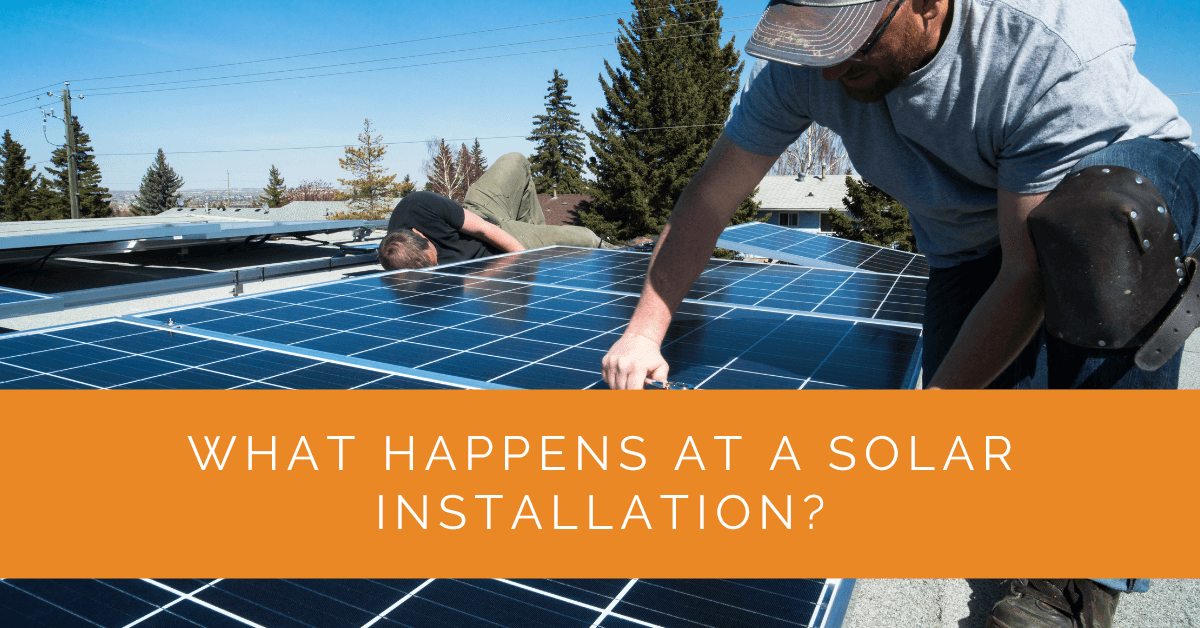
The day a solar installation crew arrives at your home can be exciting and, for some homeowners, a bit uncertain. What exactly will they do? How long will it take? Will my roof be damaged? These are common questions. Understanding the installation process — from the initial roof inspection through final system activation — helps you prepare and sets realistic expectations.
A typical residential solar installation takes one to three days of active work, though the full process from contract to grid connection typically spans four to eight weeks. Let’s walk through each phase.
Contents
- 1 Pre-Installation: Permits, Inspections, and Preparation
- 2 Day 1: Roof Inspection and Mounting Hardware Installation
- 3 Completing Day 1: Panel Installation
- 4 Day 2: Electrical Installation — From Roof to Breaker Box
- 5 Safety Inspection and Testing
- 6 Utility Interconnection and Final Inspection
- 7 System Activation and Monitoring Setup
- 8 Typical Timeline: From Contract to First Kilowatt-Hour
- 9 What to Expect During Installation: Noise, Dust, and Access
- 10 Potential Complications During Installation
- 11 After Installation: Ongoing Maintenance and Monitoring
- 12 Frequently Asked Questions
- 13 Summing Up
Pre-Installation: Permits, Inspections, and Preparation
Before the installation crew ever arrives, significant behind-the-scenes work happens. After you sign a contract with a solar company, they submit a building permit application to your local jurisdiction. This application includes detailed system design drawings, electrical schematics, structural calculations, and proof of insurance.
Permit approval timelines vary widely: some jurisdictions approve permits in one week, others take six to eight weeks. During this period, the solar company also orders equipment (panels, inverter, mounting hardware, wiring) from suppliers. Lead times have shortened since 2023 but can still add two to four weeks to the timeline.
A few days before installation, a solar company representative typically conducts a final site visit to confirm roof condition, electrical panel access, and any obstructions (trees, antennas, vents). They also discuss the installation schedule and any special access requirements.
Day 1: Roof Inspection and Mounting Hardware Installation
Installation day begins early, typically 7 AM to 8 AM. The crew (usually two to four electricians/technicians) arrives with a truck full of equipment: solar panels, mounting rails, brackets, electrical components, tools, and safety gear. The first hours are always about roof access and structural assessment.
Roof inspection: The crew walks the entire roof, checking for damaged shingles, weak spots, or areas unsuitable for mounting. They identify roof penetration points (where lag bolts will anchor the mounting rails) and verify that the roof structure can support the system weight. For a typical 6 kW system with 18 panels, total weight is roughly 4,000–5,000 pounds, distributed across the roof. Most modern residential roofs easily support this; older or severely compromised roofs may require additional structural support or even partial reinforcement.
Layout and marking: Using a pencil or chalk, crew members mark where each rail will be anchored. This layout is critical — it ensures optimal panel placement for production and aesthetics, avoids roof vents/skylights/antennas, and maintains building code clearances from roof edges.
Flashing installation: Before bolting down rails, the crew installs flashing—thin metal or rubber collars that fit around lag bolts to prevent water intrusion. This is one of the most important steps for preventing leaks. High-quality flashing uses stainless steel or aluminum with rubber gaskets.
Rail mounting: Lag bolts are drilled through the roof into the roof rafters below, typically with 4–6 fasteners per rail. Each bolt is wrapped with flashing, then sealed with roofing cement. Rails are then bolted to these anchors using stainless steel hardware. This process is loud (drilling/impact hammer sounds) and may take 2–4 hours depending on roof complexity.
Key observation: Watch that the crew removes all debris (roofing material, shavings, fasteners) and properly seals each penetration. Sloppy flashing work is the #1 cause of post-installation roof leaks.
Completing Day 1: Panel Installation
Once rails are secured, the crew begins attaching panels to the mounting hardware using specialized clamps that grip the panel frame without damaging it. Panels are typically installed in portrait orientation (taller than wide) to maximize airflow and reduce thermal losses.
Panel placement: Panels are positioned and fastened from bottom to top across the roof, working methodically to avoid accidental stepping on unbolted panels. Each panel is mechanically attached but not yet electrically connected.
Grounding: A grounding wire is attached to the frame of each panel, connecting all panels together via a grounding rail that runs to the main system grounding point. This ensures electrical safety by providing a low-resistance path for fault currents.
Electrical conduit: Black conduit tubing (PVC or metal) is routed along the mounting rails to house the DC wiring that will connect panels in series. This routing is done carefully to avoid pinching wires, minimize UV exposure, and maintain building code clearances (typically 6 inches from roof edges, 3 feet from vents, etc.).
By end of Day 1, if all goes smoothly, panels are mechanically secured and grounding is in place, but no electrical connections have been made yet. The roof penetrations are sealed. The crew covers any open electrical connections with caps to protect against weather and conducts a safety walkthrough to confirm the roof is secure.
Day 2: Electrical Installation — From Roof to Breaker Box
Day 2 focuses entirely on wiring and electrical integration. This is the most technically complex and safety-critical phase.
DC wiring from panels: Electricians run DC (direct current) cables from the panels down the side of the house, typically through conduit routed to the electrical service area. Standard residential systems use 10 AWG (10 gauge) or 8 AWG copper cable, depending on amperage and run length. These thick cables carry DC power from the panels toward the inverter.
String configuration: Panels are electrically connected in “strings” (series connections). A typical 6 kW system with 18 panels might have three strings of six panels each. This configuration is determined during system design and optimizes voltage and current for the inverter. Strings are joined at a DC combiner box, which consolidates the multiple circuits into a single high-current DC line.
DC disconnect and breaker: Between the combiner box and inverter, a DC disconnect switch and circuit breaker are installed. These allow safe shutdown of the DC side for maintenance or emergency. The DC breaker is typically 100–150 amps for residential systems.
Inverter installation: The inverter is mounted on an exterior wall or in a garage/basement near the electrical service panel. For a 6 kW system, the inverter typically weighs 50–100 pounds and measures 24″ wide × 36″ tall. Electricians connect the DC input from the combiner box to the inverter using appropriately sized cable (typically 2/0 or larger).
Grounding and bonding: A grounding electrode (often a copper rod driven into the ground) is installed near the electrical service. All metal components (panels, rails, inverter enclosure, conduit) are bonded together and grounded to this electrode, ensuring a single point of ground reference and electrical safety.
AC wiring and breaker: From the inverter’s AC output, a heavy-gauge (typically 6 AWG or larger) AC cable is routed to the main electrical service panel. A new double-pole circuit breaker (typically 60–100 amps for residential systems) is installed in your main panel, and the solar AC line is connected to this breaker using appropriate crimp terminals and torqued connections.
Meter and net metering: If your utility requires a new bidirectional meter, the utility company typically installs it during this phase or shortly thereafter. This meter measures both electricity consumed from the grid and electricity exported to the grid.
Safety Inspection and Testing
Before powering up the system, extensive testing occurs:
Insulation resistance testing: Using a megohmmeter, electricians verify that all DC and AC circuits are properly insulated and free of faults. Any shorts or leakage paths are identified and repaired.
Grounding continuity testing: All grounding and bonding connections are tested to confirm low-resistance paths to the ground electrode.
Polarity verification: DC cables are tested to confirm correct polarity (positive and negative connections) throughout the system. Reversed polarity can damage the inverter.
String voltage and current testing: Each panel string is tested individually to confirm proper voltage (typically 400–600 VDC for residential systems) and that no panels are shaded or damaged.
System documentation: The crew photographs all electrical connections, conduit routing, breaker placements, and equipment nameplates. This documentation is retained for warranty and future maintenance purposes.
Utility Interconnection and Final Inspection
Before the system can be energized and connected to the grid, your local utility and building department must inspect and approve the installation. This typically happens on Day 2 or Day 3, depending on inspector availability.
Building department inspection: A municipal inspector verifies that the installation meets the National Electrical Code (NEC), local amendments, and building permits. They check roof flashing, electrical grounding, wire sizing, breaker ratings, conduit routing, and equipment placement. Most inspections pass on the first attempt; if deficiencies are found, they must be corrected and the system re-inspected.
Utility interconnection inspection: The utility company’s representative verifies that the AC disconnection, grounding, and anti-islanding safety provisions are correct. Anti-islanding protection ensures that if the grid goes down, your inverter automatically shuts off (to protect utility workers who may be working on downed lines). Modern inverters have this built-in.
Permission to operate (PTO): Once both the building department and utility approve, you receive a permission-to-operate notice. This is your green light to turn on the system.
System Activation and Monitoring Setup
On the final day or shortly thereafter, the system is energized for the first time:
DC disconnect activation: The DC disconnect switch is switched to the ON position. The inverter powers up and begins converting sunlight into AC electricity (assuming it’s daytime). You should hear a faint humming sound from the inverter.
Monitoring system activation: An internet-connected monitoring device (often built into the inverter or a separate gateway) is activated. This allows you to track real-time production, daily/monthly/annual output, and any system faults from your smartphone or computer.
Production verification: The installer confirms that the system is producing electricity and that real-time production displayed on the monitoring app matches expectations for current sun conditions.
Meter verification: If the utility hasn’t already swapped meters, they do so now. You should confirm that your new meter displays both consumption (kWh in from grid) and export (kWh out to grid).
Final walkthrough: The solar company reviews the system with you, explains how to read the monitoring system, discusses maintenance needs (generally minimal — occasional panel cleaning), and provides warranty documentation and emergency procedures (e.g., how to manually shut off the system if needed).
Typical Timeline: From Contract to First Kilowatt-Hour
Week 1: Contract signing and permit application submission.
Weeks 2–6: Permit processing (timelines vary; some jurisdictions are fast, others are slow). Equipment is ordered during this period.
Week 6: Equipment arrives and is staged at the solar company’s warehouse.
Week 7: Installation appointment is scheduled. Pre-installation site visit occurs a few days before.
Week 7, Days 1–2: Installation occurs. Roof, electrical, and safety work is completed.
Week 7, Day 3 or later: Building and utility inspections occur. If approved, you receive PTO notice within a few days.
Week 8: System is energized and monitoring begins.
In fast-moving jurisdictions with quick permitting, the entire process can compress to 4–6 weeks. In jurisdictions with slow permitting (California, some northeastern states), it can stretch to 12–16 weeks.
What to Expect During Installation: Noise, Dust, and Access
Noise: Roof drilling and impact hammering are loud, typically 85–95 dB. If you have young children or pets, plan for them to be elsewhere during Day 1 roof work. The noise typically lasts 2–4 hours of the day.
Dust: Roof penetrations create dust and small debris. The crew should use tarps and clean up thoroughly at day’s end, but expect some roof dust and shavings in gutters or downspouts.
Interior access: Electricians need access to your electrical service panel, typically located in a garage, basement, or utility closet. They may need to briefly disconnect power to certain circuits during breaker installation, which is normal.
Parking and logistics: Crew trucks and equipment need clear access. If you have a narrow driveway or limited parking, discuss this with the installer beforehand.
Timing: Installation typically begins at 7–8 AM and concludes by 4–5 PM. Plan for full occupancy of your roof and electrical areas throughout these hours.
Potential Complications During Installation
Roof damage discovery: If the inspector finds roof rot, deteriorated shingles, or structural weakness, the roof may need repair before panels are installed. This adds cost and timeline.
Electrical service upgrades: Older homes with small service panels (60 or 100 amps) may require service upgrades to accommodate a solar breaker. This is a separate project that can cost $1,500–$3,000 and add one to two weeks to the timeline.
Shading obstructions: If detailed shading analysis during site visit reveals trees that must be trimmed or removed, this may delay installation until the tree service completes work.
Permit rejection: If the building department finds code violations (e.g., equipment placement, wire sizing, grounding), corrections must be made and the system re-inspected. This adds one to two weeks.
Utility delays: In some regions, utilities are slow to process interconnection requests or schedule inspections. This can extend timelines significantly.
After Installation: Ongoing Maintenance and Monitoring
Once your system is energized, your main responsibility is monitoring its performance via the manufacturer’s app. Most systems have an expected production range based on weather; if production is significantly lower than expected on sunny days, it may indicate a problem (shading, inverter fault, soiling). A quick call to your installer usually resolves issues.
Annual panel cleaning (typically in spring and fall) maintains peak efficiency, especially in dusty or coastal climates. Many homeowners do this themselves with a soft brush and hose; professional cleaning runs $200–$400 annually.
Battery backups and monitoring systems occasionally require software updates. Your installer may handle these remotely or schedule a quick visit.
25-year panel warranties and inverter warranties (typically 10–15 years, with optional extensions) provide peace of mind. Most systems have essentially zero maintenance costs during their life.
Frequently Asked Questions
Active installation work typically takes one to three days, depending on system size and roof complexity. A 5–6 kW system usually requires two days on-site. The entire process from contract to permission to operate can take four to eight weeks due to permitting and inspections.
A properly executed installation should not damage your roof. Flashing is installed around each roof penetration to prevent water intrusion, and mounting hardware uses stainless steel to resist corrosion. However, if your roof is already compromised or near end of life, the added weight and penetrations may expose existing weaknesses. Most installers offer roof inspections and can recommend repairs if needed.
Yes, but plan for noise and activity. Roof work is loud and involves drilling. Electricians need access to your electrical panel and may brief disconnect power to circuits. Most homeowners stay home but plan to be elsewhere during the loudest periods (typically morning roof drilling), especially if they have small children or noise-sensitive pets.
If structural damage or deterioration is found, the roof should be repaired before solar installation. This is typically covered by your homeowner’s insurance if the damage is new, though some solar companies offer roof repair financing. If you need a full roof replacement, it’s often recommended to do this before installing solar.
Not always. Homes with 100–200 amp service panels typically have sufficient capacity for residential solar. Older homes with 60-amp service may require an upgrade. Your electrician will assess this during design and quote a separate upgrade cost if needed.
Yes. Standard grid-tied solar systems (without batteries) automatically shut down when the grid goes down, as a safety measure. This prevents electricity from flowing to downed power lines where utility workers might be operating. If you want backup power during outages, you need a battery system with an all-in-one hybrid inverter.
Summing Up
A residential solar installation is a multi-week process that includes permitting, inspections, equipment delivery, and two to three days of active on-site work. The installation itself is methodical and well-choreographed: Day 1 focuses on roof mounting hardware and panel installation, Day 2 on electrical wiring and integration, and final days on inspections and system activation. While the process involves some roof penetrations and electrical work, a professional installer with proper flashing and grounding practices should leave no lasting damage. The key is understanding the timeline, staying engaged during the process, and confirming that post-installation inspections pass smoothly. Once energized, your system requires minimal maintenance and begins reducing your electric bill immediately.
Ready to get started on your solar installation? Call (855) 427-0058 for a free consultation and site assessment.
Updated