
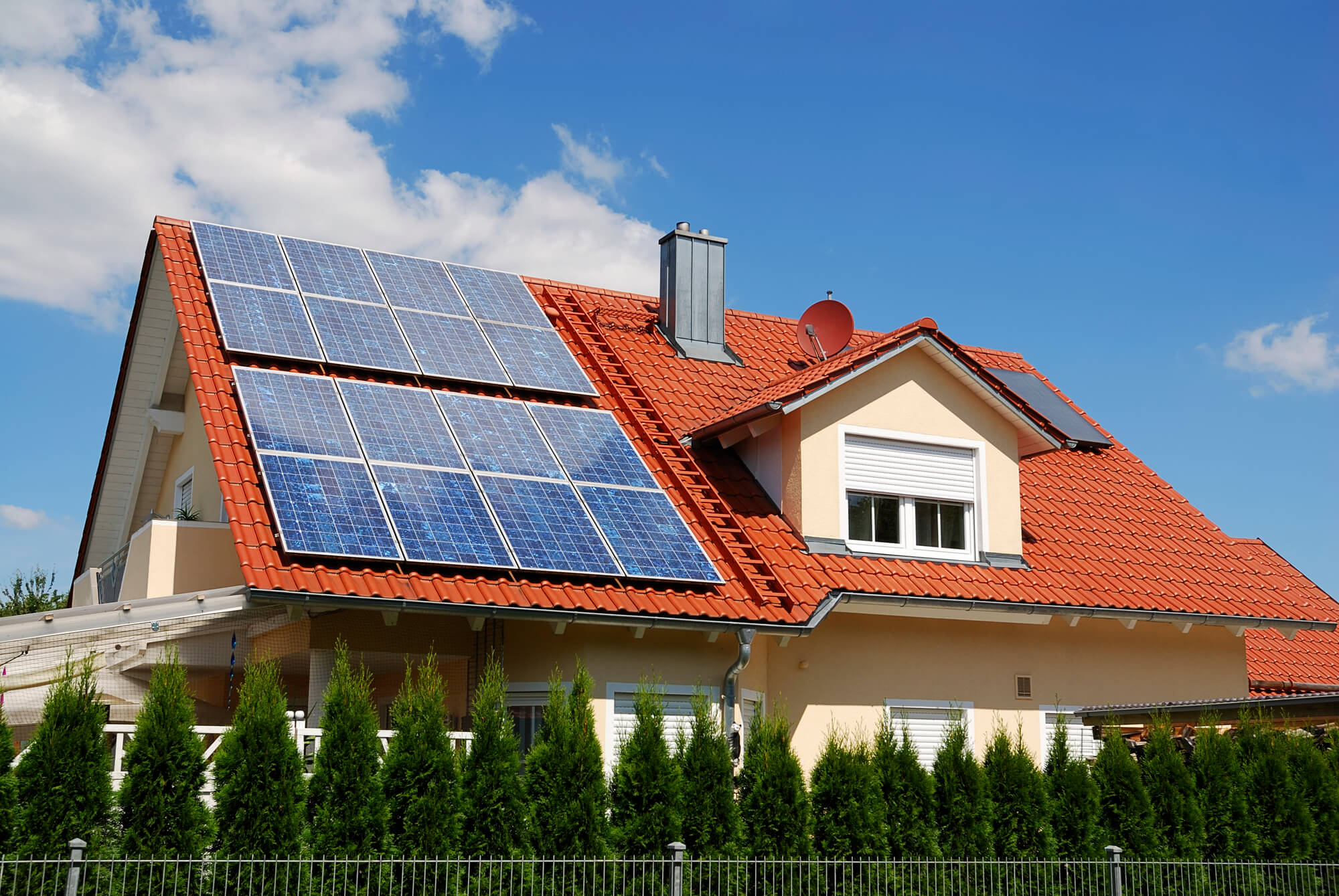
Heating and cooling account for a large share of home energy use, and solar can offset this load either indirectly (powering electric heat pumps) or directly (solar thermal systems). Solar PV paired with a heat pump is the most practical solar-powered HVAC solution for most homes today.
Solar Approaches to Heating and Cooling
| Approach | How It Works | Best For |
|---|---|---|
| Solar PV + heat pump | Panels generate electricity, heat pump provides heating/cooling (COP 2.5-4.5) | Most homes — flexible, efficient |
| Solar thermal | Direct heat capture for space or water heating | Water heating, some space heating |
| Passive solar design | Building orientation/materials capture/reject heat | New construction, major renovations |
Solar PV Plus Heat Pumps
Pairing solar panels with an electric heat pump lets your system both generate and use clean electricity for heating and cooling — heat pumps achieve coefficients of performance (COP) of 2.5-4.5, meaning they deliver several times more heating/cooling energy than the electricity they consume.
Solar Thermal for Direct Heat
Solar thermal collectors capture heat directly from the sun for water heating or, less commonly, space heating — more efficient per square foot than PV for pure heat applications, but less flexible since it can’t power anything else.
Passive Solar Design
New construction or major renovations can incorporate passive solar principles — strategic window placement, thermal mass, and overhangs — to reduce heating and cooling loads before any active system is even considered.
Sizing Considerations
A solar PV system sized to cover heat pump electricity demand, on top of typical household loads, requires careful load calculation — oversizing wastes money, undersizing leaves you dependent on grid power for HVAC.
Combine solar with efficient heating and cooling. Free quote: (855) 427-0058
Frequently Asked Questions
Can solar panels power my home’s heating and cooling?
Yes, especially when paired with an electric heat pump.
What is a heat pump’s COP?
Coefficient of performance — typically 2.5-4.5, meaning several times more output than electricity input.
Is solar thermal better than solar PV for heating?
Solar thermal is more efficient for pure heat applications, but less flexible than PV.
What is passive solar design?
Building orientation and materials that naturally capture or reject heat.
How do I size solar for heat pump electricity demand?
A load calculation accounting for heating/cooling and other household usage.
Does solar work well with existing HVAC systems?
Yes — solar PV can offset electricity use for any electric HVAC system.
Is combining solar with a heat pump cost-effective?
Often yes, especially replacing gas heating with an efficient, solar-offset heat pump.
Summing Up
Solar and efficient heating/cooling work well together to cut energy costs. For a combined system quote, call (855) 427-0058 or visit us.solarpanelsnetwork.com.
Updated