
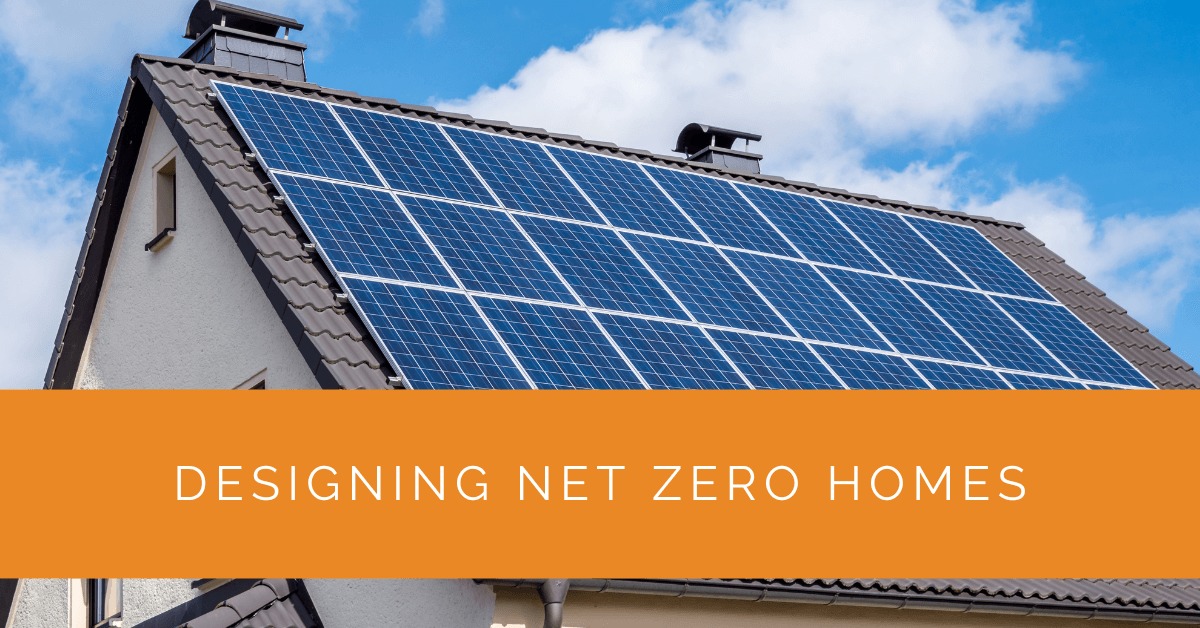
A net zero home produces as much energy as it consumes over the course of a year. The concept sounds simple; achieving it in practice requires coordinating solar panel sizing, energy storage, building envelope performance, HVAC system selection, appliance efficiency, and occupant behavior into a coherent whole. More net zero homes are built each year than any prior decade — improved insulation standards, heat pump technology, solar costs, and battery storage prices have made the once-theoretical goal financially attainable for mainstream new construction and major renovation projects.
This guide explains the technical and design elements required to achieve net zero energy performance, the costs involved, and the order of operations for designing a net zero home from the ground up or retrofitting an existing one.
What Net Zero Energy Actually Means
Net zero energy (NZE) means the home’s on-site renewable energy production equals or exceeds annual energy consumption, measured in kilowatt-hours on a utility billing basis. A home consuming 10,000 kWh annually that produces 10,000 kWh annually from solar panels achieves net zero energy — even if it draws from the grid on cloudy winter days and exports surplus in summer, because the net over the full year balances to zero.
Important distinctions: Net zero site energy (most common metric) measures energy consumed and produced at the home. Net zero source energy accounts for the efficiency losses in generating and transmitting grid electricity, which can require 3x more source energy to deliver 1 kWh at the meter. Net zero carbon goes further, accounting for embodied carbon in construction materials and the carbon intensity of grid electricity used during production shortfalls. Different certification programs (PHIUS, Passive House, DOE Zero Energy Ready Home, LEED) use different metrics.
Step 1: Reduce Load First
The most important principle in net zero design is energy hierarchy: reduce consumption before adding generation. Solar panels cost $2.50–$3.50 per watt installed; improving insulation costs $0.50–$2.00 per watt-equivalent of reduced load. It is always cheaper to not use energy than to generate it. A home that requires 20,000 kWh annually needs a much larger and more expensive solar array than one requiring 10,000 kWh.
Building Envelope: The envelope — walls, roof, foundation, windows, and air barrier — is the first line of defense against energy loss. Net zero homes typically specify:
Insulation levels: R-30 to R-60 in ceilings (vs. code minimum R-38 in Climate Zone 5), R-20 to R-30 in walls (vs. code R-13/15), and R-10 to R-20 in foundation systems. Continuous exterior insulation (rigid foam or mineral wool boards) eliminates thermal bridging through framing members, which can reduce wall system thermal performance by 25–40% compared to nominal R-values.
Air tightness: Standard US homes leak 6–10 ACH50 (air changes per hour at 50 pascals blower door test pressure). Net zero homes target 1–3 ACH50; Passive House certification requires ≤0.6 ACH50. Controlled mechanical ventilation with heat recovery (HRV/ERV) replaces the fresh air that would otherwise infiltrate through leaks, maintaining indoor air quality without the energy penalty of uncontrolled infiltration.
High-performance windows: Triple-pane windows with U-factors of 0.15–0.22 (vs. standard double-pane at 0.30–0.35) and appropriate solar heat gain coefficients (SHGC) optimized by orientation — higher SHGC on south-facing windows to admit passive solar gain in winter; lower SHGC on east/west windows to limit summer overheating.
Step 2: Electrify Everything
Net zero homes run on electricity — not because electricity is always cleaner, but because electric appliances can be powered by on-site solar while natural gas or propane cannot. The critical electrification decisions are:
Space Heating and Cooling: Heat pumps replace gas furnaces and air conditioners in a single system. Modern variable-speed cold-climate heat pumps (Mitsubishi Hyper-Heat, Bosch IDS, Carrier Infinity) deliver 2.5–4x more heat energy than the electricity they consume, even at outdoor temperatures of -15°F. This coefficient of performance (COP) of 2.5–4 means heat pumps use 60–75% less energy than electric resistance heating. A well-insulated net zero home typically needs a much smaller heat pump system than a conventionally built home of equivalent square footage.
Water Heating: Heat pump water heaters (HPWHs) use the same vapor-compression technology as heat pump space heaters. A HPWH uses 3x less electricity than a conventional electric resistance water heater. Energy Factor of 3.0–4.0 (vs. 0.9 for resistance water heater). In a net zero home, HPWH selection is one of the highest-impact appliance decisions; standard resistance water heaters can represent 15–25% of household electricity consumption.
Cooking: Induction cooktops use 5–10% less energy than gas and eliminate combustion byproducts (NO₂, CO) that impair indoor air quality. Induction cooktops also provide faster heating, more precise temperature control, and a cooler kitchen surface that reduces cooling loads.
Clothes Drying: Heat pump dryers use 50% less electricity than conventional electric resistance dryers and are increasingly available from major manufacturers (LG, Samsung, Bosch, GE). They also reduce tumble-dry times and are gentler on fabrics.
Step 3: Size Solar to Match Reduced Load
After reducing consumption through envelope improvements and efficient electrification, calculate the annual electricity consumption and size the solar array accordingly.
Sizing calculation: A net zero home in climate zone 5 (Chicago, Denver, New York) after efficiency improvements might consume 8,000–12,000 kWh annually. At 4.2 peak sun hours/day and a system performance ratio of 0.80 (accounting for inverter losses, temperature, soiling): required system size = 10,000 kWh ÷ (4.2 hours × 365 days × 0.80) = 8.17 kW. In practice, design to 10% overcapacity to account for degradation and year-to-year weather variation: ≈9 kW.
Panel placement: South-facing roof surfaces at the latitude tilt angle produce maximum annual output. East-west split arrays sacrifice 10–15% annual production but flatten the production curve through the day, reducing midday export and increasing morning/afternoon self-consumption — valuable in NEM 3.0 and TOU rate environments. Bifacial panels add 5–15% output from ground-reflected light (albedo).
ITC benefit: The 30% federal Investment Tax Credit through 2032 applies to the full solar system cost, significantly improving the financial case. A 9 kW system at $3.00/W = $27,000 before incentives, $18,900 after the 30% ITC.
Step 4: Add Battery Storage
Battery storage is not strictly required for net zero energy certification (net metering provides effective storage via the grid), but it adds resilience, enables TOU rate optimization, and moves the home toward energy independence. For homes with ambitious sustainability goals or grid unreliability concerns, 10–27 kWh of battery storage complements a net zero solar system effectively.
A 13.5 kWh Tesla Powerwall 3 or Enphase IQ Battery 10T system pairs well with a 7–10 kW solar array in most US climates. Sizing for multi-day backup requires significantly larger battery banks. Battery systems installed in 2026 qualify for the 30% ITC as standalone storage (no solar pairing required under IRA rules).
Step 5: Certifications and Verification
Several certification programs verify net zero and high-performance home standards:
DOE Zero Energy Ready Home (ZERH): A federal certification requiring homes to meet ENERGY STAR Certified Homes requirements plus additional requirements for insulation, windows, water heating, and solar-ready construction. ZERH homes are verified by a third-party HERS rater. The certification does not require solar panels at construction but requires the home to be designed so that a solar array can achieve net zero on that specific lot.
Passive House (PHIUS or PHI): The most rigorous building performance standard, requiring <4.75 kBtu/ft²/year heating demand, <3.17 kBtu/ft²/year cooling demand, and ≤0.6 ACH50 airtightness. Passive House homes typically achieve 60–80% energy reduction vs. conventional construction and can reach net zero with smaller solar arrays as a result.
LEED Platinum with Energy and Atmosphere credits: LEED certification includes an energy performance pathway that awards credits for net zero energy, on-site renewable generation, and high-performance envelope systems.
Cost of Building a Net Zero Home
| Component | Incremental Cost vs. Standard Construction | Energy Impact |
|---|---|---|
| Enhanced insulation and air sealing | $8,000–$20,000 | 20–35% load reduction |
| Triple-pane windows | $5,000–$15,000 | 5–15% load reduction |
| Cold-climate heat pump (vs. gas furnace) | $2,000–$6,000 | 60–75% heating energy reduction |
| Heat pump water heater | $500–$1,500 | 65–70% water heating reduction |
| HRV/ERV ventilation system | $2,000–$5,000 | 70–80% ventilation energy recovery |
| Solar PV system (9 kW) | $18,900 (after 30% ITC) | Net zero offset |
| Battery storage (13.5 kWh) | $8,400 (after 30% ITC) | Grid independence / TOU optimization |
Total incremental cost to achieve net zero in new construction: typically $35,000–$70,000 above standard construction costs. In a 30-year mortgage, this adds $150–$300/month. Energy savings in a net zero home typically exceed $200–$400/month in utility costs, creating positive cash flow from day one in most markets.
Net Zero Retrofits: Existing Homes
Retrofitting existing homes to net zero is more challenging and expensive than designing from scratch, but achievable with the right approach. Priority sequence:
First, air seal and insulate accessible attic spaces (highest ROI). Second, upgrade HVAC to cold-climate heat pump at equipment end-of-life. Third, replace water heater with HPWH at end-of-life. Fourth, install solar array sized to new reduced load. Fifth, add battery storage if desired. Federal tax credits (30% ITC for solar and batteries, 30% Energy Efficient Home Improvement Credit for heat pumps, insulation, and windows) apply to retrofit projects as well as new construction.
Frequently Asked Questions
How much does it cost to build a net zero home?
Net zero homes typically cost 5–15% more than standard new construction to build — roughly $35,000–$70,000 on a $400,000–$500,000 home. The incremental cost is partially offset from day one by lower utility bills; the solar and battery systems carry 30% federal tax credits; and the building envelope improvements significantly increase long-term comfort and resale value. Many homeowners achieve positive monthly cash flow immediately when the energy savings exceed the incremental mortgage cost.
Can any home be made net zero?
Most homes can get close to net zero with the right combination of efficiency improvements and solar panels, but some face constraints: severely shaded roofs, south-facing rooftop obstructions, or very high energy loads (large homes in extreme climates) may make full net zero difficult or cost-prohibitive. Community solar or off-site green power purchases can compensate for on-site generation shortfalls. Homes with good solar exposure in moderate climates are the best net zero candidates.
What is the difference between net zero and Passive House?
Passive House is a building performance standard focused on drastically reducing energy demand through envelope design (ultra-high insulation, airtightness, passive solar design). A certified Passive House uses 60–80% less energy than a standard building. Net zero adds on-site renewable generation to offset remaining consumption. The best net zero homes are often Passive House certified as well, since achieving net zero with a very efficient envelope requires a much smaller (and cheaper) solar system.
Does a net zero home need battery storage?
No — but it is increasingly recommended. Grid-tied net zero homes with net metering use the utility grid as a virtual battery, drawing from it at night and exporting surplus during the day. Battery storage adds resilience during grid outages, enables TOU rate optimization (valuable in California NEM 3.0, PSEG, and other TOU markets), and moves the home toward genuine energy independence. The 30% federal ITC for standalone battery storage makes adding batteries more financially accessible in 2026.
Summing Up
Net zero homes are built — or retrofitted — in a logical order: reduce loads first through envelope and efficiency improvements, electrify all energy end uses, then size solar to match the reduced load. The technology is proven, the economics are compelling in most US markets, and the combination of the 30% ITC, state incentives, and rising electricity rates continues to improve the financial case. Well-designed net zero homes deliver lower utility bills, higher comfort, improved indoor air quality, and greater resilience — benefits that compound over decades of ownership.
Contact Solar Panels Network USA at (855) 427-0058 to discuss solar system sizing for a net zero or near-net-zero project. Our specialists work with new construction builders and renovation contractors to design solar and storage systems that complete the net zero equation for your home.
Updated