
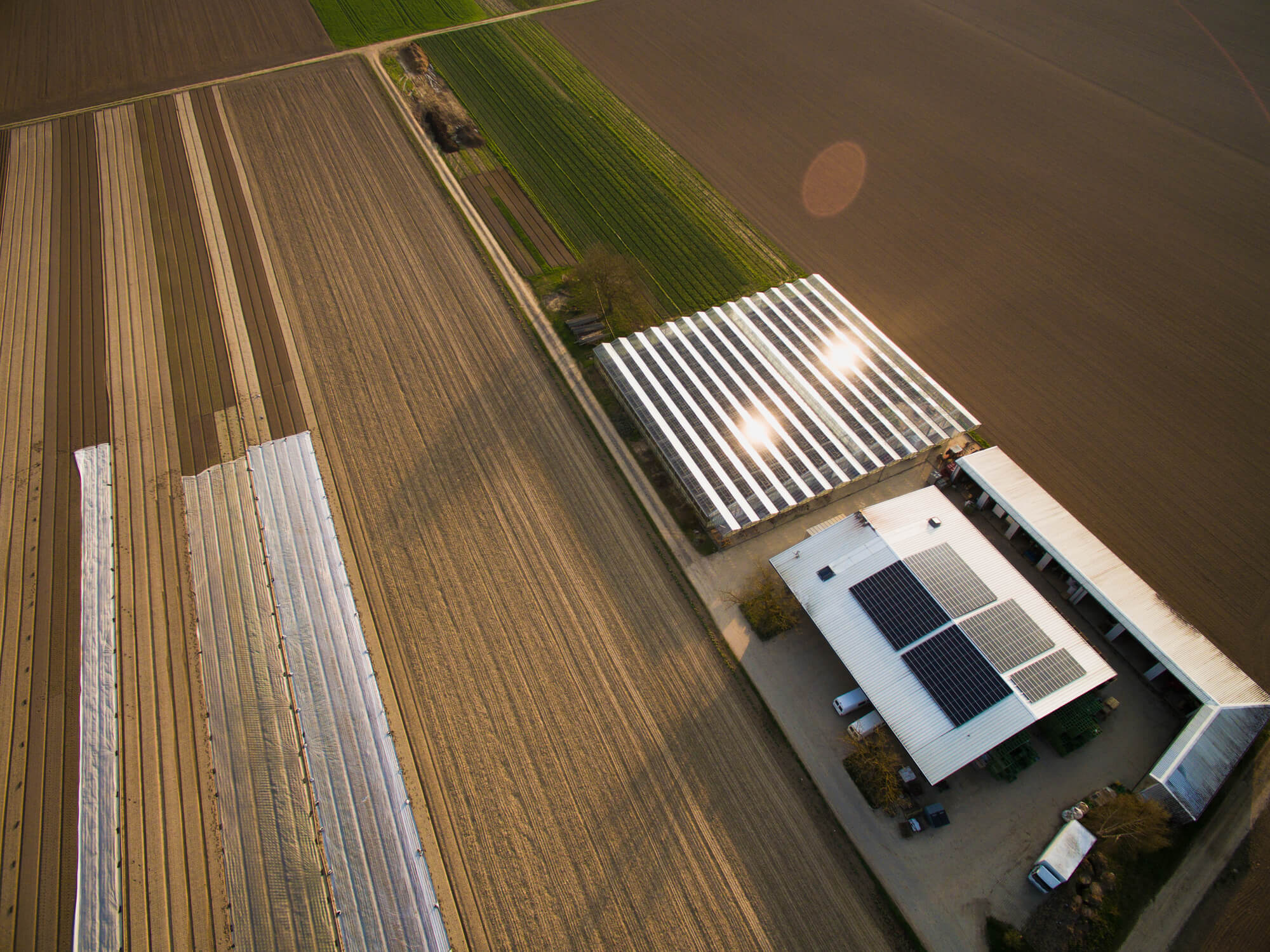
Greenhouses are among the most energy-intensive structures on a property. Heating systems, ventilation fans, and grow lights add up quickly — commercial greenhouses can see utility bills of $2,000 to $15,000 per month. Solar power reduces these costs while protecting your operation from grid outages and rising electricity prices.
This guide covers the solar options available for greenhouse operators, how to size a system for your needs, the real costs and payback timelines, and the practical challenges of integrating solar with a growing environment.
Why Greenhouse Energy Costs Are High
A working greenhouse runs heaters all night in cold months, ventilation fans throughout the day, and grow lights for 12–16 hours during short winter days. Heating alone can account for 40–60% of annual electricity costs. Even a small 200 sq ft hobby greenhouse can spend $200–400/month during heating season. Solar directly addresses this because greenhouse roofs have excellent sun exposure — the same resource you’re already managing for your plants.
Types of Solar Systems for Greenhouses
Panels on an Adjacent Structure or Ground Mount
The simplest approach: install conventional solar panels on a nearby shed, garage, or ground-mounted frame. This avoids shading crops while capturing full sunlight. A 2–4 kW system (6–12 panels) on a neighboring south-facing building covers supplemental greenhouse loads without any compromise on growing light.
Semi-Transparent Panels on the Greenhouse Roof
Newer technology integrates partial transparency — panels allow 20–50% of light to pass through while generating power. These cost 2–3× more per watt and deliver 5–15% of standard panel output, but they work for space-constrained operations or agrivoltaic experiments.
Agrivoltaic Systems
Panels elevated 10–15 feet above crops allow light and moisture to reach plants below. More common in open-field agriculture than enclosed greenhouses, but some large operations are building hybrid structures. Requires custom mounting and structural engineering.
On-Grid vs. Off-Grid
On-grid: Connects to the utility grid. Excess solar earns net metering credits; you draw grid power when production dips. Most cost-effective — no battery required. A 4–6 kW system costs $8,000–$15,000 installed ($5,600–$10,500 after the 30% ITC). Payback: 6–10 years. Limitation: shuts off if grid goes down.
Off-grid with battery: Full energy independence, resilient to outages. A 5 kW system with 10 kWh storage costs $18,000–$30,000. Best for remote properties or operations needing outage protection.
Hybrid (on-grid + battery): Best of both — grid stability plus backup. Costs 40–50% more than on-grid alone but gaining popularity for critical greenhouse operations.
Sizing Your System
- Small hobby greenhouse (100–300 sq ft): 1–2 kW (4–6 panels), $2,500–$5,000 before incentives
- Medium greenhouse (400–1,000 sq ft): 3–5 kW (10–16 panels), $6,000–$12,000 before incentives, covers 60–70% of annual electricity
- Large commercial (2,000+ sq ft): 10–20 kW (35–65 panels), $15,000–$35,000, offsets 70–90% of consumption
Key consideration: greenhouse heating peaks in winter while solar production peaks in summer. Size for realistic offset, not full independence in winter. Accept that solar covers spring/fall/summer loads and reduces — but doesn’t eliminate — winter heating bills.
Costs and ROI
A 5 kW on-grid system: $6,500–$11,000 installed. After 30% ITC: $4,550–$7,700. At $0.13/kWh and 7,000 kWh annual production, savings = $910/year. Payback: 5–8 years, then free electricity for 20+ more years.
Real example: A Pennsylvania greenhouse operator installed 12 kW for $20,000 after ITC. Annual bill dropped from $8,400 to $2,800 — saving $5,600/year. Payback: 3.6 years.
Practical Challenges
Shading crops: Use adjacent structures or pole mounts to avoid blocking greenhouse light. Semi-transparent panels trade power output for retained light.
Structural load: Solar panels add 3–4 lbs/sq ft. Have a structural engineer verify your greenhouse frame can handle added weight before installing on the roof.
Condensation and cleaning: Greenhouse moisture accelerates panel fouling. Monthly cleaning is typical (vs. quarterly for standard rooftop installations).
Permitting: Budget 3–6 months from contract to operation for permits and utility interconnection approval.
Frequently Asked Questions
Can I use the 30% federal tax credit for greenhouse solar?
Yes. The ITC applies to commercial greenhouses and residential structures used for income. It covers 30% of total installed cost and runs through 2032. If you lack sufficient tax liability in the installation year, the credit can be carried forward.
Will solar panels work through polycarbonate greenhouse panels?
No. Polycarbonate diffuses light and blocks direct irradiance; panels mounted inside or shielded by polycarbonate will lose 30–50% of output. Always mount solar panels on the exterior, exposed directly to the sky, or on an adjacent structure outside the greenhouse envelope.
What inverter should I use for a greenhouse system?
A string inverter (5–10 kW) is cost-effective for most on-grid greenhouses. For humid environments, prioritize brands with 10-year warranties and agricultural-grade moisture resistance (Fronius, SMA, Enphase). A hybrid inverter future-proofs you for battery storage if you add it later.
How much space does a ground-mounted system need?
A 5 kW array requires about 350–400 sq ft (10 panels plus spacing). Orient due south, ensure no shading between 9 AM and 3 PM, and maintain 18–24 inches clearance under panels for airflow and cleaning access.
How long do greenhouse solar systems last?
Panels last 25–30 years (manufacturers guarantee 80%+ output at year 25). Inverters need replacement around year 12–15. In humid greenhouse environments, inspect all connections annually and seal against moisture. Total system lifespan with one inverter replacement: 25–30 years.
Summing Up
Greenhouse solar makes economic sense if your annual electricity bill exceeds $1,500 and you have south-facing space for panels. A 4–6 kW system on an adjacent structure costs $5,600–$10,500 after the 30% ITC and reduces energy bills by 50–70%. Most greenhouses see payback within 5–8 years.
Plan carefully: size for realistic offset (not full winter independence), place panels where they won’t shade crops, and account for seasonal mismatch in your projections. Standard on-grid systems deliver the best ROI for most operations today.
Ready to get quotes from local installers? Call (855) 427-0058 or get a free quote to compare options in your area.
Updated