
Solar cells are the fundamental building blocks of photovoltaic technology, converting sunlight directly into electrical current through the photovoltaic effect. Understanding how solar cells work, their different types, efficiency ratings, and manufacturing processes provides essential context for evaluating solar panel quality, predicting performance, and appreciating the engineering elegance underlying solar energy technology. Whether you’re a consumer evaluating panel specifications or someone curious about renewable energy science, solar cell knowledge illuminates how sunshine becomes usable electricity.
Modern solar cells achieve 15–22% efficiency, converting roughly one-fifth of incident sunlight into electrical power. Decades of research have produced specialized cell types optimized for different applications—from consumer rooftop installations to utility-scale farms to space satellites. This comprehensive guide explores solar cell fundamentals, types, efficiency factors, and the physics enabling clean energy generation.
Contents
How Solar Cells Work: The Photovoltaic Effect
Basic Physics: Solar cells are semiconductor devices (typically silicon-based) engineered to exploit the photovoltaic effect—the phenomenon where light energy causes electrons to become mobile in a material, creating an electric current.
Cell Structure: A basic solar cell has three layers: top contact (electrical contact allowing current flow), light-absorbing layer (silicon semiconductor), and bottom contact. The semiconductor is specially processed to create an internal electric field (P-N junction) that separates electrons from electron holes (missing electrons) generated by incident photons.
Electron Excitation: When a photon (light particle) strikes a silicon atom, it transfers energy to an electron. If photon energy exceeds the “bandgap energy” (roughly 1.1 electron volts for silicon), the electron becomes excited, breaking free from its atom and becoming mobile. This creates an electron-hole pair.
Current Generation: The internal electric field (P-N junction) separates the free electron from the hole, pushing the electron toward the negative terminal and the hole toward the positive terminal. External circuit connection allows electrons to flow from negative to positive terminal through the load, creating usable electric current.
Key Insight: Light energy directly becomes electrical energy without combustion, moving parts, or harmful emissions. This elegant conversion is why solar technology is so promising for clean energy.
Solar Cell Types and Technologies
Monocrystalline Silicon (85%+ of market): Single continuous silicon crystal, highest efficiency (18–22% commercial, 40%+ research cells). Uniform dark appearance, recognizable grid pattern. Manufacturing: silicon ingot grown from pure molten silicon, sliced into wafers. Cost: $0.30–$0.50 per watt. Advantages: highest efficiency, mature supply chain, excellent reliability. Disadvantages: energy-intensive manufacturing, highest cost.
Polycrystalline Silicon (10–12% of market): Multiple silicon crystals, lower efficiency (15–18%) than monocrystalline. Recognizable speckled appearance from visible crystal boundaries. Manufacturing: molten silicon poured into molds, creating crystalline structure. Cost: $0.20–$0.40 per watt. Advantages: lower manufacturing cost, adequate efficiency, simpler manufacturing. Disadvantages: slightly lower efficiency, marginal market share decline as monocrystalline prices drop.
Thin-Film Technologies (3–5% of market): Photovoltaic material deposited in thin layers on substrate (glass, plastic, metal). Types include cadmium-telluride (CdTe), copper-indium-diselenide (CIGS), and amorphous silicon. Efficiency: 11–16% for commercial products. Advantages: lower material cost, flexibility (bendable), better high-temperature performance. Disadvantages: lower efficiency, higher degradation rates, manufacturing complexity. Example: First Solar (CdTe specialist) manufactures utility-scale thin-film modules.
Emerging Technologies (Research/Pre-commercial):
Perovskite Cells: Rapid efficiency improvement from 3% (2009) to 33% (laboratory, 2023). Advantages: high efficiency, lower cost potential, thin material requirements. Challenges: stability under UV/moisture, lead toxicity concerns in common formulations, manufacturing scalability. Expected commercialization: 2026–2028.
Multi-Junction/Tandem Cells: Combine silicon with perovskite or other materials to capture broader light spectrum. Laboratory efficiency: 40%+. Commercialization: 2028+. Applications: space, ultra-premium residential.
Bifacial Cells: Generate power from both front and rear surfaces, capturing reflected light from ground/surfaces. Efficiency gain: 10–15% additional output. Commercial availability: widespread. Cost premium: 5–10%.
Solar Cell Efficiency Factors
Theoretical Limits: Shockley-Queisser limit (1961) defines maximum theoretical efficiency for single-junction cells: ~33% for silicon. This limit reflects fundamental physics—photons below bandgap energy pass through without contributing, and excess photon energy above bandgap is lost as heat. Multi-junction cells exceed this limit by capturing different light wavelengths at different junctions.
Commercial vs Laboratory Efficiency: Laboratory cells achieve higher efficiency (21–22% silicon) under ideal conditions. Commercial panels slightly lower (~20–21%) due to manufacturing tolerances, connection losses, and series resistance. Real-world installation efficiency further reduced by temperature effects, soiling, angle-of-incidence losses, and inverter/wiring losses.
Temperature Effects: Efficiency decreases with temperature at ~0.4–0.5% per degree Celsius above Standard Test Conditions (STC: 1000 W/m² irradiance, 25°C cell temperature). On hot days (100°F+ cell temperature), efficiency drops 15–20% compared to STC rating. This is why cooler climates sometimes outperform hotter ones despite lower direct irradiance.
Light Spectrum Effects: Silicon cells optimized for light spectrum reaching Earth’s surface (peak response in red/infrared). Direct sunlight spectrum differs from diffuse (cloudy) light. Cells perform slightly better under diffuse light due to different spectral composition. This is why panels work efficiently even in cloudy conditions.
Voltage and Current Relationships: Operating voltage (Vmp) is roughly 80% of open-circuit voltage (Voc). Operating current (Imp) is roughly 90% of short-circuit current (Isc). Actual power output (Pmax) = Vmp × Imp. This is why panel power output varies with operating conditions—it’s never 100% of theoretical Voc × Isc.
Solar Cell Manufacturing Process
Silicon Purification and Growth: Standard silicon (sand, SiO2) purified to semiconductor-grade (99.9999% pure) through multi-step chemical/thermal processes. Molten silicon crystallized into ingot (monocrystalline, single direction growth) or ingot cast (polycrystalline, random crystallization). Purification is energy-intensive, typical embedded carbon: ~20–40 kg CO2 per kilowatt peak capacity.
Wafer Slicing: Silicon ingots sliced into wafers (150–200 micrometers thick) using wire saw. ~40% material lost as saw kerf; recent innovations (diamond wire saws) reduce kerf to ~20%.
Cell Processing: Wafers undergo multiple steps—texturing (surface roughening to reduce reflectance), dopant diffusion (introducing impurities to create P-N junction), anti-reflective coating (reducing light reflection to ~3% vs ~30% bare silicon), and contact application (conductive grid allowing current extraction).
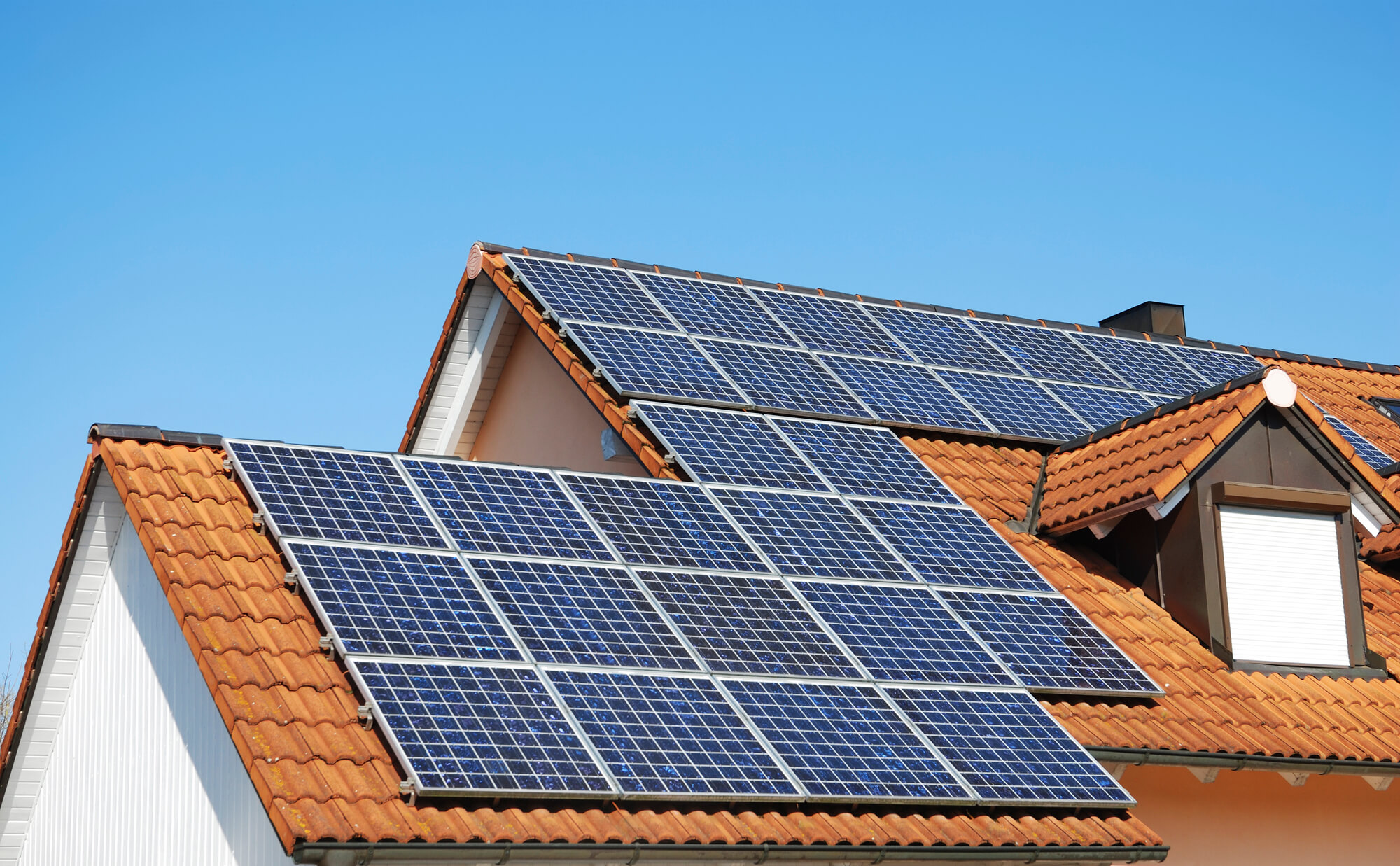
Panel Assembly: Cells soldered together in series (typically 60–72 cells for residential panels), laminated between glass front and backsheet, encapsulated in EVA (ethylene-vinyl acetate) polymer. Junction box on rear connects cells and includes bypass diodes (allowing current bypass of shaded cells). Aluminum frame completes assembly.
Testing and Grading: Finished panels tested for power output (within +3% to -3% tolerance), insulation resistance, and durability. Panels sorted by output and labeling adjusted accordingly—a 300W panel is certified to produce 300W ±3% under Standard Test Conditions.
Efficiency Improvements and Future Prospects
Historical Progression: Commercial silicon cell efficiency improved from 14% (1980) to 20–22% (2024) through better materials, processing refinement, and design optimization. Trajectory: ~0.4% annual improvement, suggesting 24–25% efficiency possible within 5–10 years with monocrystalline technology.
Pathway to Higher Efficiency: Bifacial adoption (10–15% additional output), PERC (Passivated Emitter Rear Contact) cells further improved, HJT (Heterojunction Technology) combining crystalline silicon with thin-film amorphous silicon (~24% efficiency, commercial emergence 2024+).
Cost-Efficiency Trade-offs: Higher efficiency (>22%) costs 5–15% more but reduces area requirements and BOP (balance-of-plant) costs. For space-constrained roofs, premium efficiency justified. For ground-mounted systems with ample space, commodity efficiency (20–21%) offers better $/Watt despite lower efficiency.
Emerging Game-Changers: Perovskite-silicon tandem cells potentially reaching 30%+ efficiency and cost parity with monocrystalline by 2028. This would fundamentally reshape cost structure and deployment attractiveness.
Reading Solar Cell Specifications
Standard Test Conditions (STC): All panel specifications measured at 1000 W/m² irradiance, 25°C cell temperature, AM1.5 spectrum. Real-world conditions rarely match; actual output typically 60–80% of STC rating on average due to temperature, angle-of-incidence, and soiling losses.
Nameplate Rating (Watts): Panel power output under STC. A 300W panel produces 300W at STC; real-world output 200–250W on average sunny day, 50–150W on cloudy day.
Efficiency (%): Percentage of incident light converted to electrical power. Calculate as: (Watts ÷ Area) ÷ 1000 W/m². Example: 300W panel, 1.6 m² area = (300 ÷ 1.6) ÷ 1000 = 18.75% efficiency.
Temperature Coefficient: Power loss per degree Celsius above STC. Typical: -0.4%/°C, meaning 100°F day (37.8°C) reduces output 5–6% compared to STC. High-efficiency cells better at temperature management than lower-efficiency cells.
Fill Factor: Ratio of actual power to theoretical maximum (Voc × Isc). Typical: 75–80%. Degraded cells show reduced fill factor visible in I-V curves.
Frequently Asked Questions
What is the most efficient type of solar cell?
Monocrystalline silicon achieves highest commercial efficiency: 20–22%. Laboratory multi-junction cells exceed 40% but aren’t commercially available yet. Perovskite-silicon tandem cells under development promise 30%+ efficiency, expected commercialization 2026–2028.
How much of the sun’s energy can a solar cell convert?
Commercial solar cells convert 18–22% of incident sunlight into electrical power. Laboratory research cells achieve 40%+ with multi-junction technology. Theoretical limit (Shockley-Queisser): ~33% for single-junction silicon cells. Remaining energy is lost as heat, reflected light, or photons with insufficient energy.
Why do solar cells lose efficiency in heat?
Higher cell temperature reduces the bandgap energy (energy required to excite electrons), decreasing open-circuit voltage and overall power output. Temperature coefficient: roughly -0.4%/°C for silicon. On 100°F days, cells lose 5–8% efficiency compared to 77°F STC conditions.
What is the Shockley-Queisser limit?
Theoretical maximum efficiency for single-junction solar cells: ~33% for silicon under AM1.5 spectrum. This limit reflects fundamental physics—photons below bandgap energy pass through, and excess energy above bandgap is lost as heat. Multi-junction cells exceed this limit by capturing different wavelengths at different junctions.
How are solar cells recycled?
End-of-life solar panels are disassembled: glass separated (recycled as flat glass), aluminum frame recycled as scrap aluminum, silicon cells recovered through chemical or thermal processing, and remaining materials (copper, polymers) sorted for recycling. Modern facilities recover 85–95% of panel materials, with recovered silicon reused in new panels.
What is a bifacial solar cell?
Bifacial cells generate power from both front and rear surfaces, capturing reflected light from ground, snow, or nearby surfaces. Rear generation contributes 10–30% additional output depending on surface reflectivity and installation environment. Bifacial panels cost 5–10% more but deliver 10–15% higher output in optimal conditions.
Summing Up
Solar cells represent one of humanity’s most elegant technologies—silently converting sunlight directly to electrical power through quantum physics phenomena captured in semiconductor materials. From monocrystalline dominance at 20–22% efficiency to emerging perovskite and tandem technologies promising 30%+ efficiency, continuous improvement pushes renewable energy economics toward inevitable dominance.
Understanding solar cell physics, efficiency factors, and manufacturing processes illuminates why panels work even on cloudy days, how temperature affects output, and why costs continue declining. Modern cells achieve remarkable efficiency despite the Shockley-Queisser theoretical limit—research in multi-junction, perovskite, and tandem designs promises efficiency breakthroughs that will reshape energy economics in coming decades.
Interested in learning how solar cells translate into real-world home or business power? Call (855) 427-0058 to discuss solar panel options for your energy needs, or get a free quote today.
Updated