
Our blog is reader-supported. When you buy through links on our site, we may earn an affiliate commission. Thank you for your support!
The solar inverter is the engine of every solar installation — it converts the DC electricity your panels produce into the AC power your home uses. Pick the wrong one and you leave performance and money on the table. Pick the right one and your system runs quietly for 25+ years.
For 2026, our top picks by category are: Fronius Primo GEN24 Plus (best string inverter), Enphase IQ8+ (best microinverter), and Sol-Ark 15K-2P (best hybrid/whole-home backup). Below we break down all 7 picks with specs, pricing, and honest pros and cons — plus a buying guide to help you choose the right type for your roof.
If you’d prefer to skip the research and get a quote from a local installer, call (855) 427-0058 — it’s free and no-obligation.
Our Top Picks
| PRODUCT IMAGE | PRODUCT | PRICE |
|---|---|---|
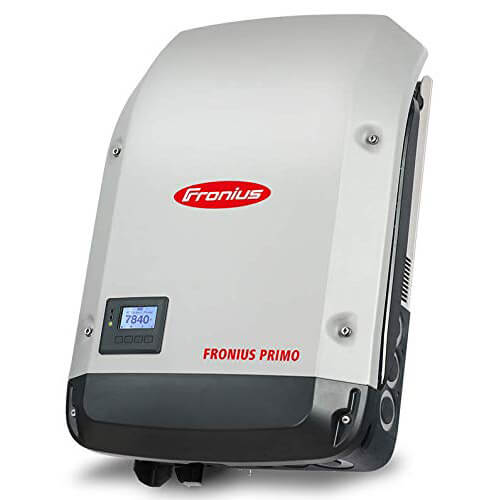 | Fronius Primo GEN24 Plus The Fronius Primo GEN24 Plus is the highest-performing residential string inverter available in the US in 2026. At 98.0% peak efficiency — the best in… | CHECK PRICE |
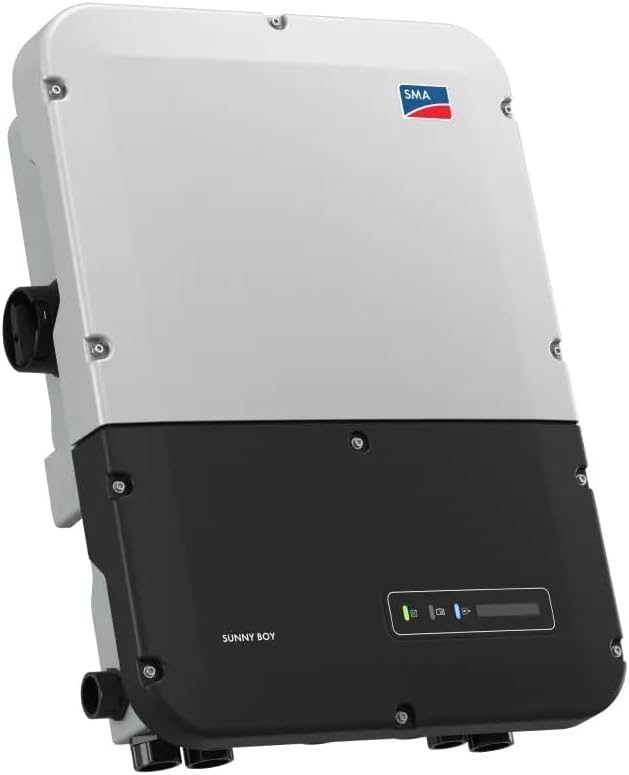 | SMA Sunny Boy 5.0/6.0 SMA has been building solar inverters longer than almost anyone, and the Sunny Boy line remains the industry benchmark for reliability. The current 5.0 … | CHECK PRICE |
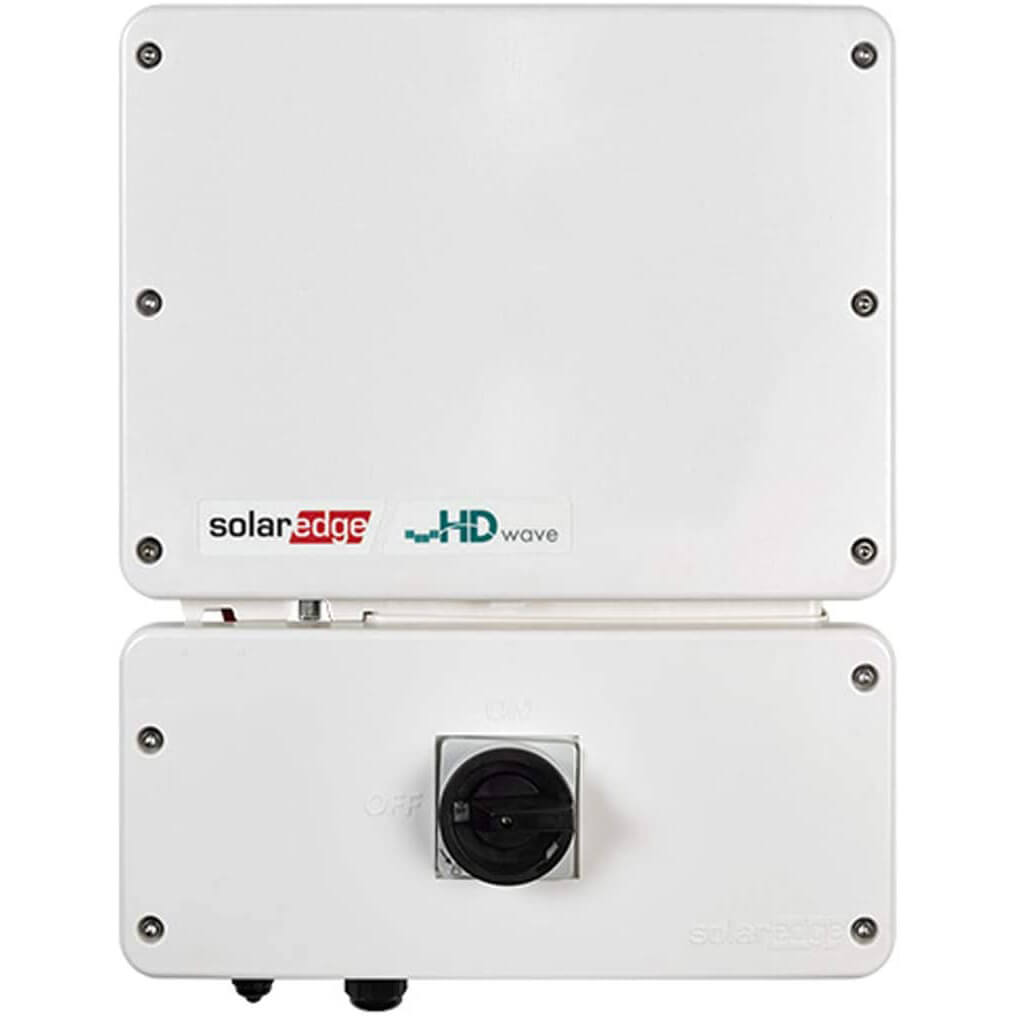 | SolarEdge SE7600H + Optimizers SolarEdge occupies a unique position between traditional string inverters and microinverters. The central inverter connects to strings of panels, but ea… | CHECK PRICE |
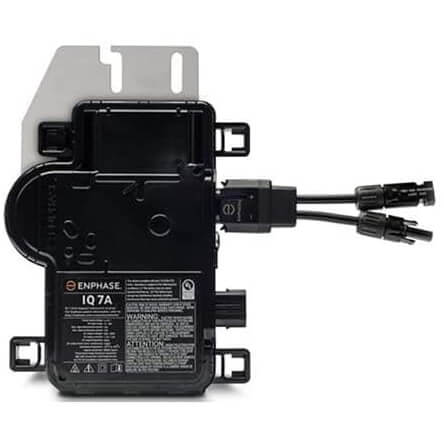 | Enphase IQ8+ Microinverter Enphase dominates the North American microinverter market, and the IQ8+ is the sweet spot of their 2026 lineup. It handles solar panels in the 235–440… | CHECK PRICE |
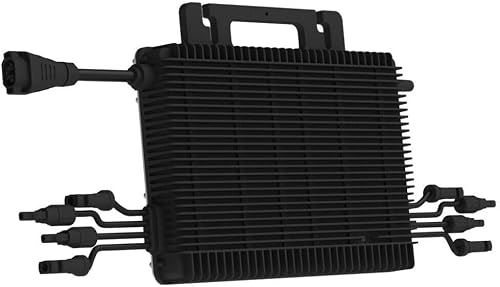 | Hoymiles HMS-2000-4T-NA Hoymiles has carved out a strong position as the value-oriented microinverter option, and the HMS-2000-4T-NA is their best product for North American in… | CHECK PRICE |
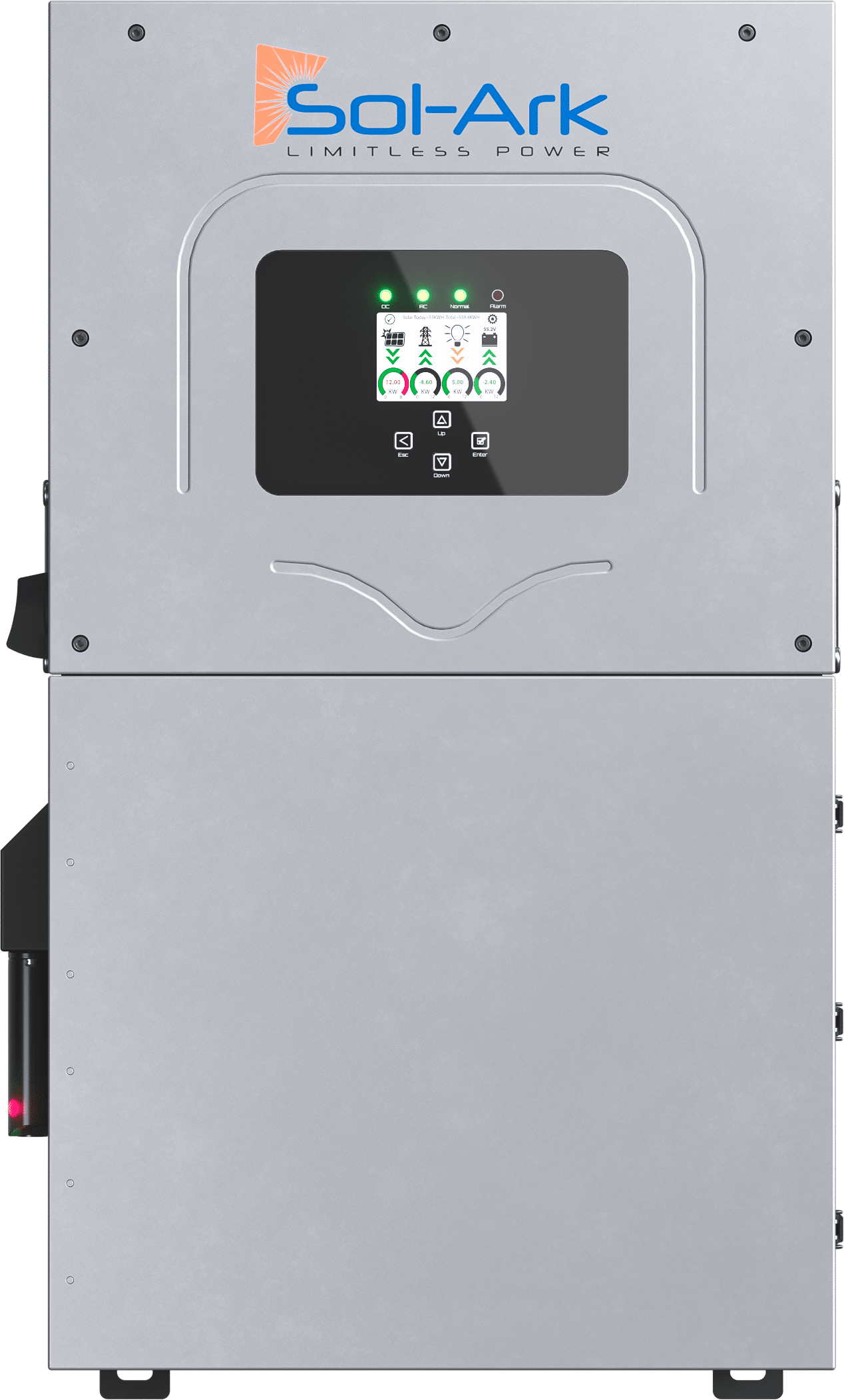 | Sol-Ark 15K-2P The Sol-Ark 15K-2P has become the default recommendation for whole-home backup and serious off-grid installations in North America. At 15 kW continuous … | CHECK PRICE |
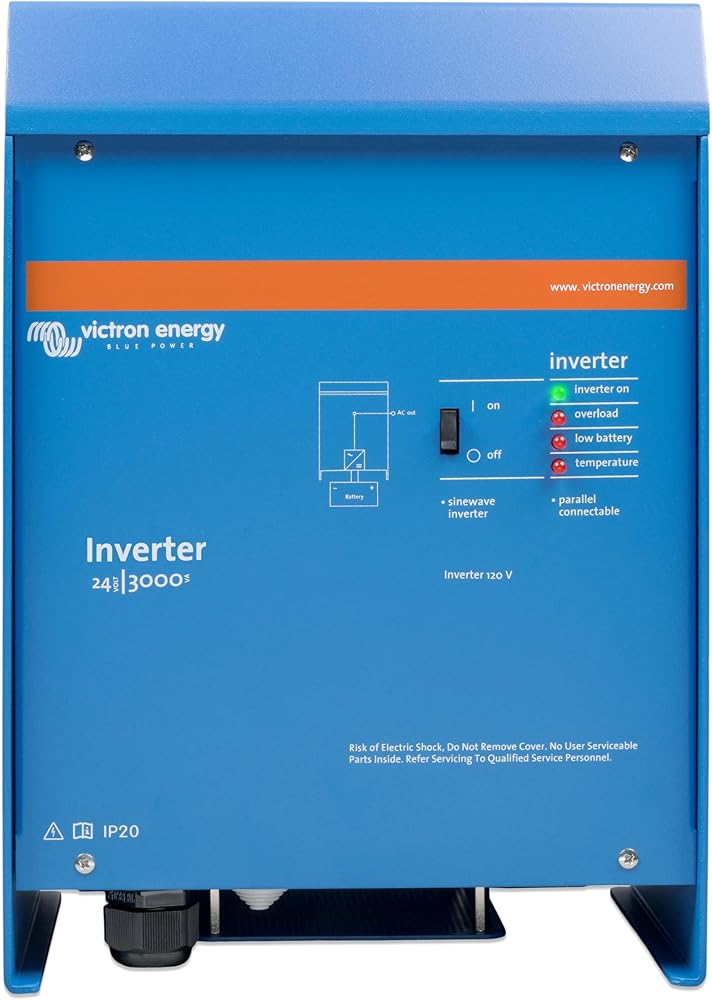 | Victron MultiPlus-II 48/5000 Victron is the name that comes up repeatedly in conversations with serious off-grid professionals, marine electricians, and mobile solar builders. The M… | CHECK PRICE |
Best String Inverters
String inverters are the workhorses of residential solar. A single centralized unit converts power from one or two strings of panels wired in series. They’re the most cost-effective option for a straightforward roof — simple installation, easy maintenance, and the cheapest to replace. The trade-off: if one panel underperforms (due to shade or soiling), it drags down the whole string.
String inverters are the right choice when your roof is one or two planes, faces roughly south, and has minimal shading. For complex roofs, see microinverters below.
#1. Fronius Primo GEN24 Plus — Best Overall String Inverter
The Fronius Primo GEN24 Plus is the highest-performing residential string inverter available in the US in 2026. At 98.0% peak efficiency — the best in its class — it converts more of your panels’ DC output into usable AC power than any comparable unit. But efficiency alone doesn’t explain why installers recommend it above everything else.
The GEN24 Plus includes a built-in battery interface that supports both high-voltage and low-voltage storage systems. If you’re not adding a battery today but plan to in the next 5–10 years, you won’t need a new inverter — just plug in the battery. It also features PV Point, a backup feature that keeps a critical loads circuit alive directly from your panels during a grid outage, even without a battery. That’s a meaningful advantage for customers who want some outage resilience without committing to full battery storage.
Fronius Solar.web is the best monitoring portal in the string inverter category: detailed energy flow visualization, yield forecasting, and easy data export. The standard warranty is 10 years, extendable to 20 years at purchase.
The GEN24 Plus sells exclusively through licensed solar installers — not Amazon or home improvement stores. This is actually a quality signal: it means the installation is done by trained professionals, which protects both performance and warranty coverage.
Best for: Homeowners who want a premium grid-tied string inverter today with a clear upgrade path to battery storage later.
#2. SMA Sunny Boy 5.0/6.0 — Most Reliable String Inverter
SMA has been building solar inverters longer than almost anyone, and the Sunny Boy line remains the industry benchmark for reliability. The current 5.0 and 6.0 kW models deliver 97.6% peak efficiency with an IP65 outdoor rating — these are built to mount on an exterior wall and survive decades of weather exposure.
SMA’s failure rate is among the lowest in the industry. Installers routinely report Sunny Boy units running well past 15 years with zero intervention. For homeowners who want to install their system and not think about the inverter again, SMA is the safest choice. The standard warranty is 10 years, extendable to 15 or 20 years.
One caveat for 2026: Some US distributors are transitioning away from the classic Sunny Boy-US models as SMA shifts its residential lineup toward the Sunny Boy Smart Energy hybrid series. Confirm current stock with your installer before designing around a specific SMA model.
Best for: Straightforward grid-tied systems on unshaded roofs where maximum long-term reliability matters more than cutting-edge features.
#3. SolarEdge SE7600H with Power Optimizers — Best for Shaded Roofs
SolarEdge occupies a unique position between traditional string inverters and microinverters. The central inverter connects to strings of panels, but each panel gets a DC power optimizer that performs module-level maximum power point tracking. This eliminates the “weakest link” problem: shade or soiling on one panel no longer drags down the entire string.
The optimizers achieve 99.5% efficiency, and the SE7600H inverter hits 99.0% — combined system efficiency that competes with the best microinverters. SolarEdge also satisfies NEC rapid shutdown requirements through its SafeDC technology, which automatically reduces string voltage to safe levels when the inverter shuts down.
The inverter carries a 12-year warranty; the power optimizers are warranted for 25 years — matching the lifespan of the panels. Panel-level monitoring through SolarEdge’s app gives you the same data granularity as microinverters.
The trade-off is cost: you’re paying for the inverter plus a DC optimizer on every panel, which pushes total system cost above a traditional string inverter and toward microinverter territory. Worth it only when your roof complexity would cause measurable losses with a pure string system.
Best for: Roofs with partial shading, multiple orientations, or dormers where panel-level optimization provides a real production gain.
Best Microinverters
Microinverters mount directly behind each solar panel, converting DC to AC right at the source. Every panel operates independently — shade on one panel has zero effect on the rest. This architecture makes microinverters ideal for complex roofs and simplifies NEC rapid shutdown compliance since there’s no high-voltage DC on the roof to begin with.
The trade-off is higher cost per watt and more electronics mounted under your panels. Modern microinverters have overcome most early reliability concerns, but the sheer number of units does statistically increase the chance that one will need replacement over a 25-year lifespan.
#4. Enphase IQ8+ — Best Microinverter Overall
Enphase dominates the North American microinverter market, and the IQ8+ is the sweet spot of their 2026 lineup. It handles solar panels in the 235–440W range, delivers 97.5% peak efficiency, and carries a 25-year warranty — the same lifespan as the panels it serves.
The standout feature is Sunlight Backup: the IQ8+ can provide limited power directly from your panels during a grid outage, even without a battery. Most grid-tied solar systems go dark when the grid goes down; the IQ8+ gives you a meaningful exception. It won’t run your whole house, but it can keep a critical circuit alive during a daytime power outage.
Enphase’s monitoring app is the gold standard in residential solar. You get real-time, panel-level production data — useful for catching underperformance early. The IQ8+ also satisfies NEC rapid shutdown requirements inherently, with no additional shutdown devices needed.
Best for: Homeowners who want maximum panel independence, industry-leading monitoring, and future flexibility to add panels one at a time.
#5. Hoymiles HMS-2000-4T-NA — Best Budget Microinverter
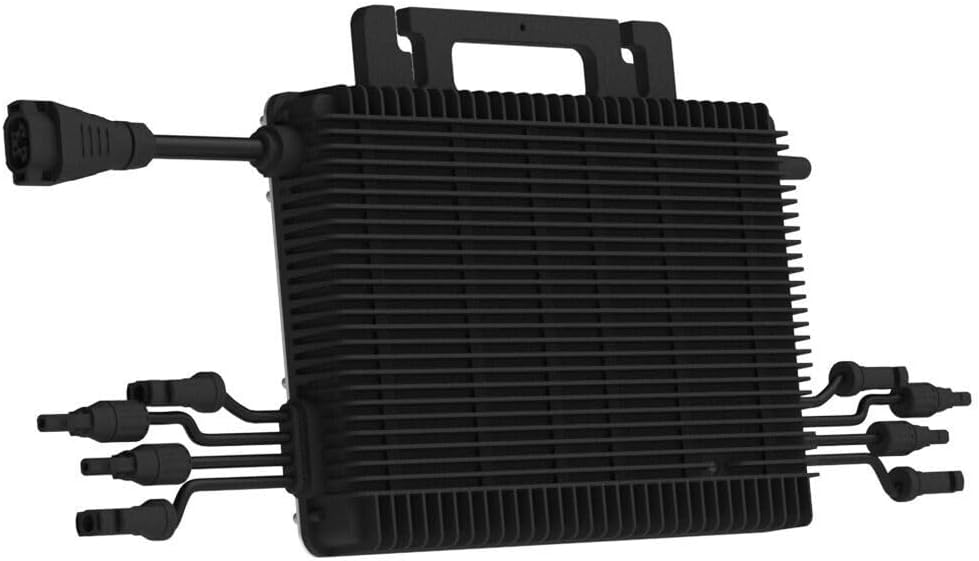
Hoymiles has carved out a strong position as the value-oriented microinverter option, and the HMS-2000-4T-NA is their best product for North American installations. The key differentiator: it’s a 4-in-1 microinverter — one unit handles four solar panels. That cuts per-panel cost and installation labor dramatically compared to one-to-one microinverters like Enphase.
Efficiency is 96.7% — slightly below Enphase but still excellent. The 25-year warranty matches industry standards. Hoymiles S-Miles Cloud monitoring provides panel-level data, though it’s less polished than Enphase’s app (improving with each firmware update). Where Hoymiles clearly wins: price per watt is typically 40–50% below Enphase for equivalent output capacity.
The HMS-2000-4T-NA is specifically the North American model configured for 120/240V split-phase output — make sure you’re ordering the -NA variant for US installations.
Best for: Cost-conscious buyers and DIY solar projects where microinverter benefits are desired without the Enphase price premium.
Best Hybrid & Off-Grid Inverters
Hybrid inverters combine solar inversion with battery management in a single unit. They can operate grid-tied, off-grid, or switch between the two seamlessly. If you want battery backup, plan to go partially or fully off-grid, or live in an area with unreliable grid power, this is the category that matters.
#6. Sol-Ark 15K-2P — Best Hybrid Inverter for Whole-Home Backup

The Sol-Ark 15K-2P has become the default recommendation for whole-home backup and serious off-grid installations in North America. At 15 kW continuous output, it can handle starting surges from well pumps, HVAC compressors, and other heavy loads that trip smaller hybrid inverters. It supports up to 19.5 kW of PV input and works with virtually every 48V lithium battery on the market.
The grid-to-battery failover time is under 20 milliseconds — fast enough that most electronics don’t notice the switch. The system supports generator integration, time-of-use programming, 200A grid passthrough, and parallel stacking for larger homes. Monitoring shows real-time data on solar production, battery state of charge, grid import/export, and load consumption.
Sol-Ark’s US-based customer support team is a meaningful differentiator. Street price is roughly $7,000–$8,000 before installation. Sol-Ark sells through licensed solar distributors — your installer can source it directly, or call us for a referral.
Best for: Whole-home backup, off-grid homes with standard appliances, and anyone who wants solar, battery, grid, and generator integration in one box.
#7. Victron MultiPlus-II 48/5000 (120V) — Best Off-Grid Inverter
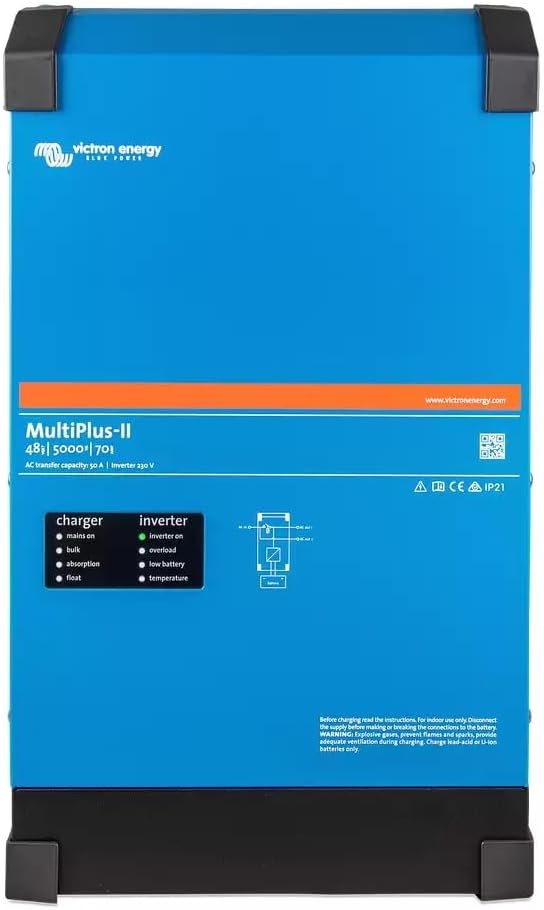
Victron is the name that comes up repeatedly in conversations with serious off-grid professionals, marine electricians, and mobile solar builders. The MultiPlus-II 48/5000 is a 5 kVA inverter/charger that supports AC coupling (pair it with any grid-tied solar inverter on a shared AC bus), DC coupling (via a separate Victron MPPT charge controller), and seamless grid interaction.
96.0% efficiency. Outstanding build quality. Can be paralleled up to six units for 30 kVA, or configured in three-phase setups. The Victron VRM monitoring portal is the most capable remote monitoring platform in this roundup — real-time data logging, remote firmware updates, full configuration via Node-RED for technically inclined owners.
The trade-off is complexity. Victron systems use a component-based approach: separate inverter, MPPT charge controller, GX communication device, and battery monitor. More wiring and configuration than plug-and-play competitors like Sol-Ark, but in exchange you get unmatched flexibility, repairability, and a massive ecosystem of compatible components.
Standard warranty is 5 years, but Victron’s real-world reliability and the fact that components are individually replaceable make this less of a concern than the paper number suggests.
Best for: Off-grid cabins, marine installations, RVs, and any system where long-term repairability and deep monitoring matter most.
Solar Inverter Buying Guide
Inverter Types: String, Microinverter, and Hybrid — Which Is Right for You?
The inverter market divides into three categories with meaningfully different tradeoffs. String inverters connect multiple solar panels in a series “string,” converting the combined DC output to AC at a single central unit. They’re the lowest-cost option per watt and have a long track record of reliability, but the entire string underperforms when any one panel is shaded — the classic “weakest link” problem. Microinverters attach to each individual panel, converting DC to AC at the panel level. This eliminates shading losses across the array, allows panel-level monitoring, and makes roof expansion easier, but they cost 20–30% more than string systems and have more components to potentially fail. Hybrid inverters add a battery charge controller alongside the standard AC conversion, allowing direct battery integration for backup power or self-consumption optimization. They’re the right choice if you’re planning battery storage now or in the future. For a simple roof with no shading and no near-term battery plans, a quality string inverter is the most cost-effective starting point.
Inverter Sizing: Matching Output to Your Solar Array
Inverter capacity is rated in kilowatts (kW) and must be sized relative to your solar array’s total DC capacity. The DC-to-AC ratio (clipping ratio) is how oversized the panel array is relative to the inverter — a common design choice because panels rarely operate at full rated output simultaneously. A 1.1–1.25 DC/AC ratio is typical: a 6kW array paired with a 5kW inverter, for example. This “clipping” of peak output is intentional — it captures more total energy over the year because panels operate at their peak rating for only a few hours on the sunniest days. Going too high (above 1.4) wastes clipped energy; going too low (1:1 or below) leaves production capacity on the table. Always size based on the expected average production at your location using PVWatts or your installer’s shading analysis — not just on panel nameplate watts. Undersized inverters clip excessively; oversized inverters operate at low efficiency and may have shorter life.
Efficiency Ratings: What CEC and Peak Efficiency Mean in Practice
Inverter efficiency — the percentage of DC input converted to usable AC output — ranges from about 96% to 99% in quality products. The difference between 96% and 98% on a 10kW system is roughly 200 kWh per year, worth approximately $30–$40 annually at average electricity rates. The California Energy Commission (CEC) weighted efficiency is the most meaningful real-world figure: it’s calculated across a range of operating conditions rather than just at peak output, making it a better predictor of annual performance than peak efficiency alone. A 98% CEC efficiency rating is excellent; anything below 96% should prompt closer inspection of the brand’s quality positioning. Efficiency drops at very low loads (early morning, late afternoon) and at high temperatures — check the temperature derating curve in the datasheet if your installation environment gets hot, as efficiency losses at 75°C can be significant on string inverters mounted on south-facing walls.
Monitoring and Connectivity: Keeping Tabs on Your System
Modern solar inverters include built-in monitoring systems accessible via web portal or smartphone app. The best systems provide real-time production data, historical graphs, panel-level performance (for microinverters and optimizers), and fault alerts. Monitoring matters because it catches underperformance early — a panel failure or inverter fault that cuts output by 20% can go unnoticed for months without active monitoring, wasting hundreds of dollars in lost production. Look for inverters with both WiFi and Ethernet connectivity options, as WiFi-only units can drop connection after router changes. Cloud-based monitoring requires an active internet connection and depends on the manufacturer maintaining servers — check whether monitoring access is included indefinitely or requires a subscription after the initial period. For systems with optimizers or microinverters, panel-level monitoring is a significant diagnostic advantage worth the premium.
Grid Interaction: Anti-Islanding, Rapid Shutdown, and Interconnection Requirements
Grid-tied inverters must meet specific safety standards to be utility-approved. Anti-islanding protection automatically disconnects the inverter from the grid if utility power fails, preventing the inverter from energizing lines that utility workers expect to be dead — a critical safety requirement under IEEE 1547. Rapid shutdown (NEC 690.12) requires that roof-level wiring be de-energized within 30 seconds of a fire department shutdown — a code requirement since 2017 that affects which inverters are legally installable on residential roofs. String inverters pair with module-level power electronics (optimizers or microinverters) to meet rapid shutdown; some string inverter manufacturers include integrated rapid shutdown transmitters. Before purchasing, confirm that your chosen inverter is on your utility’s approved equipment list — many utilities maintain their own lists separate from NEC compliance, and unlisted equipment requires additional approval steps that can delay interconnection by months.
Warranty and Reliability: What 10 vs. 25 Years Means
Standard string inverter warranties are 10 years, with extended 20-year or 25-year warranties available (often for a premium) from brands like SMA, Fronius, and SolarEdge. Microinverters from Enphase come with 25-year warranties as standard, reflecting their longer expected service life. Inverter failures are the most common solar system service event — string inverters typically have a 10–15 year service life in practice, meaning a 25-year solar loan will likely require at least one inverter replacement. Factor this into your system cost analysis: a $500–$1,500 inverter replacement in year 12–15 is a real cost that affects the true payback period. Brands with US-based support networks and local service centers reduce downtime after a failure. When comparing inverter prices, weigh the warranty length and brand’s US presence heavily — a cheaper inverter with poor support or a 5-year warranty has a higher true lifetime cost than a premium unit with 12-year coverage.
Temperature Range and Environmental Ratings
Inverters generate heat during operation and must dissipate it effectively to maintain efficiency and lifespan. Operating temperature range — typically -13°F to 140°F (-25°C to 60°C) for quality units — determines where the inverter can be safely installed. Garage installations in northern states see temperatures well below freezing; attic installations in southern states can exceed 130°F in summer. Check whether the listed operating range includes the full output range or just survival range (some units derate significantly at temperature extremes). Inverters mounted outdoors should have a minimum IP65 rating; units with NEMA 4X ratings offer better protection against dust, corrosion, and hose-directed water. Passive thermal management (no fans) produces quieter units with fewer moving parts to fail; active cooling (fans) handles higher ambient temperatures but requires periodic fan cleaning and eventual fan replacement.
Budget and Value: Understanding Price Per Watt
Solar inverter pricing is typically expressed in cost per watt of capacity. String inverters run approximately $0.10–$0.25 per watt; microinverters and optimizers run $0.25–$0.50 per watt; hybrid inverters with battery capability run $0.30–$0.60 per watt. For a 10kW system, this translates to $1,000–$2,500 for a string inverter or $2,500–$5,000 for a microinverter system. The additional cost of microinverters is easier to justify when roof shading is significant, when multiple roof planes at different orientations are involved, or when future expansion is likely. For simple south-facing unshaded roofs, the output advantage of microinverters is minimal and the premium hard to recover. Always get quotes for the complete installed system including monitoring, conduit, labor, and permitting — the inverter hardware price is only part of the full system cost.
Frequently Asked Questions
How long do solar inverters last?
String inverters typically last 10–15 years, with premium units from SMA and Fronius often exceeding 15 years. Microinverters are designed for 25+ years, matching solar panel lifespan. Hybrid inverters vary: expect 10–15 years from quality manufacturers like Sol-Ark and SMA, and 10+ years from Victron with proper maintenance.
Is a microinverter better than a string inverter?
Not universally. Microinverters are better for shaded or complex roofs where panel-level optimization provides measurable production gains. String inverters are more cost-effective and easier to maintain for simple, unshaded roofs. The best choice depends entirely on your specific roof conditions and budget.
What size solar inverter do I need?
For grid-tied systems, match your inverter’s AC capacity to your solar array’s DC capacity within a 1.0–1.3 ratio. A 10 kW array typically pairs with an 8–10 kW inverter. For off-grid and hybrid systems, size from your appliance loads — add up continuous wattages plus 3–5× the running wattage of any motors or compressors to account for startup surge.
Can I add a battery to a string inverter later?
Some string inverters — like the Fronius Primo GEN24 Plus — include a built-in battery interface for future storage. Others require adding a separate battery inverter in an AC-coupled configuration. If you think you might add a battery in the future, choose an inverter that’s battery-ready from the start. It saves significant cost and complexity later.
Do solar inverters work during a power outage?
Standard grid-tied inverters (string and microinverter) shut down automatically during a grid outage for safety reasons — they cannot export power to a grid that may have workers on the lines. Hybrid inverters with battery storage can continue powering your home during an outage. The Enphase IQ8+ is the exception: its Sunlight Backup feature can provide limited daytime power without a battery.
What is the best solar inverter brand in 2026?
For string inverters: Fronius and SMA are the top two for reliability and efficiency. For microinverters: Enphase leads for monitoring and warranty, Hoymiles for value. For hybrid/off-grid: Sol-Ark for North American whole-home backup, Victron for complex off-grid and marine applications. There is no single “best” brand — the right choice depends on your installation type.
Summing Up
The right solar inverter depends on your roof, your goals, and your budget. For a simple south-facing roof with no shade, the Fronius Primo GEN24 Plus or SMA Sunny Boy delivers excellent efficiency and long-term reliability at a lower cost than microinverters. For complex roofs, choose the Enphase IQ8+ or SolarEdge SE7600H for panel-level independence. If you want whole-home battery backup or off-grid capability, the Sol-Ark 15K-2P is the most capable all-in-one solution in 2026.
Inverters for grid-tied residential systems (Fronius, SMA, SolarEdge, Sol-Ark) are sold exclusively through licensed solar installers — which is actually a good thing. It means professional installation backed by manufacturer warranties. If you want a quote that includes the right inverter for your specific roof and usage, our network can connect you with vetted local installers across all 50 states.
If you’re also thinking about solar panels for your home, call (855) 427-0058 for a free, no-obligation solar quote. Our network connects you with vetted local installers across all 50 states.
Updated