
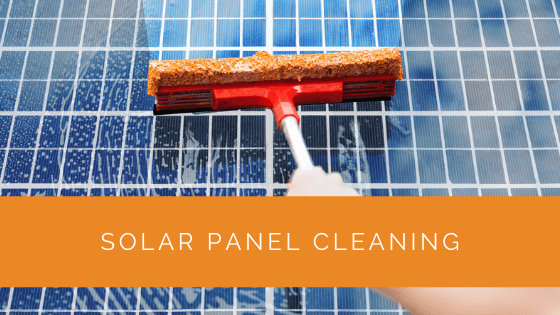
Keeping solar panels clean is one of the simplest, cheapest ways to improve energy output. Dust, bird droppings, pollen, and pollution build up on the panel surface over time, blocking sunlight and reducing the photovoltaic cells’ ability to generate electricity. In most climates, a professional-grade cleaning once or twice a year recovers 15 to 25% of lost production. In dusty or polluted areas, the gains can be even higher.
This guide covers everything you need to know to clean your solar panels safely and effectively, whether you’re doing it yourself or hiring a professional service. For a free professional consultation about your solar system, call (855) 427-0058 or get a free quote here.
Contents
- 1 Key Takeaways
- 2 How Much Does Dirt Actually Affect Solar Output?
- 3 What You’ll Need to Clean Solar Panels
- 4 When Is the Best Time to Clean Solar Panels?
- 5 Step-by-Step: How to Clean Solar Panels Yourself
- 6 Professional Solar Panel Cleaning: When to Hire Out
- 7 How Often Should You Clean Solar Panels?
- 8 What NOT to Do When Cleaning Solar Panels
- 9 Case Study: Production Recovery After Professional Cleaning in Phoenix
- 10 Expert Insights From Our Solar Panel Installers
- 11 Frequently Asked Questions
- 12 Summing Up
Key Takeaways
- Dirty panels can lose 15 to 25% of their energy output, and up to 30% in arid or high-pollution areas.
- Clean panels with distilled water, a soft brush, and mild soap — never use high-pressure washers.
- The best time to clean is early morning or late afternoon when panels are cool.
- Most residential systems need cleaning every 6 to 12 months, more frequently in dusty climates.
- Professional cleaning costs $100 to $300 per service and is worthwhile for steep or high roofs.
How Much Does Dirt Actually Affect Solar Output?
Soiling losses are real and measurable. Research from multiple solar installations consistently shows that an uncleaned residential system loses an average of 0.5% to 1% of output per week in moderate climates. In desert regions like Arizona, Nevada, and Southern California, where dust storms and low rainfall are common, soiling losses can accumulate to 25 to 30% of annual output if panels go without cleaning for a full year.
The type of soiling matters too. Bird droppings are among the worst because they’re concentrated in a small area and completely opaque, blocking all light from reaching the cells beneath them. A single dropping covering just one cell in a traditional string-wired array can reduce output for the entire string. Dust and pollen create a diffuse film that reduces output more uniformly but can be nearly as damaging in aggregate.
Your monitoring data is the best way to quantify the impact on your specific system. If you see a consistent downward trend in output on days with similar weather, soiling is likely the cause. A clean after a long dirty stretch will show an immediate jump in production that confirms the loss.
What You’ll Need to Clean Solar Panels
The right tools make cleaning safe and effective without risking panel damage. Here’s what you need:
Distilled water or filtered water. Tap water in many areas contains dissolved minerals that leave white spots and residue as it evaporates. Distilled water leaves no residue and is the professional standard. For a single residential cleaning, a gallon or two is sufficient.
Soft-bristle brush or squeegee. Purpose-made solar panel cleaning brushes are available for $30 to $60 and typically include a telescoping pole that lets you reach panels from the ground or roof edge. The bristles must be soft enough not to scratch the anti-reflective coating on the glass surface.
Mild soap or dedicated panel cleaning solution. A few drops of dish soap in a bucket of distilled water is effective and safe. Dedicated solar panel cleaning solutions are available but rarely necessary for residential use. Never use abrasive cleaners, bleach, or ammonia-based products.
Microfiber cloth or squeegee for drying. Optional but helpful for avoiding water spots if you can’t use distilled water.
Safety equipment. If you’re going on the roof, use appropriate footwear, a safety harness if required by your roof pitch, and ideally work with a partner. Wet panels are slippery.
When Is the Best Time to Clean Solar Panels?
Timing matters for two reasons: panel temperature and cleaning effectiveness. Solar panels get hot in direct sunlight, often reaching 150°F or more on the surface. Spraying cold water on a hot panel can cause thermal shock, which in rare cases cracks the glass or damages seals around the frame. More practically, water evaporates almost instantly on a hot panel, leaving mineral deposits before you can wipe them away.
The best times to clean are early morning before the sun has heated the panels, or late afternoon after they’ve had a chance to cool. A cloudy day also works well. Avoid cleaning during the hottest part of the day, especially in summer.
Seasonally, plan your cleanings for spring (after pollen season peaks and before peak summer production) and fall (after summer dust accumulation, before winter). In high-rainfall areas, rain cleans panels reasonably well and you may only need one professional cleaning per year. In low-rainfall areas, clean quarterly.
Step-by-Step: How to Clean Solar Panels Yourself
Step 1: Turn off your solar system. Follow your inverter manufacturer’s instructions for shutting down the system before cleaning. This is a safety requirement, not optional.
Step 2: Rinse the panels. Using a garden hose on a gentle setting, rinse the panels to remove loose dust and debris. Never use a high-pressure washer. The force can penetrate seals, damage wiring connections, and strip anti-reflective coatings.
Step 3: Apply cleaning solution. Mix a small amount of mild soap in a bucket of distilled water. Dip your soft brush in the solution and gently scrub the panel surface using circular motions. Work systematically across the panel to avoid missing areas.
Step 4: Address stubborn spots. Bird droppings and sap often require a few minutes of soaking to soften. Apply the soap solution and let it sit for 2 to 3 minutes before scrubbing. Never use metal scrapers or abrasive pads.
Step 5: Rinse thoroughly. Rinse the panels completely with clean water, removing all soap residue. Soap left on the surface can attract dirt faster and reduce output.
Step 6: Dry if needed. In areas with hard tap water, use a squeegee or microfiber cloth to remove standing water before it evaporates and leaves mineral deposits. In soft-water areas, you can let panels air dry.
Step 7: Check monitoring data. After cleaning, compare your system’s output to the same period before cleaning (accounting for weather). A 15 to 25% jump in production on sunny days confirms the cleaning was worthwhile.
Professional Solar Panel Cleaning: When to Hire Out
DIY cleaning works well for ground-mounted systems and single-story roofs with a walkable pitch. For steep roofs, multi-story homes, or if you’re not comfortable working at height, professional cleaning is the safer and often more cost-effective option when you factor in your time and the cost of renting the right equipment.
Professional solar cleaning services typically charge $100 to $300 for a residential system, depending on system size, roof pitch, and your location. Most solar installers offer periodic cleaning as part of maintenance packages. Some window cleaning companies also clean solar panels as an add-on service.
When hiring a cleaning service, confirm they use soft-bristle tools and won’t use high-pressure washers. Ask about their water source: distilled or deionized water is the professional standard. A reputable service will also inspect the panels visually during cleaning and alert you to any damage, loose connections, or other issues that need attention.
How Often Should You Clean Solar Panels?
Cleaning frequency depends on your local environment more than any other factor. As a general guideline: in rainy areas of the Pacific Northwest, biannual cleaning may be all you need. In the desert Southwest, quarterly cleaning can be justified by the output gains. Most of the country falls somewhere in between, and a twice-yearly routine keeps most systems close to peak production.
Your monitoring data is the best guide. If your production data shows a consistent decline that isn’t explained by weather, it’s time to clean. If your panels are producing at or near expected levels, there’s no need to clean on a fixed schedule.
What NOT to Do When Cleaning Solar Panels
Avoid high-pressure washers at all costs. The water pressure can penetrate seals, force water into the junction box, and damage micro-connections inside the panel. Standard garden hose pressure is the maximum safe level.
Don’t use abrasive sponges, steel wool, or harsh chemicals. Anti-reflective coatings on modern panels are durable but can be scratched by abrasive materials, permanently reducing panel efficiency. Bleach and ammonia-based cleaners can degrade seals and corrode aluminum frames over time.
Don’t clean during peak sun hours when panels are at maximum temperature. And don’t skip the safety precautions when working on roofs — wet panels are significantly more slippery than dry ones.
Case Study: Production Recovery After Professional Cleaning in Phoenix
Background
A homeowner in Phoenix, Arizona had a 10 kW solar system installed in early 2022. By late 2023, monitoring data showed the system was consistently producing about 18% below expected output after accounting for seasonal variation and weather. The panels had not been professionally cleaned since installation.
The Cleaning
A professional cleaning service used deionized water and soft-bristle brushes to clean all 25 panels. The cleaning removed a visible layer of desert dust along with several concentrated bird droppings. Total cost: $220.
Results
The day after cleaning, production jumped back to within 3% of expected output, a 15% improvement versus pre-cleaning baseline. At Phoenix’s 10 cents per kWh retail rate and the system’s annual production, that 15% improvement was worth approximately $540 per year in recovered electricity value. The cleaning paid for itself in less than 5 months.
Expert Insights From Our Solar Panel Installers
One of our senior solar panel installers with over 13 years of experience shares this: “In Arizona, I tell customers to clean their panels every three months at minimum. I’ve seen systems that haven’t been cleaned in two years running at 70% of capacity. The buildup is gradual enough that homeowners don’t notice until we pull up the monitoring data. Cleaning is the highest-ROI maintenance task available for solar. Nothing else costs $200 and returns $500 or more in recovered production every year. The math is simple.”
Frequently Asked Questions
Most residential systems benefit from cleaning every 6 to 12 months. In dusty or arid climates, every 3 months maximizes output. In rainy areas, natural rainfall may clean panels adequately between annual professional cleanings. Use your monitoring data to decide.
Yes, for accessible panels on single-story roofs or ground-mounted systems. Use a soft brush, mild soap, and distilled water. Never use high-pressure washers. For steep roofs or multi-story homes, hire a professional cleaning service for safety.
Dirty panels lose 15 to 25% of their output over time. In dusty climates, losses can reach 30%. This means you’re generating less electricity, saving less money, and lengthening your system’s payback period. Regular cleaning is one of the highest-return maintenance activities you can do.
Rain washes off loose dust and light debris but doesn’t remove bird droppings, pollen, or sticky residue effectively. Studies show rain-cleaned panels still underperform manually cleaned panels by 5 to 15%. Supplemental manual or professional cleaning is recommended even in rainy climates.
Typically $100 to $300 for a residential system, depending on size, roof pitch, and location. Given the 15 to 25% production recovery, professional cleaning almost always pays for itself within a few months of recovered electricity value.
Summing Up
Solar panel cleaning is one of the most cost-effective maintenance tasks available to homeowners with solar systems. A $150 to $300 professional cleaning can recover 15 to 25% of lost output, paying for itself many times over in recovered electricity value. Whether you clean yourself or hire out, the key is doing it regularly and doing it correctly: soft tools, distilled water, gentle pressure, and the right time of day.
For more detail on keeping your entire solar system in peak condition, see our comprehensive solar panel maintenance checklist. For professional solar installation and system maintenance in your area, call (855) 427-0058 or get a free quote here.
Updated