
Our blog is reader-supported. When you buy through links on our site, we may earn an affiliate commission. Thank you for your support!
The Renogy 400W Premium Kit (B07CTKT56Y) is the best 400 watt solar panel system for most buyers — it pairs four 100W monocrystalline panels with a 40A MPPT charge controller, Bluetooth module, mounting hardware, and all cabling in a single purchase, making it the most complete off-grid solar solution at this wattage. At 400 watts, you have enough generating capacity to power a full off-grid cabin, run a large 12V compressor fridge, charge a substantial battery bank, and handle lights and electronics simultaneously.
In this guide we’ve compared five of the top-rated 400 watt solar panel options available on Amazon right now — covering complete all-in-one kits, high-efficiency N-Type rigid panel arrays, and portable foldable solutions for mobile power needs. Read on for detailed reviews, a buying guide, and answers to the most common questions.
Our Top Picks
| Product Image | Product | Price |
|---|---|---|
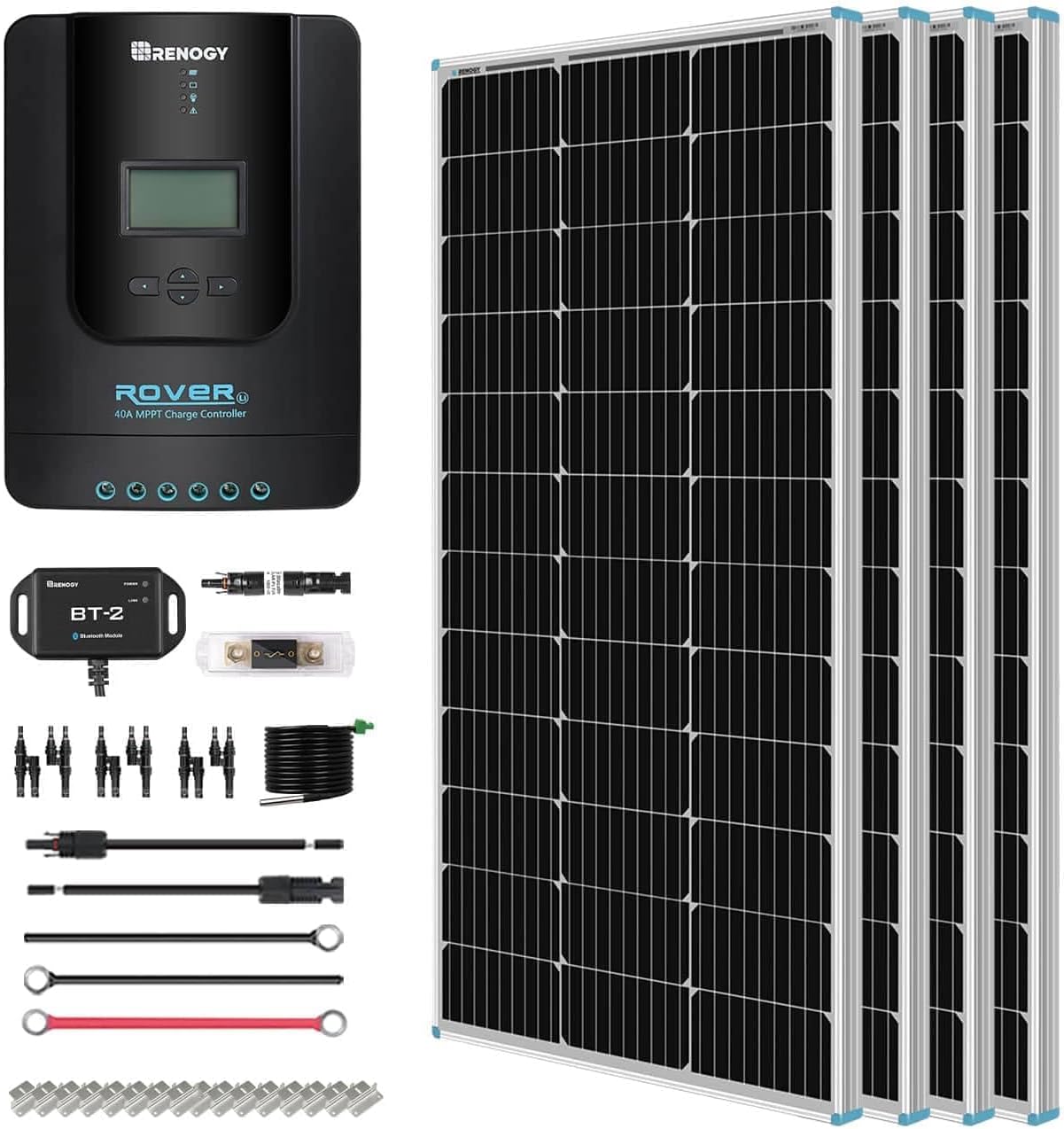 | Renogy 400W 12V Premium Kit Four 100W panels, MPPT controller, mounting hardware, and cables — the most complete turnkey 400W kit available. Read more ↓ | CHECK PRICE |
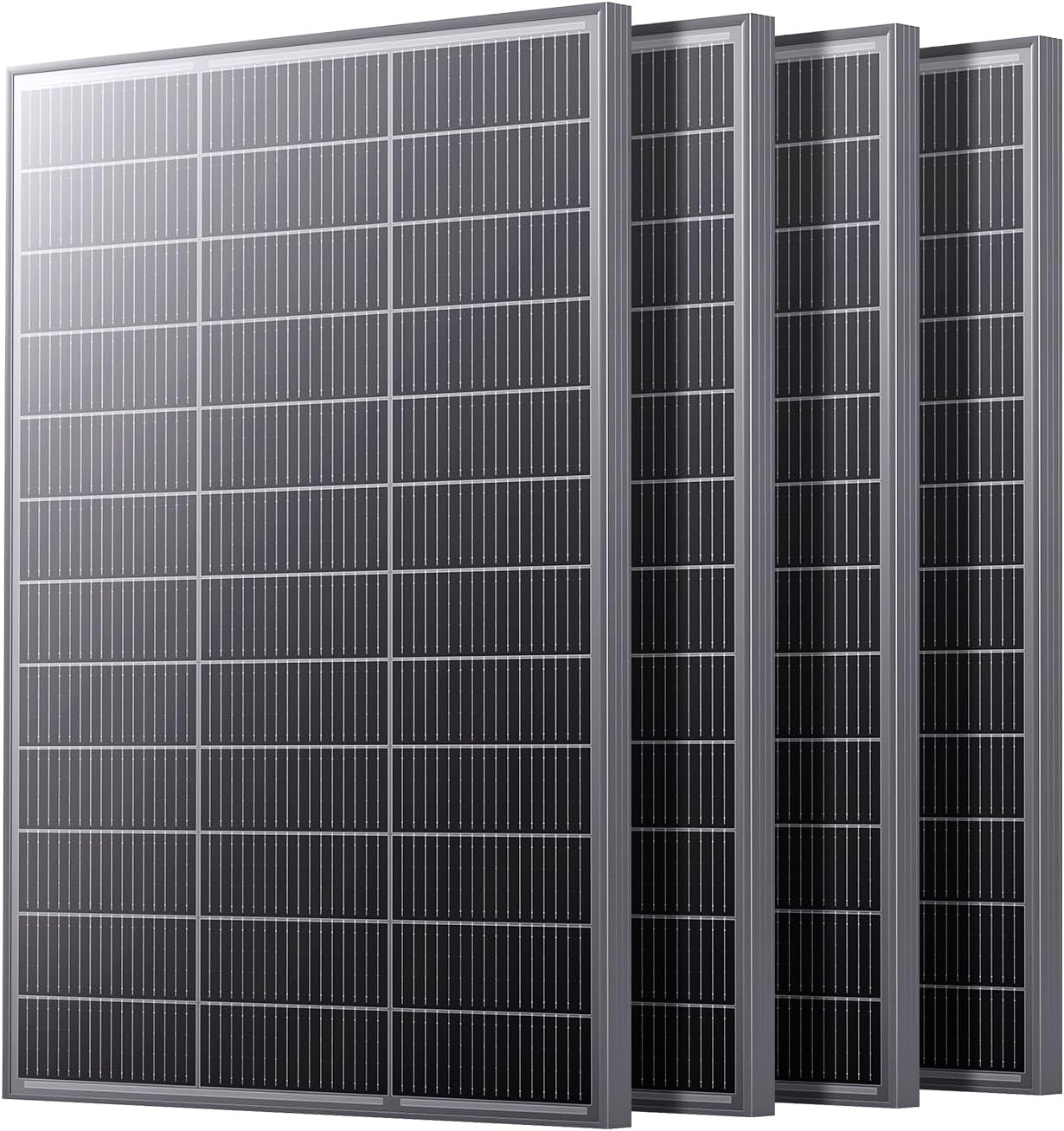 | Callsun N-Type 16BB 400W 4x100W Panels 23.8% efficiency N-Type cells; best watts-per-square-foot of any product on this list. Read more ↓ | CHECK PRICE |
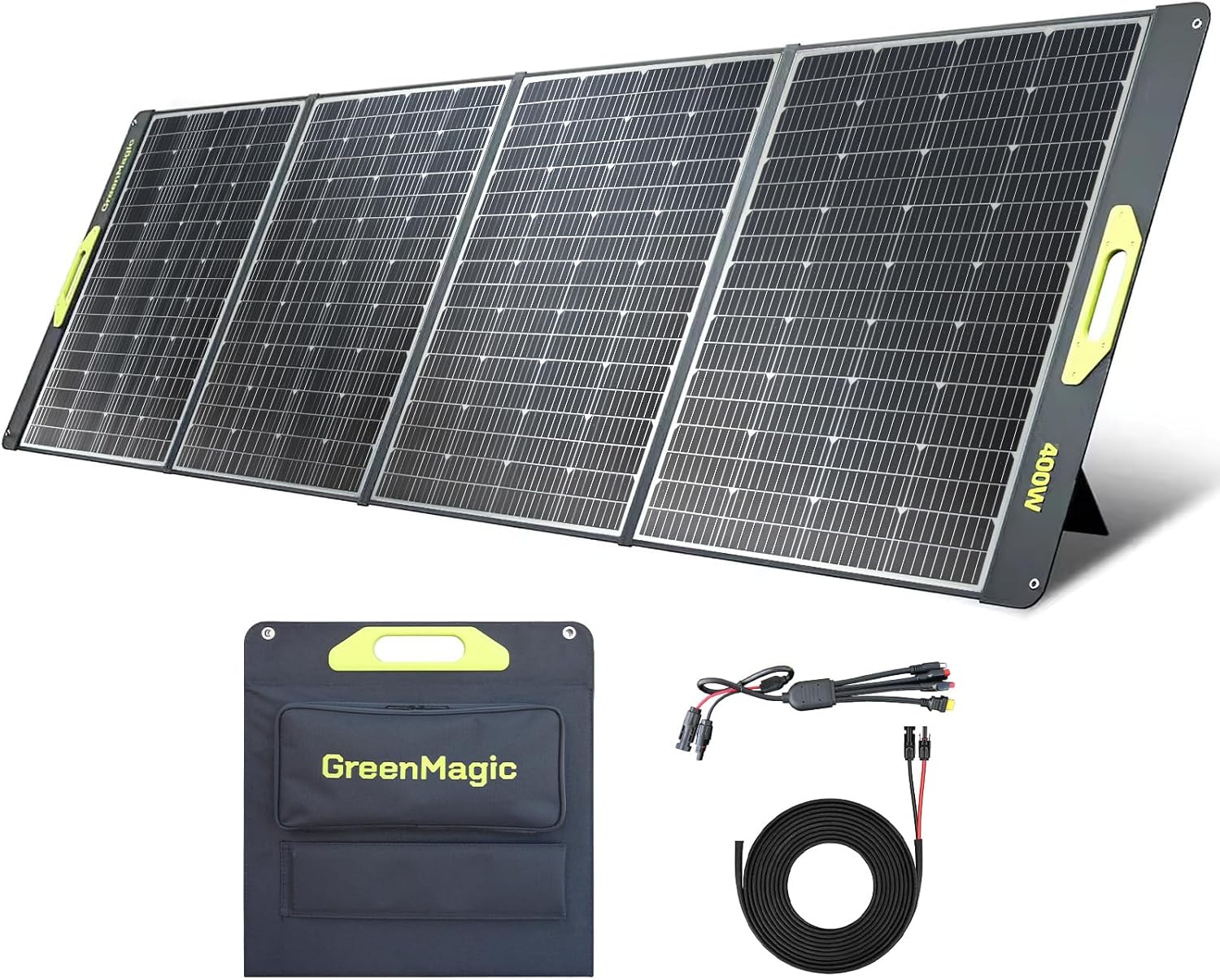 | Greenmagic 400W Foldable Solar Panel Folding 400W portable panel for base camps and temporary deployments; no mounting hardware required. Read more ↓ | CHECK PRICE |
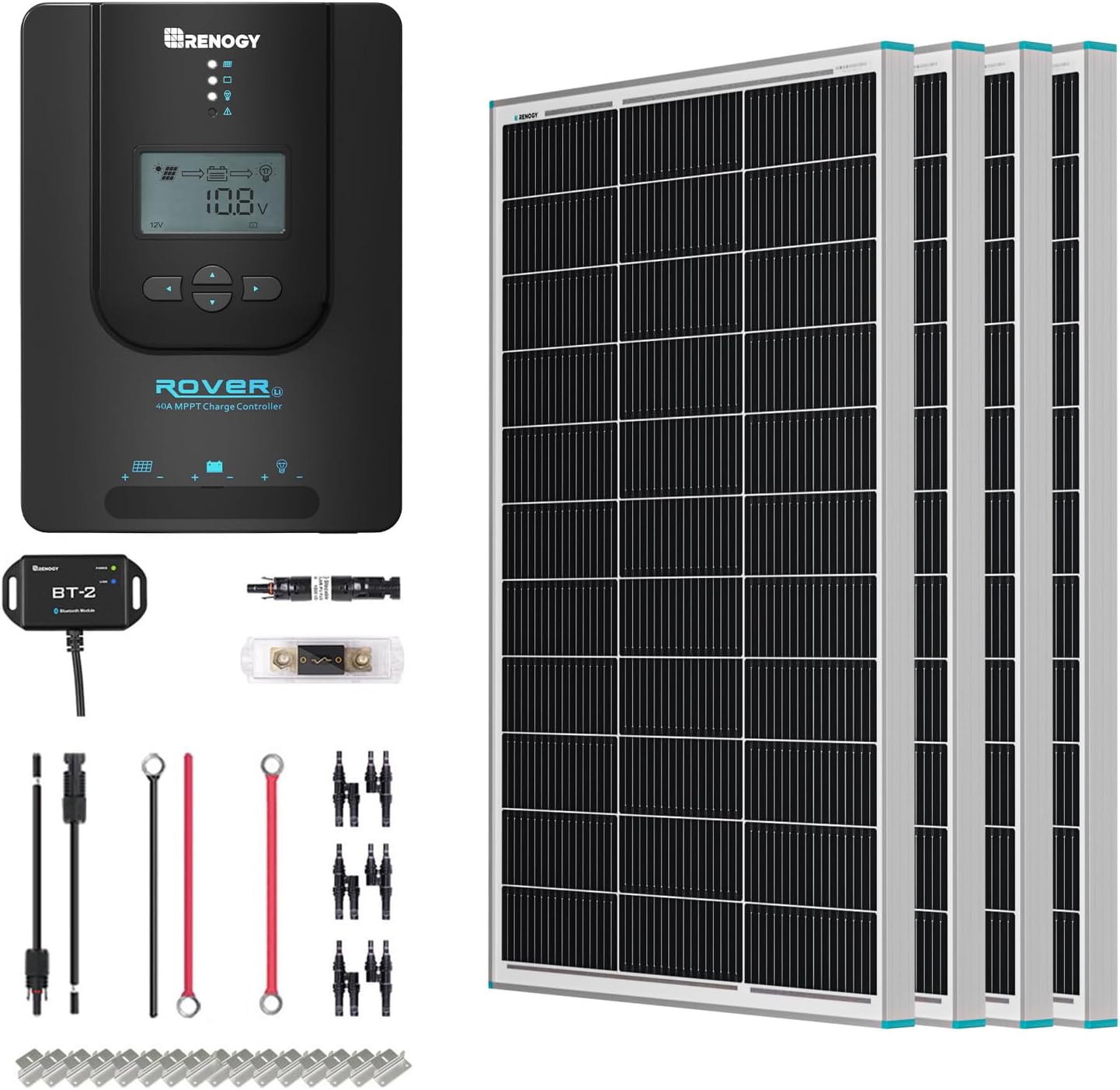
 | Renogy 400W New Version Kit Updated version of the Premium kit with an improved MPPT controller spec; better value at a similar price. Read more ↓ | CHECK PRICE |
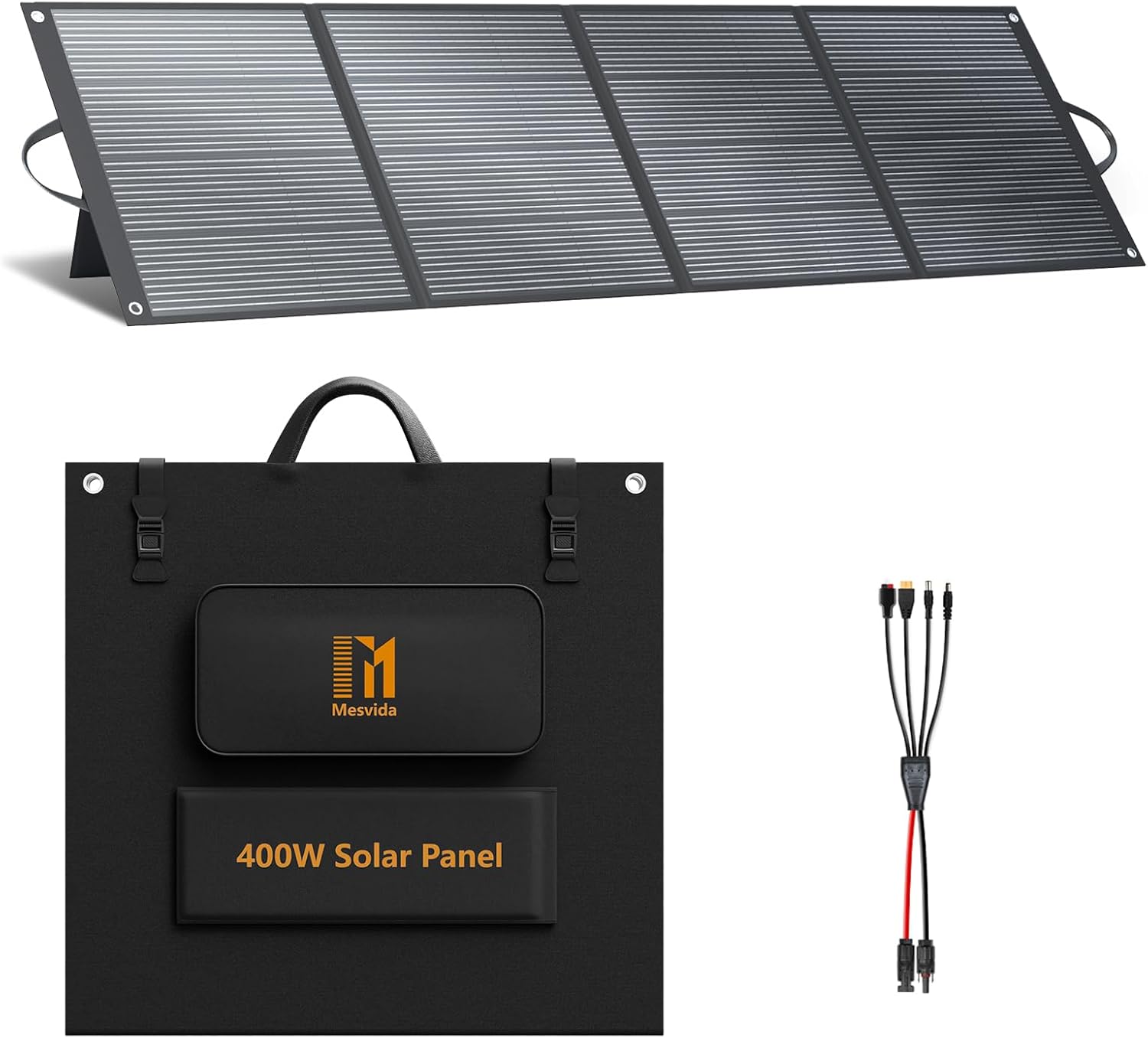
 | Mesuvida 400W IP68 Portable Solar Panel IP68-rated weatherproof folding panel — the only ruggedized 400W portable option currently available on Amazon. Read more ↓ | CHECK PRICE |
Reviews of the Best 400 Watt Solar Panels
1. Renogy 400W 12V Premium Kit — Best Complete Kit
Renogy’s 400W Premium Kit is the most comprehensive off-grid solar package at this wattage, and it earns its place at the top of this list through sheer completeness. Four 100W monocrystalline panels, a 40A MPPT charge controller, Bluetooth monitoring module, MC4 fuse, Z-bracket mounting hardware, and all required cabling ship together in a single order. For buyers who don’t want to source individual components from multiple vendors — and deal with compatibility headaches — this kit removes all of that friction.
The 40A MPPT charge controller is the headline component. Unlike the PWM controllers bundled in many budget kits, an MPPT controller extracts 10–30% more power from the panels — critically important in winter, on cloudy days, and in the morning/evening hours when sun angle is lower. The Bluetooth module lets you monitor voltage, current, power, and battery state of charge from a phone app without running a separate communications cable. Renogy’s 25-year panel warranty and established US service network make this a reliable long-term investment for a cabin, RV, or boat solar system.
- Pros:
- Complete system — 4 panels + 40A MPPT + Bluetooth + mounting hardware + cabling
- 40A MPPT controller — 10–30% more efficient than PWM alternatives
- Bluetooth monitoring — track system performance from phone app
- Renogy 25-year panel warranty and US-based support
- Cons:
- Premium price at $637.99 — highest in this roundup
- Four separate 100W panels require more roof space than one large 400W panel
2. Callsun N-Type 16BB 400W Solar Panel (4x100W) — Best High-Efficiency Panels
The Callsun 400W set stands out as the best panels-only option in this roundup, combining N-Type cell technology and 16 busbars per cell into a four-panel array at $246.49 — a strong price-per-watt for this level of cell technology. N-Type cells eliminate light-induced degradation (LID), which means these panels hold closer to their rated output over the full 25-year lifespan compared to standard P-Type monocrystalline panels. The 16BB (16 busbar) design further reduces resistive losses and improves shade tolerance.
At 25% efficiency — the practical ceiling for current silicon solar cell technology — the Callsun panels extract maximum watts from a given roof area. This matters most in space-constrained installations: RV rooftops, van builds, and boats where every square foot of panel space is precious. The panels are designed for rigid roof or ground-mount installation with standard Z-bracket or rail racking. No charge controller or mounting hardware is included — this set is for buyers who already own a compatible 40A MPPT controller and racking system, or who are building a custom system from components.
- Pros:
- N-Type cells — 25% efficiency, no LID degradation
- 16BB design — lower resistive losses and better shade tolerance
- Best price-per-watt for N-Type technology in this roundup
- Compact space-saving design noted in product title
- Cons:
- Panels only — no controller, hardware, or cables included
- Smaller brand than Renogy — fewer long-term performance data points
3. Greenmagic 400W Portable Foldable Solar Panel — Best Portable
The Greenmagic 400W foldable panel delivers genuine 400W portable output — a remarkable feat for a carry-anywhere solar solution. The panel folds into a compact case for transport and deploys in minutes for campsite, overlanding, or emergency power use. DC output connectors are included, making it immediately compatible with most portable power stations without additional adapters. At $359.99, it’s positioned in the mid-tier of portable 400W options.
For overlanders and van lifers who need 400W of charging capacity without a permanent roof installation, a foldable 400W panel opens up solar options that simply didn’t exist in portable form a few years ago. The monocrystalline cells deliver consistent output, and the DC output supports charging popular power station brands including EcoFlow, Jackery, and Bluetti directly. The primary trade-off compared to rigid mounted panels is longevity — portable foldable panels have a shorter lifespan than permanently installed framed panels, and the daily folding/unfolding cycle adds mechanical wear over time. For buyers who need portable 400W, this delivers.
- Pros:
- 400W in a portable foldable format
- DC output compatible with popular power station brands
- Deploys in minutes — no installation required
- Best for overlanders and campers needing maximum portable power
- Cons:
- Shorter lifespan than permanently mounted rigid panels
- Heavier and bulkier than fixed panel alternatives for the same wattage
- Manual positioning required — no roof-mount automation
4. Mesuvida 400W IP68 Waterproof Foldable Panel — Best Waterproof Portable
The Mesuvida 400W panel earns its place in this roundup through its IP68 waterproof certification — a full step above the IP65 or IP66 ratings found on most portable panels. IP68 means the panel is fully dust-tight and can withstand continuous immersion in water up to 1 meter for 30 minutes. For buyers who regularly use solar in rain-heavy environments — kayak camping, Pacific Northwest overlanding, coastal marine use — IP68 provides genuine peace of mind that a splash-resistant rating doesn’t.
The ETFE (ethylene tetrafluoroethylene) surface is a premium alternative to the standard glass used on rigid panels. ETFE is lighter, more flexible, and highly resistant to UV degradation — making it ideal for panels that are folded and unfolded regularly. The 41V MC4 output makes it compatible with both battery charge controllers and direct power station input. At $329.37, the Mesuvida sits at a competitive price point for a 400W foldable with IP68 certification and ETFE surface treatment, making it the best option for buyers whose priority is weather protection alongside portability.
- Pros:
- IP68 waterproof — can withstand rain and brief immersion
- ETFE surface — lighter and more UV-resistant than glass
- 41V MC4 output — compatible with charge controllers and power stations
- Best portable 400W option for wet-environment use
- Cons:
- Smaller brand with limited long-term reviews
- Foldable portables have shorter lifespans than rigid mounted panels
5. Renogy Premium 400W 12V Solar Kit (New Version) — Best Updated Kit
The Renogy Premium 400W New Version kit is the updated successor to pick #1, incorporating design refinements and component updates while maintaining the same core system: four 100W panels, 40A MPPT charge controller, Bluetooth module, and mounting hardware. Renogy periodically updates their kit configurations as charge controller firmware and panel cell technology improve — the “New Version” designation indicates updated components vs the legacy kit. At $637.99, it matches the price of the original kit exactly.
For buyers choosing between the two Renogy 400W kits, the New Version incorporates more recent component revisions and should be the default choice for new purchases. Both offer the same fundamental system architecture — MPPT control, Bluetooth monitoring, and the four-panel array. The difference lies in component-level refinements that Renogy doesn’t always fully document, but in practice reflect a newer generation of controller and panel designs. If you’re buying one Renogy 400W kit in 2026, this is the one to select.
- Pros:
- Updated components vs the legacy Renogy 400W kit
- Same complete system: 4 panels + 40A MPPT + Bluetooth + mounting hardware
- Renogy brand reliability and 25-year panel warranty
- Best choice for new Renogy 400W kit purchases in 2026
- Cons:
- Same high price as original kit at $637.99
- Component-level differences vs original kit not fully documented by Renogy
Buying Guide: What to Look for in 400 Watt Solar Panels
Key Takeaways
- 400W is the threshold where off-grid solar becomes genuinely comfortable: fridge, devices, lighting, and reserve all covered in a good sun day.
- Kit or separate components: kits are better for first installs; separate components suit buyers adding to an existing system.
- Confirm the kit controller is MPPT — at 400W a PWM controller wastes 60–120 Wh per day.
- N-Type panels deliver 3–5% higher efficiency at the same physical size — meaningful when roof space is limited.
- Minimum practical battery for a 400W system: 200Ah LFP (2,400 Wh usable).
- Wire the array as 2S2P (two series pairs in parallel) for a 12V system — pure series wiring exceeds safe controller voltage limits.
What a 400W System Actually Delivers
A 400W array producing 1,600–2,000 Wh per day is the point where off-grid solar starts to feel comfortable rather than managed. At this output, a 12V compressor fridge runs continuously, laptops and phones charge without restriction, LED lighting is on all evening, and there is still battery reserve at day’s end during good sun. It is the most common starting point for serious van builds, off-grid cabins, and agricultural setups.
400W does not run air conditioning at full load, resistance heating (electric space heater, kettle), or a washing machine without substantial battery storage far beyond what the panels can replenish daily. For those loads, you need 800W+ of panels — a different system category.
Turnkey Kits vs. Building from Components
A complete kit (Renogy Premium or New Version) gives you matched hardware from one manufacturer, a single warranty contact, and a known-working combination of panels, MPPT controller, mounting hardware, and cabling. For a first installation, the kit approach eliminates the most common cause of underperforming systems: component selection errors. Both Renogy kits here include genuine MPPT controllers.
Building from separate components makes sense when you already own a charge controller, are adding panels to an existing system, or specifically want the highest-efficiency cells available (like the Callsun N-Type 23.8% panels, which are not available in any kit).
Critical check before buying any kit: confirm the controller spec says MPPT. At 400W, a PWM controller wastes 60–120 Wh per day versus MPPT — that is the production equivalent of an entire extra panel over a week of use.
N-Type vs. Standard Mono: Does Efficiency Matter Here?
Standard P-Type mono panels in the Renogy kits are reliable and proven. For roof-mount applications where you have adequate space for four standard 100W panels, they are the right choice.
N-Type panels (like the Callsun 23.8%) deliver 3–5% more power per square foot of panel surface. The practical size difference across four panels is roughly 15–20% less roof area for the same 400W output. If your available south-facing roof area is tight — a short wheelbase van, a small cabin roof, or a restricted ground-mount footprint — N-Type earns its premium. It also eliminates light-induced degradation, retaining more rated output over a ten-year system life.
Battery Bank Sizing
For a 400W system, the minimum practical battery is 200Ah LFP at 12V (2,400 Wh usable). This covers one full day of moderate off-grid use (1,200–1,600 Wh) with reserve for overnight loads. Two days of production at 1,600 Wh/day fills the bank in good sun.
Common 400W battery configurations:
- Two 100Ah LFP in parallel at 12V — 200Ah / 2,400 Wh usable. Good for medium-load RV and van use.
- One 200Ah LFP at 12V — same capacity, simpler wiring.
- Two 100Ah LFP in series at 24V — 100Ah / 2,400 Wh usable; requires 24V-compatible controller and inverter but reduces cable thickness needed for the same power.
Do not pair 400W panels with less than 100Ah LFP — the battery fills before midday and you waste the afternoon’s production. AGM is not recommended: its 50% depth of discharge limit effectively halves usable capacity compared to spec.
Charge Controller and Inverter Sizing
For 400W at 12V: a 40A MPPT controller is the correct size (handles up to 480W of input at 12V with standard 10% design oversizing). At 24V, a 20A controller covers the same wattage. Proven choices at this size include the Renogy Rover 40A, Victron SmartSolar 40A, and EPever Tracer 4210AN.
If you plan to run 120V appliances, a pure sine wave inverter is required — not modified sine, which can damage motors, audio equipment, and some battery chargers. For a 400W system, a 1,000–2,000W pure sine inverter is appropriate sized to your peak simultaneous AC load. Size the inverter for peak draw, not average load.
Wire sizing: at 12V, 400W draws 33A continuous. Use 8 AWG minimum between battery and charge controller for runs under three metres; 6 AWG for longer runs. Undersized wire causes resistive losses and is a fire risk at sustained current.
Portable 400W Options
Folding 400W portable panels (Greenmagic, Mesuvida) are genuinely useful for temporary deployments — base camps, off-grid weekends, supplementing a fixed system when parked away from shore power. They are heavier than their wattage implies (8–12 kg) but need no mounting hardware or roof penetrations.
The Mesuvida IP68 is the only fully weatherproof option at this wattage. Standard folding panels should not be left deployed in rain. ETFE-laminated folding panels resist UV well but are not submersion-rated. If the panel will be left unattended in changing weather, IP68 is worth the extra cost.
Common System Design Mistakes
- Wiring four 100W panels in pure series at 12V. Four panels in series produces 80V+ open-circuit voltage, which exceeds the safe input limit of most 12V MPPT controllers (typically 50V). Use 2S2P wiring: two series pairs connected in parallel.
- Forgetting fuses. Every battery-to-controller run and battery-to-inverter run needs a correctly rated fuse within 30cm of the battery terminal. This is a NEC requirement and a critical safety measure.
- Assuming kits include a battery. No solar kit at any price includes a battery. Budget separately.
- Buying 400W when 200W would serve. If your actual daily load is under 600 Wh (one small fridge, phone charging, lights), 200W covers it. Audit your real loads before sizing up — 400W costs significantly more in panels, controller, wiring, and often battery.
- Undersizing the charge controller. A 20A controller on a 400W 12V array will throttle production every time the battery approaches full. Use a 40A at 12V, always.
Why We Chose These and Not Others
We evaluated dozens of 400W options before selecting the final five. Here is why some popular alternatives did not make the list:
- RICH SOLAR 400W kit: Higher priced than Renogy for comparable specs with no meaningful efficiency advantage; controller quality is mid-tier at both brands.
- ECO-WORTHY 400W kit: Bundles PWM controllers with 400W kits, where MPPT is the standard and correct choice; excluded on that basis.
- WEIZE 400W: Good panel construction but limited US availability and sparse warranty documentation are genuine purchase risks.
- Furrion 400W: Designed for Furrion-ecosystem RVs; proprietary connectors make it incompatible with standard MPPT controllers without rewiring.
Frequently Asked Questions
What can 400 watts of solar power?
A 400W solar array in a location with 4–5 peak sun hours generates 1,200–1,600 watt-hours (1.2–1.6 kWh) per day. That’s enough to run a 12V compressor fridge continuously, charge laptops and phones, power LED lighting throughout the day and night, run a 12V television for several hours, and operate a water pump. For a small off-grid cabin with modest loads, 400W is a solid baseline system. It won’t power air conditioners or electric stoves continuously — those require 1,000W+ systems with large battery banks.
How many batteries do I need for a 400W solar system?
For a 400W system generating 1.2–1.6 kWh per day, a battery bank of 200Ah at 12V (2.4 kWh usable with LiFePO4, or 1.2 kWh usable with lead-acid at 50% DoD) provides one day of energy storage. Most off-grid users want 2–3 days of autonomy — so a 400–600Ah lithium bank (or 400–600Ah lead-acid at a practical 50% DoD) is a reasonable target. A 40A MPPT charge controller with Bluetooth monitoring (included in the Renogy kits) lets you track battery state and optimize charging.
How long does a 400W solar system take to charge a 200Ah battery?
A 400W system in direct sun on a 12V system produces approximately 28–33 amps (with MPPT). To charge a 200Ah lithium battery from 50% state of charge (100Ah needed), with 5 peak sun hours per day, expect a full recharge in roughly one good day of sun. For lead-acid batteries with a higher internal resistance and charging taper, add 20–30% more time. Battery capacity and panel wattage are the two biggest variables — this is where a monitoring system (Bluetooth module) becomes genuinely useful.
Can I use 400W solar panels for my home?
A 400W array is far below what a typical home requires (most US homes use 900 kWh/month — 30 kWh/day — vs the 1.2–1.6 kWh a 400W array produces). For serious home solar, you’d typically need 20–30 individual 400W panels. If you’re considering a full home solar installation, contact a licensed installer to get a properly sized system designed for your energy usage. Call (855) 427-0058 for a free consultation with a local installer — they can size a system that covers your actual bill.
Summing Up
For most buyers, either Renogy 400W Premium Kit — the original (B07CTKT56Y) or the updated New Version (B0FG2VF2V2) — is the safest choice, providing a complete MPPT-controlled system with Bluetooth monitoring and Renogy’s 25-year warranty. For the best technology in panels-only form, the Callsun N-Type 16BB 400W set delivers 25% efficiency at a competitive price if you have your own controller. For portable 400W needs, the Greenmagic covers general use and the Mesuvida IP68 is the pick for wet environments. If you’re ready to explore home solar beyond off-grid, call (855) 427-0058 for a free consultation.
Updated