
Solar energy is not a single technology — it’s a family of distinct approaches to capturing and converting the sun’s energy. Photovoltaic panels are the most visible form, but concentrating solar power plants, solar thermal water heaters, passive solar building design, and emerging technologies like agrivoltaics and building-integrated photovoltaics represent fundamentally different ways of harnessing sunlight.
Understanding the different types of solar energy helps consumers, businesses, and policymakers choose the right technology for the right application. A rooftop system for a suburban home has almost nothing in common with a 500 MW utility-scale concentrating solar plant, yet both qualify as “solar energy.” This guide covers all major solar energy types — how each works, where it makes sense, and what makes each approach distinct.
1. Photovoltaic (PV) Solar Energy
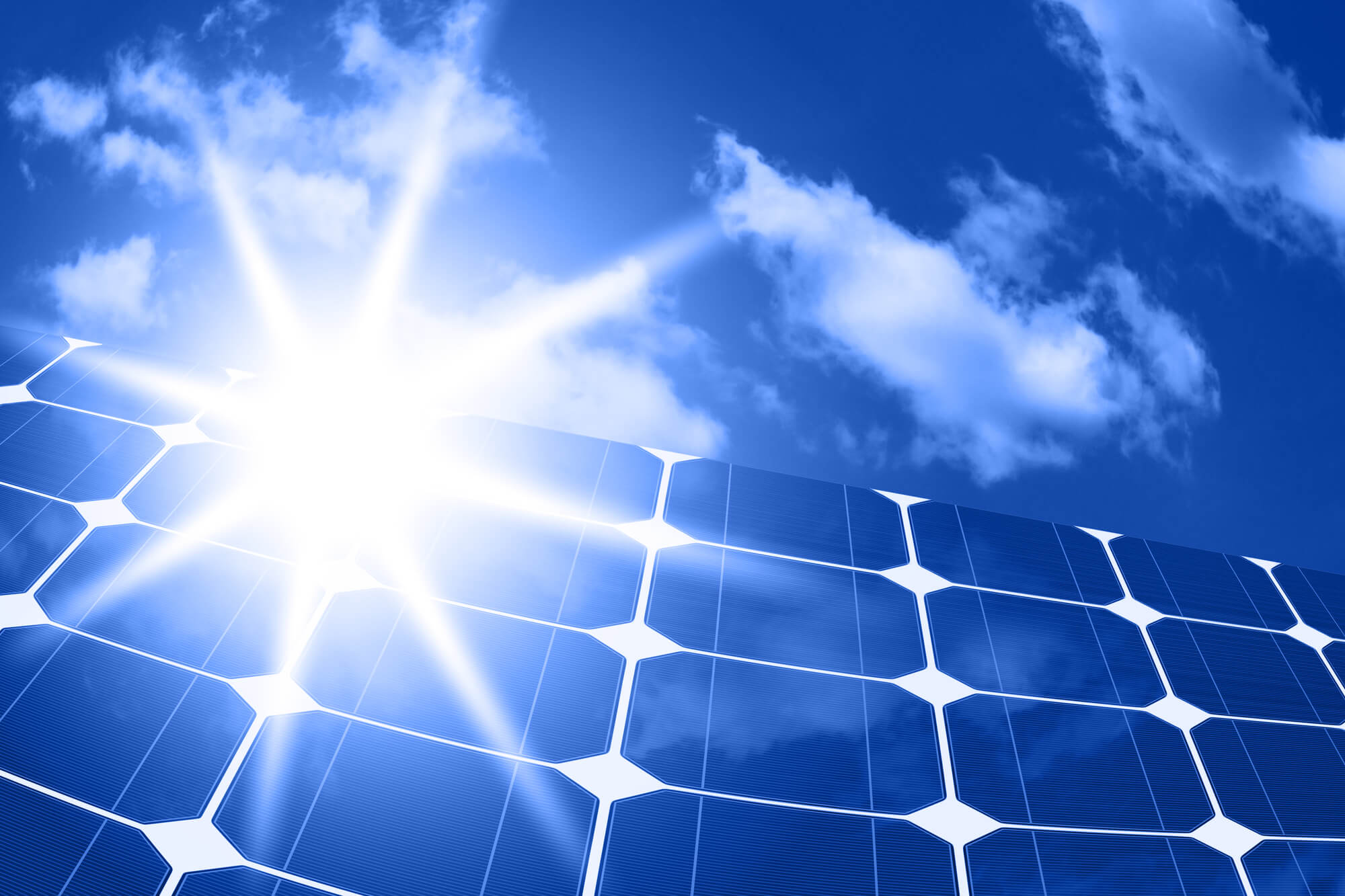
Photovoltaic solar is the technology most people mean when they say “solar panels.” It converts sunlight directly into electricity through the photovoltaic effect — when photons from sunlight strike a semiconductor material (typically silicon), they knock electrons loose, creating a flow of direct current (DC) electricity. An inverter converts this DC to the alternating current (AC) used in homes and businesses.
Photovoltaic systems range from small portable chargers to utility-scale farms spanning thousands of acres. For residential and commercial applications, PV is the dominant solar technology and the primary focus of the US rooftop solar market.
PV panel types:
Monocrystalline silicon — made from a single silicon crystal structure. Highest efficiency (19–24%), best performance in heat and low light, premium cost. Modern monocrystalline panels use advanced cell architectures including PERC (Passivated Emitter and Rear Cell), TOPCon (Tunnel Oxide Passivated Contact), HJT (Heterojunction Technology), and IBC (Interdigitated Back Contact). These are the dominant residential and commercial panel type in 2026.
Polycrystalline silicon — made from multiple silicon crystals. Lower efficiency (15–17%), higher temperature coefficient, lower cost. Polycrystalline panels have been largely discontinued by major manufacturers as TOPCon monocrystalline production costs have dropped below the polycrystalline premium threshold. New installations rarely use polycrystalline.
Thin-film — semiconductor materials (cadmium telluride/CdTe, copper indium gallium selenide/CIGS, amorphous silicon/a-Si) deposited in thin layers. Lower efficiency (10–16%) but flexible manufacturing options, better high-temperature performance coefficient, and uses less semiconductor material. First Solar dominates the utility-scale CdTe market. Not commonly used in residential applications.
Bifacial — panels that capture sunlight from both the front (direct) and rear (reflected from the ground or a white roof surface). Bifacial panels produce 5–20% more energy than monofacial equivalents in ground-mount installations with high-albedo surfaces under the array. Most major residential panel lines have shifted to bifacial N-type monocrystalline cells.
2. Concentrating Solar Power (CSP)
Concentrating solar power (CSP) uses mirrors or lenses to concentrate sunlight onto a receiver, generating intense heat that drives a steam turbine to produce electricity — the same basic process as coal, nuclear, or natural gas plants, but powered by solar heat instead of combustion or fission.
CSP is a large-scale technology suitable only for utility-scale power generation in high-direct-normal-irradiance (DNI) desert environments. The US Southwest (Mojave, Sonoran, Chihuahuan deserts) and parts of Texas are the primary domestic CSP regions. CSP plants are rare outside desert areas because they require concentrated direct sunlight — diffuse cloudy-sky light cannot be effectively focused.
CSP system types:
Parabolic trough — curved mirrors shaped like a parabola focus sunlight onto a heat-transfer fluid pipe running along the trough’s focal line. The heated fluid (typically synthetic oil or molten salt) drives a steam generator. Parabolic trough is the most commercially deployed CSP technology worldwide and the type used at Ivanpah and other major US plants. Efficiency: 14–20%.
Solar power tower (central receiver) — a field of flat mirrors (heliostats) track the sun and focus light onto a central receiver atop a tall tower. The concentrated sunlight heats molten salt to 565°C or higher. The Crescent Dunes plant in Nevada and Ivanpah Solar Electric Generating System in California represent this technology at commercial scale. Power towers achieve higher temperatures than troughs, enabling more efficient steam cycles and better thermal storage. Efficiency: 15–20%.
Fresnel lens concentrators — flat mirror strips approximate a parabolic shape at lower cost. Less efficient than parabolic troughs but simpler construction. Used in some utility-scale installations.
Dish Stirling systems — parabolic dish concentrators focus sunlight at their focal point, where a Stirling engine converts heat directly to electricity. Very high solar-to-electric efficiency (25–30%) but limited to small modular installations and not commercially deployed at scale.
The key advantage of CSP over PV is inherent thermal storage: molten salt storage systems can store 6–15 hours of heat, allowing CSP plants to generate electricity at night or during cloudy periods. This firm, dispatchable power output makes CSP more grid-friendly than PV, but the high capital cost relative to PV plus battery storage has challenged CSP economics in recent years.
3. Solar Thermal Energy (Low and Medium Temperature)
Solar thermal energy — distinct from concentrating solar power — uses sunlight to heat a fluid directly, without generating electricity. This heat is then used for domestic hot water, space heating, pool heating, or industrial process heat. Solar thermal is the oldest form of solar energy utilization and remains one of the most cost-effective solar applications for direct heating needs.
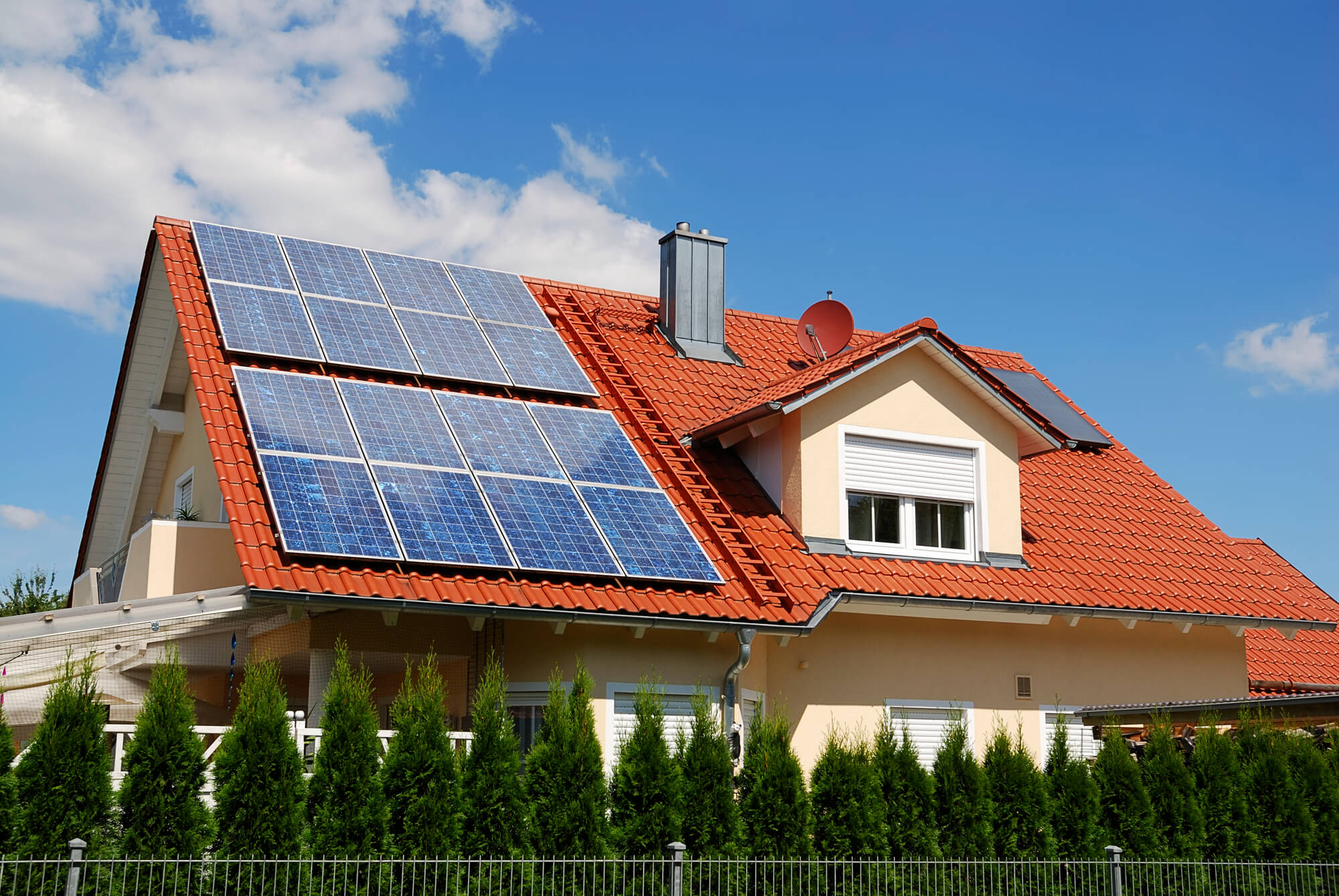
Domestic solar water heaters: Panels called solar collectors — flat plate or evacuated tube — are installed on the roof and heat a fluid (water or glycol) that transfers heat to a storage tank. An 80-gallon solar hot water system can provide 50–80% of a household’s hot water needs. Installed cost: $3,000–$8,000. Payback: 5–12 years depending on existing fuel costs (gas vs electric backup). Solar water heaters were once widely subsidized; availability of incentives varies by state in 2026.
Solar pool heaters: Unglazed rubber or plastic collectors circulate pool water directly through the collector and back to the pool — no heat exchanger needed for mild climates. This is the simplest and lowest-cost solar thermal application. A properly sized system (1.0–1.5 collector area for each 1.0 pool area) can extend the swimming season by 2–4 months and maintain pool temperature 8–15°F warmer than unheated. Cost: $2,500–$5,000 installed.
Active solar space heating: Solar air or liquid collectors coupled to a home’s heating system — a hydronic radiant floor, forced-air handler, or heat exchanger. Common in Europe; less common in the US where PV-plus-heat-pump systems have become more cost-effective. Solar fraction (percentage of annual heat load covered by solar) of 40–70% is achievable in most US climates.
Solar process heat (industrial): Medium-temperature solar thermal (100–400°C) serves industrial processes — food processing, textiles, paper manufacturing, chemical processing — that require heat below the threshold where CSP becomes necessary. This is a growing application in countries with high industrial heat demand and good solar resources.
4. Passive Solar Design
Passive solar is not a technology you add to a building — it’s a set of architectural principles that harness sunlight for heating and daylighting without mechanical systems. A building designed around passive solar principles uses the sun’s energy with no moving parts, no electrical systems, and zero operating cost.
The four principles of passive solar design:
Aperture: Large south-facing windows (in the Northern Hemisphere) allow sunlight to enter the building during winter months when the sun is lower in the sky. The aperture area is typically 5–12% of the floor area for solar heating.
Absorber: Dark-colored surfaces — concrete floors, masonry walls — inside the sunlit area absorb solar heat during the day.
Thermal mass: Dense materials (concrete, brick, stone, water) store heat absorbed during daylight hours and release it slowly at night, moderating temperature swings.
Control: Roof overhangs designed to the local latitude block the high summer sun (preventing overheating) while allowing the lower winter sun to enter. Thermal mass and window placement are also part of the control strategy.
Passive solar homes in cold climates can reduce heating energy use by 30–70% compared to conventional construction. The Passive House standard (Passivhaus) formalizes these principles into a certification framework requiring heating energy consumption under 15 kWh/m² per year — approximately 90% less than an average US home.
5. Building-Integrated Photovoltaics (BIPV)
Building-integrated photovoltaics replaces conventional building materials — roofing tiles, facade panels, skylight glazing, window glass — with photovoltaic materials that generate electricity while serving a structural or aesthetic function. BIPV eliminates the “added on top” appearance of conventional racked panels.
Solar roofing tiles: The most prominent BIPV product in the US market is the Tesla Solar Roof, which replaces the entire roof surface with a combination of active PV tiles (containing solar cells) and passive tiles (matching appearance, no solar function). Cost: $35,000–$70,000+ for a complete Solar Roof installation, significantly more than traditional panels. Other entrants include GAF Energy’s Timberline Solar shingles, designed to integrate with standard asphalt shingle installation practices.
Solar facades: PV modules integrated into building facades, curtain walls, or parking structures. Common in commercial high-rise construction as part of green building certifications. Efficiency is typically lower than roof-mounted systems (non-optimal angle, partial shading from adjacent buildings) but the BIPV approach generates electricity from surfaces that would otherwise be opaque walls.
Solar glazing: Transparent or semi-transparent PV panels used in skylights, atriums, and windows. Current efficiency is 7–12% (lower than opaque panels) but is advancing with perovskite and thin-film technologies. Solar glazing can reduce HVAC loads (by blocking heat gain) while simultaneously generating power.
6. Agrivoltaics (Solar + Agriculture)
Agrivoltaics — also called dual-use solar or co-location solar — places solar panels over or alongside agricultural land, allowing simultaneous solar generation and crop production on the same land area. Research from the University of Massachusetts, Oregon State, and other institutions shows that many crops benefit from partial shading provided by solar panels above them, reducing heat stress and water evaporation during peak summer hours.
Benefits measured in agrivoltaic research projects:
Crop yield increase of 20–60% for shade-tolerant crops (lettuce, broccoli, peppers, herbs) under panels. Water use reduction of 14–29% from reduced evapotranspiration under panel shade. Solar panel cooling from crop evapotranspiration below, improving panel efficiency 1–3% compared to ground-mounted panels over bare soil. Dual land revenue: land used for agrivoltaics generates both solar lease income and agricultural income.
US agrivoltaic installations are growing rapidly following an NREL analysis showing that covering 1% of US irrigated farmland with elevated agrivoltaic systems could meet 20–40% of US electricity demand. The USDA and DOE have joint funding programs supporting agrivoltaic research and deployment through 2026–2028.
7. Floating Solar (Floatovoltaics)
Floating solar installs PV panels on floating platforms anchored to the surface of reservoirs, lakes, irrigation ponds, or other bodies of water. Floating installations offer three advantages over land-based systems: they use water surfaces that have no competing agricultural or development value; the water cooling effect improves panel efficiency 5–10% compared to ground-mounted systems at the same location; and they reduce water evaporation from reservoirs by 70–80%, a significant benefit in water-stressed western US regions.
The California Energy Commission-funded Project Nexus on the Turlock Irrigation District’s canals (UC Merced analysis) found floating solar reduced channel evaporation by an estimated 63 billion gallons annually if deployed across California’s canal system — roughly equivalent to a year’s water supply for 2 million households.
US floating solar is still nascent but growing, with installations on treated water reservoirs, agricultural irrigation ponds, and mine water impoundments. Floating solar avoids the permitting complexity of utility-scale land-based solar in many jurisdictions.
8. Space-Based Solar Power
Space-based solar power (SBSP) proposes collecting solar energy in Earth orbit — where sunlight is 8–10 times more intense than at the surface and available 24/7 without atmospheric absorption — and transmitting it to the ground via microwave or laser beams received by terrestrial antennas (rectennas).
SBSP has been studied since the 1970s (NASA and DOE joint study in 1979) and has attracted renewed interest in the 2020s. The UK Space Energy Initiative, European Space Agency, and JAXA (Japan) have active SBSP research programs with demonstration missions planned for the 2030s. The US Air Force Research Laboratory conducted a ground test of a microwave power transmission module in 2023.
SBSP remains pre-commercial and faces enormous engineering and cost challenges — primarily the cost of lifting solar hardware to geostationary orbit. The emergence of reusable rockets (SpaceX Falcon 9, Starship) has changed the economic calculus but has not yet made SBSP cost-competitive with terrestrial solar.
Frequently Asked Questions
What are the main types of solar energy?
The main types are: photovoltaic (PV) solar, which converts sunlight directly to electricity; concentrating solar power (CSP), which uses mirrors to focus sunlight and drive steam turbines; solar thermal, which uses sunlight to heat water or air for domestic or industrial use; passive solar design, which uses architecture to capture solar heat without mechanical systems; and building-integrated photovoltaics (BIPV), which embeds solar cells in roofing, facades, or glazing. Agrivoltaics and floating solar are newer variations on PV technology.
What type of solar energy is most commonly used?
Photovoltaic (PV) solar is by far the most commonly deployed solar energy type globally and in the US. As of 2026, the US has over 239 GW of installed solar capacity, the vast majority of which is photovoltaic. Solar thermal water heaters and pool heaters represent the second largest installed base. Concentrating solar power represents a small fraction of total US solar capacity, primarily in the desert Southwest.
What is the difference between solar PV and solar thermal?
Solar PV converts sunlight directly to electricity through the photovoltaic effect. Solar thermal collects sunlight as heat, which is used directly for water heating, space heating, or pool heating. PV requires an inverter to produce usable AC electricity. Solar thermal requires a heat exchanger, storage tank, and pump. For domestic hot water, solar thermal systems are often more efficient (more energy captured per dollar invested in warm climates) but PV systems are more versatile since electricity can power anything, not just heat.
What is the most efficient type of solar energy?
Solar thermal is the most efficient form of direct solar energy collection — flat plate and evacuated tube collectors achieve 60–80% thermal efficiency (sunlight to usable heat). PV efficiency by comparison is 19–24% for commercial monocrystalline panels. However, this comparison is misleading since solar thermal produces only low-grade heat while PV produces versatile electricity. For electricity generation, concentrating PV (CPV) systems achieve 40%+ efficiency at the cell level but are limited to high-direct-normal-irradiance locations and are rarely deployed commercially.
Can solar energy be used for heating?
Yes, through three mechanisms: solar thermal collectors directly heat water or air for domestic or industrial use; PV electricity powers heat pumps, which move heat from outside to inside using 2–4 units of heat for every 1 unit of electricity consumed (COP 2–4); and passive solar design captures solar heat through architectural strategies. Heat pump space heating powered by solar PV is now the most cost-effective solar heating approach for residential applications in most US climates.
Summing Up
Solar energy encompasses a broad family of technologies — from photovoltaic rooftop panels to concentrating solar towers, solar thermal water heaters, passive solar architecture, and emerging approaches like agrivoltaics and floating solar. For residential applications, photovoltaic panels remain the dominant technology and the most cost-effective way to reduce electricity bills and carbon footprint. Solar thermal water heaters and pool heaters offer strong economics for heating-specific applications, particularly in warm climates.
If you want to explore which solar technologies make sense for your home — from rooftop PV to solar thermal — call (855) 427-0058 for a free consultation. Local solar experts can assess your home’s energy profile and recommend the right combination of technologies at no cost.
Updated