
Solar Panel Mounting Systems
The mounting system is one of the most critical components of a solar installation, yet it often receives less attention than the panels themselves. A well-designed mounting system keeps your solar panels securely in place, positions them at the optimal angle for maximum sunlight capture, and ensures durability against weather, wind, and temperature fluctuations. Whether you’re planning a rooftop or ground-mounted system, understanding mounting options and installation principles is essential to system performance and longevity.
This guide covers everything you need to know about solar panel mounting: the differences between roof and ground mounts, types of racking systems, optimal tilt angles and orientations, installation considerations, and how mounting choices affect system cost and efficiency. By the end, you’ll understand which mounting solution best fits your property, climate, and energy goals.
Roof-Mounted Solar Systems
Roof-mounted systems are the most common residential solar installations. They use existing roof structure, eliminate land requirements, and minimize aesthetic impact compared to ground systems. Roof mounts position panels at a fixed angle determined by latitude and roof pitch, or allow adjustable tilt for seasonal optimization.
The primary advantage of roof mounting is space efficiency. A typical residential system requires 250-300 square feet of roof space; ground mounting the same array would need 450-600 square feet of land. For homeowners with limited property or valuable land use, roof mounting is the practical choice. Roof systems also offer cleaner aesthetics—panels blend with the roofline rather than dominating a yard.
Installation complexity varies with roof type. Asphalt shingle roofs are simplest; racking attaches to trusses using lag bolts through the sheathing. Metal roofs require special clamps that don’t penetrate the weatherproof barrier. Tile and slate roofs are more challenging and often require reroofing before installation. Flat commercial roofs use ballasted (weighted) systems that don’t require roof penetration, ideal for buildings where drilling isn’t permitted.
Roof pitch (slope) influences panel tilt angle. In northern climates (above 40°N latitude), roofs with 4:12 to 6:12 pitch naturally provide near-optimal panel angles. Shallow roofs (1:12 to 3:12 pitch) require additional tilt on east or west-facing aspects. Steep roofs (8:12 or greater) in southern climates may already exceed the ideal angle. A solar designer calculates the optimal angle based on your latitude and typical cloud cover patterns.
Roof penetrations for mounting hardware create potential leak points. Professional installers use roofing-grade flashing and sealants compatible with your roof material. Poor installation causes leaks years later, undermining system reliability and home value. Always hire certified installers experienced with your specific roof type.

Ground-Mounted Solar Systems
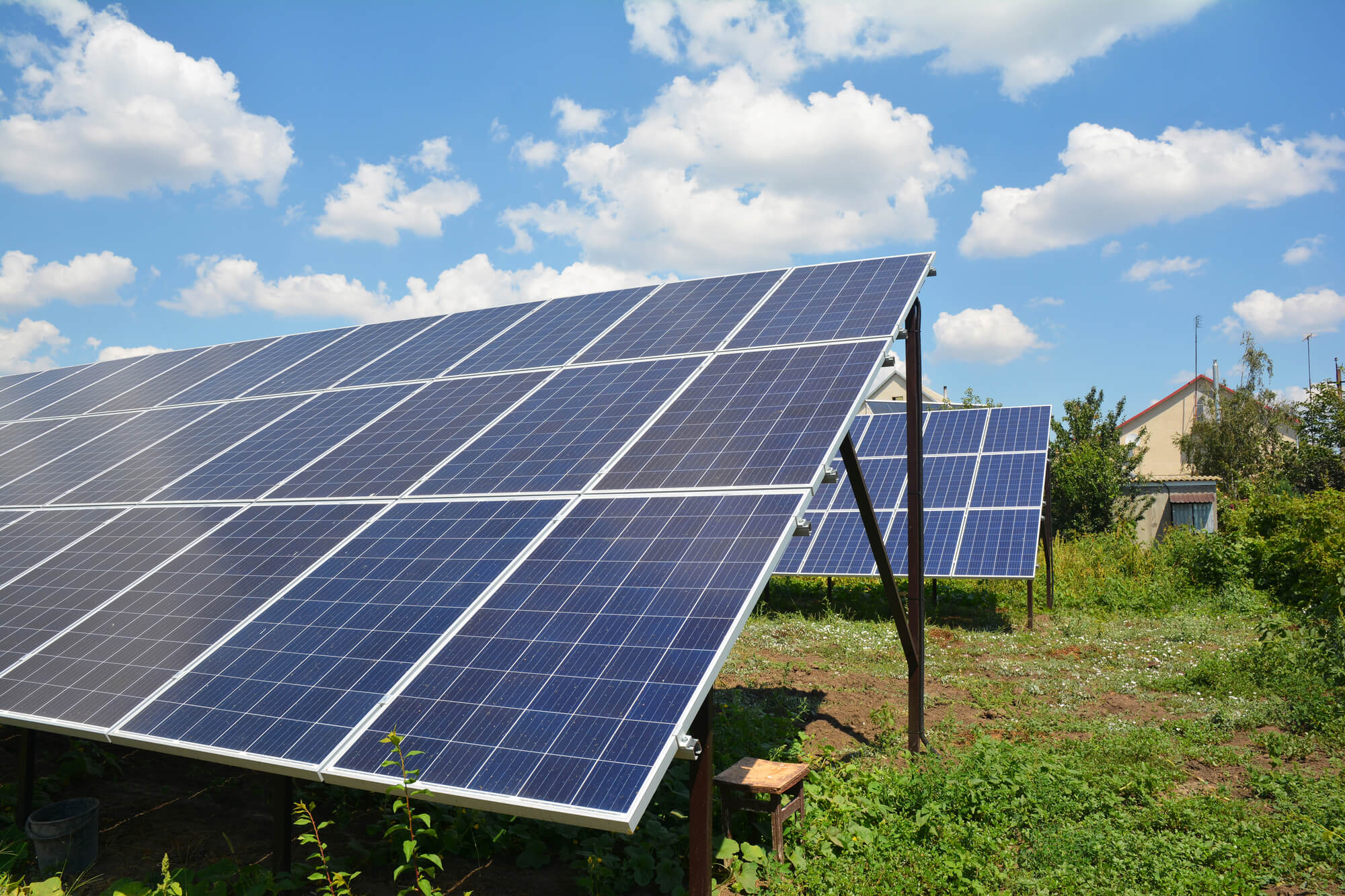
Ground-mounted systems place solar panels on a dedicated frame above the earth or on pole mounts. They’re ideal for properties with open land, commercial installations, or homes where roof space is insufficient or unsuitable. Ground mounts offer several advantages over roof systems: easier installation, no roof penetration, simplified maintenance and cleaning, and full adjustability for optimal angle and orientation.
Ground mounts accommodate east-west orientation, dual-array configurations, and even tracking systems that follow the sun throughout the day. This flexibility allows optimization for specific climates or seasonal patterns. For example, a ground system can be tilted steeper in winter to capture lower sun angles, then adjusted in summer for higher sun paths.
The primary disadvantages are land use and aesthetics. Ground systems require 450-600 square feet per residential array. In urban areas or dense suburban neighborhoods, this isn’t practical. Ground mounts also create visual impact—neighbors may object to large arrays in open views. Some homeowners associations restrict ground-mounted systems or limit placement to side or back yards.
Pole-mounted systems are a middle ground, raising panels 10-15 feet above ground while minimizing land footprint. They’re common in rural properties and allow ground-level space for parking, gardens, or other uses. Pole mounts cost more than ground-level racking but less than roof penetration and reroofing.
Ground systems require proper drainage and foundation. In wet climates, elevated platforms prevent water accumulation and corrosion. Concrete piers or buried footings anchor frames against wind uplift. Racking must withstand 120+ mph wind gusts in coastal areas and snow loads in northern regions. A structural engineer verifies design for local building codes and conditions.

Types of Solar Racking Systems
Fixed Tilt Racking
Fixed racking holds panels at a permanent angle optimized for annual energy production. Most residential and commercial systems use fixed angles matching the site’s latitude or slightly less (latitude minus 5-15 degrees in southern regions to capture lower winter sun). Fixed systems are the simplest, most durable, and lowest-cost racking option. They have no moving parts, requiring only periodic cleaning and visual inspections. Annual energy loss compared to ideal angle is typically 3-5%.
Adjustable Racking
Adjustable systems allow manual tilt angle changes seasonally or quarterly. A homeowner might adjust angle 10-15 degrees higher in winter for lower sun, then lower it in summer. This captures 5-10% more annual energy than fixed systems but requires hands-on maintenance. Adjustable racks cost 10-20% more than fixed. They’re best suited to owners willing to perform regular adjustments and who have easy roof access.
Single-Axis Tracking
Tracking systems rotate panels to follow the sun’s east-west movement throughout the day (single-axis) or both east-west and north-south (dual-axis). Single-axis trackers increase energy output 25-35% compared to fixed systems. They’re common in commercial installations and utility-scale farms where land is abundant and additional output justifies higher cost ($0.30-0.60 per watt more than fixed systems).
Trackers require reliable sunshine (work poorly in cloudy climates), more maintenance (bearings, gears, motors), and stronger structural support. For residential systems, trackers are rarely economical unless you have significant land and want maximum output per square foot. In cloudy regions, trackers underperform fixed systems because the sun’s position is less predictable.
Dual-Axis Tracking
Dual-axis trackers follow the sun’s path across the entire sky, achieving 35-45% energy gain over fixed systems. However, they’re expensive, complex, require more maintenance, and are mainly used in utility-scale installations or research settings. For residential projects, dual-axis tracking is not practical or cost-effective.
Optimal Tilt Angle and Orientation
Solar panel angle dramatically affects energy capture. The optimal tilt maximizes year-round sunlight interception based on your latitude and climate. In the Northern Hemisphere, south-facing orientation is standard; in the Southern Hemisphere, north-facing is optimal.
Latitude-Based Tilt
A simple rule: tilt angle equals your latitude. For example, at 40°N latitude, a 40-degree tilt captures maximum annual solar irradiance. However, this is a starting point; actual optimization depends on seasonal patterns and cloud cover. In northern regions with seasonal variation (significant snow or heavy cloud in winter), tilting 5-15 degrees steeper captures more winter sun. In southern regions with year-round sun, tilting 5-15 degrees shallower captures more summer production (when demand is lower, but battery charging is important).
Seasonal Variation
Winter sun angles are 20-30 degrees lower than summer angles at any latitude. A fixed angle represents a compromise between seasons. If you can adjust seasonally (or use tracking), steep angles (50-60 degrees) in winter and shallow angles (20-30 degrees) in summer optimize daily capture. For fixed systems, an angle slightly lower than latitude (latitude minus 10-15 degrees) often delivers better annual production by capturing more summer output, when solar irradiance is highest.
Orientation
In the Northern Hemisphere, true south (180 degrees on a compass) is ideal. East-west orientations reduce output by 10-20%. A rooftop facing 160-200 degrees azimuth is still optimal; 140-220 degrees produces nearly the same output with minor loss. In Southern Hemisphere installations, true north is optimal with the same tolerance range.
East-west (bifacated) configurations are sometimes used on large roofs to spread load and accommodate multiple array sections. These sacrifice 15-20% annual production compared to all-south, but may be necessary for structural or layout reasons.
Wind and Snow Load Considerations
Racking systems must withstand local wind and snow conditions. Building codes define design criteria for different regions: coastal areas (120-150+ mph winds), inland areas (85-100 mph), and light wind zones (60-75 mph). Snow load requirements vary from minimal (10 psf) in dry regions to 50+ psf in alpine areas.
Taller ground-mounted systems experience greater wind force due to exposure. Roof-mounted arrays on tall buildings encounter strong winds at altitude. Wind load increases with panel height above ground, array area, and wind speed squared. A small 2% increase in wind speed can increase load by 4% due to aerodynamic scaling.
Snow accumulation reduces output by blocking sunlight and adding weight. In steep-roofed installations (8:12 pitch or greater), snow slides off naturally. Shallow-roofed or ground-mounted systems in snowy climates may hold snow for weeks, reducing winter output. Some systems add snow-melt features or install the array at steeper angles in snowy regions.
Professional structural design accounts for all local conditions. A solar installer obtains building permit engineering that certifies compliance with wind and snow codes. Never proceed without proper structural certification.
Mounting Hardware and Materials
Modern solar racking uses aluminum extrusions and stainless steel hardware for corrosion resistance and durability. Aluminum is lightweight, strong, and resists rust. Stainless steel bolts and flashings prevent galvanic corrosion (when different metals contact in wet conditions).
Roof Racking Hardware
Roof mounts use L-brackets or rail-mounted clamps anchored to roof trusses via roof penetrations. Lag bolts or structural fasteners secure brackets through roof sheathing into wood structure, distributing load across multiple connection points. Riser blocks elevate rails 2-4 inches above the roof, creating air gap for cooling and water drainage. Flashing seals each penetration, typically using rubber boots with rubberized sealant compatible with asphalt shingles or metal coatings.
Ground Racking Hardware
Ground systems use post-mounted channels or rails anchored to concrete piers or footings. Posts are typically 4×4 or 4×6 timber (pressure-treated) or steel with galvanized coating. Bolted connections attach aluminum rails to posts, then panels attach to rails via mid-clamps and end-clamps. Concrete footings extend below frost line (typically 3-4 feet in northern regions) to prevent heave from freeze-thaw cycles.
Ballasted roof systems (flat commercial roofs) use concrete blocks or trays to weight down racking without penetrations. This preserves roof warranty but requires significantly more ballast weight (1-2 lbs per watt) to prevent uplift in high winds.
Installation Best Practices
Professional installation ensures safety, durability, and performance. Key practices include:
Structural Assessment: Before installation, a solar engineer verifies roof structural capacity (load rating in psf), truss spacing, and rafter dimensions. Flat roofs are checked for water pooling (must slope toward drains). Older homes with undersized framing may require reinforcement before mounting heavy arrays.
Roof Preparation: The roof should be relatively new (5+ years remaining life) to avoid reroofing shortly after solar installation. If the roof needs replacement, replace it before installing solar. Roof condition is verified before drilling penetrations.
Proper Flashing: Each roof penetration requires waterproof flashing compatible with the roof type. Asphalt shingles use rubber-booted flashing sealed with roofing cement. Metal roofs use standing-seam clamps that don’t penetrate the surface. Tile roofs require custom flashing fitting under the tile pattern.
Electrical Safety: Racking includes bonding (grounding) conductors connecting all metal rails and panels, then bonded to the house grounding system. This prevents electrical shock hazards if a live wire contacts the array frame.
Permits and Inspections: Racking installation requires building permits and inspections certifying structural compliance. Never avoid permit processes—they protect your property value and insurance coverage. Unpermitted work voids warranties and creates liability.
Maintenance and Durability
Quality racking systems last 25+ years with minimal maintenance. Aluminum naturally forms a protective oxide layer resisting corrosion. Stainless steel hardware resists rust in all climates. The main maintenance task is periodic cleaning (discussed separately) and visual inspections for loose bolts or damage.
In coastal salt-air environments, annual rinses with fresh water prevent salt buildup on fasteners. In cold climates, inspect after severe winter storms for any shifting or damage. Most issues are minor and addressed with a wrench or sealant reapplication.
Degradation mechanisms are rare but possible: galvanic corrosion (if incompatible metals contact), frost heave (ground systems in freeze-thaw zones), and wood rot (if pressure-treated posts deteriorate). Proper design and installation prevent these issues. If any racking component shows rust or instability, contact a qualified installer for assessment and repair.
Cost Implications of Mounting Choices
Mounting typically accounts for 10-15% of total residential solar system cost. Fixed roof mounts are cheapest ($0.20-0.35/watt). Adjustable systems cost 10-20% more. Single-axis tracking systems add $0.30-0.60/watt, making them economical only for commercial or large residential arrays where additional output justifies cost.
Ground mounts cost more than roof mounting when accounting for foundation, structural engineering, and installation labor (15-25% system cost premium). However, if your roof is unsuitable or will require reroofing within 10 years, ground mounting avoids expensive roof intervention.
The 30% federal Investment Tax Credit (ITC), active through 2032, applies to all mounting hardware as part of the complete solar system. This reduces net cost by 30% for residential systems and 30% for commercial installations, making professional-grade mounting systems more affordable.
Frequently Asked Questions
How much does a solar panel mounting system cost?
Mounting systems typically cost $0.20-0.35 per watt of solar capacity for fixed roof mounts, or $0.25-0.50/watt for ground systems. A typical 6 kW residential system would have mounting costs of $1,200-2,100 for roof installation or $1,500-3,000 for ground mounting. These costs include racking, hardware, flashing, and installation labor. The 30% federal ITC reduces net cost by 30%.
What is the ideal tilt angle for solar panels?
For fixed-tilt systems, the ideal angle approximates your latitude, with adjustments for climate and seasonal variation. For example, at 40°N latitude, a 30-35 degree tilt often produces more annual output than 40 degrees by capturing higher summer sun when irradiance is peak. In regions with significant winter cloud cover, tilting 10-15 degrees steeper optimizes winter capture. South-facing orientation (180 degrees azimuth) is standard in the Northern Hemisphere. A solar professional calculates the specific angle for your location.
Can solar panels be mounted on a flat roof?
Yes, flat roofs are excellent for solar mounting. Racking with tilt feet raises panels at the optimal angle (typically 20-35 degrees in most US climates). Flat roofs also allow ballasted (weighted) systems that don’t require penetrations, preserving roof warranty. Ensure proper drainage so water doesn’t pool under the array, and verify the roof structure can support the panel weight (10-15 psf for typical systems).
What happens to solar panels in high wind?
Properly installed systems with structural engineering for local wind conditions withstand 120+ mph winds in coastal areas. Wind load increases with exposed array height and size. Professional racking design and installation, along with building permits and inspections, ensure compliance with wind codes. Loose or improperly installed arrays can lift in high winds, but certified installations remain secure. If you live in a high-wind area, ensure your installer has experience with wind engineering and local code requirements.
Do solar panel mounts damage the roof?
Professional installations with proper flashing do not damage the roof. However, poor installation can cause leaks through penetrations. Ensure your installer uses roofing-grade flashing, quality sealants, and proper techniques for your roof type. If your roof is nearing end-of-life (less than 5 years remaining), consider reroofing before solar installation to avoid removing arrays for future roof work. A quality installation protects your roof for the 25+ year solar system lifespan.
Should I choose roof or ground mounting?
Choose roof mounting if your roof is structurally sound, faces south (in Northern Hemisphere), and you lack suitable land. Ground mounting is preferable if you have open property, want to avoid roof penetrations, or your roof faces unfavorable directions. Roof mounting is simpler and cheaper; ground mounting offers adjustability and easier maintenance. A solar designer evaluates your specific property and recommends the best option.
How are solar panels secured to prevent theft?
Roof-mounted panels are secured with lag bolts and brackets that make removal difficult without tools and time. Bolts are typically recessed or covered with tamper-resistant fasteners. Ground-mounted systems can be surrounded by fencing or positioned in less visible locations. Wire management and conduit protection prevent theft of electrical wire and disconnects. Visible ownership marking and security signage deter casual theft. For high-risk areas, security cameras and alarms provide additional deterrence.
Summing Up
Solar panel mounting systems have one job: hold panels securely at the right angle for 25+ years through wind, snow, thermal cycling, and UV exposure. In 2026 the dominant system for sloped roofs is aluminum rail-and-module racking (IronRidge, Unirac, Schletter), with flashed lag bolts or stanchion penetrations into roof rafters every 48–72 inches. Flat commercial roofs use ballasted systems with weighted concrete blocks — no roof penetrations, but requiring structural load analysis. Ground mounts use driven steel piles or helical piers, both of which avoid concrete and allow for tracking systems.
For homeowners, the key mounting decisions are: verify the installer uses racking that’s engineered for your local wind and snow load zone, ensure flashing (not just sealant) is used at every roof penetration, and confirm the system is compatible with your roof material. Metal roofs use clamps rather than penetrations — systems like S-5! clamps require no drilling. Tile roofs need tile hooks that lift and replace individual tiles. Get the mounting details in your installation contract before signing.
To explore solar options for your home, call (855) 427-0058 for a free, no-obligation quote from vetted local installers across all 50 states.
Updated