
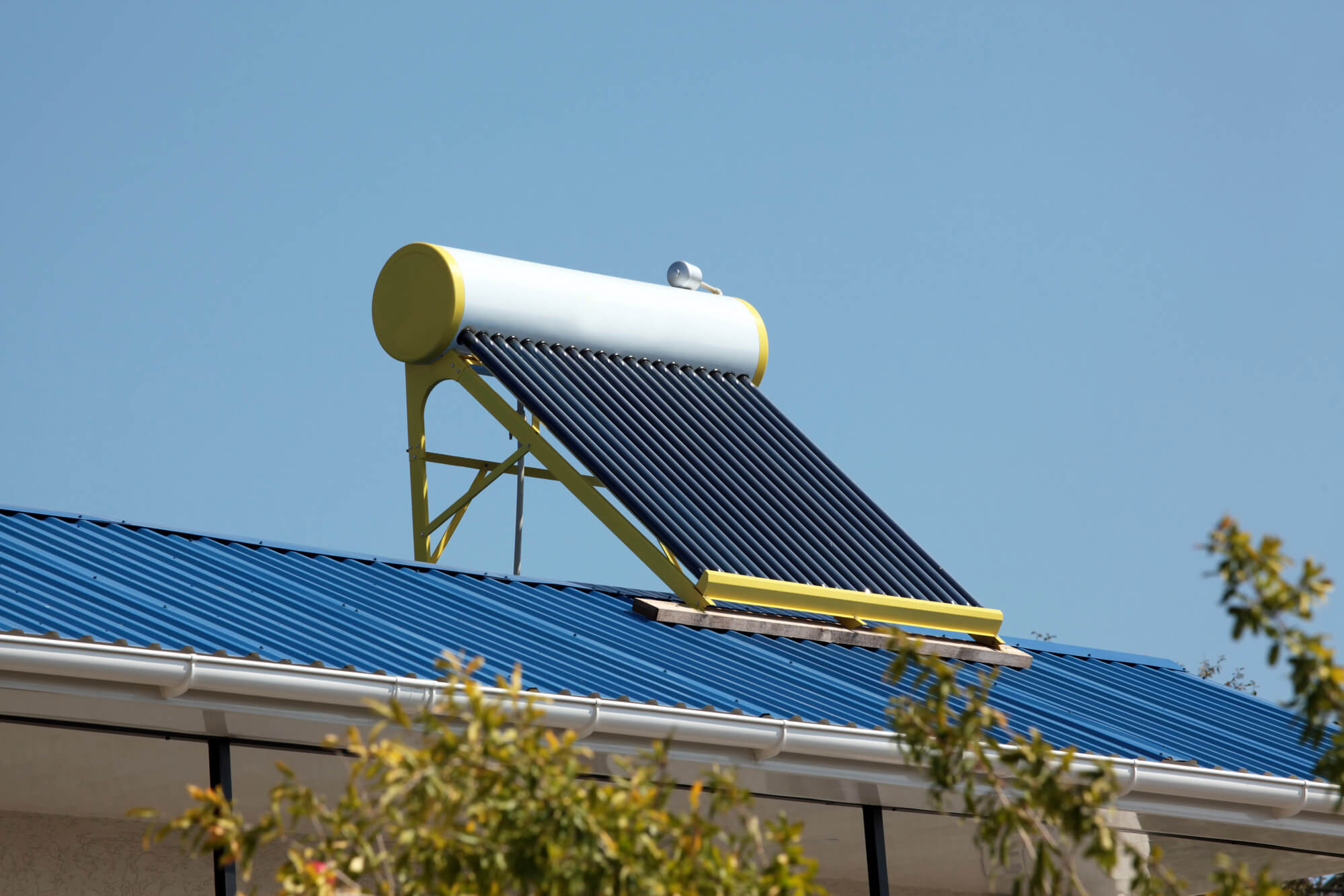
Solar thermal water heaters use the sun’s heat directly to warm water, rather than converting sunlight to electricity like PV panels. The two main designs — flat plate and evacuated tube collectors — differ in efficiency, cost, and climate suitability, and both can significantly cut water heating costs.
How Solar Thermal Water Heating Works
A solar thermal system circulates water or a heat-transfer fluid through a rooftop collector, where it absorbs solar heat, then delivers that heat to a storage tank for use in showers, sinks, and appliances. Unlike solar PV, no electricity is generated — the sun’s energy is captured and transferred as heat directly, which is inherently more efficient for this specific job (up to 70-80% of collected solar energy becomes usable heat, versus 15-22% for PV panels converting to electricity).
Flat Plate Collectors
A flat plate collector is a dark, insulated metal box with a glass or polymer cover, containing a grid of tubes that carry the heat-transfer fluid. Sunlight passes through the cover, warms the dark absorber plate, and that heat transfers to the fluid running through the tubes. Flat plate collectors are simpler, more durable, and less expensive than evacuated tubes, but slightly less efficient in cold or cloudy conditions.
Evacuated Tube Collectors
Evacuated tube collectors use rows of parallel glass tubes, each containing an absorber surrounded by a vacuum that acts as insulation, dramatically reducing heat loss. This makes evacuated tubes more efficient in cold climates and cloudy conditions than flat plate collectors, though they cost more and are more fragile (the glass tubes can crack from hail or impact).
| Feature | Flat Plate | Evacuated Tube |
|---|---|---|
| Cost | Lower | Higher (20-30% more) |
| Cold-weather performance | Good | Better |
| Durability | More durable | More fragile (glass tubes) |
| Best climate | Warm to moderate | Cold or highly variable |
Open-Loop vs. Closed-Loop Systems
Open-loop (direct) systems circulate the household’s actual water directly through the collector — simpler and cheaper, but vulnerable to freezing in cold climates. Closed-loop (indirect) systems circulate a separate heat-transfer fluid (often glycol-based antifreeze) through the collector, which then transfers heat to the household water via a heat exchanger — more complex but freeze-protected, making it the standard choice outside consistently warm climates.
Tax Incentives for Solar Water Heaters
Solar water heating systems for homeowners no longer qualify for the federal Section 25D residential credit, which expired December 31, 2025. Commercial solar thermal installations may still qualify for the Section 48E credit through 2027. Some states and utilities continue to offer their own rebates for solar water heating — check with your local utility before installing.
Considering solar for your home? Get a free quote: (855) 427-0058
Frequently Asked Questions
What’s the difference between flat plate and evacuated tube solar water heaters?
Flat plate collectors are simpler, more durable, and less expensive; evacuated tube collectors use vacuum-insulated glass tubes that perform better in cold or cloudy climates but cost more and are more fragile.
How efficient are solar thermal water heaters compared to solar PV?
Solar thermal systems can convert up to 70-80% of collected solar energy into usable heat, versus 15-22% efficiency for PV panels converting sunlight to electricity, because thermal systems skip the electrical conversion step.
What is the difference between open-loop and closed-loop solar water heaters?
Open-loop systems circulate household water directly through the collector; closed-loop systems circulate a separate antifreeze fluid that transfers heat via a heat exchanger, protecting against freezing in cold climates.
Do solar water heaters still qualify for a tax credit?
The federal Section 25D residential credit expired December 31, 2025, so homeowners can no longer claim it. Commercial solar thermal installations may still qualify for the Section 48E credit through 2027.
Which type of solar water heater is better for cold climates?
Evacuated tube collectors, paired with a closed-loop antifreeze system, generally perform better in cold or highly variable climates due to their vacuum insulation and freeze protection.
How much can a solar water heater save on energy bills?
Water heating typically accounts for 15-20% of a home’s energy use, and a well-sized solar thermal system can offset 50-80% of that, though actual savings depend on climate, system size, and household hot water use.
Are evacuated tube collectors more durable than flat plate collectors?
No – flat plate collectors are generally more durable since they lack the exposed glass tubes that can crack from hail, falling debris, or impact, which is a tradeoff against evacuated tubes’ better cold-weather efficiency.
Summing Up
Both flat plate and evacuated tube solar water heaters can meaningfully cut water heating costs, with the right choice depending on your climate, budget, and freeze risk. Understanding open-loop versus closed-loop design also helps you choose a system suited to your location. To explore whether solar makes sense for your home, call (855) 427-0058 or visit us.solarpanelsnetwork.com.
Updated