
Apartment dwellers and renters often feel locked out of solar energy because they don’t own their roof. But in 2026, that’s no longer true. Multiple solar options exist for renters and apartment residents, ranging from portable balcony systems that require zero permission to community solar programs that let you access renewable energy credits. The best option depends on your living situation, climate, and how much of your electricity bill you want to offset.
Understanding your realistic options helps you take control of your energy costs and environmental impact, even without roof access or long-term housing security.
Balcony and Plug-In Solar Systems
The most popular renter-friendly option is a portable balcony solar system (also called “plug-in solar”). These systems typically consist of 1–3 lightweight solar panels mounted to a balcony railing, patio, fence, or even ground-mounted on a balcony. A standard 800-watt balcony kit can offset 15–25% of a typical apartment’s monthly electricity consumption, reducing your bill by $25–75 per month.
Key Advantages:
- No landlord permission required in 23+ states with plug-in solar protections (as of 2026)
- Fully portable—take your system when you move
- Instant connection to a household outlet (via inverter)
- No installation labor required
- Cost: $1,500–$4,000 for a complete system
Performance Expectations: A 1000-watt balcony system in full sun produces approximately 5–6 kWh per day on average (accounting for seasonal variation). Over 30 days, that’s 150–180 kWh, offsetting about 20–30% of a typical apartment’s 500 kWh monthly usage. Actual output varies by climate, orientation, and seasonal sun angles.
Safety Certification: In early 2026, UL Solutions launched UL 3700, the “Gold Standard” safety certification for plug-in solar systems. When shopping, look for UL 3700-certified components to ensure safe operation and compatibility with your home’s electrical system.
Community Solar Programs
If a balcony is too small or your apartment receives limited sunlight, community solar is the most accessible alternative. Community solar (also called “community-choice aggregation” in some regions) places shared solar arrays on nearby rooftops or ground sites, and you subscribe to a portion of the output.
How It Works:
- A solar company or municipality installs a large array on community land
- Residents and businesses subscribe to a share of that array
- Your electricity is generated at the community location and fed to the grid
- You receive a credit on your electricity bill for your share of the power generated
- Virtual net metering allows credits to offset your consumption 24/7
Availability and Savings: Community solar is available in over 40 U.S. states and is expanding rapidly. Typical savings range from 10–15% on your electricity bill with zero upfront costs. Unlike rooftop solar, you don’t pay installation fees or maintenance costs.
Advantages for Renters:
- No landlord approval needed (you’re subscribing to a utility service)
- No upfront capital required
- No maintenance responsibility
- Portable—your subscription transfers to a new address if available
- Typically locked-in savings regardless of future rate increases
Disadvantages: Community solar program availability varies by state. Not all utilities offer programs, and waiting lists can be long. You’re also limited to the savings percentage available in your local program rather than maximizing your rooftop potential.
Building-Wide Solar Systems
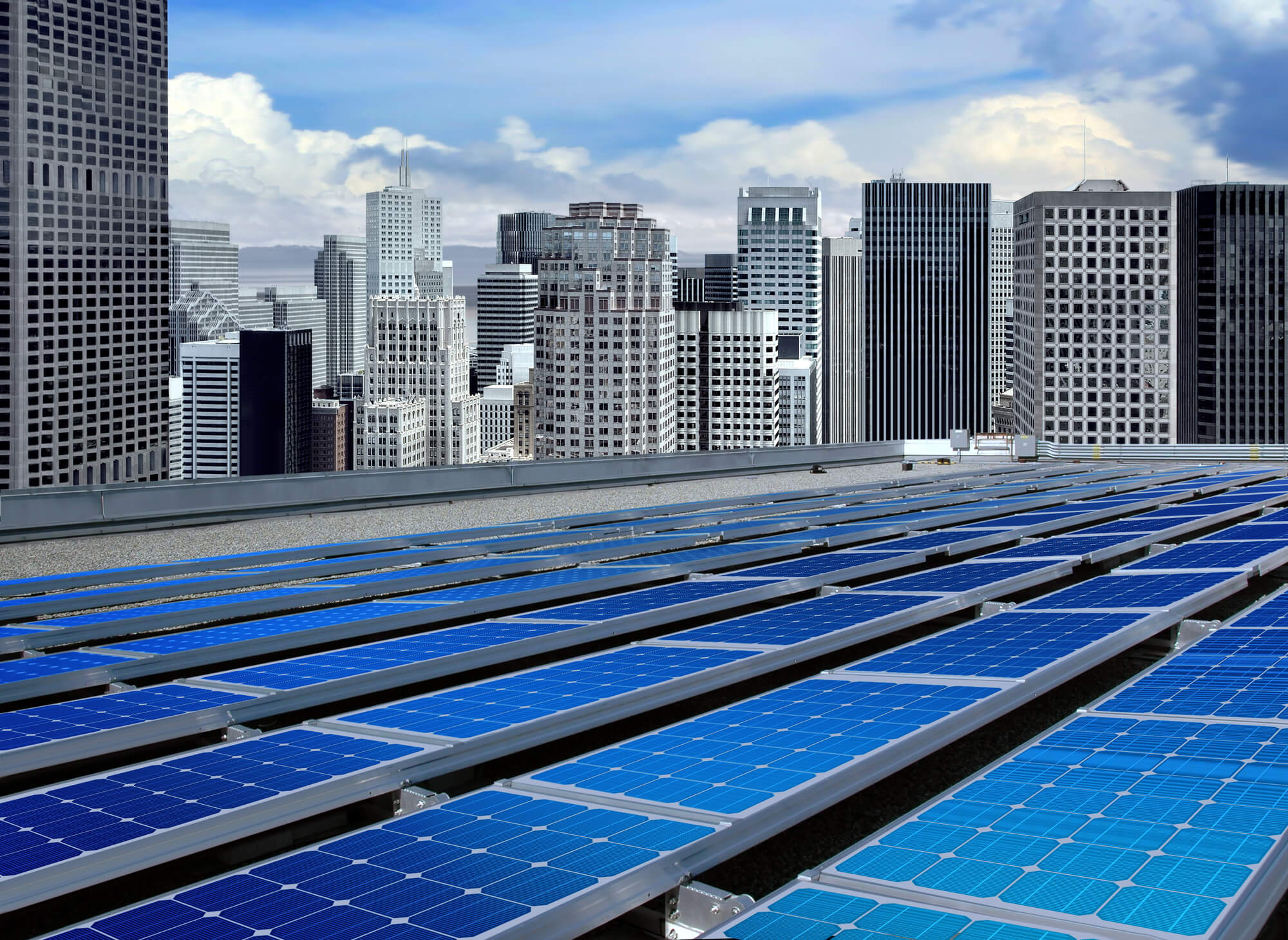
Some apartment buildings and condominiums install rooftop solar systems and share the benefits among residents. This is less common than individual rooftop systems, but growing in urban areas where multiple units benefit from one large array.
How Cost Allocation Works:
- Building installs solar on the roof, typically sized to meet 50–100% of building needs
- Generated electricity is shared proportionally among residents or used for common areas
- Residents receive credits on their electricity bills based on their share
- Installation is managed by the building owner or property manager
Advocating for Building Solar: If your apartment building lacks solar, you can advocate for installation by connecting with your building management or homeowners association (HOA). Present the financial case: a 10-unit building with 25 kW of rooftop solar can generate $2,000–$3,000 in annual savings distributed among residents. The building qualifies for the 30% federal Investment Tax Credit (ITC) through 2032, reducing the net cost significantly.
Solar Windows and Transparent Solar Options
Emerging transparent photovoltaic glass (TPV) and building-integrated solar windows are beginning to appear in new apartment construction. While not yet cost-effective for retrofits, buildings constructed in 2026 may incorporate solar windows in south-facing facades, generating power while maintaining light transmission and aesthetics.
If you live in a new building with solar windows, electricity generation happens automatically without any action required. However, window solar is early-stage technology and not widely deployed yet.
Assessing Your Apartment’s Solar Potential
Before investing in a balcony system or community solar, evaluate your living situation:
For Balcony Solar:
- Sun exposure: Your south-facing balcony receives full sun for at least 4–5 hours daily (minimum)
- Shade factors: Check for shadows from adjacent buildings, trees, or obstructions during winter months
- Space: Adequate room to mount 1–3 panels without blocking views or common pathways
- Permission: Verify your state’s plug-in solar laws; check your lease and tenant rules
- Outlet access: Proximity to a grounded outlet for the inverter (critical for safe operation)
For Community Solar:
- Check availability in your utility service area at the state’s community solar portal
- Verify your property address is eligible (some areas exclude certain neighborhoods)
- Review contract terms: contract length, cancellation policies, and rate-locking duration
- Calculate expected savings against the typical 10–15% range in your region
Financial Incentives for Apartment Dwellers
Renters and apartment residents may qualify for incentives that homeowners receive:
Portable Solar Incentives: Some states offer rebates for plug-in solar systems (typically 10–20% of cost). Check your state’s energy office or utility rebate programs.
Community Solar Credits: The 30% federal ITC does not apply to individual community solar subscriptions, but the array owner (the company or municipality operating the system) claims the credit, which is reflected in your savings.
Utility Rebates: Many utilities offer rebates for on-bill savings through community solar participation. Verify with your local utility.
Frequently Asked Questions
Can my landlord prevent me from installing a plug-in solar system?
In states with plug-in solar protections (23+ as of 2026), landlords cannot prohibit portable solar installation. However, check your lease and local laws first. Some jurisdictions still allow restrictions, and landlords may require notification. Portable systems that don’t penetrate the roof or require wiring are typically the safest choice.
How much does a balcony solar system cost, and what’s the payback period?
A complete plug-in solar kit costs $1,500–$4,000 installed. With $30–75 monthly savings, payback ranges from 20–40 months depending on your electricity rates and system efficiency. Many renters break even before moving, and portability means you take the investment with you.
Can I expand a plug-in solar system later?
Yes. Most plug-in systems allow adding 1–2 additional panels (if space permits) by connecting them in series to the same inverter. Verify your inverter’s input voltage limits before expanding.
What happens to my community solar credits if I move?
In most community solar programs, you can transfer your subscription to a new address within the same utility service area. If you move outside the service area, the subscription ends, and you typically receive a final credit on your bill. Some programs may have waiting lists at the new location.
Do I need renters insurance for a balcony solar system?
Check your renters insurance policy. Most cover portable solar equipment as part of personal property coverage. However, verify with your insurance provider, as coverage amounts and terms vary. Some insurers offer additional riders for solar systems.
Summing Up
Apartment living no longer excludes you from solar energy benefits. Balcony plug-in systems offer immediate, portable solutions for those with decent sun exposure. Community solar provides low-cost access to renewable energy with zero upfront investment. Building-wide solar is increasingly common in new construction.
The best option depends on your sun exposure, apartment rules, and how much energy offset you want to achieve. In states with plug-in solar protections, balcony systems are fully renter-friendly. In all states, community solar offers accessible renewable energy regardless of rooftop access.
If you own an apartment building or manage a property considering solar, Solar Panels Network USA can design a system optimized for your building’s size, roof orientation, and resident needs. We also provide guidance for renters navigating balcony solar installation and community solar enrollment. Call us at (855) 427-0058 for a free consultation and custom solar assessment for your living situation.
Updated