
Our blog is reader-supported. When you buy through links on our site, we may earn an affiliate commission. Thank you for your support!
If you’re dealing with damp air in a shed, RV, basement, or off-grid space, a solar powered dehumidifier is one of the smartest investments you can make. The Arctic Wind Flat Panel Energy Star Dehumidifier is our top pick for homes and spaces with a solar setup, thanks to its exceptional energy efficiency, quiet operation, and ENERGY STAR certification. But depending on your situation, one of the other options below may be a better fit.
We’ve tested and reviewed five of the best solar compatible dehumidifiers available on Amazon right now, covering everything from small rechargeable units for closets and gun safes to larger models designed to run efficiently off a home solar inverter.
Our Top Picks
Image | Name | |
|---|---|---|
| Arctic Wind Flat Panel Energy Star Dehumidifier ENERGY STAR certified, flat-panel design ideal for solar setups — low power draw with consistent humidity control. Read more | |
| Pro Breeze 215 sq ft Portable Dehumidifier Compact Peltier thermoelectric unit with low power draw, perfect for bedrooms and solar generators. Read more | |
| Midea Cube 20 Pint Smart Dehumidifier Best-in-class IEF energy efficiency with smart app scheduling — ideal for whole-home solar setups. Read more | |
| Nakoair Solar Air Heater and Dehumidifier 100% solar powered with integrated panel, no electricity needed — the only truly off-grid option for sheds and outbuildings. Read more | |
| Gocheer Upgraded Dehumidifier Quiet Peltier unit with 52oz tank and 24-hour timer, great for small rooms and RVs running on solar generators. Read more |
5 Best Solar Powered Dehumidifiers
1. Arctic Wind Flat Panel Energy Star Dehumidifier
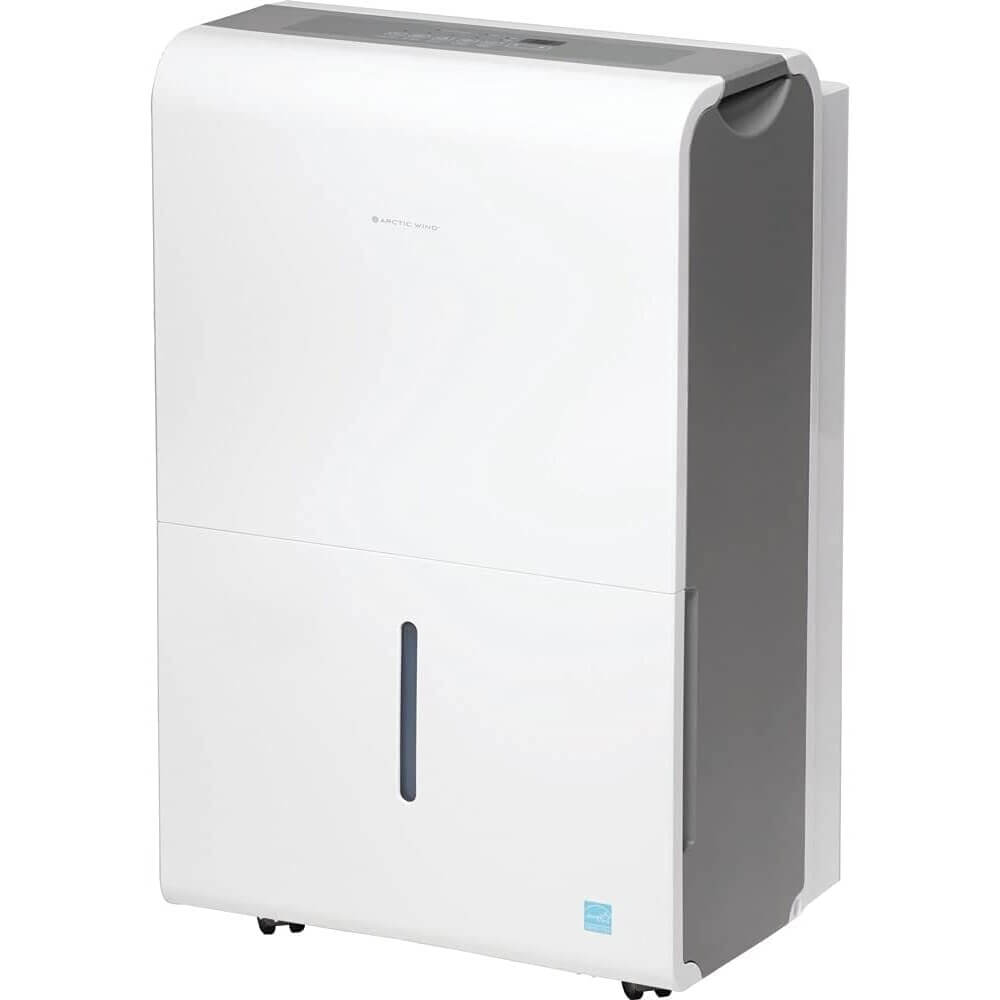
The Arctic Wind Flat Panel Dehumidifier earns its place as our top pick by combining real dehumidification performance with the kind of low power draw that makes it an excellent match for solar setups. It carries an ENERGY STAR certification, which means it meets strict efficiency standards set by the EPA, and it pulls noticeably less wattage than conventional dehumidifiers in the same capacity range. For anyone running a home solar system or a battery bank from a solar generator, that efficiency gap translates directly into more runtime per stored kilowatt-hour.
The flat panel design is genuinely practical. Unlike bulky upright dehumidifiers that demand floor space and clearance around the tank, the Arctic Wind sits flush against a wall and takes up far less room. It’s well suited to basements, laundry rooms, and bedrooms where space is at a premium. The unit runs quietly enough that it won’t disturb sleep, and the built-in auto-shutoff kicks in when the collection tank is full, so you don’t have to babysit it.
Performance across varying humidity levels is consistent. In moderately humid conditions, it cycles predictably and maintains the set humidity level without running continuously. In very humid environments, like a basement after heavy rain, it keeps pace well for a unit of this size. Reviewers consistently highlight that it does exactly what it claims to do, without the inflated specs you see from some budget brands. That reliability is particularly important when you’re relying on a unit to protect stored belongings or prevent mold in a space you’re not monitoring constantly.
The ENERGY STAR rating is the key factor for solar compatibility. Running a certified unit off your home solar system means you’re getting the same moisture control result for less energy drawn from your panels or battery storage. If you’re trying to make your solar setup do more, pairing it with an efficient appliance like this is the logical approach.
Features
- ENERGY STAR certified for high efficiency
- Flat panel design saves wall and floor space
- Auto-shutoff when collection tank is full
- Quiet operation suitable for bedrooms and living areas
- Consistent humidity control across different moisture levels
- Compatible with standard solar inverter setups
- ENERGY STAR certified, ideal for solar systems
- Slim flat panel design
- Reliable auto-shutoff
- Quiet enough for bedrooms
- Still requires AC power (via inverter for solar use)
- Tank capacity requires regular emptying in high humidity
2. Pro Breeze 215 sq ft Portable Dehumidifier
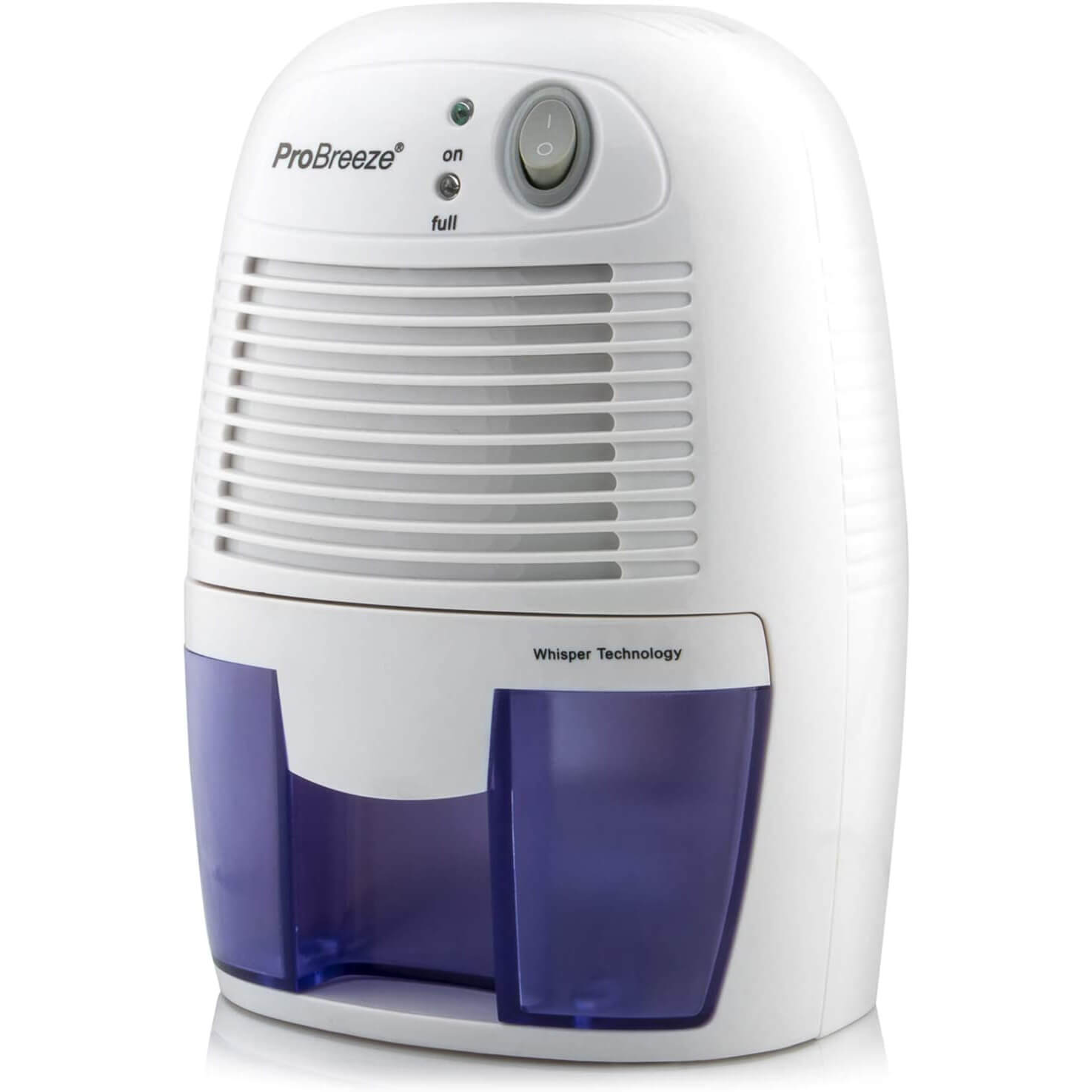
The Pro Breeze portable dehumidifier is a compact, lightweight unit that’s easy to move between rooms, making it a practical choice for anyone who needs flexible dehumidification across different spaces. Rated for up to 215 square feet, it’s sized right for bedrooms, home offices, bathrooms, and smaller living areas. Its relatively low wattage draw compared to full-size dehumidifiers makes it a solid option for running off a solar generator or battery backup during humid periods.
The built-in 16-ounce water tank is small enough that the unit stays compact but does require emptying fairly regularly in humid climates. The auto-shutoff activates when the tank is full, which prevents overflow and protects the unit. There’s also a continuous drain option for hands-free operation if you position it near a drain or run a hose out a window. That flexibility is useful in basements or utility rooms where you don’t want to check the tank every day.
One of the standout qualities of the Pro Breeze is how low-profile it is in terms of noise. At its quieter settings, it runs in the background without drawing attention, which matters in a home office or bedroom. The Peltier (thermoelectric) technology it uses has no compressor, which is why the noise floor stays low and why it draws less power than compressor-based alternatives. The tradeoff is that Peltier units are less effective in very cold or very damp conditions, so it’s best suited to moderate humidity environments rather than flooded basements.
For anyone looking to manage humidity in a single room or small space with minimal power consumption, the Pro Breeze is a straightforward and reliable choice. It’s also one of the more affordable options in this roundup, which makes it easy to run one in each problem room without a large upfront investment.
Features
- Covers up to 215 square feet
- 16-ounce water tank with auto-shutoff
- Peltier (thermoelectric) technology, no compressor
- Continuous drain option for hands-free operation
- Compact and lightweight, easy to move between rooms
- Low power draw, compatible with solar generators
- Quiet Peltier operation, no compressor noise
- Low power draw, good for solar use
- Affordable price point
- Flexible drain options
- Less effective in very cold or very damp conditions
- Small tank needs frequent emptying
3. Midea Cube 20 Pint Smart Dehumidifier
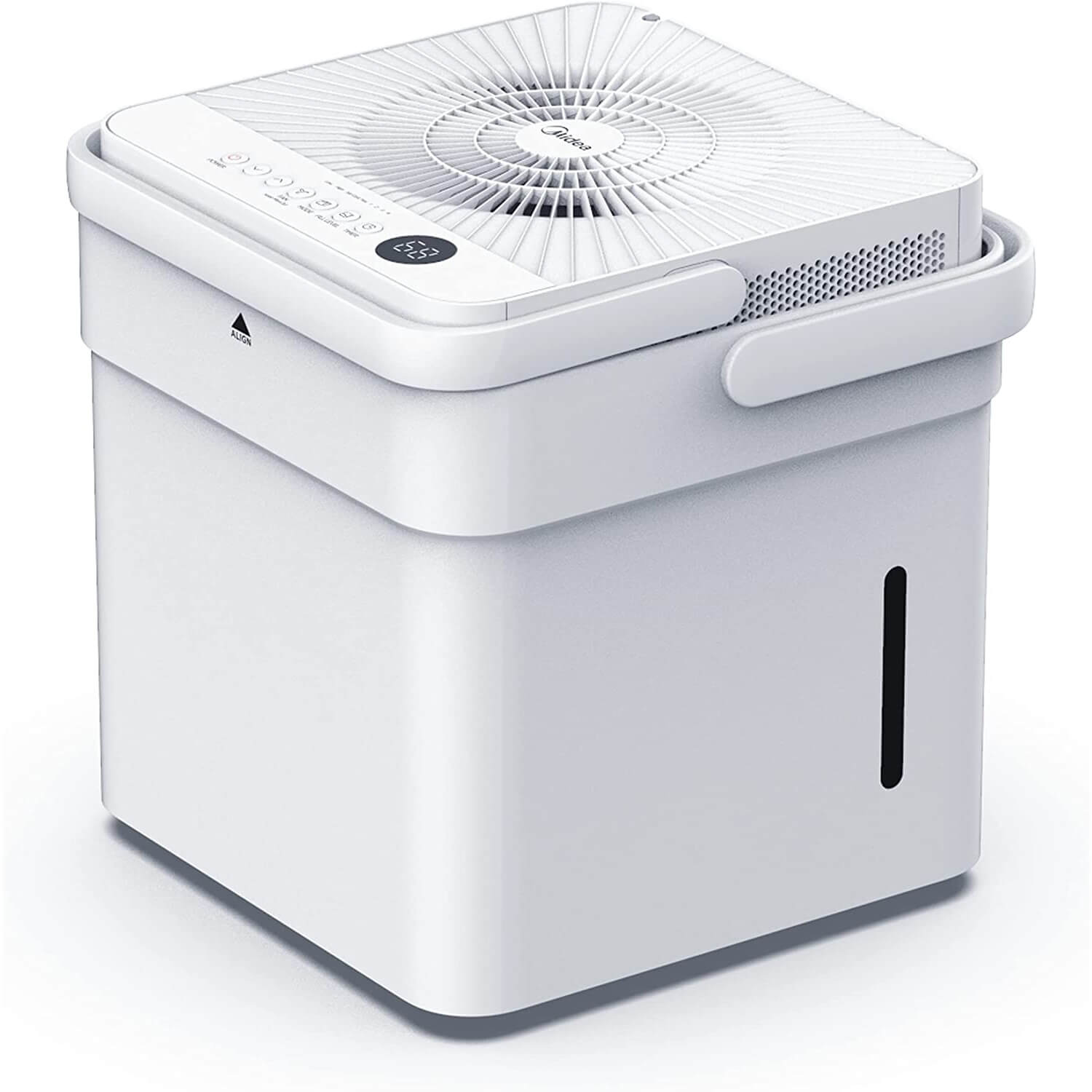
The Midea Cube is one of the more innovative dehumidifier designs on the market, and it earns that description through genuine engineering rather than marketing. The unit separates into two parts: the top cube section houses the dehumidification components, and the bottom section is a large-capacity water tank. This stacked design means you can slide the bottom tank out for emptying without moving the whole unit, which is much more convenient than lifting a heavy appliance to access a rear drain or bottom tank.
On the solar compatibility front, the Midea Cube punches well above its class. Its Integrated Energy Factor (IEF) rating is among the highest in its category, meaning it removes more moisture per kilowatt-hour than most competitors. For households with solar panel systems and battery storage, that efficiency translates to longer operating hours per stored kilowatt-hour. It’s the unit we’d recommend for anyone who has a full home solar setup and wants a dehumidifier that won’t put an outsized dent in their daily energy budget.
The smart features are a genuine plus, not a gimmick. You can monitor and control the unit via the Midea app, set schedules, and receive alerts when the tank is full. For off-grid or solar users who want to run the dehumidifier during peak solar generation hours (typically midday), the scheduling function makes that straightforward without any manual intervention. Set it to run from 10am to 3pm and let the solar panels cover the load.
It’s a larger unit than others in this roundup, suited to spaces up to 1,500 square feet. If you’re dealing with a whole-home humidity problem or a large basement, the Cube is the right scale of solution. The tank capacity is generous, and the quiet operation means it can run in occupied living areas without becoming an annoyance.
Features
- Innovative two-part design with slide-out tank
- High IEF rating, best-in-class energy efficiency
- Smart app control with scheduling
- Covers up to 1,500 square feet
- Quiet operation for occupied spaces
- Auto-restart after power outage
- Best-in-class energy efficiency for solar use
- Smart scheduling for peak solar hours
- Convenient slide-out tank design
- Covers large areas
- Higher price point
- Larger size, not ideal for tight spaces
4. Nakoair Solar Air Heater and Dehumidifier
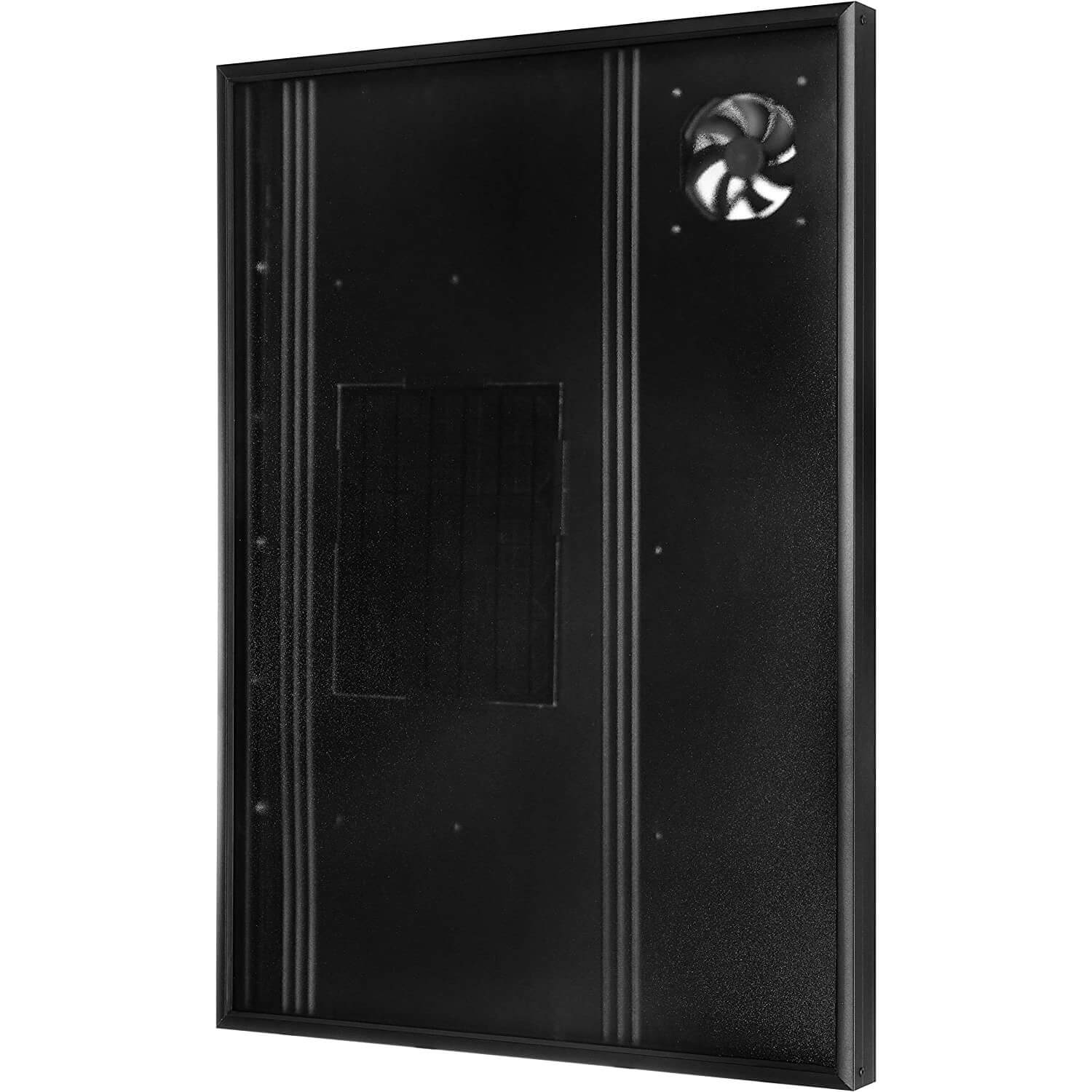
The Nakoair is the only unit in this roundup that is truly solar powered in the most literal sense: it has its own integrated solar panel and runs entirely without any external electricity supply. It mounts on an exterior wall, roof, or shed surface, draws in fresh outdoor air, heats it using solar energy, and then vents the warm, dry air into your space. The result is a continuous cycle of dry air circulation that actively removes moisture from the interior without drawing a single watt from your battery bank or solar inverter.
The application here is different from the other units in this list. The Nakoair isn’t a traditional refrigerant or desiccant dehumidifier. It’s a solar air collector that uses the heating effect of solar energy to dry the incoming air. That makes it particularly effective for sheds, log cabins, outbuildings, attic spaces, and any structure where ventilation is the primary moisture problem. If your space gets damp because of condensation and stale air rather than a high-moisture environment, the Nakoair addresses the root cause directly.
Installation is more involved than plugging in a standard dehumidifier. You’ll need to mount the unit on a south-facing surface (in the northern hemisphere) that gets good sun exposure, cut a vent hole in the wall, and secure the unit properly. The LCD thermostat and built-in fan controls give you reasonable management over when the unit runs. Once installed, however, the ongoing effort is essentially zero. There are no tanks to empty, no filters to replace on a regular schedule, and no electricity costs. It runs as long as the sun shines on the panel.
This unit works on sunny days and does nothing when it’s overcast, which is an important limitation to understand before buying. For seasonal damp control in a shed or garage that gets good sun exposure through summer and fall, it’s an excellent and truly zero-running-cost solution. For year-round humid climates or basement moisture control, pair it with one of the electric options from this list.
Features
- Fully solar powered, no external electricity required
- Integrated solar panel with built-in fan
- LCD thermostat for automated control
- Suitable for sheds, garages, attics, and outbuildings
- No tanks to empty, no ongoing running costs
- Wall or roof mountable
- Truly 100% solar powered, zero electricity cost
- No tanks or filters to manage regularly
- Ideal for sheds, garages, and outbuildings
- Only works when sun is shining
- Requires installation (wall or roof mounting)
- Not suitable for sealed or underground spaces
5. Gocheer Upgraded Dehumidifier
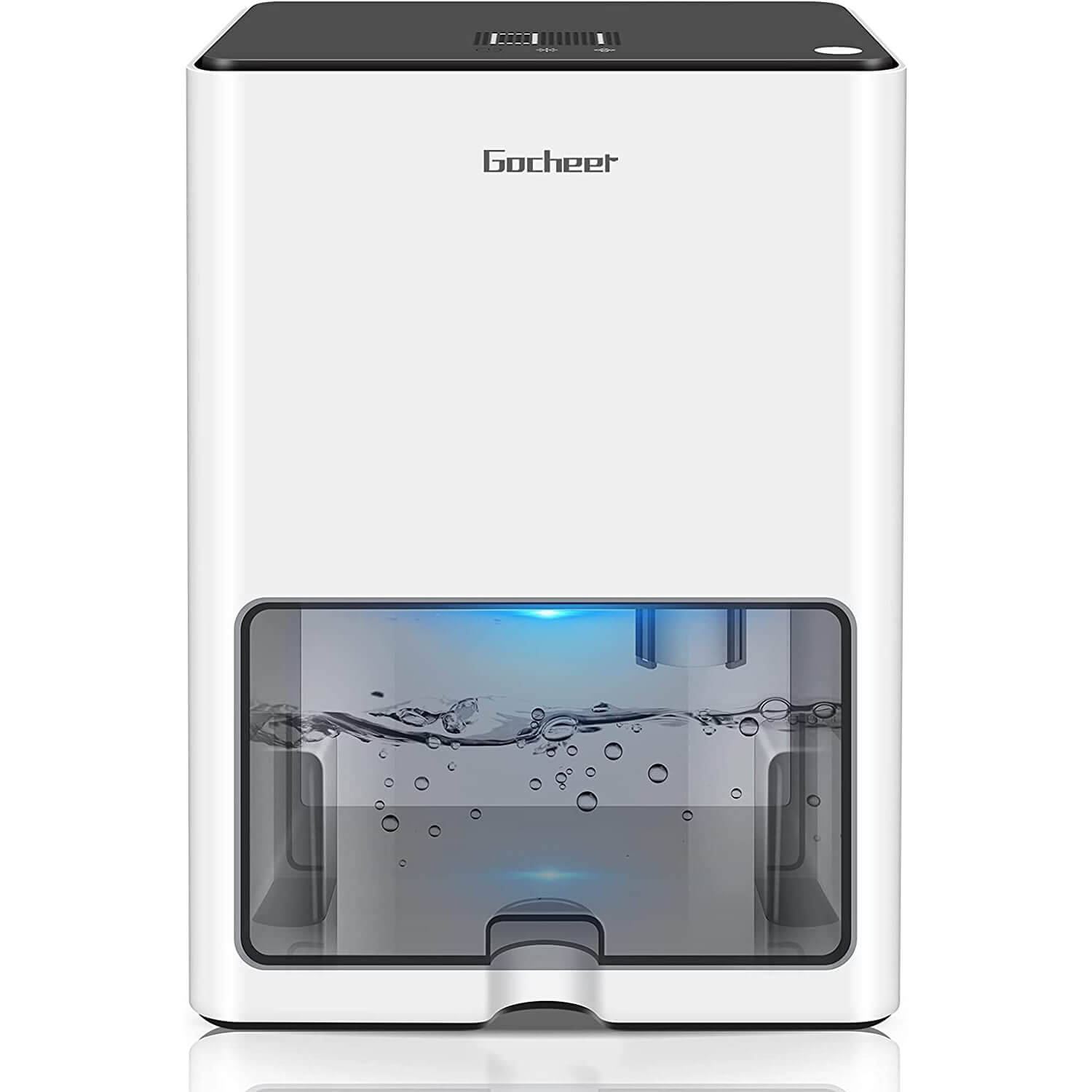
The Gocheer is a compact, no-fuss dehumidifier aimed squarely at smaller spaces: think closets, bathrooms, laundry rooms, small bedrooms, and RV interiors. At this size, the power draw is minimal, which is exactly what makes it a practical choice for anyone running a solar generator or portable power station. You don’t need a large inverter or significant battery capacity to keep this unit running, making it genuinely useful in off-grid scenarios.
The 52-ounce water tank is larger than you’d expect from a unit this compact, which means longer intervals between emptying compared to smaller competitors. The auto-off function activates reliably when the tank is full, so there’s no risk of overflow if you leave it running overnight or over a weekend. The unit’s control panel is straightforward, with humidity level settings and a 24-hour timer that lets you schedule operation around your solar generation window.
The Gocheer uses Peltier thermoelectric technology, which keeps the noise level low and eliminates the compressor vibration that makes some dehumidifiers intrusive in quiet spaces. It operates at a steady, almost ambient hum that most people stop noticing after a few minutes. That makes it particularly well suited to bedrooms, home offices, and RV interiors where you’re in the same room as the unit.
In terms of moisture removal, it’s effective in spaces up to about 220 square feet in moderate humidity conditions. It won’t tackle a flooded basement, but that’s not what it’s designed for. For keeping a smaller space fresh, dry, and protected from mold and condensation, especially when powered from a solar source, it does a reliable job without asking much of your energy budget.
Features
- Suitable for spaces up to 220 square feet
- 52-ounce water tank with auto-off
- 24-hour timer for scheduled operation
- Peltier thermoelectric technology, quiet operation
- Compact design for small rooms, RVs, and closets
- Low power draw, compatible with portable solar generators
- Very quiet Peltier operation
- Larger tank than competitors at this size
- 24-hour timer for solar scheduling
- Low power draw for off-grid use
- Limited to smaller spaces
- Less effective in very cold conditions
Solar Powered Dehumidifier Buying Guide
Key Takeaways
- True solar powered dehumidifiers (like the Nakoair) run directly from a solar panel, but most solar compatible options are energy-efficient electric units designed to work well with solar inverter setups.
- For portable solar power stations and generators, choose low-wattage Peltier units (like the Pro Breeze or Gocheer), which draw significantly less power than compressor-based alternatives.
- For whole-home solar setups with battery storage, ENERGY STAR-rated compressor units like the Arctic Wind or Midea Cube offer the best moisture removal per kilowatt-hour.
- Scheduling your dehumidifier to run during peak solar generation hours (typically 10am to 3pm) maximizes your panel output and minimizes battery drain.
- For sheds, garages, and outbuildings with no electrical access, the Nakoair solar collector is the only truly off-grid option in this roundup.
- Tank capacity and auto-shutoff are essential features if you’re not checking the unit daily.
What Is a Solar Powered Dehumidifier?
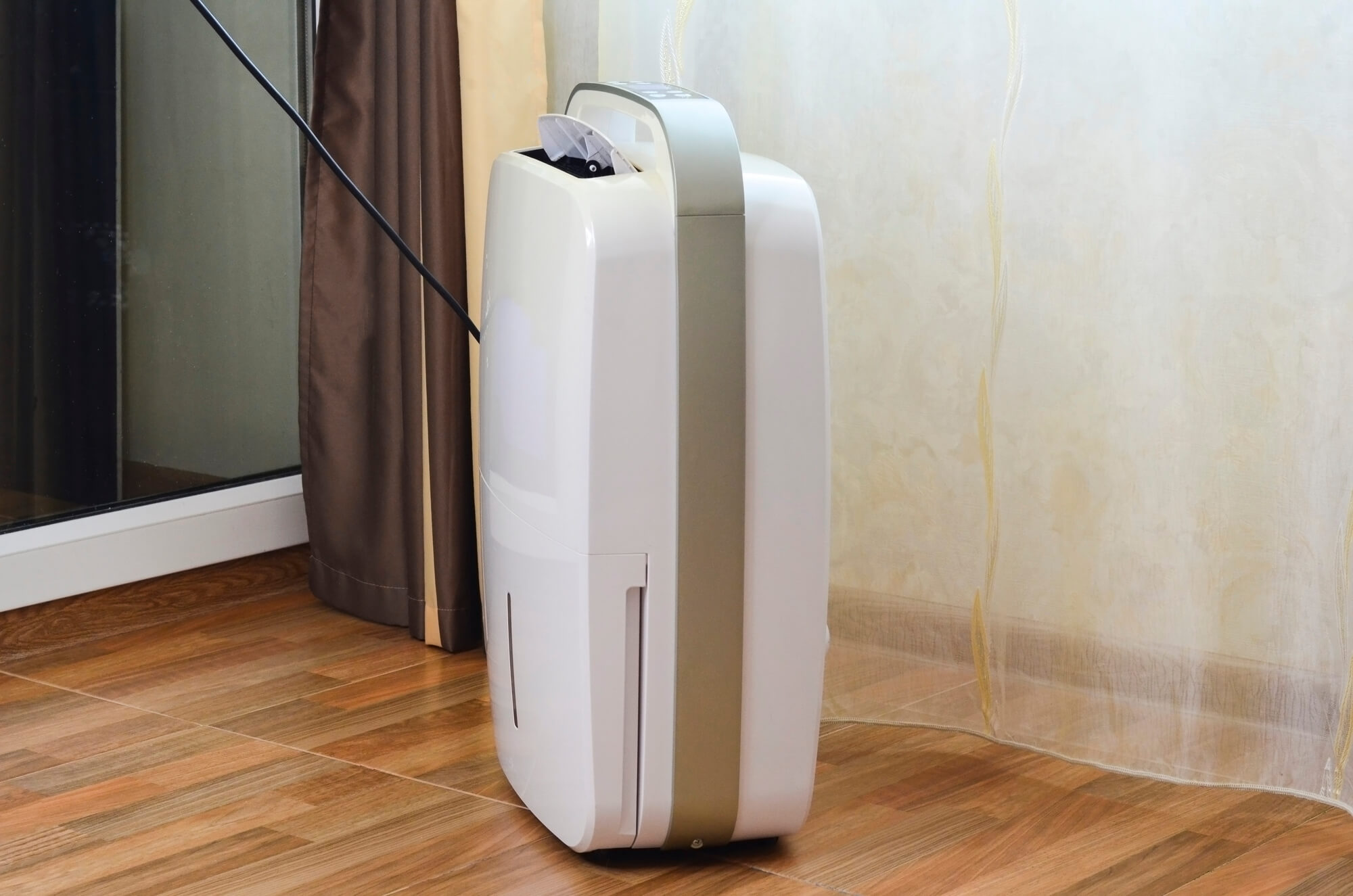
A solar powered dehumidifier is any dehumidifier that runs on electricity generated by solar panels, either directly through an integrated panel (like the Nakoair) or indirectly via a solar energy system, battery bank, or solar generator. The term covers a wide range of products, from small thermoelectric units that draw just 20 to 70 watts up to larger compressor-based models rated at 300 watts or more.
The common thread is energy efficiency. A dehumidifier that draws 200 watts will put a real dent in your daily solar budget; one that draws 50 watts barely registers. Understanding your solar system’s capacity and matching it to the right dehumidifier size and type is the key to making this work effectively. A small Peltier unit might not handle a whole basement, but it’s very well suited to an RV or a single room in a cabin running off a modest solar setup.
How Does a Solar Dehumidifier Work?
Compressor-based dehumidifiers work like a refrigerator, passing air over a cold coil to condense moisture out of it, then collecting that water in a tank or draining it away. They’re effective across a wide temperature range and can handle high-humidity environments, but they draw more power because they run a refrigerant compressor.
Peltier (thermoelectric) dehumidifiers use a semiconductor-based heat pump instead of a refrigerant compressor. They’re quieter, draw less power, and have no moving compressor parts to wear out, but they’re most effective in moderate humidity conditions and smaller spaces. For solar powered use in a bedroom or small room, a Peltier unit is often the right balance of efficiency and performance.
Solar collector dehumidifiers like the Nakoair work differently again: they use solar energy to heat incoming air, which dries it naturally as warm air holds more moisture than the cooler interior air it replaces. These units are best for ventilation-driven moisture problems in outbuildings and attic spaces, not for sealed spaces or basements.
Benefits of Using a Solar Powered Dehumidifier
The most direct benefit is lower running costs. A standard dehumidifier running 8 hours a day can add $15 to $30 or more to your monthly electricity bill depending on your rate and the unit’s wattage. Running that same unit off solar panels eliminates that cost entirely, or very close to it. Over a 5-year lifespan, the savings are meaningful.
There’s also an environmental angle. Running appliances off renewable solar energy reduces your reliance on grid power and, in most US states, reduces the carbon footprint of keeping your home dry and mold-free. And for off-grid properties, solar powered dehumidification is often the only practical option grid power isn’t available, and running a generator continuously to power a dehumidifier is expensive and noisy.
Sizing a Solar Dehumidifier for Your Space
Dehumidifier capacity is measured in pints per day, referring to how much moisture the unit pulls from the air over 24 hours under standard conditions (60% RH, 80°F). Solar-powered models are almost universally low-capacity units, typically in the 20 to 35 pint per day range because their panel and battery configurations can’t sustain the compressor loads that larger conventional units require. That’s fine for spaces up to about 1,500 square feet at moderate humidity levels, but it won’t keep pace with a chronically damp basement or a flooded crawl space.
A quick rule of thumb: match the pints-per-day rating to your square footage as follows. Up to 500 square feet in a moderately damp space (musty smell but no visible moisture) needs about 10 to 12 pints. 500 to 1,000 square feet with visible sweating walls or standing puddles needs 25 to 30 pints. At the larger end of what solar models offer, you’re looking at supplementing rather than replacing a grid-tied unit in a seriously damp space. Be honest about your actual conditions rather than buying to the panel wattage.
Also account for temperature. Dehumidifiers lose efficiency significantly below 65°F because the refrigerant cycle is less effective at lower temperatures. A solar dehumidifier rated at 30 pints per day at 80°F might deliver only 15 to 18 pints at 55°F in a cool basement or garage. If your target space gets cold, either size up or consider a desiccant-type model, which operates effectively in cooler conditions.
Solar Panel Requirements and Off-Grid Viability
The biggest practical limitation of solar-powered dehumidifiers is their duty cycle. A typical compressor-based dehumidifier draws 300 to 700 watts continuously, which requires a substantial solar panel and battery setup to run reliably off-grid. Most “solar dehumidifiers” on the market are actually grid-tied units with a solar-assist mode, or they’re small thermoelectric or desiccant designs that draw only 30 to 150 watts — significantly less effective but genuinely solar-compatible.
For a true off-grid solar dehumidifier running on a compressor, you need to calculate your daily watt-hour demand and size your panel and battery bank accordingly. A 500W unit running 8 hours a day needs 4,000 watt-hours, which requires roughly 1,200 to 1,500 watts of panel capacity (accounting for charge losses and non-peak sun hours) and a battery bank of at least 400 amp-hours at 12V. Most residential solar setups can handle this, but it’s worth doing the math before buying rather than after.
The honest recommendation for most buyers is this: if your space has grid power, a grid-tied dehumidifier paired with solar panels on your home system is more practical than a standalone solar dehumidifier. Standalone solar dehumidifiers make the most sense for sheds, boat bilges, RV storage, or other off-grid applications where running power is genuinely impractical and the humidity level is moderate rather than severe.
Things to Keep in Mind Before Buying
The most important factor is matching the dehumidifier’s wattage to your solar system’s capacity. A 300-watt dehumidifier running 8 hours a day needs 2.4 kilowatt-hours of stored energy per day. If your battery bank holds 5 kilowatt-hours and you have other loads to power, that dehumidifier will eat half your daily storage. A 50-watt Peltier unit, by contrast, uses just 0.4 kilowatt-hours for the same runtime.
Also consider the coverage area you need to dehumidify. Small Peltier units handle 150 to 300 square feet effectively. If you have a large open-plan space or a whole-home humidity problem, you’ll need a higher-capacity compressor unit, which means more wattage and more solar storage. There’s no way around that trade-off you simply need to ensure your system can handle the load.
Types of Solar Powered Dehumidifiers
There are three main types to consider. Peltier (thermoelectric) dehumidifiers are compact, quiet, and low-power, ideal for single rooms, RVs, and small off-grid cabins running on a modest solar setup. Compressor dehumidifiers are more powerful and cover larger areas, making them the right choice for whole-home solar systems with adequate battery storage. And solar collector units like the Nakoair mount externally and run entirely off an integrated solar panel, making them the purest off-grid option for sheds and outbuildings.
For most home solar users, a compressor unit with an ENERGY STAR rating is the best balance of performance and efficiency. For truly off-grid or limited-power situations, a Peltier unit or the Nakoair solar collector will serve you better.
Frequently Asked Questions
Can a solar panel run a dehumidifier directly?
Yes, but you need the right setup. A standard dehumidifier runs on AC power, so you need a solar inverter to convert the DC output from your panels to AC. You also need either enough panel output to cover the dehumidifier’s wattage during operation, or a battery bank to store solar energy for use when the sun isn’t shining. Small Peltier dehumidifiers drawing 20 to 70 watts are much easier to power from solar than large compressor units drawing 300 to 700 watts.
How many solar panels do I need to run a dehumidifier?
It depends on the dehumidifier’s wattage and your location’s average sun hours. A 150-watt dehumidifier running 8 hours a day uses 1.2 kilowatt-hours. A single 300-watt solar panel producing 4 to 5 peak sun hours per day generates 1.2 to 1.5 kilowatt-hours, so one panel could theoretically cover a small energy-efficient dehumidifier. For larger units or longer run times, you’ll need multiple panels and battery storage. Use a solar calculator with your specific wattage and location for accurate sizing.
What is the most energy-efficient type of dehumidifier for solar use?
ENERGY STAR-certified compressor dehumidifiers offer the best moisture removal per kilowatt-hour for larger spaces. For very small spaces or off-grid setups with limited power, Peltier (thermoelectric) dehumidifiers draw significantly less power, typically 20 to 70 watts, making them easier to run from a solar generator or portable power station. The Nakoair solar collector is the only option that runs entirely off its own integrated solar panel with no external power required.
Can I run a dehumidifier off a solar generator?
Yes, if the solar generator’s inverter output capacity exceeds the dehumidifier’s wattage. Check your generator’s continuous watt output rating and your dehumidifier’s wattage label. Small Peltier units (50 to 100 watts) run easily off most portable solar generators. Larger compressor units (300 to 700 watts) need a more powerful generator and may drain the battery faster than the solar panel can recharge it in a single day, so runtime will be limited.
What humidity level should I set my solar powered dehumidifier to?
The ideal indoor relative humidity level is between 30 and 50 percent. Setting your dehumidifier to 45 to 50 percent is a good starting point. Below 30 percent the air gets uncomfortably dry. Above 60 percent, mold growth becomes a significant risk on surfaces and in wall cavities. For storage spaces protecting wood, electronics, or fabrics, keeping humidity below 50 percent is particularly important.
Do solar powered dehumidifiers work in winter?
Energy-efficient electric dehumidifiers powered by solar systems work year-round as long as your panels are generating power and your battery storage is adequate. Performance may be reduced in very cold temperatures (below 65 degrees Fahrenheit), as compressor efficiency drops and Peltier units become largely ineffective below around 60 degrees. The Nakoair solar collector works only when the sun is shining, which limits it in northern states during winter. For year-round cold-climate use, a compressor unit with a low-temperature mode is the best option.
Summing Up
Solar powered dehumidifiers cover a wide spectrum, from compact Peltier units that run off a portable power station to ENERGY STAR compressor models that slot into a home solar setup, right through to the Nakoair, which runs on nothing but sunlight. The right choice depends on the size of your space, your solar system’s capacity, and whether you need all-day operation or just a few hours of moisture control during peak generation.
If you’re also thinking about solar panels for your home, call (855) 427-0058 for a free quote — it takes just a few minutes to find out what installation would cost and save you in your area.
Updated