
Solar power has inspired some of humanity’s most creative innovations, from everyday devices we barely notice to cutting-edge technologies that seem pulled from science fiction. What began with solar-powered calculators in the 1970s has expanded into a universe of inventions: vehicles with solar roofs, satellites powered by the sun, entire buildings that generate their own energy, and emerging technologies like solar glass and rollable solar panels that will reshape how we think about energy. This guide explores the most practical and transformative solar inventions today, from established technologies that have proven their worth to emerging innovations that point toward the future of sustainable living.
You’ll discover how solar technology powers everything from agriculture to space exploration, understand which solar inventions already make financial sense for your home, and get a glimpse of what’s coming next.
Established Solar Technologies That Changed Everything
Residential Solar Panel Systems
The fundamental invention, residential rooftop solar panels (photovoltaic or PV systems) have become mainstream. A typical home solar array uses 15-25 modern silicon panels, generating 5-10 kW and producing 30-50% of a household’s annual electricity. Costs have dropped 70% over the last decade; a fully installed 6 kW system now costs $9,000-$15,000 before the 30% federal tax credit. Over 3.5 million US homes currently have solar, and adoption continues accelerating. This is the solar invention with the clearest return on investment: 6-9 year payback in most sunny states, then 20+ years of free electricity.
Solar Water Heaters
Among the oldest large-scale solar technologies, solar water heaters have been deployed since the early 1900s. Modern systems use flat-plate collectors or evacuated tube collectors mounted on roofs, warming water that circulates through your home’s hot water tank. In sunny climates, a solar water heater can provide 50-80% of annual hot water heating energy, reducing utility bills by $500-$1,500 annually. Cost: $3,000-$8,000 installed. These systems are less glamorous than PV but highly efficient (40-50% of solar energy converts to usable heat, versus 15-20% for electrical PV). In Arizona, Florida, and California, solar water heaters remain popular for retrofit and new homes.
Solar Street Lights
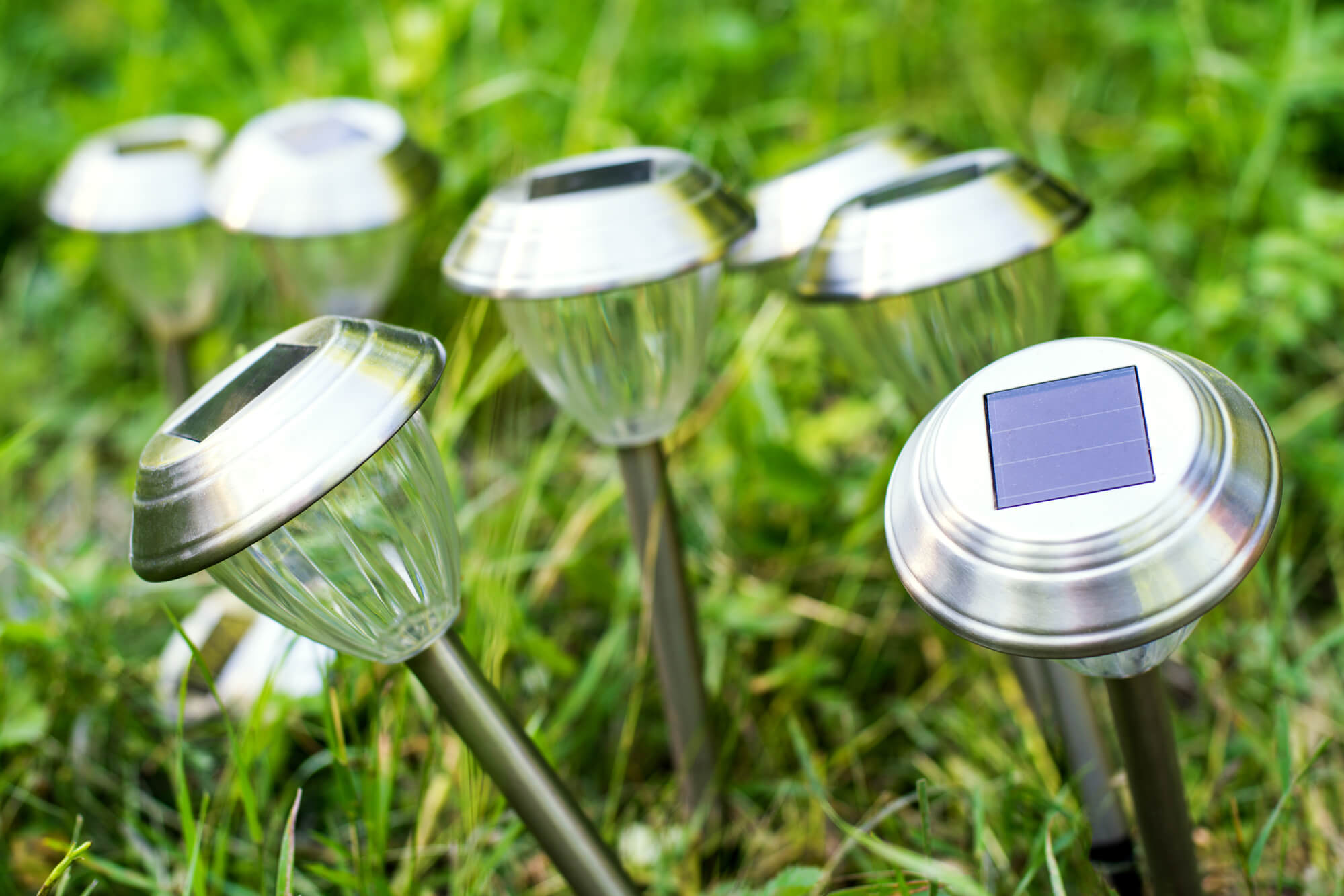
Solar-powered LED street lights eliminate the need for grid electricity and trenching for cables in remote areas, parking lots, and rural roads. A typical solar street light includes a small PV panel (50-100 W), a rechargeable battery, an LED fixture, and a controller. They’re reliable, low-maintenance, and increasingly cost-competitive with grid-powered streetlights. Municipalities worldwide have installed millions, particularly in developing countries where grid infrastructure is sparse. US cities are now adding solar street lights to new developments and replacing legacy mercury-vapor lights.
Solar-Powered Vehicles
Solar Panel Roofs on Production Cars
Several manufacturers have integrated solar panels into vehicle roofs to supplement battery charging:
- Tesla Solar Roof: Integrated into some Model Y variants, Tesla’s solar glass roof can add 5-15 miles of range per day in ideal sunlight. The panels are woven into the roof structure, minimizing aerodynamic drag.
- Aptera Motors (2024): A futuristic three-wheeled vehicle with 17.7 kWh battery and 40 square feet of integrated solar panels. Aptera claims the vehicle can charge fully from the sun alone in ideal conditions (though real-world range is 5-10 miles per day).
- Lightyear (Netherlands): Their Lightyear 0 is a long-range EV with integrated solar panels, claiming 40+ miles of solar-added range daily. Premium pricing ($250,000+) has limited adoption.
- Hyundai and others: Several Asian manufacturers are testing solar roof modules as optional add-ons for EVs, marketed as range extenders.
Reality check: Most solar roofs add 5-20 miles of range daily, meaningful but not transformative. They work best in sunny climates and for daily commutes. Rain, snow, and shade reduce output by 50-70%. Currently, solar vehicle roofs are more marketing gimmick than necessity, but they’re rapidly improving.
Solar Boats and Aircraft
Solar-powered boats have become practical for recreational use and education. Solar panel arrays covering most of the hull or a deployable deck provide power for electric propulsion motors. Speed is limited (5-10 knots), but range is essentially unlimited on sunny days.
Solar aircraft are more experimental: NASA’s Pathfinder, Helios, and modern drones like the Zephyr have achieved sustained flight powered by large wing-mounted solar arrays. The record is held by NASA’s Helios (2001), which reached 96,863 feet on solar power alone. Commercial applications remain niche (long-duration surveillance drones, atmospheric research), but they prove solar flight is feasible.
Everyday Solar-Powered Consumer Products
Solar Calculators
The first mass-market solar device, solar calculators emerged in the 1970s and revolutionized portable computing. A tiny photovoltaic cell powers the LCD display and processor indefinitely. You can still find them today: reliable, no batteries needed, indestructible. While replaced by smartphones, solar calculators remain popular in schools and niche markets because they don’t require charging.
Portable Solar Chargers and Power Banks
Modern portable solar chargers range from small backpack-sized panels (20-30 W) to full solar power stations (2-5 kW battery capacity). Popular examples:
- Lightweight panels (20-50 W): $50-$200. Charge phones and small devices on hiking trips or during outages. Output: 1-5 hours of phone charging per full day of sunlight.
- Solar power stations (2-10 kW capacity): $1,000-$5,000. Integrated battery with multiple outlets (USB, AC, DC). Useful for RVs, camping, and emergency backup. 20-50 watts of integrated solar panels provide 10-15% daily recharge on sunny days.
- Foldable solar panels (100-200 W): $300-$800. Portable systems for overlanding or extended off-grid living. Can charge a small power station in 6-8 hours of sunlight.
These are genuine game-changers for outdoor enthusiasts and emergency preparedness. Compared to gasoline generators, they’re quieter, require no fuel, and have virtually no maintenance.
Solar Pumping Systems
Solar-powered water pumps are used extensively in agriculture, livestock watering, and remote well systems. A surface or submersible pump powered by a small PV array (50-300 W) can deliver 500-5,000 gallons per day depending on lift height and array size. These systems are incredibly popular in rural India, Africa, and Latin America where grid power is unavailable or unreliable. Cost is $1,000-$5,000 for a small system with battery backup. Over 10-20 years, the total cost of ownership is far lower than diesel pumps or grid electricity.
Emerging and Advanced Solar Inventions
Floating Solar Farms (Floatovoltaics)
Floating solar arrays deployed on reservoirs, ponds, or lakes maximize land efficiency and benefit from water cooling. Water keeps panels cooler than land-based arrays, increasing efficiency by 5-10%. Floatovoltaics also reduce algae growth and evaporation from the water body. Cost is higher than rooftop solar (some modules are specialized), but the long-term ROI is attractive for utilities and water districts. China leads in deployment with gigawatts of floating capacity.
Solar Desalination
Pairing solar power with reverse osmosis or distillation systems addresses water scarcity in arid regions. Solar desalination turns saltwater or brackish groundwater into fresh drinking water without grid electricity or diesel generators. Capacity ranges from 100 gallons daily (remote communities) to 100,000+ gallons daily (utility scale). Costs are dropping as panel prices fall, making solar desalination increasingly viable in coastal and inland arid regions.
Transparent and Semi-Transparent Solar Panels
Next-generation solar technology aims to make panels invisible or translucent, integrating them into windows, skylights, and building facades:
- Solar windows (perovskite and organic PV): Lab prototypes of perovskite solar cells allow 5-30% of visible light to pass through while generating electricity. Companies like Oxford PV and Saule Technologies are commercializing these for building-integrated photovoltaics (BIPV). Deployment could reduce building energy consumption by 20-40%.
- Solar glass (transparent silicon): Blue Device and other researchers have created nanoparticle-infused glass that generates electricity while remaining visually clear. Potential applications: building facades, skylights, car windows.
- Colored solar windows: Some perovskite formulations can be tuned to absorb different light wavelengths, creating colored panels that generate electricity while matching architectural aesthetics.
Status: Mostly in research and early commercialization stages. Efficiency is lower than standard panels (10-20%), but improving rapidly. First real-world deployments are appearing in 2024-2025.
Perovskite Solar Cells
Perovskite materials are a game-changing solar cell technology with potential efficiency over 30% (vs. 20-22% for current silicon). They’re cheaper to manufacture (solution-based printing vs. silicon crystal growing), lightweight, and flexible. Downsides: durability and stability concerns in wet or UV-heavy environments have delayed commercialization. Companies like Oxford PV and Tandem Power are now shipping tandem perovskite-silicon panels with 30%+ efficiency. Expected commercialization at scale: 2025-2030.
Vehicle-Integrated Solar (Solar Roof Tiles)
Beyond cars, solar integration extends to vehicle structures themselves. Several companies are developing solar roof tile systems designed to replace traditional shingles on RVs and boat cabins, providing integrated power generation. Brands like Solarstic and Victron Energy offer marine-grade solar panels that double as shade or weather protection.
Indoor Solar and Ambient Light Harvesting
Indoor solar cells optimized for low-light environments can power sensors, smart locks, and IoT devices using ambient indoor light (lamps, sunlight through windows). While output is low (micro-watts), it’s sufficient for battery-free operation of low-power devices. Companies like PowerCast and V-Technology have deployed ambient light harvesting in warehouses, parking garages, and smart buildings.
Rollable and Flexible Solar Panels
Ultra-thin, flexible solar cells printed on plastic or fabric substrates can be rolled up and deployed like a tent or tarp. BiLight’s perovskite solar curtain is only 0.1 mm thick and can be integrated into textiles. Potential applications: emergency shelters, military deployments, and portable power. Still experimental, but rapid development is expected.
Solar-Powered Satellites and Space Applications
The International Space Station generates power from two large solar array wings (each about 112 feet long). Earth-observation satellites, communications satellites, and deep-space probes all use solar panels or nuclear-powered radioisotope thermoelectric generators. Solar sails (using radiation pressure from the sun to propel spacecraft) are being tested for deep-space missions without fuel consumption.
How to Benefit from Solar Technology Today
If you’re interested in solar power beyond passive observation, several practical options exist:
Residential Solar PV (Most Practical)
Installing a rooftop solar array is the highest-ROI solar investment for most homeowners. A 6-8 kW system costs $12,000-$20,000 before the 30% federal tax credit (through 2032), bringing net cost to $8,400-$14,000. Payback typically occurs within 6-10 years, then you enjoy free electricity for 25+ years. In sunny states (California, Texas, Arizona, Florida), payback is even faster.
Solar Water Heating (Secondary)
If you have high hot-water usage and sunny conditions, a solar water heater complements rooftop PV. It handles heating independently, freeing your PV for other loads. Cost: $3,000-$8,000, payback: 7-15 years depending on your hot-water heater’s current efficiency.
Solar Portable Power (Immediate Impact)
A solar power station or portable panels provide emergency backup and are useful for camping or outdoor work. Cost: $500-$2,000 for a capable system. No permits, no installation, works immediately. Great first step if you’re interested in solar without committing to home installation.
Solar Battery Storage (With Caution)
Pairing solar PV with a Tesla Powerwall or similar battery costs $10,000-$20,000 installed but enables true energy independence and outage resilience. Payback is slower than PV alone (15-20 years) unless you live in an area with frequent outages or expensive demand charges. Best combined with rooftop PV for maximum benefit.
Frequently Asked Questions
Which solar inventions are closest to mainstream adoption?
Residential PV, solar water heaters, and solar street lights are already mainstream. Solar power stations and portable chargers are rapidly adopted by consumers. Floating solar farms are being deployed at utility scale. Perovskite and transparent solar panels are in early commercialization (2024-2025) and will reach mass production in 5-10 years.
Can solar vehicle roofs replace my home’s solar system?
No. A solar-roofed car generates 5-20 miles of range daily, useful for commuting but not sufficient to power a home. A home solar system (6-8 kW) generates 20-30 kWh daily; a car roof generates less than 5 kWh daily. They serve completely different purposes. However, pairing a solar car with a home PV system maximizes self-consumption and energy independence.
Are perovskite solar panels ready for my home?
Not yet. Perovskite prototypes reach 30%+ efficiency in labs, but commercialized products are just becoming available (2024-2025) at premium prices. Current silicon panels (20-22% efficiency) are cheaper and more proven. Wait another 3-5 years for perovskite to drop in cost and prove long-term durability before switching.
Do solar-powered vehicles actually work in cloudy climates?
Solar-powered vehicles (cars, boats, aircraft) work in cloudy climates but generate less power. A solar roof in Seattle (cloudy year-round) might add 2-5 miles of range daily versus 15-20 miles in Phoenix. For practical transportation, solar roofs remain supplementary; the main battery must be charged from grid or dedicated solar panels. They’re most effective in consistently sunny climates.
Which solar invention offers the best long-term investment for homeowners?
Residential rooftop PV remains the best investment. A 6-8 kW system costs $12,000-$20,000 after incentives, returns 6-9 years payback in most sunny states, then generates free electricity for 25+ years. Solar battery storage adds resilience but increases payback to 15-20 years. Combined, they’re the most complete solar investment for homes in sunny regions.
What’s the real efficiency of transparent solar panels?
Current transparent or semi-transparent solar panels operate at 10-20% efficiency (vs. 20-22% for standard opaque silicon panels). The trade-off is that allowing visible light to pass through reduces the solar energy available for conversion. As the technology matures, efficiency will improve, but they’ll likely remain 5-10% less efficient than standard panels. Their value lies in architectural integration, not peak power output.
Summing Up
Solar power has moved far beyond rooftop panels. Today’s solar inventions range from water heaters and street lights (proven and affordable) to emerging technologies like transparent solar windows and perovskite cells that will reshape energy generation in the coming decade. For homeowners seeking immediate financial returns, residential PV remains unbeatable: 6-9 year payback, 25+ year lifespan, and declining costs. For those chasing innovation, portable solar chargers and power stations are affordable entry points. Looking ahead, perovskite solar cells, building-integrated photovoltaics, and floating farms will drive the next wave of solar adoption, particularly in urban environments and water-stressed regions. If you’re ready to explore solar options for your home, call (855) 427-0058 or get a free quote to see what makes sense in your location and climate.
Updated