
Solar panels are designed to withstand weather without covers under normal operating conditions — their tempered glass, anodized aluminum frames, and IP68 junction boxes provide built-in protection against rain, hail, UV, and temperature extremes. But there are specific situations where adding a protective cover makes sense: during construction work that could shower debris onto panels, during severe hailstorm forecasts in hail-prone regions, during extended storage of portable panels, or for solar pool covers that use an entirely different type of solar material. Understanding which type of cover fits your situation — and which are unnecessary or potentially harmful — saves money and prevents damage.

Do Solar Panels Need Protective Covers for Regular Weather?
Standard roof-mounted solar panels do not need protective covers for normal weather — including rain, snow, wind, and temperature extremes. They are engineered and tested for decades of outdoor exposure under IEC 61215 and IEC 61730 standards, which include:
Hail resistance: certified to withstand 25mm diameter hail at 23 m/s (approximately 51 mph). Thermal cycling: designed to withstand 200 cycles of −40°C to +85°C without degradation. UV resistance: 30+ years of UV exposure at 1000 W/m² equivalent. Mechanical load: 2,400 Pa minimum wind load and 5,400 Pa snow load.
Covering panels during normal operation blocks sunlight and generates no electricity. Covering them unnecessarily also creates condensation and moisture trapping risks if the cover is not properly ventilated.
Temporary Protective Covers for Hail
In hail-prone regions (Colorado Front Range, Kansas, Nebraska, Texas Panhandle, Oklahoma — the “hail alley” states), large hail can exceed the IEC 25mm hail certification and crack panel glass. Some homeowners in high-risk areas use temporary protective panels during severe weather forecasts.
Foam mat covers: Thick polyurethane or polyethylene foam mats (1–2 inches thick) cut to panel dimensions and placed over panels before a severe storm. Foam absorbs hail impact energy effectively. Heavy enough not to blow off in moderate wind but require securing straps in high-wind storms. Not designed for permanent installation — remove after the storm to resume generation. Limitations: labor-intensive (must climb roof before storm), not practical for large arrays, requires advance warning time.
Polycarbonate panel covers: Rigid polycarbonate sheets (same material as bulletproof glass but thinner) installed on a frame above the panel surface — functioning like a sacrificial second layer. Some systems use hinged polycarbonate frames that can be dropped into place over panels. More durable than foam but heavier and more expensive. Primarily used in commercial or agricultural solar installations where panel replacement would be very costly.
Hail netting: Heavy agricultural hail netting (used to protect vineyards and orchards) can be deployed over solar arrays. Less effective than solid covers at stopping large hail but reduces impact velocity for smaller hail. Used in wine-region agrivoltaics where hail protection serves dual purpose (panels + crops).
Insurance vs covers: For most residential homeowners, hail damage to solar panels is covered under standard homeowner’s insurance — the same as for a roof or skylight. The practical approach in hail-prone areas is to verify that your insurance policy covers solar panels as part of the dwelling structure, rather than attempting to cover panels before every severe weather warning.
Portable Solar Panel Covers and Cases
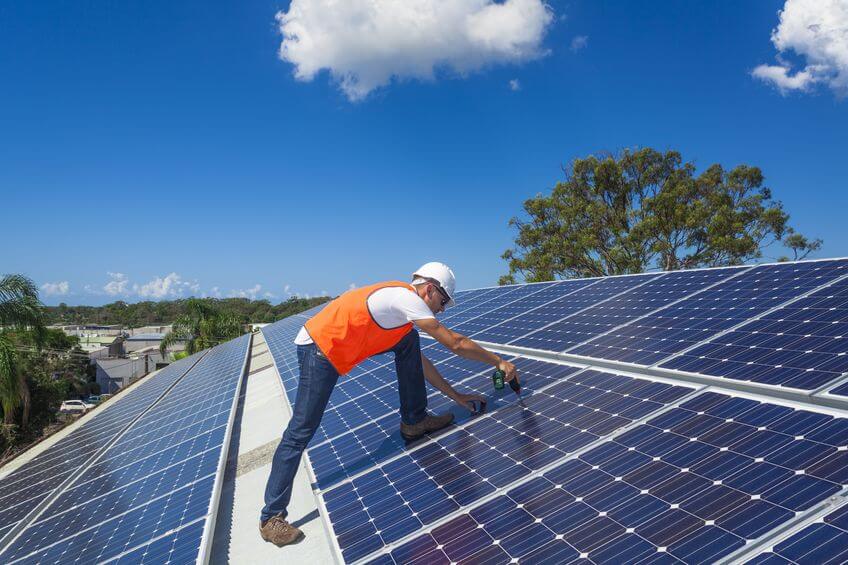
Portable solar panels — used for camping, RV travel, and emergency power — benefit from protective covers for storage and transport. Unlike roof-mounted panels, portable panels are handled frequently and exposed to impact, scratching, and moisture infiltration in ways that stationary installations are not.
Carrying cases and sleeves: Soft cases (neoprene or oxford fabric) protect the panel face from scratching during transport. Rigid carrying cases (foam-lined hard cases) protect against impact during travel — particularly useful for portable panels transported in truck beds, ATV storage, or backpacking. Most ETFE-faced portable panels (GoPower, Renogy Flex, Jackery SolarSaga) offer optional carrying cases.
ETFE vs glass face panels — protective differences: Most portable panels use ETFE (ethylene tetrafluoroethylene) film instead of tempered glass on the face — significantly lighter but more susceptible to surface scratching. Keeping an ETFE panel in a soft case when not in use preserves the surface and prevents micro-scratches that reduce light transmission over time. Glass-face portable panels (more durable but heavier) are less sensitive to surface handling.
Rain covers for RV and boat panels: For portable panels mounted semi-permanently on RV roofs or boat decks without tilt frames, covers are not typically used — these panels are designed for continuous outdoor exposure. However, in winter storage situations (RV in covered storage), removing or covering panels may be appropriate if the storage facility has risk of impact from equipment or other vehicles.
Anti-Bird and Critter Guard Mesh — A Form of Protection
While not a “cover” in the traditional sense, anti-bird mesh (critter guard) is a form of panel protection widely used in residential installations. It protects panel wiring and the roof from bird nesting under panels.
How it works: Galvanized steel or aluminum wire mesh is attached around the perimeter of the panel array, between the panel frames and the roof surface, sealing off the gap where birds (starlings, pigeons, sparrows) and rodents (squirrels, rats) typically nest. Nesting animals cause damage by chewing wiring jacketing, depositing debris that causes soiling and hot spots, and creating fire hazards from nesting material near electrical components.
Installation: Clips attach the mesh to panel frames; the mesh hangs down to the roof surface. Available in pre-cut panel border kits or bulk roll form for installer cutting. Popular brands: Critter Guard, SolarKit Bird Guard, and generic galvanized mesh cut to fit.
Cost: Approximately $200–$600 for a typical residential array (20–30 panels), installed by a solar technician or pest control company. Less expensive than dealing with the aftermath of wiring damage or a nest fire.
Solar Pool Covers — A Completely Different Product
“Solar cover” or “solar blanket” for swimming pools is a completely different product from solar panel covers — it’s a heat-retention and evaporation-prevention cover used on pool water surfaces. Solar pool covers are made from bubble-wrap-like polyethylene film that absorbs solar heat and transfers it to the pool water while preventing evaporation (which accounts for 70–80% of pool heat loss).
How solar pool covers work: The translucent bubbles allow sunlight to pass through to the water surface while trapping heat like a greenhouse. Pools can gain 7–15°F of water temperature with a properly sized solar cover in sunny climates. The cover also reduces evaporation by 90–95%, saving significant water and the chemicals that evaporate with it.
Solar pool cover types: Standard polyethylene (most common, budget option, 2–5 year lifespan); UV-stabilized clear or blue polyethylene (better UV resistance, 5–8 years); thermal bubble covers with insulating foam layer (best heat retention, higher cost); polycarbonate rigid solar panel covers for in-ground pools (highest durability, walk-on rated in some configurations).
Bubbles up or bubbles down? The bubbles should face down into the water. The flat side faces up and is exposed to sunlight; the bubble layer below acts as insulation and maximizes contact with the water surface for heat transfer. This orientation is counterintuitive to many pool owners but is consistently recommended by manufacturers and pool professionals.
What to Avoid — Covers That Harm Solar Panels
Several cover types damage rather than protect solar panels>
Tarps and plastic sheeting left long-term: Covering panels with standard tarps for extended periods traps moisture, prevents ventilation, and can cause algae or mold growth on the panel surface. Prolonged moisture contact can infiltrate frame seal gaps over time. Short-term (days) is acceptable; weeks or months is not.
Dark-colored covers that retain heat: Panels already run hot under sunlight. A dark cover left in place increases panel temperature, accelerating EVA encapsulant degradation and reducing panel lifespan. If a temporary cover is needed, use light-colored or reflective materials.
Covers attached with adhesives or tape: Adhesives bond to the panel’s aluminum frame anodization or glass surface and are very difficult to remove cleanly. Adhesive residue attracts dirt and can damage the surface. Never attach covers with adhesive tape — use clips or straps.
Frequently Asked Questions
Should I cover my solar panels during a hailstorm?
Standard solar panels are certified to withstand 25mm hail at 23 m/s — covering is not necessary for hail below this threshold. For rare extreme hail events exceeding this size, temporary foam mat covers can reduce damage risk, but they require roof access before the storm. Most homeowners in hail-prone areas are better served by verifying that their homeowner’s insurance covers solar panels (most policies include solar as part of the dwelling structure).
Can I cover solar panels in winter to protect them from snow?
No — covering panels in winter prevents any charging from diffuse sunlight on clear-sky winter days. Snow on properly tilted panels typically slides off within 1–3 days on its own. If panels are covered by snow for longer periods and removal is desired, use a soft foam roof rake from ground level. Never cover panels with tarps or plastic to “prevent” snow accumulation — the cover causes more harm than the snow it prevents.
Do solar panels need covers for shipping or storage?
New panels arrive from manufacturers in protective packaging — foam corner protectors and cardboard boxing. For individual panel storage (spare panels, returns), wrapping in foam and storing flat in a dry location protects against impact and moisture. Long-term storage of panels in attics or garages should include some form of face protection to prevent dust accumulation on the cell surface that can increase cleaning requirements when the panel is put into service.
What is a solar blanket for pools?
A solar blanket (solar cover) for pools is a polyethylene bubble-film cover placed on the water surface to retain heat and prevent evaporation. It has nothing to do with photovoltaic solar panels — it passively heats pool water using solar energy and prevents the evaporative heat loss that accounts for 70-80% of pool heat loss. Bubbles should face down toward the water.
How do I protect solar panels from bird damage?
The most effective protection against bird nesting and associated damage is critter guard mesh installed around the perimeter of the array, between the panel frames and the roof surface. This prevents birds and rodents from accessing the gap under panels where they typically nest. The mesh is attached with spring clips to panel frames and is nearly invisible from ground level.
Summing Up
Roof-mounted solar panels do not need protective covers for normal weather — they’re engineered for 25+ years of outdoor exposure. Temporary covers make sense for extreme hail events, construction site debris, and portable panel storage. Anti-bird mesh protects wiring and roofing from nesting damage year-round. Solar pool covers are a completely different product — heat-retention blankets for pool water surfaces. Avoid long-term tarp coverage or adhesive attachments, which trap moisture and can damage panel surfaces.
Updated