
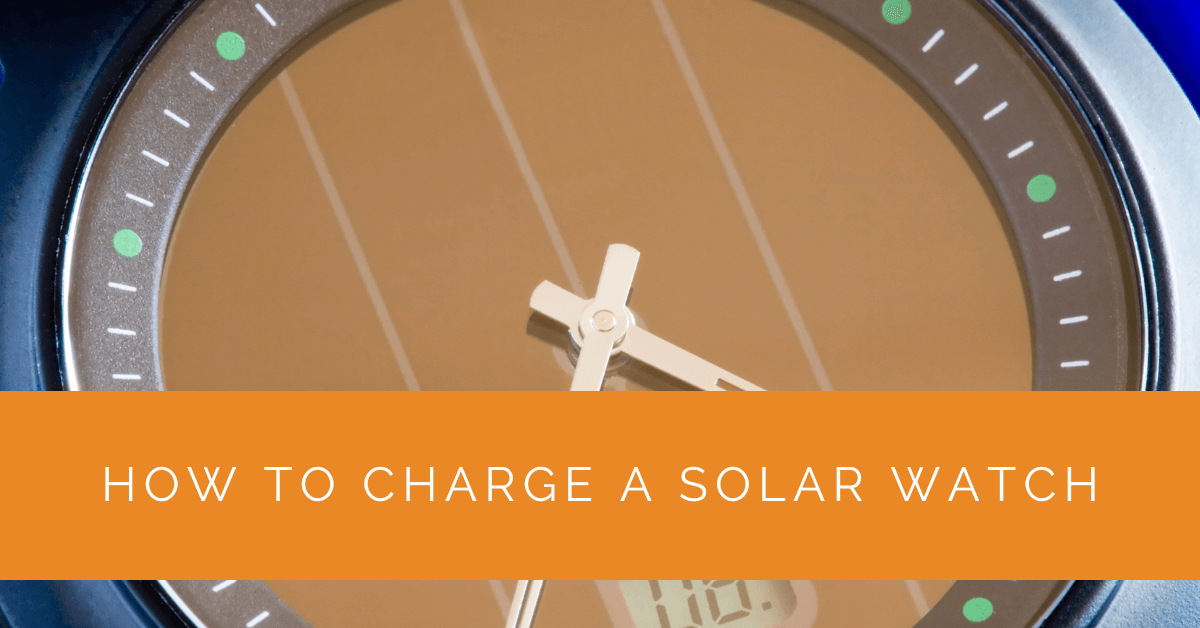
Solar watches eliminate the need for battery replacements by converting light into electricity. However, understanding how to properly charge and maintain your solar watch ensures reliable timekeeping and maximizes its lifespan. Whether you own a Seiko Kinetic, Casio G-Shock Solar, Citizen Eco-Drive, Garmin solar smartwatch, or another solar-powered model, this guide covers charging methods, optimal practices, troubleshooting dead watches, and how to keep your solar timepiece powered year-round.
How Solar Watches Work
Solar watches contain photovoltaic cells beneath the watch face that convert light energy into electrical current. This current charges a rechargeable battery (capacitor or secondary cell) inside the watch. When light exposure ends, the stored energy powers the watch’s quartz movement and electronic circuitry. Unlike traditional watches requiring battery changes every 1–3 years, solar watches theoretically run indefinitely with adequate light exposure.
The watch automatically switches between charging and discharging modes. In bright light, photovoltaic cells generate more power than the watch consumes, creating a surplus that charges the internal battery. In darkness or low light, the watch draws entirely from stored battery energy. A fully charged solar watch can run 6–12 months without additional light exposure, depending on the model and battery capacity.
Charging Methods for Solar Watches
Method 1: Direct Sunlight (Fastest and Most Effective)
Exposing your solar watch to direct sunlight is the fastest charging method. Place the watch face-up on a window sill or hold your wrist in the sun with the watch dial facing the sun. Full sunlight (5,000–10,000 lux) charges the battery most efficiently.
Charging Time: A fully depleted solar watch reaches 90% charge in 3–6 hours of direct sunlight. Expect complete charging (100%) in 6–8 hours of bright sun exposure.
Best Practices:
- Position the watch dial directly facing the sun
- Expose for 6–8 hours on a clear, sunny day for fastest charging
- Rotate the watch occasionally to ensure even light exposure across the entire dial
- Avoid charging on very hot surfaces (rocks, pavement in extreme heat) as excessive temperature can stress the watch casing
- Don’t leave the watch sitting in direct sun for extended periods beyond full charge, as this doesn’t improve charging but may expose the watch to high heat
Method 2: Ambient Indoor Light (Slowest but Practical)
Solar watches charge in everyday ambient light—office lighting, room lamps, cloudy skies, and even dawn/dusk light. While much slower than direct sunlight, ambient light ensures your watch charges throughout daily wear.
Charging Time: Ambient light (300–1,000 lux) charges the battery much more slowly. A fully depleted watch requires 25–50 hours of ambient light exposure to achieve full charge. This translates to roughly 3–7 days of normal daytime wear in an office setting.
Best Practices:
- Position your wrist naturally during the day so the watch dial receives ambient light
- Place the watch on a desk or near a window during working hours
- Brighter indoor lighting (LED or fluorescent) charges faster than dim incandescent
- Don’t block the watch dial with your sleeve; keep it exposed when possible
For most daily wearers in typical office or household environments, ambient light exposure during normal activities provides enough charging to maintain watch operation indefinitely. You only need direct sunlight charging if the watch has been stored in darkness for extended periods.
Method 3: LED Charging Devices (Fast Alternative to Sunlight)
Specialized LED chargers designed for solar watches deliver bright artificial light mimicking sunlight spectral distribution. These devices are particularly useful for charging watches quickly without waiting for sunny weather.
How LED Chargers Work: The charger contains an array of bright LEDs (similar to full-spectrum grow lights) that deliver light intensity comparable to summer sunlight (5,000–10,000 lux). The watch is placed dial-up under the LED array for charging.
Charging Time: 4–8 hours for a full charge, similar to direct sunlight but without weather dependence.
Popular LED Charging Products:
- Casio Solar Watch Fast Charger (compatible with Casio, Seiko, Citizen, Timex, and others)
- Generic LED watch chargers (cost: $15–$50)
Advantages: Weather-independent, consistent charging speed, compact for travel.
Disadvantages: Requires purchasing a specialized device, uses electricity (though minimal energy consumption).
Method 4: Window Sill Indirect Light
Placing a solar watch on a sunny window sill (indoors, behind glass) charges the watch but more slowly than outdoor direct sun exposure. Glass filters some UV and reduces light intensity, so expect 50–70% of direct sunlight charging speed.
Charging Time: 10–14 hours for a full charge in bright indoor sunlight.
Best for: Overnight charging or maintaining charge during daytime in cool, sunny climates where you don’t want extended outdoor time.
Understanding Watch Specifications and Power Reserve
Every solar watch has a power reserve specification indicating how long it runs after full charge without additional light exposure.
- Small watches (less than 1 inch dial): 4–8 months power reserve
- Medium watches (1–1.5 inch dial): 6–12 months power reserve
- Large watches and dive models (1.5+ inch dial): 8–24 months power reserve
- Smartwatches and high-capacity models: 2–12 months depending on battery size and power consumption
This means even if you store a fully charged solar watch in complete darkness, it continues running for months before fully depleting. In reality, most watches receive some ambient light even in storage, so they rarely fully discharge.
Optimal Charging Practices for Long-Term Health
Avoid Letting the Watch Completely Die
While solar watch batteries can survive full depletion, it’s gentler to prevent complete discharge. If a watch stops running, don’t panic; simply charge it and it will restart. However, regularly allowing a watch to fully discharge and sit dead for extended periods can slightly reduce battery lifespan over years.
Regular Exposure Prevents Problems
Wearing your solar watch outdoors 2–3 times per week during daylight ensures consistent charging. This prevents the battery from ever fully depleting and keeps the watch running reliably.
Seasonal Charging Adjustments
Summer: Charge naturally through daily outdoor exposure. Direct sunlight is abundant; little additional action needed.
Winter: Sunlight is weaker and days shorter. Spend 10–15 minutes in midday sun weekly, or use an LED charger once monthly to maintain full charge.
Indoor-Heavy Lifestyles: If you work indoors most of the day, charge the watch outdoors 1–2 times weekly for 1–2 hours. Or use an LED charger monthly as insurance.
Avoid Excessive Heat
While charging, avoid placing the watch on hot surfaces (black pavement in summer, near heaters) that could stress the casing or battery. Ideal charging temperature is 50–95°F (10–35°C).
Protect from Extreme Cold
In very cold climates below freezing, charge the watch at room temperature indoors rather than outdoors. Extreme cold temporarily reduces battery efficiency, though no permanent damage occurs.
Troubleshooting a Dead or Weak Solar Watch
Watch Stopped or Runs Slowly
Cause: Battery is depleted or low.
Fix: Charge in direct sunlight 6–8 hours or under an LED charger 4–6 hours. The watch should restart and resume normal operation. If still slow after charging, the battery may be failing (rare).
Won’t Hold Charge
Cause: Battery may be failing (after 10+ years), or photovoltaic cells are dirty.
Fix: Clean the watch dial gently with a soft, damp cloth to remove dust, which reduces light transmission by 10–20%. Then charge again. If charging still doesn’t help, the internal battery may need replacement (requires professional service).
Never Fully Charges
Cause: Watch dial is clouded or photovoltaic cells are damaged.
Fix: If the dial is scratched or cloudy, polishing may help. If the problem persists, internal damage likely requires professional repair or battery replacement.
Battery Drains Too Quickly
Cause: Watch is aging (battery capacity naturally decreases after 10+ years), or the watch dial is blocked from light during wear.
Fix: Ensure your watch dial isn’t blocked by your sleeve during daily wear. Charge more frequently if the watch is 10+ years old and the battery is naturally degrading.
Long-Term Care and Warranty Protection
Solar watches represent a long-term investment in sustainable timekeeping. To preserve warranty coverage and maximize longevity, follow manufacturer-specific guidance for your model. Citizen, Seiko, and Bulova provide detailed care instructions for solar watches, typically emphasizing the importance of regular light exposure and proper storage in a light-filled environment when not wearing the watch.
Most solar watch manufacturers warrant the watch for 1–5 years against defects, and the solar cell/battery module for 10–15 years. Warranty coverage typically includes battery replacement, which costs $50–$150 at authorized service centers. After 15–20 years of use, battery degradation is natural, and replacement becomes more cost-effective than expensive internal repairs.
Properly maintained solar watches often outlast their original owners, becoming family heirlooms passed down across generations. This longevity and minimal maintenance requirement make them superior to conventional quartz watches requiring frequent battery replacements. Your discipline in keeping the watch exposed to light during daily wear directly translates to decades of reliable timekeeping with virtually no ongoing costs.
Comparison: Solar Watches vs. Traditional Quartz and Mechanical Watches
Solar watches offer distinct advantages over conventional timepieces. Traditional quartz watches require battery replacement every 1–3 years, costing $10–$50 per replacement. Over a 20-year ownership period, this totals $100–$300 in battery costs alone, plus the inconvenience of periodic replacements and risk of moisture damage during battery service.
Mechanical watches require annual or bi-annual servicing ($100–$300 per service) to maintain accuracy and prevent damage. They also need manual winding or daily wear to stay operational.
Solar watches eliminate both battery costs and service requirements. A quality solar watch costs more upfront ($200–$1,000 vs. $50–$300 for quartz), but over 20–30 years, the total cost of ownership is lower due to eliminated battery replacements and maintenance. Additionally, solar technology appeals to environmentally conscious consumers seeking to reduce waste and dependence on disposable batteries. If you value sustainability and long-term reliability, solar watches deliver unmatched value among all timepiece categories.
Frequently Asked Questions
How long does a solar watch actually last?
Solar watch movements last 10–20 years or longer; the mechanical components are very durable. The internal rechargeable battery eventually degrades after 10–15 years of regular cycling. Replacement batteries cost $20–$100 and extend lifespan another 10+ years. Many solar watches outlast three or more battery generations.
Can I charge a solar watch through a window?
Yes, but more slowly. Window glass filters some UV and reduces light intensity, so charging takes 30–50% longer than outdoor direct sun. For a watch that needs charging, window charging works but isn’t optimal.
Is LED charging as effective as sunlight?
Yes, modern full-spectrum LED chargers designed for solar watches deliver light intensity equivalent to bright outdoor sunlight. The main difference is convenience: LED chargers work indoors regardless of weather but cost $20–$50.
Should I take my solar watch off at night?
Wearing the watch at night (in low light) is fine and doesn’t harm the battery. The watch automatically switches to battery power when light drops below a threshold. You don’t need to remove it. However, removing the watch and placing it on a sunny window sill at night charges it faster for the following day.
Can solar watches charge in moonlight?
Moonlight is far too dim to charge a solar watch meaningfully. The moon reflects only 0.25 lux of light, while solar watches need 300+ lux for noticeable charging. Moonlight provides essentially zero charging power.
What if my solar watch is a vintage model from the 1990s?
Vintage solar watches still work if the internal battery hasn’t failed. Charge the watch in direct sunlight 6–8 hours. If it doesn’t restart, the battery may have failed. Seiko and Citizen can replace batteries in vintage models for $30–$75.
Summing Up
Solar watches charge through direct sunlight (fastest, 6–8 hours), ambient indoor light (practical, 25–50 hours), LED chargers (convenient, 4–8 hours), or window light (slow, 10–14 hours). A fully charged solar watch runs 6–12 months without additional light, ensuring reliable operation even during periods of limited exposure. Optimal practices include wearing the watch outdoors 2–3 times weekly, avoiding complete discharge, and protecting from extreme heat. Most solar watches last 10–20 years before battery replacement becomes necessary, making them one of the most cost-effective and reliable watch investments available.
For more information on sustainable, solar-powered technologies for your home or lifestyle, call (855) 427-0058 to explore how solar energy can power your daily life beyond just accessories.
Updated