
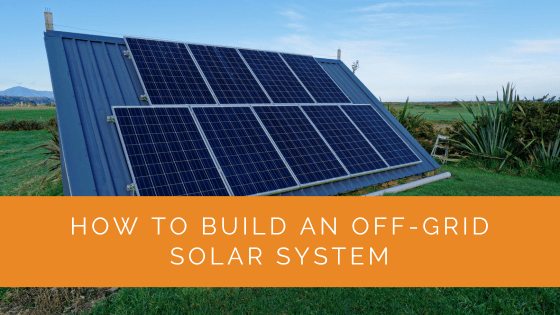
Building an off-grid solar system means designing every piece to work together with no utility backup: enough panels to cover your daily energy use, enough battery to get through the night (and cloudy days), and an inverter and wiring sized to handle your real loads. Get the sizing math right up front, because retrofitting an undersized off-grid system is far more expensive than building it correctly the first time.
Step 1: Calculate Your Daily Energy Use
List every appliance and device you’ll run, its wattage, and hours per day. Total the watt-hours — this is your daily energy budget, and it drives every other sizing decision. A modest off-grid cabin (fridge, lights, water pump, electronics) often lands around 3–6 kWh/day; a full off-grid home with electric appliances can run 15–30+ kWh/day.
Step 2: Size the Solar Array
Divide your daily watt-hour need by your location’s peak sun hours and a realistic 0.80 derate factor to find the array size needed:
Array wattage = Daily Wh ÷ (Peak Sun Hours × 0.80)
Off-grid systems are typically oversized 20–40% beyond the bare minimum to account for cloudy days and winter production drops, since there’s no grid to fall back on.
Step 3: Size the Battery Bank
The battery bank needs to store enough energy to cover your daily use through the night, plus extra “days of autonomy” for cloudy stretches. Most off-grid systems plan for 1–3 days of autonomy using modern LFP (lithium iron phosphate) batteries, which offer 95–100% usable depth of discharge versus roughly 50% for older lead-acid batteries.
| Battery Chemistry | Usable DoD | Typical Cycle Life |
|---|---|---|
| LFP (lithium iron phosphate) | 95–100% | 3,000–6,000+ cycles |
| AGM lead-acid | ~50% | 300–700 cycles |
| Flooded lead-acid | ~50% | 300–600 cycles |
Step 4: Choose the Inverter and Charge Controller
An off-grid inverter needs to be sized to your peak simultaneous load (continuous watts) plus enough surge capacity for motor-driven appliances starting up (well pumps, refrigerator compressors). An MPPT charge controller (rather than older PWM) should sit between the panels and battery bank — MPPT controllers extract 20–30% more usable power from the same panels, especially in cold or partly cloudy conditions.
Step 5: Wiring and Safety
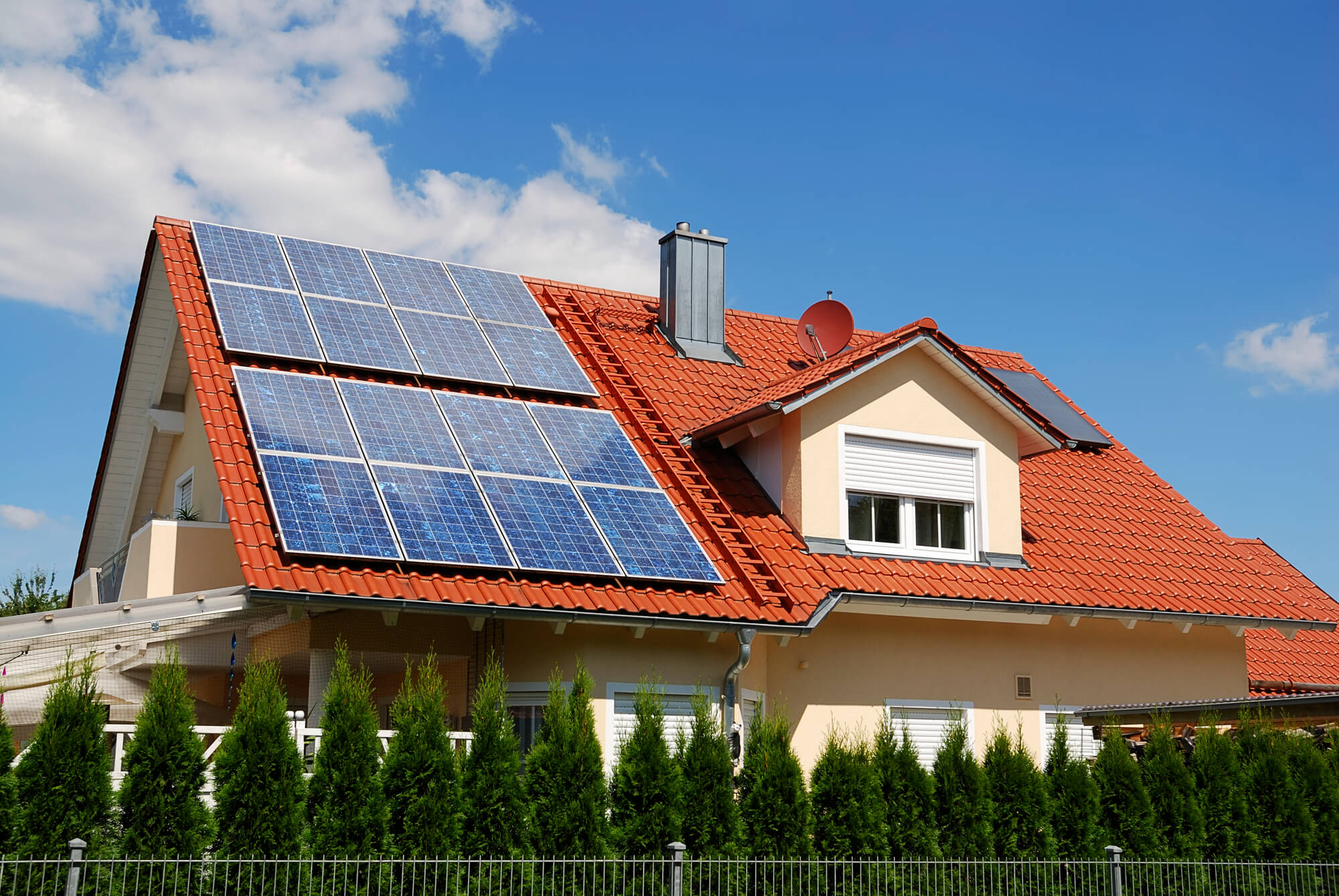
Wire the system in the sequence panels → charge controller → battery bank → inverter → loads, with correctly sized breakers and fuses at each stage per NEC 690. Battery banks in particular need overcurrent protection and a battery management system (BMS) for lithium chemistries to prevent overcharge, over-discharge, and thermal issues.
Step 6: Backup Generator (Recommended)
Most off-grid systems include a backup generator sized to recharge the battery bank and run essential loads during extended low-sun periods, since no amount of battery capacity fully eliminates the risk of a multi-day winter storm. This is typically sized as a percentage of your inverter’s continuous rating rather than your full daily load.
Example System: 5 kWh/Day Cabin
| Component | Sizing |
|---|---|
| Solar array | ~2,000W (5 x 400W panels), sized with margin |
| Battery bank | 10 kWh LFP (2 days autonomy) |
| Inverter | 3,000W continuous / 6,000W surge |
| Charge controller | MPPT, sized to array voltage/current |
Frequently Asked Questions
How do I size an off-grid solar system?
Calculate your total daily watt-hour usage, divide by peak sun hours and a 0.80 derate factor to size the array, then size the battery bank to cover 1-3 days of that usage using modern LFP batteries for the best usable capacity.
How many days of battery backup do I need off-grid?
Most off-grid systems plan for 1-3 days of autonomy, with longer autonomy for regions with extended cloudy periods or where a backup generator isn’t available.
Do I need a generator for an off-grid solar system?
It’s strongly recommended. A backup generator covers extended low-sun periods that battery storage alone can’t reliably handle, reducing how large (and expensive) your battery bank needs to be.
What’s the difference between MPPT and PWM charge controllers?
MPPT controllers extract 20-30% more usable power from the same panels compared to older PWM controllers, especially in cold or partly cloudy conditions, making them the standard choice for new off-grid systems.
Why is LFP battery chemistry preferred for off-grid systems?
LFP batteries offer 95-100% usable depth of discharge and 3,000-6,000+ cycle life, versus roughly 50% usable capacity and 300-700 cycles for lead-acid batteries, making them far more cost-effective over the system’s lifetime.
How much does an off-grid solar system cost?
Costs vary widely with load size, but a modest cabin system (2-3 kW array, 10 kWh battery) often runs $15,000-$25,000, while a full off-grid home system can run well beyond $40,000 depending on battery capacity and generator backup.
Can I add more panels or batteries later?
Yes, if the system is designed with expansion in mind — sizing the charge controller, inverter, and wiring with some headroom up front makes it much easier to add capacity later than building at bare minimum size.
Summing Up
Building an off-grid solar system starts with an honest calculation of your daily energy use, then sizing the array, battery bank, inverter, and charge controller around that number with margin for cloudy days. LFP batteries and MPPT charge controllers are the current standard for good reason — they maximize usable capacity and production. To get help designing a system sized to your actual needs, call (855) 427-0058 or visit us.solarpanelsnetwork.com.
Updated