
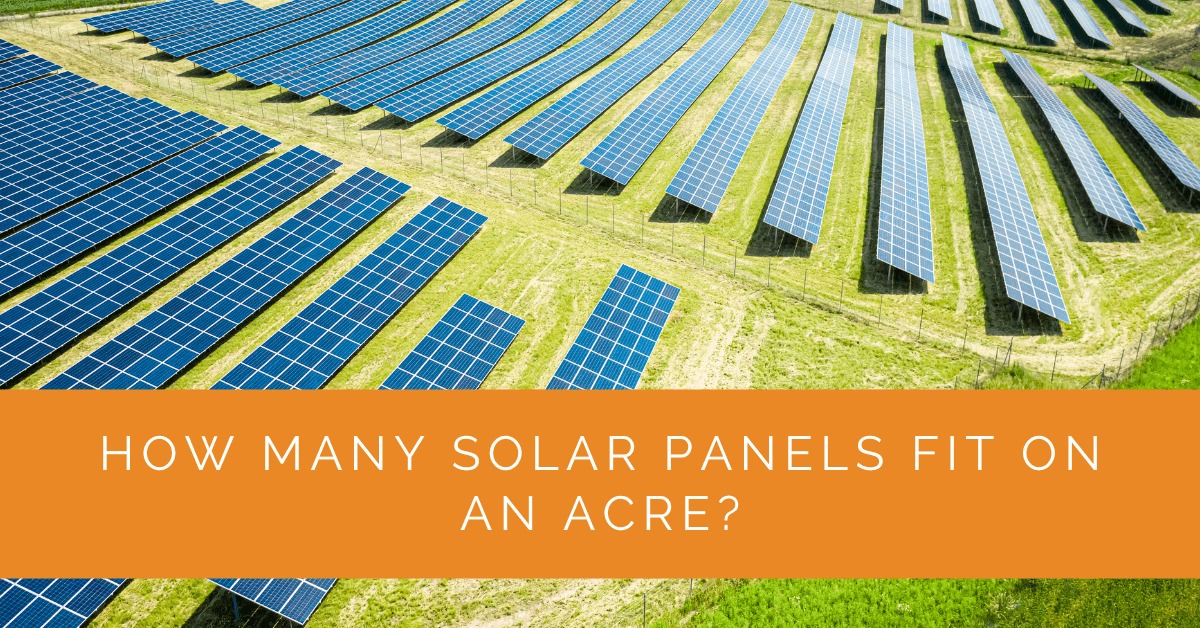
Approximately 300–500 solar panels fit on one acre of land in a typical fixed-tilt ground-mounted solar farm configuration, producing 150–250 kW of DC capacity. The wide range reflects differences in panel wattage, row spacing (for shading avoidance), access roads, setbacks from property boundaries, and inverter/combiner box footprints. A one-acre solar farm generates roughly 200,000–350,000 kWh of electricity per year depending on location — enough to power 18–35 average US homes.
Solar Panel Density: The Key Variables
How many solar panels fit on an acre depends on several site-specific factors:
Panel size: A standard commercial 400W panel is approximately 84 inches × 45 inches (6.9 ft × 3.75 ft, or about 26 sq ft of panel area). Larger 600W utility panels are about 8 ft × 4 ft (32 sq ft). Panels themselves are only part of the land footprint — the space between rows dominates land use.
Row spacing (GCR — ground coverage ratio): Panels must be spaced apart to prevent front rows from shading rear rows during morning and afternoon hours. The ground coverage ratio (GCR) — the fraction of ground area covered by panels — typically ranges from 0.3 to 0.45 for fixed-tilt systems. A GCR of 0.35 means 35% of the ground is covered by panels; the rest is spacing, roads, and setbacks. Lower GCR = more spacing = less shading = more production per panel; higher GCR = more panels per acre = more capacity per land area but more inter-row shading.
Tilt angle: Steeper tilt angles capture more sun but require more row spacing to avoid shading. At a 20° tilt in a mid-latitude US location, rows typically need to be spaced 15–25 feet apart (measured from the front of one row to the front of the next) to avoid significant inter-row shading during winter months when the sun is low.
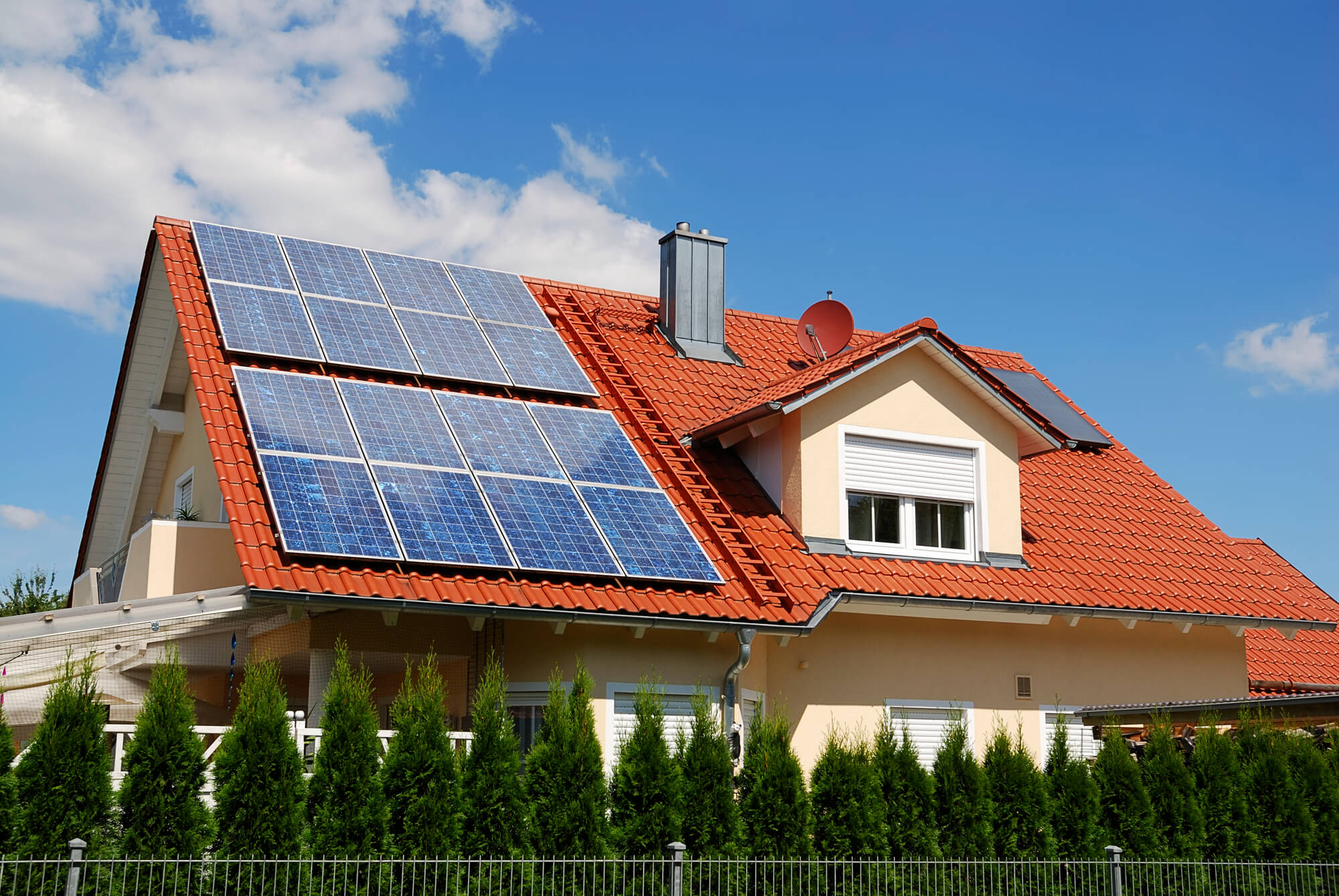
Access roads and setbacks: Ground-mounted systems require maintenance roads between sections, perimeter security fencing, setbacks from property lines (typically 10–25 feet required by local zoning), and footprints for inverters, combiner boxes, transformers, and monitoring equipment. These non-panel areas reduce usable panel space by 15–25% on a typical commercial installation.
Practical Panel Counts Per Acre
Working through the math for a typical fixed-tilt commercial installation:
One acre = 43,560 square feet = approximately 208 × 209 feet
At a GCR of 0.35 and accounting for roads and setbacks (assume 20% of total area unavailable):
Usable panel area = 43,560 × 0.80 = 34,848 sq ft × 0.35 = 12,197 sq ft of panel coverage
At 26 sq ft per 400W panel: approximately 469 panels ≈ 470 panels per acre at 400W = 188 kW DC
At a more conservative GCR of 0.30 (more row spacing for better production efficiency):
Usable panel area = 43,560 × 0.80 = 34,848 sq ft × 0.30 = 10,454 sq ft
At 26 sq ft per 400W panel: approximately 402 panels ≈ 400 panels per acre = 160 kW DC
Industry rule of thumb for commercial fixed-tilt installations: 5–10 acres per MW (1,000 kW) of DC capacity, or roughly 100–200 kW per acre. The variation reflects site-specific factors.
For large utility-scale projects using single-axis trackers: tracking systems increase spacing requirements to avoid shading during tracker movement, reducing panel count per acre by approximately 10–15%. However, trackers increase annual energy production by 15–25%, more than compensating for the reduced panel count. Utility projects typically achieve 4–7 acres per MWDC when using single-axis trackers.
How Much Power Does One Acre of Solar Produce?
An acre of solar panels (approximately 150–200 kW DC of fixed-tilt commercial installation) generates:
High-solar states (Arizona, Nevada, California desert): 200–250 kWh/kWdc annual production ratio × 175 kWdc average = 35,000–43,750 kWh/year per acre
Average US locations (Southeast, Midwest, Mid-Atlantic): 1,400–1,600 kWh/kWdc × 175 kWdc = 245,000–280,000 kWh/year per acre
Lower-solar states (Pacific Northwest, New England): 1,000–1,200 kWh/kWdc × 175 kWdc = 175,000–210,000 kWh/year per acre
To put this in context: the average US home uses approximately 10,500 kWh per year. One acre of solar in an average US location powers approximately 20–25 homes per year. A 10-acre community solar project in an average location powers 200–250 homes.
Residential vs. Commercial Solar Land Use
The panel count per acre on a ground-mounted residential system differs from commercial scale:
Residential ground-mount (1–20 panels, backyard scale): No access road requirements, minimal setbacks, no large inverter footprint. A homeowner can achieve much higher GCR (0.40–0.50) for a small system without needing organized maintenance access. A 20-panel residential ground mount occupies roughly 500–800 square feet (0.012–0.018 acres) — almost negligible land use for the electricity generated.
Small commercial/community solar (1–10 MW): Requires organized rows, maintenance roads (typically 12-foot wide access lanes every 3–4 rows), perimeter fencing, and equipment pads. GCR of 0.30–0.40 is typical. Roughly 5–8 acres per MW.
Utility-scale solar farms (10+ MW): Large dedicated sites with optimized layout, single-axis trackers in many cases, O&M buildings, high-voltage transformers, and interconnection substation space. Roughly 6–10 acres per MWDC depending on tracker vs. fixed-tilt, terrain, and setback requirements. The world’s largest solar farms (multi-GW projects in UAE, India, and China) use thousands of acres.
Solar Farm Land Lease Rates
For landowners considering leasing land to solar developers, typical solar land lease rates in 2026 are $300–$2,000 per acre per year, with median rates around $500–$1,000/acre/year for agricultural land in solar-suitable regions.
Factors driving higher lease rates: proximity to high-voltage transmission lines, good solar resource, permissive zoning, and land market competition in areas with many solar developers. Factors driving lower rates: distance from grid infrastructure, poor solar resource, challenging terrain (slopes, wetlands), or markets with less solar development activity.
Lease terms are typically 25–40 years with options to extend. Developers prefer long-term agreements to justify permitting, interconnection, and construction investment. Landowners receive annual payments regardless of the system’s electricity production — typically with an escalator of 1–2% per year to account for inflation.
Frequently Asked Questions
How many homes can one acre of solar power?
Using the average US home consumption of 10,500 kWh/year and an average production estimate of 250,000 kWh/year per acre (for a typical US location): one acre of solar powers approximately 24 average US homes per year. In high-solar states like Arizona or California, the same acre may power 30–40 homes. In lower-solar states like Oregon or Vermont, closer to 18–22 homes.
What is agrivoltaics and how does it affect panels per acre?
Agrivoltaics (also called co-location or solar sharing) places solar panels above agricultural crops or grazing animals, allowing dual land use — solar production and farming on the same acre. Agrivoltaic installations typically use elevated racking (8–12 feet high) to allow equipment access and maintain crop sunlight, and wider spacing to ensure crops receive adequate light. This reduces panel density to approximately 150–250 panels per acre — lower than a pure solar installation — but allows the land to continue producing agricultural income simultaneously. Research shows certain crops (berries, leafy greens, lavender) perform well under agrivoltaic arrays, and sheep grazing under solar panels is increasingly common.
How does ground-mounted density compare to rooftop solar?
Rooftop solar is physically more constrained than ground-mounted solar: usable roof area, structural weight limits, roof obstructions, and setbacks from roof edges limit panel counts. A typical residential roof can accommodate 18–30 panels (7–12 kW). For comparison, one acre of ground-mounted solar (150–200 kW) would require the combined rooftops of 12–25 average homes. Rooftop solar is cost-effective because it uses already-developed space with no land acquisition cost; ground-mounted solar allows larger scale and optimized layout.
What is the minimum viable land size for a community solar farm?
Community solar projects (shared solar farms where subscribers receive bill credits without installing panels on their property) typically start at 1–5 MW. At 5–8 acres per MW, a 1 MW community solar project needs 5–8 acres. A 5 MW project needs 25–40 acres. Below 1 MW, the fixed costs of permitting, interconnection, and project development often make community solar economics marginal. The IRS’s enhanced credit for community solar projects serving low-income communities (established under the Inflation Reduction Act) has spurred development of smaller community solar projects in many states.
Summing Up
One acre of ground-mounted solar accommodates approximately 300–500 panels at standard commercial GCR and spacing, producing 150–200 kW DC of capacity and roughly 200,000–280,000 kWh of electricity per year in most US locations — enough to power 20–25 average homes. The exact count depends on panel size, row spacing, access road requirements, setbacks, and equipment footprints. For commercial solar farm development, the industry rule of thumb is 5–8 acres per MWDC for fixed-tilt systems and 6–10 acres per MWDC for single-axis tracker systems. For a free consultation on residential or commercial solar development on your land or rooftop, call (855) 427-0058.
Updated