
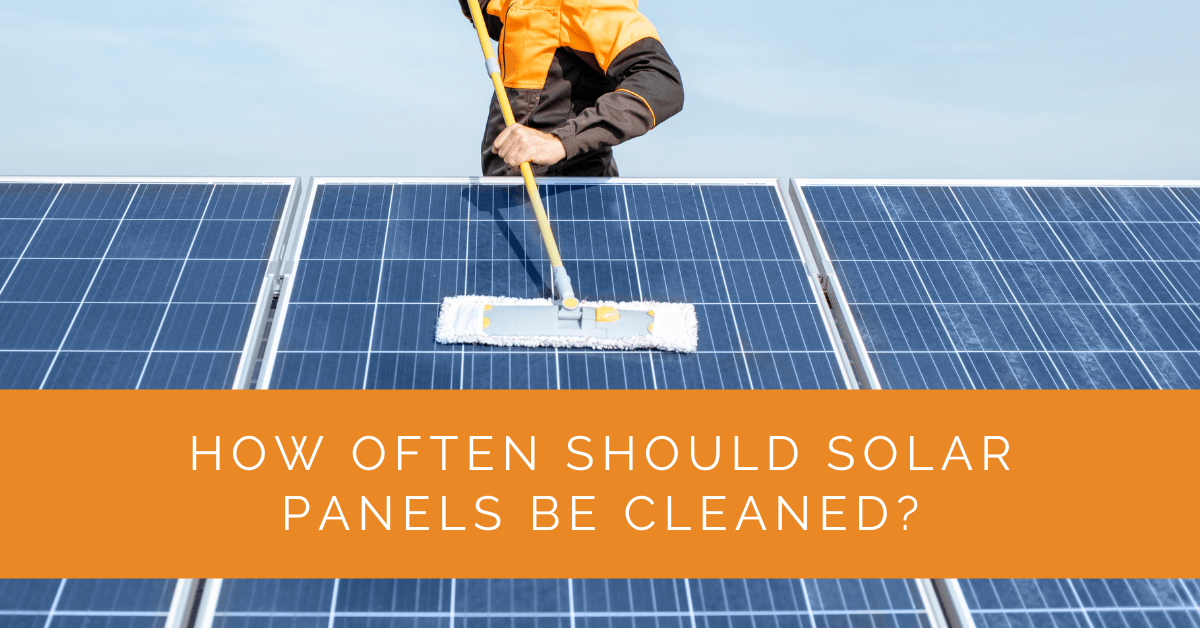
Keeping your solar panels clean is one of the easiest ways to maintain peak energy production year-round. Dirt, dust, leaves, bird droppings, and other debris can accumulate on the surface of your panels, reducing their ability to absorb sunlight and generate electricity. But exactly how often should you clean your solar panels? The answer depends on your local climate, weather patterns, and environmental conditions. This guide covers everything you need to know about solar panel maintenance timing, cleaning methods, and how much dirt actually impacts your system’s performance.
How Often Should You Clean Your Solar Panels?
The general rule of thumb is to clean your solar panels at least twice a year—typically once in spring and once in fall. However, the ideal cleaning frequency for your system depends heavily on where you live and what weather conditions surround your home.
Most homeowners and solar installers recommend an inspection every six months, with cleaning scheduled as needed based on soiling levels. In regions with moderate rainfall, rainwater naturally washes away light dust and pollen, reducing the need for manual cleaning. In drier climates or areas with heavy pollution, you may need to clean your panels every three months or even more frequently.
Factors That Affect Solar Panel Cleaning Frequency
Geographic Location and Climate
Your location is one of the biggest determinants of how often you’ll need to clean your panels. If you live in a warm, dry desert climate with infrequent rainfall, dust and sand accumulate quickly. Parts of California, Arizona, and the Southwest face higher soiling rates due to sandy, arid conditions. Conversely, regions with regular rainfall experience natural panel cleaning from rainstorms, so manual cleaning may only be necessary once or twice a year.
In moderate climates with seasonal rainfall, twice-yearly cleaning—spring and fall—strikes a good balance between maintaining output and avoiding excessive maintenance.
Nearby Trees and Vegetation
If your home is surrounded by tall trees, you’ll likely see more frequent soiling from falling leaves, pollen, and tree debris. Homeowners in wooded areas often benefit from quarterly cleaning, especially during autumn when leaves are dropping. Conversely, if your roof is clear of nearby trees, you’ll need fewer cleanings.
Air Quality and Pollution
Urban and industrial areas experience more atmospheric pollution, dust, and particulate matter. If you live near a factory, highway, or heavily trafficked road, your panels may accumulate more debris faster. Rural areas with clean air quality typically need less frequent cleaning.
Proximity to Water and Salt Spray
Homeowners living near the coast face a unique challenge: saltwater spray from the ocean deposits salt residue on panels, which is harder to remove than ordinary dust. Coastal homes should clean panels more frequently—typically every two to three months—to prevent salt buildup and corrosion. Freshwater lakes and ponds are less problematic but can still contribute minor soiling.
Roof Pitch and Orientation
Solar panels installed at steeper angles naturally shed debris better than panels on flatter roofs. Panels tilted at 30 degrees or more benefit from some self-cleaning during rain. Flatter roof installations accumulate debris more easily and may require more frequent cleaning. South-facing panels in the Northern Hemisphere may self-clean better due to sun angle, while north-facing panels stay shadier and wetter longer.
Impact of Dirt on Solar Panel Performance
Dust and debris block sunlight from reaching the photovoltaic cells, reducing energy output. Studies show that soiling can reduce solar panel efficiency by anywhere from 2% to 25% depending on the type and amount of dirt. Light dust might cause a 2–5% efficiency loss, while heavy soiling from bird droppings, mud, or thick dust can reduce output by 15–25% or more.
The performance loss is often not uniform across the panel. A single bird dropping or leaf can create a hotspot that disproportionately reduces output from that section of the panel due to electrical shading effects. Over weeks and months, accumulated grime and dust gradually reduce output, and you may not realize how much production you’re losing until you compare your monthly energy reports.
Dirty panels don’t just produce less energy—they may also run slightly hotter because the dirt acts as insulation. While modern panels are designed to handle high temperatures, excessive heat can accelerate the degradation of panel materials over decades.
Real-World Soiling Loss Examples
Consider a practical example: a 7 kW residential solar system in Phoenix, Arizona produces approximately 11,000 to 12,000 kWh annually under clean conditions. With moderate dust accumulation typical of that region, soiling can reduce annual output by 5–8%, translating to 550–960 kWh lost per year. At an electricity rate of $0.15 per kWh (typical for US consumers), that represents $82.50 to $144 in lost energy production annually from a single cleaning cycle. Over five years without addressing soiling, that same system could lose $412.50 to $720 in production value.
In coastal regions where salt spray accelerates soiling, the impact can be even greater. A study conducted in California’s Mojave Desert found that unclean panels experienced output reductions of 23% over a four-week period during summer months. When accounting for multiple months of operation without cleaning, annual losses in that region could exceed 15–20% without maintenance.
DIY vs. Professional Solar Panel Cleaning
DIY Cleaning Methods
Many homeowners can clean their solar panels safely without hiring professionals. The basic approach involves using a soft brush, mild soap, and water. Here’s how to do it safely:
- Cool, Early Morning Cleaning: Clean your panels in early morning or late afternoon when they’re cool. Spraying cold water on hot panels can cause thermal stress and potentially damage the glass.
- Soft Brushes Only: Use a soft-bristle brush designed for solar panels, never abrasive scouring pads or stiff brushes that can scratch the glass.
- Mild Soap Solution: Mix distilled water with a small amount of mild dish soap. Avoid harsh chemicals or window cleaners that can leave residue.
- Gentle Rinsing: Rinse thoroughly with distilled water to avoid mineral deposits from tap water.
- Safety First: Use a safe ladder and don’t work alone. Consider hiring professionals if your roof is steep, high, or difficult to access.
For most homeowners, DIY cleaning works well and costs only the price of basic supplies. If your panels are easily accessible from a single-story roof, DIY cleaning can save you hundreds of dollars annually on professional services.
Professional Cleaning Services
Professional solar cleaning companies have specialized equipment, insurance, and experience with rooftop work. They typically charge $100–$300 per cleaning depending on system size and location. For homeowners uncomfortable working at heights or with large systems, professional cleaning provides peace of mind and warranty protection.
If you sign up for an annual maintenance plan with a local solar installer or cleaning company, you may get a discount compared to one-off cleanings. Some installers include cleaning as part of their warranty or service agreement.
Cost-Benefit Analysis of Professional vs. DIY
For most homeowners, DIY cleaning represents better long-term economics. If you have one or two annual cleanings at $150 per cleaning, that’s $300 annually in professional costs. Over 25 years, that totals $7,500 in cleaning expenses. By contrast, DIY cleaning costs roughly $50 per year in supplies, totaling $1,250 over 25 years. The $6,250 savings make DIY cleaning attractive for those with accessible roofs.
However, professional cleaning becomes more economical if it prevents damage from improper technique. A single mistake using a pressure washer or abrasive cleaner can cost $2,000–$5,000 in panel replacement. In this case, the $150–$300 professional cleaning fee is insurance against costly errors. Additionally, professional cleaners often identify other maintenance issues (loose wiring, micro-cracks, inverter problems) during their visits, adding diagnostic value beyond cleaning.
Best Times to Clean Your Solar Panels
Spring Cleaning (March–May)
Spring is an ideal time for your first cleaning of the year. Winter often leaves pollen, dust, and possibly salt residue on panels. After cleaning in spring, your system can operate at peak efficiency heading into summer, when daylight hours are longest and energy demand is highest in many regions. Spring cleaning also prepares your system for summer air conditioning season.
Fall Cleaning (September–November)
Fall cleaning removes accumulated summer dust and prepares your panels for winter. If you live in a wooded area, fall cleaning is especially important because falling leaves can stick to panels and block sunlight for weeks if not removed promptly. Cleaning before winter ensures maximum efficiency when winter months have shorter days and less available sunlight.
Seasonal Adjustments
In very dry, dusty regions, cleaning every quarter (every three months) maintains optimal performance. In tropical climates with frequent rain, natural rainfall may keep panels clean enough that you only need one cleaning per year. In coastal areas with salt spray, every two months is more appropriate.
Warning Signs Your Panels Need Cleaning
Don’t wait for a scheduled cleaning if you notice these signs:
- Visible Dirt or Debris: If you can see dust, leaves, bird droppings, or mud on your panels, they need cleaning.
- Drop in Energy Production: If your monitoring app shows a sudden decline in output on a clear, sunny day with no equipment issues, soiling is likely the culprit.
- Patches or Streaking: Water streaks, mineral deposits, or uneven dirt patterns mean cleaning time.
- After Storms: Heavy winds or storms can blow dust, pollen, and debris onto your panels. Clean them afterward.
- Fall Leaf Accumulation: After significant leaf drop, inspect and clean promptly to avoid shading losses.
Can Rain Clean Your Solar Panels?
Rainwater provides some natural cleaning, especially light rain that rinses away loose dust and pollen. However, rain alone is not sufficient for complete cleaning. Heavy rainfall may help flush away some debris, but residual dirt, bird droppings, and mineral deposits from hard water remain. Additionally, in dry climates with infrequent rain, you can’t rely on natural precipitation to keep panels clean.
Rain also leaves mineral deposits if your water is hard, so relying entirely on rainwater can leave a filmy residue on panels. For best results, supplement light rainfall with manual cleaning using distilled water.
Do You Need to Buy Special Cleaning Products?
You don’t need expensive specialty products. A soft brush, mild dish soap, and distilled water are sufficient for almost all situations. Avoid these products:
- Abrasive scouring pads or steel wool
- Harsh chemical cleaners or degreasers
- High-pressure pressure washers (can damage seals and panels)
- Alcohol or acetone-based solvents
- Window cleaning products with ammonia (leaves streaks and residue)
Some companies market specialty solar panel cleaners, but they’re rarely necessary. Save your money and stick with proven, gentle methods.
Does Cleaning Void Your Warranty?
Proper cleaning using the methods described in this guide will not void your warranty. Most solar panel manufacturers recommend regular cleaning as part of normal maintenance. However, improper cleaning—such as using pressure washers, harsh chemicals, or abrasive tools—can damage panels and may void warranty coverage.
Always check your panel manufacturer’s maintenance guidelines. Reputable companies like SunPower, Panasonic, and Canadian Solar explicitly recommend regular cleaning with soft tools and mild soap, confirming that this maintenance is expected.
System Monitoring and Performance Tracking
To determine if your panels are getting too dirty, monitor your system’s daily and monthly output. Most solar systems come with monitoring apps or web dashboards that show real-time and historical production data. If you notice a consistent decline in output on clear, sunny days compared to the same period in previous years, soiling is likely responsible.
Compare your actual output to predictions. Most solar design software calculates expected production accounting for typical soiling losses. If your actual output falls 10% or more below projections, a cleaning may restore significant efficiency gains.
Frequently Asked Questions
How much does professional solar panel cleaning cost?
Professional cleaning typically costs $100–$300 per session, depending on system size, roof accessibility, and your location. Some companies offer annual contracts at discounted rates.
Is it safe to clean panels in summer?
Avoid cleaning during the hottest part of the day or when panels are very hot. Clean in early morning or late evening when panels have cooled. Sudden temperature changes from cold water on hot panels can damage the glass.
What happens if bird droppings get on my panels?
Bird droppings block sunlight and can create hotspots that reduce output significantly. Clean them off as soon as you notice them, rather than waiting for your scheduled cleaning.
Do solar panels clean themselves?
Solar panels have no moving parts to self-clean. Rain provides minimal cleaning and doesn’t remove all debris, mineral deposits, or bird droppings. Manual cleaning is necessary for optimal performance.
Can I use a garden hose to clean panels?
A gentle spray from a garden hose is acceptable for rinsing after using a soft brush and soap. Never use a high-pressure washer, which can damage seals, degrade the anti-reflective coating, or cause water infiltration.
Summing Up
The ideal cleaning frequency for your solar panels depends on your location, climate, and environmental conditions. Most homeowners benefit from cleaning twice yearly—once in spring and once in fall. In dusty, dry, or coastal regions, quarterly cleaning maintains peak efficiency. In areas with frequent rainfall, annual cleaning may suffice. The key is monitoring your system’s output and cleaning whenever you notice visible soiling or performance declines.
DIY cleaning using soft brushes, mild soap, and distilled water is safe, effective, and inexpensive. For steep or high roofs, professional cleaning services provide peace of mind and expertise. Regular cleaning protects your investment and keeps your solar panels producing maximum energy throughout their 25–30 year lifespan. A small investment in maintenance now pays dividends in sustained energy savings for decades to come.
Ready to explore solar energy or need expert guidance on maintaining your system? Call us today at (855) 427-0058 for a free consultation and learn how to maximize your solar investment.
Updated