Starting a solar business is one of the better-timed moves you can make in the US right now. Solar accounted for 69% of all new electric generating capacity added in Q1 2025, the federal Investment Tax Credit (ITC) remains at 30% through 2032 under the Inflation Reduction Act, and the Bureau of Labor Statistics projects solar installer jobs to grow 22–48% through 2032 — making this the fastest-growing trade in the country. The business itself breaks into several distinct models, and picking the right one for your skills, capital, and market is the first real decision you’ll face.

Types of Solar Business You Can Start

Not all solar businesses require the same capital, licensing, or expertise. The four main paths are:

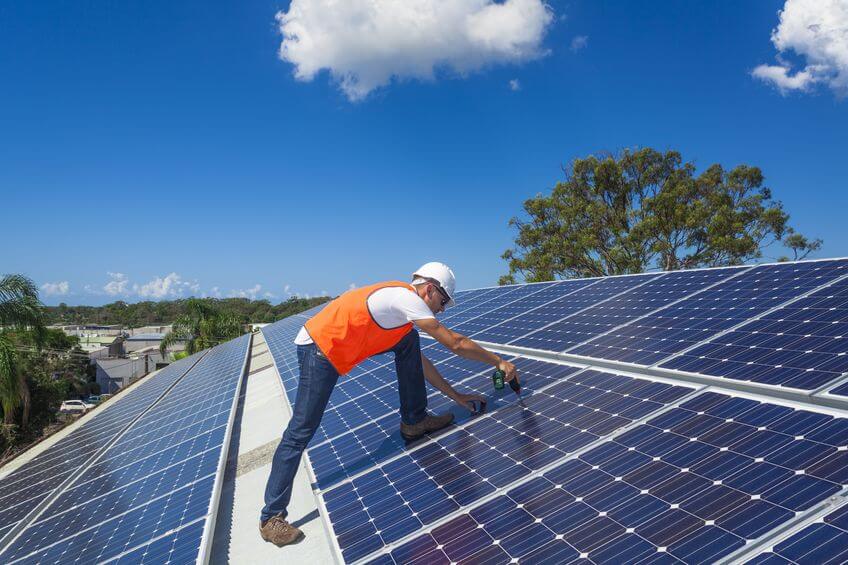
Residential installation company: You contract directly with homeowners, pull permits, and install rooftop systems. Margins are strong ($5,000–$10,000 gross profit per residential job is typical), but startup costs are higher: you need licensed electricians, roofers in many states, insurance, vehicles, and tools. This is the highest-earning model per job but requires the most infrastructure.

Commercial and industrial (C&I) installation: System sizes run from 50 kW to several MW. Profit per project is much larger, but sales cycles are longer (6–18 months), financing is more complex, and you’re competing with established regional installers. Most people don’t start here — they migrate from residential after building a track record.

Solar sales and lead generation: You identify and close customers, then subcontract the installation to licensed installers. No tools, no trucks, no roofers on payroll. Commissions run $1,500–$4,000 per residential deal depending on the market. Lower barrier to entry, lower ceiling. This works well as a solo or small-team operation.

Solar equipment supply / distribution: You wholesale panels, inverters, racking, and batteries to installers. Margins are thin (5–15%) but volumes can be high. You need strong supplier relationships (often direct with manufacturers or Tier 1 distributors) and warehouse infrastructure.

Most successful small solar businesses start as residential installers or sales organizations, then expand from there.

Step-by-Step: How to Start a Solar Installation Business

Step 1 — Get the right licenses. Requirements vary by state, but in most states you need a general contractor’s license or an electrical contractor’s license (sometimes both) to pull solar permits. California requires a C-10 Electrical or C-46 Solar license. Florida requires a licensed electrical contractor. Texas has no state-level contractor license but requires county/municipal permits. Check your state’s contractor licensing board before anything else. If you’re not a licensed electrician, hire one full-time or as a partner — pulling permits without the right license exposes you to major liability.

Step 2 — Get certified (NABCEP). The North American Board of Certified Energy Practitioners (NABCEP) PV Installation Professional (PVIP) certification is the gold standard in the industry. Many utilities and municipalities require or prefer NABCEP-certified installers for interconnection. It signals competence to customers and significantly improves close rates. The exam requires documented hours of field experience and a passing score on a 100-question technical exam. Even if not required in your state, it’s worth pursuing early.

Step 3 — Structure your business and get insured. Form an LLC or S-Corp for liability protection. Get commercial general liability insurance (minimum $1M per occurrence, $2M aggregate is standard), workers’ compensation if you have employees, and auto insurance on any work vehicles. Some states require proof of insurance to obtain a contractor’s license. Budget $3,000–$8,000 per year for insurance depending on payroll and revenue.

Step 4 — Establish supplier relationships. Open accounts with solar equipment distributors — CED Greentech, Wesco, BayWa r.e., and Sonepar are major US distributors. Getting net-30 credit terms matters for cash flow: you’ll often need to buy equipment weeks before you’re paid by the customer. Panel brands to work with include Qcells (US-manufactured, IRA domestic content bonus), REC Group, Canadian Solar, and Jinko Solar.

Step 5 — Choose your design and proposal software. Aurora Solar and OpenSolar are the industry standards for system design, shading analysis, and customer proposals. Both integrate with satellite imagery to produce production estimates and financial models without a site visit. Aurora Solar’s pricing starts around $2,000/year. OpenSolar has a free tier. Proposal software matters — customers compare 2–4 quotes in most markets, and a professional financial analysis closes more deals.

Step 6 — Understand permitting and interconnection. Every residential solar install requires a building permit and utility interconnection approval. Permitting timelines range from same-day (for jurisdictions using SolarAPP+) to 8–12 weeks in slower markets. Interconnection — the utility’s process for connecting your customer’s system to the grid — adds another 2–8 weeks. Factor these into your project timelines and customer communications.

Step 7 — Set up financing options for customers. Most residential solar is financed. GoodLeap, Mosaic, Sunlight Financial, and Service Finance are the major solar loan providers. Offering multiple financing options — cash, loan, PPA/lease — increases your addressable market. Loan dealer fees typically run 10–25% of the system price and are built into the customer’s loan amount, not your cost.

Step 8 — Hire and train your crew. A basic residential install crew is 2–4 people: a lead installer (electrician or NABCEP-certified), a roofer or general laborer, and sometimes a permit runner. Train your team on fall protection (OSHA 1926.502), electrical safety (NFPA 70E), and your specific racking and inverter systems. Many installers use OSHA 10 or 30 as a baseline. Accidents on roofs are serious; safety training is not optional.

Step 9 — Build your sales pipeline. Door-to-door canvassing remains the dominant residential lead source for most small installers. Referrals from past customers typically convert at 30–50%. Google Local Services Ads and paid search generate leads at $50–$200 per lead in competitive markets. Build a Google Business profile, collect reviews aggressively, and make sure your website is optimized for local searches (“[city name] solar installation”).

Step 10 — Manage cash flow carefully. Solar businesses are capital-intensive because you buy equipment before you’re paid. Milestone-based payment schedules (deposit at signing, payment at permit, balance at commissioning) help. A business line of credit from a bank gives you a float for equipment purchases. Watch your receivables — customers who delay final payment are a common cash flow killer in this business.

Startup Costs and Expected Returns

A lean residential solar installation startup can launch for $50,000–$150,000. Here’s a rough breakdown:

Licensing and NABCEP certification: $2,000–$5,000. Tools and installation equipment: $10,000–$25,000. First vehicle: $15,000–$40,000 (used work truck or van). Insurance: $5,000–$8,000 (first year). Software (Aurora, QuickBooks, CRM): $3,000–$6,000/year. Working capital for first jobs: $20,000–$50,000. Marketing and website: $2,000–$10,000.

A two-person crew completing 2 residential jobs per week at $5,000 gross profit each generates $500,000+ gross annually. Net margins for well-run residential installers run 8–15% after labor, overhead, and marketing. Many solar businesses reach profitability within 12–18 months.

Market Timing and the IRA Tailwind

The Inflation Reduction Act (IRA) extended the federal 30% Investment Tax Credit through 2032 and added a domestic content bonus credit (up to 10% additional for systems using US-manufactured components). This has stimulated substantial US manufacturing investment — companies like Qcells, First Solar, and Silfab have opened or expanded US production. For your business, recommending IRA-eligible equipment can be a differentiator: customers who qualify for the domestic content adder get 40% total credit rather than 30%.

The IRA also created ITC provisions for standalone battery storage (batteries not paired with solar now qualify for the 30% credit), expanding the upsell opportunity significantly.

Common Mistakes to Avoid

Underpricing jobs to win volume is the most common way solar businesses fail. Know your fully-loaded cost (equipment + labor + permitting + overhead + financing fees) before bidding. Price to your cost structure, not to beat the lowest quote.

Skipping the permit is the second most common mistake, especially among newer installers. Unpermitted solar is a liability nightmare: utilities can disconnect, homeowners can’t claim the ITC, and home sales can be blocked. Always pull the permit.

Growing faster than your cash flow can support is a third critical failure mode. Taking on more jobs than your working capital can fund leads to equipment delays, missed timelines, and angry customers. Grow deliberately.

Frequently Asked Questions

Do I need to be a licensed electrician to start a solar business?

In most states, yes — either you or a licensed electrician on your team must hold the required license to pull electrical permits. The specific license (general contractor, electrical contractor, or solar-specific) varies by state. Operating without the required license exposes you to fines, permit rejections, and civil liability. Check your state’s contractor licensing board requirements before starting.

How much do solar business owners make?

Gross profit per residential job typically runs $5,000–$10,000. A well-run two-person crew completing 100+ jobs per year can generate $500,000+ in gross profit. Net margins after all overhead are typically 8–15%. Owner income varies widely based on whether the owner also installs, manages, or purely sells — but $150,000–$400,000 in owner earnings is achievable within 3–5 years for a growing regional installer.

Is NABCEP certification required to start a solar business?

It is not universally required, but it is strongly recommended and increasingly expected by utilities and municipal permit offices. NABCEP PVIP certification demonstrates technical competence, improves close rates with informed customers, and is required by some utility interconnection programs. The exam requires documented field hours, so plan to get hands-on experience before sitting for it.

What is the biggest challenge in starting a solar business?

Cash flow is the most common operational challenge. You purchase equipment weeks before receiving final payment, which creates ongoing capital strain. The second challenge is customer acquisition — solar is a competitive market in most US metros, and generating qualified leads at a sustainable cost requires a real marketing strategy, not just word of mouth.

Is 2026 a good time to start a solar business?

Yes. The 30% federal ITC runs through 2032, solar installer jobs are the fastest-growing trade in the US, electricity rates hit a national average of 18.05¢/kWh in early 2026 (strengthening the value proposition for homeowners), and the IRA’s domestic content bonuses create additional incentives for customers. The market headwinds — tariffs on Chinese panels, competitive pricing pressure — are manageable for a well-positioned installer who focuses on quality and local reputation.

Summing Up

Starting a solar business in 2026 means entering a market with structural tailwinds — a 30% federal tax credit running through 2032, rising electricity rates, and the fastest job growth of any trade in the US. The key decisions are your business model (installation vs. sales vs. supply), getting the right licenses and NABCEP certification, and managing cash flow carefully as you grow. Gross margins of $5,000–$10,000 per residential job make this a financially attractive trade business once you build your pipeline and crew.

If you’re a homeowner interested in going solar rather than starting a solar company, our team can help you get a free quote for your home. Call Solar Panels Network USA at (855) 427-0058 to speak with a solar advisor about your property and local incentives.

Updated