
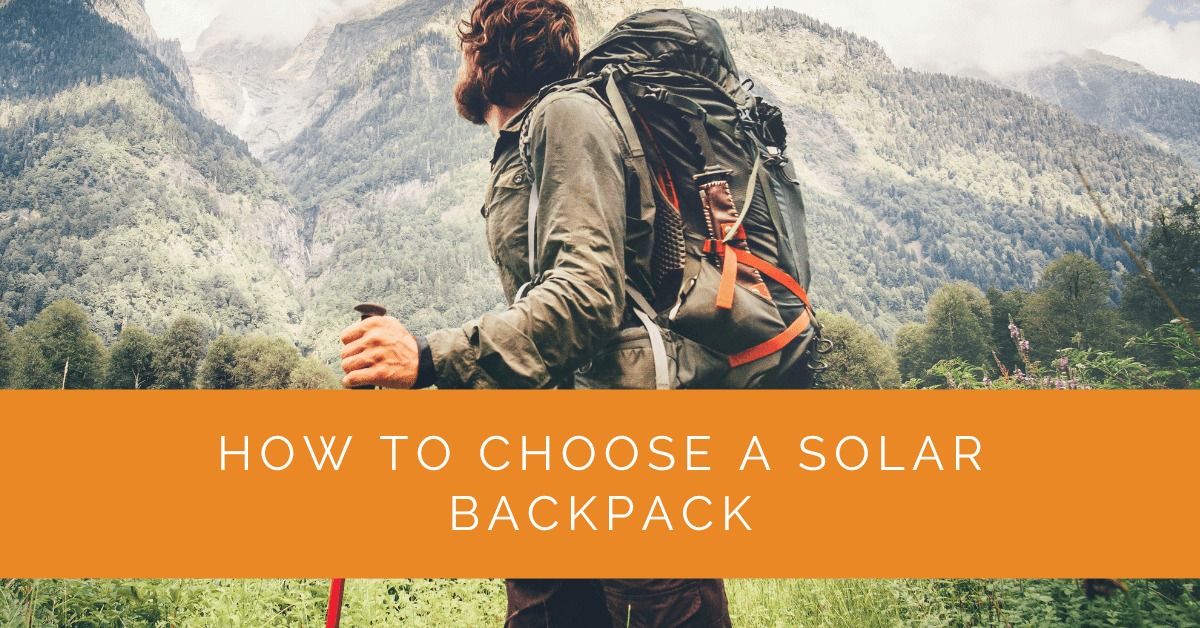
A solar backpack combines the convenience of a day pack or hiking pack with integrated solar panels and battery storage, allowing you to charge phones, tablets, and other devices while exploring the outdoors. Whether you’re hiking a multi-day backcountry trek, camping off-grid, or traveling through remote areas, a solar backpack can keep your devices powered without relying on wall outlets or heavy portable generators.
However, not all solar backpacks are equally effective. The market is crowded with models that prioritize style over real solar performance, leading to disappointing field results. In this guide, we’ll walk you through the key specifications, performance metrics, and practical considerations for choosing a solar backpack that actually delivers power when you need it most.
Understanding Solar Panel Specifications
The most visible specification on any solar backpack is wattage. You’ll see models advertised as 5W, 10W, 15W, 20W, or higher. Wattage describes the peak power output under ideal conditions (direct perpendicular sunlight, 77°F ambient temperature, clean panel surface). Real-world output is almost always significantly lower.
A 15W solar panel on a backpack under typical hiking conditions (variable sunlight angles, haze, partial cloud cover) might produce only 5–8W of actual usable power. This 40–50% efficiency loss is normal and caused by misalignment with the sun, atmospheric conditions, and dust on the panel surface.
When comparing backpacks, don’t rely solely on wattage. Instead, look for independently tested charging performance: How long does it take to fully charge a 3,000mAh smartphone under realistic sunny conditions? Reputable manufacturers publish these data points. A well-engineered 10W system might outperform a poorly designed 15W system due to better charge controller efficiency.
Panel type matters too. Most solar backpacks use monocrystalline or polycrystalline silicon, with monocrystalline being more efficient (18–22% conversion) than polycrystalline (15–18%). Some premium models integrate PERC (Passivated Emitter Rear Contact) or half-cut cell technology for 20–23% efficiency, though the practical benefit on a small backpack panel is modest.
Battery Capacity and Integration
The built-in battery is often more important than the solar panel for practical use. A 15W panel under strong sun delivers roughly 12–15W of power, but this is peak output. Real sustained power is lower due to varying sun angles throughout the day.
Battery capacity is measured in milliamp-hours (mAh) or watt-hours (Wh). A typical smartphone requires 3,000–4,000mAh to charge fully, while a tablet needs 5,000–10,000mAh. Solar backpacks typically integrate 5,000mAh to 25,000mAh batteries, with larger capacities adding weight and cost.
The key consideration is this: A small 5W panel won’t fully charge a smartphone in a single day of partial sun. Instead, it trickles charge throughout the day. A built-in 10,000mAh battery allows you to store daytime solar harvesting and use it to charge devices in the evening. This is far more practical than waiting all day for direct solar charging.
Look for backpacks with lithium-ion or lithium polymer batteries rated for at least 300–500 charge cycles. These technologies offer better energy density (more capacity in less weight) than older lead-acid or NiMH designs. Check the warranty—reputable brands guarantee battery performance for 1–3 years.
Some solar backpacks offer optional external power bank compatibility, allowing you to attach a larger portable battery for extended trips. This modularity is valuable if you sometimes need more capacity than the built-in battery provides.
Charge Controller Technology
The charge controller is the electronic component that converts variable solar output into stable charging power for your devices. Two common types exist: PWM (Pulse Width Modulation) and MPPT (Maximum Power Point Tracking).
PWM controllers are simpler and cheaper but less efficient, typically achieving 60–70% energy conversion. MPPT controllers are more sophisticated and achieve 90–95% conversion, meaning they extract more usable power from the same panel. For a small 10W solar backpack, the difference might be 1–2W of additional output, but over a day of charging, this adds up.
Quality charge controllers also include protections against overcharging, over-discharge, and temperature extremes. Look for backpacks that advertise smart charging with USB-A and USB-C outputs. USB-C with Power Delivery (PD) is particularly valuable if you use modern phones, tablets, or laptops that support fast charging.
The best charge controllers automatically optimize for whatever devices you’re charging. If you connect a phone requiring 5V/2A, the controller delivers that. If you switch to a tablet needing 9V/2A, it adjusts. This adaptive technology ensures you’re always charging at the maximum rate your device supports.
Real-World Charging Performance Expectations
Marketing claims often promise full smartphone charges in a few hours of sunlight. This is only realistic under ideal conditions: direct perpendicular sunlight, clean panels, warm temperature, and optimal USB Power Delivery negotiation with your device.
Realistic expectations for a well-designed 10–15W backpack under typical sunny hiking conditions (partial haze, varying sun angles):
Smartphone (3,000mAh): 3–5 hours to full charge from dead battery. This requires relatively consistent strong sunlight and assumes no cloud cover.
Tablet (5,000–8,000mAh): 6–10 hours, often requiring overnight storage of solar charge in the built-in battery before final device charging.
In partly cloudy conditions or forest environments, charging takes 2–3 times longer or may not reach completion in a single day. In heavy cloud cover or deep shade, solar charging becomes negligible.
The most practical approach is thinking of a solar backpack as a slow trickle charger combined with a portable battery. You harvest solar energy throughout the day into the built-in battery, then use that stored power for bulk device charging in the evening. This workflow is far more reliable than betting on continuous direct sun.
Panel Durability and Weather Resistance
A solar backpack lives outdoors in harsh conditions: UV exposure, sand, rain, temperature swings, and mechanical stress from carrying. Durability matters significantly because a broken panel means zero charging capacity for the rest of your trip.
Quality solar panels are laminated with multiple layers: tempered glass front, EVA encapsulant, silicon cells, EVA, and waterproof backing. This layered construction provides UV resistance and weatherproofing. Cheaper panels skip the glass cover and use plastic, which yellows under UV exposure and becomes brittle.
Check ratings for water resistance. IP54 or higher means dust and water resistance sufficient for hiking and light rain. IP67 is fully submersion-proof, which is overkill for a backpack but offers maximum protection. Note that waterproofing applies to the entire backpack assembly; individual USB ports must also be sealed or covered.
Panel flexing is another durability concern. Backpacks bounce and flex during hiking. Some panels are designed with flexible backing to tolerate this. Others are semi-rigid and more prone to cracking if overstressed. Look for reviews from users who actually hiked with the pack for extended periods.
Seams and connection points are failure-prone areas. Where solar leads connect to the battery or charge controller, connections can loosen with vibration. Check that connections are soldered or potted (filled with epoxy) rather than just crimped. Replaceable battery modules are a plus if your internal battery fails.
Weight, Comfort, and Usability
A solar backpack must function as a backpack first and a power source second. If it’s uncomfortable to wear, you won’t use it, regardless of solar performance.
Total weight varies from 2 lbs for minimal 5W models to 5–6 lbs for feature-rich 20W systems with larger batteries. For backpacking, 3–4 lbs of solar backpack is reasonable; beyond that, it becomes a significant burden on multi-day trips.
Padded shoulder straps and a breathable back panel are essential. Solar panels add rigid bulk to a backpack, so manufacturers must work harder on ergonomics to distribute weight comfortably. Look for packs with suspension systems designed to transfer weight from shoulders to hips, similar to dedicated hiking packs. Test-fit any pack before buying if possible; what’s comfortable on a showroom floor may not work after an hour of uphill hiking.
Pocket layout and material matter. You want multiple compartments to organize gear, quick-access pockets for phones or power banks, and durable fabrics. Water-resistant nylon or polyester with taped seams is standard. Some packs use reinforced Oxford cloth for abrasion resistance.
USB port placement should be logical. Ports on the pack exterior let you charge while hiking without removing the pack. Ports on an interior battery module mean you must open the pack to charge. Many modern packs offer both, with external ports for quick top-ups and internal access to the main battery for larger charges.
Comparing Solar Backpack Types
Solar backpacks fall into a few broad categories, each suited to different use cases.
Lightweight Daypacks (5–10L capacity, 5W panel, 5,000mAh battery): Best for short hikes where weight is critical. The battery barely holds enough for a single smartphone charge, so they’re practical mainly if you already have a power bank. Weight advantage: 2–3 lbs.
Standard Hiking Packs (15–25L capacity, 10–15W panel, 10,000mAh battery): The sweet spot for most recreational hikers and travelers. Capacity fits a 1–3 day trip, panels provide meaningful solar harvest, battery holds 2–3 smartphone charges. Weight: 3.5–5 lbs. Cost: $80–$200.
Large Expedition Packs (30–50L capacity, 15–20W panel, 20,000mAh+ battery): For serious backpacking or overlanding. Larger battery and panel justify the weight, especially on week-long trips. Weight: 5–7 lbs. Cost: $150–$400. Best for vehicle-based camping where pack weight is less critical.
Laptop-Capable Packs (20–30L, USB-C Power Delivery, 15W+ panel, 15,000mAh+ battery): For remote workers or digital nomads. Must support higher power (USB-C PD at 30–65W) to charge laptops. Adds significant cost and weight. Best evaluated by laptop charging time under realistic sun conditions.
Environmental Conditions and Solar Performance
Real solar performance depends heavily on your hiking environment and season. Climate, altitude, latitude, and vegetation all affect charging speed.
High-Altitude Mountain Terrain: Thinner atmosphere and reduced haze allow more direct sunlight, increasing solar output 10–20% compared to sea level. Mountain terrain also offers reliable clear-sky windows even in summer afternoons. Ideal for solar backpacks.
Desert and Open Country: Maximum solar potential. Clear skies and extended daylight hours mean realistic daily charging from mid-morning through late afternoon. These environments are where solar backpacks shine.
Forests and Shaded Valleys: Dappled sunlight reduces output by 50–70%. A 15W panel becomes a 5–7W producer in deep shade. Solar backpacks are less practical here; a conventional battery pack is more reliable.
Coastal and Oceanic Climates: Marine layer haze, frequent overcast, and salt spray all reduce performance. Expect 40–50% of theoretical output. Solar backpacks work but aren’t as effective as in drier climates.
Seasonal Variation: Winter and high-latitude locations have low sun angles and short daylight. A solar backpack in Alaska in January is nearly useless; in California in June, it’s excellent. Match expectations to season and latitude.
Brand Reputation and Warranty Support
Solar backpack brands range from no-name imports to established outdoor brands integrating solar technology. Reputable manufacturers invest in quality control, testing, and warranty support.
Established brands like Goal Zero, Anker, and major outdoor companies (The North Face, Coleman) offer warranty coverage and customer support if issues arise. Off-brand models from Amazon Marketplace may be cheaper but lack technical support and often deliver misleading performance claims.
Read independent reviews from users who actually hiked with the pack, not just unboxing videos. Look for comments on real charging performance, durability after extended use, and whether the pack is comfortable fully loaded. Verified purchase reviews are more trustworthy than paid promotional content.
Warranty coverage should include the battery (1–3 years) and panels (2–5 years). Check if the manufacturer covers manufacturing defects or only dead batteries. Some warranty programs are strict about water damage or user error; others are more permissive. Ask before purchasing if you’re concerned about edge cases.
Cost-Benefit Analysis for Your Use Case
A quality solar backpack costs $100–$300, significantly more than a conventional pack. Is the investment justified for your hiking style?
Strong case for solar backpack: You take multi-day trips in sunny regions, hike remote areas without resupply opportunities, use power-hungry devices (GPS, camera, phone, headlamp), and want the security of slow but steady charging. Cost is recovered in convenience and reduced anxiety about dead batteries.
Weak case for solar backpack: You hike 1–2 days locally, mostly have cellular service, use lightweight devices, or can recharge at camps or towns. A lightweight conventional pack plus an external battery pack ($30–$60) is lighter, cheaper, and more practical.
Moderate case: You travel internationally, camp in remote areas unpredictably, and want flexibility. A solar backpack adds modest cost for genuine utility, especially if you combine it with a larger external battery bank for extended trips.
Consider your typical trip length and frequency. If you take 10 overnight trips per year, a $200 solar backpack costs $20 per trip to own, plus it eliminates the hassle of finding outlets at hotels. For longer expeditions, the math is even more favorable.
Testing Performance Before Your Next Adventure
Don’t assume a solar backpack will perform as advertised until you test it yourself. Before a big trip, run a controlled test:
On a clear sunny day, place the pack in direct sunlight with panels oriented toward the sun. Measure voltage and current output using a multimeter. Compare results to the manufacturer’s claimed peak output. Real output should be 70–85% of spec under ideal conditions.
Next, perform a charging test. Fully discharge your smartphone and the backpack’s internal battery. In full sun, time how long it takes to charge the phone from dead to full. Compare to your own results from the manual and manufacturer reviews. Significant deviations indicate a problem (degraded panel, faulty controller, or dead battery cell).
Finally, simulate trip conditions. Place the pack in partial shade or hazy conditions and charge for an hour. Measure power output. This represents realistic hiking performance and helps set expectations.
Frequently Asked Questions
Only models with 15W+ panels, 20,000mAh+ batteries, and USB-C Power Delivery support. Even then, charging is very slow. A typical laptop battery (60Wh) would require 12–24 hours of strong sunlight to charge fully using a 15W panel. More practical: Use the backpack to charge a power bank, then the power bank to charge your laptop. Or carry a portable solar panel array designed specifically for laptop charging.
Lithium-ion batteries degrade over time and charge cycles. Expect 500–1,000 full charges before capacity drops to 80% of original. If you charge the backpack daily from hiking, the battery lasts 1.5–3 years. Some manufacturers offer replaceable battery modules for $30–$60, while others require factory service. Check this before buying.
Most models are water-resistant (not fully waterproof). IP54 rating means splash and dust resistance but not full submersion. USB ports are typically vulnerable in heavy rain. For extended rain, pack your electronics in waterproof bags inside the backpack. Don’t assume the solar panel or internal battery tolerates full dunking without damage.
Yes. Cold reduces panel efficiency and battery capacity. A panel that produces 15W at 77°F produces only 12W at 32°F. Battery capacity also decreases; a 10,000mAh battery at freezing might store only 70–80% of its rated capacity. Winter hiking with a solar backpack is less effective than summer use, and cold-weather overnight storage reduces usable charge.
Most modern solar backpacks have both solar charging and wall-charger input. You can rapidly charge the internal battery at home or a hotel, then use solar to top it up during the day. This hybrid approach is more practical than relying solely on solar, especially in cloudy climates or at high latitudes in winter.
For a week of hiking, plan on charging multiple devices multiple times. A 15,000–20,000mAh battery with a 15W panel is the minimum. Realistically, you’ll charge your smartphone every 1–2 days, so plan on 3–4 full charges over the week. Pair the backpack with a larger external battery bank (25,000mAh+) for true multi-day confidence, especially if hiking in shaded or low-sun environments.
Summing Up
Choosing the right solar backpack requires balancing solar panel wattage, battery capacity, charge controller efficiency, weight, durability, and price. The best backpack for you depends on your hiking style, trip duration, destination climate, and device needs.
For most recreational hikers, a 15–25L pack with a 10–15W panel and 10,000mAh battery strikes the right balance between capability and weight. Real-world charging performance under typical conditions is 3–5 hours for a smartphone in strong sun, with longer times in partial shade or clouds. Treat the solar panel as a slow trickle charger that extends battery life, not a magic solution for unlimited power.
Test any backpack before a major trip to confirm real performance. Read independent reviews from users who actually used the pack on trails. Choose reputable brands with solid warranties. When selected thoughtfully, a solar backpack provides genuine peace of mind on extended backcountry adventures. Ready to outfit your next expedition? Call (855) 427-0058 for guidance on solar solutions for your specific needs.
Updated