
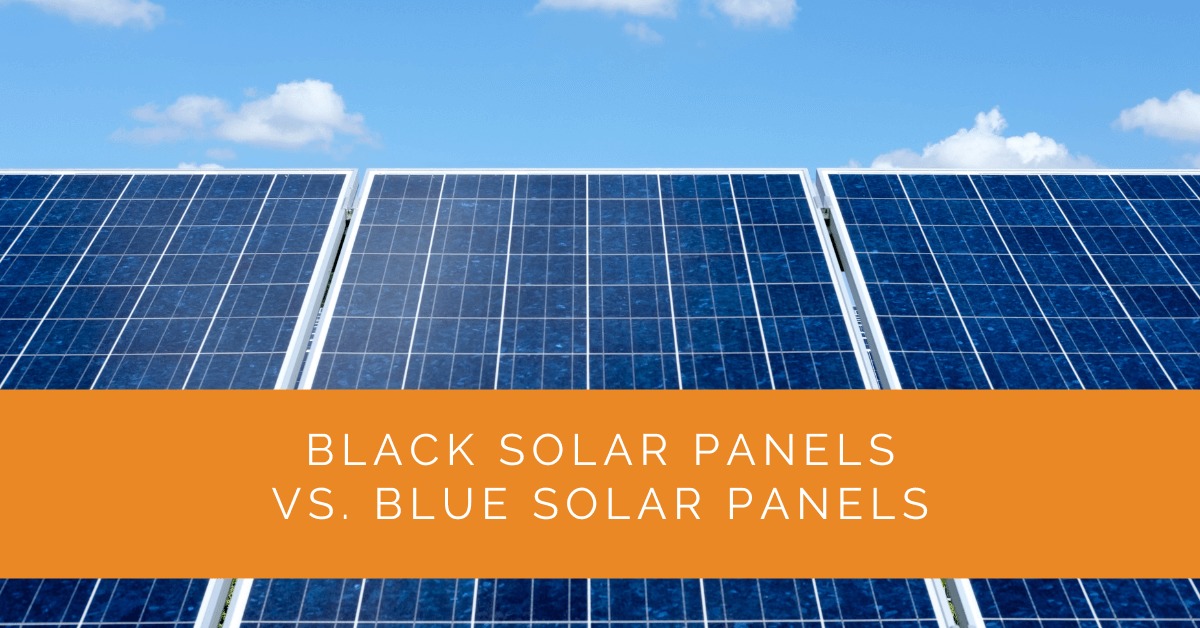
The color difference between black and blue solar panels comes down to the underlying cell technology, not just aesthetics. Black panels use monocrystalline silicon cells and an all-black design for a sleeker look, while blue panels use polycrystalline silicon — a technology that has been largely discontinued in new manufacturing as of 2026.
What Causes the Color Difference
| Feature | Black Panels (Monocrystalline) | Blue Panels (Polycrystalline) |
|---|---|---|
| Cell structure | Single silicon crystal | Multiple silicon fragments melted together |
| Efficiency | 20-24%+ | 15-17% (when produced) |
| Appearance | Uniform black, sleeker | Blue, visible crystal fragments |
| 2026 manufacturing status | Standard, widely produced | Largely discontinued |
| Typical cost | Higher per watt historically, now converged | Was cheaper, less relevant now |
Monocrystalline (Black) Panels
Made from a single continuous silicon crystal, monocrystalline cells achieve higher efficiency and a more uniform black appearance, especially with black frames and backsheets. This has become the dominant residential panel type, further improved by newer cell architectures like PERC, TOPCon, and HJT.
Polycrystalline (Blue) Panels: Mostly Discontinued
Polycrystalline cells are made from multiple silicon fragments melted together, giving them a distinctive blue, speckled appearance and historically lower manufacturing cost. However, as monocrystalline production costs have fallen, most manufacturers discontinued polycrystalline panels by 2023-2026 in favor of higher-efficiency mono technology across price tiers.

Does Color Affect Performance Directly?
Color itself doesn’t determine performance — it’s a byproduct of the underlying cell technology. Monocrystalline’s higher efficiency comes from its purer silicon structure, not the black color itself, though black panels do absorb slightly more heat, which can very marginally affect performance in extreme conditions.
What This Means for Buyers Today
If you’re shopping for panels in 2026, you’ll almost exclusively find monocrystalline (black) panels — polycrystalline blue panels are now a legacy technology mostly seen on older installations rather than new products.
Ready for modern high-efficiency solar panels? Get a free quote: (855) 427-0058
Frequently Asked Questions
What’s the difference between black and blue solar panels?
Black panels use monocrystalline silicon cells; blue panels use polycrystalline silicon, a technology largely discontinued as of 2026.
Are black solar panels more efficient than blue ones?
Yes — monocrystalline (black) panels achieve 20-24%+ efficiency versus 15-17% for polycrystalline (blue).
Can I still buy blue polycrystalline solar panels?
Most manufacturers discontinued polycrystalline production by 2023-2026, so new panels are almost exclusively monocrystalline.
Does panel color affect solar performance?
Not directly — performance differences come from cell technology, though black panels absorb slightly more heat.
Why did manufacturers stop making blue solar panels?
Falling monocrystalline production costs made higher-efficiency black panels more cost-competitive across price tiers.
Are black solar panels more expensive?
Historically yes, but pricing has largely converged as monocrystalline became the industry standard.
Which panel type should I choose today?
Monocrystalline (black) panels are the standard choice in 2026, as polycrystalline is no longer widely manufactured.
Summing Up
Today’s solar market is dominated by high-efficiency black monocrystalline panels. To get a quote for a modern, efficient system, call (855) 427-0058 or visit us.solarpanelsnetwork.com.
Updated