Our blog is reader-supported. When you buy through links on our site, we may earn an affiliate commission. Thank you for our support!

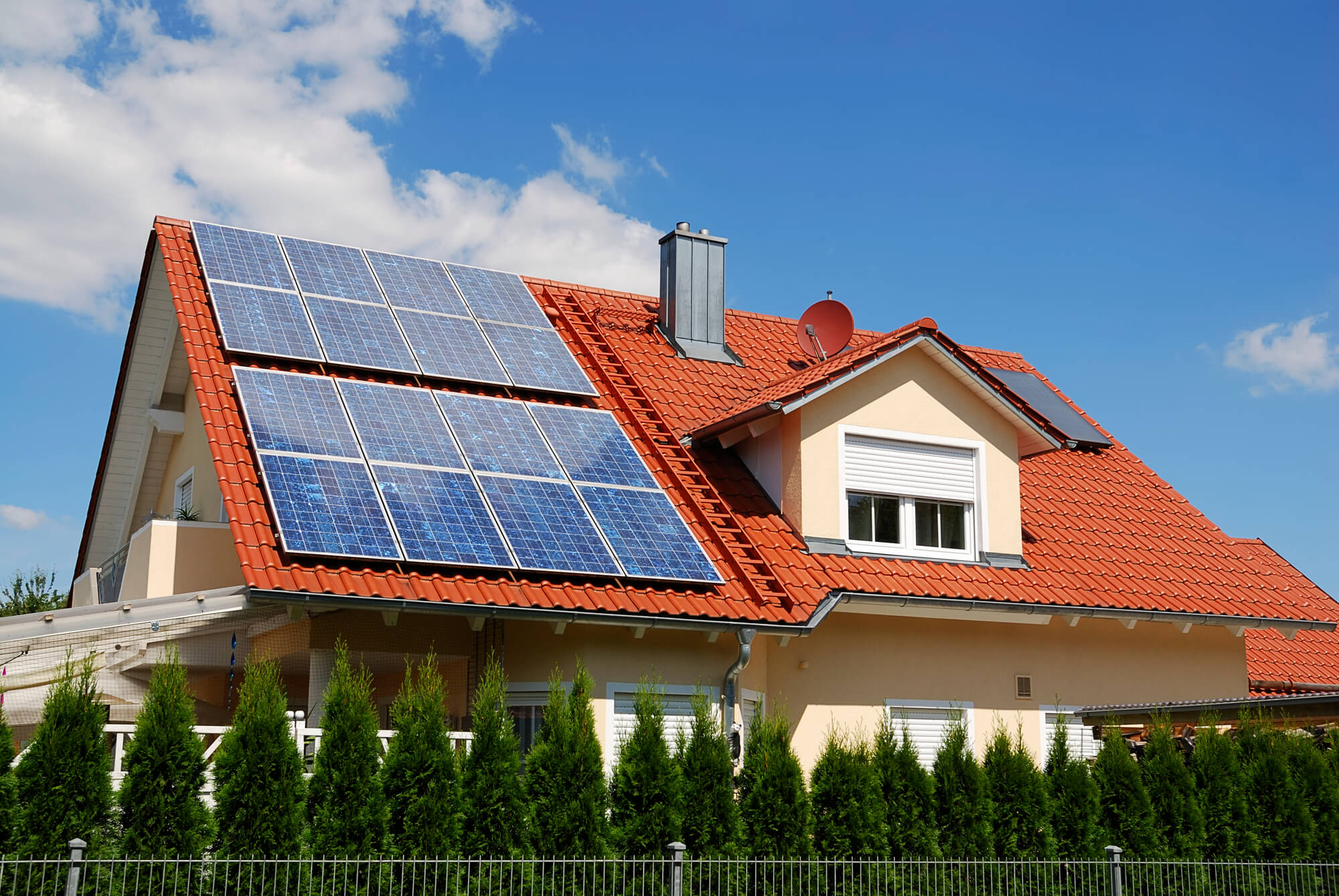
Rooftop solar is the most common residential installation, but it’s not the right choice for every home. A roof with heavy shade, poor southern exposure, structural issues, or upcoming replacement makes rooftop solar impractical or inefficient. Fortunately, multiple alternatives exist: ground-mounted arrays, solar carports, solar shingles, community solar, and even plug-and-play portable panels. Understanding each option helps you choose the solar solution best suited to your property, budget, and energy goals.

The rise of affordable solar alternatives reflects growing demand from homeowners whose roofs don’t work for traditional installations. These alternatives often deliver equal or better energy production while providing secondary benefits like shade, parking cover, or neighborhood aesthetics. Whether you’re constrained by roof limitations or attracted to the flexibility of alternative placements, today’s options make solar accessible to more properties than ever.

Ground-Mounted Solar Panels

Ground-mounted arrays are the most practical alternative to rooftop installations, offering superior performance, easier maintenance, and design flexibility. The panels are mounted on racks anchored to concrete piers or footings in a yard, garden, or open land, typically at a south-facing tilt angle optimized for your latitude.

Advantages: Ground-mounted systems perform better than rooftop panels on shaded properties (you can position them in full sun). They’re easier to clean, inspect, and repair without climbing or roof hazards. You can adjust tilt angles seasonally (more tilted in winter for low-angle sun, flatter in summer). Ground mounts are ideal if your roof is aging, has poor orientation, or will need replacement soon. They also scale easily—you can add panels later without roof capacity concerns.

Disadvantages: Installation costs are 40-50% higher than rooftop systems according to 2026 EnergySage data, totaling $3.00-$3.50 per watt after incentives (vs. $2.50-$2.90 for rooftop). Ground systems require available land (typically 400-600 square feet for a 6 kW residential system). They may need reinforced concrete footings in freeze-thaw climates to prevent frost heave. In residential areas, homeowners associations (HOAs) may restrict ground-mounted arrays as “unsightly.”

Cost example: A 6 kW ground-mounted system costs $18,000-$21,000 before incentives, vs. $13,500-$15,000 for rooftop. After applying the 30% federal ITC (active through 2032), ground-mounted comes to $12,600-$14,700, adding $3,000-$4,000 premium vs. rooftop, but delivers the same electricity and may last longer (ground systems have superior cooling, reducing panel degradation).

Solar Carports and Canopies

Solar carports combine parking shade with electricity generation. Panels are mounted on a structure above your driveway or parking area, replacing or supplementing a traditional carport roof. Solar canopies are similar—open-sided structures with panels overhead, providing shade without walls.

Advantages: Dual functionality—you gain parking shade while generating solar electricity, adding both utility and property value. Carports keep vehicles cool in summer, reducing cooling costs and extending vehicle life (cooler batteries in EVs). They’re ideal for properties where rooftop or ground space is limited. A 6 kW solar carport system can shade 3-4 vehicles while generating enough electricity for most households.

Disadvantages: Carports cost significantly more than equivalent rooftop systems—typically $4.00-$5.00 per watt installed, or $24,000-$30,000 for 6 kW before incentives. After the 30% ITC, you’re still investing $16,800-$21,000 vs. $12,600-$15,000 for rooftop. Structural engineering requirements add $1,000-$3,000 for design and permits. Snow loading can be problematic in cold climates—snow accumulation adds weight and shade. Maintenance access is sometimes challenging if panels are overhead.

Use case: Carports make most sense for EV owners who want to charge from solar and keep their vehicle cool, or properties with significant shade trees blocking rooftop sunlight but clear driveways. A homeowner with a 6 kW carport system can generate $1,500-$2,000 in annual electricity savings while gaining $3,000-$5,000 annual value from vehicle shade and cooling.

Solar Pergolas and Patio Covers

Similar to carports, solar pergolas and patio covers attach panels to structures covering outdoor living spaces. Panels provide shade for patios, decks, or garden areas while generating electricity.

Advantages: They extend your usable outdoor space by providing shade and weather protection. A solar patio cover generating 2-3 kW can reduce cooling costs by 10-15% while supplying electricity. Aesthetically, modern panels look sleek on contemporary homes. Dual-use structures justify higher costs compared to standalone solar—you’re paying for both structure and electricity generation.

Disadvantages: Cost is high ($4.50-$5.50 per watt) due to structural engineering and custom fabrication. A 3 kW patio cover system costs $13,500-$16,500 before incentives. They may not provide optimal south-facing orientation—if your patio faces east or west, energy production suffers by 15-25% vs. south-facing. Building permits and HOA approval can be complex.

Payback timeline: A solar patio cover with $10,000 net cost (after ITC) saving $1,200/year breaks even in 8-9 years. Longer payback than rooftop systems, but the added property and lifestyle value may justify the premium.

Solar Shingles and Integrated Roofing

Solar shingles (sometimes called solar tiles) are photovoltaic cells embedded in or integrated with traditional roofing materials. They replace conventional asphalt shingles or tile rather than mounting over existing roof surfaces. The most notable product is Tesla’s Solar Roof, a line of solar-integrated architectural shingles that look like premium roof tile.

Advantages: Aesthetics—solar shingles blend seamlessly into the roof, eliminating the “bulky panels” look. They replace existing roofing, so installation combines two projects. No exposed mounting hardware. For homes with strict architectural guidelines or HOA restrictions on visible solar arrays, solar shingles may be the only approved option.

Disadvantages: Extremely high cost—$5.00-$8.00+ per watt installed (some Tesla Roof installations exceed $10/watt). A typical 6 kW system costs $30,000-$48,000 before incentives, vs. $13,500-$15,000 for conventional rooftop. After 30% ITC, you’re still investing $21,000-$33,600 vs. $9,450-$10,500 for rooftop. Efficiency lags conventional panels by 5-15%—integrated shingles typically generate 150-200W per unit vs. 300-400W for modern rooftop panels. Installation is specialized and requires certified contractors, adding complexity. Repair and replacement can be difficult—if one shingle fails, replacing it involves roofing work, not just swapping a module.

Cost-benefit analysis: Solar shingles are justified only if you need roof replacement anyway and value aesthetics highly. For most homeowners, investing $15,000-$20,000 in a rooftop system plus $5,000-$10,000 for a new traditional roof (separately) is more cost-effective than a $30,000+ solar shingle system.

Community Solar and Virtual Net Metering

Community solar (also called shared solar) allows you to subscribe to a portion of a larger solar farm in your area, receiving bill credits for your share of production. No equipment is installed on your property. This is the only solar option for renters, condo dwellers, or homeowners with unsuitable roofs.

Advantages: Zero upfront cost—you subscribe and begin receiving credits immediately. No maintenance or equipment hassles. Ideal for renters, renters with concerns about roof compatibility, or homeowners under restrictive HOAs. Savings typically range from 5-20% of annual electricity bills, depending on the program and utility rates. Some programs offer 20-25 year contracts with fixed rates, providing long-term cost certainty against rising grid electricity prices.

Disadvantages: You don’t own the system, so you receive no federal tax credit or ownership benefits. Savings are typically lower than owner-installed rooftop (which can save 40-70% of electricity bills with net metering). You’re dependent on the solar farm operator to maintain the installation. If you move, your subscription doesn’t transfer (or requires paying an exit fee). Contract terms vary widely—some guarantee 20-year discounts, others escalate rates annually.

Availability: Community solar is available in 30+ states but not nationwide. Check with your utility or NREL’s Community Solar Map to see if programs operate in your area. Cost is zero to $100 signup, with savings of $10-$50+ monthly depending on system size and participation level.

Payback timeline: Immediate—you save money from month one with zero upfront investment. Over 20 years, cumulative savings range from $2,000-$10,000+ depending on program discounts and electricity rate growth.

Plug-and-Play / Portable Solar Panels

Portable solar panel systems, sometimes marketed as “plug-in” or “balcony solar,” are self-contained units that can be installed on balconies, patios, garden areas, or even placed on the ground. They typically include a small inverter and plug directly into a standard household outlet. Popular products include Ecoflow, Anker Solix, and various Chinese manufacturers.

Advantages: Minimal installation cost—you can set them up yourself in minutes. No permits or electrician required. You can rent rather than own, making them ideal for apartment dwellers or people planning to move. Prices are low—a 400W portable system with inverter costs $300-$600, a 1 kW system $800-$1,500. Payback period is exceptionally fast: a 1 kW system saving $100-$150/year breaks even in 5-10 years. If you rent, you can take the system with you when you move.

Disadvantages: Energy production is limited—a small 400W system generates only $30-$50/year in savings. Total system output per square foot is 20-30% lower than traditional panels due to non-optimized angle and less-efficient inverters. They don’t integrate with battery systems as seamlessly as permanent installations. Most landlords and HOAs allow them because they’re non-permanent, but check your lease or community rules.

Payback timeline: Fastest of all solar options. A $500 system saving $100/year breaks even in 5 years, with additional savings in years 6-25. Total 25-year value can exceed $2,500, a 400%+ return despite small scale.

Use case: Ideal for renters, apartment dwellers, those with unsuitable roofs, and people wanting to test solar before committing to a full installation. For homeowners, portable panels make sense as a supplemental system (adding to rooftop) or temporary solution until a permanent installation is feasible.

Solar Awnings and Mobile Shade Structures

Solar awnings are retractable or fixed shading structures with integrated solar panels, mounted on walls or windows. They provide shade while generating electricity. Mobile shade structures (moving pergolas, adjustable sun shades) can also incorporate panels.

Advantages: Space-efficient for small properties. They reduce solar heat gain in summer, lowering AC costs. Dual-purpose design (shade + power) can appeal to design-conscious homeowners. Retractable awnings offer flexibility—you can open them for ventilation or close them for maximum shade.

Disadvantages: High cost per watt ($5.00-$7.00) due to mechanical complexity. A 2 kW awning system costs $10,000-$14,000 before incentives. Mechanical components (motors, hinges) add maintenance concerns. Energy production is often suboptimal if awning angle isn’t south-facing or if retractable operation prevents all-day solar exposure.

Niche application: Solar awnings make most sense for modern homes with significant glass facades, where summertime shade is a priority and aesthetics matter. Payback is typically 10-15 years.

Solar Greenhouses and Agricultural Integration

For rural properties, integrating solar into greenhouse structures or agrivoltaic systems (crops beneath or beside solar panels) offers unique benefits. Agrivoltaics combine food production with electricity generation on the same land.

Advantages: Dual revenue streams—farmers sell electricity and crops. Shade from panels benefits heat-sensitive crops (lettuce, spinach) in hot climates. Reduced water evaporation under panel shade. Compatible with grazing (sheep beneath elevated arrays). Minimal land use conflict compared to ground-mounted arrays alone.

Disadvantages: Requires specialized design and contractor expertise. Crop-solar compatibility varies—some crops thrive under partial shade, others need full sun. Initial cost is high ($3.50-$4.50/watt). Federal agricultural policies and local zoning may restrict or incentivize agrivoltaics differently. ROI depends on crop value and solar production.

Emerging opportunity: Agrivoltaics is growing rapidly, with government incentives emerging for farmer-installed solar. Payback timelines vary widely (8-20 years) depending on crop value and subsidy programs available in your region.

Comparing Energy Production Across Alternatives

For the same 6 kW system size, energy production varies by alternative:

Rooftop: Full performance in ideal conditions. Produces approximately 8,000-10,000 kWh/year in a good solar location (3-4 peak sun hours daily).

Ground-mounted: Similar or 5-10% higher (optimized tilt angle and better cooling). Produces approximately 8,500-10,500 kWh/year.

Solar carport: Equivalent to rooftop if south-facing. Produces approximately 8,000-10,000 kWh/year.

Solar shingles: 15-25% lower due to lower panel efficiency and integration losses. Produces approximately 6,000-8,000 kWh/year.

Community solar: Depends on farm location, but typically optimized by professionals. Produces as much or more than residential rooftop per kW subscribed.

Portable/balcony solar: Depends on angle and shading. Often suboptimal (20-30% lower than ideal), producing 200-300 kWh/year per kW.

Cost Comparison and Payback Timelines

For a typical 6 kW system in a good solar location (5 peak sun hours, $0.14/kWh electricity):

Rooftop: $13,500-$15,000 before ITC, $9,450-$10,500 after. Annual savings: $1,200-$1,400. Payback: 7-9 years. 25-year value: $30,000-$35,000.

Ground-mounted: $18,000-$21,000 before ITC, $12,600-$14,700 after. Annual savings: $1,200-$1,400 (same kWh, higher system cost). Payback: 10-12 years. Justifiable if roof issues exist.

Solar carport: $24,000-$30,000 before ITC, $16,800-$21,000 after. Annual savings: $1,200-$1,400 plus vehicle shade value ($1,500-$2,000/year). Combined payback: 6-8 years when including shade value. Most attractive for EV owners.

Community solar (6 kW equivalent): $0 upfront. Annual savings: $600-$900 (50-70% of typical ownership savings). 25-year value: $15,000-$22,500. Payback: immediate. Best for renters and limited-space properties.

Portable (1 kW): $500-$1,000. Annual savings: $100-$150. Payback: 3-10 years. 25-year value: $2,500-$3,750. Fastest break-even.

Frequently Asked Questions

Is ground-mounted solar better than rooftop?

Not necessarily better, but sometimes necessary. Ground-mounted solar produces similar electricity (often 5-10% more due to better cooling and optimized angle) but costs 40-50% more. It’s worthwhile if your roof is shaded, old, or has poor orientation.

Can renters use solar?

Yes. Community solar (subscribing to shared solar farm) is available in 30+ states with zero upfront cost. Portable plug-in solar is another renter option. Most landlords permit portable systems because they’re non-permanent and removable.

Are solar shingles worth it?

Rarely. Solar shingles cost $30,000-$48,000 for 6 kW (2-3x rooftop cost) and generate 15-25% less electricity due to lower efficiency. Only consider if your roof needs replacement anyway and you prioritize aesthetics above cost.

How much do solar carports cost vs. rooftop?

Carports cost $4.00-$5.00/watt vs. $2.25-$2.50/watt for rooftop (installed). A 6 kW carport is $16,800-$21,000 after ITC vs. $9,450-$10,500 for rooftop. The $6,000-$10,000 premium is often justified by dual functionality (parking shade) and vehicle cooling benefits.

What’s the fastest-payback solar alternative?

Portable plug-and-play panels. A $500-$1,000 system breaks even in 5-10 years and requires no permits or installation. Community solar breaks even immediately (zero upfront cost with day-one savings).

Can I combine rooftop and ground-mounted solar?

Yes. A mixed system (rooftop + ground or carport) maximizes energy production across your property. You can start with rooftop and add ground-mounted later if space and budget allow. Both systems work seamlessly with a single inverter or dual-inverter setup.

Summing Up

Rooftop solar remains the most cost-effective option for most homeowners, but alternatives provide valuable solutions for properties with unsuitable roofs, space constraints, or specific needs. Ground-mounted arrays deliver excellent performance and flexibility at a 40-50% cost premium. Solar carports combine shade and electricity at a compelling value for EV owners. Community solar offers zero-upfront renewable energy for renters and apartment dwellers. Portable panels provide fastest payback for budgets under $1,500.

Before dismissing solar due to roof limitations, evaluate these alternatives. The 30% federal ITC (active through 2032) applies to most installations. Pairing alternatives with smart financing and matching them to your property’s strengths can deliver attractive returns and energy independence, even if rooftop solar isn’t an option.

Get a Free Solar Quote → (855) 427-0058

Updated