Our blog is reader-supported. When you buy through links on our site, we may earn an affiliate commission. Thank you for your support!
Solar lights are worth it if you’re looking for low-cost outdoor lighting without wiring or electricity bills. Quality solar lights ($30-$200 per fixture) last 5-10 years and save $5-$30/year per light compared to grid-powered alternatives, payback in 2-7 years. However, solar lights have limitations: reduced brightness in cloudy regions, variable performance depending on sun exposure, and lower light quality than LED landscape lighting.
The explosive growth of solar lighting reflects a shift toward low-cost, eco-friendly outdoor solutions. Modern solar lights are dramatically better than designs from even 5 years ago—brighter LEDs, larger battery capacity, and improved motion sensors. Whether they’re worth the investment depends on your specific application: pathway lighting (good fit), ambient deck lighting (reasonable), security spotlights (poor fit).
Contents
Types of Solar Lights
Solar outdoor lighting spans multiple categories, each with distinct cost, brightness, and application:
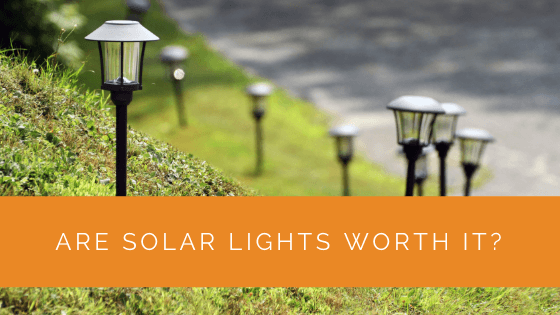
Pathway/landscape lights: Small stake-mounted lights ($15-$40) line gardens, walkways, or driveways. Brightness: 20-100 lumens. Lifespan: 3-5 years. Cost to replace grid-powered path lights: $8-$15 in electricity per year for 10-12 fixtures. Solar break-even: 3-5 years.
Solar string lights: Decorative LED strings ($40-$150) hang over patios or decks. Brightness: 40-200 lumens total. Moderate light output suitable for ambiance, not task lighting. Lifespan: 3-7 years. Lower operating cost than pathway lights because decorative use is seasonal (4-6 months/year).
Motion sensor floodlights: Bright security lights ($60-$250) mount on walls or posts. Brightness: 800-2,000 lumens (security-grade). Lifespan: 5-8 years. Cost to replace grid-powered motion sensors: $30-$50/year in electricity. Solar motion sensors save significantly if triggered frequently (security-sensitive areas).
Landscape spotlights: Directional lights ($40-$120) highlight architectural features or plants. Brightness: 100-500 lumens. Aesthetic-focused, so economic value is subjective (you’re paying for ambiance, not illumination).
In-ground and deck lights: Recessed lights ($30-$100) for stairs, decks, or terraces. Brightness: 20-100 lumens. Good for safety-critical areas like step marking. Lifespan: 3-7 years.
Cost Analysis: Solar vs. Grid-Powered Lighting
For a typical outdoor lighting installation of 10 pathway lights:
Solar option: 10 quality solar pathway lights at $30 each = $300 total. Installation: zero (self-installed in minutes). Annual operating cost: $0. Lifespan: 5 years before battery replacement. Total 10-year cost: $300 (original) + $300 (replacement at year 5) = $600.
Grid-powered option: 10 LED landscape lights at $40 each = $400. Wiring/trenching: $400-$800 (professional installation). Installation cost: $400-$800. Annual electricity: 10 lights × 10W × 4 hours/night × 365 days ÷ 1,000 = approximately 146 kWh/year × $0.14/kWh = $20/year. Total 10-year cost: $400 (lights) + $600 (installation) + $200 (electricity) = $1,200.
Economic advantage: Solar by $600 over 10 years ($60/year savings). Solar is cheaper upfront and over time for basic pathway lighting because installation costs and electricity dominate grid-powered economics.
Exception: Motion sensor security lights. Grid-powered motion sensor ($80) saves electricity because it only activates when triggered (estimated 2-4 hours/night vs. 8 hours for always-on path lights). Total grid electricity: 20-40 kWh/year = $3-$6/year. 10-year cost: $80 + $400 (installation) + $50 (electricity) = $530. Solar motion sensor ($150) breaks even or underperforms if installed in low-sun areas or frequently cloudy climates.
Brightness and Performance Limitations
Brightness reality: Most solar pathway lights produce 20-100 lumens, suitable for ambient lighting or subtle path definition but insufficient for task lighting (reading, detailed work). For comparison, a single 60W incandescent bulb produces approximately 800 lumens; a modern 10W LED produces 800-1,000 lumens.
Expect solar lights to produce 10-20% of the brightness of comparable grid-powered LED fixtures. This is acceptable for decorative or wayfinding use but inadequate for security or task areas. If you need bright illumination, solar lights are not the answer.
Cloudy climate performance: Solar lights in regions averaging 3 or fewer peak sun hours daily (Pacific Northwest, northern US) charge poorly and deliver noticeably dimmer light. Choose higher-capacity solar lights (4,000-5,000 mAh batteries) in cloudy climates. In sunny regions (Southwest, Florida), standard capacity batteries suffice.
Shading issues: A solar panel in partial shade (under a tree or eave) charges at 50-70% of rated capacity. Site solar lights in full sun (6+ hours direct sunlight daily) for reliable performance. If your patio is shaded, grid-powered lights or wired solar systems with remote panels are better options.
Lifespan and Replacement Costs
Quality solar lights last 5-7 years before degradation becomes noticeable (LEDs dim, batteries lose capacity). Budget solar lights last 2-3 years. Premium solar lights (Philips, Kichler, higher-end Amazon models) last 7-10 years.
Battery replacement: When a solar light dims excessively (after 5+ years), often just the rechargeable battery needs replacement ($5-$15), not the entire fixture. Reputable brands (Sunforce, Westinghouse) sell replacement batteries. Budget brands may require replacing the entire light ($20-$60).
True lifespan cost: A $40 solar light lasting 5 years ($8/year) is more expensive than a $60 solar light lasting 8 years ($7.50/year). Don’t choose based on purchase price alone; consider expected lifespan and replacement part availability.
When Solar Lights Make the Most Sense
Pathway and garden lighting: Clear economic advantage over grid-powered alternatives (no wiring, installation, or electricity cost). Install 8-10 quality pathway lights around a home perimeter for comprehensive landscape illumination at $300-$400 total cost and zero operating costs. Payback vs. grid-powered: 3-5 years.
Deck and patio ambiance: Solar string lights or deck lights add aesthetic value without wiring hassle. Reasonable ROI if you value the ambiance. Economic payback is slower (6-10 years) because decorative use is seasonal, but convenience and ease of installation justify the higher per-lumen cost.
Remote or off-grid areas: Solar lights are ideal for remote properties without access to grid power. A solar pathway light in a remote cabin costs $30 vs. running electrical lines ($2,000+). Obvious choice.
Renters: Solar lights are portable and non-permanent, making them ideal for renters who want outdoor ambiance without landlord approval for electrical work.
When Solar Lights Don’t Make Sense
Security-critical areas: If security is the primary goal, invest in bright, reliable grid-powered motion sensor floodlights (1,000+ lumens). Solar motion sensors in cloudy climates or shaded locations perform inconsistently. Professional-grade security requires dependable, powerful lighting that solar often can’t deliver.
Task lighting (grilling, workspace): Solar lights are too dim for detailed work or safety-critical tasks. Grid-powered LED fixtures deliver consistent, adequate brightness.
Frequently-overcast locations: In Pacific Northwest or northern climates, solar lights charge poorly and perform dimly. Skip them unless you select high-capacity models and place them in full sun. Grid power or battery-powered alternatives are more reliable.
Shaded patios or under trees: If your outdoor area is perpetually shaded, solar lights won’t work. Run wired solar systems with remote solar panels in the sun, or use grid-powered lights.
Top Solar Light Brands and Quality
Quality varies enormously. Budget options ($10-$20) from generic brands fail within 1-2 years. Reputable brands include Philips Hue (high-end, $100-$300), Sunforce (mid-range, $30-$80), Westinghouse (mid-range, $25-$70), and quality Amazon-branded models ($20-$50). Read reviews carefully—3-star reviews with complaints about battery longevity suggest poor quality.
Frequently Asked Questions
How long do solar lights last?
Quality solar lights last 5-10 years. Budget models last 2-3 years. LEDs typically outlast rechargeable batteries; when lights dim, replace the battery ($5-$15) rather than the entire light. Premium brands offer 7-10 year lifespans.
Do solar lights work in cloudy climates?
Solar lights charge poorly in cloudy climates and produce dimmer light. Choose high-capacity models (4,000+ mAh) and place in full sun (6+ hours direct sunlight daily). In very cloudy regions, grid-powered lights are more reliable.
Are solar lights safe for security?
Standard solar pathway lights (20-100 lumens) are too dim for security. Security-grade motion sensor floodlights require 800-2,000 lumens. If you need security lighting, choose bright grid-powered LED floodlights rather than solar.
How much can I save with solar lights?
A 10-light pathway system saves approximately $20-$30/year in grid electricity and installation costs. Total 10-year savings: $200-$300 vs. grid-powered alternative. Payback: 3-5 years.
Summing Up
Solar lights are worth it for pathway, garden, and ambient outdoor lighting in sunny locations. They’re cost-effective, require zero installation effort, and save electricity over time. However, they’re not suitable for security-critical areas, task lighting, or frequently-cloudy climates. Choose quality brands (Sunforce, Westinghouse, Philips) over budget options to ensure 5+ year lifespan. For ambiance and convenience, solar lights excel; for reliability and brightness, grid power wins.
Get a Free Solar Quote → (855) 427-0058
Updated