

Our blog is reader-supported. When you buy through links on our site, we may earn an affiliate commission. Thank you for your support!
The Renogy 100W 12V Monocrystalline Solar Panel (B07GF5JY35) is the best 100 watt solar panel for most buyers — it combines proven monocrystalline cell technology, a rugged aluminum frame, and one of the strongest warranties in off-grid solar. Whether you’re charging a van build, an RV, a shed, or a remote cabin battery bank, a quality 100W panel covers the basics without overcomplicating the system.
In this guide we’ve compared six of the top-rated 100 watt solar panels available on Amazon right now — covering rigid monocrystalline workhorses, the latest N-Type high-efficiency panels, and portable folding options for life on the move. Read on for detailed reviews, a buying guide, and answers to the most common questions.
Our Top Picks
| Product Image | Product | Price |
|---|---|---|
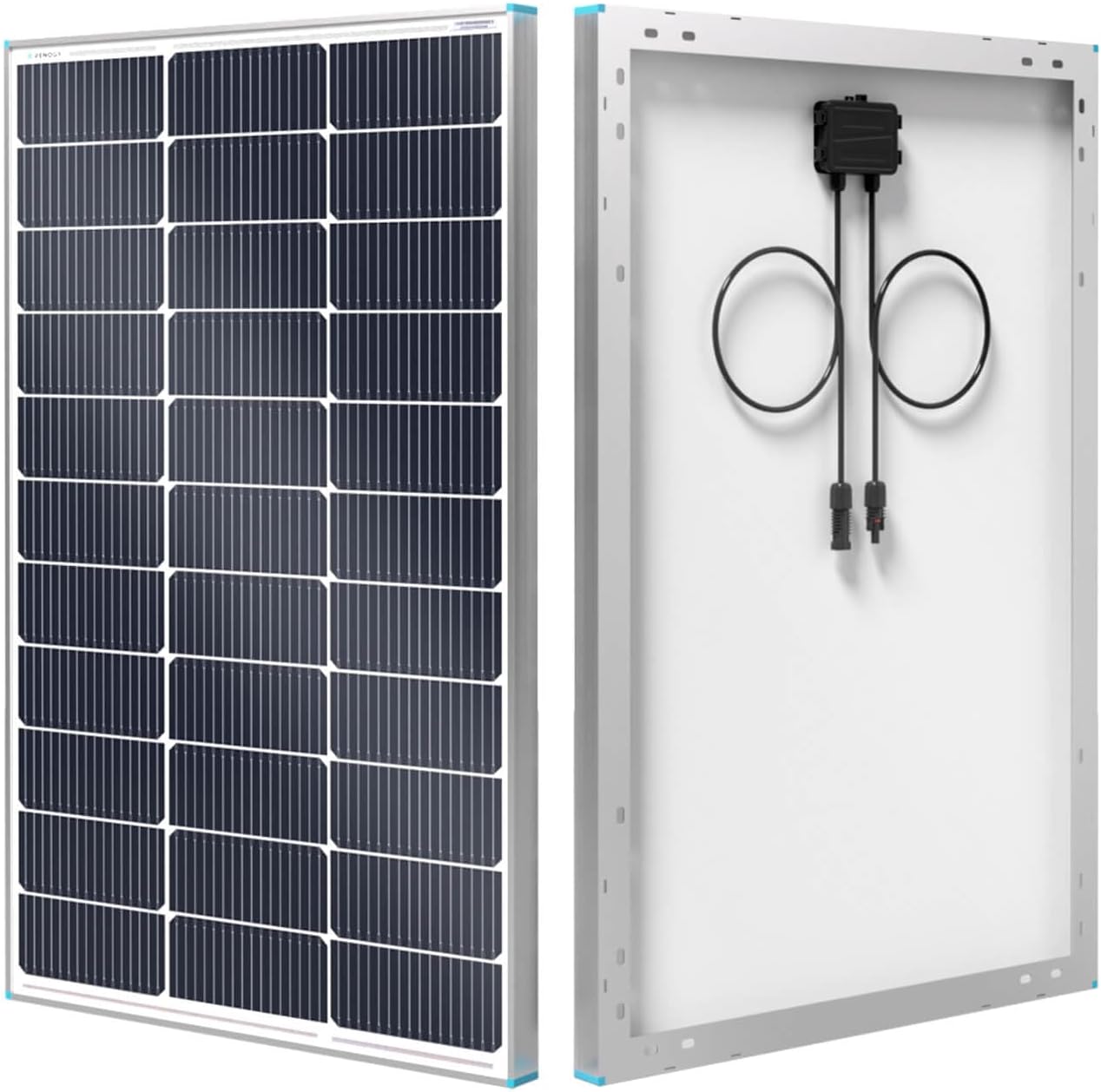 | Renogy 100W 12V Monocrystalline Solar Panel P-Type mono at 21.4% efficiency; the most-tested and most-reviewed 100W panel on the market. Read more ↓ | CHECK PRICE |
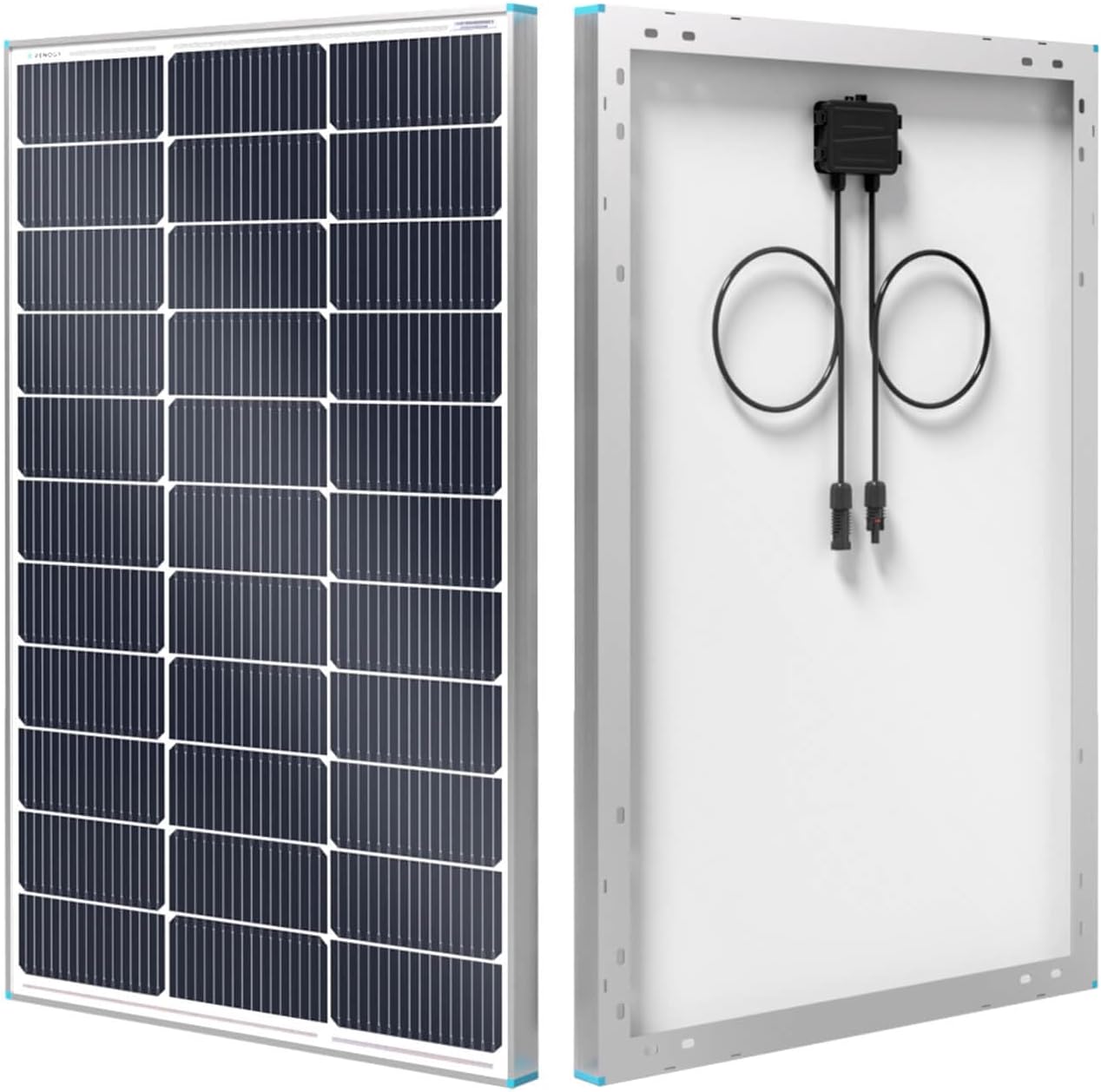 | Renogy 100W N-Type 16BB Solar Panel N-Type silicon eliminates light-induced degradation for better long-term output retention on permanent installs. Read more ↓ | CHECK PRICE |
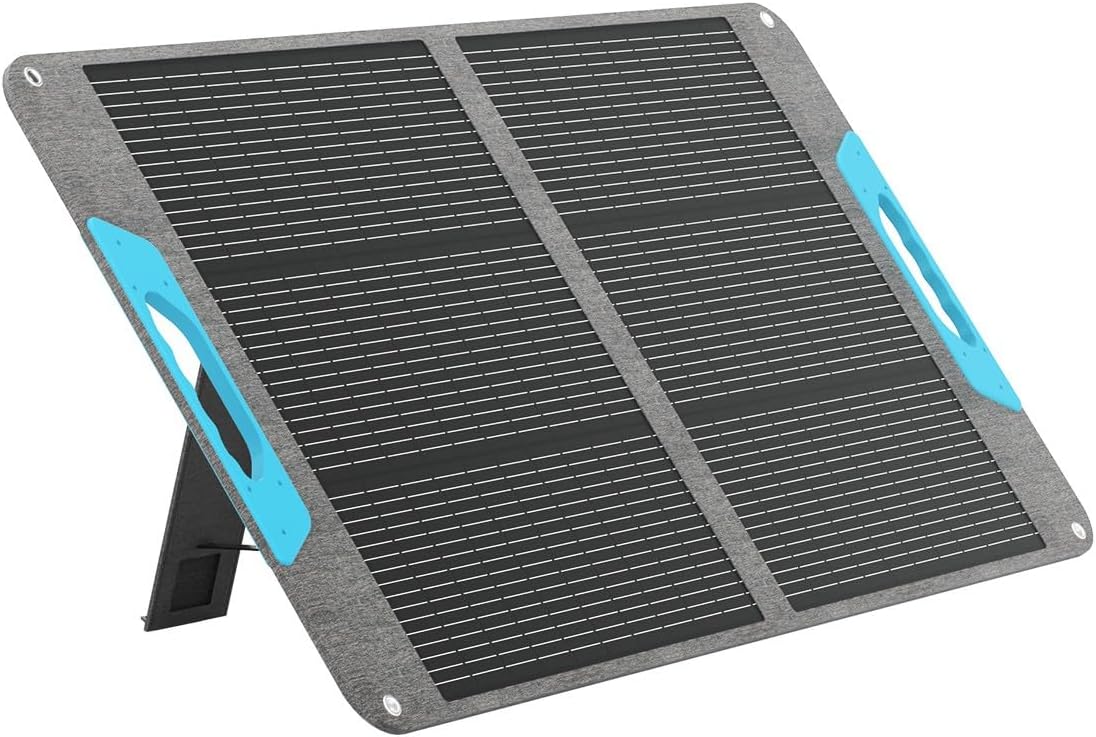 | RENOGY REGO 100W Foldable Solar Panel Briefcase-fold design with pre-attached MC4 connectors; deploys in seconds without any tools. Read more ↓ | CHECK PRICE |
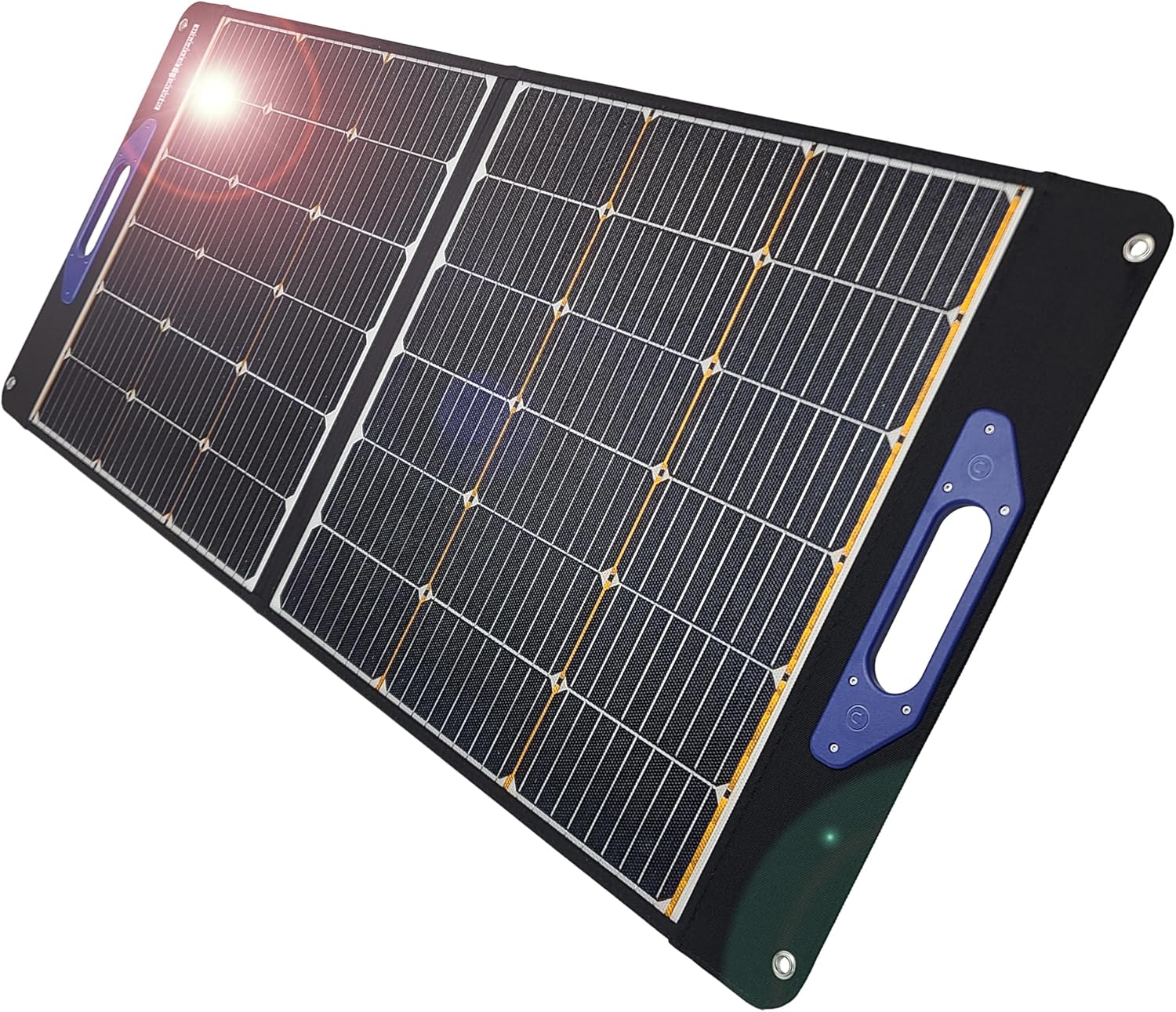 | EMFX 100W Folding Shade Stopper Per-cell bypass diodes reduce partial-shading losses by roughly half compared to standard mono panels. Read more ↓ | CHECK PRICE |
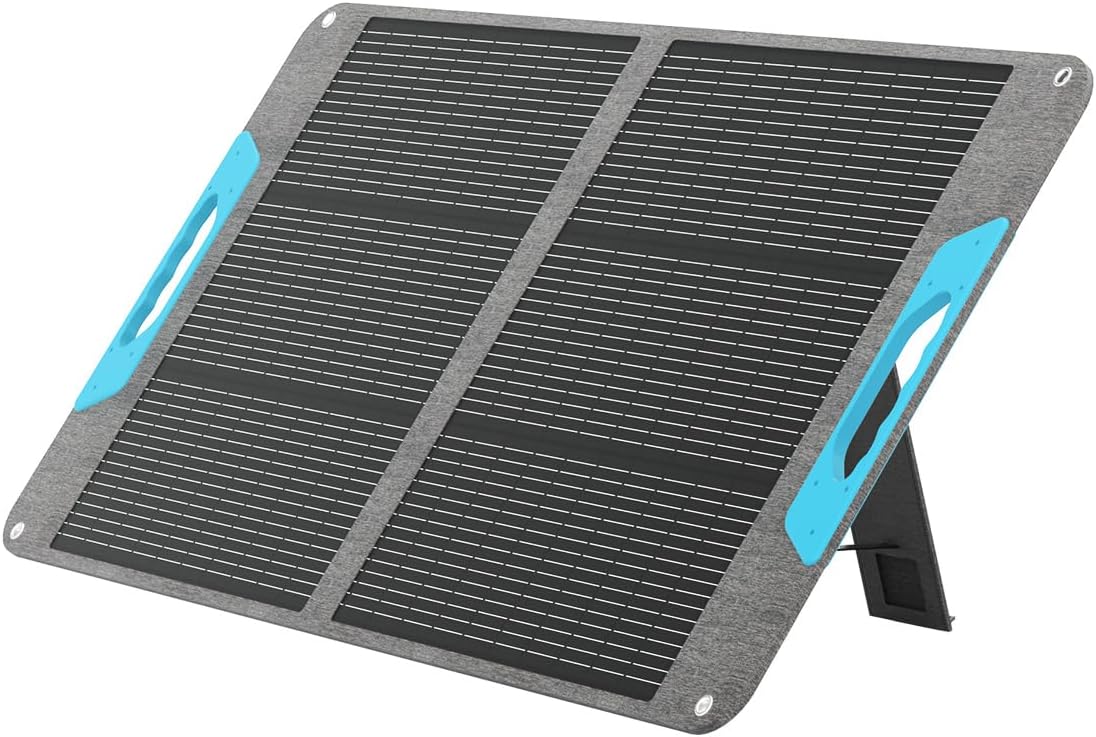 | Renogy 100W N-Type Panel + Kickstands Rigid N-Type panel with integrated angle-adjustable kickstands — portable without the fragility of a fabric folder. Read more ↓ | CHECK PRICE |
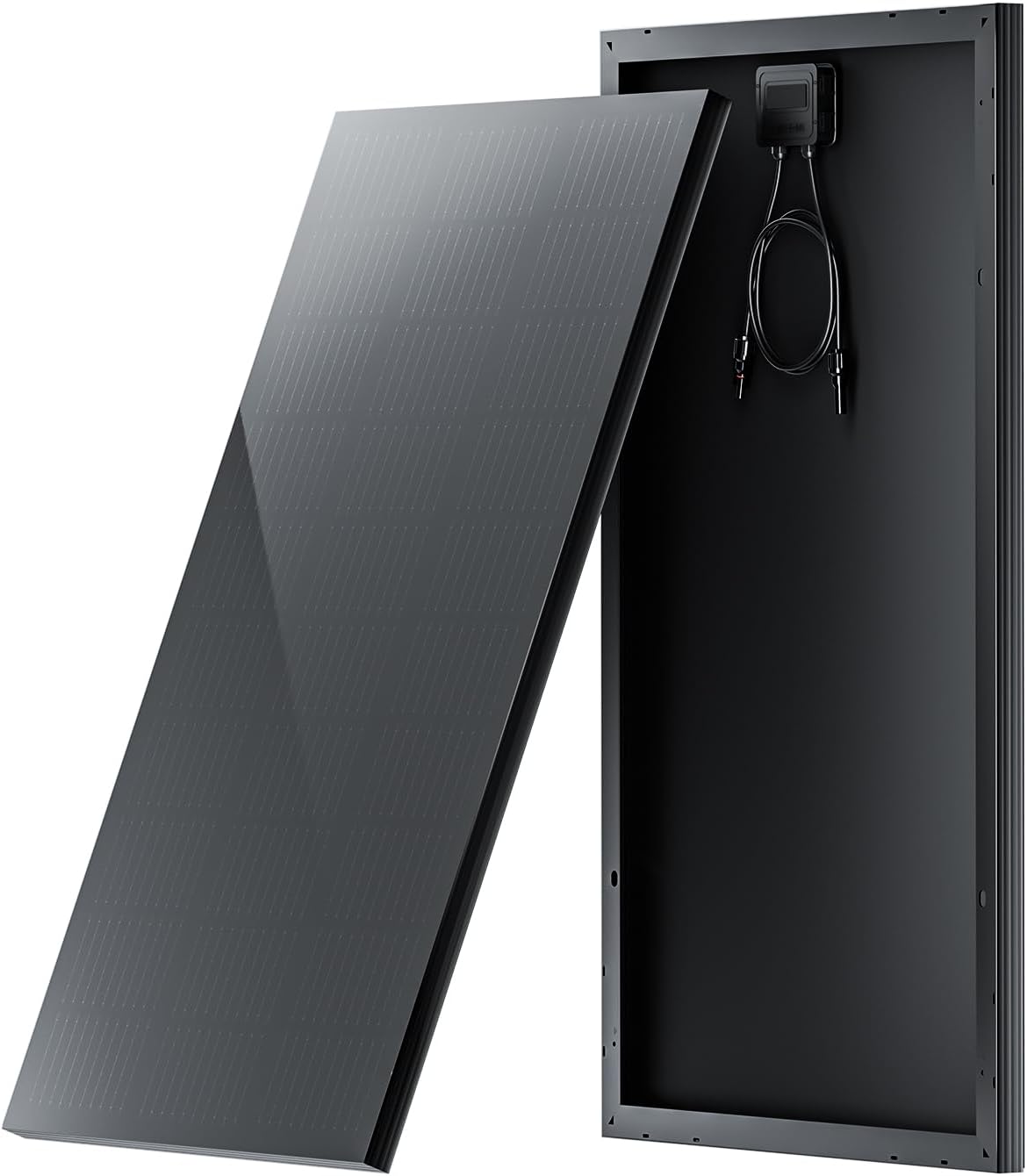 | STAR 100W Frameless Solar Panel Adhesive-friendly frameless design for flush van and RV roof installs; lowest price-per-watt on this list. Read more ↓ | CHECK PRICE |
Reviews of the Best 100 Watt Solar Panels
1. Renogy 100W 12V Monocrystalline Solar Panel — Best Overall
Renogy is the most recognized name in off-grid solar, and the 100W 12V monocrystalline panel earns that reputation. This is a time-tested rigid panel using high-efficiency monocrystalline cells — rated around 21% cell efficiency — that performs predictably across RV rooftops, van builds, farm sheds, and marine installations. The tempered glass front is anti-reflective coated, improving energy harvest in low-angle morning and evening sun, and the anodized aluminum frame resists corrosion through years of outdoor use.
The panel’s electrical specs make it universally compatible: Voc around 22.3V and Vmp around 18.9V suit both PWM and MPPT charge controllers. For a 12V system, it’s the easiest panel to wire into an existing battery setup. Renogy backs it with a 5-year material warranty and a 25-year linear power output warranty (80% output at year 25) — among the strongest in this class. Most off-grid solar builds start here.
- Pros:
- Proven monocrystalline design with ~21% cell efficiency
- IP65-rated junction box for weather resistance
- Pre-drilled mounting holes simplify installation
- 25-year power output warranty, 5-year materials warranty
- Cons:
- Standard monocrystalline — not N-Type (see pick #2 for N-Type)
- Charge controller sold separately
2. Renogy 100W N-Type Solar Panel — Best High-Efficiency
N-Type solar cells represent the current leading edge of crystalline silicon panel technology, and Renogy’s 100W N-Type panel is the upgrade pick for buyers who want the latest technology in a 100W form factor. N-Type cells differ from standard P-Type monocrystalline cells at the silicon doping level — they’re inherently resistant to light-induced degradation (LID), which means they hold closer to their rated output over the full 25-year warranty period. The 16BB (16 busbar) cell design further reduces resistive losses and improves shade tolerance compared to older 3 or 5 busbar designs.
Efficiency on N-Type panels pushes 25% under STC conditions — noticeably better than standard monocrystalline options. For installations where roof or surface space is limited and you need maximum watts per square foot, this panel delivers. The electrical specs (Voc ~22V, Vmp ~18.5V) remain fully compatible with standard 12V charge controllers. At $89.99 it’s only $2 more than the standard Renogy mono — making it the easy upgrade choice.
- Pros:
- N-Type cells — up to 25% efficiency, lower long-term degradation
- 16 busbar design for better shade tolerance and lower resistive losses
- Virtually no price premium over standard mono version
- Renogy’s full warranty coverage applies
- Cons:
- Similar physical size to standard mono — no space advantage
- N-Type benefits most apparent over long 20+ year timeframes
3. RENOGY REGO 100W Foldable Solar Panel — Best Portable
The RENOGY REGO 100W portable panel brings the same cell quality as Renogy’s rigid panels into a foldable, carry-anywhere form factor. The panel folds down to a compact case size and unfolds to full deployment in under a minute — no tools, no mounting hardware, no roof penetrations required. IP65 waterproofing on the unit means it can be left deployed through light rain without concern, which sets it apart from many lower-rated portables.
Output specs are consistent with a genuine 100W panel: enough to top off a power station, maintain an RV battery bank at a campsite, or keep a portable fridge running through the day. Built-in kickstands or carry handles allow angle adjustment for better sun tracking without additional accessories. For campers, overlanders, and van lifers who move frequently and can’t mount a fixed roof panel, the REGO 100W is the most polished portable option from a brand with a proven service network. The $140.99 price reflects the engineering premium over rigid panels of the same wattage.
- Pros:
- IP65 waterproof — usable in light rain
- Folds flat for compact storage and transport
- No installation required — set up and go
- Full Renogy brand support and warranty
- Cons:
- Higher price per watt than rigid panels
- Shorter lifespan than permanently mounted framed panels
4. EMFX 100W Folding Solar Panel — Best for Partial Shade
EMFX’s 100W folding panel makes one claim front and center: output that doesn’t collapse in partial shade the way standard panels do. Standard string-wired solar panels suffer from the “weakest link” problem — shade on one cell can drag down the entire panel’s output by 50% or more. EMFX addresses this with cell-level shade mitigation technology that allows unshaded portions of the panel to continue producing at full capacity even when part of the panel is covered.
For campsite use where trees, overhangs, or neighboring vehicles regularly create partial shadow, this is a meaningful real-world advantage. The panel is portable and foldable, with a built-in carry handle and kickstand for angle adjustment. At $119.00 it sits between the basic folding options and the premium REGO, and for consistently shaded environments it justifies the price. If your setup is always in unobstructed direct sun, the shade-stopper tech adds cost without benefit — but for tree-lined campsites or partial cover, it can meaningfully increase daily harvest.
- Pros:
- Shade-tolerant cell design — maintains output under partial shading
- Foldable portable design with kickstand
- Better real-world output in obstructed environments vs standard panels
- Cons:
- Smaller brand with fewer long-term reviews than Renogy
- Shade tech advantage only relevant in partially shaded environments
5. Renogy 100W N-Type Portable Panel with Kickstands — Best Rigid Portable
This panel occupies a unique niche: it’s a fully rigid framed N-Type monocrystalline panel — built to the same durability standard as a permanent roof-mount panel — with integrated kickstands that let you angle it toward the sun without any additional hardware. It’s the choice for buyers who want rigid panel durability and long lifespan, but need the flexibility to reposition the panel seasonally or use it at different locations.
The N-Type 25% efficiency cells mean this 100W panel extracts more energy per square foot than standard mono alternatives. The kickstands allow tilt adjustment from ground level — critical for maximizing winter output when the sun angle is lower. At $137.74 it’s priced between the standard REGO portable and the shade-stopper, and for buyers who want a rigid panel they can move around a property (shed to cabin to carport), it’s the most practical option. MC4 connectors and pre-wired cables are included.
- Pros:
- Rigid framed panel with 25% N-Type cell efficiency
- Integrated kickstands for tilt adjustment without additional hardware
- Durable framed construction — longer lifespan than flexible portables
- Renogy brand reliability and warranty
- Cons:
- Heavier than folding portable panels
- Not as compact when transported as folding designs
6. STAR 100W Solar Panel — Best Budget
At $57.99, the STAR 100W panel is the most affordable option in this roundup by a significant margin. The frameless design is the key differentiator — by eliminating the aluminum frame, STAR cuts manufacturing costs, reduces weight, and creates a panel that can be laminated directly onto RV roofs, boat decks, or low-profile ground mounts without raised edges catching wind. The 25% high-efficiency monocrystalline cells are impressive for the price point and suggest more advanced cell tech than you’d typically find at this price.
The “maintenance-free” designation reflects the frameless design — no frame corners to collect debris or trap moisture. For buyers on a strict budget who understand they’re trading brand recognition and warranty depth for price, the STAR 100W is a capable panel. It suits 12V or 24V systems (12/24V compatible per the listing), covers the standard outdoor applications, and for a first solar project where budget is the primary constraint, it’s a practical entry point. Verify the mounting approach suits your application before purchasing, as frameless panels require a different racking approach than framed models.
- Pros:
- Lowest price in this roundup at $57.99
- Frameless design — lighter, lower profile, no frame corrosion
- 25% efficiency cells — strong spec for the price
- 12V and 24V compatible
- Cons:
- Frameless design requires different mounting hardware
- Smaller brand — fewer reviews and less established warranty support
Buying Guide: What to Look for in a 100 Watt Solar Panel
Key Takeaways
- 100W panels suit RVs, boats, and off-grid 12V charging — not whole-home power.
- N-Type cells eliminate light-induced degradation; worth the premium for permanent installs.
- Portable folding panels make sense if the panel moves with you more than twice a month.
- An MPPT charge controller recovers 15–30% more energy than PWM — budget for one from the start.
- Half-cut cell panels (like the EMFX Shade Stopper) cut shading losses by roughly 50% versus standard cells.
- Realistic daily production in most US locations: 300–400 Wh — plan loads accordingly.
What a 100W Panel Can Actually Deliver
In full sun for five hours, a 100W panel produces 500 Wh of raw energy. After charge controller losses, battery round-trip efficiency, and real-world sun angles, budget for 300–400 Wh of usable energy per day in a mid-latitude US location. That is enough to keep a 12V compressor fridge running for 5–7 hours, charge phones and laptops throughout the day, and run LED lighting for several hours in the evening.
A 100W panel will not run air conditioning, resistance heating, or any 120V appliance through an inverter without substantial battery backup that solar alone cannot replenish. If those loads are on your list, start at 400W.
Rigid vs. Portable: Which Format Suits You?
Rigid aluminium-framed panels are the default for rooftop and fixed installs. They tolerate outdoor exposure across a decade or more, carry 25-year power warranties, and connect cleanly to roof-mount racking. The trade-off is weight (7–10 kg) and the need for brackets and sealed roof penetrations.
Folding portable panels set up in seconds, require no drilling, and pack flat for storage. They suit campers, van-lifers who move regularly, and anyone supplementing shore power when parked. The practical rule: if the panel will move with you more than twice a month, buy portable. If it will be permanently or semi-permanently mounted, buy rigid.
Frameless panels like the STAR use adhesive rails instead of brackets — cleanest install on a flat van roof, but adhesive bonding requires an absolutely clean surface and degrades in outdoor UV over time. Confirm your roof material is compatible before buying.
P-Type Mono vs. N-Type: Does the Upgrade Pay Off?
Standard P-Type monocrystalline panels (like the Renogy 100W Mono) deliver around 21% efficiency and are thoroughly proven across millions of installs. They experience light-induced degradation (LID) — a 1–3% output drop in the first days of sun exposure that never recovers. Over a decade, that gap compounds.
N-Type panels eliminate LID entirely. They also tend to have slightly better performance in low-light and high-temperature conditions. For a panel that will spend most of its life in storage or occasional use, P-Type is the better value. For a fixed permanent install where you want maximum ten-year output, N-Type is worth the modest premium.
Charge Controller: The Component Buyers Get Wrong
A PWM (Pulse Width Modulation) controller is functional and cheap. An MPPT (Maximum Power Point Tracking) controller tracks the panel’s optimum operating voltage and converts excess voltage to additional current, recovering 15–30% more energy in real conditions. For a single 100W panel charging a 12V battery, a 10A MPPT controller costs around $30–45 and pays for itself within one season of regular use.
Size the controller at least at 10A for a single 100W panel. A 20A MPPT controller costs only a few dollars more and leaves room to add a second panel later without replacing the controller. Do not oversize past 40A for a single 100W panel — controllers operate least efficiently at very low input relative to their rating.
Shading: When It Matters and When to Pay for Shade Tolerance
A shaded cell in a standard panel can cut output by 30–70% because cells are wired in series — the weakest limits the whole string. Half-cut cell panels like the EMFX Shade Stopper split each cell in two, rewiring the panel in two independent halves. Shading one half has far less impact on the other, typically limiting loss to 10–20% instead of 50%+.
If your panel location has any nearby obstructions — tree limbs, roof vents, antenna masts — a shade-tolerant panel is worth the modest premium. If you have an unobstructed southern sky, shade tolerance is irrelevant and standard mono is the better value.
Mounting, Orientation, and Practical Installation Notes
For fixed installs: south-facing at a tilt angle equal to your latitude delivers near-optimal annual output in the northern hemisphere. An east/west split produces fewer peak-hour watts but extends the daily generation window. North-facing installs produce 30–50% less than south — avoid them if any alternative exists.
Z-brackets are the standard for van and RV roofs: four brackets per panel, pre-drill holes, seal with self-leveling sealant on every penetration. Unsealed roof penetrations are the most common cause of post-install complaints in van conversion communities. Every hole must be sealed before first rain.
When One 100W Panel Is Not Enough
A single 100W panel is the minimum viable solar setup — adequate for topping up a battery in good sun, but not for running demanding loads or bridging cloudy days. Consider expanding to 200W+ if any of these apply to your setup:
- You run a 12V compressor fridge for more than 8 hours per day
- You regularly charge a laptop, phone, and run lighting simultaneously
- You experience more than two consecutive overcast days and need uninterrupted power
- You are stationary in a low-sun location (Pacific Northwest, northern states in winter)
- You plan to run any 120V loads via an inverter
For most RV users in sunny US states, one 100W panel + 100Ah LFP battery + 10A MPPT controller is a solid starting point that expands cleanly by adding a second panel without replacing anything else.
Common Buyer Mistakes
- Buying based on wattage alone. Two 100W panels from different manufacturers can have meaningfully different real-world output based on cell efficiency, temperature coefficient, and wattage tolerance. Check efficiency spec, not just the headline watt number.
- Pairing a good panel with a cheap PWM controller. You lose 15–30% of available energy every day. The $20 saving on the controller costs far more in lost production over a season.
- Flat-mounting in winter at northern latitudes. A panel flush on a horizontal surface at 45°N in December produces roughly half what a tilted mount produces. Even manually propping the panel at 30° on sunny days makes a real difference.
- Forgetting the battery. A 100W panel without a properly sized battery cannot run continuous loads. Minimum practical bank for regular use: 50–100Ah LFP.
Why We Chose These and Not Others
We evaluated dozens of 100W panels before settling on these six. Here is why some frequently seen alternatives did not make the list:
- HQST 100W: Solid build but efficiency trails Renogy at ~19% vs 21%+; fewer verified long-term user reviews and slower warranty response.
- RICH SOLAR 100W: Decent performance but consistently priced higher than Renogy for equivalent specs; their kit bundles ship with PWM controllers.
- WindyNation 100W: An older cell generation; N-Type and PERC technology has moved well past what WindyNation offers at current pricing.
- ECO-WORTHY 100W: Best suited to their own kit ecosystem; standalone panel wattage tolerance and connector quality are inconsistent across production batches.
Frequently Asked Questions
What can a 100 watt solar panel power?
A 100W solar panel in a typical US location (4–5 peak sun hours per day) generates roughly 300–500 watt-hours of electricity daily, depending on weather, orientation, and system efficiency. That’s enough to charge smartphones, run LED lighting for 8–10 hours, power a 12V fan continuously, maintain a small 12V refrigerator (most draw 30–50W), or keep a 100Ah battery topped up through normal use. It won’t power air conditioners, electric water heaters, or other high-draw appliances — those require multiple panels or higher-wattage systems.
How many 100W solar panels do I need?
For a small RV or van build with basic loads (phone charging, LED lighting, a 12V fridge), one or two 100W panels with a 100Ah battery is a workable starting point. For a larger off-grid cabin or expanding to more appliances, panels add up quickly — and at that point, transitioning to 200W or 400W panels often makes more sense for the cost and wiring efficiency. If you’re considering a home solar installation, 100W panels are not practical — residential systems use 400W+ panels. Call (855) 427-0058 for a free consultation with a local installer.
Do 100W solar panels work on cloudy days?
Yes, but at reduced output. On an overcast day a 100W panel typically produces 10–25% of its rated output — so 10–25W instead of 100W. On partly cloudy days output fluctuates and averages 30–50% of rated. Modern monocrystalline panels perform better than older polycrystalline designs in diffuse-light conditions. N-Type panels show slightly better low-light performance than standard P-Type due to their improved cell structure. For reliable power in frequently cloudy regions, oversize your panel array or add battery storage capacity.
How long does it take a 100W panel to charge a 100Ah battery?
A 100W panel produces roughly 5–6 amps on a 12V system in direct sun. To charge a 100Ah lithium battery from 50% state of charge (50Ah needed), with 5 peak sun hours per day, you’d need 1–2 days depending on losses and shading. An MPPT charge controller speeds up charging by 10–30% versus PWM. For lead-acid batteries, factor in that you should only discharge to 50% depth of discharge — so effectively you’re working with 50Ah of usable capacity from a 100Ah lead-acid battery.
What’s the difference between a 100W panel and a 200W panel?
A 200W panel is roughly twice the physical size of a 100W panel. Two 100W panels wired in parallel produce the same output as one 200W panel, but with the added flexibility of positioning each panel independently. For most permanent installations, fewer larger panels are simpler to wire and mount. For portable setups, multiple 100W panels can be deployed more flexibly. Watt-for-watt, higher wattage panels are typically more cost-effective because balance-of-system costs (wiring, charge controllers, mounting hardware) are shared across more watts.
Summing Up
For most buyers, the Renogy 100W 12V Monocrystalline Solar Panel is the safest all-around choice — proven reliability, strong warranty, and wide compatibility with off-grid charging systems. If you want the latest cell technology, the Renogy N-Type 100W adds N-Type efficiency at virtually the same price. For portable use, the RENOGY REGO foldable panel is the most polished option. On a tight budget, the STAR 100W frameless panel delivers solid performance at the lowest cost in this roundup. If you’re thinking beyond 12V off-grid charging and want to explore home solar, call (855) 427-0058 for a free consultation with a local installer.
Updated