

Our blog is reader-supported. When you buy through links on our site, we may earn an affiliate commission. Thank you for your support!
The ECO-WORTHY 200W Solar Panel Kit (B09RZZHHHM) is the best 200 watt solar panel option for most buyers — it pairs a capable monocrystalline panel with a 30A PWM charge controller in a single purchase, removing the guesswork of component matching for off-grid beginners. At 200 watts, you have enough solar to comfortably run a 12V fridge, charge devices, power LED lighting, and maintain a 100–200Ah battery bank through daily use.
In this guide we’ve compared six of the top-rated 200 watt solar panel options available on Amazon right now — covering complete kits, rigid panel sets, foldable blanket portables, and lightweight portable panel solutions. Read on for detailed reviews, a buying guide, and answers to the most common questions.
Our Top Picks
| Product Image | Product | Price |
|---|---|---|
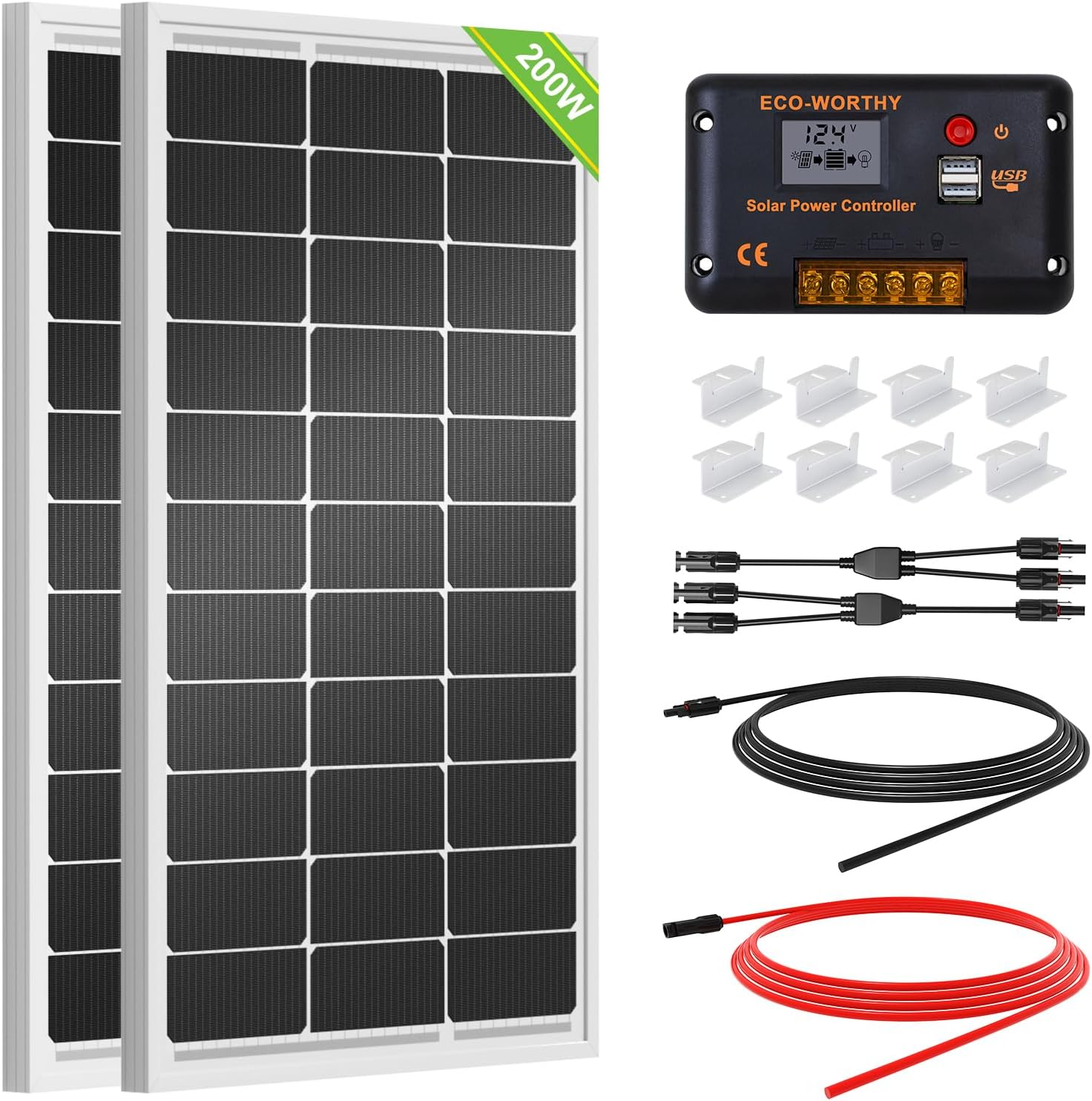 | ECO-WORTHY 200W Solar Panel Kit Complete kit with panels, controller, brackets, and cabling — everything needed except a battery. Read more ↓ | CHECK PRICE |
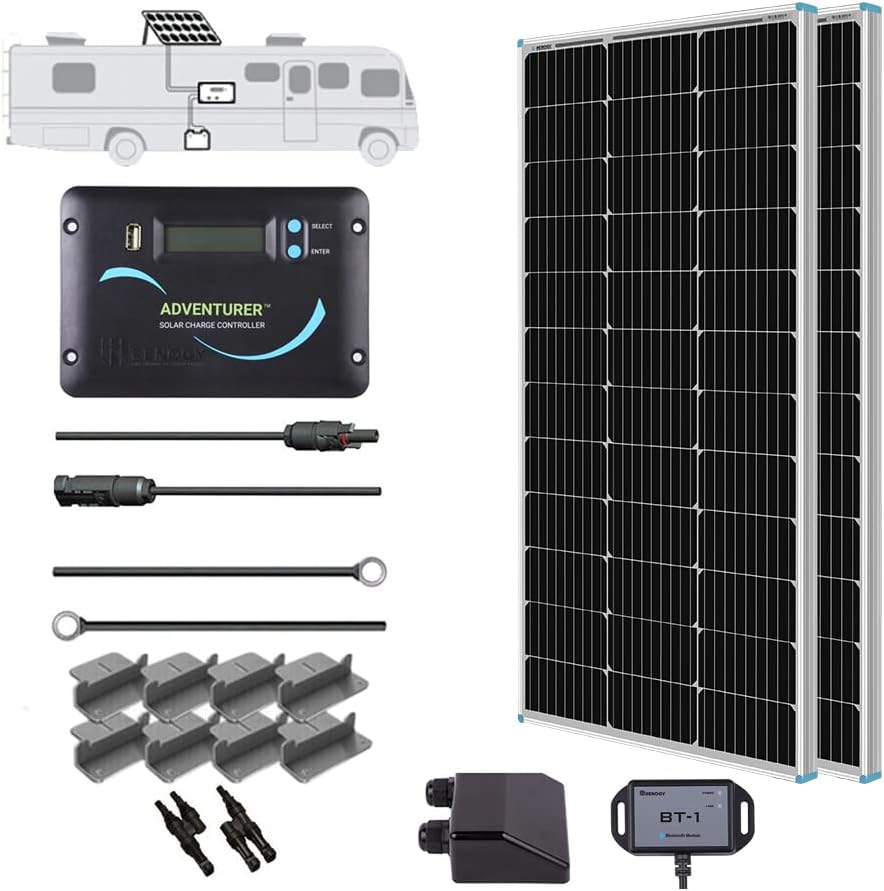 | Renogy 200W RV Kit + Adventurer Controller Two 100W panels paired with Renogy’s Adventurer MPPT controller; one of the few kits that ships with a proper MPPT unit. Read more ↓ | CHECK PRICE |
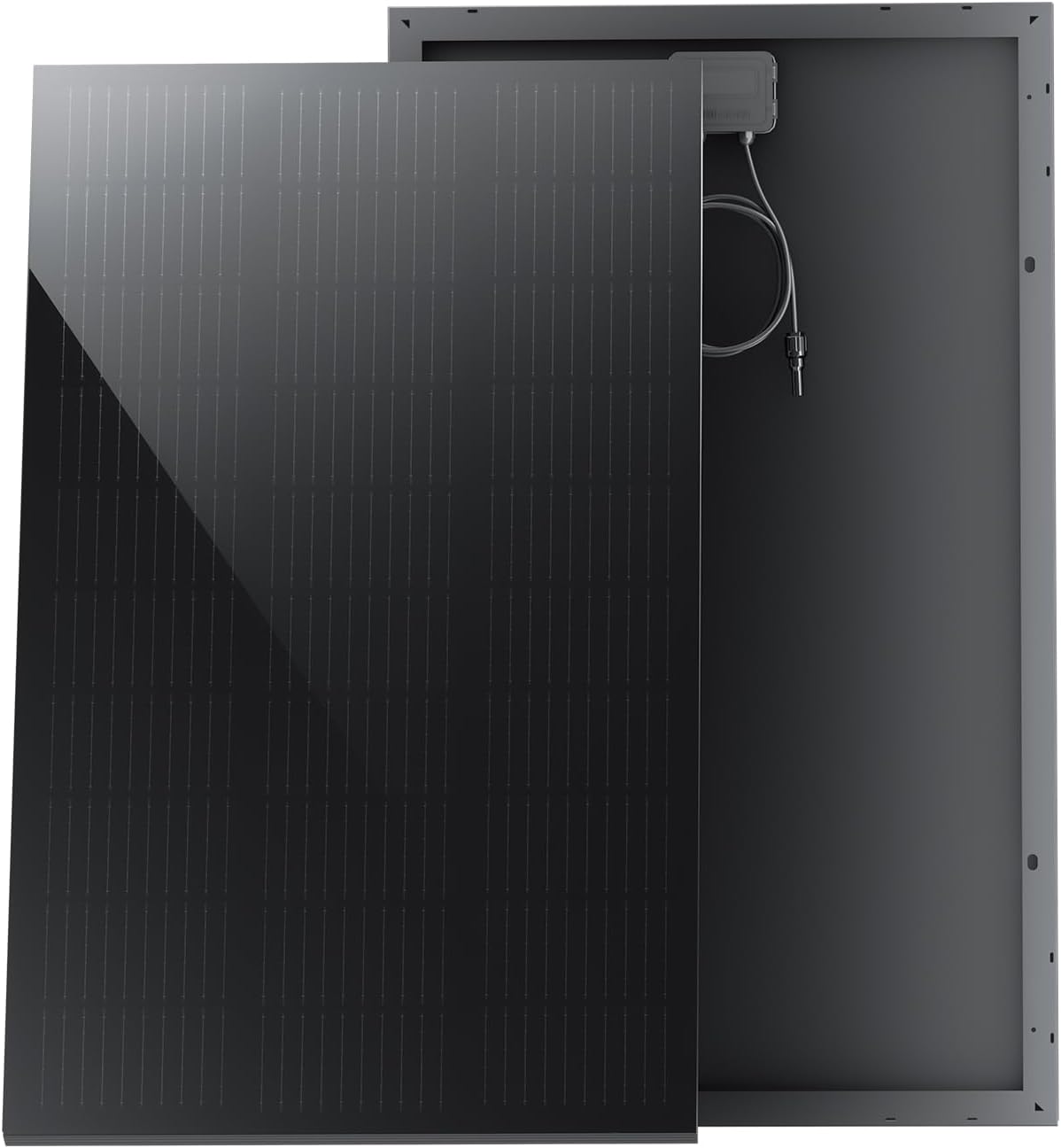 | STAR 200W 2x100W Frameless Panels Two frameless 100W panels with adhesive-compatible backing for the cleanest possible flat-roof install. Read more ↓ | CHECK PRICE |
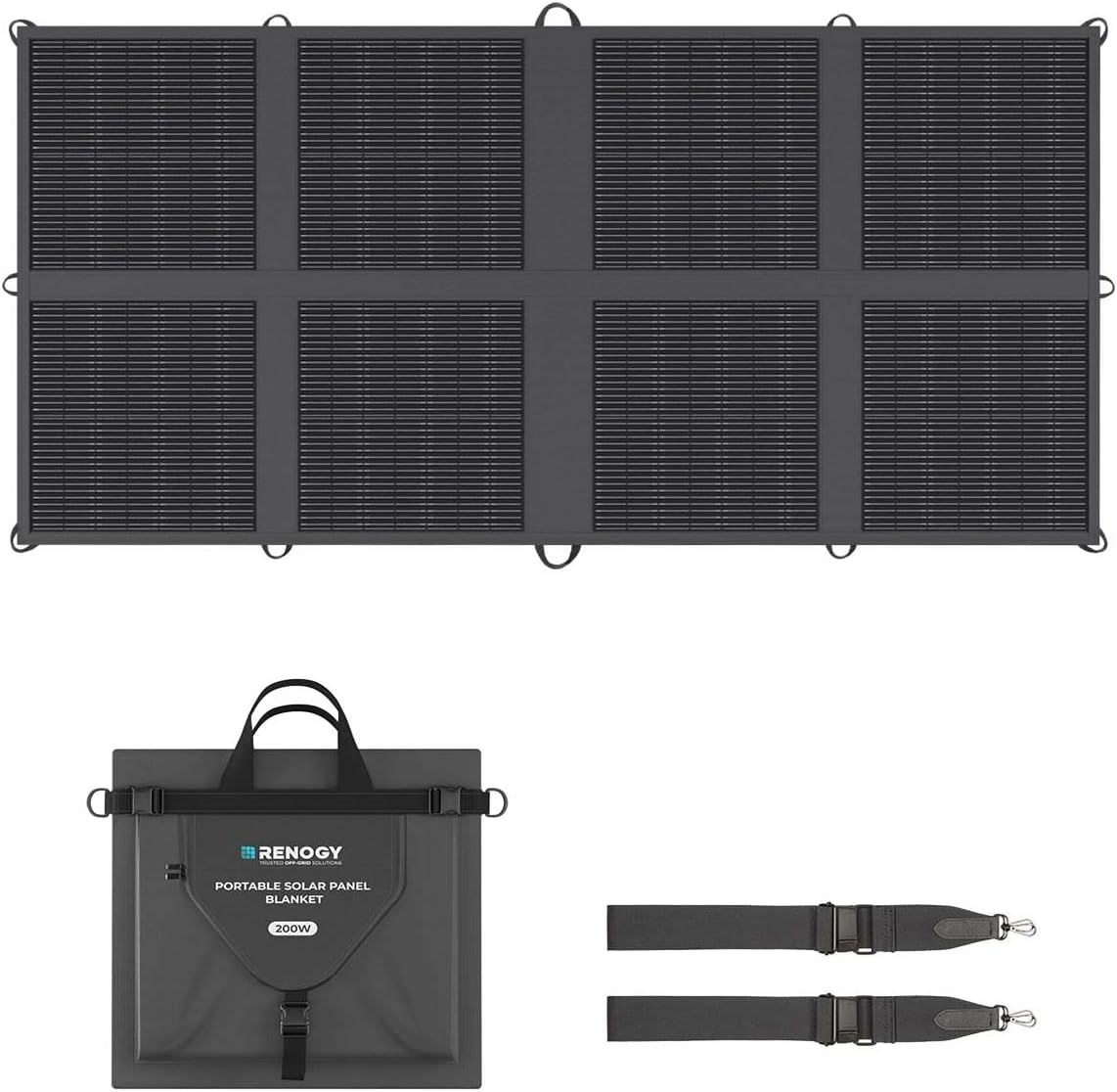 | Renogy 200W N-Type Blanket The only foldable 200W panel with N-Type cells; lightest weight-to-watt option for weight-sensitive deployments. Read more ↓ | CHECK PRICE |
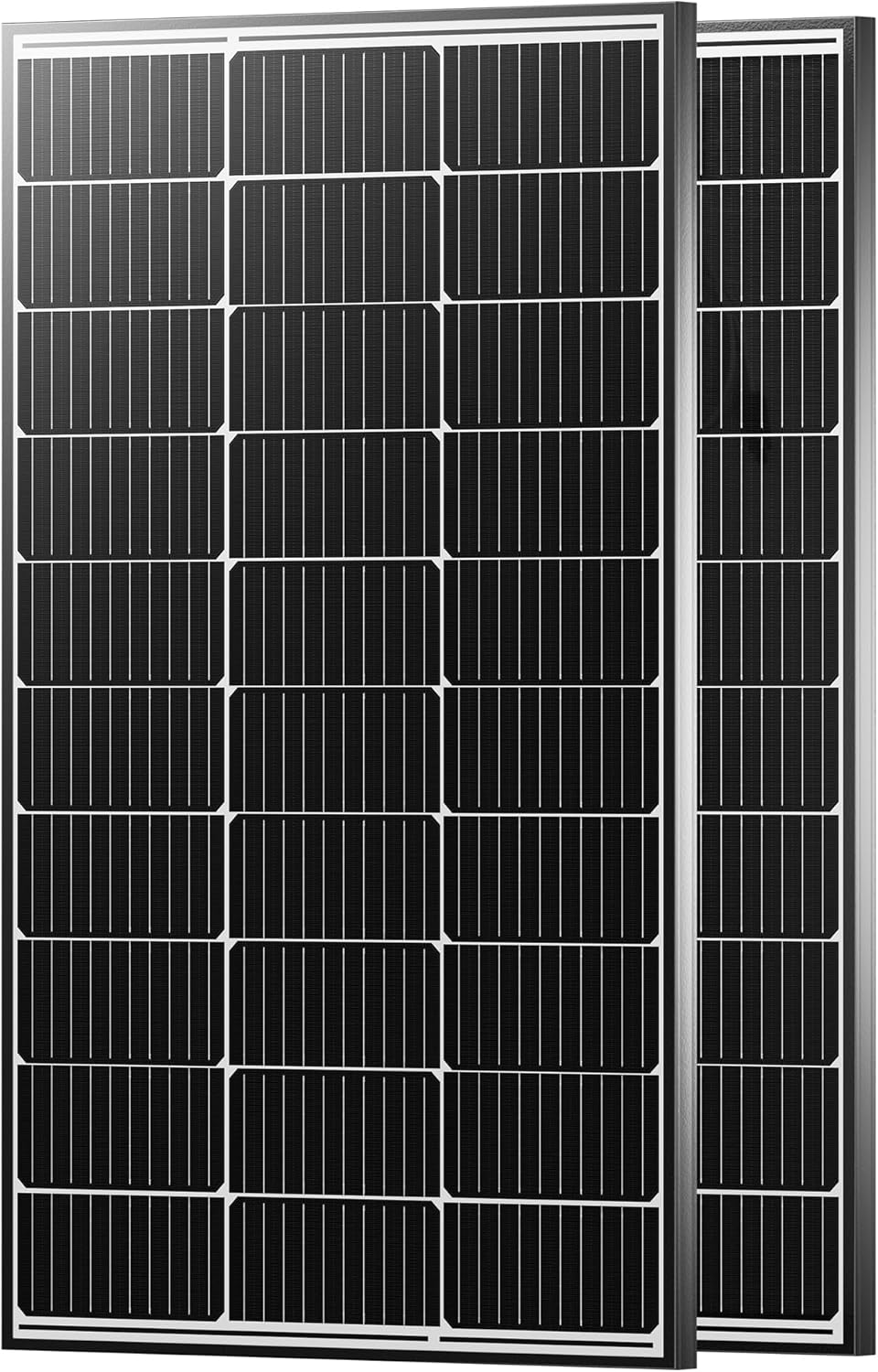 | JJN 200W 2x100W 10BB Solar Panels Two-panel set at a competitive price; standard mono cells with a 25-year linear power warranty. Read more ↓ | CHECK PRICE |
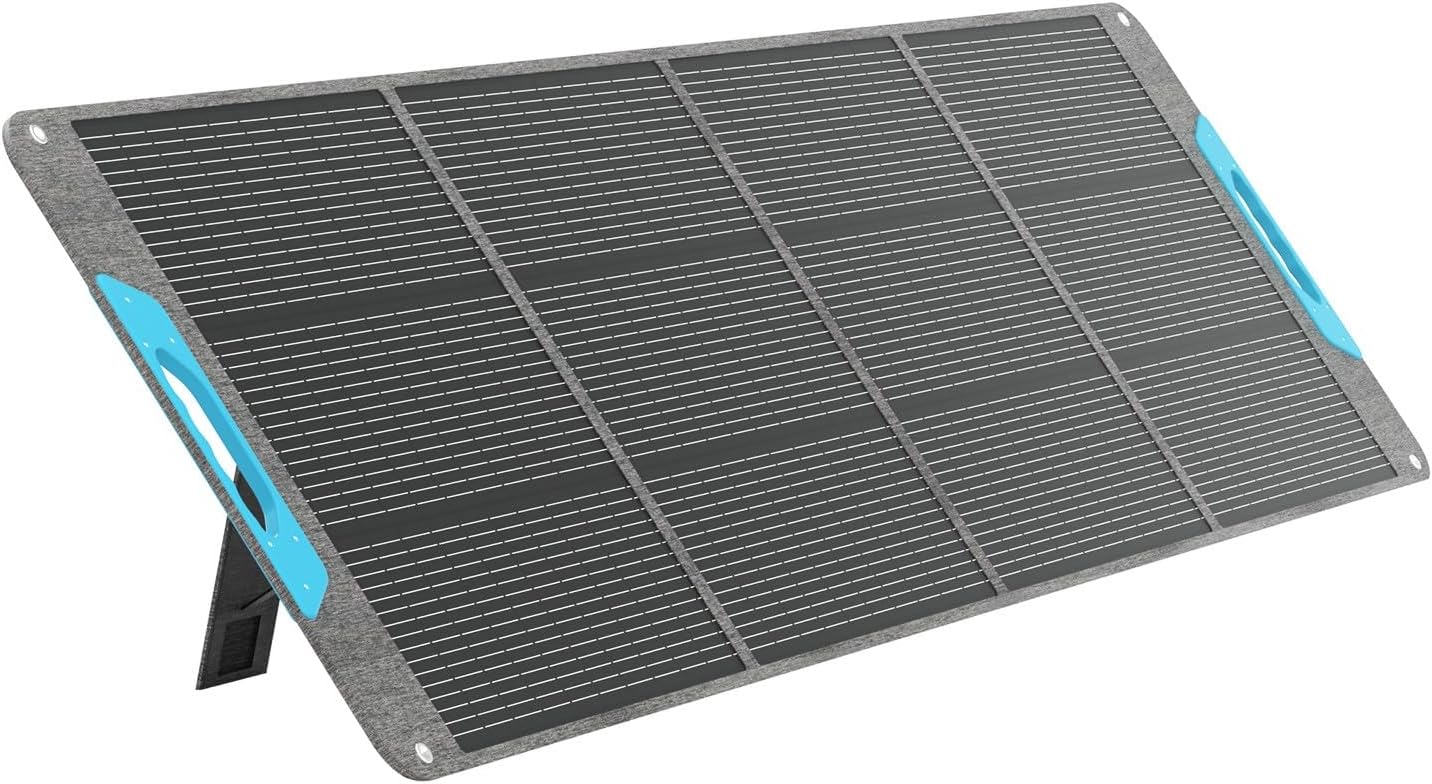 | RENOGY REGO 200W Portable Solar Panel Folding N-Type portable panel with the fastest setup and pack-down of any 200W option on this list. Read more ↓ | CHECK PRICE |
Reviews of the Best 200 Watt Solar Panels
1. ECO-WORTHY 200W Solar Panel Kit — Best Complete Kit
ECO-WORTHY’s 200W kit is one of the most popular off-grid starter packages on Amazon because it handles the most common beginner headache: component compatibility. The kit includes a high-efficiency monocrystalline solar panel and a 30A PWM charge controller, along with the wiring and connectors needed to get a basic 12V or 24V charging system up and running. For buyers setting up a first RV solar system, a workshop, or a small off-grid cabin, the convenience of a matched kit eliminates a lot of research.
The 200W panel itself uses Grade A monocrystalline cells and is designed for 12V or 24V systems. The included 30A PWM controller is functional for single-panel systems but note that PWM is less efficient than MPPT — especially in winter or partial cloud conditions. If you plan to expand beyond one panel, upgrading to an MPPT controller makes sense. For the single-panel setup, however, this kit represents the most accessible 200W entry point at $169.99, and ECO-WORTHY’s customer support is consistently well-reviewed for a budget-tier brand.
- Pros:
- Complete kit — panel + 30A controller + wiring in one purchase
- Works on 12V or 24V battery systems
- Strong value for first-time solar buyers
- ECO-WORTHY brand has decent US customer support
- Cons:
- PWM controller is less efficient than MPPT
- Single panel — charge controller will need upgrading if you expand
2. Renogy 200W RV Solar Kit with Adventurer Controller — Best RV Kit
Renogy’s 200W RV kit is the premium-tier kit option — pairing a 200W monocrystalline panel with the Adventurer 30A LCD PWM charge controller, mounting hardware, and everything needed for a complete RV roof installation. The Adventurer controller is a meaningful step up from basic PWM controllers: it features a backlit LCD display showing charging voltage, current, power, and battery state, plus multiple battery type presets (lithium, AGM, gel, sealed, flooded) so you can optimize charging for your specific battery chemistry.
At $285.99, this kit costs considerably more than the ECO-WORTHY — the premium is for Renogy’s brand reliability, the superior controller display, and the mounting hardware. For RV owners who want a permanent roof installation and expect the system to last 10–15+ years without issues, Renogy’s warranty coverage and US-based service network justifies the cost. The 200W panel carries a 25-year power output warranty, and the Adventurer controller is one of the most reliable entry-level PWM units on the market.
- Pros:
- Renogy brand reliability — 25-year panel warranty
- Adventurer 30A LCD controller with battery type presets
- Includes mounting hardware for RV roof installation
- Best long-term kit for permanent RV builds
- Cons:
- Premium price at $285.99
- PWM controller — not MPPT despite the higher price
3. STAR 200W Solar Panel Set (2x100W Frameless) — Best Budget
STAR’s 200W offering comes as two 100W frameless monocrystalline panels — making it the most affordable route to 200W in this roundup at $101.99. The frameless design keeps weight low and allows lamination directly onto RV roofs or boat decks without raised frame edges catching wind. STAR claims 25% efficiency cells, which is a strong specification for this price tier and suggests the use of advanced cell technology.
Wired in parallel, two 100W panels on a 12V system produce the same output as a single 200W panel. Wired in series, they produce 24V — useful for 24V systems or to improve MPPT efficiency on longer cable runs. The 12/24V compatibility confirms both configurations are supported. For buyers who want maximum watts per dollar and are comfortable sourcing a charge controller and mounting hardware separately, the STAR 200W set is the strongest value in this roundup. Verify that your mounting approach supports frameless panels before purchasing.
- Pros:
- Lowest price to 200W in this roundup at $101.99
- Frameless design — lighter, lower profile, no frame corrosion
- Two separate 100W panels for flexible placement
- 12V and 24V compatible
- Cons:
- No charge controller or mounting hardware included
- Frameless panels require different racking than standard framed panels
- Smaller brand with fewer long-term user reviews
4. Renogy 200W Solar Panel Blanket — Best Foldable
The Renogy 200W Solar Panel Blanket is a genuinely innovative product — a foldable N-Type 200W panel that collapses into 8 sections for maximum portability and minimum packed size. This isn’t a rigid panel masquerading as portable; it’s designed ground-up for mobile use, weighing significantly less than a rigid 200W panel while deploying to the same rated output. The N-Type cells achieve 25% efficiency, meaning the blanket delivers 200W from a much smaller footprint than budget portable panels.
For overlanders, van lifers, and off-grid travelers who need 200W but can’t mount a rigid roof panel, the blanket approach opens up new deployment scenarios: spreading on a hood, hanging from a tarp frame, or draping over a windshield. At $239.99 it’s priced as a premium portable tool. But for buyers who genuinely need portable 200W output and Renogy’s reliability backing it, it’s one of the most compact solutions available at this wattage. The 8-fold design packs flat into a carry bag that fits behind a car seat.
- Pros:
- 200W in a lightweight, foldable 8-section blanket
- N-Type 25% efficiency — best output per pound in this category
- Packs flat and compact — smallest storage footprint for 200W portable
- Renogy quality and warranty support
- Cons:
- Premium price at $239.99
- Not suitable for permanent fixed installations
- Requires manual positioning — no integrated kickstand
5. JJN 200W Solar Panels (2x100W 10BB) — Best Value Panel Set
JJN’s 200W set offers two 100W 10-busbar monocrystalline panels at $94.99 — the lowest price for a two-panel set in this roundup. The 10BB (10 busbar) cell design is a step above basic 3 or 5 busbar panels: more busbars means shorter current paths, lower resistive losses, and marginally better shade tolerance. JJN claims 23% efficiency, which is credible for 10BB monocrystalline cells and strong for this price tier.
At $94.99 for 200W, JJN is the pick for buyers who want the cheapest possible route to 200W of generation and already have a charge controller. The panels target 12V systems for RV, boat, and home applications. For buyers expanding an existing solar setup — adding 200W to an existing MPPT controller that has available capacity — the JJN set is a cost-effective way to add wattage without paying for a kit you don’t need. A solid choice for the budget-conscious system builder.
- Pros:
- Lowest price-per-watt in this roundup at $94.99 for 200W
- 10BB cell design — better performance than basic busbar panels
- Two separate panels for flexible placement on roof or ground
- Good for expanding existing 12V systems
- Cons:
- No included controller or hardware
- Smaller brand — limited long-term track record vs Renogy or ECO-WORTHY
6. RENOGY REGO 200W Portable Panel — Best Premium Portable
The RENOGY REGO 200W portable panel is the premium portable pick for buyers who need 200W in a carry-anywhere format with weather protection. It’s a foldable design with IP65 waterproofing, making it deployable in light rain and damp environments — a genuine differentiator in the portable panel market where most products are splash-resistant at best. For campsite use where afternoon rain is a regular occurrence, IP65 certification means you can leave the panel deployed rather than scrambling to pack it away.
At 200W with IP65 protection and Renogy’s REGO branding, this panel can power a mid-size portable power station, run a 12V compressor fridge continuously, or charge a 200Ah battery bank through the day. The REGO name under Renogy’s umbrella means you get Renogy’s customer support structure behind it. For camping power station users who’ve outgrown 100W portables and need genuine 200W output in a waterproof carry case, this is the most practical high-end option. At $244.99 it’s priced accordingly.
- Pros:
- IP65 waterproof — usable and deployable in light rain
- 200W in a foldable design — no installation needed
- Renogy brand support and warranty coverage
- Best for power station users needing portable 200W
- Cons:
- Premium price at $244.99
- Heavier and bulkier than the 200W blanket option
Buying Guide: What to Look for in 200 Watt Solar Panels
Key Takeaways
- 200W is the practical minimum for RV living — a 12V fridge, lighting, phone/laptop, and a fan run comfortably in good sun.
- Complete kits eliminate compatibility guesswork; worth it for first-time buyers even if the bundled controller sometimes needs upgrading.
- Check whether the kit controller is MPPT or PWM — PWM wastes 15–30% of daily production and the difference matters at 200W.
- Foldable panels are for mobile use; do not install portable panels as permanent roof-mounts.
- Minimum practical battery for a 200W system: 100Ah LFP.
- If you need more than 2–3 days of autonomy, or park in shade regularly, go to 400W.
What a 200W System Delivers Day-to-Day
A 200W setup in a sunny US state (Arizona, Colorado, Texas, California) produces 800–1,000 Wh on a good day. That comfortably covers a 12V compressor fridge for 24 hours, simultaneous phone and laptop charging, LED lighting all evening, and a small fan. It is the widely accepted minimum for comfortable off-grid RV living in summer across sun-rich states.
In the Pacific Northwest, northern states in autumn, or anywhere with persistent cloud cover, 200W will produce 400–600 Wh on overcast days. A 100Ah LFP battery gives you roughly one day of bridge storage for these periods. If your use involves regular grey-sky days, consider 400W instead — the additional production margin changes the experience significantly.
Kits vs. Individual Panels: Which Route Makes Sense?
A complete 200W kit includes panels, a charge controller, mounting brackets, MC4 connectors, and cabling — everything except a battery. For first-time buyers, this eliminates component selection and compatibility guesswork, and usually costs less than buying separately. The Renogy RV kit and ECO-WORTHY 200W kit both represent solid value in this format.
The key limitation: bundled controllers. Most budget 200W kits include PWM controllers. Renogy’s Adventurer kit is an exception with a genuine MPPT controller. If a kit ships with PWM, budget an additional $30–50 for a 20A MPPT replacement as your first upgrade — it pays for itself within a season of use.
Buying individual panels makes sense if you already own a charge controller, want to add to an existing system, or specifically need a format (N-Type blanket, frameless adhesive) that is not available as a kit.
Rigid, Foldable, or Blanket: Matching Format to Use
Rigid panels are the default for permanent and semi-permanent installs. Better durability, 25-year power warranties, and clean mounting to any standard racking system. Two 100W rigid panels also give layout flexibility — you can place them on separate roof sections around vents and hatches that a single large panel could not clear.
Folding suitcase-style panels (like the RENOGY REGO) are the right choice for anyone who moves frequently. They set up in seconds with no mounting hardware. Their output ratings assume optimal angle and clean sky — real-world production propped on grass or a picnic table will be lower than a roof-mount.
Solar blankets (like the Renogy N-Type Blanket) are the lightest format and pack smallest. They are genuinely useful for weight-sensitive applications — hiking, kayaking, motorcycle trips. They should not be left deployed in rain or overnight in heavy dew; they are not designed for permanent outdoor exposure.
Why MPPT Matters More at 200W Than at 100W
The energy difference between MPPT and PWM scales with panel wattage. At 100W, the gap is modest. At 200W producing 800 Wh/day, a PWM controller delivers roughly 560–650 Wh to your battery; MPPT delivers 700–760 Wh. Over a summer season of regular use, that gap represents 50–100 Ah of additional charging per week — the equivalent of a full charge cycle on a 100Ah battery.
The correct controller size for a 200W two-panel setup: 20A MPPT at 12V. This covers 200W at 12V with headroom for a third panel if you expand. Popular reliable options in the $45–70 range include the Renogy Wanderer, Victron SmartSolar, and EPever Tracer.
Battery Bank Sizing for a 200W System
Panel capacity and battery capacity need to be matched: a large battery bank with too few panels stays chronically undercharged, which degrades battery cells over time. A small battery bank with adequate panels fills by midday and wastes afternoon production.
For a 200W system, the practical battery range is 100–200Ah LFP. A 100Ah LFP (1,200 Wh usable) at 800 Wh/day solar input means you are near balance on a good sun day with modest loads. A 200Ah LFP gives you two days of reserve, appropriate for areas with occasional run of grey days.
Do not pair 200W panels with a 50Ah battery expecting to run a fridge overnight on days without sun — the battery is undersized for that use. LFP is the right chemistry: 3,000–5,000 cycle life, full depth of discharge, no sulfation issues. AGM at half the depth of discharge effectively doubles the battery cost per usable kWh.
When to Size Up to 400W Instead
The 200W vs. 400W decision usually comes down to autonomy: how many days do you need to stay self-sufficient without sun or shore power? For one to two overcast days with moderate loads, 200W plus 100–200Ah LFP is adequate. For three or more days, or for setups with above-average loads (second fridge, inverter loads, a family with heavy device charging), start at 400W.
Also size up to 400W if: you park regularly in partial shade, you are in a stationary setup without alternator charging from driving, you plan to add an electric cooktop, or you are in the Pacific Northwest or northern states where winter sun is limited and every watt of panel matters.
Common Mistakes When Buying 200W Panels
- Not checking the controller type in the kit. “Charge controller included” does not mean MPPT. Read the spec sheet every time.
- Under-sizing the battery. 200W panels with a 50Ah AGM battery fills by 10am in summer and wastes the rest of the day’s production. Minimum 100Ah LFP for regular use.
- Expecting 1,000 Wh/day from two 100W panels. Realistic average across a season and varied conditions in most US locations is 600–800 Wh. Plan loads to match this, not the theoretical maximum.
- Not sealing cable entry points. Every unsealed roof penetration is a future leak. Butyl tape and self-leveling lap sealant on every cable entry, every time.
- Choosing portable panels for a permanent install. Folding panels degrade faster in permanent outdoor exposure than rigid panels. UV, moisture, and hinge wear make them a poor long-term choice for fixed installations.
Why We Chose These and Not Others
We evaluated dozens of 200W panels and kits before settling on these six. Here is why some commonly seen alternatives did not make the list:
- RICH SOLAR 200W: Reputable brand, but prices run 15–20% above Renogy for equivalent specs with no meaningful efficiency advantage.
- HQST 200W: Solid but trails on efficiency (~19%) and US customer support response times are inconsistent; excluded in favour of products with better after-sale records.
- Topsolar 200W kit: Bundles PWM controllers across all its kits, which limits harvest for van and RV use cases where MPPT is standard practice.
- DOKIO 200W foldable: Popular option but rated wattage consistently underperforms in real-world conditions; the Renogy N-Type Blanket outperforms it at similar weight and price.
Frequently Asked Questions
What can a 200 watt solar panel run?
A 200W solar panel in a location with 4–5 peak sun hours produces 600–800 watt-hours per day. That’s enough to run a 12V compressor fridge continuously (most draw 30–60W), charge laptops and phones throughout the day, power LED lighting throughout the evening, and run a 12V fan. A 200W panel is the practical minimum for a solo full-time van build or a well-equipped RV weekend setup. It won’t power air conditioners or induction cooktops — those require multiple 200W panels or 400W+ systems.
How many 200W panels do I need?
For a small off-grid system (lights, phone charging, 12V fridge), one 200W panel with a 100–200Ah battery is a functional starting point. For full-time RV living or a small off-grid cabin, two or three 200W panels (400–600W total) gives a more comfortable daily energy budget. For home solar, 200W panels are not commonly used — residential installations use 400W+ panels for cost efficiency. If you’re considering a home installation, call (855) 427-0058 for a free consultation with a local installer.
Can I wire two 100W panels to get 200W?
Yes. Two 100W panels wired in parallel on a 12V system produce 200W of output at 12V — identical in output to a single 200W panel. In parallel (positive to positive, negative to negative), voltage stays at 12V while current doubles. Wired in series (positive to negative), voltage doubles to 24V — useful for 24V battery systems or longer cable runs with an MPPT controller. Confirm your charge controller supports the chosen wiring configuration before connecting.
What charge controller do I need for a 200W solar panel?
A single 200W panel on a 12V system produces a maximum of roughly 11–12 amps. A 20A MPPT charge controller is the minimum — a 30A MPPT gives you room to add another panel in the future without swapping the controller. For 24V systems, the current is halved, so a 10–15A controller is technically sufficient, but buy the 30A MPPT for expandability. PWM controllers work but waste 10–30% of potential harvest — worth the upgrade to MPPT if you’re investing in a quality panel.
Summing Up
For most buyers, the ECO-WORTHY 200W Kit is the easiest entry into 200W solar — it includes a charge controller and gets a system running without additional research. If you want Renogy’s brand reliability with a better controller, the Renogy 200W RV Kit is worth the premium for permanent RV installations. On a tight budget, the STAR or JJN two-panel sets deliver maximum watts per dollar. For portable 200W output, the Renogy REGO 200W (waterproof foldable) and Renogy 200W Blanket (ultra-compact) cover different use cases. If you’re thinking about home solar, call (855) 427-0058 for a free installer consultation.
Updated