
Our blog is reader-supported. When you buy through links on our site, we may earn an affiliate commission. Thank you for your support!
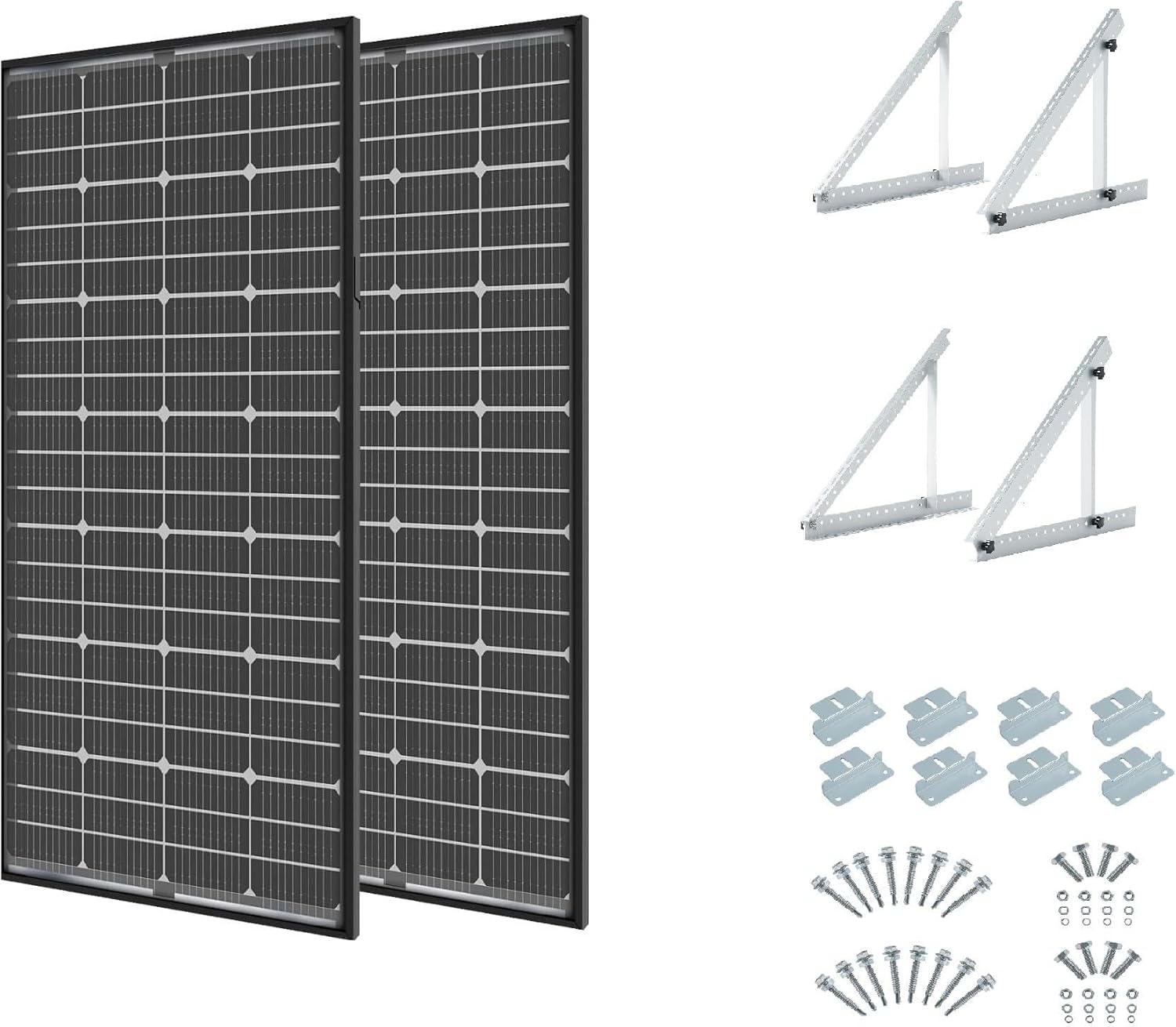
The Callsun 2x200W N-Type 16BB Bifacial Solar Panel Set (B0FYQ26BGD) is the best bifacial solar panel option for most buyers — it combines dual-sided N-Type cell technology with 16 busbars, two adjustable tilt mount brackets, and a total of 400W capacity in a single purchase. Bifacial solar panels generate power from both the front face and reflected (albedo) light hitting the rear, delivering 10–30% more energy from the same installation footprint compared to standard single-sided panels.
In this guide we’ve compared four of the top-rated bifacial solar panel options available on Amazon — covering dual-panel sets with mounting brackets, complete kits with charge controllers, and budget dual-glass options. Read on for detailed reviews, a buying guide, and answers to the most common questions about bifacial panels.
Our Top Picks
| Product Image | Product | Price |
|---|---|---|
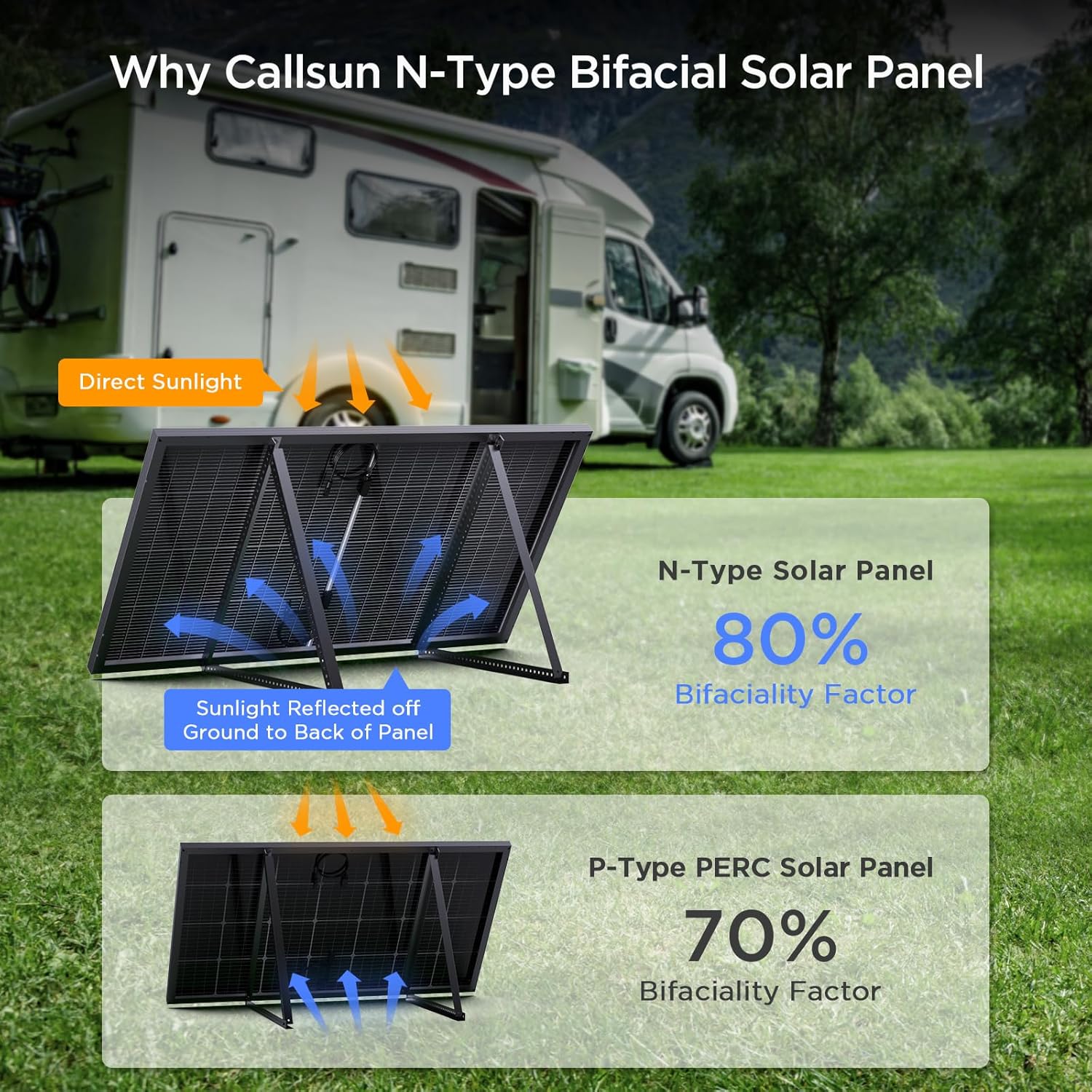 | Callsun 2x200W N-Type 16BB Bifacial Set Dual-glass N-Type bifacial pair with the best documented rear-side gain data in this price range. Read more ↓ | CHECK PRICE |
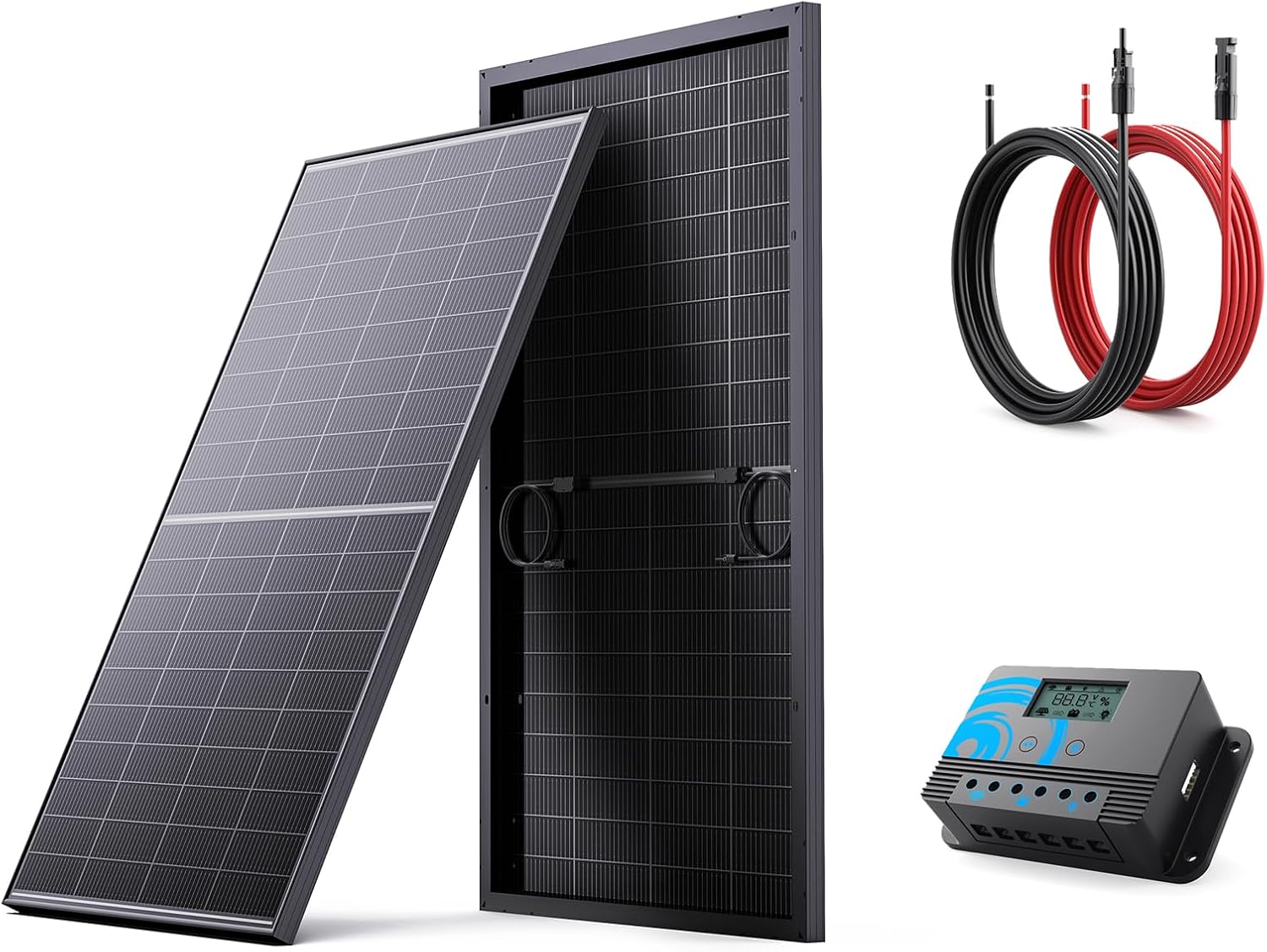 | Callsun 200W Bifacial Kit Complete kit with bifacial panels and charge controller; the easiest entry point for bifacial solar. Read more ↓ | CHECK PRICE |
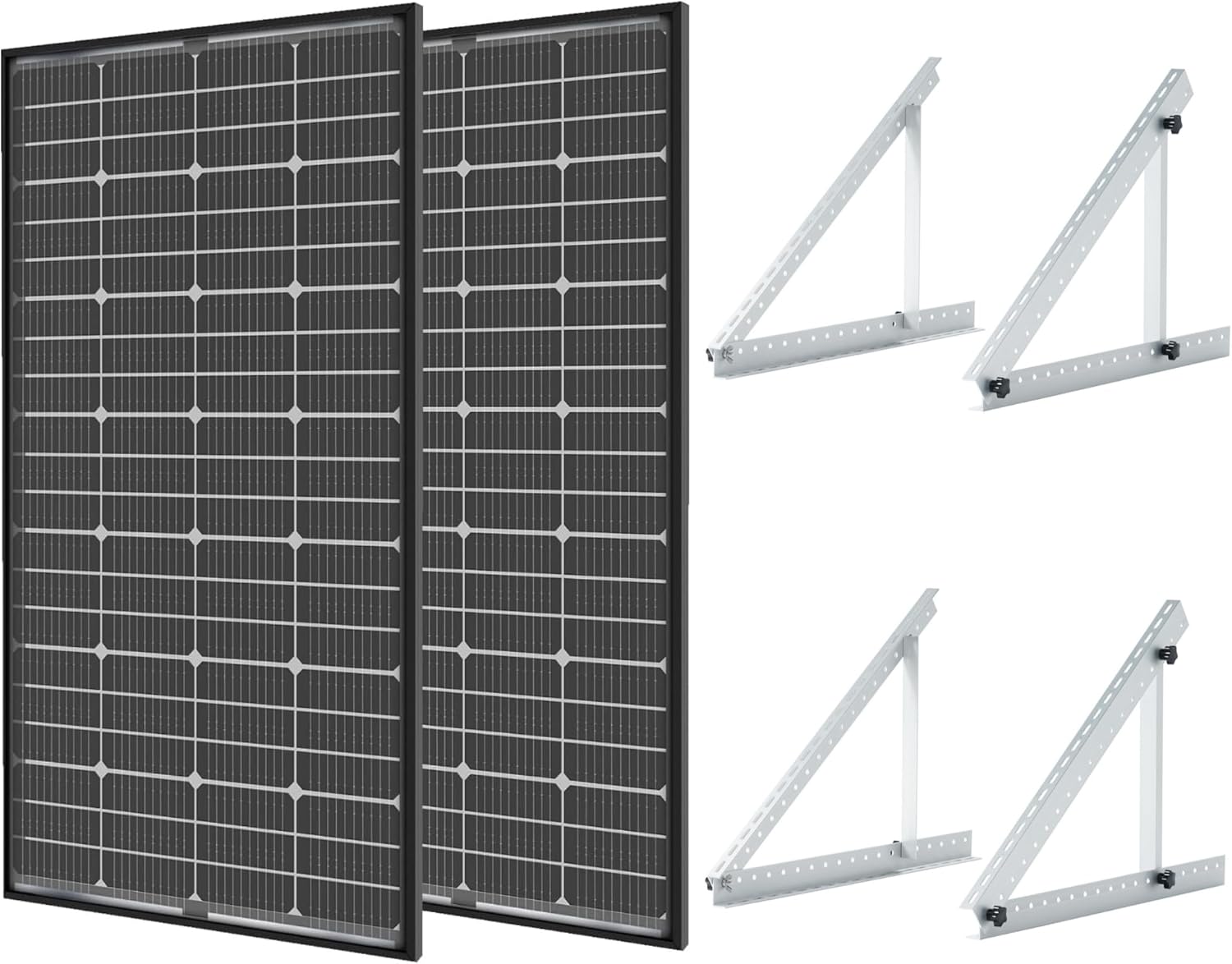 | JJN 400W Bifacial + Brackets Single 400W dual-glass bifacial panel with mounting brackets included; simplest large-wattage bifacial setup. Read more ↓ | CHECK PRICE |
 | JJN 200W Bifacial 2x100W Dual Glass Two 100W dual-glass bifacial panels; the lowest entry price for N-Type bifacial technology on Amazon. Read more ↓ | CHECK PRICE |
Reviews of the Best Bifacial Solar Panels
1. Callsun 2x200W N-Type 16BB Bifacial Panel Set — Best Overall
The Callsun 2x200W set pairs two N-Type 16BB bifacial panels with two 41-inch adjustable tilt mount brackets in a single purchase — a combination that addresses both the panels and the mounting challenge in one box. At $199.99 for 400W of bifacial N-Type capacity, this is the strongest value proposition in this roundup for buyers planning a permanent off-grid, RV, camper, boat, or rooftop installation.
N-Type bifacial cells are the current leading edge of photovoltaic technology. The N-Type silicon structure eliminates light-induced degradation (LID), meaning these panels maintain closer to their rated output over the full 25-year warranty period than P-Type alternatives. The 16BB (16 busbar) design minimizes resistive current losses across the cell face. On the rear glass, reflected light from light-colored ground surfaces (gravel, concrete, white roofing) adds 10–20% real-world output gain beyond what the front panel specifications show. The included tilt brackets simplify ground-mount installation and allow seasonal angle adjustment for better winter harvest.
- Pros:
- N-Type 16BB cells — highest efficiency and lowest long-term degradation
- Bifacial dual glass — adds 10–30% rear-side gain on reflective surfaces
- Includes two 41-inch adjustable tilt brackets — mounting solution included
- 400W total capacity at $199.99 — best price-per-watt in this roundup
- Cons:
- No charge controller included — panels only with brackets
- Bifacial gain is installation-dependent — minimal on dark or grass surfaces
- Smaller brand than established names in solar
2. Callsun 200W Bifacial Solar Power Kit — Best Complete Kit
The Callsun 200W Bifacial Kit builds on the same N-Type bifacial panel technology but adds a 20-foot cable and 20A charge controller — making it a more complete off-grid package for RV, boat, and remote cabin buyers who don’t already own a charge controller. At $246.49, this kit provides a single-panel 200W bifacial system with all the components needed to connect to a battery bank without additional sourcing.
The 20A charge controller is appropriate for a single 200W panel on a 12V system (200W ÷ 12V ≈ 16.7A). Note that the kit does not specify MPPT or PWM — verify the controller type before purchase if efficiency matters for your application. The 20-foot cable allows flexible panel placement relative to the battery bank, which is particularly useful in RV and boat installations where the battery bank and ideal panel location are not adjacent. For buyers whose priority is bifacial technology in a simple, single-panel kit format, this Callsun offering covers the basics at a reasonable price.
- Pros:
- N-Type bifacial panel — dual-sided generation with no LID
- Kit includes 20A charge controller and 20ft cable
- Suitable for RV, boat, and off-grid 12V systems
- Single-panel kit — straightforward setup for beginners
- Cons:
- 200W single panel — half the capacity of the two-panel Callsun set
- Controller type (MPPT vs PWM) should be verified before purchase
3. JJN 400W Bifacial Solar Panels with Brackets — Best 400W Set
JJN’s 400W bifacial set takes a different approach to the Callsun 400W offering: rather than two 200W panels, this is a single 400W bifacial monocrystalline panel paired with two 41-inch solar panel brackets. The single large 400W panel offers simpler wiring — one panel, one cable run — while the bifacial glass-glass construction delivers the rear-side albedo gain that makes bifacial technology compelling for ground and elevated mount installations.
The 10BB (10 busbar) cell design is a step below the Callsun’s 16BB, but still considerably more advanced than basic 3 or 5 busbar panels. JJN rates the panel at 12V, making it compatible with standard off-grid charge controllers for RV, home, and farm applications. At $209.99 for 400W with mounting brackets included, it competes directly with the Callsun 400W set on price while offering the convenience of a single large panel vs two smaller ones. If your installation location suits one large panel better than two positioned separately, this is the JJN pick.
- Pros:
- Single 400W bifacial panel — simpler wiring than two-panel sets
- Includes two 41-inch mounting brackets
- 10BB monocrystalline cells — above-average for the price tier
- Competitive price at $209.99 for 400W with mounting hardware
- Cons:
- 10BB vs 16BB (Callsun) — slightly lower efficiency and shade tolerance
- Single large panel is harder to physically handle than two smaller panels
- No charge controller included
4. JJN 200W Bifacial Panel Set (2x100W) — Best Budget
JJN’s 200W bifacial set — two 100W dual glass bifacial monocrystalline panels — is the lowest-cost entry into bifacial technology in this roundup at $159.99. The dual glass construction (glass on both front and rear surfaces) provides the structural rigidity needed to transmit rear-side albedo light through to the cells, and it also makes these panels more durable than single-glass alternatives — glass-glass panels are more resistant to moisture ingress, PID (potential induced degradation), and mechanical stress.
At 10BB monocrystalline cells and 200W total capacity, this set is best suited for buyers who want to add bifacial technology to an existing 12V system — expanding a cabin or shed installation where a compatible charge controller is already in place. Two 100W panels give flexible placement options: they can be positioned on different roof faces or at different angles to optimize morning and afternoon harvest. No mounting hardware is included, so budget for brackets or integrate into existing racking. For the budget-conscious buyer who wants genuine bifacial dual-glass technology, JJN’s 200W set is the right starting point.
- Pros:
- Lowest price bifacial entry point at $159.99 for 200W
- Dual glass construction — more durable and moisture-resistant than single glass
- Two separate 100W panels for flexible placement
- 10BB monocrystalline cells — bifacial advantage on rear side
- Cons:
- No brackets or charge controller included
- 200W capacity — half of the 400W sets in this roundup
- Smaller brand — fewer long-term reviews
Buying Guide: What to Look for in Bifacial Solar Panels
Key Takeaways
- Bifacial panels generate 5–15% more power than equivalent monofacial panels — the gain depends almost entirely on what is beneath the array.
- Ground over light gravel, white membrane roofs, and snow produce the highest rear gains; dark asphalt roofs produce almost none.
- N-Type cells are essential for bifacial — P-Type bifacial panels carry LID risk that erodes the advantage you are paying for.
- Minimum 300mm (12 inches) of ground clearance at the panel lower edge is required to unlock meaningful rear-side production.
- All four products here use dual-glass construction — more durable and longer-warranted than transparent-film bifacial designs.
- Bifacial panels make sense for permanent ground-mount or elevated roof-mount installs in good-albedo locations, not for mobile or flush-roof use.
How Bifacial Panels Work — and What the Gain Actually Is
A conventional panel has an opaque polymer backsheet that blocks all light from the rear face. A bifacial panel replaces that backsheet with tempered glass (or occasionally a transparent film), exposing rear cell surfaces to light reflected upward from the ground, roof membrane, or surrounding surfaces below the array.
Manufacturer marketing often cites 20–30% rear-side gains based on ideal laboratory conditions. The real-world figure for most ground-mount installations is 8–12% additional annual energy production. On a bright white roof membrane or over fresh snow, rear-side gain can approach 15–20%. On a flush dark-asphalt rooftop, the bifacial advantage is under 3% and not worth the price premium.
The practical takeaway: bifacial technology genuinely works, but the conditions required to unlock its full potential are specific. Know your installation environment before buying.
Why N-Type Is the Only Sensible Choice for Bifacial
P-Type bifacial panels exist, but they carry light-induced degradation (LID) — the same 1–3% output loss in the first days of operation that affects all P-Type mono panels. In a bifacial application where you are investing in a premium panel for long-term cumulative gains, starting with a cell type that immediately loses a portion of its rated output works against the purpose of the purchase.
N-Type cells use phosphorus-doped silicon, which does not experience LID. They also reach higher efficiency ceilings and carry longer warranties than P-Type equivalents. All four panels on this list use N-Type cells. If you encounter a bifacial panel at a notable discount that does not specify N-Type, assume P-Type and factor in the degradation.
Albedo: The Variable That Determines Whether Bifacial Is Worth It
Albedo is the reflectivity of the surface beneath and around the array. It is the single most important factor in whether bifacial panels deliver meaningful rear-side gain, and it is almost never mentioned in manufacturer marketing.
Approximate albedo by surface type:
- Fresh snow: 80–90% reflective — maximum bifacial gain
- White membrane roof or light gravel: 50–70% — excellent conditions
- Light concrete: 30–50% — good conditions
- Dry grass or light soil: 20–30% — moderate gain (~8–10%)
- Green vegetation: 20–25% — modest gain (~5–7%)
- Dark asphalt or dark roofing: 5–15% — minimal benefit (<3%)
If your site has dark soil, dark paving, or dark roofing beneath the array, bifacial panels will underperform their marketing. A practical fix for ground mounts: spread light-coloured crushed gravel beneath the array to boost albedo at minimal cost.
Mounting Height and Clearance
Bifacial panels need ground clearance to access reflected light from below. The industry minimum recommendation is 300mm (about 12 inches) between the lower panel edge and the ground or roof surface. Below this clearance, the solid angle of sky and reflected surface that the rear face can see drops sharply, cutting rear-side gain by 30–50%.
For ground mounts at 30–45° tilt, standard racking typically provides adequate clearance. Verify the lower-edge height for your specific racking before purchasing. For roof mounts: flush racking provides little to no rear-side access. Standoff racking that raises panels 150–300mm above the roof surface is required. As a side benefit, this also improves panel cooling, which improves front-side efficiency in warm conditions.
Dual-Glass vs. Transparent-Film Bifacial Construction
Bifacial panels use either a second layer of tempered glass on the rear face (dual-glass construction) or a transparent ETFE or TPT polymer film. All four panels on this list use dual-glass construction.
Dual-glass panels are 20–25% heavier than single-glass equivalents but significantly more durable. The rear glass protects cells from moisture ingress, UV degradation, and mechanical stress, which is why dual-glass manufacturers offer the longest warranties. For any permanent installation — roof, ground mount, carport — dual-glass is the right choice. The weight penalty is manageable on any properly engineered mount.
Transparent-film bifacial panels are lighter and less expensive, appearing mainly in flexible and portable formats. They are less suited to permanent outdoor exposure over a decade-long system life.
Are Bifacial Panels Worth the Premium?
At current prices, bifacial N-Type panels command a 20–40% premium over equivalent monofacial panels. Whether that premium is justified depends on your installation:
Bifacial makes sense if: you have a ground mount or elevated roof mount with good albedo, you are planning a 10+ year permanent installation where cumulative additional production repays the premium, or you need dual-glass durability for a harsh outdoor environment.
Bifacial probably does not make sense if: you are flush-mounting on a dark roof, the system is portable or seasonal, or budget is tight and you could instead add a third monofacial panel for similar total cost. Three standard panels will often outperform two bifacial panels at equivalent budget in less-than-ideal albedo conditions.
When Not to Buy Bifacial
- Flush dark-roof installation. Minimal rear-side gain, full premium price — the worst possible combination.
- Portable or mobile setups. Dual-glass weight and fragility make bifacial poorly suited to frequent transport or redeployment.
- Heavily shaded locations. Shade on the front face reduces bifacial output just as severely as it reduces monofacial. Bifacial does not compensate for front-face shading.
- Tight budget. If the bifacial premium represents a significant fraction of your total system cost, additional monofacial wattage will usually deliver better return in real-world conditions.
Why We Chose These and Not Others
We evaluated numerous bifacial options before selecting the final four. Here is why some well-known names did not make the list:
- SunPower bifacial panels: Industry-leading efficiency but retail pricing far exceeds the consumer market; not available on Amazon in single-panel quantities.
- LONGi Hi-MO X6 bifacial: Excellent utility-scale panel sold primarily through distributor networks, not to end-consumers; impractical for the 200–400W buyer segment.
- P-Type PERC bifacial panels: LID risk negates a significant portion of the bifacial advantage; all P-Type bifacial excluded in favour of N-Type products.
- Transparent-film bifacial panels: Lower-cost construction but more prone to moisture ingress and cell degradation than the dual-glass panels on this list.
Frequently Asked Questions
Are bifacial solar panels worth it?
Bifacial panels are worth it when your installation conditions maximize rear-side gain: elevated ground mounts over reflective surfaces, carport installations, or rooftop systems with adequate clearance and light-colored roofing beneath. In these conditions, the 10–25% additional output from the rear side meaningfully improves system ROI. For flush rooftop installations on dark shingles with minimal clearance, the bifacial advantage is minimal — a high-efficiency monofacial N-Type panel would deliver similar real-world results at a potentially lower cost.
How much more power do bifacial panels produce?
Under ideal conditions — white reflective surface, 12+ inches of clearance, direct overhead sun — bifacial panels produce 20–30% more than their front-side rated wattage. In typical ground-mount conditions with moderate albedo (light gravel, concrete), 10–20% gain is a realistic expectation. On dark surfaces with minimal clearance, gain drops to 2–5%. Always evaluate bifacial gain based on your specific installation conditions rather than peak spec sheet numbers.
Do bifacial solar panels work in shade?
Bifacial panels perform similarly to monofacial panels in terms of shade sensitivity on the front side — partial shading on one cell still affects output on standard string-configured panels. The bifacial rear side is less susceptible to shading effects since rear illumination comes from diffuse reflected light rather than direct sun. If shade on the front side is a concern, pair bifacial panels with microinverters or DC optimizers that allow cell-level shade mitigation regardless of panel type.
Can bifacial panels be used for RV and marine applications?
Yes. Bifacial panels function identically to monofacial panels from an electrical standpoint — the same charge controllers, inverters, and wiring apply. For RV rooftop use, bifacial gain is minimal (dark roofing, flush mount) but the panels still deliver front-side performance. For boat installations on raised mounts over water, bifacial gain can be meaningful since water surface albedo is 5–15% — and at sea, light reflects from a wide surrounding area. The dual-glass construction of bifacial panels also offers better moisture resistance than single-glass panels, which is a genuine benefit in marine environments.
Summing Up
For most buyers, the Callsun 2x200W N-Type 16BB Bifacial Set is the top pick — it delivers 400W of best-in-class bifacial technology with tilt brackets included at the most competitive price in this roundup. For a complete kit including a charge controller, the Callsun 200W Bifacial Kit covers a 200W single-panel setup out of the box. The JJN 400W Bifacial is the pick for buyers who prefer one large panel over two smaller ones; the JJN 200W Budget set is the lowest-cost entry into dual-glass bifacial technology. If you’re considering a home solar installation where bifacial panels could make sense on a ground or elevated mount, call (855) 427-0058 for a free consultation with a local installer.
Updated