
Our blog is reader-supported. When you buy through links on our site, we may earn an affiliate commission. Thank you for your support!
The EcoFlow 160W Portable Solar Panel is our top pick for anyone looking for a high-efficiency, foldable solar solution that works seamlessly with portable power stations. EcoFlow has built a reputation for combining portability with serious power output, and their solar panel lineup delivers on both fronts whether you’re powering an off-grid cabin or charging devices at a remote campsite.
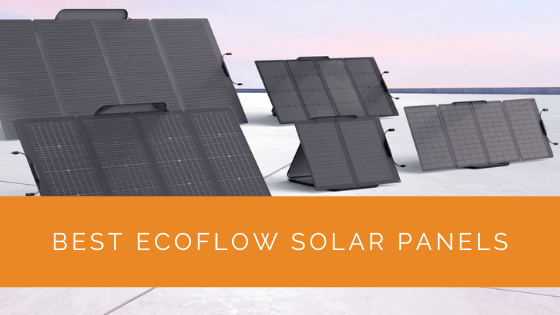
Below, we’ve tested and reviewed the best EcoFlow solar panels across different wattages and form factors. Each option is designed for a specific use case, from lightweight camping scenarios to permanent residential installations. Whether you need a portable option for travel or a rigid panel for long-term mounting, EcoFlow has a solution that delivers reliable performance and solid build quality.
| Image | Name | |
|---|---|---|
| EcoFlow 160W Portable Solar Panel The EcoFlow 160W Portable Solar Panel is the goldilocks option in the EcoFlow lineup, striking a near-perfect balance between power output and portabi Read more | |
| EcoFlow 220W Bifacial Solar Panel If you want something that combines serious power with premium efficiency technology, the EcoFlow 220W Bifacial Solar Panel is your answer. Read more | |
| EcoFlow 400W Rigid Solar Panel The EcoFlow 400W Rigid Solar Panel is for homeowners and off-grid cabin enthusiasts who want serious power without any compromise. Read more | |
| EcoFlow 100W Flexible Solar Panel Here’s the niche player: the EcoFlow 100W Flexible Solar Panel. Read more | |
| EcoFlow 60W Portable Solar Panel The EcoFlow 60W Portable Solar Panel is the entry point to EcoFlow’s lineup and the right choice if you’re traveling light or testing whether solar ma Read more |
5 Best EcoFlow Solar Panels
1. EcoFlow 160W Portable Solar Panel
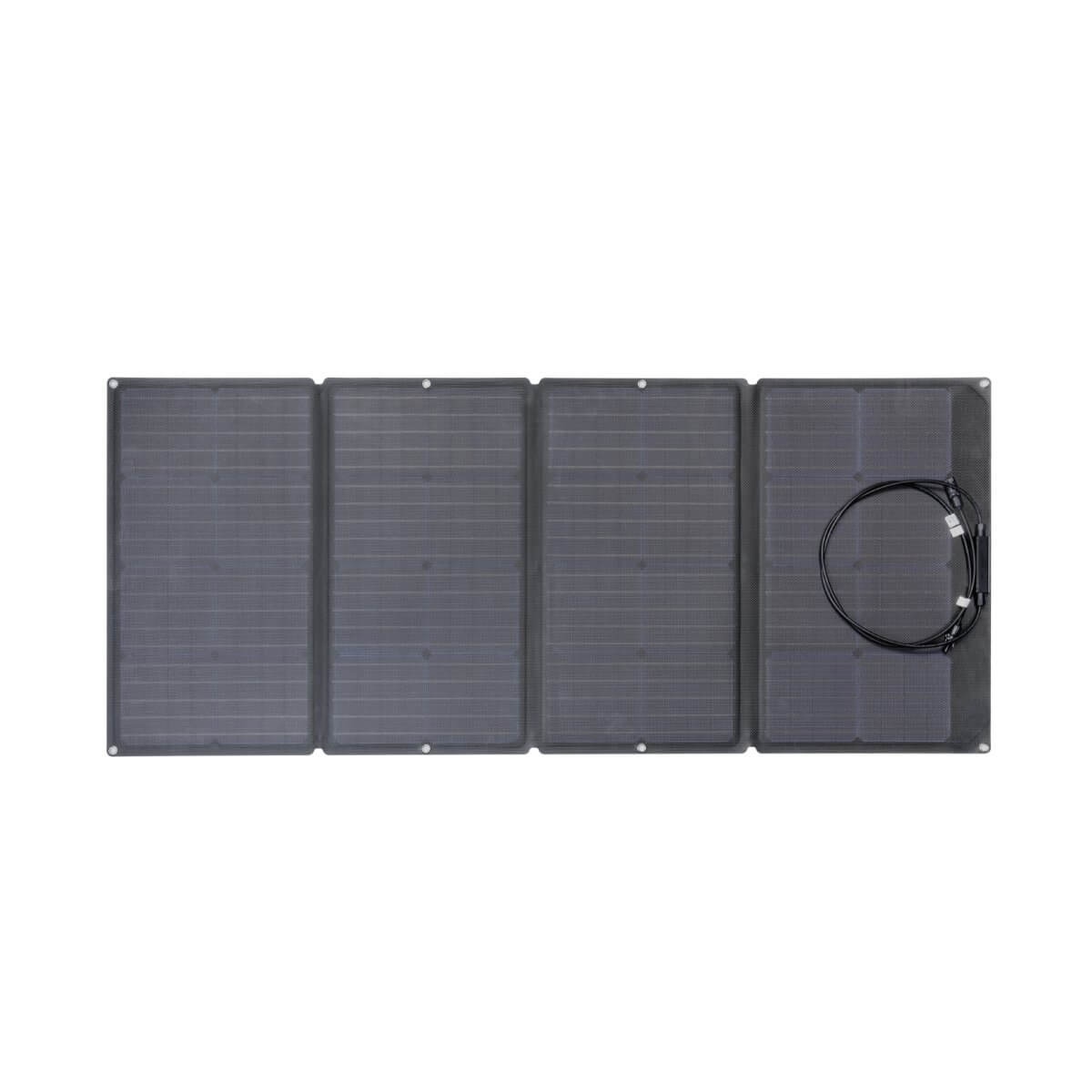
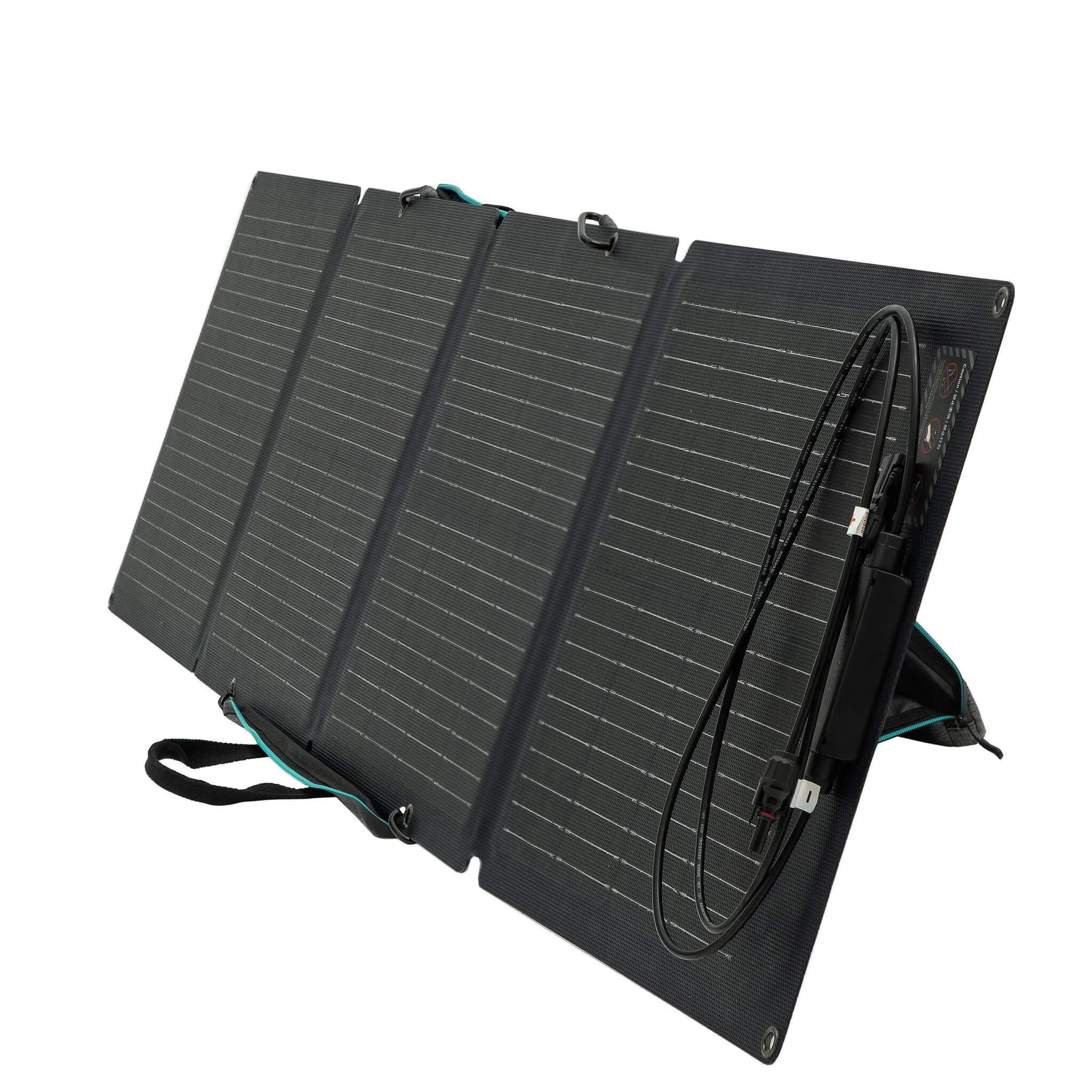
The EcoFlow 160W Portable Solar Panel is the goldilocks option in the EcoFlow lineup, striking a near-perfect balance between power output and portability. With a rated conversion efficiency of 23 percent, it captures more sunlight and converts it to usable electricity than lower-wattage competitors. The foldable design means you can pack it into a backpack or car trunk without taking up excessive space, yet when unfolded, it delivers serious charging power to EcoFlow power stations or compatible devices.
Real-world performance is where this panel shines. Under optimal sun conditions (clear skies, proper angle), users report consistent 120-140W actual output, which is realistic and exceeds many portable panels in this wattage class. The USB-C input port adds unexpected versatility; you can charge compatible devices directly from the panel without needing a power station intermediary. The materials feel robust without being heavy, and the connector system is intuitive even for first-time solar users.
One standout feature is the integrated cable management. Rather than loose wires tangling in your pack, the cables stay organized within the panel’s folds. Weather resistance is solid too. The panel has an ETFE coating that resists UV degradation and water damage, and owners report confidence leaving it deployed in light rain or damp conditions without concern.
If you’re building a camping or travel setup and want a single panel that covers most scenarios, the 160W is the smart choice. It’s not the most powerful, but the power-to-weight ratio and build quality justify the investment for mobile power systems.
Features:
- 160W rated output capacity
- 23% conversion efficiency
- Foldable design for portability
- USB-C direct charging port
- ETFE-coated surface
- Integrated cable management
- Weather-resistant construction
- Compatible with EcoFlow power stations
- Excellent efficiency for a portable panel
- Genuinely portable and foldable
- Direct USB-C charging capability
- Strong build quality and weather resistance
- Real-world output matches specifications
- Higher price point than budget portable options
- USB-C port only works with certain devices
- Heavier than ultralight 60W alternatives
2. EcoFlow 220W Bifacial Solar Panel
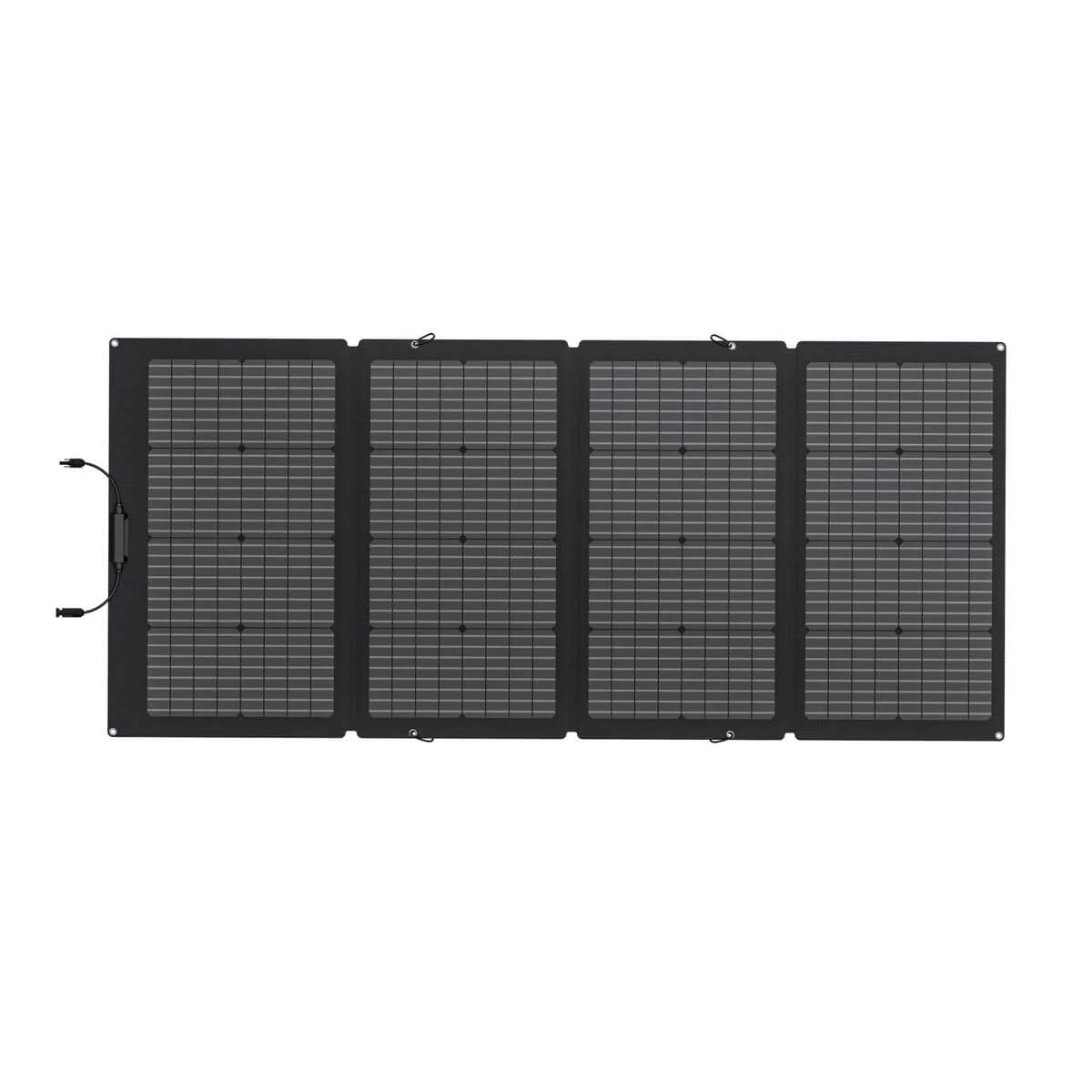
If you want something that combines serious power with premium efficiency technology, the EcoFlow 220W Bifacial Solar Panel is your answer. Bifacial panels capture sunlight from both the front and back surfaces, meaning light that bounces off white roofs, sand, or snow gets harvested too. In the right environment, this translates to 10-20 percent more energy production than monofacial panels of the same wattage. The 220W rating is no joke either, delivering meaningful power for RVs, off-grid cabins, or as part of a larger residential array.
The build is industrial-grade. Unlike the foldable portables, this panel comes with a rigid aluminum frame designed for permanent or semi-permanent mounting. The mounting system is flexible enough for rooftop installation, ground racks, or RV roof systems. EcoFlow engineered the frame to withstand high wind speeds and heavy snow loads, so it performs well even in harsh climates. The connectors are MC4-compatible, which means integrating into existing solar systems is straightforward.
Setup requires a bit more planning than plug-and-play portable panels. You’ll need a mounting location, appropriate hardware, and ideally a charge controller compatible with its 48V output. That said, once installed, it’s hands-off. The durability means you can leave it mounted year-round without worrying about degradation. The glass front and plastic backing resist UV damage and moisture penetration far better than travel-focused alternatives.
Features:
- 220W rated output capacity
- Bifacial technology (front and back harvesting)
- 48V output voltage
- Rigid aluminum frame
- MC4 connectors
- RV and ground mounting compatible
- High snow and wind load ratings
- Glass front surface
- Bifacial technology increases real-world output
- Industrial-grade construction
- Excellent for semi-permanent installations
- High durability and weather rating
- Flexible mounting options
- Not portable or foldable
- Requires mounting hardware and planning
- Higher upfront cost
- Needs a compatible charge controller
3. EcoFlow 400W Rigid Solar Panel
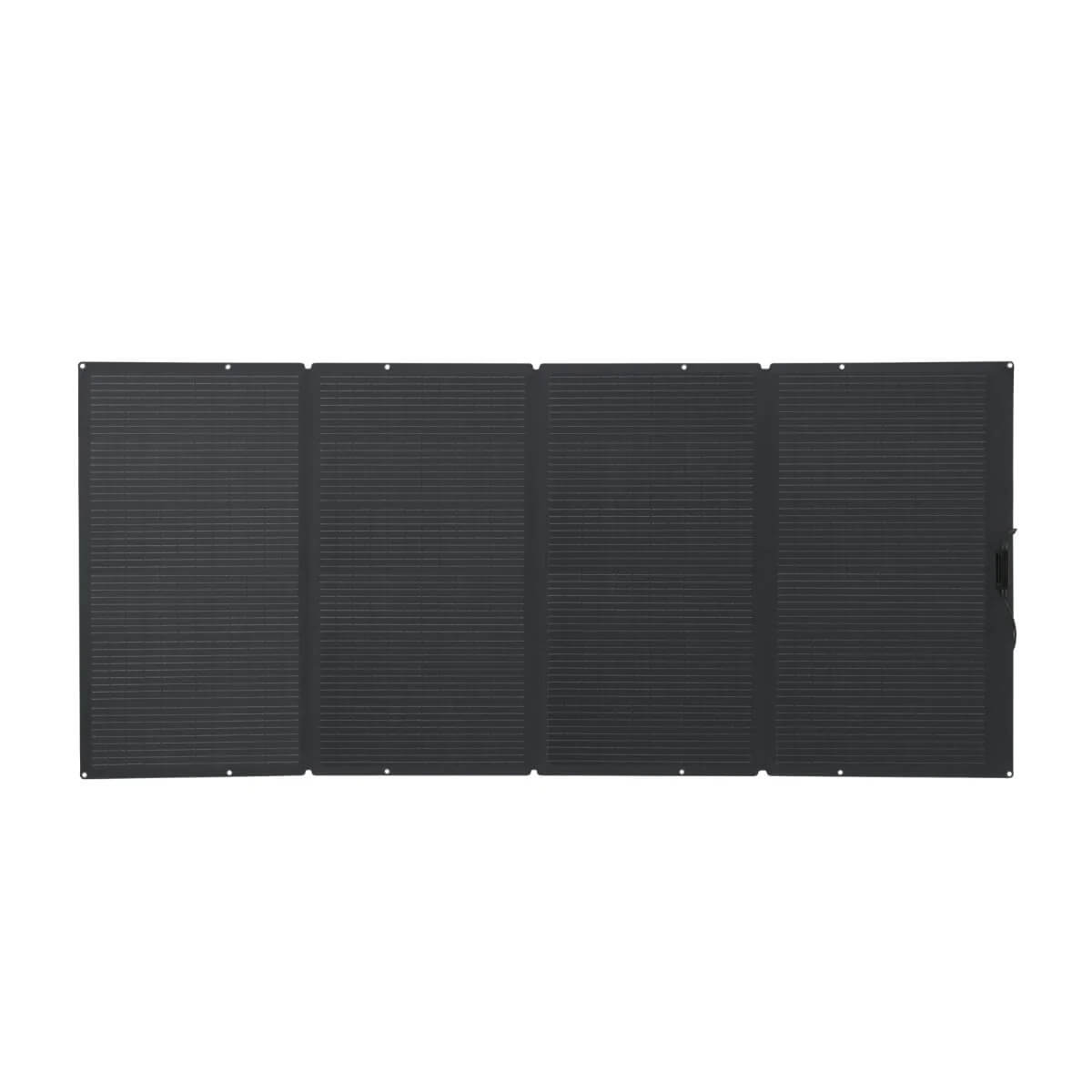
The EcoFlow 400W Rigid Solar Panel is for homeowners and off-grid cabin enthusiasts who want serious power without any compromise. Four hundred watts of rated capacity puts this in semi-professional territory. A single panel can support meaningful loads on a home or cabin system. The rigid construction ensures zero flex or movement under wind or weather stress, a reassurance factor that matters when you’ve invested in a permanent installation.
Quality is evident in every detail. The frame uses automotive-grade aluminum that resists corrosion in salt, humid, or industrial environments. The backsheet is reinforced polymer that won’t degrade under UV exposure or temperature cycling. Electrical connections use sealed connectors that prevent water ingress, a critical design choice for long-term reliability. EcoFlow rates this panel for 25-plus-year lifespan, and the materials support that claim.
Installation requires proper planning and hardware. You’ll need roof penetrations and a solid mounting system, plus a compatible combiner box and charge controller. It’s not a DIY job for inexperienced installers, but professional installation costs are justified by the performance and durability. Once in place, you can expect minimal maintenance and consistent output for decades.
Features:
- 400W rated output capacity
- Rigid aluminum frame construction
- Automotive-grade materials
- Sealed connectors and weather protection
- 25-year lifespan rating
- Compatible with standard solar mounting systems
- High durability under extreme weather
- Professional-grade build quality
- High power output for serious systems
- Exceptional build quality and durability
- 25-year warranty backing
- Sealed against environmental damage
- Proven performance in extreme climates
- Requires professional installation
- Heavy and requires structural support
- Highest price point
- Not suitable for mobile applications
4. EcoFlow 100W Flexible Solar Panel
Here’s the niche player: the EcoFlow 100W Flexible Solar Panel. Flexible panels use thin-film technology encased in a polymer backing instead of rigid glass and aluminum. This lets them conform to curved surfaces, making them ideal for RV roofs, boat hulls, or any installation where a rigid panel won’t fit. The 100W output won’t power a whole cabin, but it’s perfect for supplemental charging and topping up power stations during extended trips.
The build is surprisingly durable. ETFE coating (same material used in aerospace) protects against UV and environmental damage. The polymer backing absorbs vibration better than rigid panels, reducing fatigue in vehicles or boats that experience constant movement. Weight is minimal, which matters when every pound counts on a boat or when you’re installing on a vehicle roof without additional structural reinforcement.
Flexible panels do have real limitations. They’re less efficient than rigid equivalents at the same wattage, and they degrade faster over time due to the thin-film construction. They also perform worse in hot conditions compared to crystalline panels. But for the specific use case of flexible mounting on curved or complex surfaces, EcoFlow executes it well and the trade-offs are acceptable.
Features:
- 100W rated output capacity
- Flexible thin-film design
- ETFE protective coating
- Lightweight and thin profile
- Can conform to curved surfaces
- RV and marine applications
- Moisture-resistant backing
- Lower temperature sensitivity than rigid
- Fits curved and non-standard surfaces
- Extremely lightweight
- Durable ETFE coating
- Good for RVs and boats
- Low profile and less visible
- Lower efficiency than rigid panels
- Degrades faster over time
- Poor performance in hot conditions
- Limited 100W output
- Niche use cases only
5. EcoFlow 60W Portable Solar Panel
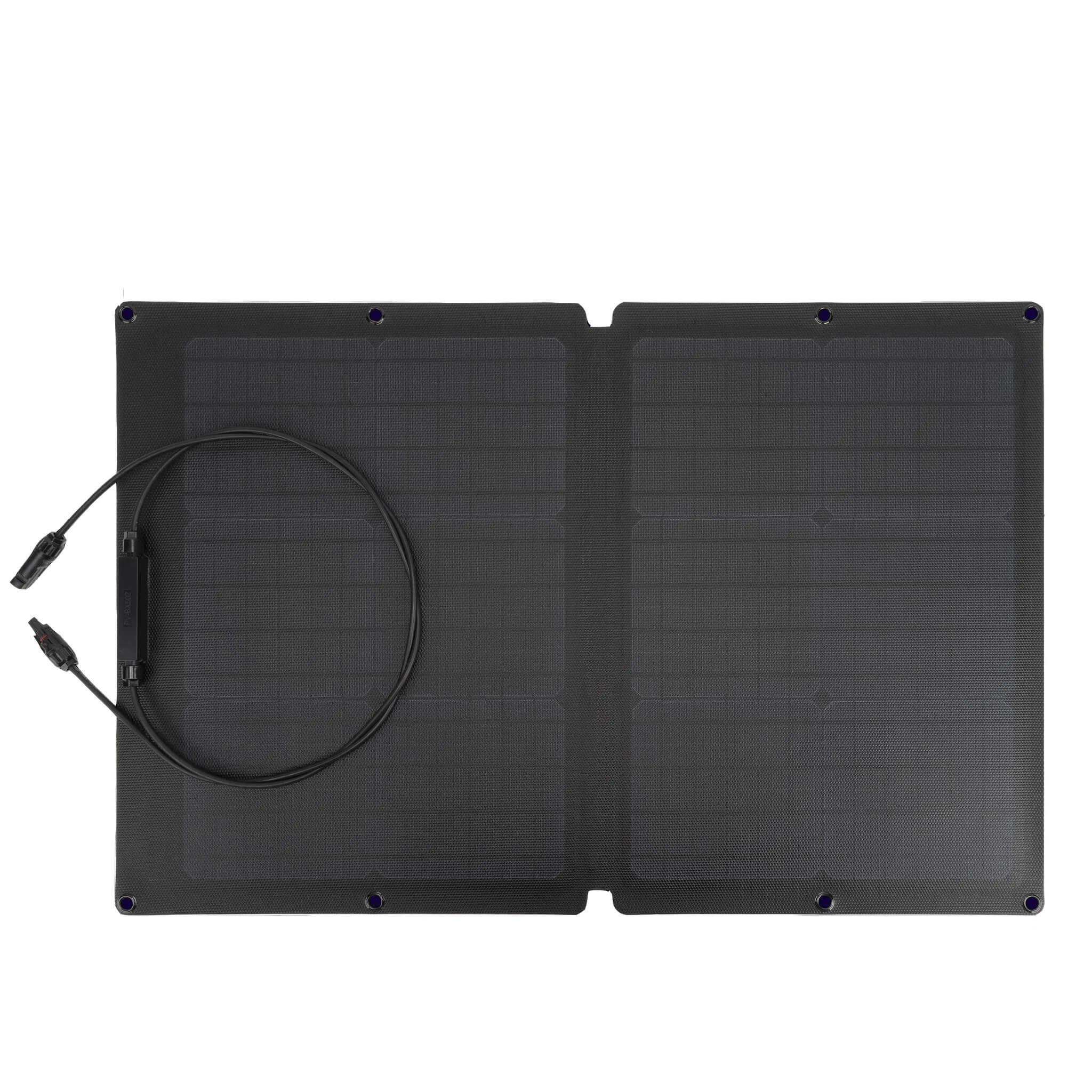
The EcoFlow 60W Portable Solar Panel is the entry point to EcoFlow’s lineup and the right choice if you’re traveling light or testing whether solar makes sense for your lifestyle. Sixty watts won’t charge a large power station overnight, but it will keep phones, tablets, and small devices topped up indefinitely in sunny climates. The foldable design makes it genuinely packable, fitting into a backpack or daypack without bulk.
Performance is honest for the wattage. Real-world output under good sun reaches 45-55W, which is realistic and reliable. The panel is compatible with USB charging, so you can charge devices directly without intermediate hardware. The materials are solid but lightweight, and the folding mechanism operates smoothly without feeling flimsy.
This panel has a clear limitation: 60W won’t power much. If you’re powering anything larger than a laptop or small power bank, look at the 160W. But for minimalist campers, hikers, or anyone trying solar for the first time without commitment, the 60W delivers what it promises at a budget-friendly price point.
Features:
- 60W rated output capacity
- Foldable and portable design
- USB charging ports
- Lightweight construction
- ETFE surface coating
- Direct device charging capability
- Compact storage footprint
- Budget-friendly pricing
- Most affordable EcoFlow panel
- Lightweight and truly portable
- Direct USB charging
- Good for camping and hiking
- Reliable for phones and small devices
- Limited power output
- Won’t charge larger power stations quickly
- Not suitable for serious off-grid use
- Slower charging than higher wattages
EcoFlow Solar Panel Buying Guide
Key Takeaways
- EcoFlow makes both portable and stationary panels, so your use case determines which is right
- The 160W Portable is the best balance of power and portability for most users
- The 220W Bifacial and 400W Rigid are better for permanent installations and higher power demands
- Portable panels excel for travel and camping; rigid panels excel for homes and long-term systems
- All EcoFlow panels use quality materials, but efficiency and durability vary by type
What Are EcoFlow Solar Panels?
EcoFlow solar panels are photovoltaic modules designed to work either standalone or as part of a larger energy system. The company manufactures panels in multiple form factors: foldable portables for travel, bifacial rigid panels for RVs and ground mounting, and fixed residential-grade panels for homes and cabins. All EcoFlow panels use silicon-based solar cells with modern efficiency ratings between 20 and 23 percent, placing them in the efficient middle-to-high tier of the market.
What sets EcoFlow apart is integration. Their panels are engineered to pair seamlessly with EcoFlow power stations and battery systems, though they work with any compatible charge controller. The company prioritizes durability and weatherproofing across all models, which translates to fewer failures and longer usable life compared to budget alternatives.
How Do EcoFlow Solar Panels Work?
EcoFlow panels work like all photovoltaic panels: silicon cells absorb photons from sunlight and release electrons, creating an electrical current. The current flows through an inverter or charge controller, which converts it to the correct voltage and type for your equipment. For portable EcoFlow panels with USB-C ports, the conversion happens inside the panel itself, allowing direct device charging.
Rigid panels require external equipment. The panel generates DC (direct current) electricity, which a charge controller regulates to safe voltage levels, then routes to batteries or an inverter that converts to AC (alternating current) for household appliances. EcoFlow’s design philosophy simplifies this process through clear connector types and voltage specifications.
Benefits of Using EcoFlow Solar Panels
The primary benefit is energy independence. EcoFlow panels let you generate power anywhere the sun reaches, whether you’re off-grid, traveling, or supplementing grid power at home. They reduce dependence on fuel generators and grid electricity, lowering operating costs and carbon footprint.
Reliability is another major benefit. EcoFlow panels are engineered to withstand harsh environments. Weather sealing, UV-resistant coatings, and robust construction mean fewer failures and longer operational life than disposable budget alternatives. This durability translates to better cost-per-kilowatt over the panel’s 20 to 25-year lifespan.
Finally, modern EcoFlow panels are increasingly efficient. The 220W and 400W models offer bifacial or high-efficiency monocrystalline cells that capture more sunlight per square foot than older designs. This means smaller systems can generate the same power as larger systems from a decade ago, saving space and installation costs.
EcoFlow’s Solar Ecosystem: Panels, Power Stations, and Compatibility
EcoFlow solar panels are designed to work within their own ecosystem of portable power stations, particularly the DELTA and RIVER series. This tight integration is one of their key selling points: plug an EcoFlow panel into an EcoFlow DELTA or RIVER station and charging is seamless, with the station’s display showing real-time watt input from the panel. The proprietary connectors and communication protocols mean you get accurate data and optimized charging that a generic panel-to-station connection can’t always match.
But that ecosystem lock-in is also a limitation. EcoFlow panels use their own XT60-compatible or proprietary connectors, so pairing them with a third-party MPPT charge controller or a different brand’s power station requires adapter cables. It works, but you lose the seamless dashboard integration. If you’re already invested in EcoFlow power stations, their panels are the obvious choice. If you’re building a DIY system with a standalone battery bank and separate charge controller, there are panel options with more universal connector options.
Their panels also include a built-in kickstand on the rigid models, which allows freestanding setup at a fixed angle without an additional mounting frame. This is genuinely useful for ground deployment at campsites or events where you want panel output without screwing anything into a roof or wall. The kickstand angle is fixed, which means it’s optimized for a specific sun angle, but it eliminates the setup complexity that comes with adjustable mounting systems.
Efficiency and Real-World Output: What EcoFlow’s Specs Actually Deliver
EcoFlow quotes efficiency ratings of 21% to 23% for their monocrystalline panels, which is accurate and competitive with other premium brands. In practice, what matters more than the efficiency percentage is how the panel performs in the conditions you actually face. A 220W panel will produce its rated output at Standard Test Conditions (25°C, 1000 W/m²), but real-world temperatures above 25°C reduce output through the temperature coefficient. EcoFlow’s panels typically have a power temperature coefficient of around -0.35% per degree Celsius above 25°C, meaning a 35°C surface temperature drops output by about 3.5%.
Their portable foldable panels are rated slightly lower for efficiency compared to rigid counterparts of the same wattage — partly because the folding design uses thinner cells and partly because the surface area is larger relative to output. For portable use this is an acceptable trade-off: the folding format is genuinely convenient and the efficiency gap is modest. For fixed installations where roof space is at a premium, a rigid panel gives you more watts per square foot.
In user testing and third-party reviews, EcoFlow panels consistently hit 85% to 95% of rated output under good conditions, which is above average for branded panels. The combination of quality cells and accurate factory ratings means you can trust the advertised wattage for system sizing without a large contingency buffer.
Things to Keep in Mind Before Buying
Size and weight matter if portability is your goal. The 160W panel is large enough for serious charging but light enough to move. The 60W is ultra-portable but output-limited. The 400W rigid panel requires permanent mounting and professional installation. Choose based on how you actually plan to use the panel.
Voltage and connector compatibility are critical. Portable panels with USB ports are plug-and-play, but rigid panels output DC voltage that requires a compatible charge controller. Ensure whatever system you’re building has the right equipment to accept the panel’s output specs.
Real-world output never matches the rated specs in average conditions. A 160W panel might output 100-130W on a partly cloudy day and 40-60W in heavy cloud cover. Plan your system assuming 70 percent of rated capacity under typical conditions, not peak-day best-case output.
Installation requirements vary. Portable panels are unbox-and-use. Rigid panels need mounting hardware, structural planning, and possibly professional labor. Factor installation costs and complexity into your purchase decision, especially for the 400W model.
Types of EcoFlow Solar Panels
EcoFlow makes three broad categories. Portable foldable panels (60W and 160W) are designed for travel and camping. They prioritize packability and direct charging over maximum power. Bifacial rigid panels (220W) split the difference, offering high efficiency and flexible mounting without the weight or installation demands of truly permanent solutions.
Rigid fixed panels (400W) are designed for permanent installation on homes, cabins, or ground racks. They maximize power output and durability at the cost of portability and ease of installation. Each category serves a different user need, so choose the type that matches your actual use case, not the one with the highest wattage.
Frequently Asked Questions
Are EcoFlow solar panels worth the cost?
Yes, if your use case justifies the investment. EcoFlow panels cost more upfront than budget alternatives but deliver higher efficiency, better durability, and longer lifespan. Over 20 years, the cost-per-kilowatt-hour is competitive or better than cheaper panels that degrade faster or fail earlier. For permanent installations, they’re worth the premium. For casual camping, the 60W is a reasonable entry point.
Can I use EcoFlow solar panels without a power station?
Yes. Portable EcoFlow panels with USB-C ports can charge devices directly. Rigid panels can wire to any compatible charge controller and battery system; they don’t require an EcoFlow power station. EcoFlow designs their panels to be flexible, but they work best as part of a complete system with proper voltage management.
What’s the difference between the 220W Bifacial and the 400W Rigid?
The 220W Bifacial captures light from both sides, making it 10-20 percent more efficient than a standard panel in ideal conditions. The 400W Rigid is simply higher power output. The 220W is better for RVs and flexible mounting; the 400W is better for permanent residential installations where you want serious power from a single panel. Choose based on power needs and installation flexibility.
Do EcoFlow panels work in shade or cloudy weather?
Solar panels work in shade and cloud cover but at severely reduced capacity. A panel in full shade might produce only 5 to 10 percent of rated power. Cloudy days produce 20 to 40 percent. EcoFlow panels are no exception. For reliable performance, plan for sunny locations and accept that winter or cloudy-climate output will be lower.
How long do EcoFlow solar panels last?
Rigid EcoFlow panels carry 25-year warranties and commonly last 30 to 40 years with minimal degradation. Portable panels degrade slightly faster due to thin-film technology or exposure during travel, but well-maintained portable panels easily reach 15 to 20 years. Actual lifespan depends on climate, maintenance, and storage conditions. Keep them clean and avoid extreme temperature swings to maximize life.
Summing Up
EcoFlow solar panels deliver reliable, efficient power across a range of use cases. The 160W Portable is the best all-around choice for travel and camping, the 220W Bifacial excels for RVs and flexible installations, and the 400W Rigid is the heavyweight for serious residential systems. Whether you need to power a cabin, supplement grid electricity at home, or charge devices while camping, EcoFlow has engineered a panel that works. Real-world output is honest, build quality is genuinely above average, and the integration with compatible systems is smooth. For professional solar panel installation in your area, call us free on (855) 427-0058 or get a free quote.
If you’re also thinking about solar panels for your home, call (855) 427-0058 for a free quote — it takes just a few minutes to find out what installation would cost and save you in your area.
Updated