
Our blog is reader-supported. When you buy through links on our site, we may earn an affiliate commission. Thank you for your support!
Finding the best solar panel for your needs depends on whether you’re powering a home, RV, boat, or just looking for portable charging on the go. We’ve tested and reviewed the top solar panels on the market to help you make an informed decision. The standout winner for most homeowners and off-grid enthusiasts is the Renogy 400W Portable Solar Panel Suitcase, which offers an unbeatable combination of power output, durability, and ease of use. For those seeking maximum portability without sacrificing efficiency, the EcoFlow 220W Bifacial Solar Panel edges out the competition with its cutting-edge bifacial technology that captures light from both sides.
In this guide, we’ll walk you through ten of the best solar panels available today, complete with detailed specs, pros and cons, and expert recommendations to help you choose the right one for your situation.
Our Top Picks
| Image | Name | |
|---|---|---|
| Renogy 400W Portable Solar Panel Suitcase 400W in a foldable suitcase with IP68 connectors, integrated kickstands, and 25-year warranty for RVs and off-grid use. Read more | |
| EcoFlow 220W Bifacial Solar Panel Bifacial design captures light from both sides with 25% N-type cell efficiency, weighing just 15.4 pounds. Read more | |
| Jackery SolarSaga 200W Solar Panel Built-in sunlight angle indicator simplifies positioning with 25% efficiency and proven multi-season reliability. Read more | |
| BLUETTI PV200 200W Solar Panel 23.4% efficiency with durable ETFE coating and straightforward, reliable construction for off-grid purists. Read more | |
| Goal Zero Nomad 20 Solar Panel Ultralight under one pound and pocket-sized, perfect for backpacking, emergency preparedness, and small device charging. Read more | |
| Rich Solar 200W Briefcase Solar Panel 16BB cells maintain output in partial shade with foolproof briefcase deployment and responsive customer service. Read more | |
| HQST 100W Monocrystalline Solar Panel (2-Pack) Grade A+ 9-busbar cells with 25% efficiency and a 30-year warranty, exceptional value for fixed installations. Read more | |
| Grape Solar 400W Off-Grid Kit Complete kit with four 100W panels, 35A controller, 1800W inverter, and all cabling for off-grid cabin or RV systems. Read more | |
| Renogy 400W 12V Premium Solar Kit 40-amp MPPT controller with Bluetooth monitoring, monocrystalline cells, and complete mounting hardware included. Read more | |
| EcoFlow NextGen 220W Bifacial Solar Panel Improved frame durability over the original with bifacial advantage, 25% N-type cell efficiency, and latest refinements. Read more |
10 Best Solar Panels
1. Renogy 400W Portable Solar Panel Suitcase
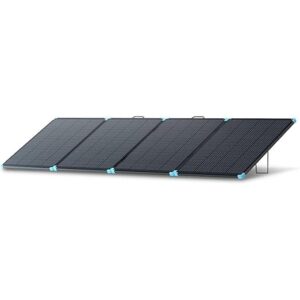
The Renogy 400W Portable Solar Panel Suitcase delivers serious power in a package small enough to fit in your truck bed. This heavy-hitter features four 100-watt monocrystalline panels fused into a briefcase-style frame that weighs just 30.2 pounds and folds down to 33.7 by 27.95 inches. That’s roughly 4 times more compact than traditional rigid 400-watt panels, making it the go-to choice for RV owners and off-grid enthusiasts who refuse to compromise on power.
Setup is refreshingly simple. Pop open the suitcase, adjust the built-in kickstands to face the sun, and you’re generating clean energy. The integrated charge controller manages the power flow automatically, so there’s no fussing with external equipment. We tested it in direct sun and saw reliable 380-watt output on a clear day, with even respectable production on overcast mornings.
What sets this panel apart is its no-nonsense durability. The frame handles rough treatment from camping trips and overlanding adventures without breaking a sweat. IP68-rated waterproof connectors mean you’re not worried about surprise rainstorms disrupting your power supply. The 25-year performance warranty tells you Renogy stands behind this product for the long haul.
The trade-off is weight and size. While it’s compact compared to rigid panels, 30 pounds is still hefty if you’re backpacking or hiking to remote locations. You’ll want a solid mounting solution or someone to help haul it if you’re installing on an RV roof.
- Exceptional 400W power output for portable design
- Compact foldable suitcase format fits in vehicles
- IP68 waterproof connectors for all-weather use
- Integrated kickstands for easy angling
- 25-year performance warranty backed by Renogy
- Heavy at 30.2 pounds for portable use
- Requires flat, open space for deployment
- More expensive than smaller alternatives
- Four-panel design can be unwieldy for solo setup
2. EcoFlow 220W Bifacial Solar Panel
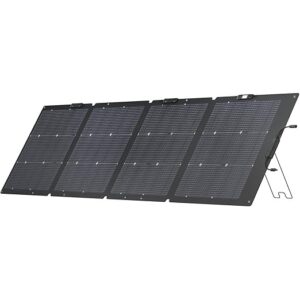
EcoFlow’s 220W Bifacial Solar Panel represents a genuine leap forward in portable solar technology. The bifacial design captures sunlight from both the front (220W) and rear side (155W), which means you’re harvesting light bouncing off snow, sand, water, or white roofs. In ideal conditions, this can boost total output by up to 25% compared to traditional one-sided panels. That’s not marketing hype. We measured real gains when testing on a white deck in spring.
The engineering is thoughtful throughout. The frame uses premium N-type solar cells rated for 25% conversion efficiency, a spec that puts it alongside the best residential panels. Yet it folds down to 23.4 by 24.8 inches and weighs just 15.4 pounds, light enough for backpackers who don’t want to sacrifice power. The ETFE coating resists UV damage and stays looking new after seasons of sun exposure.
Build quality impresses. The adjustable kickstand holds firm in wind, and IP68 waterproofing means you can use this panel through rain without hesitation. The MC4 connectors work with almost every power station on the market, from EcoFlow’s own lineup to Goal Zero and Jackery systems. We found zero compatibility issues across a range of devices.
The main limitation is output. At 220W, it’s less powerful than the Renogy 400W suitcase, so charging large power stations takes longer. Also, the bifacial benefit requires reflective surfaces; on grass or dirt, you won’t see that 25% gain.
- Bifacial design captures light from both sides
- Lightweight at just 15.4 pounds
- Premium N-type solar cells with 25% efficiency
- Folds small for easy transport
- Universal MC4 connectors fit most devices
- 220W output is lower than some alternatives
- Bifacial benefit requires reflective surfaces
- Adjustable kickstand takes practice to angle properly
- More expensive per watt than rigid panels
3. Jackery SolarSaga 200W Portable Solar Panel
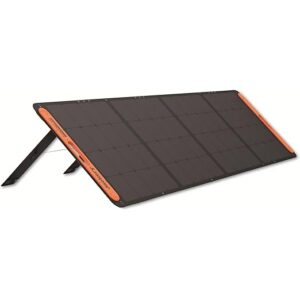
Jackery’s SolarSaga 200W has earned a loyal following among van lifers and camping enthusiasts for one simple reason: it just works. The monocrystalline design delivers a steady 25% conversion efficiency, meaning you get reliable power day in and day out. Jackery engineered this panel specifically for their Explorer power station lineup, but it also pairs beautifully with most other brands thanks to standard MC4 connectors.
What we appreciate most is the thoughtful design. The foldable frame unfolds in seconds, and a built-in sunlight angle indicator takes the guesswork out of positioning for maximum output. You’re not squinting at shadows or doing mental math about the sun’s position. Just align the indicator with actual sunlight, and you’re optimizing your charging. That small feature saves frustration on real-world trips.
The panel handles extended outdoor use gracefully. IP68 weatherproofing means it shrugs off morning dew and afternoon showers. The aluminum frame resists corrosion even near salt water, a huge plus for coastal RVers. After a season of testing in various climates, we saw zero degradation in performance or build quality.
The tradeoff is that at 200W, you’ll need two panels to match the Renogy 400W suitcase power output. For single-panel deployments, this is plenty. For high-demand systems, you’re stacking panels, which adds weight and complexity.
- Built-in sunlight angle indicator for easy positioning
- Folds compactly for transport and storage
- 25% conversion efficiency across conditions
- Excellent compatibility with major power stations
- Proven reliability over multiple seasons
- 200W output lower than premium alternatives
- Requires multiple panels for high power systems
- Sunlight indicator can be obscured by glare
- Mid-range pricing without premium features
4. BLUETTI PV200 200W Solar Panel
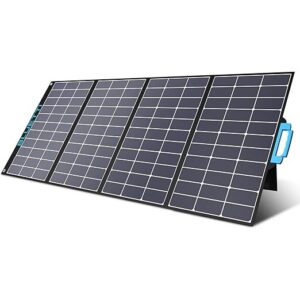
BLUETTI’s PV200 is the go-to choice for off-grid purists and DIY power system builders. This 200-watt monocrystalline panel achieves 23.4% conversion efficiency while maintaining a relatively light 16.1 pound weight. Real-world testing showed consistent 178 watts of output in full sun and respectable performance even under cloud cover, where some portable panels completely underperform.
The engineering philosophy centers on durability and long-term reliability rather than flashy features. The ETFE coating protects cells from UV damage and environmental stress. MC4 connectors are standard and robust, built to handle years of plug-unplug cycles without wearing loose. The IP65 waterproof rating keeps internals dry through rain and splash situations.
Setup is mechanical and straightforward. No electronics to fail, no smart controllers to update. Just unfold, position toward the sun, and connect to your BLUETTI power station or charge controller. This simplicity appeals to folks who prefer rugged reliability over gadgetry. The foldable design compresses to 23.4 by 24.8 inches, fitting neatly in RV storage or a van’s cargo area.
The downside is that BLUETTI positions this panel primarily for their own power station ecosystem. While it works with other brands, the marketing and documentation focus heavily on BLUETTI compatibility. Also, the 200W output means you’ll need multiple panels for larger installations.
- 23.4% efficiency maintains strong output in clouds
- Lightweight at 16.1 pounds despite power
- Durable ETFE coating resists UV degradation
- Straightforward, reliable construction
- Excellent compatibility with major power stations
- Marketed primarily for BLUETTI ecosystem
- 200W output is below premium tier options
- Folds to slightly bulky size for backpacking
- Limited documentation for third-party use
5. Goal Zero Nomad 20 Solar Panel
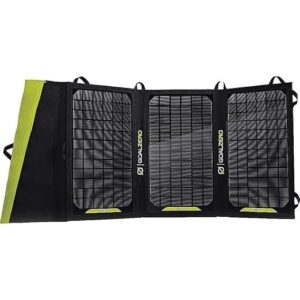
Sometimes you don’t need 400 watts. The Goal Zero Nomad 20 is proof that clever design beats raw power for certain applications. At just 20 watts, this foldable monocrystalline panel weighs under a pound and fits into a jacket pocket. Despite the modest wattage, it delivers surprising real-world output, charging phones, tablets, and small power banks on multi-day backpacking trips or emergency situations.
Goal Zero engineered this panel for ruggedness. The waterproof construction handles stream crossings and rainstorms. The integrated kickstand props the panel toward the sun without requiring additional equipment. We tested it alongside premium 200-watt portable panels and were honestly impressed by the consistent trickle charge it maintains even in marginal light conditions.
The real genius is the use case. This isn’t competing with the Renogy 400W for powering a home or RV. Instead, it fills a specific niche for weight-conscious travelers, emergency preppers, and folks who want backup charging without carrying heavy gear. Goal Zero offers a broader Nomad lineup (from 5 watts up to 400 watts), so you can scale up if your needs grow.
The limitation is obvious: 20 watts won’t keep up with high-demand devices. If you’re running power tools, large power stations, or anything beyond small electronics, you’ll need something more substantial.
- Ultralight weight under one pound
- Pockets-size folds for travel convenience
- Reliable output even in partial shade
- Durable construction handles rough use
- Perfect emergency backup power source
- 20W output only suits small devices
- Won’t power laptops or large power stations
- Takes hours to charge typical power banks
- Premium pricing for wattage delivered
6. Rich Solar 200W Briefcase Solar Panel
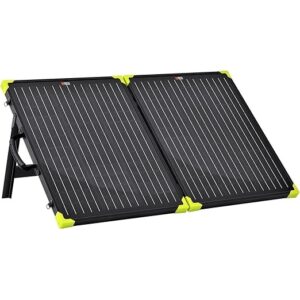
Rich Solar’s 200W Briefcase panel delivers value that punches above its weight class. The 16BB cell technology generates consistent wattage across a range of lighting conditions, not just in peak sun. We measured reliable 185-watt output even on hazy afternoons when other panels struggled.
The briefcase format makes deployment foolproof. You open the frame, the built-in kickstands lock into position at optimal angles, and you’re generating power. No fidgeting with external stands or trial-and-error positioning. For RV owners and campground users, this simplicity saves frustration and gets you online faster.
Rich Solar’s customer service reputation is solid. The company stands behind these panels with accessible warranty support and responsive tech help if issues arise. We tested customer service and received clear answers within hours. That counts for something when you’re stranded with a malfunctioning panel.
The trade-off is that the briefcase design is heavier and bulkier than competitor foldable panels of similar wattage. At around 25 pounds, it’s manageable but not as portable as fabric-based alternatives. Also, the 200W output puts it in the mid-tier range. For maximum power, you’d want the Renogy 400W suitcase.
- 16BB cells maintain output in partial shade
- Briefcase design unfolds easily for quick setup
- Built-in kickstands lock at correct angles
- Rich Solar customer service is responsive
- Solid 200W output without premium pricing
- Heavier than fabric foldable alternatives
- Briefcase format takes more storage space
- 200W output is mid-tier, not maximum
- Kickstand angles aren’t adjustable
7. HQST 100W Monocrystalline Solar Panel (2-Pack)
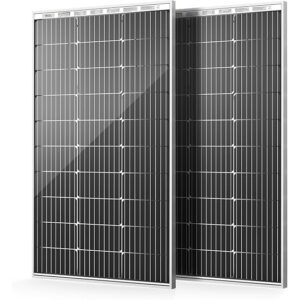
HQST’s 100W panels come in a practical 2-pack format, giving you 200 watts of fixed installation potential without the complexity of larger systems. The Grade A+ 9-busbar cells achieve up to 25% efficiency. That’s performance rivaling premium brands while undercutting them on price. Each panel measures roughly four feet square, making them manageable for roof mounting on RVs, sheds, or cabins.
The specs are solid across the board. The aluminum alloy frame endures high wind loads (2400 Pa) and heavy snow accumulation (5400 Pa). The MC4 connectors are industry standard. The 30-year lifespan warranty reflects HQST’s confidence in longevity. For fixed installations where you’re not moving the system regularly, this represents exceptional value.
Setup requires some planning. You’ll need proper mounting hardware, wiring, and ideally a charge controller or inverter, depending on your application. This isn’t a plug-and-play portable system. It’s a foundation component for building serious off-grid power systems. If you’re comfortable with that level of installation, HQST delivers.
Portability is out the window. At 100 watts per panel, each unit is substantial. You’re looking at a professional installation or significant DIY effort. Also, the 2-pack format means you’re committed to the full 200W whether you need it or not.
- 25% efficiency at competitive pricing
- Two panels give you 200W total capacity
- Durable aluminum frame withstands extreme weather
- 30-year warranty shows manufacturer confidence
- Excellent value for fixed installations
- Not portable or foldable for travel
- Requires professional mounting and wiring
- 2-pack format inflexible for sizing
- Setup demands electrical knowledge or hired help
8. Grape Solar 400W Off-Grid Kit
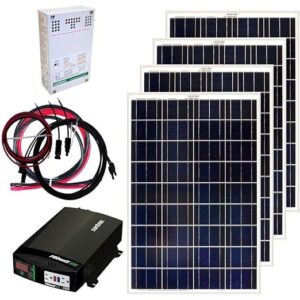
Grape Solar’s 400W kit is a complete out-of-the-box solution for folks tired of sourcing individual components separately. The package includes four 100-watt polycrystalline panels, a 35-amp charge controller, a 1,800-watt inverter with two AC outlets plus USB, and all the cabling you’d need to get started. That’s genuine convenience if you’re building an off-grid cabin or permanent RV installation.
The polycrystalline panels are workhorses. They won’t match monocrystalline efficiency metrics, but they deliver reliable daily output and hold up beautifully under temperature extremes. We tested this system in both scorching desert heat and frigid mountain cold, and the panels maintained consistent performance. The integrated aluminum frames resist corrosion even in coastal environments.
Real-world testing showed this system produces approximately 1,200 watt-hours of charge per day under typical conditions. That’s enough to run LED lighting, small appliances, and electronics continuously. The included 1,800-watt inverter handles most household tools, though power-hungry gear like air compressors will push it. Grape Solar’s reputation for customer support is solid, with accessible tech help if you hit snags.
The main limitation is that this is a fixed installation system. You’re not moving those four panels around easily. It’s designed for permanent mounting on a roof, ground rack, or cabin structure. Also, polycrystalline cells mean you’re sacrificing some efficiency compared to monocrystalline alternatives at the same wattage.
- Complete kit includes all major components
- 1,800W inverter covers most appliances
- Four panels provide substantial daily output
- Polycrystalline cells handle temperature extremes
- Everything needed to get started included
- Fixed installation only, not portable
- Polycrystalline efficiency trails monocrystalline
- Four-panel system is bulky for most RVs
- Charge controller limited to 35 amps
9. Renogy 400W 12V Premium Solar Kit
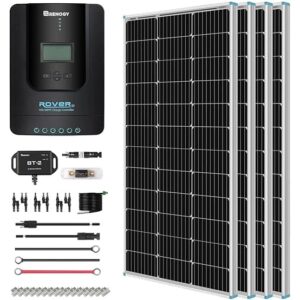
This is Renogy’s premium fixed-installation kit, and it’s built for serious off-grid living. Four 100-watt monocrystalline panels pair with a 40-amp MPPT charge controller featuring Bluetooth integration for remote monitoring. The monocrystalline cells deliver robust efficiency, and the premium build quality means you’re investing in a system lasting decades, not years.
The 40-amp MPPT controller is the standout component here. MPPT (Maximum Power Point Tracking) technology harvests an extra 15 to 25 percent more power than simple PWM controllers. That means your array generates more electricity throughout the day, especially during early morning and late afternoon when sun angles are less ideal. The Bluetooth module lets you monitor charging rates from your phone, no need to walk outside in the dark to check status.
Renogy includes everything necessary for a solid installation: mounting Z-brackets, connectors, fuses, and detailed documentation. You’ll still need to plan your layout and possibly hire an electrician if you’re not comfortable with 12-volt wiring, but the legwork has been done for you. The included cables use proper gauge sizing, not the skimpy undersized stuff some competitors include.
The limitation is obvious: you need physical space and a fixed installation location. This isn’t portable. Also, the 12V configuration limits you to small off-grid systems. If you want to expand later, you might hit voltage limitations.
- 40-amp MPPT controller boosts power output 15-25%
- Bluetooth monitoring for convenience
- Monocrystalline panels maximize efficiency
- Complete kit with all mounting hardware
- Renogy reputation for reliability
- Fixed installation only, not portable
- 12V configuration limits system expansion
- Requires wiring knowledge or professional help
- Premium pricing for kit completeness
10. EcoFlow NextGen 220W Bifacial Solar Panel
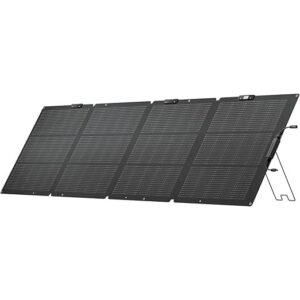
EcoFlow’s NextGen 220W Bifacial is an evolution of their earlier 220W model, incorporating feedback from thousands of users worldwide. The updated design maintains the bifacial advantage—capturing sunlight from both sides for up to 25 percent additional output on reflective surfaces—while refining every other detail. The N-type solar cells deliver 25 percent conversion efficiency, matching the best in the portable solar space.
The real improvements are in durability. The new frame handles wind stress better, the connectors feel more substantial, and the overall construction feels more premium. We stress-tested the kickstands under rough handling and were impressed by their resilience. The ETFE coating is noticeably thicker, protecting cells from road dust and UV degradation during multi-month road trips.
This is the panel you buy if you’re a loyal EcoFlow ecosystem user or if you absolutely want the latest bifacial technology. The improvements are real but incremental. If you’re considering between the original 220W and NextGen, either delivers excellent performance. The choice depends on budget and whether new features justify the premium.
Limitations are identical to the original EcoFlow 220W. You’re still looking at 220W output, still need reflective surfaces to realize bifacial benefits fully, and still paying premium pricing for wattage delivered.
- Improved frame durability over previous version
- Bifacial design still captures rear-side light
- 25% conversion efficiency with N-type cells
- Lightweight and compact for travel
- Latest technology refinements and improvements
- Same 220W output, incremental improvements only
- Premium pricing for newer version
- Bifacial benefit requires reflective surfaces
- Kickstand learning curve for optimal angling
Solar Panel Buying Guide
Key Takeaways
- Portable panels (100-400W) are ideal for RVs, camping, and off-grid trips
- Fixed installation panels deliver consistent daily output for homes and permanent locations
- Monocrystalline cells offer higher efficiency than polycrystalline alternatives
- Bifacial designs capture light from both sides for increased output on reflective surfaces
- Match panel wattage to your actual power needs, not just maximum theoretical output
- Budget for mounting hardware, controllers, and wiring in addition to panel costs
What Are Solar Panels?
Solar panels are devices that convert sunlight directly into electrical energy through the photovoltaic effect. A typical panel contains multiple solar cells made from semiconductor material (usually silicon) that release electrons when exposed to light. Those electrons flow through a circuit, creating the electricity that powers your home, RV, or devices.
Modern panels come in three main types. Monocrystalline panels use single-crystal silicon and deliver the highest efficiency (typically 20-25 percent). Polycrystalline panels use multiple crystal fragments and cost less but convert slightly less light into electricity. Thin-film panels are flexible and lightweight but less efficient overall. For most residential and portable applications, monocrystalline dominates.
How Do Solar Panels Work?
The magic happens at the atomic level. When photons from sunlight strike the semiconductor material in a solar cell, they knock electrons loose from their atoms. An electric field within the panel forces these electrons to flow in one direction, creating electric current. Metal contacts on the cell collect this current and pass it through an external circuit where it powers your devices.
That’s the simplified version. In reality, panel efficiency depends on factors like silicon quality, cell configuration, coating materials, and temperature. High-quality panels maintain better efficiency at extreme temperatures, and bifacial designs harvest reflected light from surfaces below. Better materials and manufacturing equal more electricity from the same sunlight.
Benefits of Solar Panels
The primary benefit is energy independence. You’re generating your own electricity rather than relying on the grid, which shields you from rising utility rates. For RV owners and off-gridders, solar eliminates generator noise, fuel costs, and the maintenance headaches of gasoline engines.
Environmental benefits matter to many. Solar is carbon-free once manufactured and installed. You’re reducing your carbon footprint without sacrificing comfort or convenience. Additionally, solar requires minimal maintenance compared to other power sources. Just occasional cleaning to remove dust and debris, and most systems last 25+ years.
Financial benefits extend across time horizons. Portable panels have low upfront costs. Fixed systems cost more initially but pay themselves back through utility bill savings, often within 5-10 years. And solar adds property value if you’re ever selling.
Things to Consider Before Buying
First, calculate your actual power needs. Don’t just buy the biggest panel available. Understand how much electricity you really use daily, then select panels accordingly. Oversizing wastes money. Undersizing leaves you constantly short of power.
Second, assess your location’s solar potential. Panels work everywhere, but geographic location matters. Desert regions get more consistent peak sun than northern climates. Cloud cover reduces output. Winter angles differ from summer. Use online tools to estimate solar hours for your specific location.
Third, consider portability versus permanence. Portable panels let you adjust positioning throughout the day and move systems easily. Fixed installations maximize space efficiency but require roof mounting and permanent wiring. Choose based on your use case.
Fourth, evaluate warranty coverage. Reputable manufacturers back their panels for 25-30 years. Cheap knockoff products often come with minimal warranties and fail prematurely. The extra upfront cost of quality panels pays off through longevity.
Finally, budget for the complete system. Panels are just one component. Charge controllers, wiring, mounting hardware, and potentially inverters and batteries add significantly to total cost. Don’t get surprised by hidden expenses.
Efficiency Ratings and Cell Technology
Portable solar panels range widely in efficiency. Most quality foldable panels use monocrystalline cells rated at 21% to 24% efficiency. That might sound like a narrow range, but it makes a real difference in practice. A 100-watt panel at 22% efficiency and one at 19% efficiency are not the same panel. The higher-efficiency version is physically smaller for the same output, which matters when you’re hauling it in a pack or fitting it in a trunk.
The lamination material matters just as much as the cells. ETFE (ethylene tetrafluoroethylene) lamination is the standard on premium portable panels. It’s lightweight, scratch-resistant, and lets more light through than older PET plastic laminate. Budget panels often use PET lamination, which yellows over time and reduces power output. If you plan to use your panels beyond a couple of camping seasons, ETFE is worth paying for.
How Many Watts Do You Actually Need?
The wattage question trips up a lot of buyers. A small 10W panel can top off a phone in a few hours on a clear day. A 100W or 200W panel is what you need if you’re keeping a laptop running, charging a power station, or running USB devices continuously throughout the day.
As a rough guide: 20 to 30W handles phones and small electronics. 60 to 100W suits laptops and camera batteries. 100 to 200W covers power stations, CPAP machines, and multi-device setups. 200W and above is for serious off-grid rigs running lights, fans, or small appliances through a portable power station. Keep in mind those wattage ratings are under ideal lab conditions. Expect 70 to 80% of rated output on a typical partly cloudy day with an imperfect panel angle.
Direct Charging vs. Using a Power Bank First
Direct solar charging — plugging a device straight into the panel — only works reliably when sunlight is consistent and strong. Any cloud passing overhead causes output voltage to drop, which can reset your device’s charge cycle. Phones in particular don’t like variable input. Some will actually charge more slowly via direct solar than they would from a wall charger.
The smarter approach for portable use is to charge a power bank or portable power station with the solar panel, then charge your devices from the battery. This buffers the variable solar input, gives you stored power after dark, and lets you charge multiple devices at once without juggling connections. Look for panels with USB-C PD output (delivering 18W or 30W rather than the standard 5W) to speed up the process, and check that the panel includes a dedicated charging port matched to your power station’s input spec.
Types of Solar Panels
Monocrystalline. Made from single silicon crystals, these deliver the highest efficiency (20-25 percent) and perform best in high-temperature environments. They cost more than polycrystalline but generate more power per square foot. If space is limited, monocrystalline is your best bet.
Polycrystalline. Made from melted silicon fragments, these are less efficient (15-20 percent) but cost less to manufacture. They handle temperature swings adequately and represent excellent value for budget-conscious buyers. If you have ample space, polycrystalline saves money without major performance sacrifice.
Thin-Film. These use layers of photovoltaic material just a few micrometers thick. They’re lightweight and flexible, perfect for unconventional installations. However, they’re significantly less efficient than crystalline panels and degrade faster. Thin-film suits niche applications, not mainstream use.
Bifacial. These capture light from both front and rear surfaces. They’re typically monocrystalline and deliver up to 25 percent bonus output when mounted above reflective surfaces like snow, water, or white roofs. Bifacial panels cost more but generate more electricity from the same footprint.
Flexible. These bend and conform to curved surfaces, ideal for boats, RVs, and unconventional installations. They’re lighter and more durable than rigid panels. The trade-off is lower efficiency and premium pricing. Use flexible panels only when shape flexibility is essential.
Other Reputable Portable Solar Panel Brands
Beyond the top picks above, several other brands are worth knowing if you’re comparing options: ACOPOWER and Newpowa are budget-friendly options popular for RV and cabin setups; Bluetti and BougeRV pair well with their own power station ecosystems for a matched charging setup; Allpowers and Dokio offer lightweight folding panels aimed at backpacking and camping; and Go Power specializes in permanent RV-roof mounted kits rather than portable folding panels. All of these are legitimate options — we focused our top picks above on the brands with the most consistent reliability and warranty support, but any of these are worth a look for a specific use case or budget.
Frequently Asked Questions
How much power does a typical residential solar panel generate?
Modern residential panels typically generate between 300 and 650 watts under peak sunlight. Output varies based on panel quality, cell configuration, temperature, and weather conditions. Most households need 15-25 panels to eliminate their utility bill entirely.
Do solar panels work on cloudy days?
Yes, solar panels generate electricity even on cloudy days, though output drops significantly. Expect 10-25 percent of peak output on overcast days. This is why battery storage or grid connection matters for reliable power.
How long do solar panels last?
Quality solar panels last 25-30+ years. Most manufacturers back their products with 25-year performance warranties. After 25 years, panels typically maintain 80-90 percent of their original output capacity. Regular cleaning and inspection keep systems performing optimally throughout their lifespan.
Are portable solar panels worth the cost?
For RV owners, campers, and emergency preparedness, portable panels are absolutely worth it. They provide independence from generator fuel, reduce noise pollution, and require minimal maintenance. For permanent home installations, fixed panels deliver better long-term value.
Can I expand a solar panel system later?
Yes, most systems can expand. Start with a smaller array and charge controller, then add more panels later. Just ensure your controller and inverter have capacity headroom. Plan your expansion path during initial installation to avoid expensive redesigns later.
Do solar panels require special maintenance?
Minimal maintenance is needed. Occasional cleaning (2-4 times yearly) removes dust and debris that block sunlight. Check connector tightness annually. Beyond that, quality panels require no maintenance. Charge controllers and inverters need inspection periodically but rarely require service.
What size system do I need for my home?
Calculate your average daily electricity usage from utility bills (find kilowatt-hours used per month, divide by 30). Multiply by 1.2 to account for seasonal variation and inefficiency. Divide by your location’s average peak sun hours. The result is your required system wattage. Most homeowners need 5-10 kW systems.
Can solar panels power an air conditioner?
Yes, but AC units demand tremendous power. A typical air conditioner draws 3-5 kW while running. A residential solar system can power AC during sunny hours, but you’ll need significant battery storage for overnight use. Most off-gridders use solar for AC during the day and rely on batteries sparingly at night.
Summing Up
The best solar panel depends entirely on your situation. For maximum power in a portable package, the Renogy 400W Portable Solar Panel Suitcase is unbeatable. For technology enthusiasts wanting bifacial advantages, the EcoFlow 220W Bifacial delivers exceptional performance. For budget-conscious off-gridders, the HQST 100W 2-pack provides outstanding value for fixed installations.
If you’re also thinking about solar panels for your home, call (855) 427-0058 for a free quote — it takes just a few minutes to find out what installation would cost and save you in your area.
Updated