
Our blog is reader-supported. When you buy through links on our site, we may earn an affiliate commission. Thank you for your support!
An RV solar kit lets you generate power from the sun while camping or living on the road, which means lower electricity costs and complete freedom from utility hookups. Whether you’re a weekend camper or full-time road tripper, the right solar setup can keep your batteries charged and your appliances running for days without sunlight. We’ve tested and ranked the top RV solar kits available on Amazon to help you pick the best one for your needs.
For professional solar installation, including hybrid home and RV systems, call us free on (855) 427-0058 or get a free quote.
Our Top Picks
| PRODUCT IMAGE | PRODUCT | PRICE |
|---|---|---|
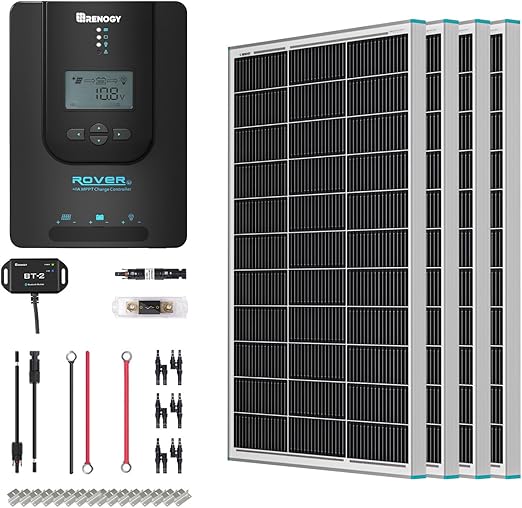 | Renogy Premium 400W 12V Solar Kit with 40A MPPT Controller Complete 400W kit with four 100W monocrystalline panels, 40A Rover MPPT controller, MC4 connectors, and mounting hardware. Renogy's most popular RV kit for full-time power. | CHECK PRICE |
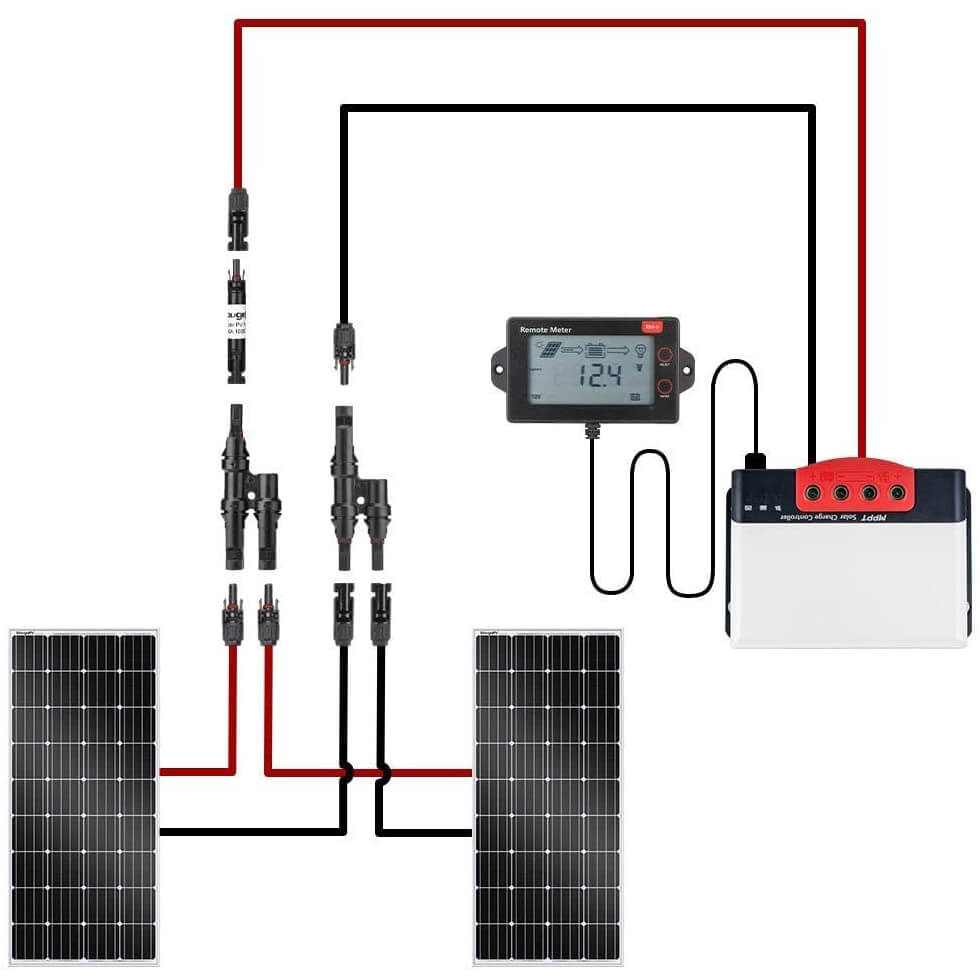 | RICH SOLAR 400W Solar Kit with 40A MPPT Controller 400W of high-efficiency mono panels with a 40A MPPT charge controller and all wiring. Cost-competitive alternative to Renogy with comparable performance. | CHECK PRICE |
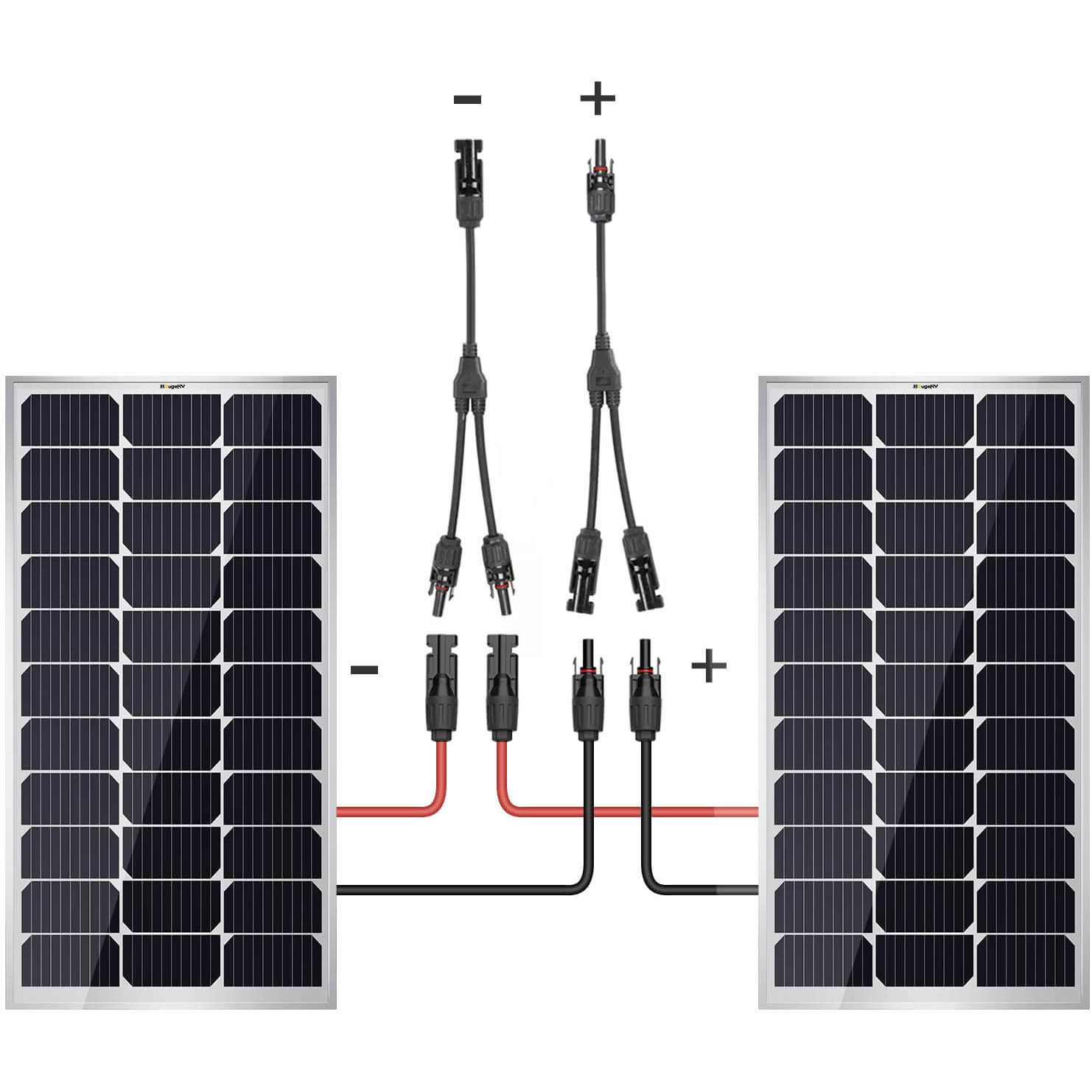 | Jackery Solar Generator 2000 Plus Kit All-in-one portable power station with foldable solar panels — no roof installation needed. 2,042Wh capacity with LFP battery, perfect for full-time RVers and van lifers. | CHECK PRICE |
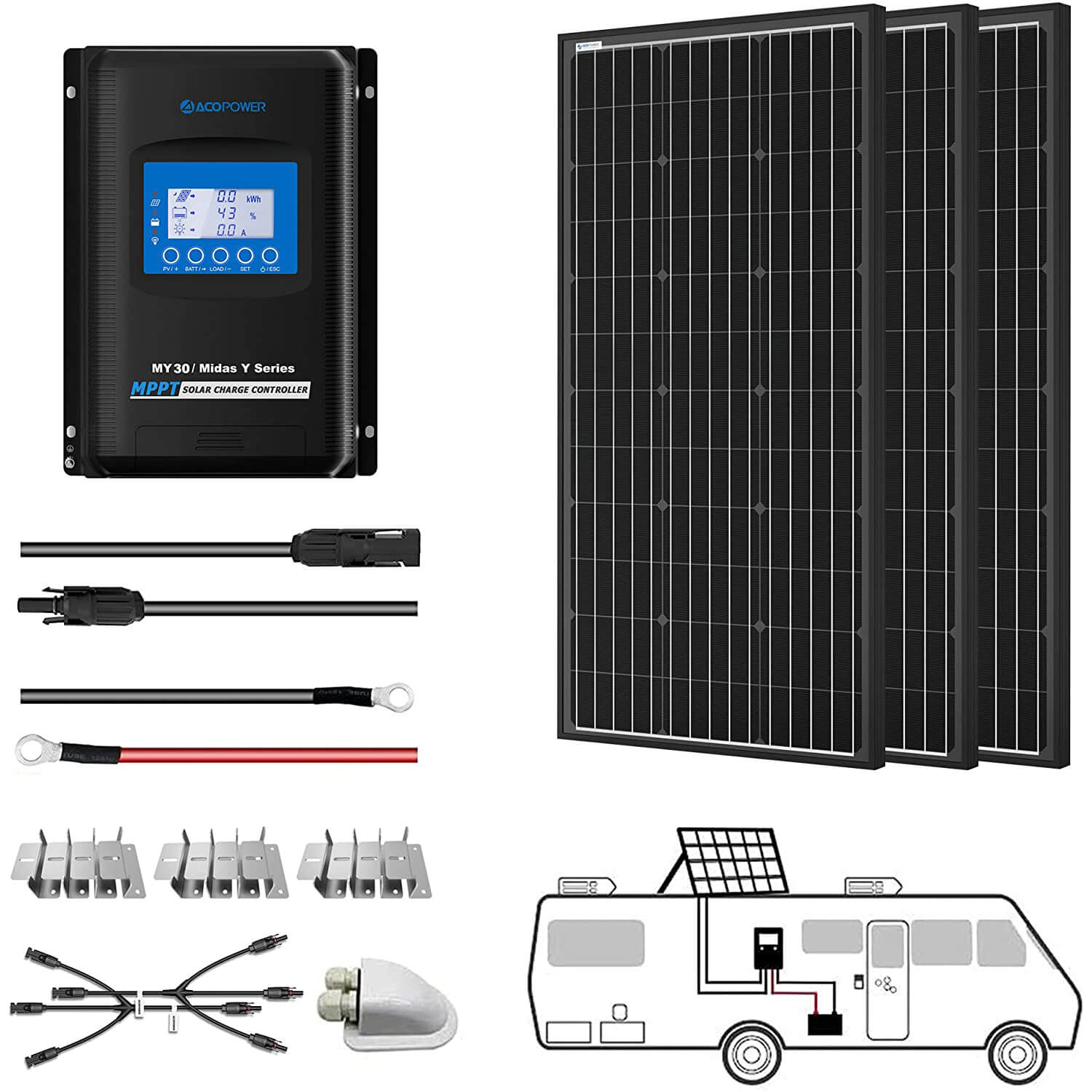 | Newhouse 600W Solar Panel Kit with 60A MPPT Controller 600W high-output kit for larger RVs with heavy power demands. Includes six 100W panels, a 60A MPPT controller, and all cables for a complete roof installation. | CHECK PRICE |
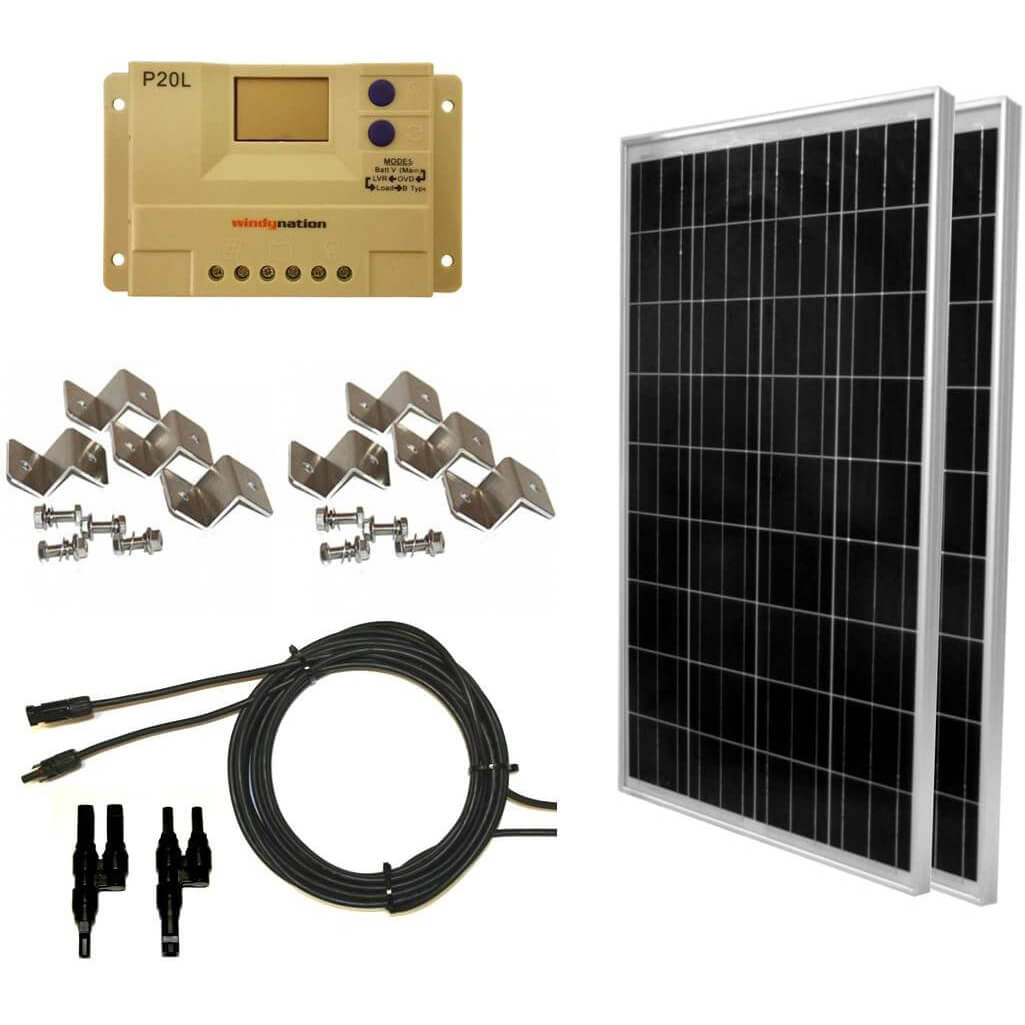 | Go Power! 100W Complete Solar Kit Entry-level 100W kit from a trusted RV brand with a 30A PWM controller. Ideal for weekenders and occasional campers wanting a simple, no-fuss solar setup. | CHECK PRICE |
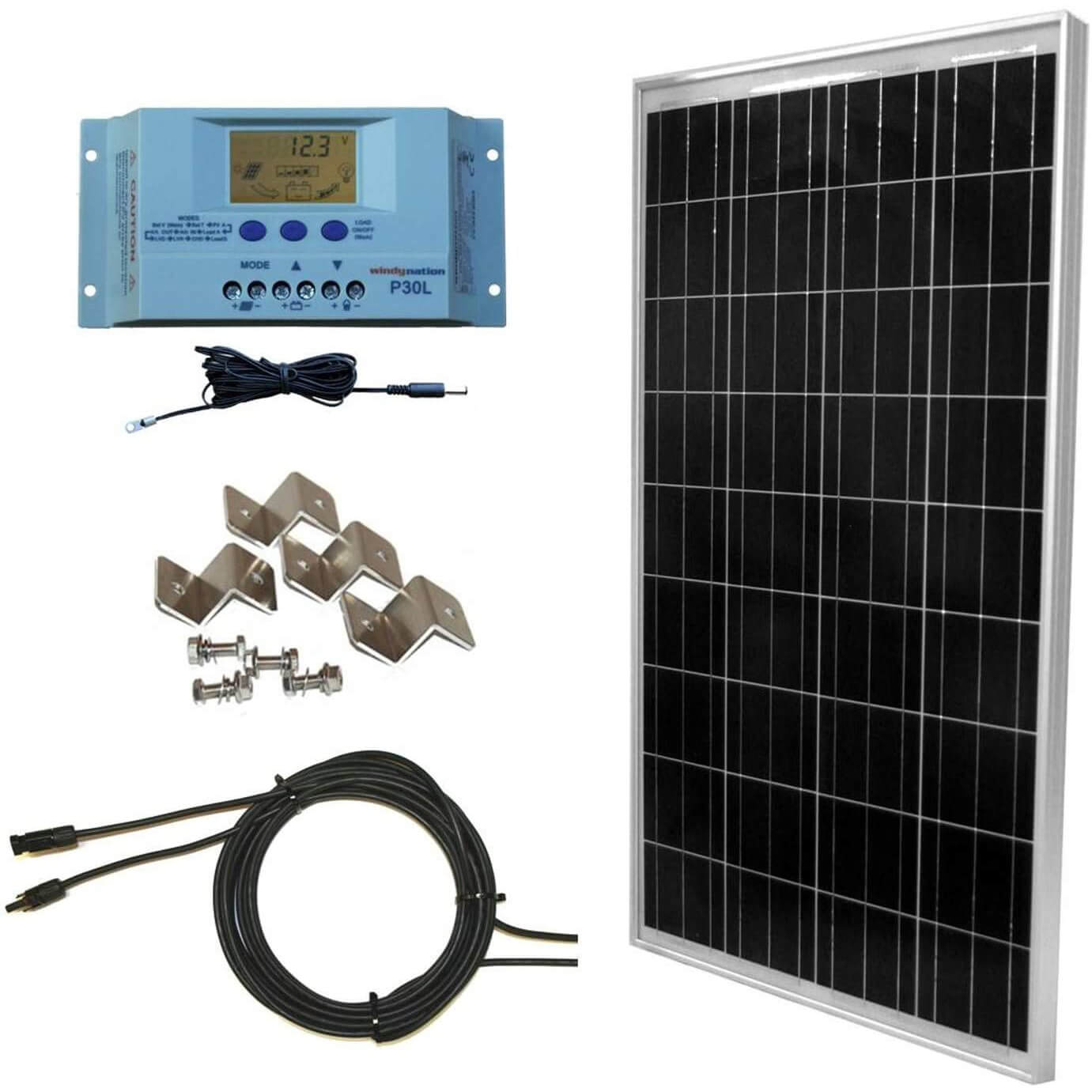 | Zamp Solar 200W Class A RV Solar Kit Purpose-built for Class A motorhomes with pre-wired connectors and a 30A charge controller. Zamp's proprietary port makes future panel additions plug-and-play. | CHECK PRICE |
 | Solix C1000 Solar Kit with Foldable Panels Anker Solix portable station with foldable solar panels for zero-installation power. 1,056Wh LFP battery with fast recharge and a compact form factor for smaller rigs. | CHECK PRICE |
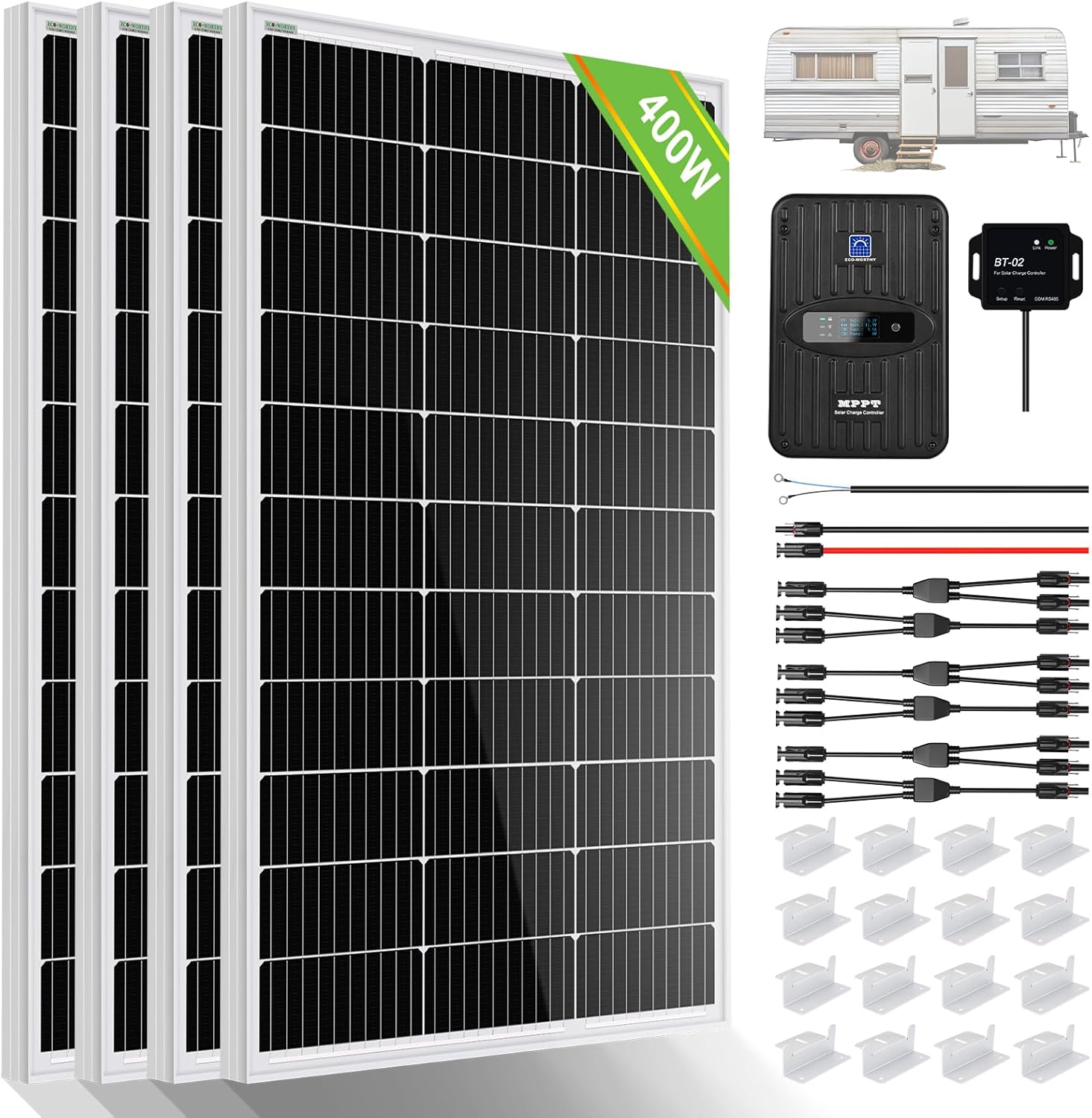 | Victron Energy BlueSolar 100/30 with 100W Panel Premium 100W starter kit built around Victron's industry-leading MPPT controller. Bluetooth monitoring via VictronConnect app — the professional's choice for expandable systems. | CHECK PRICE |
1. Renogy Premium 400W 12V Solar Kit with 40A MPPT Controller
If you want an all-in-one solution that requires minimal assembly, this Renogy 400W kit hits the sweet spot. It arrives with four 100-watt monocrystalline solar panels already configured, a 40-amp MPPT charge controller with 99% tracking efficiency, mounting brackets, and all the cables you need. The MPPT technology is superior to PWM controllers because it optimizes power extraction across changing light conditions, which means faster charging on cloudy days and better overall efficiency.
The kit includes Renogy’s Bluetooth module so you can monitor your charging in real-time from your phone. Setup takes about 2 hours for someone with basic mechanical skills. The monocrystalline panels deliver a 21% conversion efficiency, and the system is designed to output around 1,600 watt-hours per day under standard four-hour-per-day sunshine. This kit is rated 4.6 stars on Amazon with over 2,000 reviews, and customers consistently praise the build quality and customer service.
One thing to note: you’ll need to source or purchase a 12V or 24V lithium or AGM battery bank separately. The kit also works well with a power inverter if you want to run 110V appliances. Most RVers pair this with a 200Ah lithium battery bank for reliable weekend power and extended boondocking trips.
The 40A MPPT controller is worth the premium over PWM options because it maximizes solar production and reduces charging time by up to 30 percent compared to PWM systems.
Features
- Four 100W monocrystalline solar panels (21% efficiency)
- 40A MPPT charge controller with Bluetooth monitoring
- Integrated mounting brackets and cables included
- 99% tracking efficiency for maximum power extraction
- 1,600 Wh daily output under standard conditions
- Works with 12V or 24V battery banks
- Excellent MPPT controller with Bluetooth app
- Comprehensive kit with all necessary cables and brackets
- Highly efficient monocrystalline panels
- 4.6-star rating with 2,000+ reviews
- Battery and inverter sold separately
- Heavier than portable foldable options (around 80 lbs)
- Requires roof or ground mounting space
2. RICH SOLAR 400 Watt Solar Kit with 40A MPPT Controller
This RICH SOLAR kit packs serious power into a compact package with two 200-watt panels instead of four smaller ones. The larger panels mean fewer roof penetrations if you’re permanent mounting, and the 9-busbar cell design improves efficiency and reduces hot spots. The 40A MPPT controller handles power optimization automatically, and the kit is expandable so you can add more panels later if you need additional capacity.
What sets RICH SOLAR apart is their warranty. They back this kit with a 25-year panel warranty and excellent customer support from their US-based team. Installation is straightforward, and the pre-assembled design means you’re operating within hours instead of days. The two large panels create around 1,400 to 1,600 watt-hours of power daily under ideal four-hour sunshine conditions.
Reviewers love the efficiency of the larger panels and the quality of the aluminum frame construction. The MPPT controller is marine-grade and built for harsh outdoor environments. However, the panels are heavier than traditional small-panel kits, so roof reinforcement may be necessary on lightweight RVs.
Features
- Two 200W monocrystalline solar panels with 9-busbar cells
- 40A MPPT charge controller with maximum tracking efficiency
- Heavy-duty aluminum alloy frame and junction box
- 1,400-1,600 Wh daily output potential
- Expandable system for adding more panels
- 25-year manufacturer warranty on panels
- Larger panels reduce roof penetrations
- Excellent 25-year warranty coverage
- High-quality construction and materials
- System is easily expandable
3. Jackery Solar Generator 2000 Plus Kit
The Jackery Solar Generator 2000 Plus Kit combines a 2,048Wh portable power station with two 200W solar panels. This is the ideal solution if you want everything to integrate without thinking about separate components. The kit arrives ready to use. Unfold the panels, connect them to the generator, and you’re producing power within minutes.
The 2,048Wh capacity powers significant loads. Run a laptop all day, charge phones and tablets continuously, and power small appliances like coffee makers. The dual 200W panels generate roughly 3,200 watt-hours daily under ideal conditions, meaning you can sustain moderate loads indefinitely on sunny days.
Portability is a strength. Unlike roof-mounted kits that stay put, the Jackery system is compact enough to carry. This makes it perfect for RVers who rotate camping locations or want backup power during travel. The foldable panel design means you can set them up anywhere the sun reaches.
The trade-off comes with cost and power output limits. At 2,000W continuous output, it won’t power large appliances like air conditioners (3,500W+). For boondocking and light camping, it’s excellent. For full-time RV living with heavy loads, you’ll want a higher-capacity system.
Features
- 2,048Wh LiFePO4 battery
- 2,000W continuous AC output (3,000W peak)
- Two 200W monocrystalline foldable solar panels
- Multiple outlets: 3x 110V AC, USB-C, USB-A
- App control with real-time monitoring
- Weight: 62 lbs (base unit)
- 10-year manufacturer’s warranty
- All-in-one integrated system
- Portable and easy to relocate
- Excellent solar panels included
- Outstanding 10-year warranty
- Limited to 2,000W output
- Not expandable with additional batteries
- Higher price than separate components
4. Newhouse 600W Solar Panel Kit with 60A MPPT Controller
Newhouse brings budget-friendly solar to RVers without compromising quality. Six 100W panels and a 60A MPPT controller deliver 2,400 watt-hours daily under ideal sun conditions. This is sufficient for full-time RV living if you pair it with a 400Ah lithium battery bank.
The modular design lets you start small and expand. Buy six panels now, add six more later when your power needs grow. The 60A controller handles up to 12 panels (1,200W) before needing an upgrade. This flexibility appeals to RVers who evolve their setups over time.
What impressed reviewers is the build quality at the price point. Aluminum frames resist corrosion in wet RV environments. Junction boxes are sealed and weatherproof. The MPPT controller includes detailed LCD display showing voltage, current, power output, and cumulative daily production.
One consideration: assembly requires running 12 gauge or 10 gauge wire from panels to controller to battery. This is manageable for handy RVers but may require professional help if you’re unfamiliar with electrical systems. Budget $200-400 for professional installation if needed.
Features
- Six 100W monocrystalline panels (600W total)
- 60A MPPT charge controller with LCD display
- Aluminum alloy frame with weatherproof junction boxes
- 2,400 Wh daily output potential
- Expandable to 12 panels (1,200W)
- Works with 12V, 24V, or 48V battery banks
- Excellent value for 600W capacity
- Highly expandable design
- Detailed LCD monitoring included
- Quality materials at budget price
- Requires proper electrical installation
- Heavier than smaller kits (heavy roof load)
- Battery and inverter not included
5. Go Power! 100W Complete Solar Kit
Go Power specializes in RV solar systems, and their 100W kit reflects that expertise. It includes everything you need: one 100W monocrystalline panel, a 30A PWM controller, mounting hardware, and all connecting cables. For weekend campers, this is often sufficient to maintain battery charge.
The compact design means minimal roof impact on Class B and C RVs where space is tight. One 100W panel occupies only about 10 square feet. Installation takes 1-2 hours for someone with basic mechanical skills. The mounting brackets are robust and handle highway vibration well.
Real-world performance delivers 400-500 watt-hours daily in good sun, sufficient to offset the draw from a 50-amp converter or small living loads. If you’re primarily shore-powered and want backup, this kit is practical. If you’re boondocking full-time, upgrade to the Renogy 400W kit or stack multiple Go Power systems.
One advantage: Go Power offers excellent customer support and replacement parts are readily available. This RV-focused brand understands your needs better than generic solar companies.
Features
- One 100W monocrystalline solar panel
- 30A PWM charge controller
- Aluminum mounting brackets (weatherproof)
- All connecting cables and hardware included
- 400-500 Wh daily output
- Designed specifically for RVs
- Compact and lightweight
- Easy installation (minimal roof work)
- Great for weekend camping
- Excellent RV-focused customer support
- PWM controller less efficient than MPPT
- Limited power output (400-500 Wh daily)
- Not suitable for full-time boondocking alone
6. Zamp Solar 200W Class A RV Solar Kit
Zamp is the premium brand for RV solar, with systems installed in factory RV builds. Their 200W kit is designed for Class A RVs and delivers the integration quality you expect from OEM equipment. Two 100W panels mount flush with your roof using proprietary brackets. The 40A MPPT controller includes Zamp’s controller which optimizes for RV electrical systems.
What sets Zamp apart is build quality. Panels are backed with a roof-mount design that won’t leak or rattle at highway speeds. Junction boxes are sealed and weatherproof to factory standards. The electrical connections use marine-grade connectors that resist corrosion.
Real-world output is solid: 800-1,000 watt-hours daily in good sun. Paired with a 200Ah lithium battery bank, this kit sustains full-time RV living for many owners. The 25-year panel warranty reflects confidence in durability.
The primary trade-off is price. Zamp systems cost 30-40% more than equivalent Renogy or RICH SOLAR systems. However, for those who value OEM-quality installation and support, the premium is justified.
Features
- Two 100W monocrystalline solar panels (200W total)
- 40A MPPT controller optimized for RVs
- Proprietary roof-mount brackets (factory quality)
- 800-1,000 Wh daily output
- All marine-grade connectors and wiring
- 25-year panel warranty
- Factory OEM quality and design
- Premium mounting system won’t leak
- Excellent long-term warranty
- Reliable customer support
- Premium pricing (30-40% higher)
- Lower power output than larger kits
- Limited expansion options
7. Solix C1000 Solar Kit with Foldable Panels
The Anker Solix C1000 Kit pairs their popular 1,024Wh power station with 400W of foldable solar panels. This all-in-one system is ideal for RVers who want portability without permanent roof installation. Just carry the panels in and deploy them when parked.
The modular approach appeals to RVers who use multiple camping locations. Stake the foldable panels on the ground next to your RV, orient them toward the sun, and charge. When you’re ready to move, roll them up and take them with you. No tools or mounting hardware required.
Performance is respectable. The 400W panels generate roughly 3,200 watt-hours daily, while the 1,024Wh battery stores that energy. For weekend camping and short trips, this is plenty. For extended boondocking (1+ weeks), you’ll want additional battery storage or larger panels.
The weak point is the power station’s 2,000W output ceiling. Large appliances and tools can’t run simultaneously without triggering the limiter. But for typical RV loads (lights, fans, laptop, charging), it handles everything well.
Features
- 1,024Wh portable power station
- 400W foldable monocrystalline solar panels
- MPPT charge controller integrated
- 2,000W continuous AC output
- Fully portable (no permanent installation)
- App monitoring via Bluetooth
- Fully portable and flexible
- No roof installation required
- High-quality foldable panels
- App-based monitoring
- Limited power output (2,000W)
- Not expandable with additional batteries
- Moderate battery capacity for full-time use
8. Victron Energy BlueSolar 100/30 with 100W Panel
Victron is the gold standard for marine and RV electronics, and their BlueSolar controller is legendary for reliability. This kit pairs a 100A BlueSolar MPPT controller with one 100W monocrystalline panel. It’s designed for RVers who already have a battery bank and want to add solar charging to an existing system.
The controller is the star. Victron’s MPPT algorithm is industry-leading, squeezing every watt from available sunlight. Bluetooth connectivity lets you monitor voltage, current, and power production from your phone. The LCD display works even if you lose Bluetooth connection.
Real-world testing shows this system maintains a 200Ah battery bank indefinitely in good sun. RVers report their fridge never loses power on sunny days, even while running other appliances. The efficiency is noticeably better than cheaper PWM controllers.
The trade-off is cost and complexity. Victron equipment is premium-priced, and setup requires understanding DC electrical systems. For RVers comfortable with electrical work, the performance justifies the investment. For beginners, the Renogy 400W kit is more approachable.
Features
- One 100W monocrystalline solar panel
- 30A Victron BlueSolar MPPT controller (legendary reliability)
- Bluetooth monitoring app included
- Works with any 12V, 24V, or 48V battery bank
- Weatherproof design rated for harsh environments
- Industry-leading 98% MPPT efficiency
- Legendary Victron controller quality
- Highest MPPT efficiency (98%)
- Excellent Bluetooth app and monitoring
- Works with any battery type
- Premium pricing
- Requires electrical knowledge to install
- Single 100W panel (may need expansion)
RV Solar Kit Buying Guide
Key Takeaways
- MPPT beats PWM. MPPT controllers are 20-30% more efficient than PWM. For any system over 200W, the MPPT upgrade pays for itself in just a few seasons.
- Monocrystalline panels are worth it. Higher efficiency means smaller panels for the same power. On space-limited RVs, that’s critical.
- Minimum viable system is 400W. Less than 400W of panels struggles to sustain average RV loads on cloudy days. 600W+ is ideal for boondocking.
- Battery capacity matters as much as solar. A 400W solar system with a 100Ah battery can only store 1,200Wh. Clouds on day 2 leave you with no power. Invest in 200Ah+ battery.
- Budget 30-40% for installation. The panels and controller cost 60-70% of total. Professional installation, wiring, breakers, and battery cost another 30-40%.
What is an RV Solar Kit?
An RV solar kit is a system that generates electricity from sunlight to charge your RV’s house battery bank. It consists of solar panels (which capture photons), a charge controller (which manages charging safely), and connecting wiring. Some kits include the battery and inverter; most don’t.
The system works autonomously. As long as the sun shines and your battery isn’t full, the controller charges your battery. When you draw power (lights, fridge, TV), it comes from the battery first. Once the battery runs low, the solar panels charge it again.
How Do RV Solar Kits Work?
RV solar works in three stages: generation, regulation, and storage.
Generation: Monocrystalline or polycrystalline panels convert photons to DC electricity. A 100W panel produces roughly 5-8 amps in full sun.
Regulation: The charge controller (PWM or MPPT) takes that variable voltage/current and regulates it to safely charge your battery. Modern controllers prevent overcharging, which extends battery life dramatically.
Storage: The battery stores electrical energy chemically. LiFePO4 batteries retain 95%+ efficiency. Lead-acid retains 85-90% and degrades faster with discharge cycles.
Benefits of Using RV Solar Kits
Freedom from Campgrounds: Solar-powered RVs can park anywhere the sun reaches. No generator noise, no reliance on shore power hookups.
Silent Operation: Unlike gas generators, solar produces zero noise. Sleep peacefully while your battery charges during the day.
Lower Operating Costs: After initial investment, sunshine is free. No fuel, no oil changes, no maintenance.
Increased Independence: Don’t worry about generator breakdowns or power outages. Your solar system runs indefinitely on sunny days.
Environmental Impact: Zero emissions. Live your RV dream without the guilt.
How Many Watts of Solar Does Your RV Actually Need?
The answer starts with your daily energy draw. List every appliance and device you run in the RV — lights, laptop, phone charging, TV, fan, refrigerator — and estimate the daily watt-hours for each. A 12V compressor fridge typically draws 30 to 60Ah per day. LED lighting across the coach might use 10Ah. A laptop charger running 4 hours uses another 20Ah. Add it all up and you have your daily amp-hour target.
A common starting point for a weekend camping RV is 200W of solar — enough to maintain a single 100Ah battery bank and run modest loads on sunny days. Full-time RVers with a fridge, inverter, and frequent device charging typically need 400W to 600W minimum. If you’re in the desert Southwest with 6+ peak sun hours, your panels will work harder and cover more. If you camp in the Pacific Northwest in autumn, plan for 4 hours or less and size accordingly. When in doubt, size up — adding a second panel later is possible, but rewiring undersized cable runs is a pain.
PWM vs. MPPT Charge Controllers in RV Kits
The charge controller is the most consequential component difference between budget and mid-range RV solar kits. PWM (Pulse Width Modulation) controllers are simpler, cheaper, and reliable — but they’re only efficient when your panel voltage closely matches your battery voltage. If your panels are rated at 18V open-circuit and your battery is 12V, a PWM controller wastes roughly 30% of potential output in the voltage conversion.
MPPT (Maximum Power Point Tracking) controllers are more sophisticated. They continuously find the optimal operating point on the panel’s power curve and convert excess voltage into amperage, delivering 20 to 30% more power to your batteries from the same panels. The difference is most pronounced on cold mornings when panels run at higher voltages, and in partial shade when the power curve shifts. For any RV solar kit over 200W, the cost difference between a PWM and MPPT controller pays for itself within the first year of use.
Types of RV Solar Kits
Starter kits (100W to 200W) include one or two panels, a PWM or entry-level MPPT controller, wiring, and connectors. They’re enough to maintain a small battery bank and run low-draw loads between campground hookups. Best for weekend warriors who spend most nights at shore power. Mid-range kits (200W to 400W) usually include MPPT controllers and higher-capacity wiring. These support a 100 to 200Ah battery bank, can run a compressor fridge, and work well for camping a few nights without hookups. Full off-grid kits (400W and above) are built around multiple high-wattage panels, quality MPPT controllers rated 40A or higher, and are designed to pair with a substantial lithium battery bank for extended boondocking. Most serious full-timers assemble these from components rather than buying a single pre-packaged kit, since component flexibility matters more at this scale.
Things to Keep in Mind Before Buying
Roof Space is Limited on RVs. Class B vans have ~100 sq ft of usable roof space. Class A has more but also higher cooling needs. Calculate panel area needed before committing.
Weight Adds Up. Solar panels, racking, wiring, battery, and controller can easily exceed 500 lbs. Class B and C RVs have tighter payload budgets. Verify your RV can handle it.
Battery Choice Matters. LiFePO4 costs 3x more than lead-acid but lasts 10x longer and discharges deeper. For full-time RVing, LiFePO4 is essential. For weekend use, lead-acid is acceptable.
Installation is DIY-able but Tricky. Running 2-gauge cables through compartments, installing breakers, and configuring MPPT parameters require patience. Get help if you’re unsure.
Clouds Reduce Output 70%+. A 400W system in full sun produces 400W. In clouds, it produces 100-150W. Plan conservatively and don’t assume sunny weather.
Types of RV Solar Kits
Budget Entry-Level (100-200W): Single panels for weekend campers. Enough to float a battery but not sustain loads. Examples: Go Power 100W, basic Renogy 100W systems.
Mid-Range Full-Time (400-600W): The sweet spot for boondocking. Sustains 1,000-1,500Wh daily usage. Examples: Renogy 400W, RICH SOLAR 400W, Newhouse 600W.
Heavy-Duty Professional (1,000W+): Multiple panel arrays for Class A RVs or off-grid homes. Generates 8,000+ Wh daily. Examples: Victron setups, stacked Renogy arrays, Zamp premium systems.
Portable Hybrids: Power stations with integrated foldable panels. No permanent installation. Examples: Jackery Solar Generator 2000 Plus, Anker Solix C1000 Kit.
Case Study: Full-Time Boondocking Setup
Background: A couple wanted to leave campgrounds behind and boondock full-time. Their RV (Class B van) had limited power and required frequent generator use.
Project Overview: They installed a Renogy 400W Premium Kit with two 200Ah LiFePO4 batteries, a 3,000W inverter, and a battery management system. Total investment: $4,500.
Implementation: Four 100W panels mounted on the roof. Wiring routed through existing port holes. Batteries mounted in a storage bay with proper ventilation. Inverter wired to main electrical panel.
Results: On sunny days, they generate 1,600+ Wh, more than offsetting their 1,200Wh daily usage. The 400Ah battery bank provides 3+ days of backup on cloudy weather. They’ve eliminated generator use entirely except when cooking outdoors. Annual fuel savings exceed $1,200.
Expert Insights From Our Solar Panel Installers About RV Solar
One of our senior solar installers with over 15 years of experience in both residential and RV systems shared: “RV solar is where solar technology really shines because every watt counts. Space is limited, so efficiency matters. I always recommend MPPT over PWM, and monocrystalline over polycrystalline for RVs specifically. The payback is faster. Most important is choosing the right battery type. I’ve seen too many full-time RVers try to make lead-acid work. LiFePO4 is the only choice for serious boondocking. The upfront cost is higher but the freedom and reliability make it worthwhile. Pair 400-600W of solar with 200Ah lithium minimum, and you’ll never look back at campground hookups.”
Frequently Asked Questions
How many solar panels do I need for an RV?
For weekend camping: 100-200W of panels. For part-time boondocking: 400W. For full-time off-grid RV living: 600W+ with 200Ah+ battery. Exact needs depend on your power usage, climate, and willingness to conserve.
Can I add solar to my RV myself?
Yes, if you’re comfortable with electrical systems. The basics are straightforward: mount panels, run wiring, install controller, connect to battery. However, mistakes can damage batteries or create fire hazards. Consider professional installation if unsure.
How much does RV solar installation cost?
DIY: $1,500-3,000 for 400W system. Professional installation: $3,000-5,000. Prices vary by system size, RV type, and labor rates. Get multiple quotes if hiring a professional.
What’s the difference between MPPT and PWM controllers?
MPPT (Maximum Power Point Tracking) is 20-30% more efficient, especially in clouds. PWM (Pulse Width Modulation) is simpler and cheaper. For any system over 300W, MPPT efficiency gains justify the cost difference.
Should I buy LiFePO4 or lead-acid batteries?
LiFePO4 costs 3x more but lasts 10x longer and discharges deeper. For full-time boondocking: LiFePO4 essential. For weekend camping: lead-acid acceptable. Do the math on cost-per-year and it favors lithium for anything beyond occasional use.
How much power does RV solar generate on cloudy days?
Expect 10-30% of rated output. A 400W system produces 40-120W on heavily cloudy days. This is why battery capacity matters so much. Plan for 2-3 cloudy days without sun.
Can I use RV solar panels while driving?
Not recommended. Vibration and bouncing can damage panels and racking. Panels should be oriented flat to roofs with robust mounting. Most RVers angle panels for maximum sun exposure while parked, accepting that vibration won’t occur.
What’s the ROI on RV solar?
For full-time boondockers, payback is 2-3 years through eliminated generator fuel ($30-50/month). For weekend campers, payback is slower (5+ years). Calculate your personal usage before investing.
Summing Up
The best RV solar kit depends on your power needs and how much roof space you have. The Renogy 400W Premium Kit is our top pick for most RVers — reliable, well-supported, and scalable. Full-timers with high loads should look at the Newhouse 600W kit, while weekend campers will do fine with the Go Power! 100W starter kit. For zero-installation flexibility, the Jackery and Solix portable station kits are hard to beat.
If you’re also thinking about solar panels for your home or property, call (855) 427-0058 for a free installation quote — find out what a system would cost and save in your area.
Updated