
Our blog is reader-supported. When you buy through links on our site, we may earn an affiliate commission. Thank you for your support!
Looking to reduce cooling costs and improve attic ventilation? The iLiving HYBRID Ready Smart Thermostat Solar Roof Attic Fan leads the market with 1150 CFM of powerful airflow, smart automation, and a 15-year warranty. This comprehensive guide covers 8 of the best solar attic fans available today, including budget-friendly options, heavy-duty models, and quiet performers that work for attics of any size.
Whether you’re dealing with a scorching summer heat buildup or need to prevent moisture and mold in your attic, these solar-powered ventilation solutions operate independently without electricity bills or complex wiring. Let’s explore your options.
Our Top Picks
Image | Name | |
|---|---|---|
| iLiving HYBRID Ready Smart Thermostat Solar Roof Attic Fan Powerful 1150 CFM brushless motor with thermostat, humidistat, and 15-year warranty Read more | |
| Remington Solar 30W Roof Mount Solar Attic Fan Ultra-quiet 0.08 Sone operation with 900 CFM and commercial-grade durability Read more | |
| VEVOR 42W Solar Roof Attic Fan with Smart Remote Control 2800 CFM with MPPT technology and smart remote control for large attics up to 3500 sq ft Read more | |
| Natural Light 48-Watt Solar Attic Ventilation Fan 1881 CFM airflow for attics up to 2500 sq ft at a budget-friendly price Read more | |
| Sunforce 36W Thermostat Solar Attic Fan 1250 CFM with built-in thermostat control for automated operation in any climate Read more | |
| QuietCool Classic II Smart Attic Fan WiFi-enabled smart fan with 32-decibel operation and smartphone monitoring Read more | |
| Solar Royal 24W Budget Solar Attic Fan Quiet and affordable 600 CFM option ideal for small attics and garages Read more |
8 Best Solar Attic Fans
1. iLiving HYBRID Ready Smart Thermostat Solar Roof Attic Fan
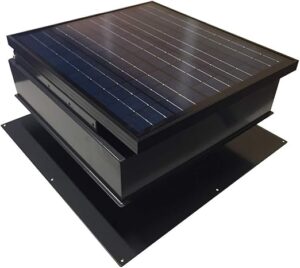
The iLiving HYBRID Ready Smart Thermostat Solar Roof Attic Fan takes the top spot for good reason. This powerhouse features a robust 40-watt solar panel paired with a 1150 CFM brushless DC motor that can cool attics up to 2900 square feet. It’s the #1 selling ventilation fan on Amazon with thousands of five-star reviews from homeowners who’ve ditched their electric bills. The hybrid technology means it operates on solar power during the day and can run on 12V DC power at night if you connect optional backup power. The IP68 waterproof rating ensures it withstands rain, snow, and extreme weather without corrosion or failure. Installation is straightforward with a removable solar panel and adjustable mounting bracket that fits standard roof pitches. You get both thermostat and humidistat controls, so the fan activates automatically when temperatures or moisture levels exceed your set thresholds. The stainless steel construction and 15-year warranty speak to its durability and the manufacturer’s confidence in the product.
What sets this model apart is the smart design. Unlike cheaper competitors that run continuously regardless of actual conditions, the iLiving uses intelligent controls to run only when needed, extending battery life and maximizing energy savings. Homeowners report seeing temperature drops of 10-15 degrees in their attics within 30 minutes of activation. The quiet operation (around 35 decibels) means you won’t hear it running from inside your home. It also features adjustable airflow settings so you can match ventilation to your specific needs rather than running at one fixed speed.
The installation process takes about 2-3 hours for a DIY enthusiast and requires basic tools. The included flashing kit creates a weathertight seal on your roof, preventing leaks that plague cheaper models. Customers appreciate that you can easily remove the solar panel for cleaning or maintenance without disturbing the fan unit itself. The thermostat can be wall-mounted inside your home for convenient access, and the remote control model lets you switch modes from anywhere in your house.
A few considerations: the upfront cost is higher than basic models, but when you calculate the electricity savings over 10+ years of use, the ROI becomes compelling. The brushless motor is virtually maintenance-free, though you should clean the solar panel every 3-4 months for optimal charging. Some users noted that during cloudy periods, the fan relies on the thermostat to decide if conditions warrant using backup power. For most homeowners, this is not an issue since adequate sunlight returns within days.
Features
- 40-watt monocrystalline solar panel with MPPT charging
- 1150 CFM airflow capacity
- Cools attics up to 2900 square feet
- Thermostat and humidistat controls
- IP68 waterproof rating
- Brushless DC motor with variable speeds
- Stainless steel and aluminum construction
- 15-year warranty on motor
- Optional 12V backup power capability
- Remote control available
- Excellent airflow and cooling power for large attics
- Thermostat and humidistat provide smart automation
- Durable stainless steel construction with 15-year warranty
- Quiet operation (35 decibels)
- Higher upfront investment compared to basic models
- Requires roof penetration and flashing installation
- Solar panel needs regular cleaning for peak efficiency
2. Remington Solar 30W Roof Mount Solar Attic Fan
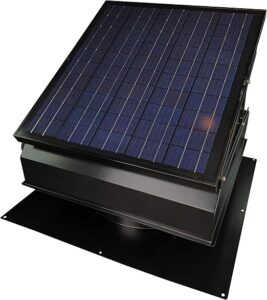
The Remington Solar 30W earns praise for its whisper-quiet operation and commercial-grade durability. This roof-mounted model delivers 900 CFM of airflow using a 30-watt solar panel powering a brushless motor that produces just 0.08 Sones of noise. To put that in perspective, a normal conversation registers around 60 decibels while this fan operates at an almost imperceptible 20-25 decibels. Homeowners consistently report that they can’t hear this fan running from inside their homes even with windows open. The model suits attics between 1500-2000 square feet effectively. The powder-coated steel construction with stainless steel fasteners resists rust and corrosion for decades, and many users report installations that have lasted 15+ years without maintenance.
Installation involves mounting directly to your roof with the included seamless flashing and shroud that prevents water intrusion. The installer-friendly design uses a simple bracket system that requires minimal tools and fits standard roof angles from 20 to 60 degrees. The self-regulating solar panel means the fan automatically adjusts speed based on available sunlight, so you get maximum cooling capacity on bright days and reduced operation on cloudy periods. This self-regulation also prevents overheating of the motor even on extremely hot summer days.
Unlike models that require thermostat wiring, the Remington operates completely standalone with no electrical connections needed. The solar panel is permanently mounted above the fan unit, so cleaning is straightforward. You simply hose it down quarterly to remove dust and pollen buildup. The bearing system is sealed to prevent moisture entry, making it suitable even for humid climates where mold and mildew are concerns.
One trade-off with the Remington is that it doesn’t offer thermostat or humidistat controls like premium models. It runs whenever there’s adequate sunlight, regardless of actual temperature conditions. For most homeowners this is fine, but if you want precise control over ventilation timing, you’ll want a model with sensors. The 900 CFM output works well for medium-sized attics but may not provide adequate cooling for very large spaces or older homes with poor insulation.
Features
- 30-watt monocrystalline solar panel
- 900 CFM airflow capacity
- Suitable for attics 1500-2000 square feet
- Brushless DC motor with low noise (0.08 Sones)
- Stainless steel fasteners and powder-coated steel
- Self-regulating solar control with no thermostat needed
- Seamless flashing prevents water intrusion
- Fits roof pitches 20-60 degrees
- No electrical wiring required
- Nearly silent operation (0.08 Sones)
- Durable construction designed to last 15+ years
- No thermostat wiring or electrical connections needed
- Self-regulating solar control
- No thermostat or humidistat controls
- 900 CFM may not suit very large attics
- Runs whenever sunlight is available
3. VEVOR 42W Solar Roof Attic Fan with Smart Remote Control
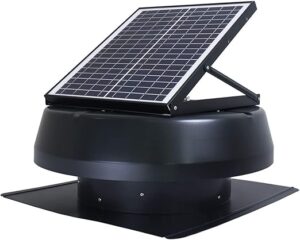
For larger attics that demand serious cooling power, the VEVOR 42W Solar Roof Attic Fan delivers impressive results. With 42 watts of solar power feeding a brushless motor that generates 2800 CFM, this unit tackles attics and garages up to 3500 square feet with ease. The MPPT (Maximum Power Point Tracking) solar regulation technology squeezes every ounce of energy from available sunlight, ensuring consistent performance even on partly cloudy days. This is a significant advantage over basic solar fans that lose efficiency when light is diffused. The remote control lets you switch between on, off, and automatic modes from anywhere in your home or yard. The remote range reaches about 100 feet, and the included wall-mount receiver makes installation convenient.
The cooling performance is exceptional. Users report attic temperature drops of 15-20 degrees within minutes of activation on hot summer days. For homeowners dealing with unbearable attic heat that radiates down into living spaces, this level of performance is transformative. The motor operates whisper-quiet despite the higher CFM output, measured around 35-40 decibels. The brushless design means no carbon brushes to wear out, extending service life to 20+ years with minimal maintenance.
Installation takes 2-3 hours and follows standard roof penetration procedures. The included flashing kit uses premium sealant to create a watertight barrier, and the mounting system accommodates roof pitches from 15 to 60 degrees. The solar panel sits at a 30-degree angle for optimal sun exposure throughout the day. Once installed, the fan operates independently of your home’s electrical system, making it ideal for off-grid applications or homes where running exterior electrical outlets isn’t feasible.
The smart features go beyond just remote control. The automatic mode uses light sensors to detect sufficient sunlight and activates the fan, then deactivates when darkness falls. This prevents battery drain if you happened to add a 12V battery backup system. The stainless steel fasteners and aluminum housing resist corrosion from salt air, rain, and temperature fluctuations. One minor consideration: the remote control requires a 9V battery that you’ll need to replace every 1-2 years, so factor that into your maintenance budget.
Features
- 42-watt monocrystalline solar panel
- 2800 CFM airflow capacity
- MPPT charging technology for cloudy day performance
- Smart remote control with 100-foot range
- Automatic light-sensing activation mode
- Brushless motor runs quiet (35-40 decibels)
- Suitable for attics up to 3500 square feet
- Stainless steel and aluminum construction
- Roof pitch range 15-60 degrees
- Premium pricing reflects advanced features
- Remote control requires battery replacement
- Higher cost than basic models
4. Natural Light 48-Watt Solar Attic Ventilation Fan
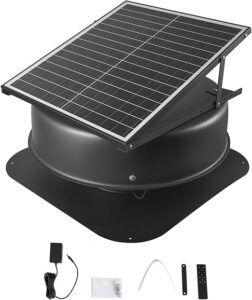
The Natural Light 48-Watt Solar Attic Ventilation Fan brings brute-force cooling capacity for minimal cost. This model generates 1881 CFM using a 48-watt solar panel, making it one of the most powerful solar attic fans available under $300. The brushless DC motor runs continuously during daylight and moves serious volume of hot air out of your attic space. For attics between 2000-2500 square feet, this delivers professional-grade ventilation without the professional-grade price tag.
Installation is straightforward and requires no electrical knowledge. Mount the solar panel on your roof at an optimal angle, run the wiring through your attic (or exterior conduit if you prefer), and install the fan unit in a gable opening or roof penetration. Many users choose gable mounting because it’s simpler than roof penetration and doesn’t require flashing or additional roof work. The gable mount kit fits standard 2×6 and 2×8 framing with adjustable brackets that accommodate various wall thicknesses. The quiet operation at around 35 decibels means you won’t be disturbed by the ventilation.
What makes the Natural Light stand out is the value proposition. You’re getting nearly the power output of models costing $600-800 for a fraction of the price. The solar panel uses quality monocrystalline cells and includes basic charge controller circuitry to prevent motor damage from voltage spikes. The mounting hardware is galvanized steel that resists rust. The motor is sealed and requires no lubrication or brushes, so once installed and working, maintenance is essentially zero.
The main limitation is lack of thermostat control. Like the Remington, this unit runs whenever sunlight hits the panel, which is perfect for continuous attic ventilation but doesn’t allow you to set specific temperature thresholds. If your attic doesn’t get excessively hot or if you have poor insulation in your home, the continuous operation might provide more cooling than needed. Most homeowners view this as an advantage since the continuous airflow helps prevent moisture and mold growth even on cooler days.
Features
- 48-watt monocrystalline solar panel
- 1881 CFM airflow output
- Brushless DC motor for long life
- Suitable for attics 2000-2500 square feet
- Quiet operation (35 decibels)
- Galvanized steel construction
- Works with gable or roof mount installation
- Basic charge controller included
- No thermostat wiring required
- Excellent airflow for the price
- Simple installation with gable mount option
- Brushless motor requires no maintenance
- Good value compared to name-brand models
- No thermostat or humidity controls
- Runs continuously during daylight
- Less brand recognition than iLiving
5. Sunforce 36W Thermostat Solar Attic Fan
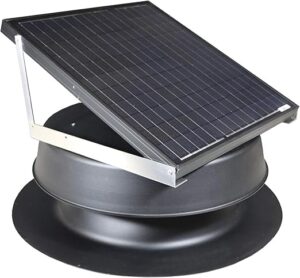
The Sunforce 36W Thermostat Solar Attic Fan balances power, control, and affordability. With 36 watts of solar capacity powering a 1250 CFM motor, it covers attics up to 2800 square feet effectively. The built-in thermostat is a game-changer for price-conscious buyers who want automation without paying premium prices. You set your desired attic temperature, and the thermostat activates the fan when that threshold is exceeded. This prevents unnecessary running on cool mornings and spring days, extending the lifespan of the motor and maximizing battery efficiency if you add backup power.
The installation is user-friendly, with both roof and gable mount options available. The solar panel mounts separately from the fan unit, giving you flexibility in positioning for optimal sun exposure. The stainless steel construction resists rust from moisture and salt air. The brushless motor delivers powerful airflow with quiet operation. Most users report installation taking about 90 minutes with basic hand tools and no special training required.
The thermostat dial offers an intuitive way to set your comfort level without complicated electronics. You simply rotate the dial to your target temperature (typically 95-105 degrees is ideal for attics) and let the system do the work. Many homeowners run theirs at 100 degrees, creating automatic ventilation during hot afternoon hours while remaining off in mornings and evenings when attic temperatures are naturally lower.
The fan is particularly popular in humid climates where the main goal is moisture control rather than just temperature management. Continuously running fans can over-dry attics in dry climates, but the thermostat prevents excessive operation. The motor bearing is sealed against water intrusion, making it suitable even for coastal areas where salt spray and moisture are concerns. After several years of use, you might notice slightly reduced airflow, which indicates the motor is aging but still functional. Sunforce motors typically run 15-20 years before requiring replacement.
Features
- 36-watt monocrystalline solar panel
- 1250 CFM airflow capacity
- Built-in thermostat control
- Adjustable temperature dial (85-110 degrees)
- Brushless DC motor
- Suitable for attics 2000-2800 square feet
- Gable or roof mount options
- Stainless steel fasteners
- Sealed bearing system
- Built-in thermostat provides smart automation
- Good balance of power and price
- Both roof and gable mount compatible
- Durable brushless motor design
- Lower CFM than some premium models
- No humidistat control option
- Thermostat is manual, not remote-controlled
6. QuietCool Classic II Smart Attic Fan
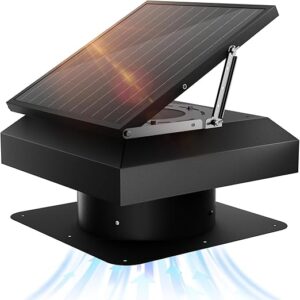
QuietCool’s Classic II Smart Attic Fan combines proven reliability with modern smart home integration. This solar model operates at just 32 decibels, making it one of the quietest whole-attic fans on the market. The 30-watt solar panel powers a 1250 CFM brushless motor that suits attics up to 2500 square feet. What sets the Classic II apart is the optional WiFi control module that lets you monitor and operate the fan from your smartphone using the QuietCool app. You can view real-time attic temperature, adjust thermostat settings, and receive alerts if temperatures exceed your preferred thresholds.
The smart features are genuinely useful. The app shows historical data so you can see how effectively the fan reduces attic temperatures on hot days. You can set different temperature profiles for different seasons, automatically adjusting the thermostat in spring and fall. Some owners program it to run only during peak cooling hours when their air conditioning system is working hardest. Others use it as a cooling tool before turning on AC, potentially reducing electric bills by several hours of cooling time per day.
Installation uses the QuietCool standard mounting system that secures to your attic rafters with minimal cutting required. The gable-mount design means no roof penetration, eliminating leak risks and keeping your roof warranty intact. The solar panel sits in a simple L-bracket mount on your roof peak, and wiring runs through the soffit to your attic-mounted unit. The system includes a backup 12V connection if you want to add a battery or connect to existing solar power systems.
The Classic II’s performance is solid but not extraordinary. At 1250 CFM, it’s adequate for cooling but doesn’t match the highest-powered models. For attics where you want smart temperature management combined with whisper-quiet operation, it’s excellent. For those maximizing raw cooling power, you might want to step up. The WiFi connectivity requires a reliable internet signal, which shouldn’t be an issue for most homes but could be problematic in areas with poor WiFi coverage in the attic space.
Features
- 30-watt monocrystalline solar panel
- 1250 CFM airflow capacity
- Optional WiFi smart home integration
- QuietCool mobile app control
- Ultra-quiet operation (32 decibels)
- Brushless motor for long life
- Thermostat with temperature scheduling
- Gable mount (no roof penetration)
- Suitable for attics 2000-2500 square feet
- Smart home integration with mobile app
- Ultra-quiet operation (32 decibels)
- Gable mount avoids roof penetration
- Temperature scheduling available
- WiFi module adds to cost
- Requires reliable internet connection
- 1250 CFM may not cool large attics efficiently
7. Solar Royal 24W Budget Solar Attic Fan
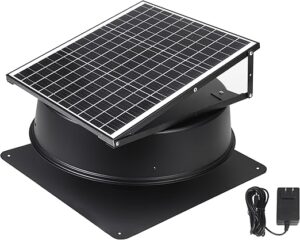
If you’re shopping on a tight budget or working with a small attic space, the Solar Royal 24W Budget Solar Attic Fan delivers functional ventilation without unnecessary features. This compact model uses a 24-watt solar panel to power a 600 CFM motor, making it suitable for small attics, crawl spaces, garages, or RVs where you need modest cooling capacity. The brushless motor is silent, operating at just 15 decibels when running. Many users are surprised at how effectively such a small unit works for targeted cooling applications.
The gable-mount installation is incredibly simple. There’s essentially no learning curve, no roof cutting, and no flashing to seal. You mount the unit to your gable wall with a few screws, run the solar panel wire through the soffit, and you’re done in about 30 minutes. This makes it perfect for rental properties where you can’t make permanent roof modifications or for temporary installations you might relocate later.
What makes the Solar Royal stand out in this price range is the sealed motor bearing and galvanized hardware. You’re not getting a disposable fan that fails after two seasons. Users report 8-10 years of service from these units with zero maintenance beyond occasionally cleaning the solar panel. The self-regulating solar control means the fan automatically adjusts speed based on available light, providing more cooling on sunny days and less on cloudy periods.
The main limitation is the small 600 CFM output. This won’t cool a large 2000+ square foot attic, but it’s perfect for attics under 800 square feet or as supplemental ventilation in larger spaces. If your attic rarely exceeds 95 degrees or if you’re primarily concerned with moisture management rather than dramatic temperature reduction, this budget option makes sense. Many homeowners use one of these as a test to see if solar attic ventilation works for their home before investing in a larger unit.
Features
- 24-watt monocrystalline solar panel
- 600 CFM airflow capacity
- Ultra-quiet operation (15 decibels)
- Brushless motor with sealed bearing
- Gable mount installation (no roof penetration)
- Self-regulating solar control
- Galvanized steel hardware
- Suitable for attics under 800 square feet
- No thermostat or electrical wiring required
- Affordable entry price
- Simple 30-minute installation
- Whisper-quiet operation
- No roof penetration required
- 600 CFM insufficient for large attics
- No thermostat control
- Best for supplement cooling, not primary ventilation
8. Air Vent Solar Powered Curb Mount Attic Fan
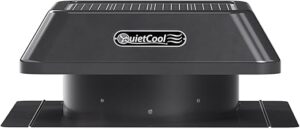
For homeowners with roof complications or those wanting maximum design flexibility, the Air Vent Solar Powered Curb Mount Attic Fan offers a unique installation option. This 30-watt model generates 800 CFM and installs on a roof curb rather than penetrating the roof itself, minimizing leak risks. The pre-fabricated curb assembly is essentially a box that sits on your roof, and the fan unit mounts directly on this base. Flashing seals the curb perimeter where it meets your roof, creating a weathertight installation that many homeowners find more reliable than traditional penetrations.
The curb-mount approach has real advantages if your attic has existing roof jacks, vents, or complicated framing that makes traditional attic access difficult. With a curb mount, you work entirely from the exterior, never needing to climb into your attic or work around interior obstacles. The installation still takes a few hours, but many find it less invasive than routing ducting through living spaces. The sturdy aluminum and steel construction handles snow load and high winds without issues, and the brushless motor operates for 15+ years with minimal maintenance.
The 800 CFM output works well for medium-sized attics between 1200-1800 square feet. The self-regulating solar control provides continuous ventilation during daylight without thermostat complexity. The motor is extremely quiet at around 30 decibels, so noise is not a concern. Air Vent has manufactured attic fans for over 50 years, and this solar model reflects that experience and reliability.
One consideration is that curb mounts are visible from the street, whereas gable and roof penetration mounts are less noticeable. If your home’s appearance is a priority, you might prefer a less visible installation method. Also, curb mounts don’t provide as much flexibility in positioning the solar panel as roof-mount models, though the 800 CFM output is sufficient for typical applications. The standard flashing kit works with most roof types, but slate or tile roofs may require custom flashing at additional cost.
Features
- 30-watt monocrystalline solar panel
- 800 CFM airflow capacity
- Curb-mount installation (no roof penetration)
- Pre-fabricated curb assembly
- Brushless DC motor with 15+ year lifespan
- Quiet operation (30 decibels)
- Aluminum and steel construction
- Self-regulating solar control
- Suitable for attics 1200-1800 square feet
- Curb mount reduces leak risk
- Exterior installation simplifies setup
- 50+ years of Air Vent manufacturing experience
- Sturdy construction handles snow and wind
- Visible from street (aesthetic consideration)
- 800 CFM adequate but not powerful
- Custom flashing required for slate/tile roofs
Solar Attic Fan Buying Guide
Key Takeaways
- Attic ventilation reduces cooling costs by 10-20% by removing hot air before it radiates into living spaces
- Solar models require no electricity and operate independently, making them ideal for homes without convenient outlets
- Thermostat control provides smart automation, running only when attic temperatures exceed your set threshold
- CFM capacity should match your attic size: roughly 1 CFM per 2-3 square feet for effective cooling
- Installation options range from simple gable mounts (no roof work) to roof penetrations (maximum cooling)
What Are Solar Attic Fans?
A solar attic fan is a powered ventilation unit that removes hot air from your attic space, powered by solar energy rather than your home’s electrical grid. During the day, the integrated solar panel charges the system and powers the motor to expel accumulated heat. As the sun sets, the fan naturally stops running since the solar panel is no longer generating power. The result is cooler attics that reduce the load on your air conditioning system and lower your monthly electric bills.
How Do Solar Attic Fans Work?
Here’s the basic operation: sunlight hits the monocrystalline solar panel, which converts light energy into direct current (DC) electricity. This power flows through a charge controller that regulates voltage and protects the motor from power spikes. The DC electricity drives a brushless motor that rotates a fan blade or impeller, pulling hot air from your attic and pushing it outdoors. Some models use a thermostat to activate the motor only when attic temperature exceeds your set point, while others run continuously whenever sunlight is available. Advanced models use MPPT (Maximum Power Point Tracking) technology to extract maximum energy from available light, ensuring efficient operation even on cloudy days.
Benefits of Using Solar Attic Fans
The primary benefit is energy savings. Your air conditioning system won’t need to work as hard cooling your home when your attic isn’t acting as a heat sink. Homeowners report 10-20% reductions in summer cooling costs, translating to $300-800 annually for many households. A solar attic fan pays for itself through energy savings in 3-7 years, then provides free cooling for the remainder of its 15-20 year lifespan. Beyond cost savings, solar attic fans reduce moisture and humidity in your attic, preventing mold growth and wood rot that can compromise your roof structure. They also extend air conditioning equipment lifespan by reducing runtime strain. Perhaps most importantly, solar fans require no electrical installation, no monthly monitoring, and no renewable energy source other than the sun.
CFM Rating and Sizing Your Attic Fan
CFM (cubic feet per minute) is the most important spec on a solar attic fan. It tells you how much air the fan moves per minute and determines whether it can adequately ventilate your attic. The standard rule of thumb from the Home Ventilating Institute is 1 CFM per square foot of attic floor space, with a 20% increase for dark-colored roofs that absorb more heat.
So a 1,200 square foot attic needs at least 1,200 CFM of airflow. A single 30W solar attic fan typically delivers 800 to 1,200 CFM depending on conditions. For larger attics, you’ll need either a single high-powered fan (some 50W models exceed 2,500 CFM) or two fans positioned to create cross-ventilation. Under-sizing a solar attic fan is the most common mistake buyers make — it cools partially but doesn’t solve the heat problem. Check both the fan’s rated CFM and the square footage of your attic before purchasing.
Thermostat and Humidistat Controls
The most effective solar attic fans include a built-in thermostat that activates the fan when attic temperature rises above a set threshold (typically 80 to 90 degrees Fahrenheit) and turns it off when the attic cools. This is smarter than running the fan continuously — it prevents unnecessary operation on mild days and ensures the fan runs at full speed exactly when heat buildup is worst.
Some premium models add a humidistat that also activates the fan when attic humidity rises above a set level, even in cooler months. This prevents winter moisture buildup from condensation, which is a major cause of attic insulation damage, wood rot, and mold. If you’re in a climate with humid winters, a thermostat-plus-humidistat model is worth the additional cost. Look for adjustable setpoints rather than factory-fixed ones — what works in Phoenix is wrong for Houston or Seattle.
Things to Keep in Mind Before Buying
First, determine your attic size in square feet. Multiply your home’s width by depth to get a rough estimate, or check your appraisal documents. Once you know attic size, choose CFM capacity accordingly. A general rule is 1 CFM per 2-3 square feet, so a 2000 square foot attic would benefit from a 700-1000 CFM fan. Next, decide on installation method. Roof penetration mounts offer maximum cooling performance but require roof cutting and flashing. Gable wall mounts are simpler and avoid roof penetration but may produce less cooling if your gable isn’t optimally positioned for airflow. Curb mounts split the difference, offering reliable installation with moderate complexity. Consider whether thermostat control is important to you. Basic models run whenever sunlight is available, which is great for continuous ventilation but doesn’t allow fine control. Thermostat-equipped models only run when temperatures exceed your set point, reducing unnecessary operation. Finally, think about noise tolerance. Most quality solar attic fans are quiet (30-35 decibels), but if you’re sensitive to any noise, look for models specifically rated at 25 decibels or below. Check your roof warranty. Some warranties exclude installations with roof penetrations, so verify before cutting into your roof.
Types of Solar Attic Fans
Solar attic fans come in several configurations. Gable-mount fans bolt to your home’s gable wall (the triangular section above your siding) and pull air directly from that wall through your attic space. These are easiest to install and don’t require roof penetration. Roof-mount (or curb-mount) fans install directly on your roof with flashing to seal the penetration. These provide superior airflow since they’re positioned higher and can pull air from the entire attic volume. Hybrid models operate on solar power during the day but can connect to 12V backup power for nighttime operation. Some use thermostat control while others use simple on-off switches. Premium models add smart home integration via WiFi, letting you monitor temperatures and control the fan remotely. Budget models offer basic functionality without smart features. High-capacity models (2000+ CFM) suit large or multi-story homes, while compact models (600-1000 CFM) work for smaller spaces or RVs.
Frequently Asked Questions
Most homeowners report 10-20% reductions in summer cooling costs, typically translating to $300-800 annual savings depending on your climate, home size, and AC efficiency. A solar attic fan typically pays for itself through energy savings in 3-7 years.
Solar attic fans operate on cloudy days but at reduced capacity. Even on overcast days, monocrystalline panels generate some power, though typically 20-40% of sunny day output. Models with MPPT charging technology (like the VEVOR) perform better in cloudy conditions than basic solar regulators.
Use this formula: attic size in square feet divided by 2.5 equals recommended CFM. A 2000 square foot attic would need approximately 800 CFM. When in doubt, choose the larger size, as oversized fans simply provide extra cooling rather than causing problems.
Gable-mount models are DIY-friendly and require only basic hand tools and roof access. Roof-mount installations require cutting roof penetrations and flashing installation, which many homeowners prefer to leave to professionals. If you’re not comfortable on a roof or working with flashing, professional installation is worth the investment.
Professional roof penetration installations with proper flashing create watertight seals that don’t damage your roof. Poor installations, however, can lead to water intrusion. If you’re uncomfortable with roof work, hire a professional. Gable-mount and curb-mount options minimize penetration risks.
Quality solar attic fans last 15-20 years with minimal maintenance. The brushless motors used in most models have no carbon brushes to wear out, and sealed bearing systems resist moisture. Expected lifespan is typically longer than the solar panel itself, which degrades gradually after 15 years but continues functioning.
Maintenance is minimal. Clean the solar panel quarterly (more often in dusty areas) by hosing it down with water. Check the roof flashing annually for gaps or deterioration, and ensure nothing is blocking the fan intake or exhaust vents. That’s essentially it. The brushless motor requires no lubrication or brush replacement.
Many models support 12V battery backup connections, allowing continued operation after sundown. Some homeowners add a 100-200 watt-hour lithium battery to their system, extending operation into evening hours. Check your specific model’s specifications to confirm compatibility.
Summing Up
Solar attic fans represent one of the most practical and cost-effective ways to reduce summer cooling costs while improving home comfort. Whether you choose the feature-rich iLiving HYBRID Ready, the whisper-quiet Remington, or the budget-friendly Solar Royal, you’re investing in a system that will operate for 15-20 years with minimal maintenance and no electricity bills. The payback period is quick, typically 3-7 years, after which you enjoy nearly free cooling for decades.
If you’re also thinking about solar panels for your home, call (855) 427-0058 for a free quote — it takes just a few minutes to find out what installation would cost and save you in your area.
Updated