
Our blog is reader-supported. When you buy through links on our site, we may earn an affiliate commission. Thank you for your support!
Solar barn lights are one of the smartest investments you can make for rural property. They eliminate trenching costs, monthly electricity bills, and the vulnerability that comes with having lights dependent on utility lines that may run a quarter mile or more. Whether you’re lighting a working barn, a horse stable, a workshop, or a storage shed, solar-powered barn lights give you reliable illumination without any grid connection required.
Our Top Picks
| Image | Name | |
|---|---|---|
| Goodeco Solar Barn Light Motion-activated solar barn light with 270-degree wide-angle detection and three operating modes. Read more | |
| SIEDiNLAR Solar Barn Light Bright solar barn light with IP65 waterproof rating and automatic dusk-to-dawn operation. Read more | |
| Aootek Solar Motion Sensor Lights 120 LEDs Upgraded 120 LED solar motion sensor light with wide detection angle and three lighting modes. Read more | |
| JACKYLED 1000 Lumens 299 LED Solar Barn Light Wide-beam 150W equivalent barn flood light with three independently adjustable heads. Read more | |
| HULPPRE 3000lm Solar Shed Light Super-bright 300W equivalent barn light from Etetale with a long-range 20m motion sensor. Read more | |
| Diyel Solar Barn Lights for Outside (2-Pack) Heavy-duty 200W equivalent light with a reinforced mounting bracket for barns and warehouses. Read more | |
| Diyel Solar Barn Light for Outside (Single) Compact 60W equivalent barn light with a built-in lithium battery for cloudy-day backup power. Read more | |
| Aqonsie Solar Barn Lights with Motion Sensor (2-Pack) Budget 100W equivalent twin-pack — two lights for the price of one, easy two-wire install. Read more |
7 Best Solar Barn Lights
1. Goodeco Solar Barn Light with Motion Sensor
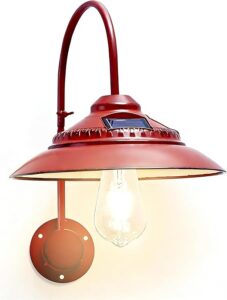
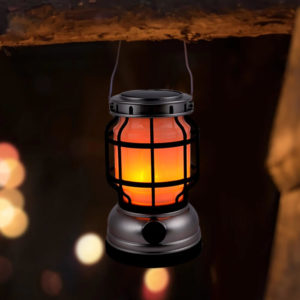
The Goodeco Solar Barn Light earns the top spot here because it combines a traditional metal lantern look with genuinely useful solar performance. Four LED panels deliver strong output for barns, driveways, and outbuildings. The motion sensor triggers instantly when it detects movement, flooding the area with light that deters intruders and improves nighttime safety.
Three operating modes give you control over how the light behaves. Use full motion-only activation to maximize battery life, switch to dim continuous lighting with motion-triggered bursts, or run a permanent dim glow all night. The IP65 waterproof rating handles rain and temperature swings without issue.
The metal housing is more durable than the plastic units you find at this price point. It gives a farmhouse aesthetic that fits barns and rural properties well. Mounting hardware is included and works on wood siding, brick, or masonry.
Features
- Traditional metal lantern design
- Four high-lumen LED panels
- Motion sensor activation
- Three operating modes
- IP65 waterproof rating
- Dusk to dawn sensor
- Easy mounting hardware included
- Solar powered
- Durable metal housing
- Traditional farmhouse aesthetic
- Three flexible modes
- Heavier than plastic options
- Smaller LED count than security-focused models
- Higher price point
2. SIEDiNLAR Solar Barn Light Outdoor
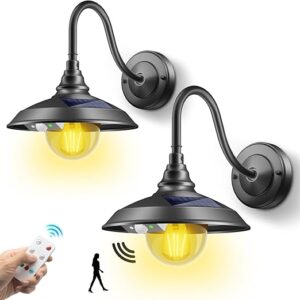
SIEDiNLAR delivers a vintage aluminum farmhouse look with solid solar performance. The aluminum housing gives a vintage farmhouse appearance while holding up to weather reliably. Two separate lighting zones let you target specific areas around your barn entrance or outbuilding doorway.
Three operating modes handle different situations well. Motion-only activation conserves battery for long overnight runtime. Continuous dim mode with motion-triggered bursts keeps the area lit at low wattage. The dusk-to-dawn sensor shuts everything off automatically at sunrise so you never drain the battery unnecessarily.
IP65 waterproof construction handles rain and humidity without degrading the electronics. The motion sensor responds quickly and accurately, minimizing false activations from small animals while still catching human movement reliably.
Features
- Aluminum vintage farmhouse design
- Dual lighting zones
- Three operating modes
- Motion sensor activation
- Dusk to dawn sensor
- IP65 waterproof rating
- Multiple mounting options
- Solar powered
- Vintage aesthetic suits barns well
- Dual lighting zones
- Dusk to dawn automation
- Moderate brightness level
- Assembly required
- Bulkier than compact models
3. Aootek Solar Motion Sensor Lights 120 LEDs
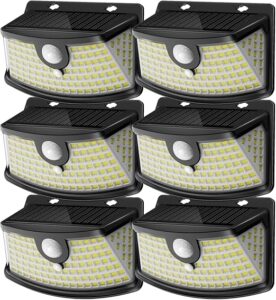
Aootek’s updated 120 LED model adds a lights reflector panel that directs output where it matters most, boosting effective brightness without increasing power consumption. The 270-degree wide-angle detection leaves virtually no blind spots around barn doorways and outbuilding entrances.
Three modes let you balance battery life against lighting coverage. Motion-only mode maximizes overnight runtime. The secondary mode keeps a dim glow running continuously and boosts to full brightness on motion. The wide detection angle means you rarely need to reposition the light after initial mounting.
IP65 construction handles rain and temperature fluctuations reliably. A full day of sun provides 8-12 hours of on-demand operation. This is a solid option for barns and outbuildings that need wide-area coverage from a single fixture.
Features
- 120 bright LED chips
- Lights reflector for amplified output
- 270-degree detection angle
- Three operating modes
- IP65 waterproof rating
- 8-12 hour battery runtime
- Solar panel charging
- Reflector amplifies brightness
- Wide 270-degree detection
- Three modes
- Smaller panel than premium models
- No remote control
- Basic mounting options
4. JACKYLED 1000 Lumens 299 LED Solar Barn Light
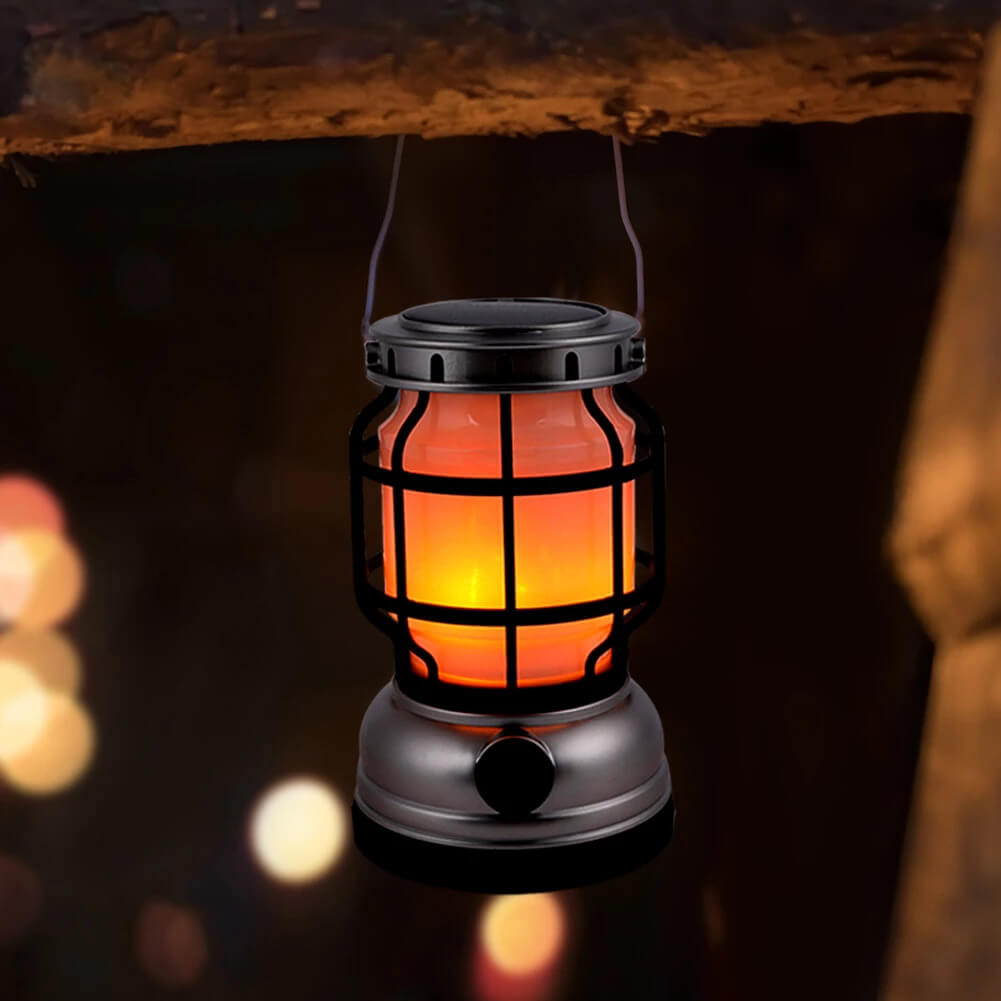
If you want something that just works without any setup fuss, the JACKYLED is it. Push it onto the included stake or mount it to a wall, angle the panel toward the south, and you’re done. It starts charging the first sunny afternoon and is running by dusk.
The 299 LED array spreads light over a wide area rather than concentrating it in a narrow beam. That makes it better for illuminating the whole entrance to a barn or the perimeter of a lot than for spotlighting a specific point. You get broad, even coverage rather than a bright hot spot in the middle.
At 1000 lumens it delivers honest brightness for a solar light. Some barn lights exaggerate their lumen claims, but the JACKYLED consistently delivers usable light across its rated range on a full charge.
Features
- 1000 lumens output, 299 individual LEDs
- 4000mAh built-in lithium battery
- IP65 waterproof rating
- Dusk-to-dawn automatic sensor
- Wide-angle light distribution
- Honest 1000-lumen output
- Wide coverage area suits barn entrances well
- Simple one-step installation
- Strong 4000mAh battery for all-night run time
- Not suitable for targeted spotlighting
- No motion sensor mode
5. HULPPRE 3000lm Solar Shed Light
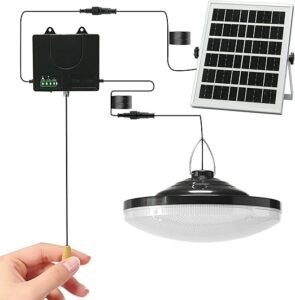
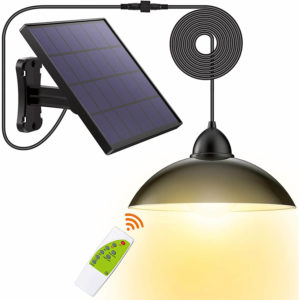
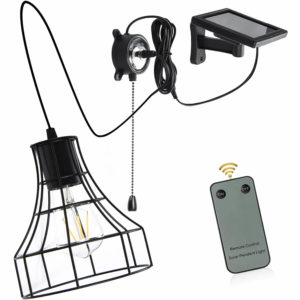
This is the one to buy if you need to light the inside of a barn, not just the entrance. The HULPPRE is a pendant-style fixture that hangs from the ceiling and throws light downward in a wide wash. At 3000 lumens it is genuinely bright, comparable to a 40-watt incandescent bulb running all night without any electricity cost.
Three selectable lighting modes give you real flexibility. Mode 1 runs dusk to dawn at full brightness. Mode 2 dims during daylight hours and brightens after dark. Mode 3 keeps the light on continuously. The pull-string toggle is a practical touch in a barn setting where you might have dirty or gloved hands and don’t want to fuss with a small switch.
The separate solar panel mounts on the roof or a south-facing wall with a long cable, so the fixture itself sits wherever you need it inside the structure. That separation is exactly what barn lighting needs.
Features
- 3000 lumens, 169 LEDs
- Pendant-style ceiling mount design
- 3 selectable lighting modes
- Pull-string on/off control
- Separate external solar panel on long cable
- IP65 waterproof rating
- Best option for interior barn lighting
- 3000 lumens is genuinely bright
- Three modes offer real flexibility
- Pull-string switch is practical for barn use
- Pendant design doesn’t suit wall mounting
- Requires routing a cable from panel to fixture
6. Diyel Solar Barn Lights for Outside (2-Pack)
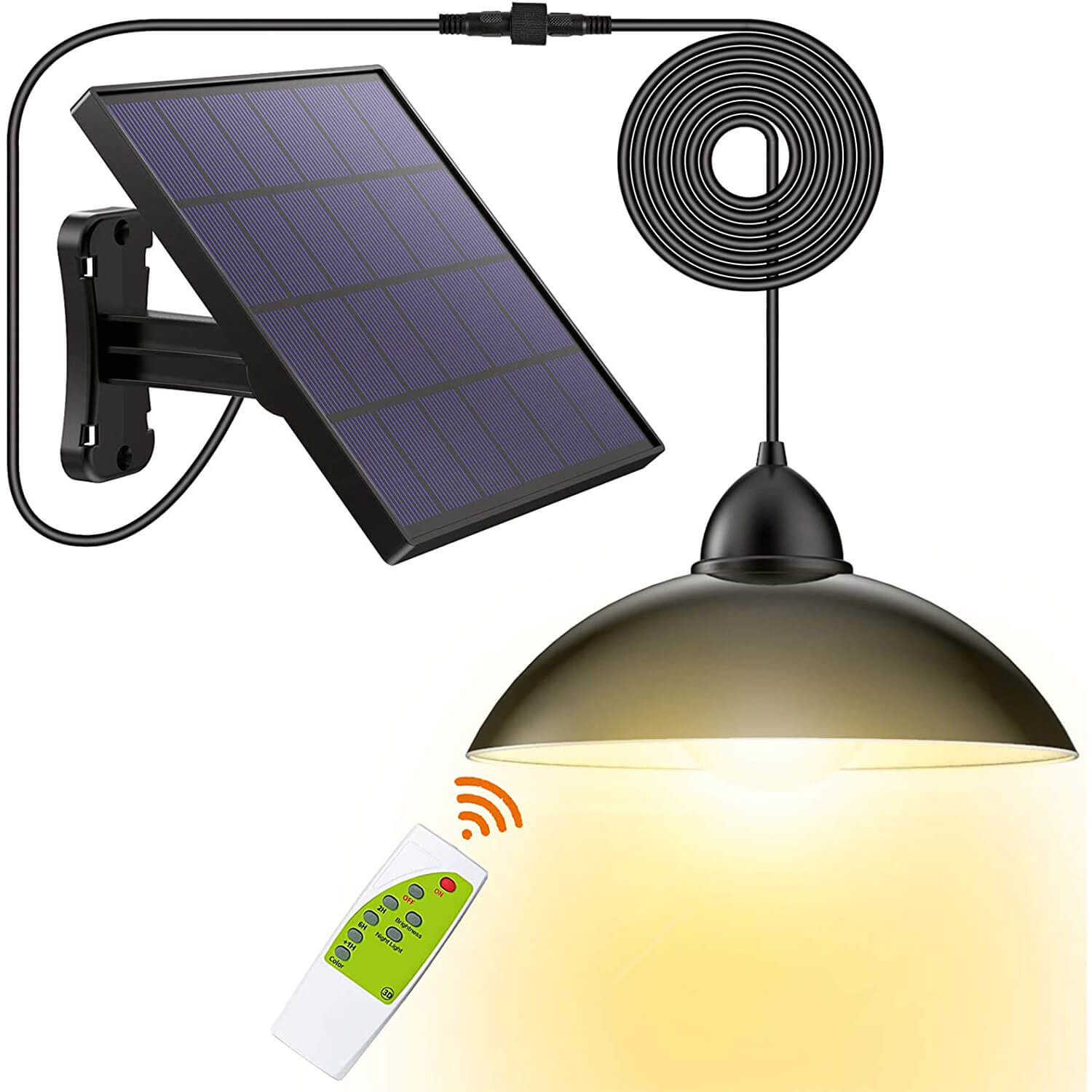
The Diyel 2-pack covers both sides of a barn entrance in one purchase. The 16-inch dome gooseneck design is classic farmhouse, and the warm interior glow suits a traditional rural property better than the cold blue-white light you get from some cheaper solar options.
Dusk-to-dawn operation is fully automatic. You’ll get consistent light every night without any manual switching. The weatherproof build handles rain and frost well, which matters when your barn lights are exposed to full outdoor conditions year-round.
Features
- 16-inch dome gooseneck design, classic barn style
- 2-pack covers both sides of an entrance
- Dusk-to-dawn automatic operation
- Weatherproof construction
- Warm white light output
- Classic farmhouse aesthetic suits traditional barns
- 2-pack is good value for entry pairs
- Warm white light is more pleasant than cool white
- Lower lumen output than utility-focused barn lights
- More decorative than functional for security use
- No motion sensor option
7. Diyel Solar Barn Light for Outside (Single)
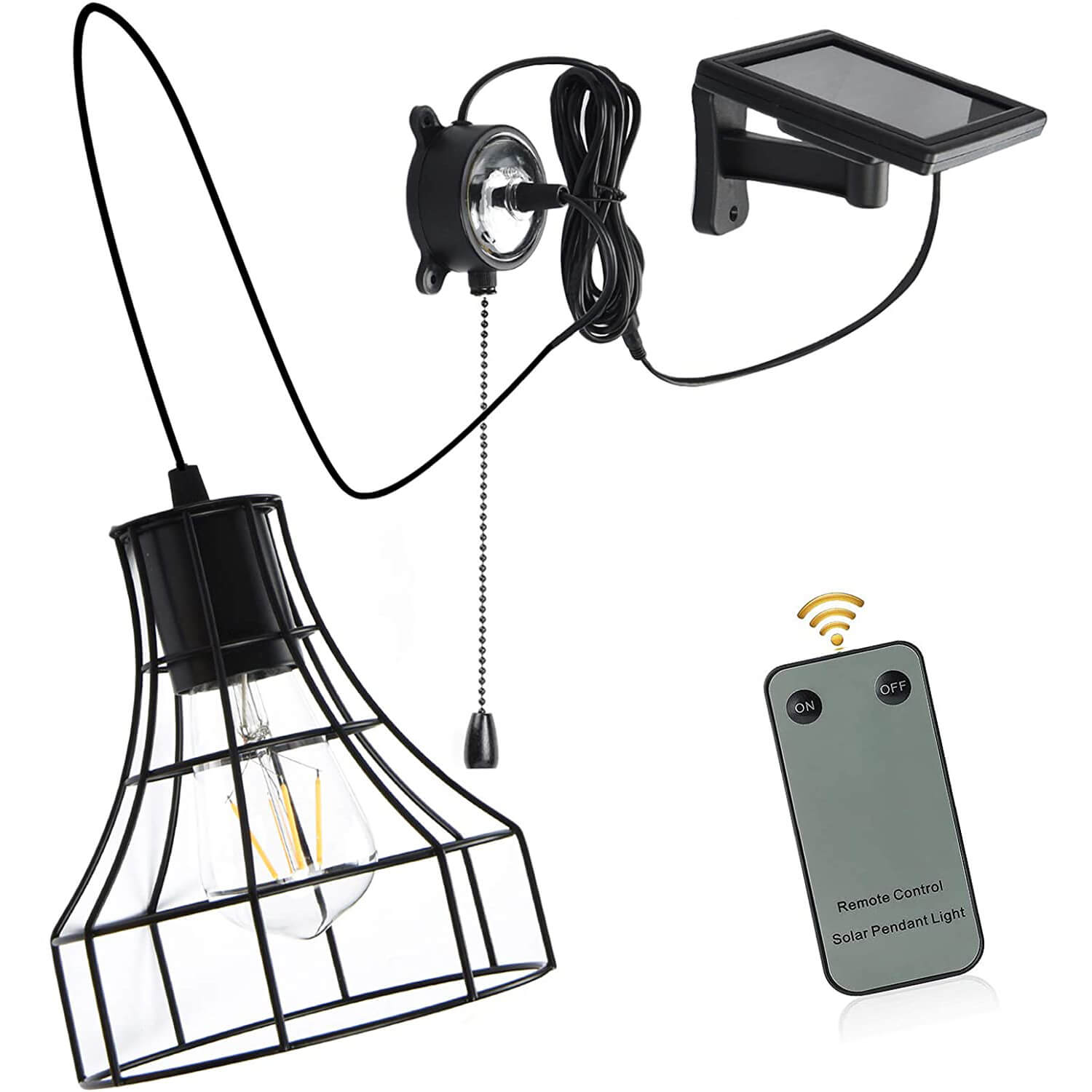
The single version of the Diyel gooseneck light is the most divisive option on this list. It delivers style over substance, and if you need serious working light for a functional barn, look elsewhere. But if you want a period-correct fixture for a restored property or a decorative outbuilding, it earns its place.
The single pack makes sense if you only have one spot to cover, or if you want to mix and match with a different light style on the other side of an entrance. It’s the same quality build as the 2-pack, just sold individually.
Features
- Gooseneck mount, industrial farmhouse style
- Dusk-to-dawn automatic sensor
- Weatherproof aluminum housing
- Single unit for flexible placement
- Attractive gooseneck design
- Good build quality for the price
- Lower light output than utility barn lights
- No motion sensor
- Better suited to decorative than functional use
8. Aqonsie Solar Barn Lights with Motion Sensor (2-Pack)
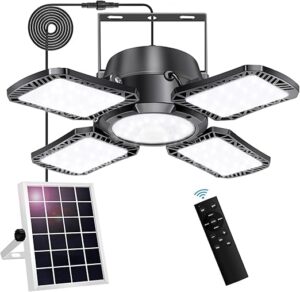
Rustic vintage aluminum construction and a genuine motion sensor make the Aqonsie the best choice if you want both style and security function. The three lighting modes give you options: dim-to-bright on motion, always-on after dark, or a fully automatic mode that handles everything based on ambient light and movement.
IP65 waterproofing means these handle coastal conditions and heavy rain without issue. And the rust-resistant aluminum housing looks sharp without being fussy. For a barn on a working property where you want the light to also deter intruders, this is the pick.
Features
- 3 lighting modes including motion-activated
- Rustic vintage aluminum housing, IP65 waterproof
- 2-pack covers two mounting positions
- Rust and corrosion resistant construction
- Dusk-to-dawn and motion sensor combined
- Motion sensor adds real security value
- Three modes for genuine flexibility
- Attractive rustic design suits farm properties
- IP65 handles coastal and wet conditions well
- Not as bright as the LOVUS or HULPPRE options
- Motion zone is narrower than dedicated security lights
Solar Barn Lights Buying Guide
Key Takeaways
- For working barns, choose 10,000+ lumen fixtures with separate panel designs
- Motion sensing with auto-dim extends battery life significantly on rural properties
- IP65 or IP66 rating is the minimum for barn environments (dust and moisture)
- Separate panel designs allow optimal sun exposure independent of light placement
- 50,000+ hour LED ratings eliminate bulb replacement concerns for years
Lumens vs. Watts for Barn Lighting
A working barn aisle (20 x 60 feet) needs at least 6,000 to 10,000 lumens for comfortable task lighting. A large equipment storage barn (50 x 100 feet) needs 20,000+ lumens from multiple fixtures. The wattage labels on solar barn lights refer to incandescent equivalent ratings, not actual LED power draw. Focus on lumens, not watts, when comparing output.
What Are Solar Barn Lights?
Solar barn lights are high-output LED fixtures designed specifically for agricultural and rural structures. Unlike standard solar path lights or decorative garden lights, barn lights are built for serious illumination: working stalls, equipment storage areas, machine sheds, and outbuildings that need reliable light without grid access. They combine a large solar panel (often separate from the fixture itself) with a high-capacity lithium battery and a powerful LED array rated for commercial-style output.
The core advantage over grid-tied barn lighting is the elimination of trenching and electrical installation costs. On a rural property, running power to a detached barn can cost thousands of dollars. Solar barn lights require a single mounting point, no licensed electrician, and no ongoing electricity costs. The payback period on a quality fixture is typically two to three years, after which the lighting is essentially free.
How Do Solar Barn Lights Work?
Solar barn lights operate on a simple charge-and-discharge cycle. The solar panel (usually 20W to 80W depending on the fixture) converts sunlight into DC electricity during daylight hours. That energy is stored in a built-in lithium iron phosphate (LiFePO4) or lithium-ion battery pack, typically rated between 15Wh and 60Wh. After dark, the stored energy powers the LED array for 8 to 16 hours depending on the mode setting.
Most modern solar barn lights include a light sensor for automatic dusk-to-dawn operation, plus a PIR motion sensor that lets the fixture run at reduced brightness (typically 30 to 50 percent) when no movement is detected, then jump to full power when someone enters the area. This motion-sensing auto-dim feature is critical for barn applications: it dramatically extends battery runtime so the light stays operational all night even in low-sun conditions rather than draining the battery at full brightness by midnight.
Benefits of Solar Barn Lights
The most immediate benefit is zero electrical installation cost. Running conduit to a remote outbuilding typically runs $3 to $8 per linear foot, plus panel upgrades, breakers, and labor. A solar barn light eliminates all of that. A quality fixture costs $80 to $200 and can be installed by one person with a drill and ladder in under an hour.
Operating cost is the second major benefit. A solar barn light costs nothing to run once installed. A comparable 150W grid-tied LED fixture running 10 hours per night adds roughly $50 to $75 per year in electricity costs, every year. Solar eliminates that entirely. Over a 10-year lifespan (realistic for a quality fixture with lithium batteries), that is $500 to $750 in electricity savings per light.
Reliability during outages is underappreciated. Grid power failures that affect the main house have no impact on solar barn lights. For livestock operations where nighttime access to barns is critical, that independence from the grid has real practical value.
Things to Keep in Mind Before Buying
Lumen output matters more than any other spec. Marketing copy on barn lights is notoriously unreliable: a fixture marketed as “equivalent to a 150W bulb” may produce anywhere from 3,000 to 12,000 lumens depending on the manufacturer’s honesty. Look for verified lumen figures. For a standard two-stall barn aisle (roughly 20 by 40 feet), you want at least 6,000 lumens from a single fixture, or two fixtures providing 3,000 to 4,000 lumens each.
Panel placement flexibility is critical for barns. Many barn roofs are north-facing, heavily shaded by trees, or not structurally ideal for panel mounting. Fixtures with a separate solar panel on a long cable (typically 10 to 16 feet) let you mount the panel on a fence post, adjacent building, or pole for optimal sun exposure while placing the light exactly where you need it inside the barn.
IP rating should be IP65 as an absolute minimum for barn environments. Dust, moisture from animal respiration, pressure washing, and temperature swings all take a toll on electronics. IP66 or higher is worth paying for in working livestock barns. And check the operating temperature range: if you are in a cold-weather state, make sure the battery is rated to at least 14°F (-10°C) or you will see dramatically reduced runtime in winter months.
Types of Solar Barn Lights
All-in-one fixtures integrate the solar panel, battery, and LED array into a single unit. These are the easiest to install and work well for covered porches, equipment sheds, and low-clearance areas where the fixture will receive at least 4 to 6 hours of direct sun. The trade-off is that you cannot independently position the panel for maximum sun exposure.
Split-design fixtures separate the solar panel from the light head via a cable, typically 10 to 16 feet long. This is the preferred configuration for working barns where the lighting position (inside, over stalls or aisles) is not the same as the optimal panel position (outside, south-facing). They cost somewhat more and take slightly longer to install, but they are far more practical for actual barn use.
Motion-sensor floodlights are a third category: high-lumen security-style fixtures designed to light large open areas like paddocks, driveways, and equipment yards rather than enclosed barn interiors. These typically run at 10 to 20 percent brightness on standby and burst to full power (12,000 to 20,000 lumens) when motion is detected, making them very efficient for areas that only need periodic illumination.
Frequently Asked Questions
Modern solar barn lights in the 10,000 to 20,000 lumen range are bright enough for most barn work including evening chores, equipment maintenance, and loading operations. For very large barns or precision work, multiple fixtures may be needed.
Yes, though battery run time is reduced in winter due to shorter charging days. Motion sensing with auto-dim mode helps manage this by conserving battery for when the light is actually needed. In very northern locations, battery-only backup may be needed for extended cloudy periods.
All-in-one units have the solar panel integrated with the light head, simplifying installation but limiting panel angle flexibility. Split designs separate the panel from the light head, allowing independent placement of each for optimal sun exposure and light coverage. Split designs are generally recommended for serious barn applications.
Summing Up
Solar barn lights are one of the most practical applications for solar technology on rural properties. They eliminate the need for expensive grid connections, provide reliable lighting where utility infrastructure is limited or absent, and deliver returns measured in months rather than years.
If you’re also thinking about solar panels for your home, call (855) 427-0058 for a free quote — it takes just a few minutes to find out what installation would cost and save you in your area.
Updated