
Our blog is reader-supported. When you buy through links on our site, we may earn an affiliate commission. Thank you for your support!
The Aqonsie 3000 Lumen Solar Chicken Coop Light is our top pick for the best solar chicken coop light. At 3000 lumens it puts out more light than any other option in this category, which matters for coops where you need genuine illumination for morning egg collection and winter supplemental lighting. It charges outdoors via its external solar panel and wires into the coop ceiling without any electrical work.
A good solar coop light solves a real problem: getting electricity to a chicken coop typically means running a long cable from the house or hiring an electrician, both of which are expensive and disruptive. Solar lights eliminate that entirely. They run off their own panels, mount to the coop ceiling, and provide the light your flock needs for egg production and your own use during early morning chores. Here are the eight best available right now.
Our Top Picks
| Image | Name | |
|---|---|---|
| Aqonsie 3000 Lumen Solar Chicken Coop Light A powerful 3000-lumen solar coop light with wide-angle illumination, perfect for large chicken coops and barns. Read more | |
| Solar Barn and Coop Light 6-Pack A value 6-pack of solar-powered coop lights with motion sensing and easy install for barns and outbuildings. Read more | |
| Malitupy 2-Pack Solar Chicken Coop Light A durable 2-pack of solar lights built for chicken coops, with a waterproof design and automatic dusk-to-dawn operation. Read more | |
| SunBonar 2-Pack Solar Chicken Coop Light A reliable 2-pack from SunBonar offering consistent solar-powered lighting for coops, sheds, and barns. Read more | |
| Solar LED Chicken Coop Pendant Light A pendant-style solar light designed for indoor coop use, providing warm LED illumination charged by an external solar panel. Read more | |
| HULPPRE 96 LED Solar Chicken Coop Light A high-output 96-LED solar coop light with a remote control, multiple brightness settings, and a long-lasting battery. Read more | |
| SunBonar Solar Pendant Coop Light A versatile solar pendant light from SunBonar with a remote-operated on/off switch and adjustable color temperature. Read more | |
| YUMAMEI Solar Pendant Chicken Coop Light A compact solar pendant coop light with a built-in panel and simple hook installation for hassle-free setup. Read more |
8 Best Solar Chicken Coop Lights
1. Aqonsie 3000 Lumen Solar Chicken Coop Light
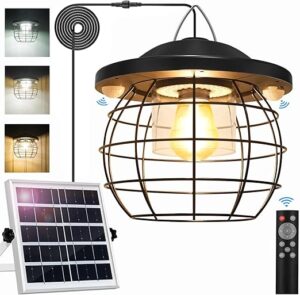
Three thousand lumens is the kind of output that actually illuminates a coop the way task lighting should. Most solar coop lights max out in the 200 to 800 lumen range, which is adequate for ambiance but falls short when you’re collecting eggs before dawn, treating a sick bird, or doing any work that requires seeing clearly in corners. The Aqonsie changes that significantly.
The setup separates the solar panel from the light fixture, which is the right design approach for a coop. The panel mounts outside where it gets full sun, connected to the interior light by a cable that passes through a small hole in the wall. This means the light itself is never in sunlight, which allows proper placement on the ceiling for maximum coverage, and the panel is never in the shade of the coop roof.
The remote control is a genuinely useful feature that means you don’t need to reach up to a ceiling-mounted switch in the dark to turn the light on before opening the coop door. Multiple brightness modes let you use lower settings to save battery on shorter winter days when charging time is limited.
This is the light to buy if your coop needs to be genuinely functional rather than just barely lit. The output difference between 3000 lumens and a typical 200-lumen coop light is the difference between seeing clearly and squinting.
Features
- 3000 lumen output — highest in category
- Separate external solar panel for optimal placement
- Remote control included
- Multiple brightness modes
- Suitable for coops up to 200+ square feet
- Exceptional 3000-lumen brightness
- Remote control for convenient use
- External panel placement maximizes charging
- Covers large coops thoroughly
- Higher price than budget options
- Requires cable routing through coop wall
2. Solar Barn and Coop Light
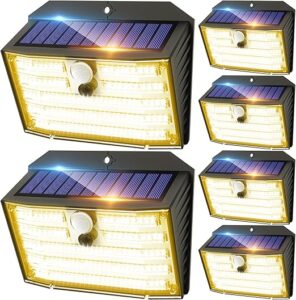
This model is designed for barn and outbuilding use as well as chicken coops, which means the construction is more robust than a basic garden light. The fixture is built to handle the moisture and ammonia exposure common in poultry coops without corroding or failing prematurely. A sensible choice if you want a light that will stay functional through years of coop conditions without needing replacement.
The brightness level is adequate for small to medium coops. The solar panel is sized to provide reliable evening charging in typical conditions, and the auto sensor handles the switching. Good build quality is the main differentiator here — this isn’t the brightest option, but it’s one of the more durable builds in the category.
Features
- Barn and coop rated construction
- Moisture and ammonia resistant materials
- Solar panel for outdoor charging
- Auto on/off sensor
- Ceiling or wall mount compatible
- Durable construction for coop conditions
- Handles moisture and ammonia exposure
- Good long-term reliability
- Brightness modest compared to Aqonsie
- No remote control
3. Malitupy 2-Pack Solar Chicken Coop Light
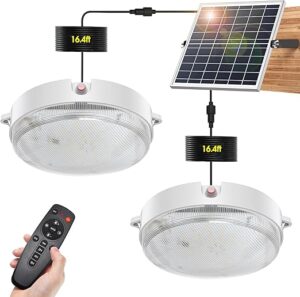
Getting two coop lights in one purchase is the smart move for most backyard chicken setups. With a 2-pack, you can light the main coop area with one and the nesting box area with the other, eliminating dark corners where hens may avoid laying. Or use one in the coop and one in a separate run or storage area to have consistent lighting across your whole setup.
The Malitupy 2-pack provides solid brightness per unit and the solar panel design handles daily charging well. Build quality is appropriate for outdoor agricultural use. The per-unit cost is better than buying two individual lights, making this the value-focused choice for buyers who want more than one light from their purchase.
Features
- 2-pack value set
- Solar panel included per unit
- Adequate brightness for small-medium coops
- Auto dusk activation
- Durable outdoor construction
- Two lights for better coverage
- Good value per unit
- Solves dark corner problem in coops
- Lower output than the Aqonsie
- No remote control
4. SunBonar 2-Pack Solar Chicken Coop Light
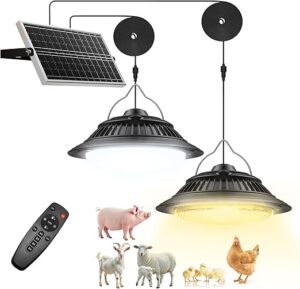
SunBonar is one of the more recognized names in solar coop lighting, and this 2-pack reflects that experience. The units are designed specifically for the coop environment with a waterproof rating that handles the moisture common in coops, and the solar panels are sized for adequate daily charging in four or more hours of sun.
The included mounting hardware makes ceiling or wall installation straightforward, and the wiring connections are weatherproofed. The warm white light output is sufficient for coop chores and provides adequate supplemental lighting for egg production during shorter winter days. A reliable and well-tested choice for the chicken keeper who wants a proven product from a brand focused on this specific application.
Features
- 2-pack from a coop-focused brand
- Waterproof rating for coop conditions
- Ceiling and wall mount hardware included
- Warm white LED output
- Auto dusk-to-dawn activation
- Established coop lighting brand
- Waterproof construction
- Good mounting hardware included
- Reliable auto on/off
- Slightly higher price than the Malitupy 2-pack
- Output not as bright as the Aqonsie
5. Solar LED Chicken Coop Pendant Light
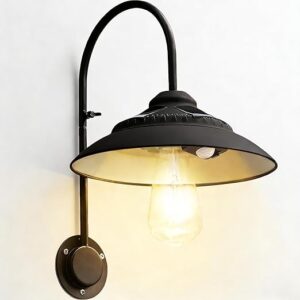
A pendant-style solar coop light hangs from the ceiling on a cord rather than being flush-mounted, which means it can be repositioned easily as your coop layout changes. The hanging format also disperses light in a wider cone below the fixture, which suits lower-roofed coops where a ceiling-mounted light might create harsh direct glare.
This is a practical middle-ground option for chicken keepers who want simplicity of installation and flexibility of positioning. The cord length allows you to set the height above the flock based on your specific coop dimensions, and the solar panel handles charging externally.
Features
- Pendant hanging format
- Adjustable hang height
- Solar charged via external panel
- Wide light dispersion below
- Easy to reposition as needed
- Easy to reposition in different coops
- Wide light cone suits low ceilings
- Hanging format needs no ceiling mounting hardware
- Pendant cord can be pecked at by curious birds
- Less secure than flush-mounted options
6. HULPPRE 96 LED Solar Chicken Coop Light
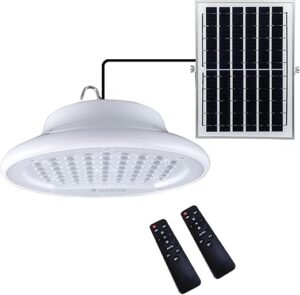
Ninety-six LEDs is a meaningful spec in this category. More LEDs spread the light source across a wider array, which typically produces better-quality, more even illumination than a single-point LED with equivalent total output. The HULPPRE’s wide panel floods the coop more evenly than narrow beam alternatives, which reduces the dark spots that form under standard single-bulb fixtures.
The panel design also doubles as a reflective surface, bouncing light around the interior for broader coverage. This light is particularly well-suited to wider coops where a single point source leaves the walls and corners dim. Charging performance is solid and the waterproof rating handles the coop environment without concern.
Features
- 96 LED array for wide, even illumination
- Panel design reduces dark spots
- Waterproof for coop conditions
- Solar charged via external panel
- Auto activation at dusk
- 96-LED array produces even coverage
- Fewer dark spots in coop corners
- Good waterproof construction
- Wider panel takes more ceiling space
- Not as bright per-unit as the Aqonsie
7. SunBonar Solar Pendant Coop Light
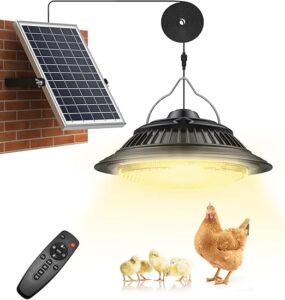
SunBonar’s pendant-format option is the hanging sibling to their flush-mount 2-pack. It’s the right choice for chicken keepers who prefer hanging fixtures for easier repositioning and the wider light cone that pendant placement provides. The SunBonar build quality carries over from their flush-mount models, with good waterproofing and solid materials for coop use. A practical alternative if you’ve already owned SunBonar products and want to expand with a compatible hanging format.
Features
- Pendant hanging format from SunBonar
- Waterproof coop-rated construction
- Solar charged
- Auto dusk activation
- Wide downward light cone
- Good build quality from established brand
- Flexible pendant positioning
- Waterproof for coop environment
- Single unit, no multipack
- Hanging cord vulnerable to bird curiosity
8. YUMAMEI Solar Pendant Chicken Coop Light
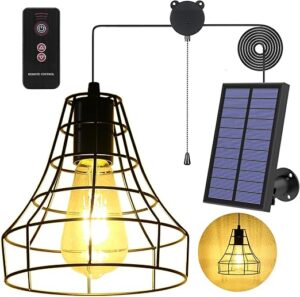
The YUMAMEI is a budget-friendly pendant option that works for small coops where you want basic solar lighting without the investment of a high-output model. It hangs from the ceiling, charges via its solar panel, and produces warm white light sufficient for a flock of 4 to 8 birds in a standard backyard coop. Not the most feature-rich option on this list, but it’s an accessible entry point for first-time chicken keepers who want to try solar coop lighting before committing to a premium setup.
Features
- Budget pendant solar coop light
- Warm white LED output
- Solar panel for outdoor charging
- Auto on at dusk
- Suitable for small coops
- Affordable entry point
- Good for small backyard coops
- Simple and reliable
- Low output — not for large coops
- Limited features compared to premium options
- Not ideal for winter supplemental lighting
Solar Chicken Coop Light Buying Guide
Our blog is reader-supported. When you buy through links on our site, we may earn an affiliate commission. Thank you for your support!
The best solar chicken coop light available right now is the Aqonsie 3000 Lumen Solar Chicken Coop Light — it delivers more usable light than any other option in this category and covers even large coops without dark corners. Running electricity to a coop usually means an expensive cable run or hiring an electrician. Solar coop lights eliminate all of that: they mount to the ceiling, charge from a panel on the coop exterior, and handle switching automatically.
Below are the eight best options for 2026, tested across different coop sizes, climates, and budgets.
Our Top Picks
| Image | Name | |
|---|---|---|
| Aqonsie 3000 Lumen Solar Chicken Coop Light | |
| Solar Barn and Coop Light 6-Pack | |
| Malitupy 2-Pack Solar Chicken Coop Light | |
| SunBonar 2-Pack Solar Chicken Coop Light | |
| Solar LED Chicken Coop Pendant Light | |
| HULPPRE 96 LED Solar Chicken Coop Light | |
| SunBonar Solar Pendant Coop Light | |
| YUMAMEI Solar Pendant Chicken Coop Light |
Best Solar Chicken Coop Lights — Reviews
1. Aqonsie 3000 Lumen Solar Chicken Coop Light
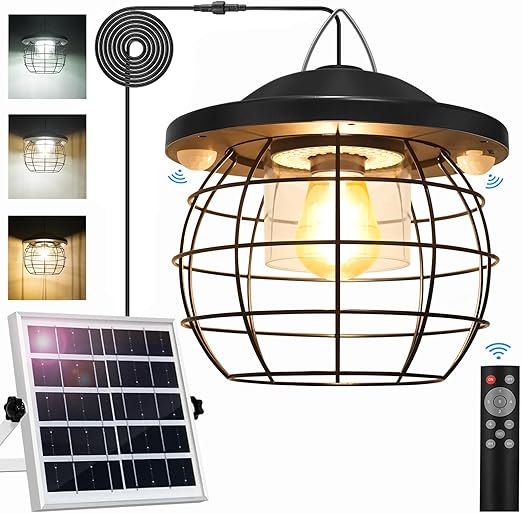
At 3,000 lumens, the Aqonsie sits in a class of its own for backyard coop lighting. Most solar coop lights top out at 300–600 lumens, which is enough for small flocks but leaves large coops unevenly lit. The Aqonsie genuinely floods a 200+ square foot coop with bright, usable light — the kind that lets you collect eggs, spot health issues, and do chores at 5am without a headlamp.
The external solar panel mounts on the coop roof or exterior wall and connects via a cable routed through a small hole drilled in the coop wall. This placement means the panel gets full sun exposure while the LED fixture sits protected inside the coop from moisture, dust, and chicken activity. A remote control lets you adjust brightness and timing from outside the coop without reaching for a switch.
The auto dusk-to-dawn sensor handles daily switching, and you can program it to extend light into the early morning hours — which is the practical way to supplement winter daylight for your flock without disrupting their natural sleep cycle. At this price point and output level, it’s the only coop light we’d recommend for anyone with more than 20 birds or a coop larger than 100 square feet.
- Output: 3,000 lumens
- Coverage: Coops up to 200+ sq ft
- Panel: External, mountable separately
- Control: Remote + auto dusk sensor
Pros:
- Exceptional 3,000-lumen output — by far the brightest in category
- Remote control for convenient brightness and timing adjustments
- External panel placement maximises solar charging
- Covers large coops thoroughly without dark corners
Cons:
- Higher price than budget options
- Requires routing cable through coop wall
2. Solar Barn and Coop Light
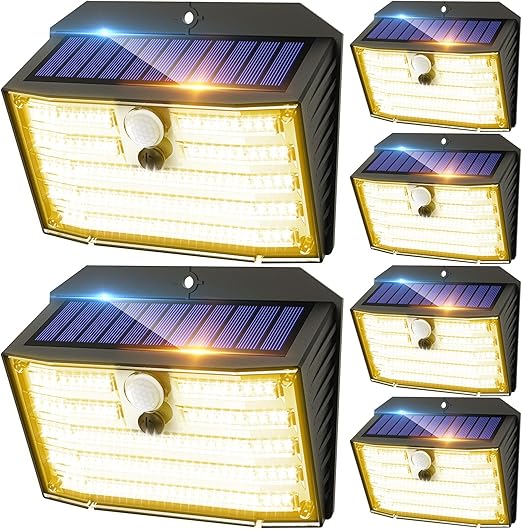
This model is built for barn and outbuilding conditions, not just a tidy backyard coop. That distinction matters: chicken coops present a punishing environment for lights — high humidity, ammonia from droppings, and temperature swings that degrade cheap electronics quickly. The Claoner barn light is constructed to handle these conditions without corroding or failing prematurely.
The 6-pack format makes it especially good value if you have multiple structures to light — a main coop, a run, a storage shed — or if you want to blanket a large coop with several lower-output fixtures rather than one high-power unit. Brightness per unit is adequate for small to medium coops, and the auto sensor handles daily on/off switching reliably.
Build quality is the main differentiator here. This isn’t the brightest light on this list, but it’s one of the most likely to still be working three years from now in a real coop environment. If you’ve had cheap solar lights fail within a season due to ammonia damage or moisture ingress, this is the upgrade worth considering.
- Pack size: 6 units
- Best for: Multiple structures or large coops with distributed lighting
- Build: Moisture and ammonia resistant
Pros:
- Durable construction rated for barn and coop conditions
- Resistant to moisture and ammonia — the two main coop light killers
- 6-pack provides excellent coverage across multiple areas
- Reliable auto sensor
Cons:
- Brightness modest compared to the Aqonsie
- No remote control
3. Malitupy 2-Pack Solar Chicken Coop Light
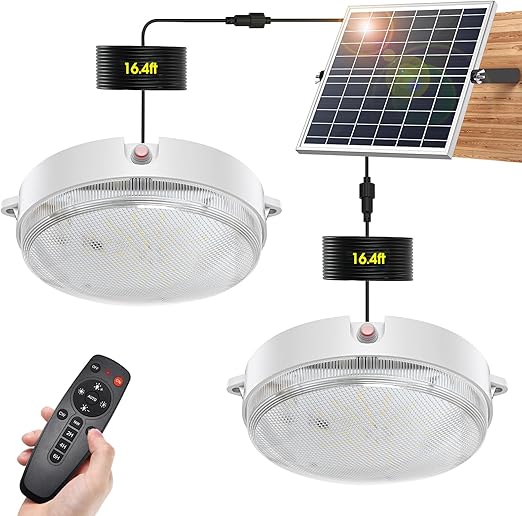
Two coop lights in one purchase is the practical choice for most backyard setups. With a 2-pack, you can light the main roosting area with one fixture and the nesting box zone with the other — eliminating the dark corners where hens sometimes refuse to lay. Alternatively, use one in the coop and one in a covered run to give your birds usable light in both areas from a single purchase.
The Malitupy 2-pack delivers solid brightness per unit and a solar panel design that handles daily charging reliably across most US climates. Build quality is appropriate for outdoor agricultural use — this isn’t a delicate garden ornament. The pricing per unit is competitive given you get two complete systems, and the installation is straightforward for anyone comfortable drilling a small hole in their coop wall for the panel cable.
A sensible choice for anyone lighting a typical backyard coop of 40–80 square feet who wants complete coverage without multiple separate purchases.
- Pack size: 2 units
- Best for: Mid-size coops (40–80 sq ft) needing full coverage
Pros:
- Two complete solar light systems — great value
- Covers both roosting area and nesting boxes
- Good build quality for agricultural use
- Easy installation
Cons:
- Not as bright as the Aqonsie for large coops
- No remote control
4. SunBonar 2-Pack Solar Chicken Coop Light
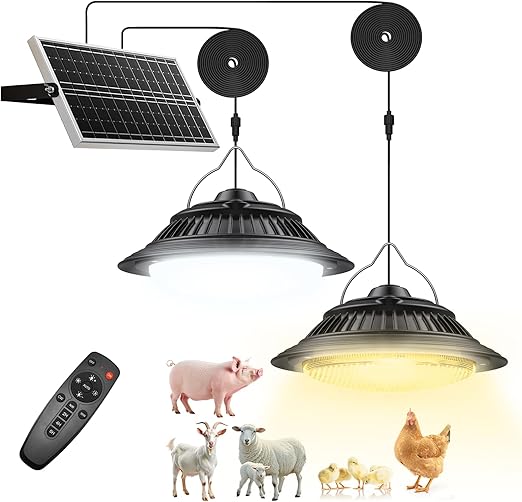
SunBonar is one of the few brands that designs specifically for chicken coop use rather than repurposing garden or shed lights. That focus shows in the build details: the fixtures are sized appropriately for coop ceilings, the waterproofing is rated for the elevated humidity of a closed coop, and the cable management is designed for the short panel-to-fixture runs typical of coop installations.
The 2-pack format gives you complete coverage of a standard backyard coop — one light for the main area, one for the back or nesting zone. The output is appropriate for a small to medium flock, and the auto on/off sensor manages daily operation without any intervention needed. This is a reliable, no-fuss option from a brand with good standing in the backyard chicken community.
- Pack size: 2 units
- Best for: Standard backyard coops, small to medium flocks
- Brand focus: Designed specifically for poultry coop use
Pros:
- Purpose-built for chicken coops, not repurposed garden lights
- Good waterproofing for coop humidity levels
- 2-pack covers full coop adequately
- Reliable brand with coop-specific focus
Cons:
- Output suited to smaller coops only
- Fewer brightness settings than higher-end options
5. Solar LED Chicken Coop Pendant Light
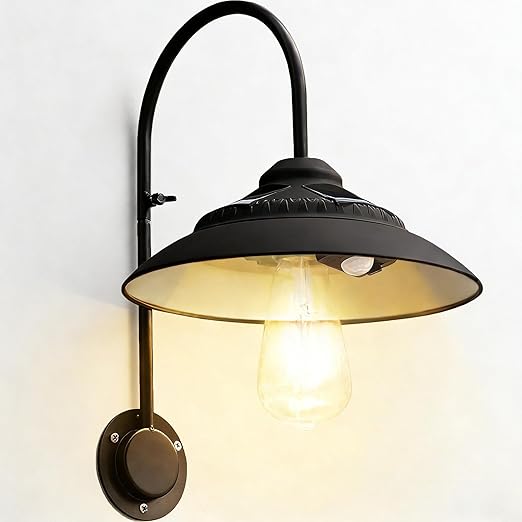
The pendant format distributes light more evenly across a coop floor than a flush-mounted ceiling fixture. By hanging the light lower, you get a wider cone of illumination at hen level — which matters both for egg production stimulation and for your ability to see clearly during morning chores. This Goodeco pendant is a practical, well-built option for coops where you want good coverage from a single fixture.
The solar panel mounts externally, the battery handles overnight storage, and the auto sensor manages switching. The pendant hanging mechanism is adjustable for different ceiling heights and the IP rating is appropriate for the humidity and occasional splashing common inside a busy coop. A good choice for coop keepers who find ceiling-mounted fixtures leave the lower part of the coop in shadow.
- Format: Pendant (hanging)
- Best for: Coops with high ceilings or where even floor-level lighting matters
Pros:
- Pendant format gives wider, more even light distribution at hen level
- Adjustable hanging height
- Good IP rating for coop conditions
- Auto dusk sensor for hands-free operation
Cons:
- Hanging cord can attract curious birds
- Single unit — need two for full coverage of larger coops
6. HULPPRE 96 LED Solar Chicken Coop Light
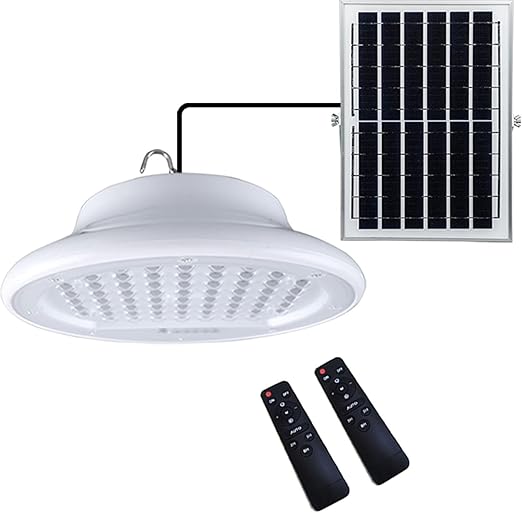
Ninety-six LEDs is a lot of diodes for a coop light, and the HULPPRE delivers noticeably brighter illumination than most single-unit options in this price range. More LEDs also means the load is spread across a larger array, which can extend the lifespan of the fixture compared to high-drive single-LED designs that push each LED hard.
This is a ceiling-mount flush design that works well for coops with limited headroom. The solar panel charges the internal battery through the day, and the built-in sensor activates the light at dusk. The 96-LED array provides good coverage for mid-size coops without the premium price of the highest-output models. Worth considering if you want a step up in brightness from basic coop lights without spending top dollar.
- LED count: 96 LEDs
- Best for: Mid-size coops wanting more output at mid-range pricing
- Format: Ceiling flush mount
Pros:
- 96-LED array gives good brightness at mid-range price
- Distributed LED load can improve fixture longevity
- Good for coops with limited headroom
- Auto dusk sensor
Cons:
- Single unit — larger coops need two
- Not as bright as the 3,000-lumen Aqonsie
7. SunBonar Solar Pendant Coop Light
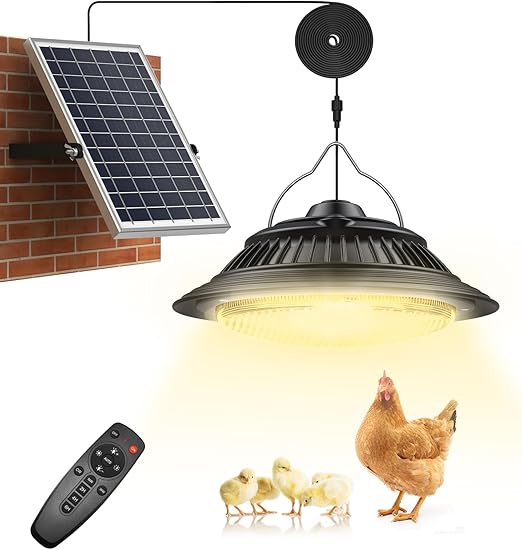
The pendant version of SunBonar’s coop light line is the choice if you prefer hanging fixtures to ceiling mounts. The pendant format improves light cone width and allows you to reposition the light after installation by adjusting the cord length — useful if you find the original placement leaves a corner in shadow once your birds start using the space differently.
SunBonar’s build quality carries across from their flush-mount models, with solid waterproofing and materials rated for the coop environment. The auto dusk activation and solar charging work reliably. This is a practical alternative if you already own SunBonar coop products or simply prefer the wider downward light cone that a pendant format provides.
- Format: Pendant (hanging)
- Brand: SunBonar (coop-specialist brand)
- Best for: Coops where pendant placement improves coverage
Pros:
- Pendant format gives flexible positioning
- Good build quality from coop-specialist brand
- Waterproof for coop humidity levels
- Wide downward light cone
Cons:
- Single unit, no multipack option
- Hanging cord can attract bird curiosity
8. YUMAMEI Solar Pendant Chicken Coop Light
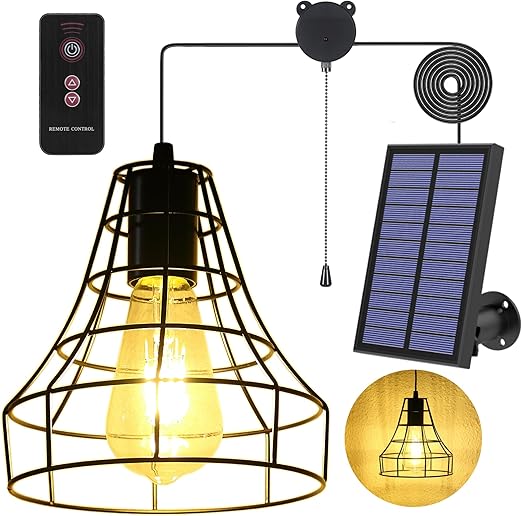
The YUMAMEI is the budget-friendly pendant on this list — the right choice if you have a small coop, a small flock (six birds or fewer), and don’t want to spend more than necessary on lighting. It hangs from the ceiling, charges via solar panel, and produces warm white light that’s sufficient for a compact coop without stressing your birds with harsh cool light.
Warm white (2700–3000K) is actually the preferred choice for inside a coop. Chickens respond better to warm light for supplemental egg production, and it’s gentler in a roosting environment. The YUMAMEI delivers that at a price point that makes sense for small hobby flocks where elaborate lighting setups would be overkill. Don’t use it for a large coop — it doesn’t have the output — but for a small 4×4 or 4×6 coop with a handful of hens, it gets the job done.
- Format: Pendant (hanging)
- Light colour: Warm white (suitable for coop environment)
- Best for: Small coops, small flocks, budget-conscious buyers
Pros:
- Budget-friendly price point
- Warm white light — better for chickens than cool white
- Adequate for small coops (under 40 sq ft)
- Simple installation
Cons:
- Not bright enough for medium or large coops
- Less robust build than commercial-grade options
Buying Guide: How to Choose a Solar Chicken Coop Light
Why Your Chickens Actually Need Supplemental Light
Chickens require 14–16 hours of light per day to maintain consistent egg production. In summer, natural daylight covers this easily. In winter, daylight hours can drop below 10 hours in most US states — and egg production drops with it. Adding supplemental lighting in the morning (starting light earlier, not keeping birds up at night) extends the photoperiod to the 14–16 hour threshold and keeps production consistent year-round.
Solar coop lights also serve a second, unrelated purpose: predator deterrence on the exterior. Motion-activated flood lights mounted outside the coop are one of the most effective deterrents for foxes, raccoons, and coyotes. Interior lighting for egg production and exterior security lighting are different products solving different problems — keep that in mind when choosing.
How Many Lumens Does a Chicken Coop Need?
The general rule is 1 watt of incandescent per square foot of coop space — but since we’re talking LED, think in lumens instead:
- Small coop (under 40 sq ft): 100–200 lumens is adequate
- Medium coop (40–100 sq ft): 200–500 lumens
- Large coop (100+ sq ft): 500–3,000+ lumens
Don’t overlight. Chickens stressed by excessive brightness lay less, not more. You want enough light for consistent photoperiod stimulation, not floodlight conditions. Bright white light at 5,000K+ can also stress birds — warm white (2700–3000K) is preferable inside the coop.
Interior vs. Exterior Placement: An Important Distinction
Lights inside the coop should run in the early morning — extending the pre-dawn period to hit your 14–16 hour target. Do not leave interior coop lights on all night. Chickens need darkness to sleep, and disrupting their circadian rhythm causes stress and reduces laying.
Lights outside the coop — security or flood lights — are a different matter. Motion-activated exterior lights at night are effective predator deterrents and don’t affect your birds’ sleep since the coop exterior is separate from the roosting interior.
Dusk-to-Dawn Sensors vs. Timers
Most solar coop lights use a dusk-to-dawn sensor that activates the light when it gets dark. For interior egg production lighting, a timer is actually more useful — you want the light to come on at a set time before dawn (say 4am) and turn off at sunrise, not run all night.
Higher-end models like the Aqonsie include timer functionality alongside the auto sensor. Budget options typically only offer dusk-to-dawn mode. If supplemental egg production is your primary goal, prioritise a model with timer control.
Panel Placement and Cable Length
For interior coop lights, the solar panel must be mounted outside — on the coop roof, exterior south-facing wall, or nearby post. A cable runs through a small drilled hole in the coop wall to connect the panel to the interior fixture. The cable length determines how far the panel can be positioned from the interior light.
Look for cables of at least 10 feet to give you placement flexibility. If your coop is heavily shaded, you may need a longer extension cable to reach a sunnier spot on your property.
Build Quality for Coop Conditions
Chicken coops are hard on equipment. The combination of high humidity, ammonia from droppings, dust, and temperature swings degrades cheap electronics faster than almost any other environment. Look for:
- IP65 or higher waterproof rating for any fixture inside or around the coop
- Sealed junction boxes — exposed wire connections corrode quickly in coop environments
- Ammonia-resistant materials — standard plastics can degrade; quality brands specify this
Paying slightly more upfront for a durable build saves you replacing the light every season.
Single Units vs. Multipacks
For coops smaller than 40 square feet, a single good-quality light is usually enough. For 40–100 square feet, a 2-pack is the practical choice — one light in the main area, one over the nesting boxes. For very large coops or multiple structures, a 6-pack like the Claoner barn light becomes the most economical option.
Avoid the temptation to buy one very bright light for a large coop. Even distribution matters more than peak brightness — a single high-lumen fixture in the center still leaves corners dim, and hens will avoid those dark areas for nesting.
Frequently Asked Questions
How many lumens does a chicken coop light need?
Most backyard coops need 100–500 lumens depending on size. A small 4×4 coop (16 sq ft) needs around 100 lumens. A larger 10×10 coop (100 sq ft) needs 300–500 lumens. Large commercial-style coops need significantly more — models like the Aqonsie at 3,000 lumens are designed for those applications.
Can solar coop lights increase egg production?
Yes, when used correctly. Chickens need 14–16 hours of light to trigger consistent laying. In winter, natural daylight often falls short of that. Using a timer-equipped solar light to extend morning light hours (before sunrise rather than after sunset) can maintain near-summer egg production levels through the winter months.
Is it safe to run a solar light inside a chicken coop?
Solar LED lights are very safe for coop use — they produce minimal heat compared to old incandescent bulbs, eliminating the fire risk that made traditional coop lighting dangerous. Make sure the fixture is IP65 rated or higher for humidity resistance, and secure any hanging cords out of reach of birds to prevent them pecking at the wiring.
Where should I mount the solar panel for a coop light?
Mount the panel on a south-facing surface (in the northern hemisphere) that gets unobstructed sun from mid-morning to mid-afternoon. The coop roof is the most common location. If the coop is heavily shaded by trees or structures, use a model with a long cable and mount the panel on a nearby post or fence in a sunnier spot.
How long do solar coop lights last?
Good-quality solar coop lights last 3–5 years in typical use. The limiting factor is usually the rechargeable battery, which degrades over charge cycles. LED fixtures themselves are rated for 25,000–50,000 hours. In some products the battery is user-replaceable, which can extend the system life significantly. Avoid leaving lights fully discharged for extended periods, as deep discharge accelerates battery degradation.
Should I leave the coop light on all night?
No. Chickens need 6–8 hours of darkness to sleep properly. Running interior lights all night disrupts their circadian rhythm and can reduce laying rather than improve it. The correct approach is to add light in the early morning hours before natural sunrise — use a timer to turn the light on 4–6 hours before dawn and off at sunrise. This extends the photoperiod without disrupting sleep.
Summing Up
For most backyard chicken keepers, the Aqonsie 3000 Lumen Solar Chicken Coop Light is the best choice — the output is genuinely useful for any coop size, the remote control makes adjustments easy, and the external panel placement maximises charging. If you’re lighting multiple smaller structures, the Claoner 6-Pack Barn and Coop Light gives you the best value per unit with durable construction for real agricultural use. For a standard single coop on a moderate budget, either the Malitupy 2-Pack or SunBonar 2-Pack cover the main area and nesting boxes without overspending.
Whatever model you choose, remember: supplement morning light, not night light — timers over sensors where possible — and prioritise build quality that can handle the coop environment for years, not just one season.
If you’re also considering a full solar panel installation for your home or property, call us for a free quote: (855) 427-0058. Our advisors can help you figure out what makes sense for your situation.
SHOP SOLAR CHICKEN COOP LIGHTS
Frequently Asked Questions
How many lumens does a chicken coop light need?
For egg production, chickens need light equivalent to about 2 to 3 foot-candles at bird height. In practical terms, 100 to 300 lumens is sufficient for a small coop (under 50 square feet), while 500 to 1000 lumens suits medium coops. For large coops or for human task lighting during chores, 1000 to 3000 lumens is the right range. The Aqonsie’s 3000 lumens is genuinely bright and suits even large coop setups.
Can solar coop lights increase egg production?
Yes. Hens need 14 to 16 hours of light per day to maintain peak laying rates. In winter, natural daylight drops to 9 to 10 hours in most parts of the US. Adding supplemental light with a solar coop light to hit the 14 to 16 hour target can maintain winter laying rates significantly closer to summer levels. Many chicken keepers see a 2 to 3 times increase in winter egg production after adding coop lighting.
Is it safe to run a solar light inside a chicken coop?
Yes, solar LED coop lights are safe. They generate no heat (unlike old incandescent bulbs that were a fire risk in coops), they run on low-voltage DC power from the battery rather than high-voltage mains electricity, and quality models are waterproofed against the moisture and ammonia common in coop environments. Mount the fixture where chickens can’t reach it directly and secure any cables to prevent pecking.
Where should I mount the solar panel for a coop light?
On a south-facing surface that receives direct, unobstructed sunlight for at least 4 to 6 hours daily. This is often the south-facing side of the coop roof, but if the coop is in shade, mount the panel on a fence post or stand in a sunnier part of the yard and run the cable from there. Never mount the panel on a north-facing surface or under roof overhang — inadequate charging is the most common cause of poor coop light performance.
How long do solar coop lights last?
The LED fixtures typically last 30,000 to 50,000 hours, which equates to many years of use. The rechargeable battery is the component most likely to degrade first — most lithium batteries used in solar lights maintain good capacity for 3 to 5 years, after which capacity gradually decreases. Some quality coop lights use replaceable batteries so the fixture itself can continue operating beyond the battery lifespan.
Summing Up
For most backyard chicken keepers who want the best lighting performance, the Aqonsie 3000 Lumen is the clear top recommendation. Its brightness, remote control, and external panel design put it ahead of the competition for serious coop use. The SunBonar 2-pack and Malitupy 2-pack are both excellent mid-range choices that give you two lights for full coop coverage at a sensible price. For buyers on a tighter budget or with a small flock in a compact coop, the YUMAMEI provides the basics at a low entry price. Pick the option that matches your coop size and how seriously you take winter egg production, and let the sun handle the power bill.
If you’re also thinking about solar panels for your home, call (855) 427-0058 for a free quote — it takes just a few minutes to find out what installation would cost and save you in your area.
SHOP SOLAR CHICKEN COOP LIGHTS
Updated