
Our blog is reader-supported. When you buy through links on our site, we may earn an affiliate commission. Thank you for your support!
The K&H Pet Products Chicken Coop Radiant Heater is the best solar heat lamp for most people who need warmth in a chicken coop, shed, or small outbuilding. But solar-powered heating is a broad category covering everything from chicken coop warmers to patio heaters to grow light setups. The right choice depends on what you’re heating and how much sun your location gets.
We reviewed eight solar heat lamps across different use cases to help you find the one that fits your setup. Run time, wattage, and weather resistance matter more here than with decorative solar lights.
Our Top Picks
| Image | Name | |
|---|---|---|
| K&H Pet Products Chicken Coop Radiant Heater This is the most consistently recommended coop warmer on the market, and for good reason. Read more | |
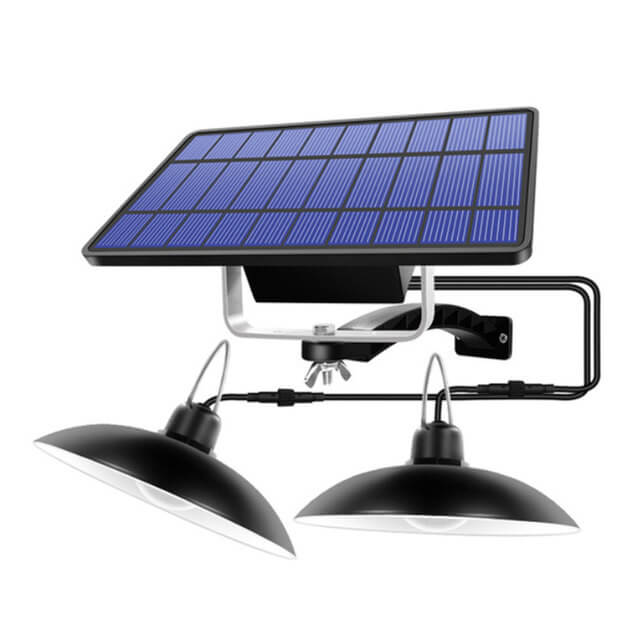
| LOZAYI YL008-1 Solar Shed Light If you need a solar-powered light that pulls double duty as mild warming in a small shed or coop, the LOZAYI is a solid choice. Read more | |
| JACKYLED Double Head Solar Sensor Lights The dual-head design makes the JACKYLED one of the most flexible solar shed lights available. Read more | |
| Nature Power 60-Watt Solar Shed Light Kit This is a proper off-grid lighting kit rather than a simple solar lamp. Read more | |
| AMORNO L01 Solar Adjustable LED Shed Light The AMORNO hits a useful middle ground between the cheapest integrated solar lamps and more expensive panel-plus-battery kits. Read more | |
| RentACoop Flat Panel Radiant Chicken Coop Heater The RentACoop is the alternative to the K&H for chicken coop heating. Read more | |
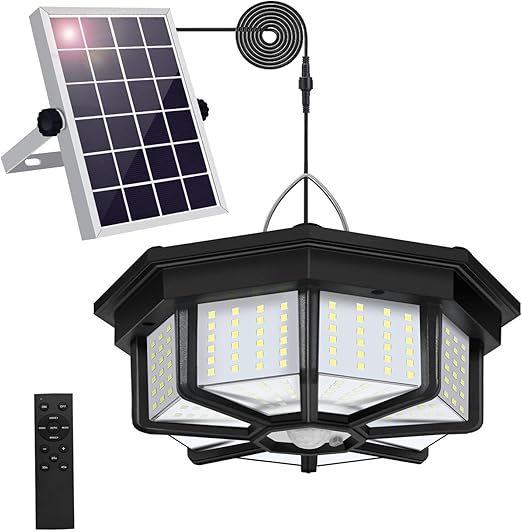
| Uponun Solar Dual Head Pendant Light The pendant light format works especially well in sheds where overhead mounting is the most natural option. Read more | |
| KK.BOL S-1200 Portable Solar LED Light Bulb The most versatile option on this list. Read more |
8 Best Solar Heat Lamps
1. K&H Pet Products Chicken Coop Radiant Heater
This is the most consistently recommended coop warmer on the market, and for good reason. The K&H flat panel design warms chickens through radiant heat rather than blowing hot air, which means no drying out of the coop air and no fire risk from dusty conditions. Chickens crowd close to it on cold nights and move away when they’re warm enough, self-regulating naturally.
The panel runs on AC power by default, but it’s the most compatible option for pairing with a solar generator or battery system. A small 100W solar panel and a battery station with AC output can power this unit for multiple hours. At 200W output, it’s genuinely warm, not just slightly warm, which matters when temperatures drop well below freezing.
The built-in thermostatic control activates the heater when temperatures drop and shuts it off when the coop warms up. That thermostat extends your battery run time significantly compared to running at full blast all night. Users with flocks of 6 to 12 chickens in a well-insulated coop report keeping birds comfortable through nights in the teens (Fahrenheit) on a single battery charge.
It’s designed specifically for poultry, which means it handles the humidity and dust common in chicken coops without electrical issues. The low-profile mounting keeps it out of the way and reduces the risk of chickens roosting on it.
Features
- 200W radiant flat panel heater designed for chicken coops
- Built-in thermostat for energy-efficient operation
- Suitable for pairing with solar generator or battery station
- Low-profile design with coop-mounting hardware included
- MET safety listed for safe indoor animal housing use
- Radiant heat is safer than forced air in dusty coop environments
- Thermostat saves battery power by not running at full output constantly
- Proven track record with poultry keepers over many seasons
- Low-profile design reduces roosting on the heater
- Requires AC power – needs solar generator or battery inverter
- 200W draw means significant solar/battery capacity needed
- Not designed for outdoor unenclosed use
2. LOZAYI YL008-1 Solar Shed Light
If you need a solar-powered light that pulls double duty as mild warming in a small shed or coop, the LOZAYI is a solid choice. It’s not a heater in the traditional sense, but a high-output LED bulb this bright does generate noticeable warmth when mounted close to an animal bedding area, and it adds several degrees to a small enclosed space on its own.
The built-in solar panel charges during daylight and stores enough power to run the light all night. Motion detection mode extends battery life significantly if you only need light when you’re working in the shed rather than all night continuously. The remote control is a genuine convenience when you’re walking in with an armful of feed.
Performance is best in summer when charging hours are long. In winter, you might get 4 to 6 hours of continuous run time rather than the 10-plus hours advertised in peak conditions. That’s typical for solar and not a knock against this product specifically.
Features
- High-output LED with motion detection option
- Remote control operation
- Built-in solar panel with 10-hour max run time
- Multiple mounting options for shed/coop installation
- IP65 weatherproof rating
- True off-grid solar operation, no wiring needed
- Motion detection extends battery life
- Remote control is practical for shed use
- Not a true heater, only mild warming from LED heat output
- Winter run time drops significantly
- Motion mode not ideal for animals that need continuous warmth
3. JACKYLED Double Head Solar Sensor Lights
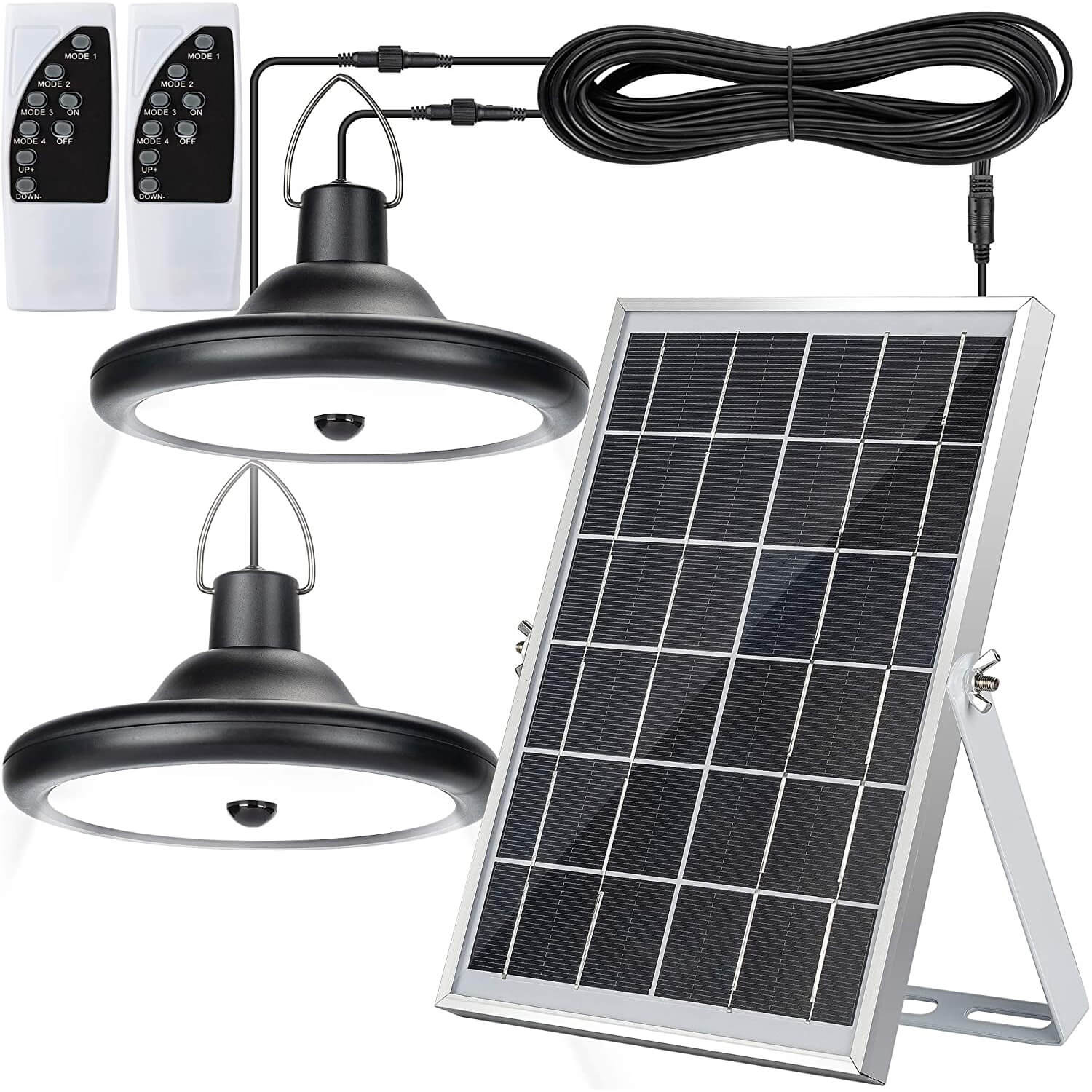
The dual-head design makes the JACKYLED one of the most flexible solar shed lights available. You can angle both heads independently to cover a wide area or focus both on a single zone, like a coop entrance or a work surface. The adjustability is genuinely useful in a way that single-direction lights aren’t.
Motion sensitivity is adjustable, and the three modes (steady on, motion-activated, and off) cover most use cases. Leave it in steady-on mode through winter when continuous warmth and light matter, and switch to motion mode in summer when you’re mainly using the shed during the day.
Build quality is solid for the price. The housing is thick plastic that handles temperature swings well. Users in cold climates report these working through multiple winters without failure. The solar panel on the separate mounting bracket captures more light than integrated-panel designs, which improves winter charging performance.
Features
- Dual adjustable LED heads for wide-area coverage
- Adjustable motion sensitivity
- Three operating modes: steady, motion, off
- Separate solar panel for better positioning
- IP65 weatherproof
- Dual head adjustability covers large areas efficiently
- Separate solar panel can be positioned for better sun exposure
- Three modes adapt to seasonal needs
- More of a security/work light than a true heat lamp
- Steady-on mode drains battery faster than motion mode
4. Nature Power 60-Watt Solar Shed Light Kit
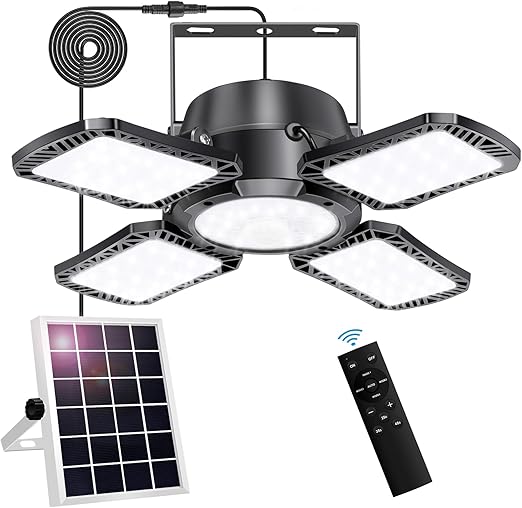
This is a proper off-grid lighting kit rather than a simple solar lamp. The 60W solar panel charges a separate battery that powers a bright LED lamp inside your shed. Because the battery and panel are separate from the fixture, you get significantly more flexibility in positioning. Mount the panel on the sunniest side of your property and run the cable to the shed interior.
The bigger battery capacity means better performance in winter and on cloudy days than integrated solar lights. You can also use the system to power other 12V devices in the shed alongside the light, which makes it useful if you want to run a small fan or charge tools.
Installation takes a couple of hours and requires basic wiring knowledge. It’s not complicated, but it’s more involved than simply mounting a self-contained solar lamp. If that kind of setup appeals to you, this is the most capable solar shed lighting solution on this list.
Features
- 60W solar panel with separate 12V battery
- High-output LED shed light
- Battery stores power for use at night and on cloudy days
- Can power other 12V accessories alongside the light
- All mounting hardware and wiring included
- Larger battery capacity handles cloudy stretches better
- Separate panel positioning maximizes sun exposure
- Powers other 12V devices simultaneously
- More capable than integrated solar lamp designs
- Installation takes more time and basic wiring knowledge
- More expensive than simple integrated solar lamps
- Requires planning where to route the panel cable
5. AMORNO L01 Solar Adjustable LED Shed Light
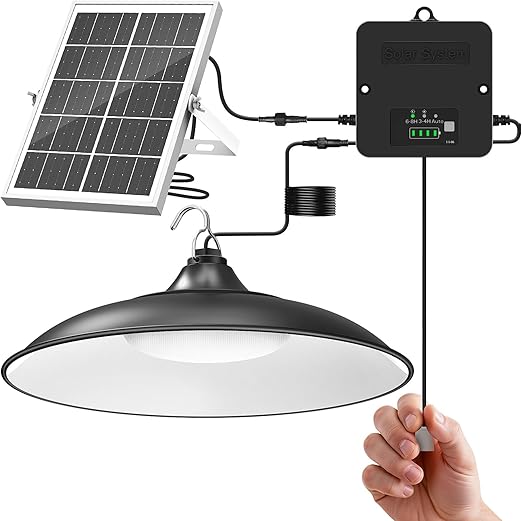
The AMORNO hits a useful middle ground between the cheapest integrated solar lamps and more expensive panel-plus-battery kits. The light head swivels to direct output exactly where you need it, the remote control adds convenience for shed use, and the multi-mode operation gives you options for balancing brightness against run time.
What stands out is the charging speed. The panel is larger than most competitors in this price range, and users consistently report good charging performance even on partly cloudy days. That translates to more reliable illumination through winter months than you’d get from a smaller-panel alternative.
The motion sensor on the brightest mode makes it a practical security light for an outbuilding entry or driveway area as well as a shed light. Versatility across multiple use cases adds real value at this price point.
Features
- Swivel-adjustable LED head
- Remote control with multiple operating modes
- Large solar panel for faster charging
- Motion sensor option on high mode
- IP65 waterproof rating
- Adjustable head directs light where it’s needed
- Large panel charges well even on overcast days
- Remote control is genuinely convenient
- Remote control range limited to about 30 feet
- Not suitable as a primary heat source
6. RentACoop Flat Panel Radiant Chicken Coop Heater
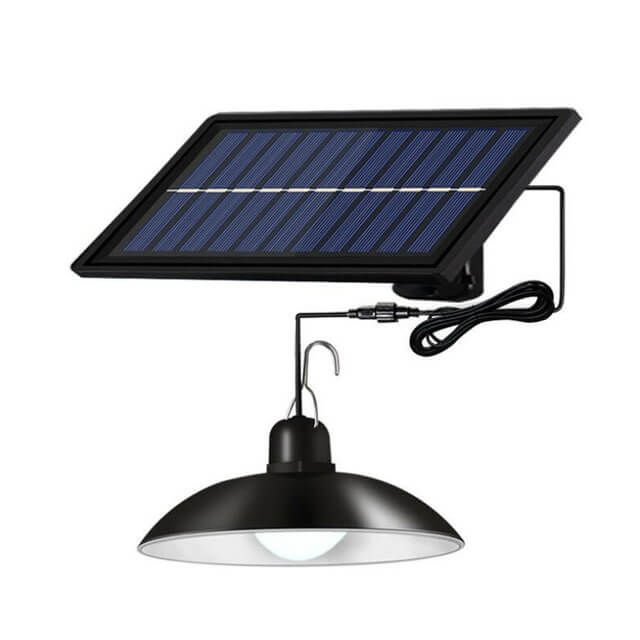
The RentACoop is the alternative to the K&H for chicken coop heating. It uses the same radiant flat panel approach, produces less heat at 150W (which is actually better for smaller coops where 200W might be too much), and costs slightly less. Pair it with a solar generator or battery inverter and you have a capable off-grid coop heating solution.
The design keeps the heating surface away from bedding and walls, and the three-legged stand lets it freestand in the coop if you can’t easily mount it. Chickens quickly learn that the warm side is toward the panel, and they’ll cluster around it on cold nights while giving you peace of mind that they’re not overheating.
Long-term reliability is good based on user reports. This is a product that chicken keepers buy once and use for many winters without failure. At this power level, a quality solar generator with a 500Wh capacity can run it for 2 to 3 hours on thermostatic control before needing a recharge, which covers the coldest part of most winter nights.
Features
- 150W radiant flat panel heater
- Thermostat keeps coop temperatures stable
- Freestanding or wall-mountable
- Suitable for coops housing 4 to 10 birds
- UL listed for safety
- 150W is better for smaller coops than 200W alternatives
- Freestanding option simplifies installation
- Lower power draw extends solar battery run time
- Still requires AC power (solar generator needed)
- Less heat output than K&H for larger coops
7. Uponun Solar Dual Head Pendant Light
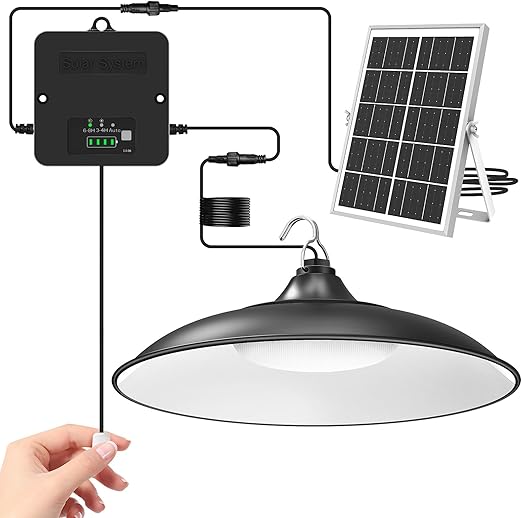
The pendant light format works especially well in sheds where overhead mounting is the most natural option. The Uponun dual-head pendant hangs from a ceiling hook, and both LED heads swivel independently to direct light wherever you need it below. The large integrated solar panel on the housing charges efficiently even through a translucent shed roof or near a window.
Output is strong for a solar pendant, and the three power modes let you choose between maximum brightness, a mid-range level, and a motion-activated mode. Most users leave it in mid-range for day-to-day shed use and switch to max brightness when doing detailed work.
It’s worth setting expectations clearly: this is a bright work light that produces mild warmth from LED heat as a byproduct. It doesn’t replace a dedicated heater for freezing temperatures. But for a shed in a mild climate where you mainly need light and a few extra degrees on cold evenings, it works well.
Features
- Overhead pendant design with hook mounting
- Dual swivel LED heads for directional lighting
- Three brightness modes including motion-activated
- Large integrated solar panel
- IP65 weather resistance
- Overhead mounting keeps floor space clear
- Dual heads cover large shed floor area
- Strong output for a self-contained solar light
- Pendant format requires a suitable overhead mounting point
- Limited warming in cold climates compared to dedicated heaters
8. KK.BOL S-1200 Portable Solar LED Light Bulb
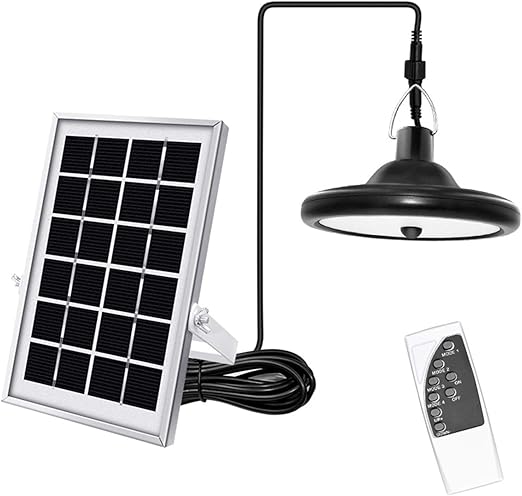
The most versatile option on this list. The KK.BOL is a solar LED bulb with a separate panel connected by a 16-foot cable. During the day, hang the panel outside in sun. At night, use the bulb inside. The result is a completely self-contained off-grid lighting solution that works in any enclosed space where you can get a cable to an outdoor panel.
It’s designed for temporary setups like camping, emergency power situations, and spaces that are too remote for convenient wiring. A chicken coop a long distance from your house, a small outbuilding you rarely use, or a temporary shelter structure all work well with this setup.
Don’t expect it to heat a space. It won’t. But for reliable off-grid lighting in hard-to-reach places, this is the most practical and portable solution on the list. The pull-cord switch on the bulb is simple and reliable, and the kit stores in a small bag when not in use.
Features
- LED bulb with 16-foot connecting cable to separate solar panel
- Multiple brightness settings
- USB charging port for devices
- Built-in battery stores multiple days of power
- Portable and easy to relocate
- Maximum flexibility for unusual locations
- Built-in device charging port adds utility
- Portable and storable when not in use
- Not a heater in any meaningful sense
- Lower output than fixed shed light options
- Cable management can be awkward in some setups
Solar Heat Lamp Buying Guide
Key Takeaways
- True solar heat lamps (radiant heaters) need AC power from a solar generator or battery inverter, not just a solar panel
- For chicken coop warmth, radiant flat panel heaters are safer than heat bulbs (no fire risk)
- Solar LED lights provide mild warmth as a byproduct of their operation, but can’t replace a heater in genuinely cold conditions
- Separate panel designs charge better in winter and partially shaded locations
- Match heater wattage to coop size: 100-150W for small coops (4-8 birds), 200W+ for larger coops
What Are Solar Heat Lamps?
“Solar heat lamp” covers two related but different product categories. The first is radiant heaters that run on electricity, which can be powered by a solar generator or battery system. These produce genuine heat through an infrared or resistive element and raise temperatures meaningfully in enclosed spaces.
The second category is solar-powered LED lights that produce mild warmth as a byproduct of their high-output operation. These are primarily lights, not heaters, but high-output LEDs in a small enclosed space do add a few degrees of warmth, which can matter in marginal cold weather.
Understanding which category you need is the first step. If temperatures in your coop or shed regularly drop below 20 degrees Fahrenheit and you have animals to protect, you need a dedicated heater powered by a solar generator. If you’re in a mild climate and mainly need light with incidental warmth, a high-output solar LED works fine.
How Do Solar Heat Lamps Work?
Radiant heaters convert electrical energy into infrared radiation, which heats objects and animals directly rather than heating the air. This is more efficient in drafty spaces like coops because it warms your chickens directly without the warmth dissipating as quickly into the air.
Solar-powered LED lights convert sunlight into DC electrical energy, store it in a rechargeable battery, and run an LED array from that stored power. The LED process produces some heat, but far less than incandescent or halogen bulbs because LEDs are specifically designed to minimize heat waste. That’s a good thing for lighting efficiency but limits their value as warming devices.
Actual Heat Output vs. Claimed Coverage: Setting Realistic Expectations
Solar heat lamps are fundamentally limited by the energy storage available from a small panel and battery. A corded 250-watt infrared heat lamp produces steady, intense warmth that you can feel from 6 feet away. A solar heat lamp working from a rechargeable battery produces far less sustained heat output. This is not a flaw — it is physics — but it means solar heat lamps are best suited for supplemental warming in small enclosed spaces like chicken coops, rabbit hutches, and cold frames rather than for heating a large outdoor patio or open space.
Realistic applications: a small coop (4 to 8 square feet) where the lamp takes the edge off overnight cold, not a primary heat source for a large space. Check the listed wattage of the heating element. Below 15 watts, the heat output is minimal and mainly psychological. 20 to 40 watts provides a perceptible warmth radius of 1 to 2 feet. Be skeptical of any solar heat lamp claiming to heat a “large area” — if the panel is compact and the battery small, the math does not support it.
Red Infrared vs. White LED: Which Type Is Right for Your Animals or Plants
Solar heat lamps for animals come in two main types. Red infrared bulbs produce radiant heat with a warm red glow. The red light is less disruptive to sleeping animals than white light, making it the preferred choice for chicken coops and rabbit hutches where you do not want to disturb natural sleep cycles or interfere with egg production. The heat is radiant, meaning it warms surfaces and animals directly rather than heating the air, so it is efficient in draughty or partially open structures.
White LED grow-heat combination lights produce light for plant growth alongside mild warmth. These work well in cold frames, greenhouses, and seed-starting setups where you want both supplemental light and a small amount of temperature buffering on cold nights. For pure warmth for animals, stick with a red infrared model. For plant overwintering or seedling protection, a white grow-light model is more appropriate. Mixing up the type is a common and frustrating mistake since an LED grow light provides minimal heat and a red heat lamp provides minimal useful light for plant photosynthesis.
Runtime and What “8 Hours” Actually Means in Cold Conditions
Heat lamp batteries drain faster in cold weather because the heating element draws more current when it is working against lower ambient temperatures, and battery efficiency drops in the cold. A solar heat lamp rated for 8 hours of runtime at 68 degrees Fahrenheit may only last 4 to 5 hours at 25 degrees, which is precisely when you need it most. This is not unique to solar products but is particularly relevant here because the entire value proposition is winter animal protection.
To get the most runtime in cold conditions: fully charge the battery during any available daylight, position the solar panel in the sunniest possible spot, and use a timer or thermostat controller if the lamp supports one so it only runs when temperatures drop below a set threshold rather than continuously from dusk to dawn. Some solar heat lamp models include a built-in thermostat that activates the heating element only below a set temperature, which dramatically extends effective runtime.
Factors to Consider Before Buying
Your climate and animal needs. Chickens handle cold better than most people expect. Healthy birds with good insulation and no drafts can survive temperatures well below freezing without supplemental heat. Heat is usually needed for young chicks, recovering birds, or in genuinely extreme cold. Match your heat source to the actual need rather than over-buying.
Power source availability. True solar heating requires a solar generator or battery station with sufficient capacity. A 500-1000Wh battery paired with a 200W solar panel can power a 150-200W heater on thermostat control through most winter nights. Without that infrastructure, you’re limited to solar LED lights as your heat source.
Coop insulation. Insulation does more for coop temperature than any heater. A well-insulated coop needs significantly less heating than a drafty one. Before investing in solar heating equipment, address drafts and insulation. You’ll get better results for less money.
Winter sun in your location. Solar charging in winter varies dramatically by location. If you’re in the northern US with limited winter sun, you’ll need a larger solar panel and battery capacity to run heaters reliably. A 100W panel and 500Wh battery that works fine in Texas might struggle in Minnesota in January.
Types of Solar Heat Lamps
Flat panel radiant heaters are the safest option for coops. They have no exposed heating elements, don’t glow red, and reduce fire risk compared to traditional heat lamps. They require AC power from a solar generator.
Traditional heat bulb setups use incandescent or ceramic heat bulbs that produce infrared heat by glowing. These are increasingly out of favor for coop use because of fire risks from dust and bedding contact. A solar generator can power these, but flat panel designs are generally safer.
Solar LED shed lights provide lighting plus mild warmth. They’re true solar products (no generator needed) but aren’t meaningful heaters in cold conditions. Best for mild climates or supplemental use.
Portable solar bulb kits offer the most flexibility for temporary or remote setups. The separate panel-and-cable design works in locations that fixed solar lights can’t reach.
Frequently Asked Questions
Can solar panels power a heat lamp for chickens?
Yes, but you need a solar generator or battery station with AC output to power a traditional electric heat lamp or radiant panel heater. A single solar panel connected directly to a heat lamp won’t work. You need a battery to store power and an inverter to convert it to AC electricity the heater can use.
How many watts do I need to heat a chicken coop?
For a small coop with 4 to 8 birds in moderate cold (20 to 30 degrees Fahrenheit nights), a 150W radiant panel heater on thermostat is usually sufficient if the coop is well-insulated. For larger coops or colder climates, 200W or more may be needed. Addressing drafts and improving insulation reduces how much heating power you need.
Do solar lights produce enough heat to warm a coop?
Not meaningfully in cold weather. High-output solar LED lights produce mild warmth as a byproduct of operation, but not enough to raise temperatures more than a few degrees in a well-ventilated coop. In mild climates (temperatures staying above 35 degrees Fahrenheit), that might be sufficient. In genuinely cold conditions, you need a dedicated heater.
Are heat lamps safe for chicken coops?
Traditional heat bulbs (glass heat lamps) carry fire risks from dust, bedding contact, and bulb failure. Flat panel radiant heaters are significantly safer because they have no exposed glowing element and don’t get dangerously hot on the surface. If you’re using solar-powered heating in a coop, flat panel designs are strongly preferred over heat bulbs for safety reasons.
What size solar panel do I need to power a heat lamp?
For a 150-200W heater running on thermostat control through winter nights, plan for at least 200W of solar panel capacity paired with a 500-600Wh battery. In cloudy climates or high latitudes, 300W+ of panels improves reliability. Add panel capacity generously if winter sun is limited in your area.
Summing Up
Solar heat lamps fall into two categories: true heaters that need a solar generator to run, and solar LED lights that provide light with incidental warmth. For genuine cold-weather heating in chicken coops, the K&H radiant flat panel paired with a solar battery station is the most reliable setup. For sheds and outbuildings in mild climates where lighting with mild warmth is sufficient, any of the self-contained solar LED options on this list will serve you well.
If you’re also thinking about solar panels for your home, call (855) 427-0058 for a free quote — it takes just a few minutes to find out what installation would cost and save you in your area.
Updated