
Our blog is reader-supported. When you buy through links on our site, we may earn an affiliate commission. Thank you for your support!
The best solar novelty and decorative yard light overall is the Alpine Corporation 10″ Solar Mosaic Gazing Globe — a genuine glass focal point that needs zero wiring or maintenance beyond an occasional wipe-down. But “decorative solar light” covers a lot of ground, from hanging wind chimes and chandeliers to whimsical stake-mounted animals and illuminated house numbers, and the right pick depends on where in your yard you’re lighting and what mood you’re going for.
We researched real, currently-available products across each style below, so you can find the right one fast instead of digging through dozens of near-identical listings.
Our Top Picks
| Photo | Product | |
|---|---|---|
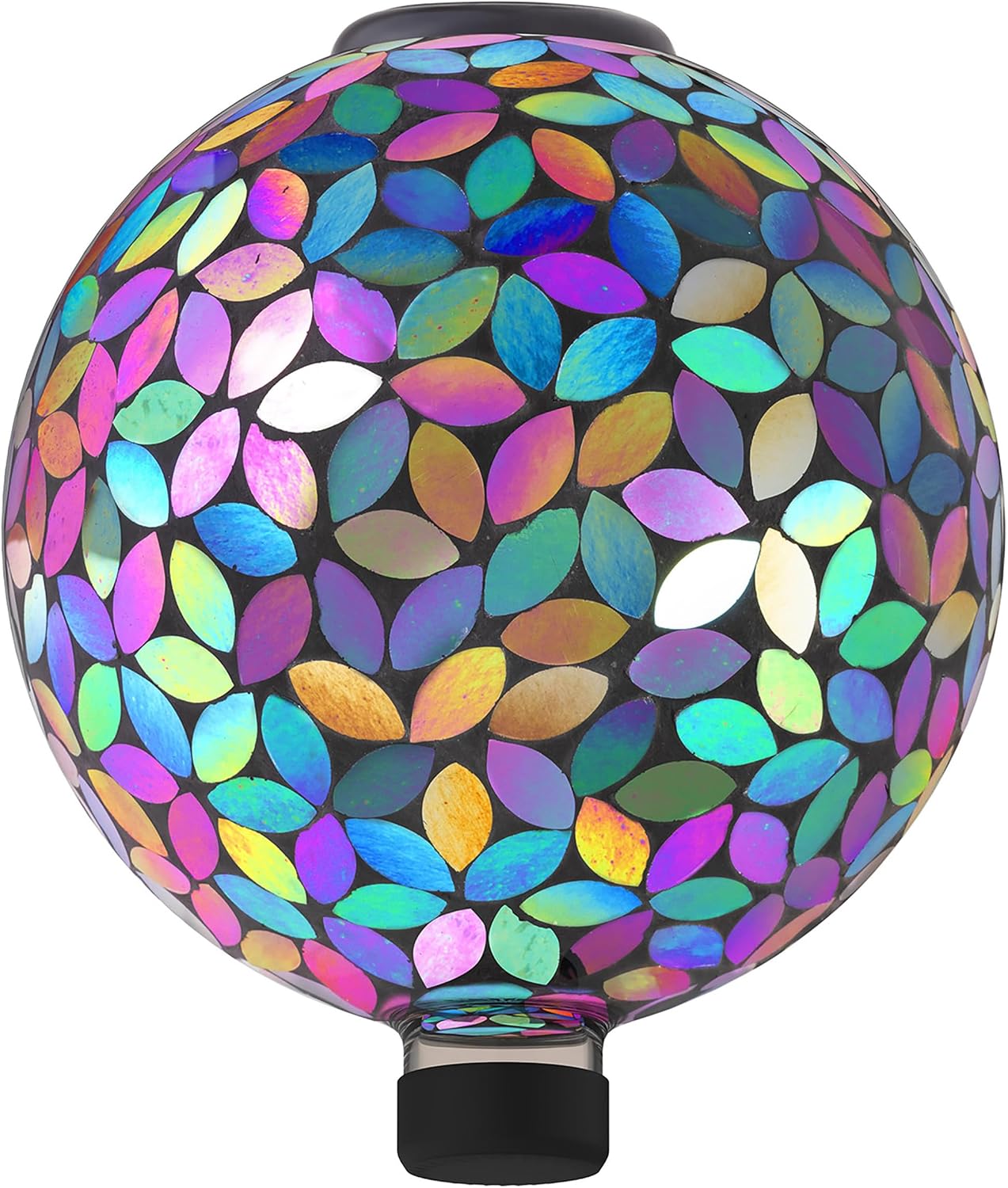 | 1. Best Overall Alpine Corporation 10″ Solar Mosaic Gazing Globe An established outdoor-decor brand’s 10″ mosaic gazing globe, lit from within by built-in solar LEDs after dark. Read more | |
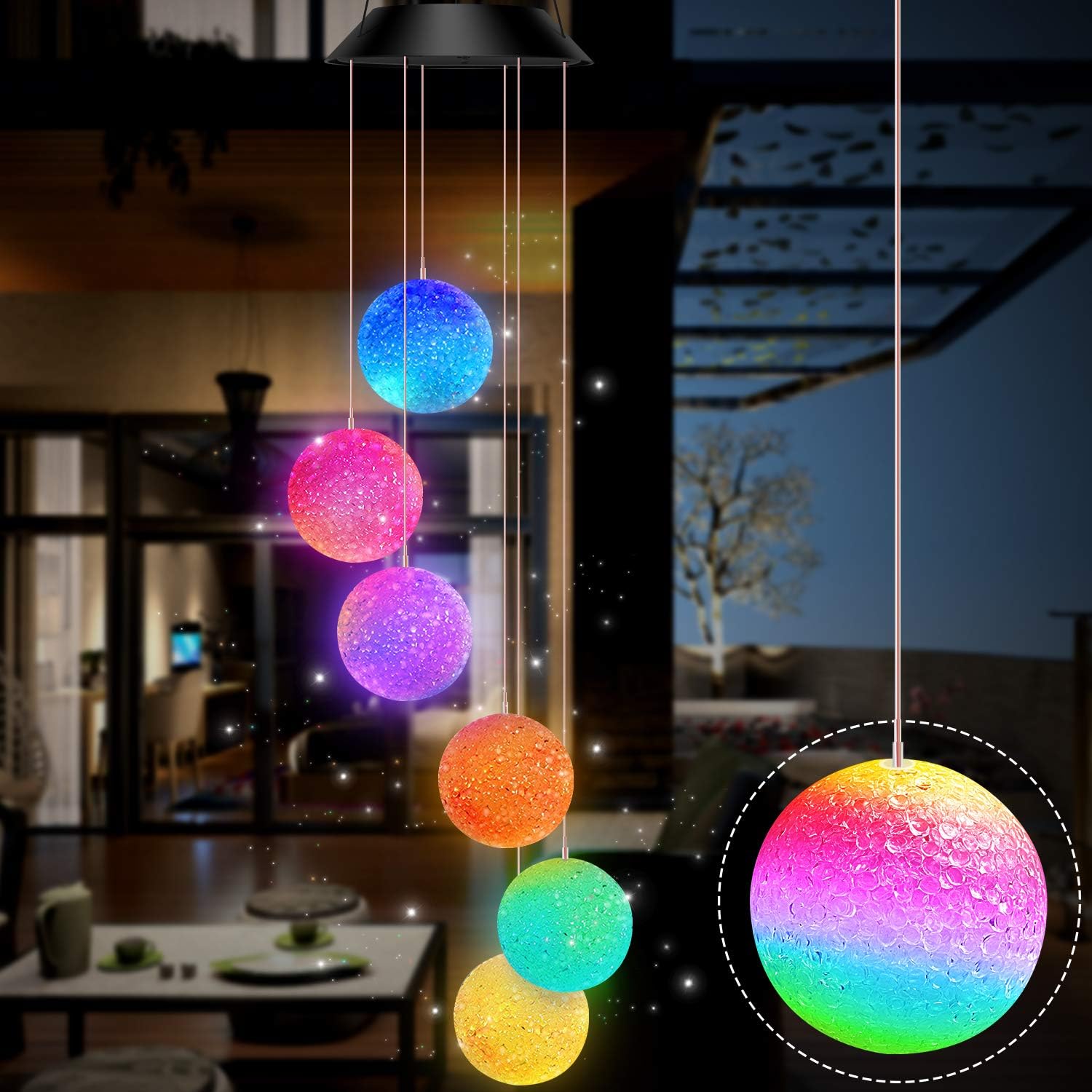 | 2. Best for Movement & Sound Remon Solar Wind Chimes with Color-Changing LED Pairs a color-changing LED crystal ball with metal wind chime tubes, cycling through seven colors independent of wind movement. Read more | |
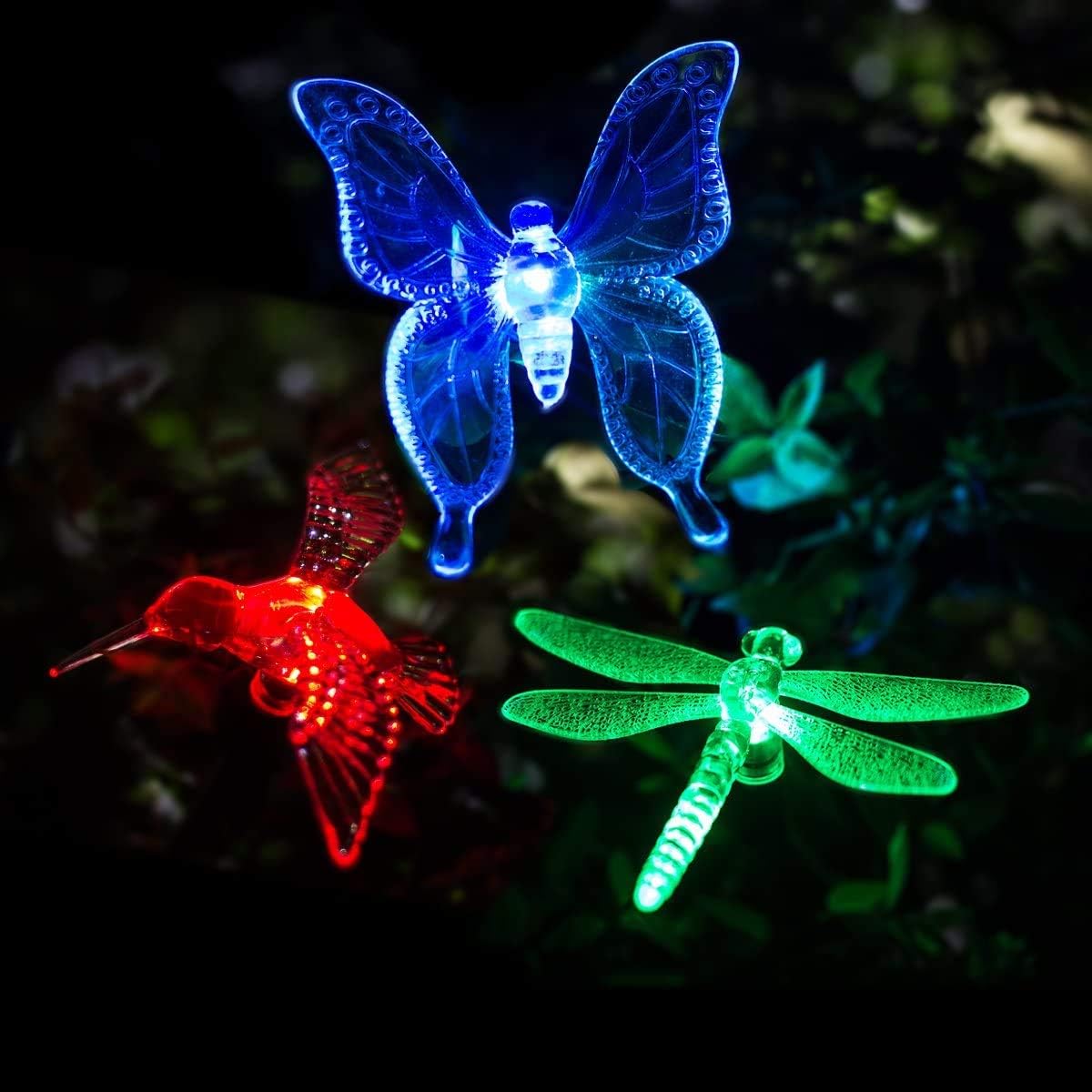 | 3. Best Whimsical Yard Stakes GIGALUMI Solar Butterfly Garden Stake Lights (3-Pack) The template for the animal-silhouette stake category — three butterfly stakes with color-changing LED wings for flower beds and borders. Read more | |
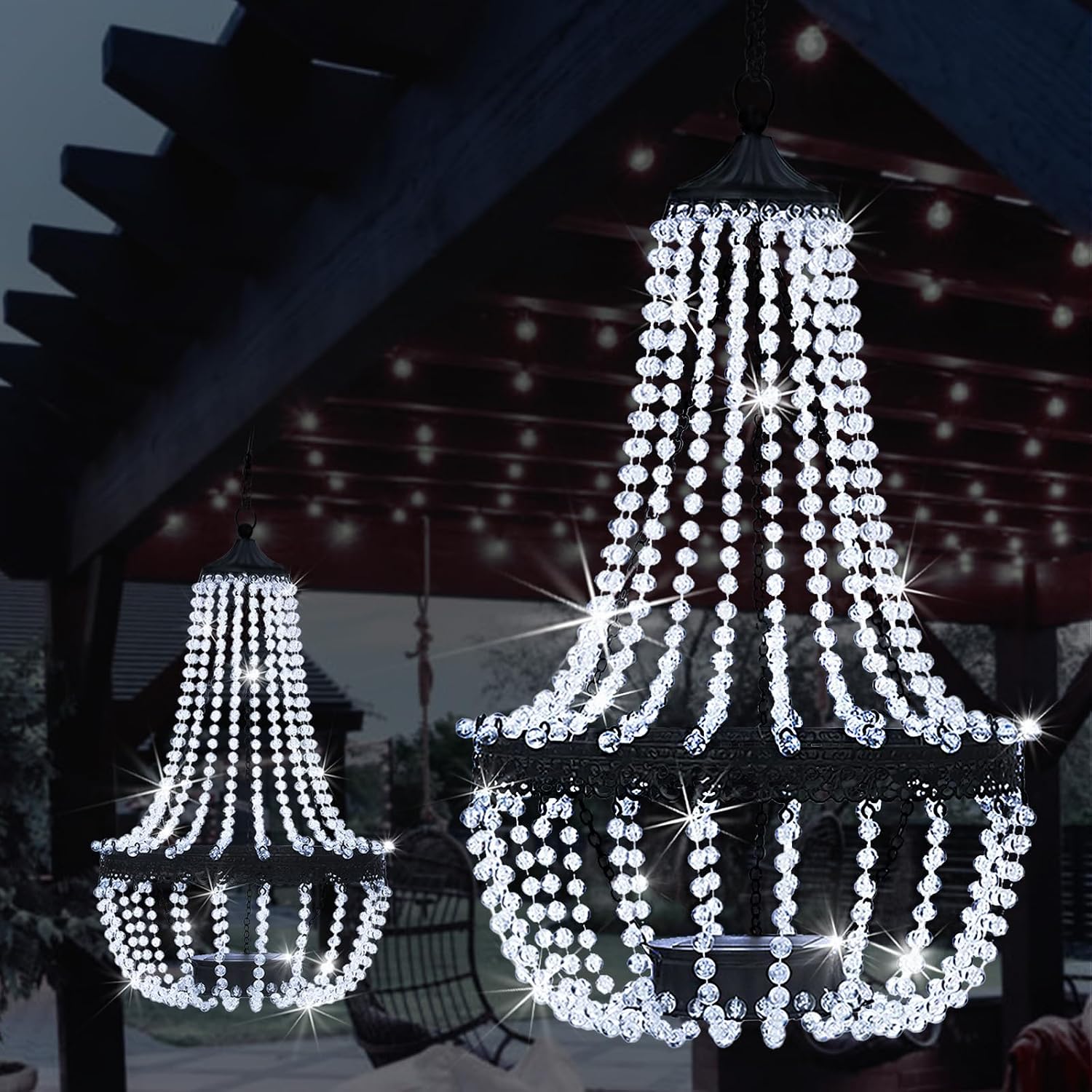 | 4. Best for Porches & Patios 28″ Hanging Solar Chandelier, Acrylic Beaded, Cool White A statement piece for covered porches and pergolas: 28″ of beaded acrylic with 30 LEDs, a light sensor, and an included S-hook. Read more | |
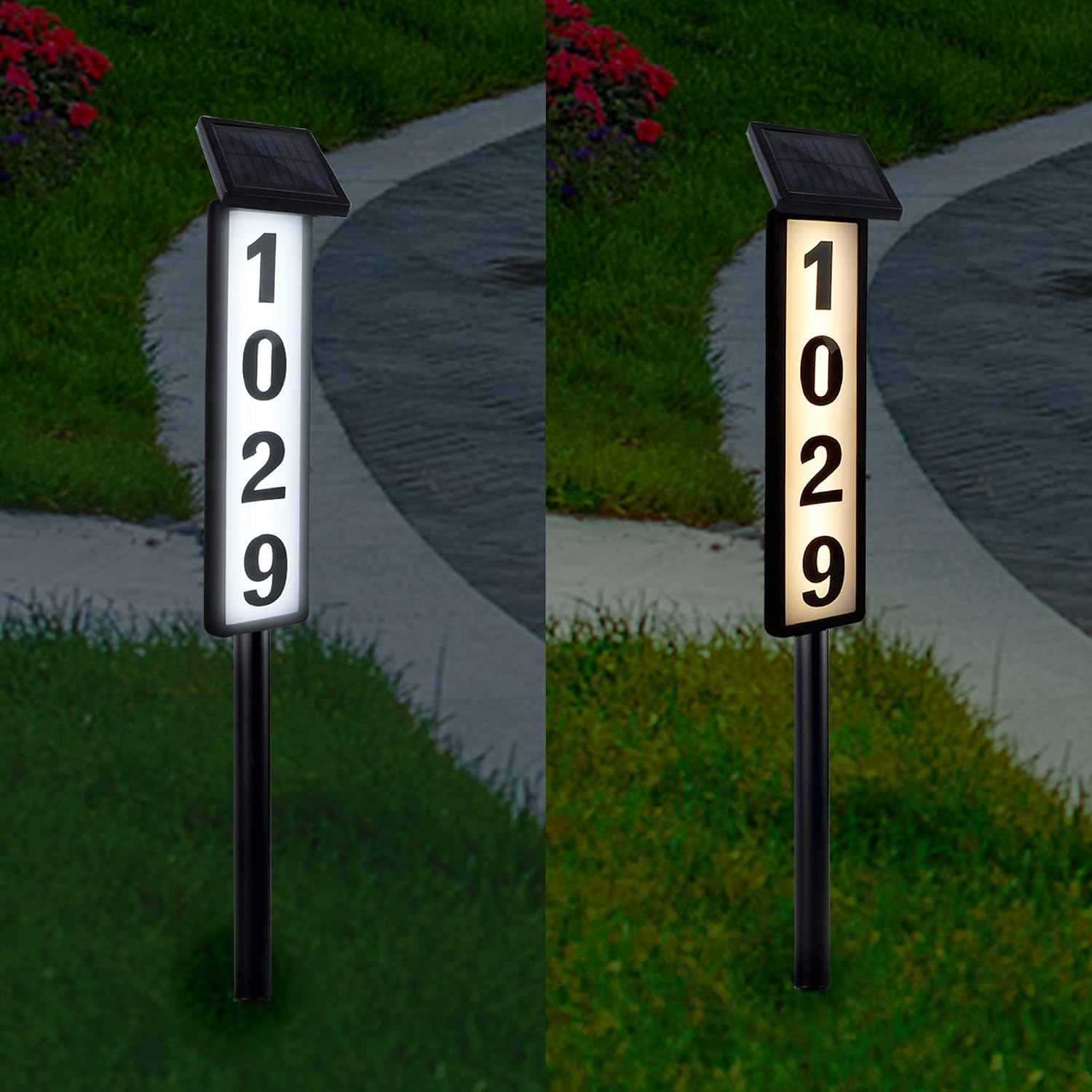 | 5. Best Address Marker ATDAWN Solar Lighted House Address Numbers The one genuinely functional pick here — illuminated address numbers that make your house visible to visitors and first responders after dark. Read more | |
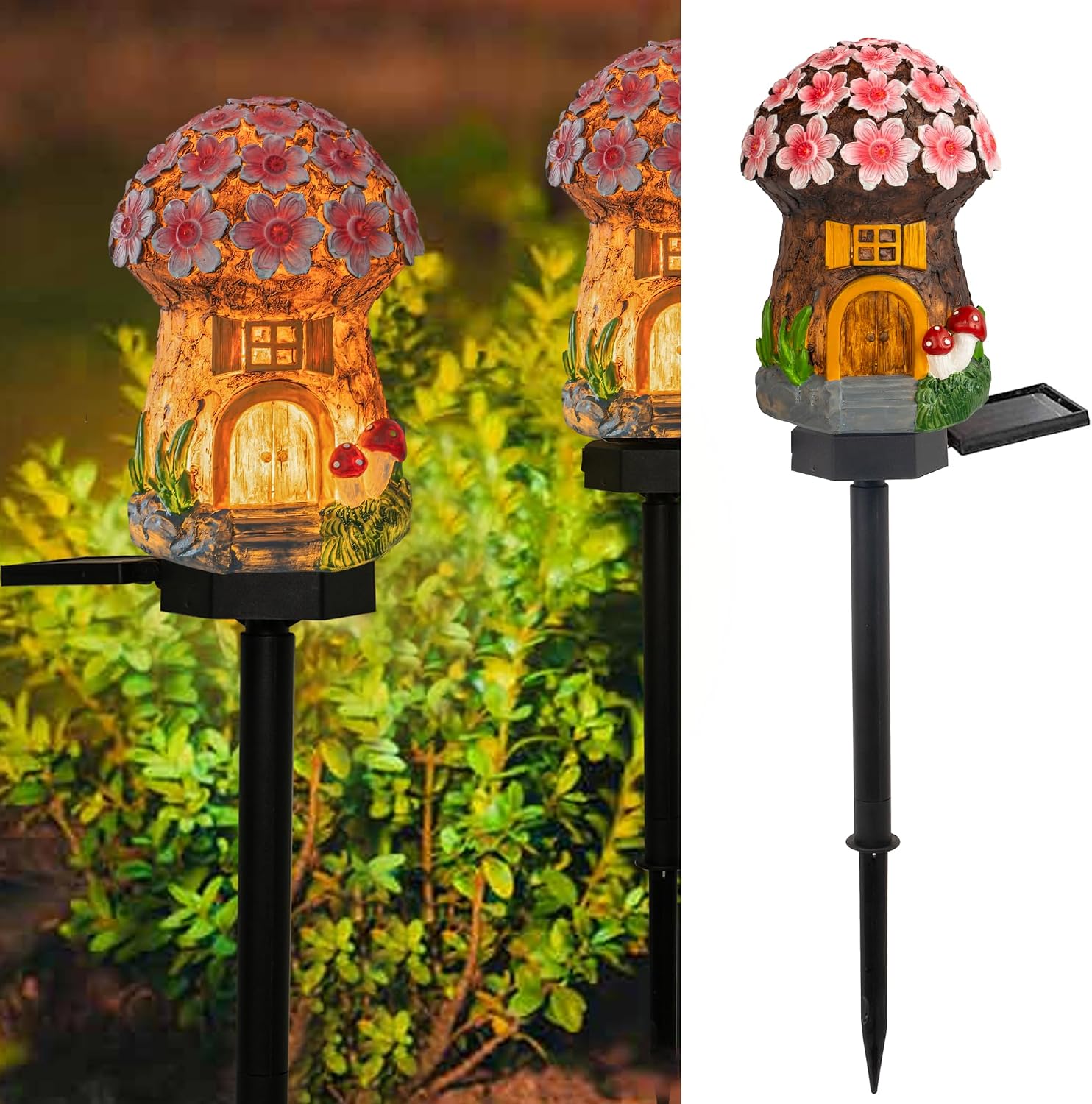 | 6. Best Budget Novelty Pick Dazzle Bright Solar Mushroom Fairy Garden Lights A low-cost entry point into novelty lighting: molded resin mushroom houses over a single warm-white LED for flower beds and fairy gardens. Read more |
Reviews of the Best Solar Novelty & Decorative Lights
1. Alpine Corporation 10″ Solar Mosaic Gazing Globe — Best Overall
Alpine Corporation is one of the most established names in outdoor garden decor, and this 10″ mosaic gazing globe is the easiest single piece to add real presence to a flower bed or entryway. Ten built-in solar LEDs charge through a small panel at the base of the included metal stand and glow softly through the stained-glass-style mosaic shell once it gets dark — no wiring, no bulbs to replace, just stake the stand and set the globe on top.
At 10 inches in diameter it reads as a genuine focal point rather than a small accent, and the glass construction holds up better over multiple seasons than the resin/plastic novelty pieces further down this list, provided you bring it in or cover it ahead of a hard freeze.
Pros:
- Substantial 10″ size reads as a real garden focal point, not a trinket
- Genuine glass mosaic construction outlasts most plastic novelty pieces
- Separate metal stand means no permanent staking into the bed
Cons:
- Glass can crack if water gets into a seam and freezes
- Heavier and pricier than simple LED stake lights
2. Remon Solar Wind Chimes with Color-Changing LED — Best for Movement & Sound
This is the pick if you want sound as well as light. A small crystal ball housing sits above the metal wind chime tubes; the ball’s built-in LEDs cycle through seven colors after dark, independent of whether there’s any wind, while the tubes themselves only chime when the air actually moves. It’s a genuinely popular gift-category item — reviewers consistently mention it as a Mother’s Day or birthday pick, which tells you the build quality is solid enough to hold up as something people are comfortable giving away.
Hang it somewhere with a hook — a porch eave, shepherd’s hook, or tree branch — that gives the tubes room to swing without hitting siding or a railing in a storm.
Pros:
- Combines ambient light with an actual wind chime sound
- Color-changing effect works even on still, windless nights
- Popular, well-reviewed gift item — reasonable proxy for build quality
Cons:
- Needs a hook or branch to hang from; not a stake-and-go product
- Metal tubes can clang loudly in high wind if hung near a wall
3. GIGALUMI Solar Butterfly Garden Stake Lights (3-Pack) — Best Whimsical Yard Stakes
GIGALUMI’s butterfly stake lights are the template for the whole “animal silhouette” category that also includes dragonfly, hummingbird, bee, and owl versions from the same and competing brands. Each stake has a small solar panel built into the top of the butterfly itself, a color-changing LED behind the wings, and an IP44 rating that GIGALUMI backs with 180 days of after-sales support — worth knowing since this is the category most prone to early failure.
Because they’re inexpensive and stake-mounted, they work best bought in multiples and clustered along a border rather than placed as a single accent — three to six spaced a few feet apart reads as intentional, one on its own can look sparse.
Pros:
- Genuinely no-tools installation — unfold panel, stake, done
- 180-day manufacturer support, better than many no-name competitors
- Cheap enough to buy in bulk for a full border
Cons:
- Shortest expected lifespan of any category here (12-24 months)
- Colors cycle automatically — no way to lock a single color
4. 28″ Hanging Solar Chandelier, Acrylic Beaded, Cool White — Best for Porches & Patios
This is the statement piece for a covered porch, pergola, or gazebo — a 28″ beaded acrylic chandelier with 30 LEDs and a built-in light sensor, hung from an included S-hook. It’s sold in warm white, cool white, and blue variants from the same product line, so it’s easy to match to existing outdoor lighting rather than being stuck with whatever color temperature the manufacturer picked.
Acrylic beads mean it won’t shatter the way a glass chandelier could in wind, which matters for something hanging overhead — but it does need a solid mounting point rather than a light garden stake, so plan for a pergola beam, porch hook, or heavy-duty shepherd’s hook.
Pros:
- 30 LEDs give genuinely usable ambient light, not just a decorative glow
- Acrylic beads are far more wind- and impact-resistant than glass
- Available in multiple color temperatures to match existing fixtures
Cons:
- Needs a real overhead mounting point, not just a stake in the ground
- At 28″ tall it needs enough clearance underneath
5. ATDAWN Solar Lighted House Address Numbers — Best Address Marker
The one genuinely functional pick on this list. ATDAWN’s illuminated address plaque runs on a smart circuit that switches to a dimmer 10-lumen mode after the first six hours at full 25-lumen brightness, stretching the run time across a full night rather than dying at 2 a.m. — a detail that matters more here than in any of the purely decorative picks, since the whole point is being visible to delivery drivers and emergency responders after dark.
It mounts to a wall or fence rather than staking into the ground, so check your house numbers’ visibility from the street before buying and make sure the mounting surface gets enough direct sun during the day.
Pros:
- Smart two-stage brightness extends usable runtime through the night
- Genuinely improves safety/visibility, not just aesthetics
- No wiring — mounts with included hardware in minutes
Cons:
- Needs a sunny wall or post; won’t work in a fully shaded entry
- Less “yard decor,” more single-purpose utility item
6. Dazzle Bright Solar Mushroom Fairy Garden Lights — Best Budget Novelty Pick
If you want to try the novelty-light category without committing much money, Dazzle Bright’s mushroom stakes are a reasonable entry point — molded resin mushroom houses over a single warm-white LED, staked directly into a flower bed or fairy-garden display. They automatically switch on at dusk and run for 10+ hours on a full charge, which is on the longer end for this size of light.
Treat these the same way as the butterfly stakes above: buy a few and cluster them rather than relying on one to make an impact, and expect a shorter working life (a season or two) than the glass or metal picks elsewhere on this list.
Pros:
- Low cost makes it easy to buy enough for a real cluster effect
- 10+ hour runtime is strong for this light’s size and price
- Fits fairy-garden / whimsical themes better than generic stake lights
Cons:
- Resin construction is the least durable material in this guide
- Single LED means a fairly dim, purely accent-level glow
Buying Guide: What Actually Matters
Across all of these categories, three things separate a light that’s still working in three years from one that dies after one season: a replaceable battery (not sealed/glued in), an IP44+ weather rating, and a panel you can actually clean or reposition if it ends up in partial shade as plants grow in around it. Lumen output matters far less here than for functional landscape lighting — these are ambiance pieces, not safety lighting.
Match the type to the job. A gazing globe or hanging chandelier is a focal point for a single spot — a flower bed, entryway, or covered porch — while stake-style animal silhouettes (butterflies, dragonflies, hummingbirds) work best bought in multiples and scattered along a border, since one on its own tends to disappear. Wind chimes add sound as well as light, which matters if you want more than a visual accent. Address numbers are the one pick on this list that’s genuinely functional rather than purely decorative, and they’re worth prioritizing if your house number is hard to see from the street at night.
Color-changing vs. fixed white. Many novelty pieces cycle through 5-7 colors automatically after dark rather than staying one color. That’s a feature for some buyers and an annoyance for others — if you want a consistent look, check the product listing for a “steady” or single-color mode before assuming color-cycling is optional.
Battery type and lifespan. Most novelty lights use a single NiMH AA or AAA battery that typically needs replacing after 1-2 years of regular use — a sealed unit that can’t be opened is a dealbreaker if you want the light to outlast its first battery.
What to avoid: listings with no stated IP rating, non-removable battery compartments, and fixed (non-adjustable) solar panels on pieces meant for partially shaded garden beds — all three are common corners cut on the cheapest novelty lights.
Frequently Asked Questions
Do solar novelty and decorative lights work in shaded yards?
Most need 6-8 hours of direct sun to fully charge. In partial shade, expect shorter runtime (2-4 hours instead of 6-8) and dimmer output. For heavily shaded spots, look for models with a larger separate panel you can mount in a sunnier location and run on an extension cable.
How long do solar decorative lights stay on at night?
Fully charged units typically run 6-10 hours, enough to cover a full evening. Cheaper novelty pieces with small built-in panels and NiMH batteries often run closer to 4-6 hours, especially after the battery has been in use for a year or more.
Are solar gazing balls, chandeliers, and wind chimes actually weatherproof?
Most quality outdoor solar decor is rated IP44 to IP65, meaning it can handle rain and splashing but shouldn’t be submerged. Glass and mosaic pieces (gazing balls, lanterns) can crack in a hard freeze if water gets into seams, so bringing them in or covering them for winter extends their life.
Can I replace the batteries in solar novelty lights?
Yes, on most models. Look for a small screw or sliding panel underneath or inside the light — it usually holds a single AA or AAA NiMH rechargeable battery. Replacing a dead battery is the single most common fix for a solar light that “stopped working” after a year or two.
Do these lights need full direct sunlight to charge, or does cloudy weather work too?
Solar panels still charge on cloudy days, just less efficiently — expect 20-30% of a clear day’s charge. Snow, heavy shade, or a dirty panel are bigger problems than clouds alone. Wiping the panel clean every few weeks makes a noticeable difference in brightness and runtime.
What’s the difference between solar decor lights and solar landscape lights?
Decorative/novelty lights (gazing balls, wind chimes, chandeliers, stake animals) are primarily about visual appeal and ambiance. Landscape lights (path lights, spotlights, flood lights) are primarily functional, built for safety and security with brighter, more directional output. Many yards use both — landscape lights for walkways and decor lights as accents.
How do I choose the right solar decorative light for my space?
Match the piece to the setting: hanging chandeliers and wind chimes work best under a porch roof or pergola where they won’t swing into anything; gazing balls and mushroom lights suit flower beds and garden borders; stake-style animals and novelty pieces are easiest to move around and experiment with placement each season.
Summing Up
For most yards, start with one or two statement pieces — a gazing globe or chandelier — and fill in with stake-mounted animals or novelty accents where you want a lower-key glow. None of these need wiring or professional installation, so it’s easy to experiment with placement over a season before committing to a full layout.
If you’re also considering full solar panel installation for your home and want to see what it would cost with current incentives, Solar Panels Network USA offers free, no-obligation quotes — call (855) 427-0058 to speak with a local installer.
Updated