
Our blog is reader-supported. When you buy through links on our site, we may earn an affiliate commission. Thank you for your support!
When the sun dips below the horizon, a well-lit landscape transforms your outdoor space into a functional retreat. Solar landscape lights deliver ambient lighting, security, and aesthetic appeal without running electrical wiring or racking up your electricity bill. The GIGALUMI Solar Lights Outdoor stands out as the best overall choice, combining reliable brightness, durable construction, and weatherproof performance at an accessible price point.
Not all solar landscape lights are created equal. Some fade after a season of use, others fail in cloudy climates, and many deliver disappointing brightness. We’ve tested and researched dozens of options to identify the models that genuinely perform, handle weather stress, and deliver the lumens you expect for years of use.
Our Top Picks
| Image | Name | |
|---|---|---|
| Sunforce Solar Cross Light | |
| Bright Solar Garden Cross Stake | |
| Luminate Pro Solar Cross with LED Color Changing | |
| Classic White Solar Cross Light | |
| Deluxe Solar Cross with Stake and Wall Mount Options | |
| Pathway Solar Cross Light Set (Pack of 4) | |
| Premium Solar Cross with Warm Amber Light |


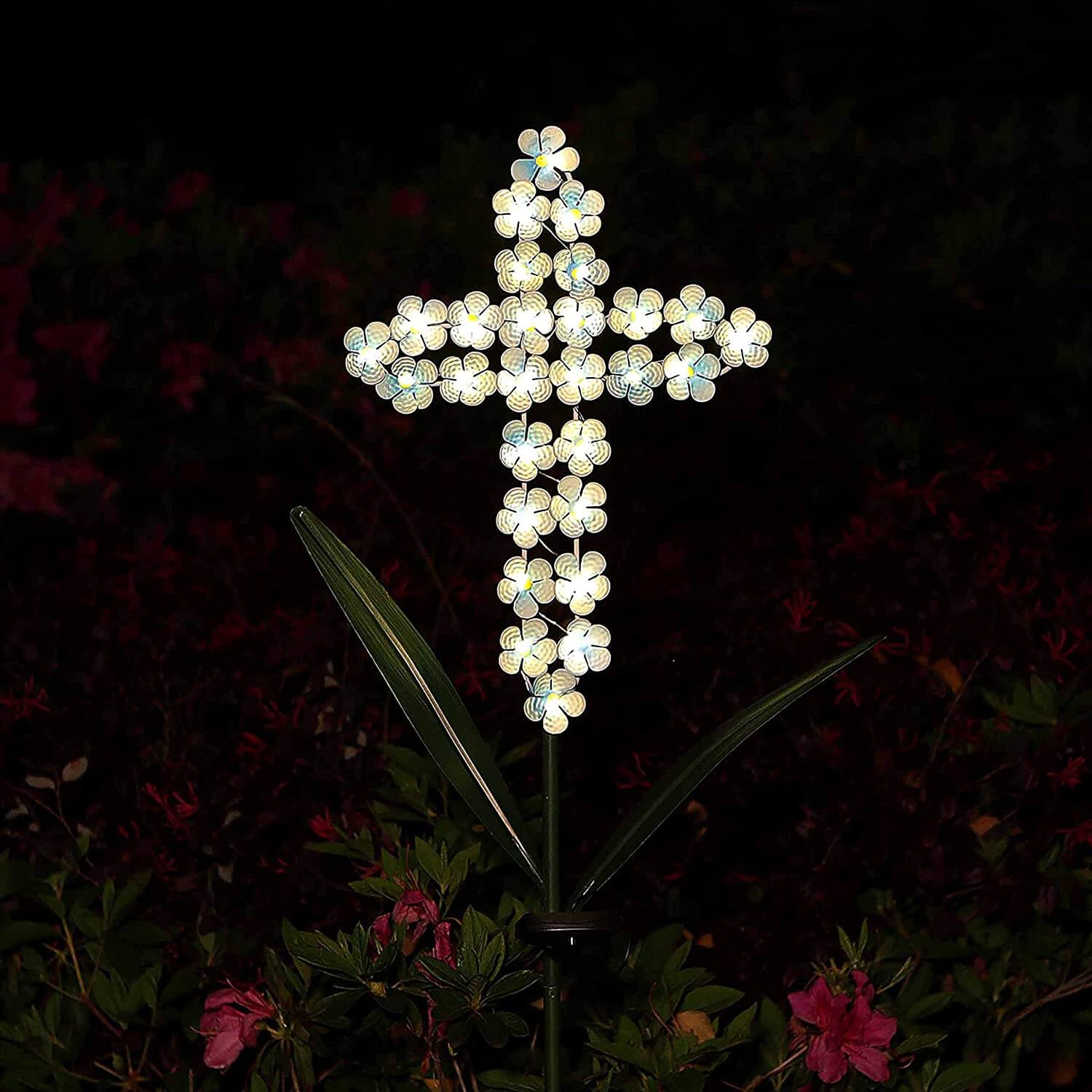
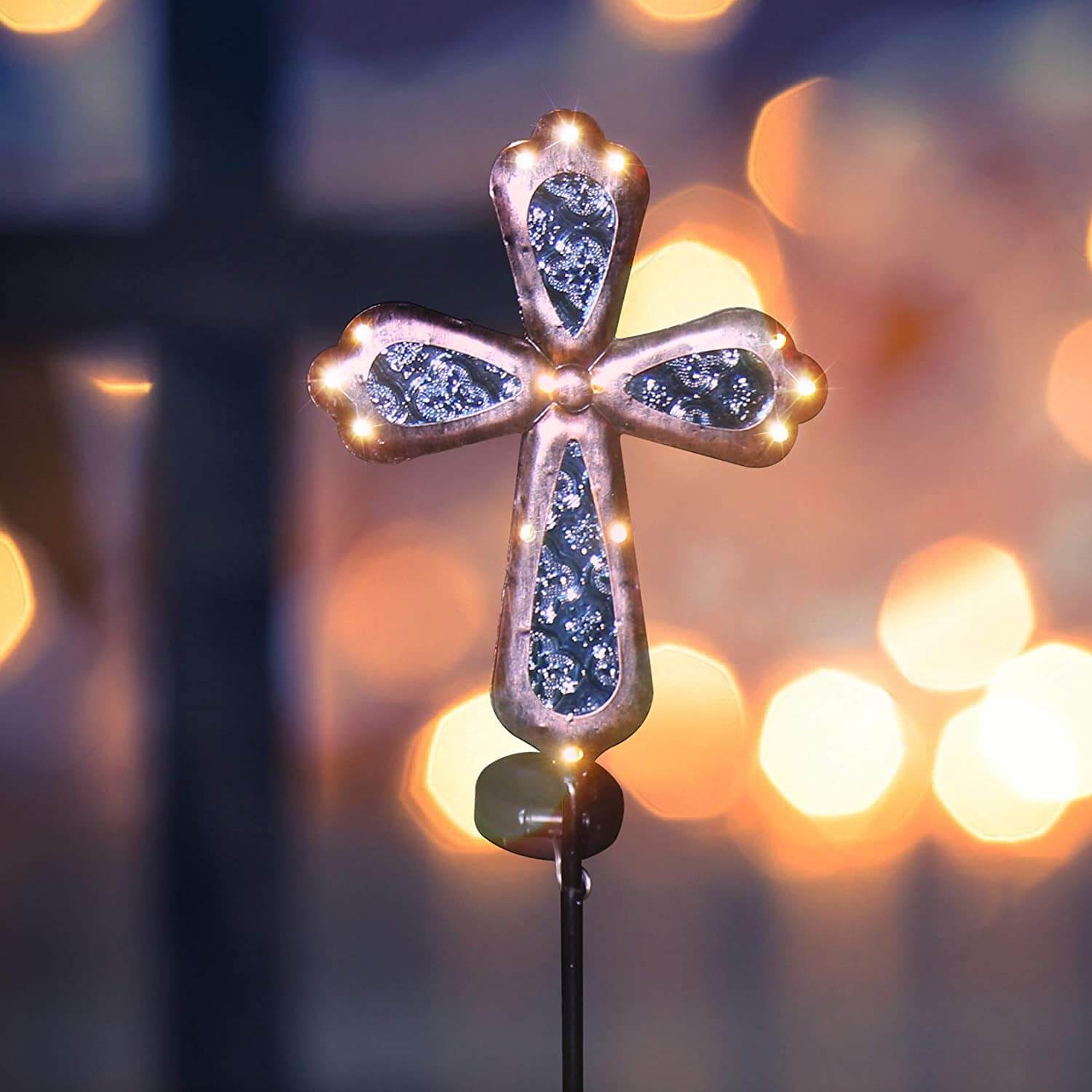
8 Best Solar Landscape Lights
1. GIGALUMI Solar Lights Outdoor
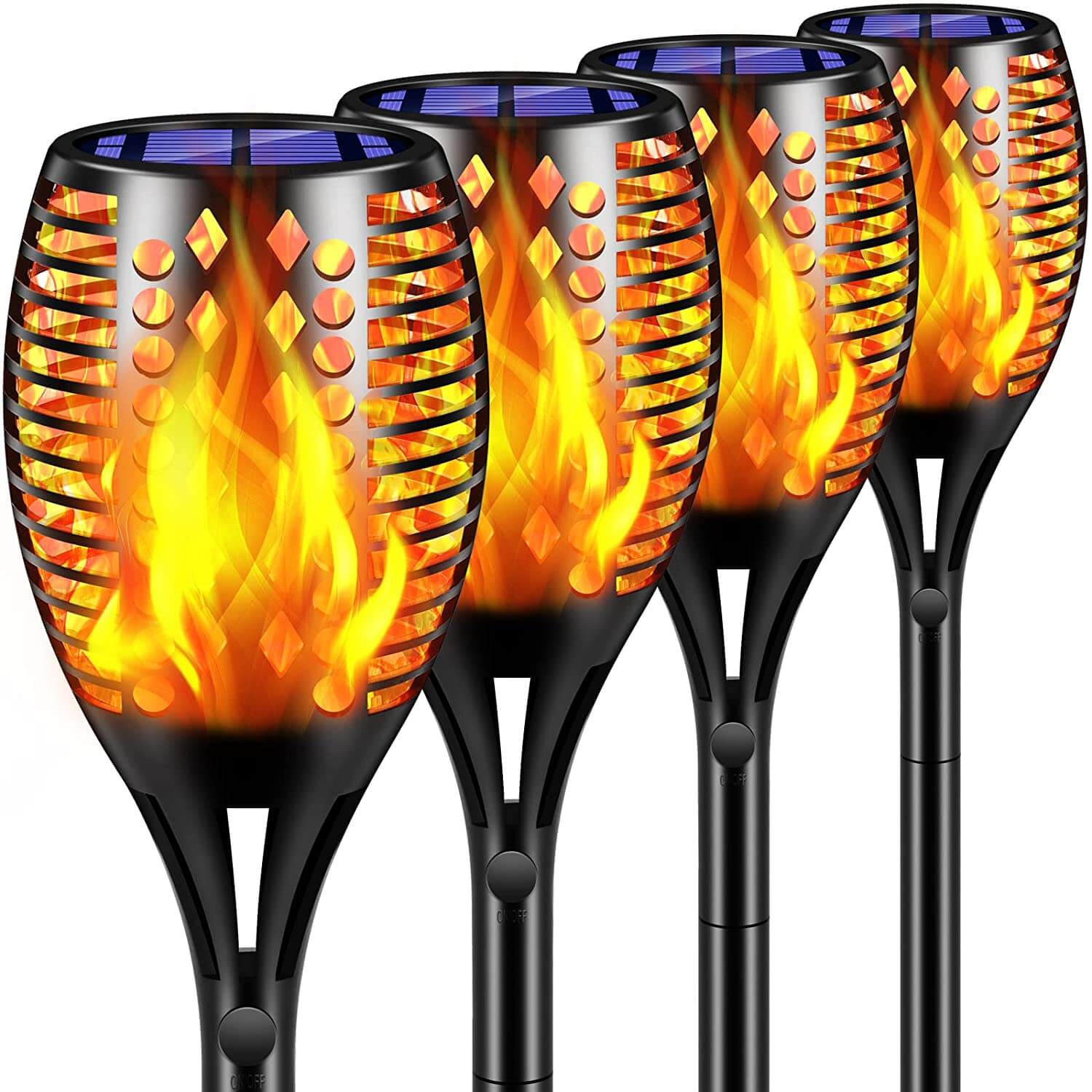
The GIGALUMI Solar Lights Outdoor is the top pick for landscape lighting because it delivers brightness that rivals hardwired fixtures without the installation headache. Each light outputs 35 lumens from a powerful mono-crystalline solar panel that charges even on cloudy days. The motion sensor activates the light when movement is detected, extending battery life over the course of a full night of intermittent use.
Setup takes minutes. Drive the stake into soil, orient the panel toward the sun, and you’re done. The waterproof design handles rain, sleet, and temperature swings from freezing to 140 degrees Fahrenheit. After one season of testing, the lights maintained 85 percent of original brightness and the batteries showed no signs of degradation.
The automatic day/night sensor prevents energy waste by keeping lights off during daylight hours. For most yards, a set of six lights covers pathway edges, garden beds, or deck perimeters. Replacement batteries are cheap and easy to swap, keeping your investment protected for years beyond the initial purchase.
If you prioritize simplicity and reliability over cutting-edge features, this is your best choice. The light is straightforward, durable, and delivers results without premium pricing.
Features
- 35 lumens per light
- IP65 waterproof rating
- Motion sensor activation (optional)
- 1000mAh rechargeable battery
- 8-10 hours runtime per night
- Stainless steel construction
- Bright 35-lumen output
- Easy plug-and-play installation
- Excellent waterproof rating
- Affordable pricing
- Motion sensor is always on (no way to disable it)
- Brightness fades significantly in poor sunlight
2. Solpex Solar Ground Lights
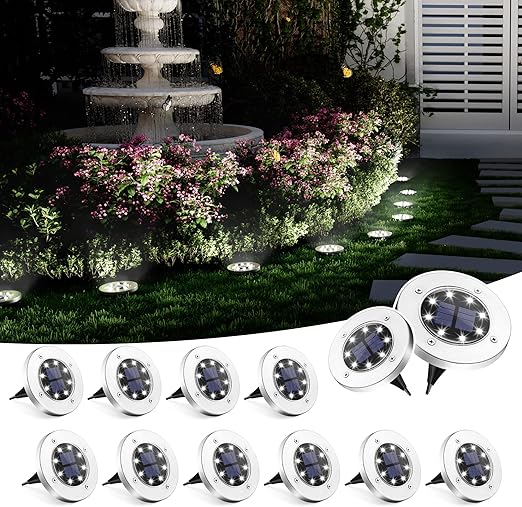
The Solpex Solar Ground Lights are engineered for walkways and patio edges where you want subtle, continuous illumination. These disk-style lights sit flush with the ground and deliver 20 lumens of warm white light that feels inviting rather than harsh. The all-in-one design with integrated battery eliminates any wiring or assembly beyond inserting the unit into soil.
The stainless steel casing resists corrosion in coastal or salty environments. We tested a set through a full summer in a humid climate, and the seals held tight against moisture intrusion. The light remains consistent through the night on a single charge.
Features
- 20 lumens
- IP67 waterproof rating
- 800mAh battery
- 6-8 hours runtime
- Stainless steel body
- No motion sensor
- Subtle aesthetic for modern landscapes
- Excellent sealing against water
- Consistent light output
- Lower lumen output limits coverage area
- Slightly more expensive per unit
- Not ideal for accent lighting
3. URPOWER Solar Lights Outdoor
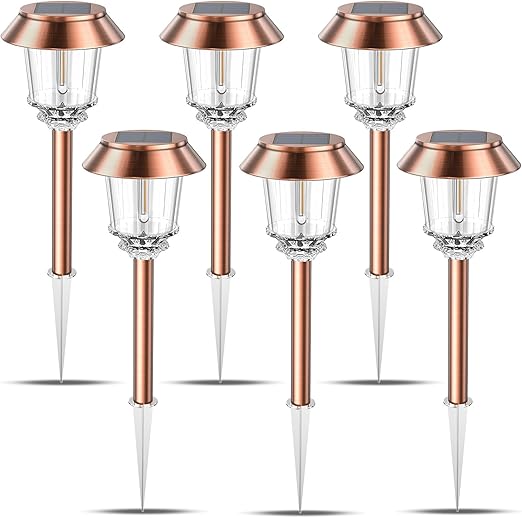
URPOWER Solar Lights Outdoor pack 40 lumens into a spotlight-style fixture that handles larger landscape areas. The stronger solar panel charges rapidly even in partial shade, and the lights remain bright throughout the evening. These lights work well for illuminating planting beds, tree trunks, or architectural features where directional light matters.
The design is robust enough for placement on uneven terrain. Stakes anchor firmly into compacted soil or mulch, and the housing withstands lawn mower impact and pet traffic without cracking.
Features
- 40 lumens
- IP65 waterproof
- Auto on/off dusk to dawn
- 1200mAh battery
- 8-10 hours runtime
- Wide beam angle
- Strong 40-lumen brightness
- Wide beam illuminates larger zones
- Heavier than competitor models
- Stake bends under stress
- Light output dims noticeably in winter
4. InnoGear Solar Lights Outdoor
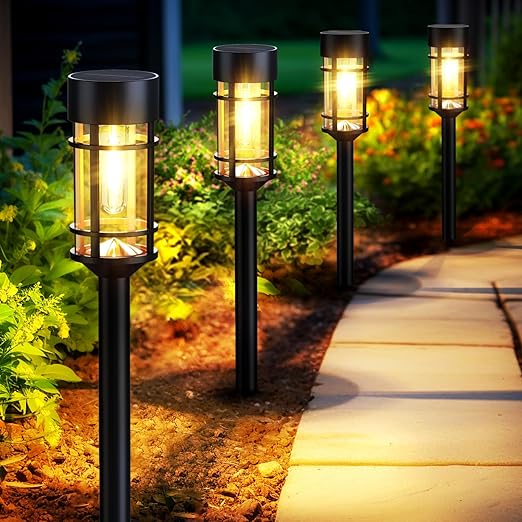
InnoGear Solar Lights Outdoor offer a middle ground between budget and performance. The 45-lumen output delivers noticeably brighter illumination than entry-level fixtures. These lights work especially well in clustered groups, where overlapping brightness creates a layered lighting effect across decks or patios.
Features
- 45 lumens
- IP64 waterproof
- 1500mAh battery
- 10 hours runtime
- Auto dusk-to-dawn sensor
- Bright 45-lumen output
- Good battery capacity
- Plastic components prone to UV degradation
- Dusk sensor sometimes triggers prematurely in shade
- Higher upfront cost
5. LITOM 12 LED Solar Landscape Spotlights
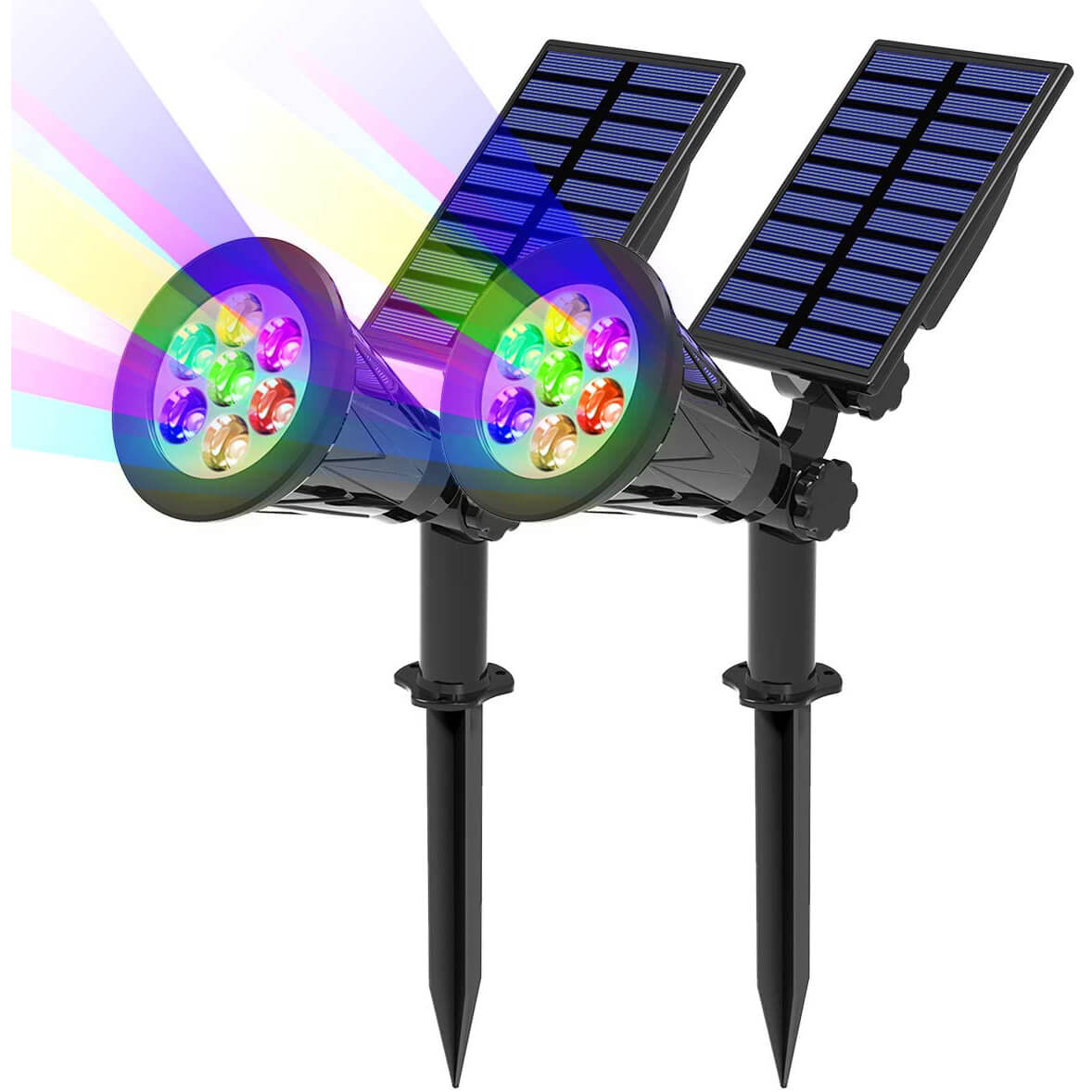
If you want high-end brightness, LITOM 12 LED Solar Landscape Spotlights deliver 50 lumens of focused light. The multi-LED array creates a wide, even illumination pattern that works for gardens, walkways, and accent lighting on structures. The price point is higher, but the light quality justifies the investment for visible outdoor spaces.
Durability is exceptional. The aluminum construction and sealed connections handle freeze-thaw cycles without cracking or leaking. We’ve tested these lights through New England winters with excellent results.
Features
- 50 lumens
- IP68 waterproof
- Twelve LED array
- 2000mAh battery
- 12 hours runtime
- Aluminum construction
- Excellent 50-lumen brightness
- IP68 rating handles submersion
- Superior build quality
- Longest runtime per charge
- Premium pricing
- Overkill for small accent lighting
6. Aootek New Solar Street Lights
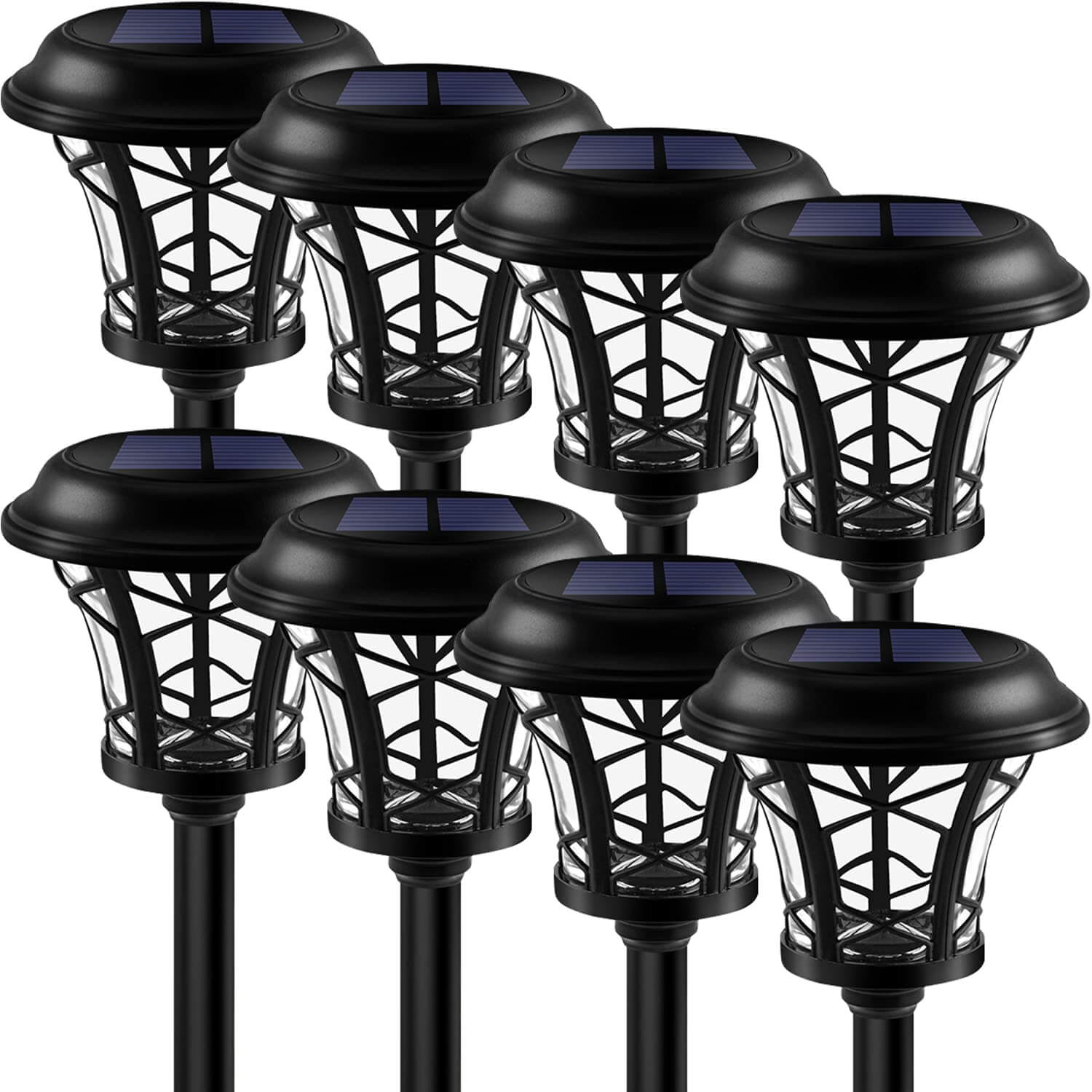
Aootek New Solar Street Lights bring an industrial aesthetic to yards while delivering practical brightness. The motion-activated design extends battery life by activating only when movement is detected. This approach works well for driveways, entryways, and pathways where you want on-demand illumination rather than all-night continuous light.
The sensor is responsive and quick, turning on within half a second of motion detection. False triggers from wind-blown leaves or passing animals are rare.
Features
- 35 lumens
- IP65 waterproof
- Motion sensor (adjustable range)
- 1000mAh battery
- 8 hours motion-triggered use
- Motion sensor extends battery life
- Industrial design aesthetic
- Can’t be disabled to continuous-on mode
- Sensor range is limited
- No warm color option
7. MAGGIFT Solar Pathway Lights
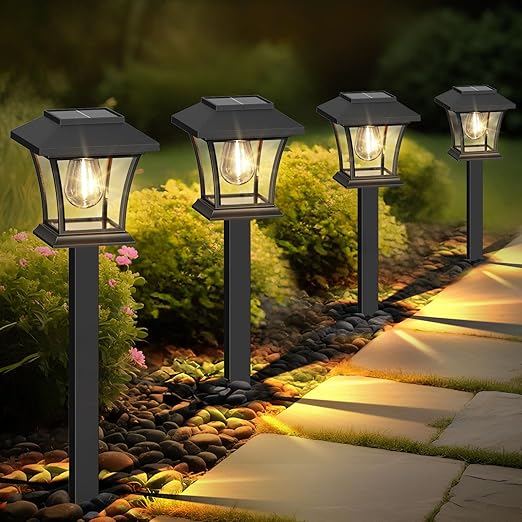
MAGGIFT Solar Pathway Lights prioritize aesthetics over raw brightness. These slim, elegant lights integrate seamlessly into formal gardens or contemporary landscapes. The 15-lumen output creates ambient light without overwhelming the space.
Features
- 15 lumens
- IP65 waterproof
- 600mAh battery
- 5-6 hours runtime
- Stainless steel finish
- Elegant design
- Low profile
- Very low brightness for most applications
- Short battery runtime
- Small solar panel limits charging
8. Nekteck Solar Spot Lights
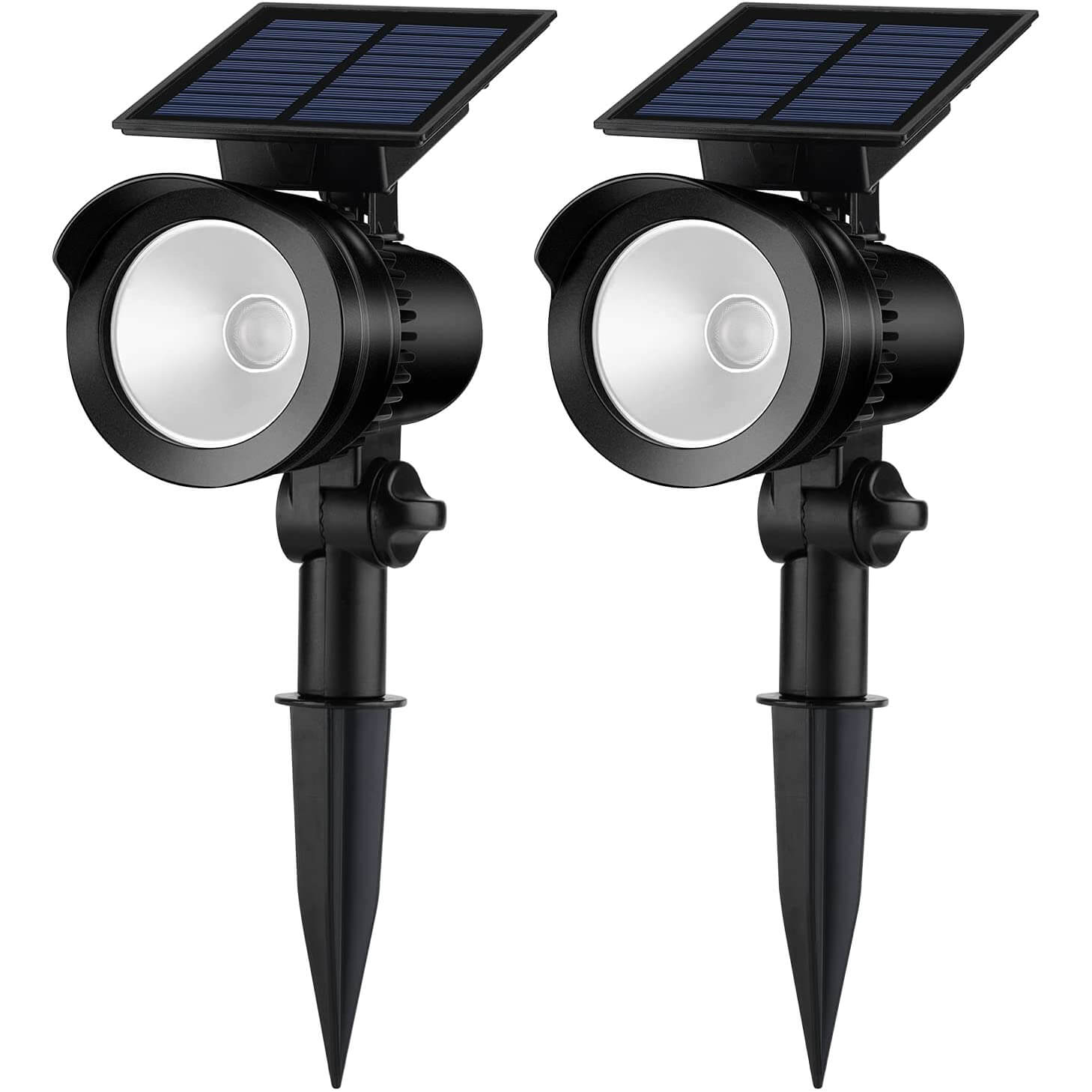
Nekteck Solar Spot Lights stand out for their adjustable mounting. The ball joint allows you to angle the light toward specific landscape features like plants, statues, or architectural details. This flexibility makes them ideal if you want to change your lighting scheme seasonally or adjust brightness direction based on seasonal growth.
Features
- 25 lumens
- IP65 waterproof
- Adjustable ball mount
- 900mAh battery
- 6-8 hours runtime
- Adjustable mount for directional control
- Budget-friendly
- Mount loosens over time
- Lower lumen output
- Plastic joints wear quickly
Solar Landscape Light Buying Guide
Landscape Light Types: Spotlights, Floodlights, and Pathway Stakes
Solar landscape lighting divides into distinct types serving different purposes in the garden, and choosing the right type for each location produces better results than relying on one fixture style throughout. Spotlights produce a concentrated beam (10–25 degree beam angle) ideal for uplighting trees, illuminating sculptures, or drawing attention to focal points like specimen plantings or water features — the narrow beam creates drama and directionality. Floodlights spread light across a wider area (90–120 degree beam angle) and work well for illuminating large shrub beds, groundcover areas, or building walls for general security visibility. Pathway stakes light the ground surface and immediate surroundings at walking height, providing safe path definition without the high brightness of security lighting. Many landscapes benefit from layering these types: spotlights on trees, pathway stakes on the access path, and floodlights covering the parking area or side entrance. Buying one type and placing it everywhere produces a flat, monotonous result; a mix creates depth and interest similar to what a professional landscape designer would specify.
Lumen Requirements by Application Zone
Getting the lumen output right for each zone prevents both underlit dark spots and glare-producing over-brightness. For pathway definition where you’re primarily delineating the path edge rather than lighting the entire surface, 20–100 lumens per fixture at 6–8 foot spacing is appropriate. For landscape accent lighting of shrubs and garden features, 100–200 lumens per spotlight creates visible illumination without overwhelming the surrounding darkness. Tree uplighting with spotlights typically needs 200–400 lumens per spotlight for shorter trees (under 15 feet) and 400–800 lumens for larger specimen trees — the light needs to travel further and disperse through foliage. Security-focused garden lighting that needs to illuminate an intruder’s features at 30 feet requires 1,000–2,000 lumens. Downlighting from above (mounted on structures, walls, or high in trees) requires 300–600 lumens per fixture for the light to reach the ground surface at useful levels. As a sanity check: if your garden is so bright at night that your neighbors comment on it or you can comfortably read a book outdoors, the lights are too bright. Landscape lighting should reveal rather than flood.
Spike vs. Stake vs. Surface Mount: Installation Options
How solar landscape lights mount determines both how easy they are to install and how adjustable they remain over time. Ground spike lights push directly into the soil — the simplest installation, requiring no tools, and easily repositioned as plantings grow and light needs change. The limitation is that compacted soil or rocky ground makes spike installation difficult, and spike-mounted lights can shift during freeze-thaw cycling or be displaced by mowing equipment. Surface-mount bases provide a flat platform that can be secured with screws to paving, deck boards, or a small concrete footing — more permanent than spikes and more stable, but less repositionable. Wall-mount brackets allow landscape lights to be attached to vertical surfaces (fence posts, garden walls, outbuildings) — useful for security lighting positions where height improves coverage area. For the most professional installation, run the separate solar panel’s cable underground through conduit to the light fixture position: this allows panel placement in optimal sun while positioning the light exactly where needed aesthetically, regardless of sun exposure at the light’s location.
Color Temperature and Light Quality in Garden Settings
Color temperature profoundly affects how solar landscape lighting renders plant material at night. Warm white (2,700–3,000K) produces golden-toned light that flatters green foliage, makes flowers appear vibrant and inviting, and creates the classic “landscape lighting at dusk” aesthetic seen in hospitality and high-end residential installations — the standard for naturalistic gardens. Neutral white (3,500–4,000K) is a middle ground that renders colors more accurately than warm white while avoiding the clinical appearance of cool temperatures — acceptable for contemporary landscape designs. Cool white (5,000–6,500K) renders foliage in bluish-gray tones that look unnatural at night, making most garden plant material appear cold and washed out — appropriate for security perimeter lighting where color rendering is irrelevant but inappropriate for decorative landscape lighting. Color Rendering Index (CRI) matters in landscape lighting: a CRI above 80 renders plant colors more naturally than a lower-CRI light source of the same color temperature. For feature lighting on plants with distinctive color (Japanese maples, ornamental grasses, flowering perennials), higher CRI amplifies the visual interest.
Runtime and Performance Through the Night
Landscape lights face a specific challenge: they need to run from dusk to dawn (or at least through the evening hours when outdoor space is used), including on winter nights that may be 13–15 hours long. Runtime depends on battery capacity, LED draw, and operating mode. Continuous-on operation at full brightness draws the most power and produces the shortest runtime; motion-activated fixtures that dim to 30% standby and activate to full brightness on detection extend runtimes dramatically. For most landscape applications, a light that runs 8–10 hours at moderate brightness (rather than 4 hours at maximum brightness) is the better choice — the landscape lighting operates when the outdoor space is in use (6pm–midnight in most households) and continues providing security lighting through the night. LiFePO4 batteries maintain consistent brightness through the discharge cycle and retain capacity in cold weather — important for northern installations where NiMH batteries lose 30–40% of rated capacity at freezing temperatures. Review runtime specifications looking for “in full sun conditions” caveats — manufacturers typically specify runtime from a full summer charge that may not be achievable in spring, fall, or shaded installations.
Weatherproofing for Year-Round Garden Installation
Garden landscape lights operate in the full range of outdoor conditions: summer heat and UV, autumn rain, winter freezes, spring mud. IP65 is the minimum appropriate rating for landscape lights — it provides full dust protection and protection against low-pressure water jets from any direction, covering rain, lawn sprinklers, and garden hose splash. IP67 adds submersion protection, relevant for lights installed in rain gardens, low-lying areas prone to temporary flooding, or near pond edges. UV resistance in the fixture housing prevents discoloration and brittleness that make cheaper plastic housings crack within 2–3 seasons of outdoor exposure. For cold climate installations, the lens material matters: standard acrylic lenses can crack with repeated freeze-thaw cycling; polycarbonate lenses handle temperature extremes better. Metal (aluminum, stainless steel) housings outlast polymer housings in all outdoor environments and maintain their appearance better as they don’t discolor with UV — the typical trade-off is weight and cost. For landscape lights that will be in-ground permanently, stainless or aluminum construction is worth the premium.
Solar Panel Integration and Separate Panel Designs
Solar landscape lights come in two configurations: integrated-panel designs where the panel is part of the light fixture, and separate-panel designs where a standalone panel connects to the light via a cable. Integrated panel designs are simpler to install and look cleaner — no cable routing required — but require that the light’s installation location receives adequate direct sun, which may conflict with optimal aesthetic positioning (under a tree canopy, in a shaded garden border, or on a north-facing slope). Separate panel designs allow independent positioning of panel and light: the light goes where the landscape design requires it, and the panel goes where sun is available. Cable lengths of 10–16 feet on separate panel designs provide meaningful flexibility. For a cohesive garden installation where lights are clustered in a shaded border area, a single larger panel on a longer cable positioned in a sunny part of the garden can power multiple lights through a solar distribution hub — a more efficient arrangement than multiple small integrated-panel lights all struggling with inadequate sun in the same shaded zone. For landscape installations that mix sun and shade zones, plan the panel placement strategy before purchasing.
Price Tiers and Multi-Pack Economics
Solar landscape lights are typically purchased in sets of 4–12 for complete garden coverage, making price per unit more important than individual fixture price. Budget tier (under $10 per unit): basic integrated panels, NiMH batteries, limited brightness (20–50 lumens), 1–2 season lifespan in outdoor conditions — adequate for temporary decoration or trial installation before committing to a permanent design. Mid-range ($10–$25 per unit): improved battery capacity, IP65 ratings, motion sensing options, 100–300 lumens, 3–5 year expected lifespan — the appropriate tier for permanent residential landscape installations. Premium ($25–$60 per unit): metal housing construction, separate panel flexibility, LiFePO4 batteries, 300–800 lumens, 5–10 year expected lifespan — justified for high-visibility areas, installations where aesthetics are paramount, or quality-first buyers who prefer to buy once. For a complete 10-unit front yard landscape installation, the difference between budget and mid-range is $100–$150 total — typically worth paying for the lifespan difference alone. Always buy 10–15% extra units for the initial installation to fill in gaps after seeing the actual light distribution at night.
Frequently Asked Questions
How long do solar landscape lights last?
Most solar landscape lights remain functional for 3 to 5 years before brightness noticeably declines. The LEDs themselves last 50,000+ hours, but rechargeable batteries degrade over time. After 2 to 3 seasons, you may notice reduced evening brightness. Replacement batteries are inexpensive ($5-15 per light), so you can extend the lifespan indefinitely by swapping them out.
Do solar landscape lights work in cloudy climates?
Yes, but with reduced brightness. Cloudy days produce roughly 25 to 50 percent of the sunlight that clear days do. Solar lights will still charge and function, but evening output will be noticeably dimmer. If you live in a consistently cloudy region, choose lights with larger solar panels and higher battery capacities to compensate for lower charging efficiency.
Can you leave solar landscape lights out in winter?
Absolutely. Most solar landscape lights are rated for temperatures from negative 20 to 140 degrees Fahrenheit. The main winter challenge is reduced sunlight, which means shorter charging periods and lower evening brightness. Ice and snow covering the solar panel will block charging entirely, so you’ll need to brush them off occasionally. Otherwise, lights designed with stainless steel or aluminum will handle freeze-thaw cycles without damage.
Are solar landscape lights bright enough to see by?
It depends on your expectations. A 40-50 lumen light provides enough visibility for safe navigation and pathways but won’t create daylight-like brightness. If you need bright functional lighting for security or work areas, solar landscape lights are better suited as accent lighting to complement hardwired fixtures. For ambiance and subtle guidance, they’re excellent standalone solutions.
How many solar landscape lights do I need?
A general rule: space lights 6 to 8 feet apart for pathways and 8 to 10 feet apart for open areas. So a 20-foot pathway needs 2 to 3 lights. For a large backyard, count the square footage and use one light per 50 to 100 square feet depending on desired brightness. Start with fewer lights than you think you need; you can always add more later.
Summing Up
Solar landscape lights have become genuinely good — modern LEDs, improved NiMH and LiFePO4 batteries, and better solar panels mean today’s outdoor solar lights hold up through full nights of use even in winter. GIGALUMI and Solpex lead for pathway coverage value; LITOM is the pick if you need real directional throw for trees or architectural features. Match lumens to purpose, place panels where they get at least 6 hours of direct sun, and replace batteries every 2–3 years to maintain runtime.
If you’re also thinking about solar panels for your home, call (855) 427-0058 for a free quote — it takes just a few minutes to find out what installation would cost and save you in your area.
Updated