
Our blog is reader-supported. When you buy through links on our site, we may earn an affiliate commission. Thank you for your support!
ALLPOWERS 100W Foldable Solar Panel takes the top spot for solar laptop chargers, delivering 100 watts of power with dual USB outputs and an 18V DC port that can charge laptops, portable generators, and much more. Whether you’re working remotely from a campsite, traveling in an RV, or dealing with a power outage at home, a solar laptop charger keeps your devices powered without burning through battery backup power. In this guide, we’ll walk you through 8 of the best solar laptop chargers currently available, helping you find the right balance of power output, portability, and price.
Our Top Picks
| Image | Name | |
|---|---|---|
| ALLPOWERS 100W Foldable Solar Panel A lightweight foldable solar charger with multiple USB outputs, designed to power laptops and devices directly from sunlight while hiking or traveling. Read more | |
| BioLite SolarPanel 100 A premium 100W panel with a built-in kickstand and integrated battery indicator, delivering reliable laptop charging power in an ultra-portable folding design. Read more | |
| BigBlue 100W Solar Panel with PD 45W USB-C Features a high-output PD 45W USB-C port capable of fast-charging most modern laptops directly from the sun, with no power station required. Read more | |
| EcoFlow 110W Portable Solar Panel A foldable 110W panel that pairs seamlessly with EcoFlow power stations and charges most USB-C laptops directly via its built-in DC and USB outputs. Read more | |
| Renogy 100W Portable Solar Panel N-Type Uses premium N-type solar cells for superior conversion efficiency, with USB-A and USB-C outputs and adjustable kickstands for optimal sun angle. Read more | |
| BLAVOR 120W Portable Solar Panel Delivers 120W of output with a PD 45W fast-charging USB-C port, making it one of the most powerful portable solar chargers for laptops on the market. Read more | |
| Jackery SolarSaga 100W Bifacial Solar Panel A bifacial panel that captures sunlight from both sides for up to 25% more power in bright conditions, ideal for pairing with a Jackery Explorer power station. Read more | |
| EcoFlow 100W Flexible Solar Panel An ultra-thin flexible panel that conforms to curved surfaces, rated IP68 waterproof and designed for permanent mounting on RV rooftops or boat decks. Read more |
8 Best Solar Laptop Chargers
1. ALLPOWERS 100W Foldable Solar Panel
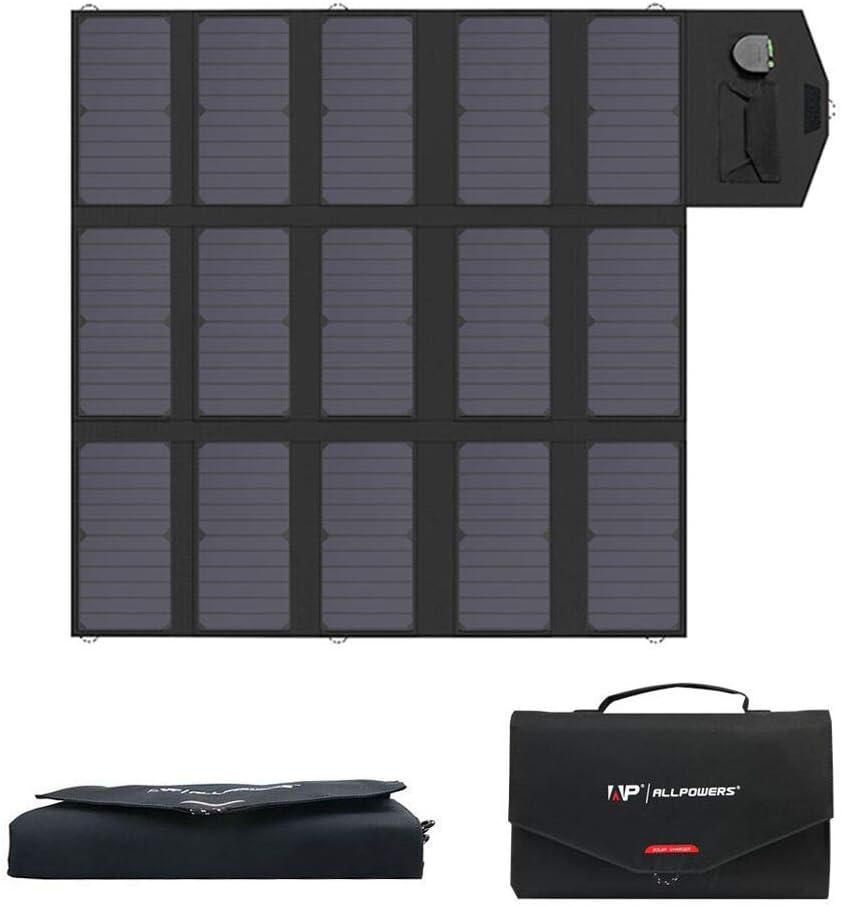
The ALLPOWERS 100W stands out as the most versatile option on this list. With dual 5V USB outputs and an 18V DC port, you’re not limited to just laptops. The 22% solar conversion efficiency means this panel captures plenty of sunlight even when conditions aren’t perfect. At just 4.73 pounds, it’s remarkably light for a 100W panel. The panel folds down to 12.6 by 7.5 inches, making it genuinely packable for backpacking or vehicle travel. Most importantly, that 18V DC output handles laptops smoothly without the need for a separate power bank intermediary.
The monocrystalline solar cells deliver consistent performance across various weather conditions, and the IP65 waterproof rating means you can use it during light rain or camping in humid environments. The 18-month warranty provides reasonable peace of mind, though many users report these panels hold up for years with basic care.
Features
- 100W power output with 22% solar conversion efficiency
- Dual 5V USB ports (2.4A each) and 18V DC output (5A)
- Weighs just 4.73 pounds, folds to 12.6 x 7.5 x 3.6 inches
- IP65 waterproof with high-temperature resistance
- Monocrystalline solar cells for reliable performance
- 18-month manufacturer warranty
- Direct DC output charges laptops without a power station
- Lightweight and genuinely foldable for travel
- Multiple port types handle phones and laptops together
- Excellent conversion efficiency at 22%
- 18V output is slightly below some laptop requirements
- Larger than smaller portable panels
- No built-in battery for cloudy-day charging
2. BioLite SolarPanel 100
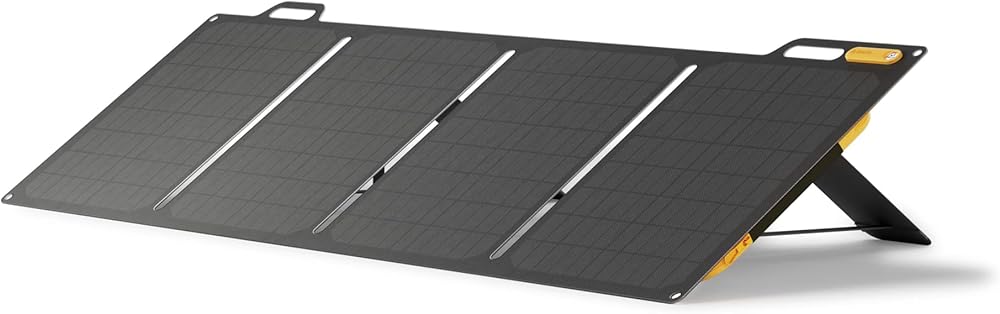
The BioLite SolarPanel 100 is built specifically for direct device charging rather than feeding into a power station. The 45W USB-C PD (Power Delivery) output is a game-changer for MacBook Pro, Windows laptops, and tablets. Unlike panels that require a separate battery hub, you can plug your laptop directly into this panel on a sunny day and charge in real time. The monocrystalline cells hit 100W peak output, and the dual kickstands adjust to optimal sun angles. At 9.5 pounds, it’s heavier than the ALLPOWERS but the weight is justified by the robust construction and direct charging capability.
The included analog sundial on the panel is a thoughtful touch for maximizing power input without needing electronic guides. The water-resistant storage pouch keeps the panel protected during travel, and the 3.5-meter built-in cable eliminates the need to carry a separate charger. This is a premium choice for those who want reliable, direct laptop charging in the field.
Features
- 100W output with 45W USB-C Power Delivery for laptops
- USB-A and USB-C PD ports for simultaneous multi-device charging
- Monocrystalline cells with built-in 3.5m cable
- Dual kickstands with analog sundial for optimal alignment
- Water-resistant pouch and 9.5-pound weight
- Unfolded size: 20.1 x 57.5 inches
- 45W USB-C charging handles most laptops directly
- Built-in cable saves packing space
- Extremely reliable, field-tested design
- Angle adjustment dial improves efficiency
- Among the heavier options in this list
- More expensive than comparable panels
- Performance varies with cloud cover
3. BigBlue 100W Solar Panel with PD 45W USB-C
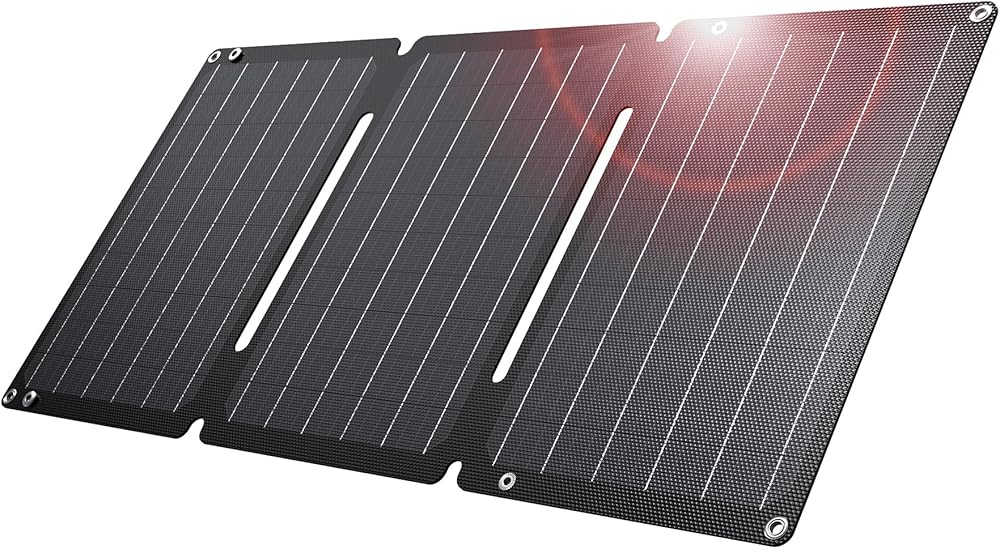
BigBlue’s 100W panel combines serious power with practical port variety. The 45W USB-C Power Delivery port charges most laptops at full speed, while the 18W USB-A port handles secondary devices. The 18V/5.5A DC output works with power stations and compatible RV systems. A quick note: this panel delivers its rated power in strong sunlight, so performance drops during overcast conditions. The 22.5% conversion efficiency is solid and competitive with premium brands. At a lower price point than BioLite and lighter than ALLPOWERS, it hits a good middle ground for budget-conscious buyers who still want direct laptop charging.
The foldable design with carrying case makes transport straightforward. The kickstand helps with angle adjustment, though it’s not as sophisticated as the BioLite sundial. This panel is a strong choice if you want 45W USB-C without overpaying for premium branding.
Features
- 100W output with 45W USB-C Power Delivery
- 18W USB-A output and 18V/5.5A DC port
- 22.5% solar conversion efficiency
- Foldable design with carrying case and kickstand
- Monocrystalline solar cells
- Compatible with most solar generators and RV systems
- Excellent value for 45W USB-C power
- Multiple port types in one package
- Lightweight and genuinely foldable
- Good conversion efficiency
4. EcoFlow 110W Portable Solar Panel
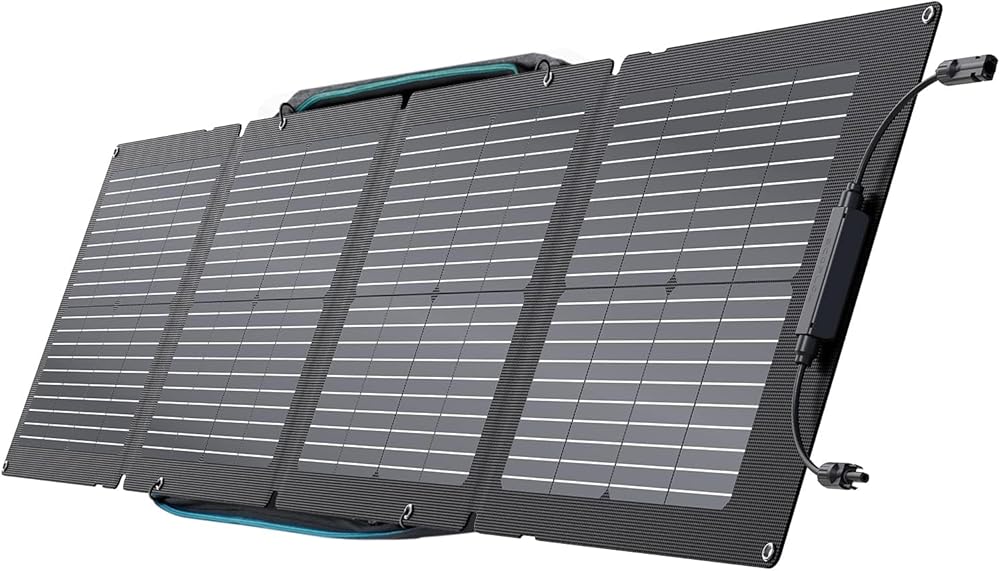
The EcoFlow 110W pushes the power envelope with 110W output instead of the standard 100W. The 23% conversion efficiency is among the highest you’ll find in portable panels, meaning you extract maximum energy even on partly cloudy days. The IP68 water and dust resistance goes beyond basic waterproofing and handles serious outdoor conditions. This panel is designed to pair with EcoFlow power stations, though it works with most battery systems via the standard MC4 connectors. If you own an EcoFlow power station, this is a no-brainer pairing. For others, understand that direct laptop charging requires either USB-C or a separate adapter setup.
The foldable design with carry case and kickstands makes setup straightforward. EcoFlow has built a solid reputation for reliability, and this panel reflects that commitment. The slightly higher wattage and IP68 rating justify the premium price for serious off-grid users.
Features
- 110W power output with 23% conversion efficiency
- IP68 water and dust resistance
- Foldable design with carry case and adjustable kickstands
- MC4 connectors for power station compatibility
- Monocrystalline solar cells
- Optimized for EcoFlow Delta and River power stations
- Highest conversion efficiency on this list
- IP68 rating handles harsh outdoor conditions
- 110W output provides extra margin
- Excellent build quality and warranty
5. Renogy 100W Portable Solar Panel N-Type
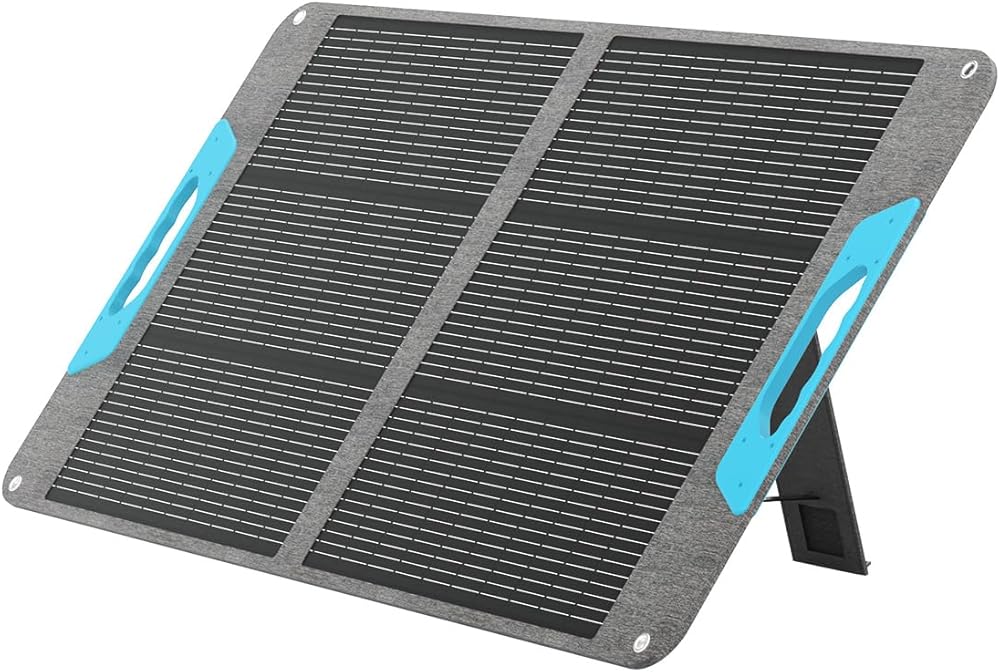
Renogy’s N-Type panel represents the latest in solar cell technology. N-Type cells are more efficient and handle heat better than traditional P-Type cells, which means you get more power per square inch. The 25% conversion efficiency is top-tier. USB-A and USB-C outputs give you flexibility for charging phones or tablets alongside your laptop setup via a power station. The foldable design with adjustable kickstands works on various terrain. Renogy’s warranty is solid, and replacement parts are widely available online, which matters when you’re miles from civilization.
The N-Type technology is worth understanding. It costs more upfront but performs better in real-world conditions, especially in heat. If you’re buying a solar panel you plan to use for 10+ years, the N-Type investment pays for itself through better performance and longevity.
Features
- 100W output with N-Type monocrystalline cells
- 25% conversion efficiency for excellent real-world performance
- USB-A and USB-C output ports
- Foldable with adjustable kickstands for multiple terrain types
- Lightweight and compact when folded
- Excellent warranty and parts availability
- N-Type cells offer superior efficiency
- Better performance in hot conditions
- Good parts availability and support
- Multiple port options for flexibility
6. BLAVOR 120W Portable Solar Panel
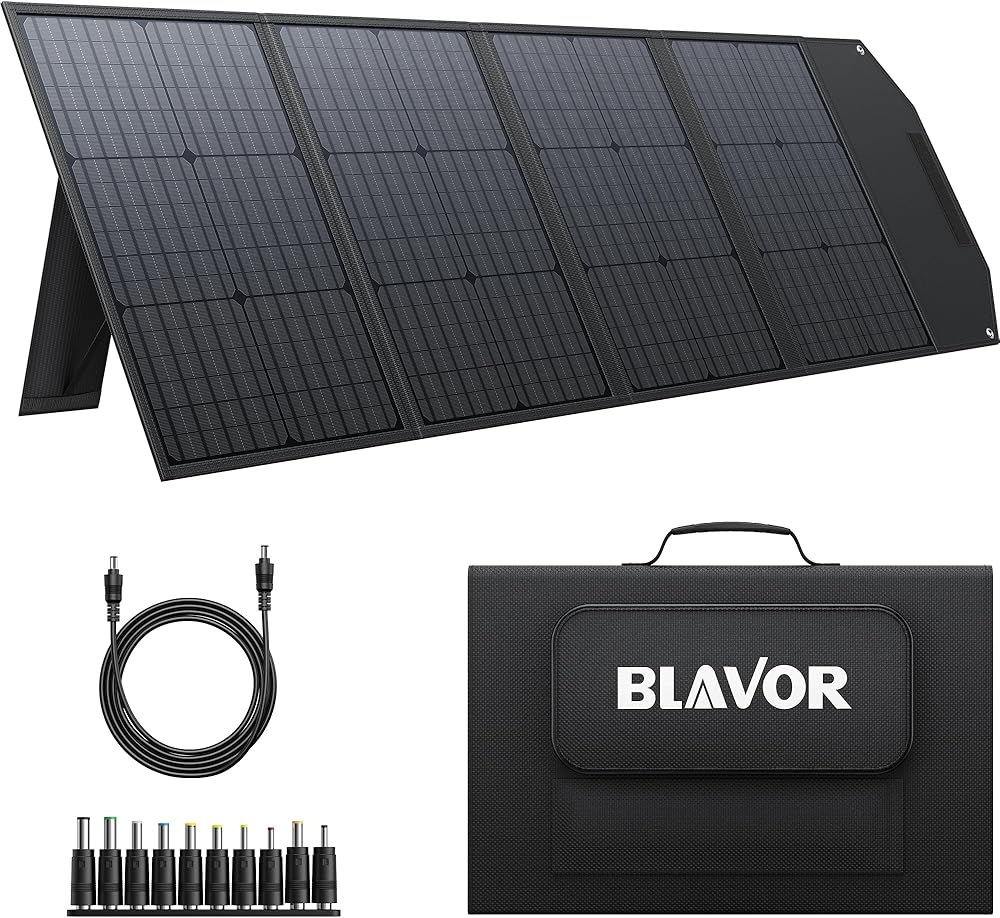
The BLAVOR 120W gives you extra power margin, delivering 20% more than the standard 100W options. The 45W Power Delivery USB-C port charges laptops directly, and you also get regular USB-A and a 18V DC output for power stations. This is a full-featured solution if you’re willing to carry the extra weight. BLAVOR products historically hit a sweet spot between quality and affordability. The 120W capacity means faster charging in direct sunlight and better performance on partly cloudy days compared to lower-wattage competitors.
The multiple port options make this panel flexible for mixed device scenarios. You can charge a laptop on USB-C while simultaneously charging a phone on USB-A, which is practical for families or team travel scenarios.
Features
- 120W power output, highest on this list
- 45W USB-C Power Delivery for direct laptop charging
- USB-A port and 18V DC output
- QC 3.0 fast charging support
- Foldable with carry case and kickstands
- IP65 waterproof rating
- Highest wattage means fastest charging
- 45W USB-C handles power-hungry laptops
- Multiple simultaneous device charging
- Good value for the wattage
7. Jackery SolarSaga 100W Bifacial Solar Panel
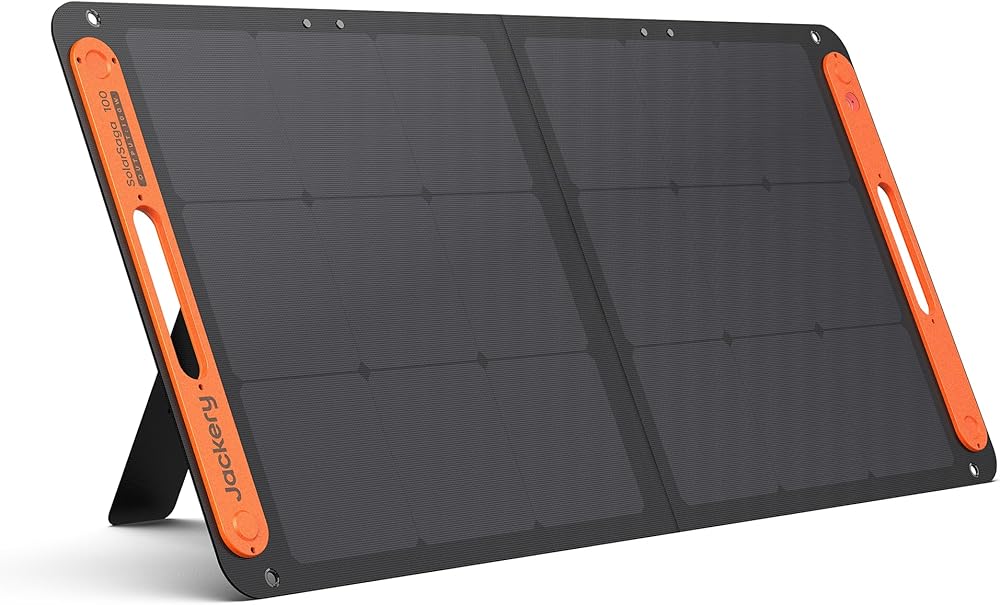
The Jackery SolarSaga includes bifacial technology, meaning it captures sunlight from both front and back surfaces. This boosts power output by 10-20% compared to traditional single-sided panels in reflective environments like snow or light-colored sand. The 25% conversion efficiency is excellent. The key limitation: this panel is designed primarily to charge Jackery power stations rather than laptops directly. The USB outputs on the panel itself are low-power (5V/2.4A), suitable only for phones. For laptop charging, you’d need a Jackery portable power station like the Explorer series as an intermediary.
If you already own a Jackery power station, this is an obvious pairing. If you’re building a new setup, budget for both the panel and a compatible power station. Under 8 pounds, it’s the lightest 100W option on this list and packs into a slim profile.
Features
- 100W output with bifacial monocrystalline cells
- 25% conversion efficiency with reflective surface benefit
- Two USB ports for phones (5V/2.4A each)
- Weighs less than 8 pounds, under 3 inches thick when folded
- Optimized for Jackery Explorer power stations
- Two adjustable kickstands for angle optimization
- Bifacial design boosts output in reflective environments
- Lightest 100W panel available
- Excellent for Jackery ecosystem users
- Superior conversion efficiency
8. EcoFlow 100W Flexible Solar Panel
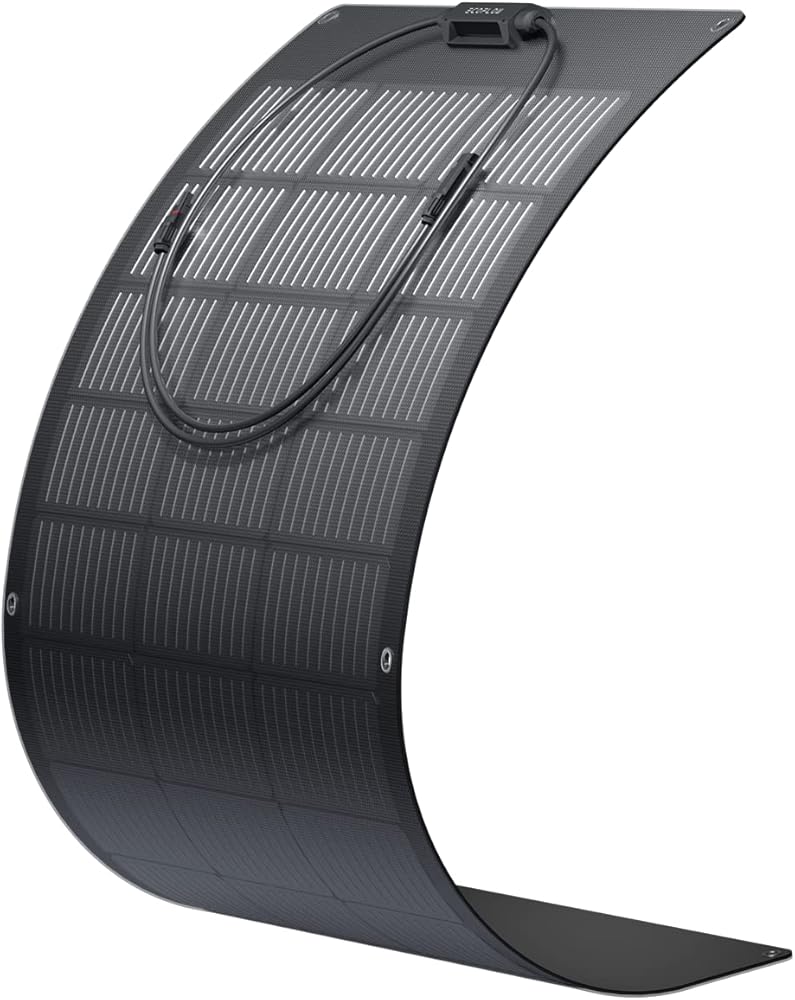
The EcoFlow 100W flexible panel is the budget option without sacrificing too much performance. Flexible panels can conform to curved surfaces like RV roofs or curved tent structures, which opens installation possibilities unavailable to rigid panels. The 23% conversion efficiency is still competitive. The flexibility comes with a tradeoff: you lose the angle adjustment capability of rigid panels with kickstands. On flat surfaces, you’ll need a separate mounting bracket to optimize the sun angle.
This panel is ideal if you have an EcoFlow power station and space constraints prevent installing a rigid panel. It’s genuinely flexible, but you can’t bend it extremely; treat it like heavy fabric rather than rubber. The MC4 connectors ensure compatibility with the EcoFlow ecosystem and most standard solar generators.
Features
- 100W flexible panel design for curved surface installation
- 23% conversion efficiency
- IP68 waterproofing for extreme conditions
- MC4 connectors for power station compatibility
- Lightweight flexible construction
- Designed for EcoFlow power stations
- Flexible design enables curved surface mounting
- Lightweight for its power output
- Good IP68 waterproofing
- Competitive conversion efficiency
Solar Laptop Charger Buying Guide
Key Takeaways
- Direct USB-C Power Delivery is the fastest way to charge laptops from solar panels; look for 45W minimum on the charger port itself
- 100W is the practical minimum for meaningful laptop charging; smaller panels take 8+ hours to add 50% battery
- Bifacial and N-Type panels offer 10-20% more power than standard panels in the same physical footprint
- Weight matters for travel; panels under 10 pounds are genuinely portable; heavier panels work better for stationary use
- A power station acts as a battery buffer, letting you charge laptops even when the sun goes down
- Conversion efficiency (22-25%) tells you how much sunlight the panel actually converts to usable power
What Is a Solar Laptop Charger?
A solar laptop charger is a portable solar panel that generates electricity from sunlight and converts it to power your laptop. Unlike small solar power banks designed for phones, a true solar laptop charger outputs either high-wattage direct current (18V-20V DC) for laptop charging ports or USB Power Delivery (45W+) via USB-C. The panel captures photons and converts them to electrical current through semiconductor cells, typically monocrystalline or bifacial designs. The output varies depending on sunlight intensity, panel angle, time of day, and seasonal factors. A 100W panel in direct sunlight produces roughly 100W of power; the same panel on an overcast day might produce 20-40W. You can use a solar laptop charger to charge your device directly when it’s sunny, or connect it to a portable power station for cloudy-day capability.
How Do Solar Laptop Chargers Work?
Solar panels contain multiple photovoltaic cells arranged in series and parallel. When light photons hit the cells, they knock electrons loose from their atoms, creating a flow of electricity (current). Each cell generates only about 0.5 volts, so hundreds of cells are combined to reach practical voltages. A 100W panel at 20V will produce 5 amps of current under peak sunlight. Charge controllers inside the panel regulate voltage and current to prevent damage to connected devices. USB ports provide standardized 5V output, while DC ports output the raw voltage directly (typically 18V-20V for laptop charging). The entire process happens silently and continuously whenever sunlight hits the panel. Efficiency losses occur at every step: light reflection off the surface, heat generated by the semiconductor material, wiring resistance, and controller inefficiency. A 23% efficient panel means 77% of the incoming sunlight energy is lost as heat, which is why size and angle matter so much.
Benefits of Using a Solar Laptop Charger
The primary benefit is energy independence. Once you own a solar charger, you generate power anywhere the sun shines, eliminating dependence on electrical outlets or battery reserves. This is invaluable during power outages, remote work scenarios, traveling in RVs, camping, or emergency situations. You also reduce your reliance on battery backup power, extending the usable range of your device during a single day. From an environmental perspective, solar energy is renewable and creates zero emissions during operation. There’s no fuel to purchase, no noise, no moving parts to wear out. Solar panels can last 25+ years with minimal maintenance. The financial benefit grows over time: if you’re off-grid or travel frequently, a $300-500 solar panel investment pays for itself in fuel savings within a few years. For professionals who work remotely, a solar charger eliminates the stress of finding an outlet or running out of battery power during critical work hours.
Wattage Requirements: Why Most Portable Solar Panels Can’t Fully Power a Laptop
A modern laptop under load typically draws 45 to 100 watts. Most portable solar chargers marketed for laptops output 20 to 60 watts in ideal conditions, and considerably less in real-world use. The math means most solar laptop chargers will slow-charge or maintain a laptop’s battery under light use, but they won’t keep up if you’re running demanding software or have multiple applications open. That’s a realistic expectation to set before you buy.
For field work where you need consistent laptop power, a solar charger used to top up an external power bank during the day, then the power bank used to charge the laptop at night, is more reliable than direct solar-to-laptop charging. A 100Wh power bank charged fully by a 60W panel in two to three hours of good sun gives you a full laptop charge in the evening. This two-stage approach smooths out the variability of solar output and means your laptop charging schedule doesn’t depend entirely on cloud cover at any given moment during the day.
USB-C PD, DC Barrel Jacks, and Compatibility with Your Specific Laptop
Laptop charging compatibility is more complicated than phone charging because laptops use more varied connector standards. USB-C Power Delivery (PD) has become the dominant standard for modern laptops: MacBooks, Dell XPS, HP Spectre, and most Chromebooks all charge via USB-C. A solar charger with USB-C PD at 45W or 65W will charge these laptops, though at slower than rated speeds in typical solar conditions. If your laptop uses USB-C charging, verify the charger’s PD wattage matches or exceeds your laptop’s adapter wattage.
Older laptops and some gaming laptops use proprietary DC barrel connectors. Some solar chargers include a set of DC adapter tips covering common brands like Dell, HP, Lenovo, and Asus. These only work if your laptop’s barrel voltage matches what the charger outputs, typically 12V or 19V. Check the voltage requirement printed on your laptop’s original adapter and confirm the solar charger outputs the same voltage before buying. A mismatched voltage can damage the laptop’s charging circuit, so this compatibility check is worth doing carefully rather than assuming a multi-tip adapter covers your specific model.
Things to Keep in Mind Before Buying
Wattage requirements matter. A 15-inch MacBook Pro demands 96W for fast charging; a lightweight laptop might need only 65W. Don’t buy a 50W panel expecting to charge a power-hungry laptop at full speed. Account for real-world conditions: your panel will never deliver rated watts unless conditions are absolutely perfect. Cloudy days might reduce output by 50-80%. USB-C Power Delivery compatibility is crucial. Some older laptops use barrel connectors or USB-A charging; confirm your laptop model’s charging port before buying. Cloud performance varies by panel type; N-Type and bifacial panels perform better in low-light conditions than standard monocrystalline panels. Temperature affects performance too. Panels actually produce less power on extremely hot days because efficiency drops above 50°C. Water resistance ratings (IP65, IP68) matter if you’ll use the panel in wet conditions; IP65 handles light rain, IP68 handles submersion. Finally, understand whether you need direct charging or power station charging. Direct USB-C charging is faster but limited to sunny conditions. A power station adds cost but lets you charge whenever you want, day or night.
Types of Solar Laptop Chargers
Foldable panels are the most popular type. They deploy like a briefcase, with internal hinges that fold for transport and expand to multiple panels for charging. Foldable designs maximize surface area while minimizing packed size. Portable rigid panels use a single large surface with kickstands, offering better durability and performance but less packability. Flexible panels are thin and bendable, enabling installation on curved surfaces like RV roofs; they’re lighter but less portable for hand-carry. The panel count varies too. A single-panel design is compact but produces less power. Multi-panel designs (combining 2-4 panels) increase wattage and power output while remaining foldable. Integrated power stations combine the solar panel and battery in one unit, eliminating the need for a separate battery. These are heavier but provide complete energy independence. You should also consider whether the charger integrates batteries. A panel-only solution is lighter and simpler but requires either direct sunlight or a separate power station. A panel plus integrated battery adds weight but offers charging capability at night. Most serious users choose to pair their favorite panel with a separate power station for maximum flexibility.
Frequently Asked Questions
Yes, but with conditions. In direct sunlight, a 100W panel outputs roughly 80-90W of usable power after controller losses. A typical laptop needs 45-96W to charge. You can charge slowly on sunny days. Cloudy conditions reduce output to 20-40W, which might only maintain current battery level rather than increase it. For reliable charging regardless of weather, pair your panel with a power station that stores energy during sunny periods.
USB-C Power Delivery (USB-C PD) is a standardized protocol that delivers up to 240W over a USB-C cable. Most modern laptops support USB-C PD charging. DC output is raw direct current, typically 18V-20V, which powers older laptops with barrel connectors or compatible power stations. USB-C PD is more convenient for modern devices; DC output is more universal for power station compatibility.
Time varies dramatically with conditions. In peak sunlight with a 100W panel, expect 2-4 hours to fully charge a typical laptop from empty. In cloudy conditions, the same charge might take 8-12 hours or not happen at all. Charging speed also depends on whether your laptop allows charging above the solar panel’s output power. If your laptop needs 96W but the panel only outputs 60W, the charge creeps forward slowly.
Foldable panels offer better power output per pound and integrated kickstands for angle adjustment. Flexible panels enable curved surface mounting and are lighter overall, but lack built-in angle adjustment. Choose foldable if you’re hand-carrying and setting up frequently. Choose flexible if you’re installing permanently on an RV roof or curved structure.
Yes, but at reduced capacity. A 100W panel might output only 15-30W on a heavily overcast day. Bifacial and N-Type panels perform better in low-light conditions than standard monocrystalline panels. If you need consistent power regardless of weather, pair your panel with a power station to buffer cloudy-day periods.
Solar power banks (25,000mAh capacity) are convenient for phones and light devices but too slow for laptops. They charge themselves in sunlight using built-in solar cells, but the small cell area produces only 5-10W. A dedicated 100W solar panel is 10-20 times more powerful and charges laptops at practical speeds. Power banks are supplements; real panels are primary chargers.
Yes, and this is the most reliable method. The power station acts as a battery buffer, storing solar energy for use during clouds or night. Most portable power stations output 100W+ USB-C and can charge laptops at full speed. This two-step process is slower than direct panel-to-laptop charging on sunny days, but provides 24/7 charging capability.
Summing Up
A quality solar laptop charger transforms your work freedom. You’re no longer tethered to wall outlets or anxious about battery depletion. The ALLPOWERS 100W takes our top spot for overall value and direct laptop charging capability. If you demand the fastest USB-C charging, the BioLite SolarPanel 100 or BLAVOR 120W deliver 45W Power Delivery directly to your laptop. For budget-conscious buyers, the BigBlue 100W offers solid performance at a lower price. If you’re already invested in a specific power station ecosystem (EcoFlow, Jackery), choose the matching panel from our list to ensure seamless compatibility and warranty support. For remote work, travel, or emergency backup power, a 100W solar panel is one of the best investments you can make. Remember: this isn’t a gadget that makes charging slightly more convenient. This is genuine energy independence that fundamentally changes how you work and travel.
If you’re also thinking about solar panels for your home, call (855) 427-0058 for a free quote — it takes just a few minutes to find out what installation would cost and save you in your area.
Updated