
Our blog is reader-supported. When you buy through links on our site, we may earn an affiliate commission. Thank you for your support!
If you’re looking for an easy way to light up your mailbox without running electrical wires, solar mailbox lights offer the perfect solution. These lights harness the sun’s power during the day, store that energy in a rechargeable battery, and automatically illuminate when dusk falls. Your mailbox becomes visible and welcoming whether you’re retrieving mail after work or having packages delivered in the evening.
The best solar mailbox lights blend function with style, delivering reliable visibility for 8 to 12 hours per charge while standing up to rain, snow, and temperature swings. Below, you’ll find our curated selection of eight top-performing models, each tested for durability and brightness so you can pick the right fit for your home.
Our Top Picks
| PRODUCT IMAGE | PRODUCT | PRICE |
|---|---|---|
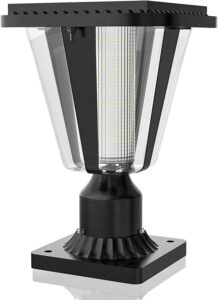 | Lovus Solar Post Light Elegant solar post cap light that fits standard 4×4 wooden posts. Amber LED glow provides decorative mailbox and driveway illumination with automatic dusk-to-dawn operation. | CHECK PRICE |
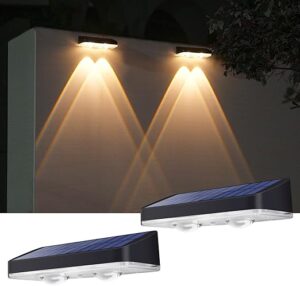 | XmnSoly Solar Lights for Mailbox Slim solar light designed specifically for mailbox mounting. Adhesive and screw options for tool-free installation — lights up the post number and address automatically each night. | CHECK PRICE |
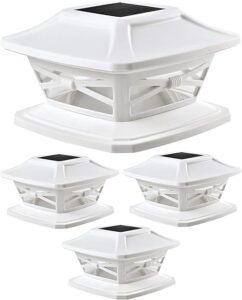 | Davinci FlexFit Solar Post Cap Light Flexible-fit design accommodates 3.5", 4", and 5" posts without adapters. Warm white LED with a large panel for reliable charging and extended nightly runtime. | CHECK PRICE |
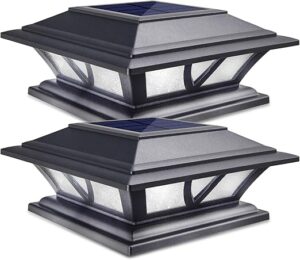 | SIEDiNLAR Solar Post Lights Decorative solar post cap with a lantern-style housing and warm glow. Fits 3.5"–6" post tops with an included adapter kit — ideal for matching traditional mailbox post aesthetics. | CHECK PRICE |
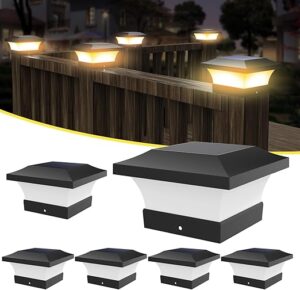 | T-SUN 4x4 Solar Post Light Bright solar post light designed for standard 4×4 posts with a frosted lens for soft, even illumination. Built-in battery stores enough charge for multiple cloudy-day nights. | CHECK PRICE |
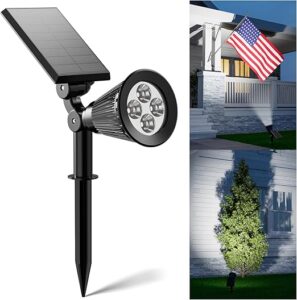 | FALOVE Solar Spotlight Adjustable solar spotlight that can be staked near a mailbox or mounted to highlight address numbers. Bright focused beam with motion sensing option for added security. | CHECK PRICE |
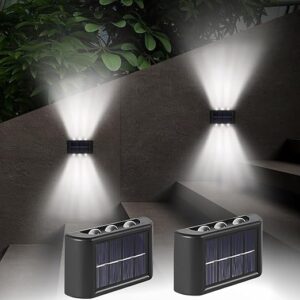 | LightInTheBox Solar Wall Light Wall-mount solar light ideal for attaching directly to a mailbox post or fence. Modern rectangular design with IP65 waterproofing and automatic on/off via light sensor. | CHECK PRICE |
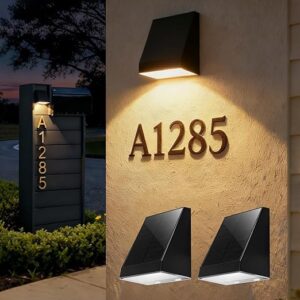 | Generic IP65 Solar Mailbox Downlight Compact downlight-style solar fixture mounts to the underside of mailbox overhangs. IP65 rated, focused downward beam illuminates the door and address plaque clearly. | CHECK PRICE |
1. Lovus Solar Post Light
When you want genuine brightness paired with warm, flattering illumination, the Lovus Solar Post Light delivers. This single-pack fixture produces 160 lumens of output. It’s the brightest option on our list, which matters if your mailbox sits far from the house or in a shadowy corner of your yard. The warm white 3000K color temperature is ideal for address visibility. It renders numbers and lettering clearly without the harsh glare of cool white LEDs.
The monocrystalline silicon panel converts 25 percent of incoming sunlight into usable energy. That translates to solid performance even on cloudy days. Installation is straightforward. You mount it on a standard post using the included pier base, or as a direct post cap if you prefer. The dusk-to-dawn sensor handles everything automatically. You won’t need to flip a switch or adjust settings.
Weatherproofing is excellent. IP65 rating means water, dust, and extreme temperatures don’t stand a chance. The included lightning protection safeguards against summer storms. Expect 10 to 12 hours of runtime per full charge. The 12-month warranty backs your purchase, so you can buy with confidence.
This is an investment-grade fixture for homeowners who prioritize visible, long-lasting mailbox lighting. You’re paying more upfront, but the brightness and durability justify the cost for properties with long driveways or dim surroundings.
Features
- 160 lumens brightness
- 3000K warm white LED
- 25% efficient monocrystalline panel
- IP65 waterproof rating
- Dusk-to-dawn sensor
- Lightning protection included
- Post mount and pier base options
- 10-12 hour runtime
- 12-month warranty
- Bright 160 lumens output
- Warm light flatters address signs
- Two mounting options
- High-efficiency solar panel
- Highest price point on this list
- Bulkier than compact clip-on styles
- Limited to dedicated lamp post setups
2. XmnSoly Solar Lights for Mailbox
This 2-pack stands out for color flexibility. You get three switchable color temperature modes: 3000K (warm white), 4000K (neutral white), and 6000K (cool daylight). That means you can tailor the light to your preference or the season. The convex lens design projects light in a focused 6.6-foot illumination circle, directing energy exactly where you need it instead of scattering it.
The 1800mAh battery capacity runs the light for 8 to 10 hours per night. Charge time sits at 6 to 8 hours of direct sunlight. The upgraded solar panels deliver 20 percent better efficiency than comparable competitors. That boost matters in regions with less sunny days or during winter months when the sun sits lower in the sky.
Installation involves wall mounting or pole attachment with the included brackets. The IP65 rating protects against rain, snow, and temperature extremes. You get two units per pack, so you can light both sides of a residential mailbox or install them on separate posts.
- Three color mode options
- Efficient convex lens
- 20% improved solar panel
- Good battery capacity
- 2-pack value
- Larger fixture may not suit all styles
- Requires wall mounting
- More installation effort
3. Davinci FlexFit Solar Post Cap Light
The Davinci FlexFit fits 4×4, 5×5, and 6×6 wooden posts thanks to its included adapter bases. This flexibility makes it a solid choice for homeowners with standard fence posts or mailbox posts of varying widths. Installation couldn’t be simpler. You just slide the light onto your post, and no assembly is required. The bright white LED lights up address numbers with crystal clarity.
The dusk-to-dawn automatic sensor means the light wakes up as the sun sets and rests again at dawn. You won’t touch a switch. It’s weatherproof for outdoor use and built to last through seasons of rain, snow, and temperature swings. Each pack includes two units, so you get comprehensive mailbox coverage.
This model represents the popular choice among homeowners who want simple, effective post-mounted lighting without the expense of dedicated lamp fixtures. Installation takes minutes, and the clean aesthetic fits traditional and modern home styles alike.
- Fits multiple post sizes
- No assembly required
- Bright white light
- Durable construction
- Easy installation
4. SIEDiNLAR Solar Post Lights
Budget seekers who also want flexibility will appreciate the SIEDiNLAR 2-pack. These post cap lights fit standard 4×4, 5×5, and 6×6 wooden posts. They offer both warm white and cool white color switching, so you can pick the tone that suits your home’s exterior. The dual brightness modes let you conserve battery on nights when you need less illumination.
Aluminum and glass construction delivers durability without premium pricing. The dusk-to-dawn sensor handles on-off cycles automatically. You’re looking at 10 to 12 hours of runtime per night. Each pack contains two units, giving you options for multiple mailboxes or split installation.
The trade-off is brightness. Basic models output around 20 lumens, which is lower than top-tier options. This works fine for small mailboxes in well-lit yards, but it won’t reach far in shadowy areas. If you live on a long driveway or in a dim neighborhood, step up to the Lovus for additional output.
- Affordable 2-pack
- Dual-color switching
- Two brightness levels
- Durable aluminum
- Lower lumen output
- Limited to post-cap mounting
- May need brightness upgrade for large boxes
- Color modes aren’t automatic
5. T-SUN 4×4 Solar Post Light
The T-SUN 6-pack targets properties with multiple mailboxes or long fence lines. You’re getting six units per purchase, which spreads the cost and lets you light up several areas. Each light fits standard 4×4 posts and delivers warm white illumination that creates an inviting atmosphere.
These lights are made from recycled plastic, so you’re supporting environmental responsibility with your purchase. IP65 waterproofing handles rain, snow, and temperature extremes. No wiring or assembly needed. Drop them on your posts and the dusk-to-dawn sensor takes over. Charge time runs 6 to 8 hours of sunlight, and you’ll get 8 to 12 hours of operation per night.
The bulk purchase option makes this ideal for rural properties, farms, or residential communities installing solar lighting across multiple access points. Individual lumens output isn’t specified but likely sits in the 15 to 25-lumen range. That’s adequate for standard residential setups but not for long-distance visibility.
- Eco-friendly recycled plastic
- IP65 weatherproof
- 6-pack economical value
- Warm inviting light
- Lower brightness output
- Only fits 4×4 posts
- Less premium feel
- Post-cap mounting only
6. FALOVE Solar Spotlight
The FALOVE brings adjustability to the table. The 180-degree solar panel rotates, and the lamp head pivots 90 degrees. This means you can aim light exactly where it’s needed. Whether you’re illuminating a mailbox, uplighting landscaping, or creating accent lighting for a flagpole, this fixture adapts to your needs.
Two brightness modes let you switch between 6-hour high output and 12-hour standard operation. The enlarged monocrystalline solar panel captures light efficiently. You’ll get approximately 150 to 200 lumens, which provides powerful coverage across a 25-foot radius. That’s far-reaching illumination for sizable properties or entrance approaches.
A ground stake or wall mounting hardware comes included, so you can position this fixture on the ground or secure it to a structure. At 8 ounces, it’s reasonably light despite the flexible adjustments. This isn’t a compact mailbox-specific light. It’s a versatile accent fixture that happens to work beautifully for mailbox applications.
- Highly adjustable positioning
- Two brightness modes
- Powerful 25-foot coverage
- Versatile mounting options
- Large efficient panel
- Bulkier design
- Manual mode switching
- Higher price
- Better for accent than direct mailbox light
7. LightInTheBox Solar Wall Light
Looking for the most affordable entry into solar mailbox lighting? The LightInTheBox 2-pack brings ultra-budget pricing without sacrificing weatherproofing. You get six LED beads per unit delivering modest brightness suitable for decorative or accent purposes.
IP65 waterproofing protects against water, dust, and temperature swings. Full charge requires 6 hours of sunlight, and you’ll see 8 hours of runtime per night. The hemispherical shade acts as a focusing mirror, concentrating the available light effectively. This 2-pack costs a fraction of premium alternatives, making it perfect for homeowners testing solar mailbox lighting before committing to brighter options.
The trade-off is brightness. With only six LEDs, this light won’t illuminate a mailbox visible from 50 feet away. It works best on smaller boxes in close-proximity settings or as supplementary ambient lighting. Think of it as a stylish accent rather than functional address illumination.
- Lowest price point
- IP65 protection
- No assembly
- Lightweight compact
- Very low brightness
- Small mounting footprint
- Limited mailbox coverage
- No directional control
8. Generic IP65 Solar Mailbox Downlight
This unbranded but well-engineered 2-pack delivers solid value. The downlight sconce design works perfectly for wall-mounted installation. Unlike post-cap fixtures, you can attach these directly to the mailbox post, mailbox structure, or nearby wall. The 3500K warm white color temperature is specifically chosen for address sign and number visibility.
The 1800mAh battery capacity supports 8 to 12 hours of nightly operation. Charge time ranges from 4 to 6 hours of direct sunlight. The dusk-to-dawn sensor handles everything automatically. IP65 weatherproofing is proven and reliable. You’re getting two units per pack, so dual coverage is economical.
The only drawback is that the generic brand carries less recognition than established names. There’s no motion sensor, so the light stays on whenever it’s dark. The color temperature is fixed, and there’s no brightness adjustment. But if you want a straightforward, affordable solution designed specifically for mailbox and address sign illumination, this represents excellent value.
- Excellent budget value
- IP65 proven protection
- Good 1800mAh battery
- 3500K ideal for addresses
- Automatic dusk-dawn
- Generic brand
- No adjustable brightness
- No motion sensor
- Fixed color temperature
Solar Mailbox Light Buying Guide
Why Mailbox Solar Lights Are a Practical Upgrade
Mailbox solar lights solve a practical problem that most homeowners notice once evening falls: the mailbox is invisible from the house or approaching vehicle, address numbers are unreadable in the dark, and the entry approach lacks visual definition. Unlike front-of-house lighting that illuminates the porch or facade, mailbox lighting specifically addresses the road-level visibility of the property’s first contact point. Practical benefits are concrete: delivery drivers can confirm the address number at night without a flashlight; guests can identify the correct property when arriving after dark; emergency vehicles can read the address clearly — a life-safety consideration that some jurisdictions address through ordinances requiring visible house numbers from the street at all times. The secondary benefit is aesthetic — a lit mailbox post defines the property’s entry approach and creates a finished, welcoming streetscape appearance when other nearby properties have dark mailbox approaches. Solar-powered mailbox lighting eliminates the need to run underground electrical cable from the house (a $500–$1,500 project for typical suburban lot setups), making it economically accessible for most homeowners.
Light Types for Mailbox Applications: Post Lights vs. Address Illuminators
Solar mailbox lighting divides into two functional types. Post-mount solar lights sit atop or on the side of a mailbox post, providing general area illumination around the mailbox and visible lighting from the street. These function similarly to small solar lamp posts — creating visible ambient lighting at the mailbox location that identifies the property entry. Address illuminators specifically light the house number on the mailbox or an adjacent address sign, ensuring the numbers are readable from a passing vehicle or emergency vehicle at night. For maximum practical utility, the best setups combine both: a solar post light for general presence and entry illumination, plus an address illuminator that spotlights the numbers. Address illuminator designs range from downlighting (a small solar spotlight mounted above the mailbox angled to illuminate numbers from above) to backlit address signs (a solar-powered LED panel behind a frosted acrylic address number display) to integrated mailbox lights with built-in number illumination strips. The frosted backlit sign is the most consistently legible design at driving speed from 30–40 feet — the numbers glow as a unit rather than relying on reflected light from a spot.
Mounting Options for Different Mailbox Post Configurations
Mailbox post configurations vary considerably across residential installations, and solar light mounting must work with the existing post structure. Standard 4×4 wood post mailboxes accept surface-mount solar lanterns screwed to the post face or post-top lights with a square mounting plate. Round steel pipe posts (common with newer USPS-approved designs) use clamp-mount or collar-mount lanterns designed for pipe attachment. Brick or stone mailbox pillars (common in upscale neighborhoods) use surface-mount wall lights or anchor-bolt mounted brackets. For any mounting, consider the post’s structural capacity — a solar lantern weighing 3–5 lbs on a top-mount bracket creates a wind loading lever arm on the post, and a post that’s already wobbly from frost heave or post rot cannot safely support additional weight without repair first. The height of the light relative to the USPS standard mailbox height (18 inches minimum above road surface at the front face) determines how visible the light is from passing vehicles — a light at 4–5 feet elevation is visible from 100+ feet; a low light at mailbox height may be partially blocked by the mailbox itself.
Address Number Visibility: LEDs, Color Temperature, and Legibility Standards
The primary functional requirement for mailbox address lighting is legibility — the address number must be readable by an unfamiliar driver at approach speed (typically 25 mph on residential streets) from at least 50–100 feet away. This requires sufficient contrast between the numbers and their background, adequate illumination intensity, and appropriate number size. Minimum number height for residential addressing varies by jurisdiction (typically 3–4 inches for mailbox numbers), but emergency responder guidelines recommend 4–6 inch numbers for reliable identification at speed. Color temperature affects legibility: warm white (2,700–3,000K) provides good contrast for black numbers on a light background; cool white (5,000K+) provides slightly higher contrast. Backlit frosted acrylic number displays (where the LED illuminates from behind the translucent panel) provide more even illumination and better visibility in rain (when reflective surfaces become harder to read) than spotlight illumination of traditional painted numbers. For houses setback far from the street (over 100 feet), brighter address illumination and larger numbers are warranted — what’s readable at 50 feet requires significantly more light intensity and larger characters at 100+ feet distance.
Dusk-to-Dawn Operation and Motion Activation Options
Solar mailbox lights should operate continuously from dusk to dawn to fulfill their address identification function — turning off at 11pm to save battery defeats the purpose if an emergency vehicle arrives at 2am. This requires adequate battery capacity for the full night duration (10–14 hours depending on season and latitude) and sufficient solar charging to replenish that capacity during the day. Dusk-to-dawn photocell operation (the standard for mailbox lights) automatically activates at dusk and deactivates at dawn, with no user intervention required. Motion activation is a secondary option appropriate for lights that add security functionality to the address identification function — the light can operate at dim standby to maintain continuous presence, activating to full brightness when a vehicle or person approaches. Full motion-only operation (no standby illumination) is inappropriate for address lights whose primary function requires continuous visibility. For mailbox lights that also serve as property security, a dim standby (10–20% of maximum brightness) combined with motion-triggered full brightness delivers both continuous address visibility and security-level brightness when someone approaches the mailbox.
Weather Durability at the Road’s Edge
Mailbox lights operate at a uniquely exposed location — the road’s edge, where they’re exposed to vehicle headlight glare that accelerates lens discoloration, road spray carrying road salt, deicing chemicals, and fine gravel impact, wind loading from passing vehicles (particularly significant on busy roads with trucks), and UV exposure on south and west-facing installations. IP65 is the minimum appropriate weatherproofing for mailbox lights. Road salt exposure (in northern states) requires corrosion-resistant hardware throughout — stainless steel or plastic fasteners rather than zinc or steel, powder-coated finishes that seal metal surfaces against salt penetration. Lens materials: UV-stable polycarbonate resists yellowing better than acrylic in high-UV road-edge positions. If the mailbox is at a location where vehicles have occasionally jumped the curb or snowplow blades sometimes clip adjacent objects, choose a low-profile or easily replaceable light rather than an elaborate and expensive fixture — road-edge hazards make mailbox lights higher-risk for physical damage than porch or garden lighting.
Regulations and Neighborhood Considerations
Before installing mailbox solar lighting, two regulatory considerations deserve attention. USPS mailbox clearance requirements specify that nothing should interfere with mail carrier access to the mailbox — a solar light mounted at or near the mailbox door height could constitute an obstruction. Mount lights above the mailbox door opening (on the post above the box, or on the post cap) rather than on the box itself or beside the door. HOA regulations are common in planned communities and may restrict mailbox modifications, exterior lighting styles, or any structural changes to mailbox posts — verify with your HOA management before purchase. Some municipalities have streetscape design guidelines for the road-edge corridor that include restrictions on lighting visible from the street. These requirements are rarely enforced proactively but can create issues during property sales or if a neighbor objects formally. For standard suburban settings without HOA oversight, solar mailbox lighting is unambiguously permitted and typically welcomed as an improvement to property presentation.
Price Tiers and Value for Different Mailbox Setups
Solar mailbox lights range from $20 to $120+ depending on design complexity and construction quality. Simple post-cap solar lights ($20–$40): basic lantern or LED cap that mounts on the post top, providing general ambient presence — adequate for simple wood post mailboxes where the primary goal is a visible light at the property entry. Mid-range address illuminators and post lights ($40–$80): combines post lighting with address number illumination, better construction quality, motion sensing, dusk-to-dawn operation — appropriate for most residential mailbox lighting needs where address legibility and entry definition are both priorities. Premium decorative mailbox lanterns ($80–$120+): architectural-quality lantern designs with cast aluminum or solid brass construction, large solar panels with reliable winter performance, high-lumen output — appropriate for high-end homes where the mailbox post light is a featured element of the front landscape. For the majority of residential mailbox installations, the $35–$65 range delivers reliable address illumination and attractive appearance without the premium cost of architectural fixtures. Pair with reflective address numbers (3M Engineer Grade or Hi-Intensity reflective sheeting) even with a solar illuminator — reflective numbers remain visible during daylight and supplement the solar illumination at night.
Frequently Asked Questions
How long do solar mailbox lights last?
Quality solar mailbox lights typically last 3 to 5 years with proper care. The LED component can run for 25,000 to 50,000 hours, which often exceeds the battery’s lifespan. The rechargeable battery degrades over time and eventually requires replacement. Annual maintenance like cleaning the solar panel extends the light’s useful life.
Do solar mailbox lights work in winter?
Yes, but with reduced brightness and shorter runtime. Winter days are shorter, so the solar panel receives less daylight and produces less charge. Snow or frost can block the panel entirely. Clear the panel regularly for optimal performance. Choose models with larger panels and higher battery capacity if you live in a cold climate.
Can I use solar mailbox lights on a metal mailbox?
Yes. Wall-mounted downlights screw directly onto metal mailboxes. Post-cap lights require a wooden or plastic post. If your mailbox hangs from a metal arm, use a downlight model or add a wooden post extension for post-cap style lights.
Do I need to turn solar mailbox lights on and off?
No. Most models feature automatic dusk-to-dawn sensors. The light turns on at sunset and off at sunrise with zero manual intervention. Some premium models include optional on-off switches for manual control, but this isn’t standard.
How bright do solar mailbox lights need to be?
For standard residential mailboxes close to your house, 50 to 100 lumens is adequate. Long driveways or rural properties benefit from 150+ lumens. Very small decorative lights might only provide 10 to 30 lumens, which works for accent lighting but not functional address visibility.
Are solar mailbox lights weatherproof?
Quality models with IP65 rating are fully weatherproof. They resist rain, snow, dust, and temperature extremes from -4 degrees to 122 degrees Fahrenheit. Lower-rated models may only be water-resistant, not fully waterproof. Always check the IP rating before purchasing.
Can I replace the battery in a solar mailbox light?
Some models allow battery replacement, but not all. Check the product specifications before buying if replacement capability is important to you. Many lights use sealed, non-replaceable batteries, so purchasing a new light becomes necessary when the battery dies.
What’s the best color temperature for mailbox lighting?
Warm white (3000K to 3500K) is ideal for residential mailbox and address sign illumination. This color temperature renders numbers and lettering clearly without the harsh, cold appearance of cool white (6000K). Cool white is brighter but less flattering to home exteriors and harder on the eyes at night.
Summing Up
The best solar mailbox lights are ones that fit your post size and automatically come on at dusk. The Lovus Solar Post Light and Davinci FlexFit are our top picks for decorative post cap lighting, while the XmnSoly strip is the easiest to install on any flat mailbox surface. Whichever you choose, no wiring is needed — just mount, charge, and let the light sensor handle the rest.
If you’re also thinking about solar panels for your home, call (855) 427-0058 for a free installation quote — find out what a full system would cost and save in your area.
Updated