
Our blog is reader-supported. When you buy through links on our site, we may earn an affiliate commission. Thank you for your support!
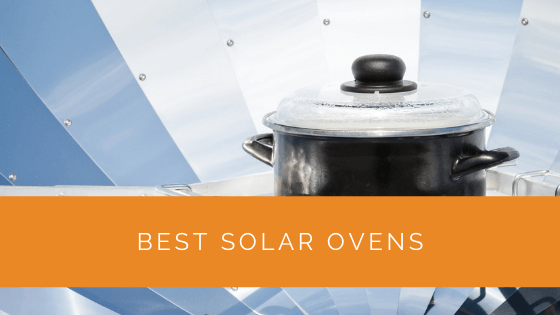
If you want to cook outdoors without spending a cent on fuel, the Haines 2.0 SunUp Solar Cooker and Dutch Oven Kit is the best solar oven on the market right now. It reaches temperatures that rival a conventional oven, handles everything from slow-cooked stews to baked bread, and holds up through years of outdoor use.
Not every solar oven suits every cook, though. Some are built for speed over capacity, some fold down to backpack size, and some are designed to simmer rather than sear. Here are the eight best options available today.
Our Top Picks
| Image | Name | |
|---|---|---|
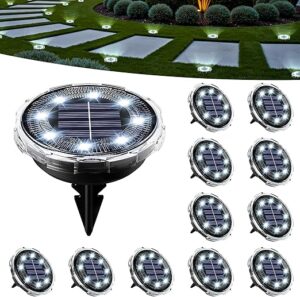
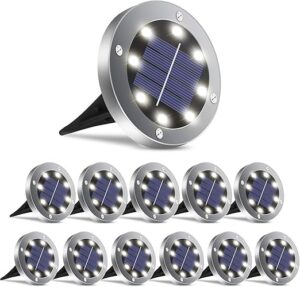
| Peasur Mini Solar Ground Lights 12 Pack Compact flush-mount disk lights with 6-hour runtime, ideal for pathways. Read more | |
| 2.8 Inch Mini Solar Ground Lights 12 Pack Ultra-compact 2.8-inch disk lights with cold white LED and IP67 waterproofing. Read more | |
| Solar Ground Lights Outdoor 8 Pack IP67 Anti-glare diamond design with IP67 waterproofing for all-weather use. Read more | |
| SOLPEX Solar Ground Lights 12 Pack Reliable 12-pack disk lights with warm white glow and strong ground stakes. Read more | |
| ELECLINK Solar Pathway Lights 8 Pack Upgraded Upgraded 8-pack with brighter LEDs and improved solar panel efficiency. Read more | |
| OULONGER 4.6 Inch Solar Lights 12 Pack Larger 4.6-inch format with wider light spread for driveways and patios. Read more | |
| ELECLINK Solar Pathway Lights 6 Pack Budget-friendly 6-pack from ELECLINK with consistent warm white output. Read more | |
| SHONELIGHTING Solar Driveway Disc Lights 8 Pack Heavy-duty driveway disc lights rated for vehicle traffic and harsh weather. Read more |
8 Best Solar Ovens
1. Haines 2.0 SunUp Solar Cooker and Dutch Oven Kit
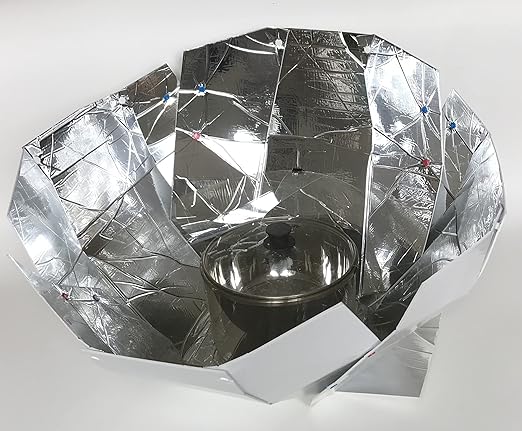
The Haines 2.0 is the kind of solar cooker that makes you rethink your relationship with your gas range. It uses a large parabolic reflector to concentrate sunlight onto a black cooking vessel, and in full sun it can reach temperatures well above 300°F within 20 to 30 minutes. That is hot enough to fry, bake, boil, and roast, not just slowly warm food, which is what cheaper panel cookers do.
The Dutch oven kit is a smart addition. You get a heavy-duty dark cooking pot that absorbs heat efficiently and distributes it evenly, which means your food cooks uniformly rather than burning on the bottom. The whole setup is well-built and comes with clear instructions for aiming the reflector. Point it at the sun, adjust the angle every 20 to 30 minutes as needed, and you have a genuine alternative to a conventional oven outdoors.
For emergency preparedness this is one of the most practical tools you can own. When the power goes out and the propane runs low, sunny days become cooking days. The Haines has a loyal user base precisely because it delivers real results rather than just novelty cooking times.
At 4.6 stars across nearly 300 reviews, this earns its reputation as the top choice for anyone serious about solar cooking. It is more capable than the GOSUN tube cookers when it comes to capacity, and more versatile than any single-method cooker in this list.
Features
- Large parabolic reflector concentrates direct sunlight
- Reaches 300°F+ in full direct sun
- Includes dark Dutch oven cooking pot
- Works for frying, baking, boiling, and roasting
- Durable construction for extended outdoor use
- Adjustable angle for sun-tracking
- Genuinely high cooking temperatures
- Large capacity Dutch oven included
- 274+ reviews at 4.6 stars
- Versatile — bake, fry, boil, and roast
- Requires direct sunlight to reach peak temps
- Needs periodic sun-tracking adjustments
2. SolCook All Season Solar Cooker
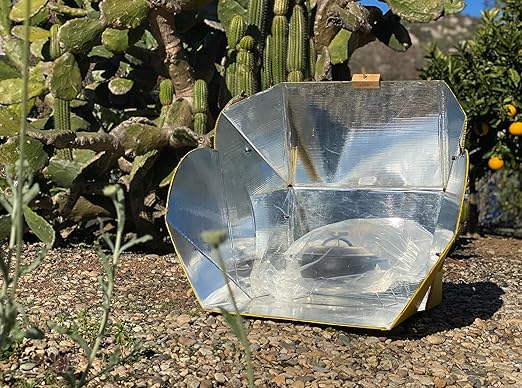
The SolCook is the solar cooker for people who want to cook outdoors but do not want to babysit the process. Where parabolic cookers like the Haines need regular repositioning to track the sun, the SolCook uses a large flat panel design that captures diffuse sunlight across a wide angle. You set it up, load your food, and check back later.
The trade-off is speed. This is a slow cooker in the truest sense. Cooking times run two to four hours depending on cloud cover and sun angle, which makes it better for soups, casseroles, and grains than for anything that needs high-heat searing. Think of it as a solar crock pot rather than a solar stovetop. On overcast days it will still work, just more slowly.
With 483 reviews and a 4.5-star rating it is one of the most reviewed solar cookers on Amazon. Families who use it regularly tend to reach for it for beans, rice, and stews. It is the most forgiving panel cooker in this roundup and a good starting point for anyone new to solar cooking.
Features
- Large flat panel design captures wide-angle sunlight
- Works in partial sun and overcast conditions
- Minimal repositioning required during cooking
- Suitable for soups, casseroles, grains, and beans
- Folds flat for storage and transport
- Good all-season performance across various climates
- Works in partial cloud cover
- Minimal sun-tracking needed
- Most-reviewed solar cooker in this list
- Slow cooking times (2-4 hours)
- Not suitable for high-heat cooking
- Slower in winter or low-sun months
3. Solar Oven Portable 4.5L Large Capacity
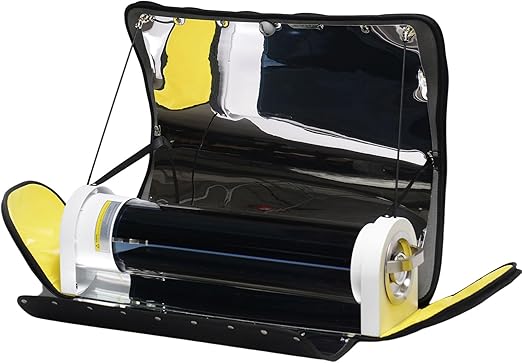
This is the pick for anyone who needs to cook for a group. The 4.5-liter capacity is genuinely large, enough to cook a full pot of chili or a family-sized batch of rice in a single session. The box-style design uses a reflective lid and insulated cooking chamber to trap heat, which means it holds temperature reasonably well even when clouds pass briefly overhead.
Setup is straightforward: open the reflective panels to the correct sun angle, place your cooking pot inside, close the tempered glass lid, and leave it. The insulated chamber keeps cooking even as the sun shifts, so you do not need to hover over it the way you do with a parabolic cooker. Temperatures typically reach 250 to 280°F in good conditions.
At 4.5 stars this delivers solid performance for the price. It is the best option here for anyone cooking large meals or running a solar kitchen for more than two people.
Features
- 4.5L large cooking capacity
- Box-style design with tempered glass lid
- Insulated cooking chamber retains heat
- Reaches 250-280°F in direct sunlight
- Reflective panels fold for easy transport
- Suitable for cooking for groups of 4-6
- Largest cooking capacity in this list
- Insulated chamber holds heat well
- Great for cooking for groups
- Larger and heavier than tube cookers
- Maximum temp lower than parabolic designs
- Best results require strong direct sunlight
4. Teenyyou 2 Pack Portable Foldable Solar Oven
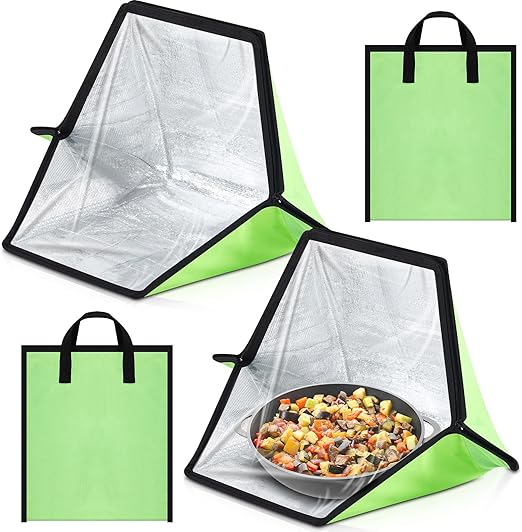
Two cookers for the price of one is a compelling proposition, and the Teenyyou set delivers exactly that. Each unit is a compact foldable solar cooker with a small cooking chamber, designed for individual meals rather than family cooking. The parabolic reflector folds completely flat, making it one of the most packable solar cookers available.
These work well for solo hikers, backpackers, and anyone who wants a no-bulk solar cooking option for day trips. Cooking capacity per unit is modest — think one portion of pasta or a small pot of soup — but the two-pack means you can cook two things simultaneously or share with a camping partner. At 4.5 stars they are a pleasant surprise for the price.
Features
- Two cookers included in one purchase
- Compact foldable parabolic reflector design
- Lightweight and packable for camping and hiking
- Suitable for individual portion cooking
- Fast setup and easy to use
- Good for emergency preparedness kits
- Two cookers for the price of one
- Most compact and packable design here
- Great value for camping and hiking
- Small individual capacity per unit
- Lighter build quality than premium options
- Best for solo cooking, not groups
5. GOSUN Go Portable Camping Stove Solar Oven
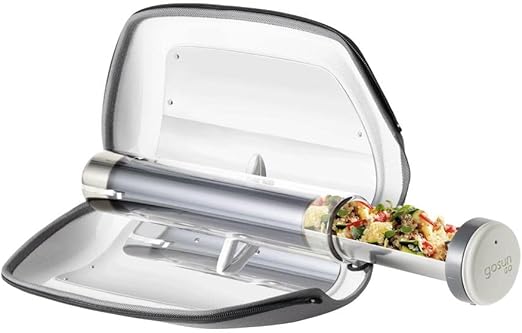
GOSUN built its reputation on one clever idea: a vacuum-insulated glass tube that cooks food the way a thermos holds heat. The Go is their smallest model, with a 0.9-liter capacity that is enough for one good meal or two light servings. The vacuum tube means it retains heat exceptionally well even when clouds roll in, which sets it apart from reflective panel designs that lose heat quickly in shade.
Cooking times in full sun are impressive. You can expect cooked food in 20 to 30 minutes for most meals. Load food into the tray, slide it into the tube, orient the reflector toward the sun, and wait. There is no fire, no fuel, and minimal cleanup because the tray is dishwasher-safe. For backpackers and outdoor enthusiasts who want a genuinely lightweight solar cooking solution, the Go stands out as the best compact option.
With 514 reviews at 4.4 stars it is one of the most popular solar cookers on Amazon. The small capacity is the main limitation, as this is not a family cooker. But for solo outdoor cooking it is hard to beat.
Features
- Vacuum-insulated glass tube cooking chamber
- 0.9L capacity for 1-2 servings
- Cooks in 20-30 minutes in direct sun
- Retains heat well even in partial shade
- Dishwasher-safe cooking tray
- Ultra-compact and lightweight for backpacking
- Fast 20-30 minute cooking times
- Vacuum tube retains heat in clouds
- Easy cleanup with dishwasher-safe tray
- Small 0.9L capacity for solo cooking only
- Glass tube requires careful handling
- More expensive per liter than box-style cookers
6. GOSUN Sport Solar Oven
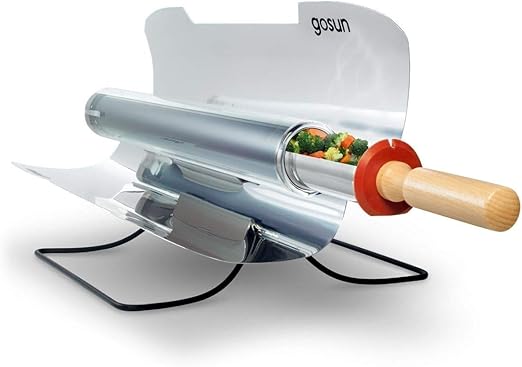
If you want GOSUN’s vacuum tube technology but need to feed more than one person, the Sport is the step up you are looking for. It uses the same basic principle as the Go, a vacuum-insulated tube with a curved reflector, but the tube is larger and cooks 2 to 4 servings per session. It comes with a stand and a carry bag, making it the more versatile option in the GOSUN lineup for family camping or outdoor entertaining.
Cooking performance is comparable to the Go in terms of speed, with most meals ready in 20 to 40 minutes in full sun. The reflector is larger and heavier than the Go, so you trade some packability for capacity. But compared to the panel and box cookers, the Sport remains a reasonably compact option. At 4.4 stars across 208 reviews it has earned a consistent following among regular outdoor cooks.
Features
- Larger vacuum tube cooks 2-4 servings
- Same vacuum-insulated tube technology as the Go
- Included stand and carry bag for outdoor use
- Cooks in 20-40 minutes in direct sun
- Works in partial shade better than panel designs
- Carries in a compact bag for easy transport
- More capacity than the GOSUN Go
- Includes stand and carry bag
- Retains heat well in intermittent cloud cover
- Heavier and bulkier than the Go
- Not large enough for groups of 4 or more
- Glass tube can crack if mishandled
7. Energy Wise Premium Solar Oven
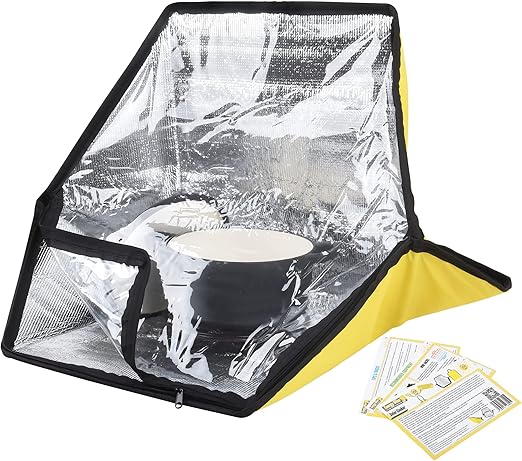
The Energy Wise is a traditional box-style solar oven. Reflective panels fold out around an insulated box with a glass lid, trapping solar heat inside the cooking chamber. It is slower than the GOSUN tube cookers but more forgiving of changing sunlight conditions, and the box-style chamber accommodates standard cookware rather than requiring dedicated trays.
At 4.2 stars across 227 reviews, this is the most divisive option on this list. Some users love the traditional approach and report cooking everything from roasts to cakes. Others find the cooking times frustrating compared to more modern designs. Box ovens require patience. If you want to put food in and come back three hours later, this works. If you need speed, look at the GOSUN options instead.
Features
- Classic box-style solar oven design
- Reflective fold-out panels maximize heat capture
- Insulated cooking chamber with glass lid
- Includes thermometer for temperature monitoring
- Accommodates standard-sized cookware
- Can bake, simmer, and slow-cook
- Traditional proven design
- Accommodates standard cookware
- Slower than vacuum tube or parabolic designs
- Lower rating (4.2 stars) reflects mixed results
- Requires patience and longer cook times
8. GOSUN Portable Solar Oven Kit
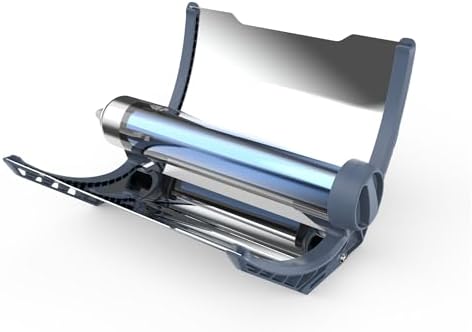
The GOSUN Portable Solar Oven Kit comes as a complete ready-to-use bundle designed for one to two meal portions. If you are new to GOSUN’s vacuum tube technology and want everything in one box, this is the easiest entry point. It is more compact than the Sport but offers more in the box than the base Go model.
At 4.0 stars it is the lowest-rated option on this list. Some users find the capacity limiting and the reflector less robust than the Sport version. It is a reasonable choice for casual solar cooking and emergency prep, but the Haines and SolCook offer better value for most buyers. Consider this one only if you specifically want the GOSUN kit format and the Sport is out of budget.
Features
- Compact vacuum tube design for 1-2 meals
- Complete kit — everything included for immediate use
- GOSUN’s heat-retaining vacuum insulation technology
- Portable and lightweight
- Easy to set up with minimal experience needed
- Good for emergency preparedness and casual camping
- Complete ready-to-use kit
- Compact and portable
- Lowest rating in this list (4.0 stars)
- Limited capacity for the price
- Other GOSUN models offer better value
Solar Oven Buying Guide
How Solar Ovens Work: Concentration, Insulation, and Convection
Solar ovens cook food using concentrated and trapped solar energy through one or more of three mechanisms. Box cookers — the most common design — use an insulated box with a transparent glass or polycarbonate lid that allows solar radiation in and traps the resulting heat inside (the greenhouse effect), supplemented by reflective panels that redirect additional sunlight into the box. Parabolic cookers use a curved reflective dish that concentrates sunlight to a single focal point, reaching temperatures of 400–600°F suitable for frying and rapid boiling. Panel cookers fold reflective panels around a dark cooking pot in a transparent bag, achieving moderate temperatures (250–325°F) with the simplest construction. Box cookers are the most practical for everyday cooking — they reach 250–375°F, can be left unattended without burning food (temperatures stabilize naturally as the box reaches equilibrium), and are robust enough for regular outdoor use. Parabolic cookers produce the highest temperatures and shortest cooking times but require manual tracking of the sun every 20–30 minutes and can cause burns if the focal point contacts skin. For camping, emergency preparedness, and off-grid homestead cooking, box and panel designs balance performance and safety better than parabolic options for most users.
Temperature Ranges and What You Can Cook
Solar oven temperature capability determines what cooking tasks are possible. Most box cookers reach 250–350°F in good sun — sufficient for the full range of slow-cook and bake applications: bread (325°F), cakes and muffins (325–350°F), rice (212°F for boiling, lower for slow simmer), beans (requires 212°F sustained), casseroles and stews (250–300°F), and pasteurizing water for drinking (149°F for 6 minutes per WHO guidelines). Browning and crisping (which require 375°F+) are difficult in most box cookers unless the sun is particularly intense and the cooker is well-insulated. Premium box cookers with larger reflector panels and better insulation reach 375–400°F in optimal conditions, enabling roasting and browning comparable to a conventional oven. Parabolic cookers reaching 450–600°F can fry, boil water rapidly, and sear — tasks impossible in standard box designs. The minimum useful temperature for food safety: internal temperatures of 165°F for poultry, 145°F for beef and pork, 212°F for pasteurization. A solar oven that reaches 250°F interior air temperature can achieve these internal temperatures in meats given adequate cooking time (longer than conventional cooking).
Box Cooker Design Elements: What Separates Good from Great
Box cooker quality varies significantly, and the key design elements determine real-world performance. Insulation is the most critical factor: thick walls (3+ inches) with high-R-value insulation (rigid foam, fiberglass, or natural wool) retain heat better and allow the cooker to maintain cooking temperatures through partial cloud cover. A poorly insulated box drops temperature quickly when a cloud passes; a well-insulated box holds temperature for 5–10 minutes through brief overcast, making the difference between successful and failed cooking on partly cloudy days. Double-pane glazing (two layers of glass or polycarbonate with an air gap) dramatically reduces heat loss through the lid compared to single-pane designs — responsible for 10–30°F temperature difference in cooler ambient conditions. Reflector panels that fold out to redirect additional light into the box can increase interior temperatures by 30–50°F by increasing the effective collection area. Dark interior surfaces (flat black paint or dark anodized aluminum) maximize absorption of incoming radiation. Airtight construction prevents convective heat loss — check that the lid fits tightly and that gaskets seal properly. A built-in thermometer lets you monitor actual interior temperature, which is far more useful than manufacturer temperature claims.
Cooking Time Adjustments and Solar Tracking
Solar oven cooking requires adapting conventional recipe times to account for lower temperatures and sun angle changes. The general rule: solar cooking at 275°F takes approximately twice as long as conventional cooking at 350°F for most dishes. Casseroles and stews that take 1 hour conventionally take 1.5–2 hours in a solar oven. Bread rises and bakes, but the crust doesn’t brown the same way it does at higher temperatures — a characteristic many solar bread bakers appreciate as producing a softer crust. Most solar cooking is more forgiving than conventional cooking precisely because temperatures are lower: food rarely burns in a solar oven even when left longer than planned, because the oven equilibrates at its maximum temperature rather than continuing to heat indefinitely. Tracking the sun is necessary every 30–45 minutes for box cookers to maintain optimal reflector alignment — if the reflector panels fall significantly out of alignment, interior temperature drops. Many experienced solar cooks orient the cooker toward where the sun will be in 45 minutes (slightly ahead of current sun position) to minimize the temperature dip between adjustments.
Portable Solar Ovens for Camping and Emergency Use
Portable solar ovens are a growing category, designed for camping, outdoor events, and emergency preparedness. Folding designs collapse for transport in a bag or case — the GoSun Sport and similar tube-based evacuated glass tube cookers fold to backpack-compatible dimensions. Tube cookers use a different principle than box cookers: an evacuated glass tube (similar to a thermos) traps heat so effectively that they reach cooking temperatures (300°F+) even in winter sun and at ambient temperatures well below freezing, outperforming box cookers in cold, clear conditions. The trade-off: tube cookers hold less food (a long cylinder rather than a flat box), requiring cooking in batches. For camping, a portable solar oven used midday saves fuel (no propane, no wood) and is particularly valuable in fire-restricted zones where open flames are prohibited. For emergency preparedness, a solar oven provides cooking capability during grid outages without fuel dependency — one of the few cooking tools that improves in usefulness during a prolonged emergency when other fuel sources deplete. Combined with a solar-charged power bank, it represents a genuinely fuel-independent cooking system for sunny-climate preparedness.
Parabolic Cookers: High-Temperature Solar Cooking
Parabolic solar cookers achieve the highest temperatures of any passive solar cooking design — 400–600°F at the focal point — making rapid boiling, frying, and true roasting possible. The design uses a large reflective dish (typically 3–5 feet in diameter) that focuses sunlight to a single point where the cooking pot is positioned. The Sun Cook, Sunflair Deluxe, and various DIY designs from aluminum foil and curved support frames are common examples. The performance advantage over box cookers is significant: a parabolic cooker can boil a liter of water in 10–15 minutes; a box cooker takes 30–60 minutes for the same task. The operational trade-offs are equally significant. Parabolic cookers must be manually adjusted every 15–30 minutes to track the sun — unlike box cookers that can be left unattended while the sun moves. The focal point is hot enough to cause serious burns or ignite flammable materials if accidentally positioned incorrectly. Wind stability is a concern for large-diameter dish designs. For the solar cooking enthusiast who wants to replicate conventional cooking times and techniques including frying and rapid boiling, a parabolic cooker is the right tool despite the added attention required during cooking.
Panel Cookers: The Ultralight Middle Ground
Panel cookers use folded reflective panels to concentrate sunlight onto a dark cooking pot placed inside a clear plastic bag or glass vessel. The CooKit, designed by Solar Cookers International, is the definitive example — foldable cardboard with reflective foil, weighing under 2 lbs and folding flat for transport. Panel cookers reach lower temperatures than box cookers (200–275°F) but are significantly cheaper, lighter, and simpler to build. Their primary use cases are developing-world food security applications (Solar Cookers International has distributed hundreds of thousands for this purpose) and ultralight camping where even a folding box cooker’s weight is prohibitive. For backpackers willing to work around panel cooker limitations — slower cooking, temperature sensitive to cloud cover, requires the plastic bag — a CooKit or similar panel cooker weighs under a pound and costs under $30, enabling fuel-free cooking throughout a sunny multi-day trip. For established campers or off-grid homeowners, a box cooker’s higher temperatures, larger capacity, and unattended operation provide significantly better cooking results at moderate additional cost and weight.
Selecting a Solar Oven: Key Specifications and Price Tiers
Solar oven selection depends primarily on intended use, then on budget. For casual home use and emergency preparedness without camping mobility requirements, the SolarStar Oven ($150–$200), All American Sun Oven ($350–$400), and similar quality box cookers provide the best cooking performance with minimal operational complexity. The All American Sun Oven is the benchmark for serious solar cooking — well-insulated, reaches 400°F in good conditions, large cooking chamber, and US-made with an established track record. For camping and travel, the GoSun Sport ($180–$220) evacuated tube design is compact, performs in cold weather, and cooks efficiently in a smaller footprint than a box design. For ultralight use, the CooKit panel cooker ($25–$30) is the budget entry point, trading temperature capability for minimal weight and cost. Avoid very cheap “solar oven” products (under $60) marketed as box cookers — thin insulation, poor sealing, and small reflectors limit real-world temperatures to 180–225°F, insufficient for many cooking applications. For emergency preparedness specifically, the value calculation includes fuel cost avoidance over a multi-day outage — a quality solar oven at $200–$350 provides food security value that significantly exceeds its purchase price in a genuine extended emergency scenario.
Frequently Asked Questions
It depends on the design. Parabolic cookers can reach 400°F or higher. Box cookers typically reach 250 to 300°F. Vacuum tube cookers like GOSUN models operate in the 250 to 350°F range. All figures assume strong, direct sunlight at midday.
You can use a solar oven in partial sun, but cooking times will be much longer and temperatures will be lower. On a fully overcast day, most solar ovens will not generate enough heat to cook food safely. Vacuum tube designs like GOSUN handle intermittent clouds better than flat panel designs.
Almost anything you can cook in a conventional oven or on a stovetop — rice, beans, bread, soups, stews, pasta, eggs, meat, and vegetables. The main limitation is high-heat techniques like deep frying, which requires temperatures solar ovens rarely reach consistently.
A vacuum tube cooker like the GOSUN Go can cook a single serving meal in 20 to 30 minutes in full sun. Box and panel cookers typically take 1.5 to 4 hours depending on the dish and sunlight conditions. Parabolic cookers fall in the middle at 30 to 90 minutes for most meals.
Yes. They produce no flame, no toxic fumes, and no carbon monoxide. The main hazard is the focused sunlight itself, which can burn skin if you touch the cooking chamber without protection. Standard oven mitts and avoiding direct eye contact with reflector surfaces are the only precautions needed.
They work, but less effectively. Lower sun angles mean less energy reaching the cooker, and shorter daylight windows reduce cooking time. In climates with cold but sunny winters, like the US Mountain West, solar ovens can still produce results year-round. In northern states with gray winter skies, performance drops significantly from November through February.
Summing Up
The best solar oven for most buyers is the Haines 2.0 SunUp Solar Cooker. It hits the right combination of cooking temperature, capacity, and build quality, and the included Dutch oven makes it genuinely versatile from the first day you use it. If you want something compact for solo camping, the GOSUN Go is the pick. And if budget and simplicity matter most, the SolCook All Season Solar Cooker delivers reliable results with minimal fuss. Whichever you choose, a sunny day is all you need to start cooking.
If you’re also thinking about solar panels for your home, call (855) 427-0058 for a free quote — it takes just a few minutes to find out what installation would cost and save you in your area.
Updated