

Our blog is reader-supported. When you buy through links on our site, we may earn an affiliate commission. Thank you for your support!
A solar-powered bird bath brings birds to your yard without running extension cords or worrying about electricity costs. The solar panel powers a small pump that circulates water through a fountain or dripper, which birds find far more attractive than still water. Moving water creates sound and visual rippling that draws birds from a distance, making your yard a more active birding spot with no ongoing cost.
The variety of designs ranges from floating solar pumps that drop into any existing bath to complete self-contained units with integrated basins and panels. Here are eight solid options for 2026.
Our Top Picks
| Image | Name | |
|---|---|---|
| AISITIN Solar Bird Bath Fountain A floating solar fountain with multiple spray heads and no battery required — runs purely on solar power during daylight hours. Read more | |
| Vivreal Solar Bird Bath with Basin Combines a decorative basin with a solar-powered pump, ideal for yard placement where you want a complete bird bath setup. Read more | |
| Sunnydaze Solar Pump and Panel Kit A versatile solar pump and panel kit that works with existing bird baths, with a separate panel for positioning in full sun. Read more | |
| Angel Solar Bird Bath Fountain with Battery Backup Features a built-in battery so it keeps running after dark — one of the few solar bird bath fountains with overnight capability. Read more | |
| Helifouner Solar Heated Bird Bath A solar-heated bird bath designed to prevent freezing in winter, keeping water accessible to birds year-round. Read more | |
| LATITOP Solar Bird Bath Fountain Compact and lightweight with multiple nozzle options, this fountain suits smaller yards and containers. Read more | |
| OASE Living Water Solar Bird Bath A premium European-designed solar bird bath known for quiet operation and durable construction. Read more | |
| Alpine Corporation Solar Bird Bath with Dripper Uses a slow-drip mechanism rather than a spray, attracting birds that prefer still water with gentle movement. Read more |
8 Best Solar Powered Bird Baths
1. AISITIN Solar Bird Bath Fountain
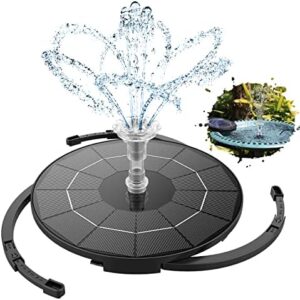
The AISITIN solar fountain pump is the most popular add-on floating pump on the market, and for good reason. Drop it into any existing bird bath or decorative bowl and it immediately turns still water into a working fountain. The pump draws power directly from its integrated solar panel and circulates water through multiple interchangeable spray heads, giving you different water patterns to suit different bird species.
The 2.5-watt solar panel produces enough flow to run 3 to 7 fountain patterns depending on sun intensity. The floating design is self-orienting, rotating to face the brightest available light, which keeps the fountain running even when the sun’s angle changes throughout the day. A built-in battery backup maintains pump operation for a short period after clouds pass.
It’s compatible with any container at least 3 inches deep and 8 inches across. Cleaning is simple: remove the pump, rinse the mesh filter screen weekly, and it continues to run reliably. For most homeowners who already have a bird bath, this is the easiest way to add solar-powered water movement for under 30 dollars.
The one limitation is that it doesn’t run in heavy shade or at night. It’s purely solar-powered with minimal battery buffer, so it requires good direct sun to pump effectively.
Features
- 2.5-watt integrated solar panel
- Self-rotating floating design
- Multiple interchangeable spray heads
- Works in any bowl 3+ inches deep
- Built-in short-term battery buffer
Pros:
- Works in any existing bird bath
- Self-rotating to track sun
- Affordable and easy to use
- Multiple spray patterns
Cons:
- Requires direct sun to pump strongly
- No significant overnight battery reserve
2. Vivreal Solar Bird Bath with Basin
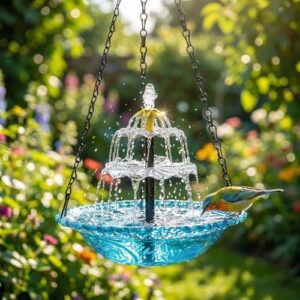
If you want something that’s its own complete unit rather than an add-on pump, the Vivreal solar bird bath includes a resin basin on a decorative pedestal with an integrated solar panel. Everything ships together and assembles in minutes without tools. Place it in the garden, fill with water, and it runs.
The basin design is shallow and wide, which is ideal for smaller birds that prefer to stand in 1 to 2 inches of water. The fountain head creates a gentle spray pattern that attracts birds without being so forceful that it splashes water out of the basin constantly. A built-in battery stores enough energy to run the pump for 3 to 4 hours after direct sun ends.
The resin construction looks attractive and resists UV degradation better than painted metal alternatives. The pedestal height puts the bath at about 30 inches, which keeps it accessible while also making it harder for ground predators to ambush bathing birds.
For a complete, ready-to-use bird bath solution that requires no additional purchases, the Vivreal is a well-rounded choice at a fair price.
Features
- Complete unit: basin, pedestal, solar panel
- Built-in battery for 3-4 hours after-sun operation
- Shallow wide basin ideal for small birds
- UV-resistant resin construction
- 30-inch pedestal height
Pros:
- Complete all-in-one unit
- Battery runs pump after dark
- Attractive decorative design
- Good size for small birds
Cons:
- Fixed solar panel direction (not adjustable)
- Resin may crack in extreme cold
3. Sunnydaze Solar Pump and Panel Kit
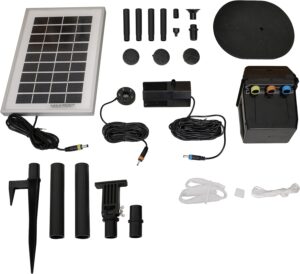
The Sunnydaze kit separates the solar panel from the pump via a 9-foot cable, which is one of the most practical design choices in the solar bird bath category. The pump goes in your bird bath where the birds are, and the panel goes wherever the sun is. Your bird bath doesn’t have to be in a sunny spot to have a working solar fountain.
This matters more than it might seem. Birds often prefer bird baths in semi-shaded locations near trees and shrubs, which provide cover during bathing. But shade means no solar power if the panel is integrated into the fountain. The Sunnydaze design solves this by letting you run the panel out to a sunny bed while the bath sits in the shade the birds prefer.
The 1.5-watt panel and pump deliver adequate flow for a standard residential bird bath. Six spray heads give you multiple pattern options. The system doesn’t include a battery, so operation requires sun, but the decoupled panel placement typically gives it longer daily run time than integrated designs in partially shaded yards.
Features
- Separate panel and pump via 9-foot cable
- 1.5-watt solar panel
- Six interchangeable spray heads
- Compatible with any bird bath or water feature
- No battery — runs on direct sun only
Pros:
- Panel placement independent of bath location
- Works in shaded bird baths
- Multiple spray head options
Cons:
- No battery — stops when sun goes behind clouds
- Cable can be a trip hazard if not secured
4. Angel Solar Bird Bath Fountain with Battery Backup
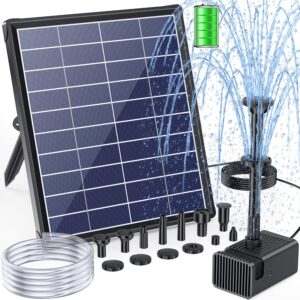
The Angel Solar bird bath fountain puts battery backup front and center, storing enough charge to run the pump for 6 to 8 hours after direct sun ends. For homeowners who want the fountain running into the evening hours or who live in climates with frequent afternoon clouds, the extended battery reserve makes a meaningful difference.
The integrated solar panel charges the 1800mAh battery during daylight hours. The pump circulates water through a flower-shaped decorative spray head that creates a pleasant multi-stream effect. The built-in light ring illuminates the fountain at night, which is a nice touch if the bath is visible from your porch or living room.
Three operating modes cover different scenarios: solar-only (conserves battery), battery-only (for charging days then evening use), and solar-plus-battery (always-on priority). The floating design works in any basin with adequate depth, similar to the AISITIN, but the battery backup and light features add meaningful value for the modest price difference.
Features
- Built-in 1800mAh battery, 6-8 hours reserve
- Integrated LED ring light
- Three operating modes
- Decorative flower spray head
- Floating design for any basin
Pros:
- 6-8 hour battery reserve for evening use
- LED light illuminates bath at night
- Flexible operating modes
Cons:
- Fixed spray head (not interchangeable)
- Floating design not as stable in wind
5. Helifouner Solar Heated Bird Bath
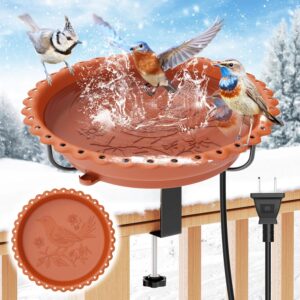
The Helifouner takes a different approach entirely: it uses solar power for heating rather than a pump fountain. The solar-heated basin keeps water above freezing in winter, which is one of the most valuable things you can do to support backyard birds during cold months when natural water sources are frozen. Birds need liquid water year-round, and heated baths dramatically increase bird activity during winter.
The thermostatically controlled heater activates only when the water temperature drops near freezing, so it doesn’t waste energy heating water in mild weather. The solar panel is mounted on a pole separate from the basin, allowing it to be positioned in sun while the bath sits in whatever location works best.
This is a product with a very specific purpose. It doesn’t circulate water for the fountain effect that attracts birds in summer, but it provides essential winter support that most bird bath owners overlook. If you live in a cold-winter region and want to continue supporting birds year-round, the Helifouner fills a gap that floating fountain pumps don’t address.
Features
- Solar-powered heating element
- Thermostatically controlled (activates near freezing)
- Separate pole-mounted solar panel
- Designed for winter bird bath operation
Pros:
- Essential winter bird support
- Thermostat prevents waste in mild weather
- Keeps water liquid when natural sources freeze
Cons:
- No fountain/circulation function
- Seasonal product — mainly useful in winter
6. LATITOP Solar Bird Bath Fountain
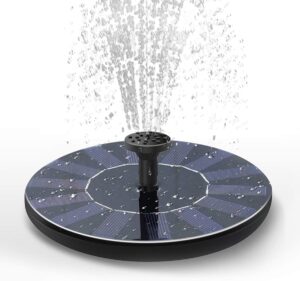
The LATITOP is a direct competitor to the AISITIN, offering a floating solar fountain pump with multiple spray heads and a self-rotating panel design at a comparable price. The build quality is slightly more premium, with a heavier pump housing that sits more stably in the water and less tendency to drift in wind than lighter competitors.
The 2-watt panel provides good flow in direct sun, and the multiple spray head options include patterns that produce lower, wider water curtains that are particularly effective at attracting ground-feeding species like juncos and towhees that prefer a splashing bath to a vertical jet.
For homeowners choosing between the AISITIN and LATITOP, the LATITOP’s heavier pump housing and broader spray patterns are worth the slight price premium. Both work well, but the LATITOP’s stability in wind is a practical advantage in exposed garden locations.
Features
- 2-watt solar panel
- Self-rotating floating pump
- Multiple spray heads including wide curtain patterns
- Heavier stable pump housing
Pros:
- More stable in wind than lighter competitors
- Wide curtain spray heads attract more species
- Good flow rate in direct sun
Cons:
- Slightly more expensive than AISITIN
- No battery reserve
7. OASE Living Water Solar Bird Bath
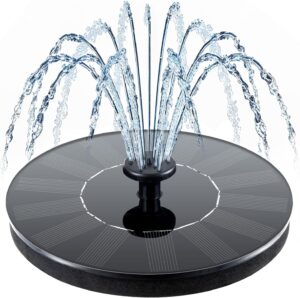
OASE is a water garden brand with a strong reputation in pond and water feature equipment, and their solar bird bath represents a step up in pump quality from consumer-grade floating pumps. The pump mechanism uses higher-quality ceramics and impeller design that holds up better through multiple seasons and handles partial debris without clogging as quickly.
It’s more expensive than other options here, and the design is simpler (fewer spray head patterns) but more reliable. For birders who’ve had floating solar pumps fail after one season, the OASE represents a quality investment that’s likely to outlast cheaper alternatives by several years.
The panel is integrated and floating, which means it needs direct sun at the bath location. But the pump quality is the real selling point here. If longevity and reliability matter more than features, the OASE is worth considering.
Features
- High-quality OASE pump with ceramic components
- Integrated floating solar panel
- Designed for multi-season durability
- Compatible with any water feature
Pros:
- Premium pump quality from water garden specialist
- Better long-term durability
- Resists clogging better than consumer pumps
Cons:
- Higher price
- Fewer spray pattern options
8. Alpine Corporation Solar Bird Bath with Dripper
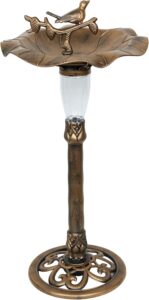
Not all birds prefer fountain-style water movement. Some species, particularly warblers and vireos, are more attracted to drippers that create a slow, steady drip into the basin rather than a spray. The Alpine Corporation dripper design is purpose-built for this preference, producing a gentle rhythmic drip that rings true for woodland bird species that encounter natural spring seeps and leaf drips in the wild.
The solar panel is separated from the dripper via a cable, allowing flexible placement. Water flow is gentle enough that the bath doesn’t lose water rapidly through splashing, reducing how often you need to refill. The simple mechanism is inherently reliable with fewer moving parts than spray fountain pumps.
If your yard attracts or you’re specifically trying to attract warblers, thrushes, and other woodland species, a dripper is worth trying alongside or instead of a fountain. The birds that prefer drippers are often reluctant to use spray fountains, so this design expands the range of species you can attract.
Features
- Solar-powered dripper design
- Separate panel and dripper via cable
- Gentle rhythmic drip pattern
- Low splash — conserves water
Pros:
- Attracts species that prefer drippers over sprays
- Low water loss through splashing
- Simple reliable mechanism
Cons:
- Doesn’t attract species that prefer fountain movement
- Lower visual impact than spray fountains
Solar Bird Bath Buying Guide
Pump Type: Direct Solar vs. Battery-Backed for Bird Bath Fountains
Solar bird bath fountains split into two fundamentally different operating designs, and choosing the wrong one for your situation creates ongoing frustration. Direct solar fountains run only when the sun is shining — the panel powers the pump directly, producing flow when sunlight is strong and stopping when clouds pass or sun angles are low. These are the cheapest designs and work well for decorative fountains where intermittent operation is acceptable — birds will still visit a fountain that stops at dusk. Battery-backed bird bath fountains use a solar panel to charge an internal battery, which powers the pump continuously including through the night and on overcast days. These maintain steady flow regardless of cloud cover and are preferable in two situations: when continuous movement is desired for mosquito prevention (mosquitoes need 3+ days of still water to breed), or when birds are attracted specifically to the sound of moving water and intermittent operation disrupts their routine. Battery-backed units cost more and require battery replacement eventually (typically after 2–3 seasons for NiMH, longer for LiFePO4), but deliver more reliable performance in partial-shade gardens where direct solar pumps operate erratically.
Flow Rate and Nozzle Types for Bird Attraction
Bird baths work best with gentle water movement rather than aggressive fountain action — birds are attracted by the sound of splashing water and the visual movement of ripples, not by spectacular jets that drench them when they approach to drink. A flow rate of 20–60 gallons per hour (GPH) is typically the right range for a decorative bird bath fountain. The nozzle pattern determines how the water moves: a single-column jet sends water straight up 6–12 inches (dramatic but wets birds approaching from the side); a bell or mushroom nozzle creates a cascading dome that falls gently back into the basin (more attractive to birds who prefer to bathe at the water’s edge); a multi-spray head creates overlapping streams with an audible splashing sound that carries 30–50 feet to attract birds from a distance. Most solar bird bath pumps include multiple interchangeable nozzle heads — test them with your specific bird bath basin depth and diameter to find the pattern that fills the basin appropriately without spraying water over the edges. Deep basins (over 3 inches) can accommodate taller jets; shallow basins (under 2 inches) need low-spread nozzles that don’t drain the basin through splash-out.
Basin Size, Depth, and Material for Bird Safety
The bird bath basin itself is as important as the pump for attracting birds safely. Maximum water depth should be 2–3 inches at the deepest point — birds wade rather than swim, and deep basins drown small songbirds who lose their footing. Shallow, textured basin surfaces allow birds to grip while bathing; smooth, steep-sided basins are slippery and dangerous. Basin diameter of 18–24 inches accommodates multiple birds simultaneously — smaller sparrows and finches share space with larger robins and mourning doves without conflict in a wider basin. Materials matter for durability and bird safety: glazed ceramic is attractive and easy to clean but heavy, may crack with frost, and can become algae-slippery; cast concrete is durable and naturalistic but heavy; resin and polypropylene are lightweight and frost-resistant but may harbor algae in textured surfaces. Avoid copper-based metals for basins in contact with water — copper is toxic to many bird species at concentrations that leach from aging copper surfaces. Solar bird bath pumps must be placed in basins deep enough to keep the pump intake submerged during operation (typically requiring 2+ inches of water over the pump).
Panel Placement and Sun Exposure in Garden Conditions
Bird baths are typically placed in garden borders or on lawns where birds feel safe — often under or near trees and shrubs that provide perching and escape routes from predators. This same sheltering vegetation frequently shades the solar panel. A panel receiving 2 hours of direct sun per day will not reliably power even a modest fountain pump throughout the day. The most functional solar bird bath designs separate the panel from the pump assembly: the pump sits in the basin where the birds are, while the panel is on a stake or cable positioned in the nearest sunny spot — often several feet away. Panel separation cables of 6–10 feet provide meaningful positioning flexibility. For bird baths in heavily shaded locations, a larger panel (2W+ rather than the typical 0.5–1W integrated designs) compensates for reduced sun intensity. A simple field test: set up the panel at your planned location and watch whether it powers the pump continuously during midday or only intermittently — this tells you whether the position receives adequate sun before you commit to a permanent installation.
Mosquito Prevention: Why Flow Rate Matters for Health
Standing water in bird baths is a known mosquito breeding habitat — female mosquitoes can complete egg-to-larva development in as little as 3 days in warm, still water. Regular water changes (every 2–3 days) or continuous water movement eliminates the breeding risk. A solar pump that keeps water moving during daylight hours significantly reduces mosquito breeding but may not eliminate it if the pump stops overnight in a battery-free design, allowing mosquito eggs laid at dusk time to develop in still water through the night. Battery-backed fountains that run continuously provide the most effective mosquito control. For direct-solar designs, a Mosquito Dunk (a Bacillus thuringiensis israelensis tablet) placed in the basin is a bird-safe biological control that kills mosquito larvae without harming birds, fish, or beneficial insects. Empty and scrub the basin weekly to remove the algae biofilm that mosquito larvae feed on — a pressure rinse with a garden hose and a stiff brush takes 2 minutes and dramatically reduces both mosquito breeding and algae buildup that can clog pump intakes.
Pump Durability and Maintenance Requirements
Solar bird bath pumps are submersible units operating continuously in water that contains organic matter (bird droppings, decomposing leaves, algae, insect debris). Pump longevity depends on intake pre-filtration and regular cleaning. Most pumps include a sponge pre-filter around the intake — clean this weekly during peak bird bath season (summer) and every 2 weeks during cooler months. A clogged pre-filter is the most common cause of reduced flow rate and pump motor overheating, which shortens motor life dramatically. Ceramic impeller shafts outlast plastic ones in grit-laden water; check whether replacement impellers are available for your pump model before purchasing (proprietary parts that become unavailable end the pump’s useful life). For winter storage, remove the pump before freezing temperatures — ice formation in a submerged pump cracks the housing and damages the impeller. Clean and dry the pump before storage. Most solar bird bath pumps last 1–3 seasons without maintenance; well-maintained pumps with ceramic impellers can run 5+ seasons.
Design and Aesthetic Integration in the Garden
A solar bird bath serves dual purposes — attracting wildlife and functioning as a garden ornament — and the design should work for both. Natural materials (stone, concrete, textured resin in earth tones) blend more naturally into planted garden settings than glossy ceramic or obviously synthetic materials. Traditional pedestal designs elevate the bath 24–36 inches above ground, giving birds clear sightlines for predator awareness while keeping cats from easily reaching them — an important consideration in cat-populated neighborhoods. Ground-level or near-ground dishes attract ground-feeding birds (thrushes, juncos, towhees) that don’t use elevated feeders but are more vulnerable to cat predation. For a solar pump to be visually unobtrusive, look for designs where the panel is small enough to be hidden among plants or positioned behind the basin. The pump cable connecting a separate panel to the basin should be UV-stabilized (outdoor-rated) and long enough to route without tight bends that crack the insulation over time.
Price Tiers and Value for Different Buyers
Solar bird bath pumps and complete solar bird bath sets span a wide price range. Pump-only units (to add to an existing basin): $10–$30 for basic direct-solar; $30–$60 for battery-backed with multiple nozzles and adjustable flow. Complete solar bird bath sets (basin + pump + panel): $40–$80 for resin or plastic basin designs; $80–$150 for cast concrete or ceramic basins with quality pumps; $150–$300+ for decorative stone or heavy concrete pedestal designs with premium pumps. For buyers with an existing bird bath who want to add movement, a quality direct-solar add-on pump ($20–$40) is the most cost-effective upgrade. For buyers creating a new installation, a complete mid-range set ($60–$120) is typically better value than buying basin and pump separately. The most important factor for long-term satisfaction is pump quality and basin surface texture — a rough-textured basin with a reliable pump outperforms a beautiful smooth basin with an unreliable pump every time.
Frequently Asked Questions
Plan to clean the pump filter screen every 1 to 3 weeks depending on how much algae and debris accumulate. Rinse the basin when you refill it. Once a month, do a deeper cleaning with a stiff brush and diluted white vinegar to prevent algae buildup, which can clog the pump and turn the water green. Never use bleach or soap — residues harm birds.
Partially. Most solar pumps reduce flow significantly on overcast days and may stop entirely in heavy cloud cover without a battery reserve. Models with battery backup maintain some operation through clouds and after dark. If you live in a frequently overcast climate, a battery-backup model is worth the extra cost.
Most small birds prefer 1 to 2 inches of water. The deepest part of the basin should not exceed 3 inches, and a gradual slope from shallow at the edges to the deeper center is ideal. Larger birds like robins and jays can use up to 3 inches but smaller birds need the shallow areas. A stone or pebble placed in the center of a deep basin creates a safe perching spot.
In climates where temperatures regularly drop below freezing, bring floating pump mechanisms inside to prevent the pump housing from cracking. Replace them with a solar-heated bird bath or electric heater to keep water liquid for winter birds. Concrete basins can crack from freeze-thaw cycles if left full of water, so either empty and store them or use a plastic or resin basin that’s more frost-tolerant.
Summing Up
Moving water is the single best upgrade you can make to your backyard bird watching, and solar power makes that upgrade free to run after the initial purchase. For adding motion to an existing bath, the AISITIN or LATITOP floating pumps are the simplest and most affordable options. For a complete self-contained unit, the Vivreal offers everything in one package. If you want extended evening operation, the Angel Solar with battery backup runs well into the night. And for cold-weather bird support, the Helifouner’s solar heater keeps water liquid when other sources freeze.
If you’re also thinking about solar panels for your home, call (855) 427-0058 for a free quote — it takes just a few minutes to find out what installation would cost and save you in your area.
Updated