
Our blog is reader-supported. When you buy through links on our site, we may earn an affiliate commission. Thank you for your support!
Finding a reliable calculator for your desk, backpack, or office doesn’t have to mean constantly replacing batteries. The CATIGA 12 Digit Desk Calculator combines a large LCD display with dual solar and battery power, making it one of the most dependable and affordable options available. With over 18,000 reviews averaging 4.7 stars, it’s clear that thousands of people trust this calculator for their daily math needs.
Whether you need a basic calculator for quick arithmetic, a scientific model for advanced math and physics, or a printing calculator for accounting work, solar-powered options exist at nearly every price point. Below we’ve tested and compared eight of the best solar powered calculators to help you find your perfect match.
Our Top Picks
| Image | Name | |
|---|---|---|
| CATIGA 12 Digit Desk Calculator with Large LCD Display & Big Buttons A 12-digit LCD desktop calculator with oversized buttons and dual solar + AAA battery power. Over 18,000 reviews and a 4.7-star average make it the most trusted basic calculator on this list. Read more | |
| Amazon Basics LCD 8-Digit Desktop Calculator, Portable and Easy to Use Amazon’s Choice compact calculator with 8-digit display and dual solar/battery power. At $7-8, it’s the best budget pick for anyone who needs a portable everyday calculator. Read more | |
| Casio FX-115ES Plus 2nd Edition Advanced Scientific Calculator A 16-digit natural textbook display with 280+ functions for college math, physics, and engineering. The gold standard scientific solar calculator for STEM students. Read more | |
| Texas Instruments TI-30X IIS 2-Line Scientific Calculator SAT/ACT approved scientific calculator with 2-line display showing both input and result. Trusted by millions of high school and early college students for decades. Read more | |
| Sharp EL-W516TBSL Advanced Scientific Calculator with WriteView 556 built-in functions with a 4-line WriteView display that shows equations in natural mathematical notation. The highest function count of any calculator on this list. Read more | |
| Casio SL-300SV Standard Function Desktop Calculator A genuine pocket-sized Casio with 8-digit display and dual power. At $5-6, it’s the most portable and affordable quality calculator from a trusted brand. Read more | |
| Casio HS-8VA Mini 6-Function Calculator with Solar Power and Battery Backup Ultra-mini 8-digit calculator at $4-5 with 11,000+ reviews. The cheapest option on the list that actually delivers reliable basic arithmetic from a trusted brand. Read more | |
| Canon P170DH3 12-Digit Desktop Printing Calculator A professional printing calculator that produces dual-color paper records of every calculation. Essential for accountants, bookkeepers, and anyone who needs a paper audit trail. Read more |
8 Best Solar Powered Calculators
1. CATIGA 12 Digit Desk Calculator with Large LCD Display & Big Buttons
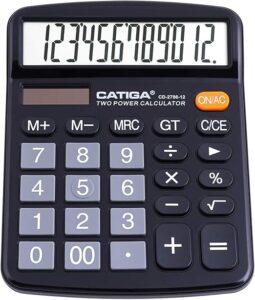
The CATIGA 12-digit desk calculator stands out for one simple reason: it works hard and doesn’t ask for much in return. The 12-digit LCD display is genuinely large, making it easier to read numbers without squinting. The buttons are oversized compared to typical calculators, which significantly reduces mistyping. With dual power from both solar panels and an AAA battery backup, you’re never stuck in the dark.
What really sets the CATIGA apart is its popularity. With over 18,300 customer reviews and a 4.7-star average, this calculator has proven itself through everyday use by tens of thousands of people. The sheer volume of positive feedback suggests this is a calculator that holds up to regular use. It’s the kind of product you can buy without second-guessing your choice.
The design is straightforward and no-nonsense. It sits on your desk and calculates. No learning curve, no buried functions you’ll never use. If you spend your days doing basic arithmetic—running a small business, managing a household budget, or doing classroom work—this calculator delivers reliable, accurate results consistently.
Price-wise, at around $10, you’re getting what amounts to a steal for a calculator this dependable. The build quality feels solid, and the battery compartment is straightforward to access when you eventually need to swap the backup battery. This is the calculator to grab if you want something that simply works.
Features
- 12-digit LCD display
- Large, oversized buttons
- Dual power: solar + AAA battery
- Standard arithmetic functions (add, subtract, multiply, divide, percentage)
- Desktop size: 4.5″ x 3.5″ x 0.75″
- Weight: 4.2 ounces
- Huge display is easy to read
- Oversized buttons reduce errors
- 18,000+ reviews prove reliability
- Affordable at under $10
- Desktop size means it’s not portable
- Basic functions only
- Takes up desk space
2. Amazon Basics LCD 8-Digit Desktop Calculator, Portable and Easy to Use
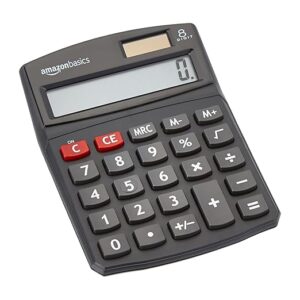
If the CATIGA feels too bulky for your needs, the Amazon Basics calculator steps in as the go-to budget pick. This model strips away everything unnecessary, leaving you with a compact, lightweight calculator that fits easily in a backpack, work bag, or even a large jacket pocket. At just $7-8, it’s a no-risk purchase.
The 8-digit display handles most everyday calculations quickly. The calculator earned Amazon’s Choice status for good reason: it’s reliable, affordable, and doesn’t try to be something it isn’t. Dual power (solar and battery) means you can use it anywhere without worrying about constantly replacing batteries. The buttons have decent tactile feedback, so you won’t feel like you’re fighting the calculator to input numbers.
Portability is where this model shines. It’s genuinely easy to carry around, making it ideal for students, field workers, or anyone who does calculations on the move. The compact size doesn’t come at the cost of accuracy or responsiveness.
Features
- 8-digit LCD display
- Standard functions: add, subtract, multiply, divide, percentage, square root
- Dual power: solar + battery backup
- Compact size: 3.2″ x 2.2″ x 0.5″
- Amazon’s Choice certified
- Extremely affordable
- Pocket-sized and portable
- Dual power source
- Amazon’s Choice reliability badge
- Basic functions only
- Small 8-digit display
- Not ideal for extended calculations
3. Casio FX-115ES Plus 2nd Edition Advanced Scientific Calculator
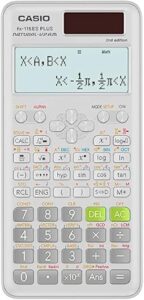
Jump up to the Casio FX-115ES Plus and you enter the world of serious math. This is the calculator for college students tackling calculus, physics, or chemistry. The natural textbook display shows fractions, equations, and expressions exactly as they appear in your textbook. Instead of looking at coded symbols, you see real math on the screen.
With 280+ built-in functions covering everything from trigonometry to statistics, this calculator grows with your math skills. The 4-line display and 6.5-centimeter screen make it possible to see multiple lines of calculation at once. Solar power with battery backup keeps it running during those late-night study sessions. The Casio FX-115ES Plus earned an Overall Pick badge for good reason: it’s become the gold standard scientific calculator for higher education.
Yes, it costs more than a basic calculator at around $17. But if you’re in a STEM field or serious about mathematics, this calculator saves time and reduces errors. The learning curve is real, but it flattens quickly once you get comfortable with the layout. This is an investment that pays off across multiple semesters.
Features
- 16-digit 4-line LCD natural textbook display
- 280+ built-in functions
- Fraction, equation, and expression display as written
- Solar powered with battery backup
- Perfect for college-level mathematics and sciences
- NAV keys for easy equation editing
- Natural textbook display matches coursework
- 280+ functions for advanced math
- 4.8-star rating from 7,000+ reviews
- Perfect for STEM students
- Steep learning curve for new users
- More expensive than basic models
- Overkill for simple arithmetic
4. Texas Instruments TI-30X IIS 2-Line Scientific Calculator
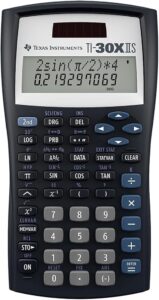
The Texas Instruments TI-30X IIS has been the calculator of choice for high school and early college students for good reason. This model bridges the gap between basic and advanced: it handles far more than simple arithmetic, yet remains intuitive enough for someone picking it up for the first time. The 2-line display shows both your input and result, eliminating guesswork about what you just entered.
This calculator is accepted on the SAT, ACT, and numerous other standardized tests, making it the smart choice if test prep is in your near future. With over 9,500 reviews averaging 4.7 stars, TI has built trust across generations of students. The solar plus battery power keeps it running reliably without fuss.
Functions include basic scientific operations, fraction and decimal conversion, and statistics capabilities. It’s more than enough for most high school math and introductory college courses. The price sits comfortably in the middle range, making it accessible without breaking your budget.
Features
- 2-line LCD display (input + result)
- Solar powered with battery backup
- Basic and advanced scientific functions
- Fraction and decimal conversion
- Statistics functions (mean, median, standard deviation)
- SAT/ACT approved
- Approved for standardized tests
- 2-line display prevents input errors
- Trusted by millions of students
- Reasonable price point
- Fewer functions than premium scientific models
- Dated interface design
- Steeper learning curve than basic calculators
5. Sharp EL-W516TBSL Advanced Scientific Calculator with WriteView
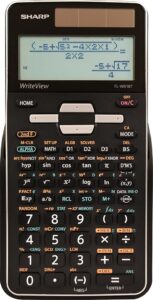
When you need maximum function count, the Sharp EL-W516TBSL delivers 556 functions—more than any other calculator in this list. The 4-line WriteView display shows equations exactly as written, similar to the Casio FX-115ES but with even more power under the hood. This is a calculator for serious mathematical and engineering work.
The WriteView technology displays your equations in natural mathematical notation, making complex calculations easier to verify and understand. Whether you’re working through calculus, engineering coursework, or advanced physics, this calculator keeps up with your ambitions. Solar power combined with battery backup ensures you never lose power in the middle of work.
The main trade-off is familiarity. Sharp calculators aren’t as ubiquitous as Casio or TI in academic settings, which means fewer classmates who can help you navigate the interface. However, if you spend serious time with mathematics or engineering, learning the Sharp’s system is worthwhile. This calculator is built to serve professionals and advanced students who need maximum capability.
Features
- 16-digit 4-line WriteView display
- 556 built-in functions
- Natural equation display in mathematical notation
- Solar powered with battery backup
- Advanced statistics and complex number support
- Ideal for engineering and advanced mathematics
- Most functions of any calculator (556)
- WriteView display for natural math
- Perfect for engineers and advanced users
- 4-line display shows more information
- Less well-known brand than Casio/TI
- Steeper learning curve due to complexity
- May not be approved for some tests
6. Casio SL-300SV Standard Function Desktop Calculator
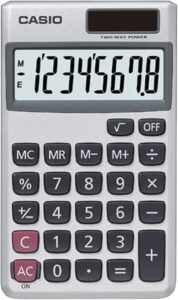
Sometimes you need a calculator that fits in your pocket without sacrificing Casio’s reputation for quality. The Casio SL-300SV delivers exactly that. At just 3 to 3.9 inches wide, it’s genuinely pocket-sized yet still easy enough to use. The 8-digit display handles everyday calculations without any fuss.
The build quality is exactly what you’d expect from Casio. The buttons respond cleanly, the solar and battery power keeps things running, and the overall durability means this calculator will likely outlive its owner. It’s not flashy, but it works reliably day after day. At $5-6, you’re getting dependable math functionality at an unbeatable price.
This is the calculator to throw in a car glove box, a backpack, or a purse. When you need quick addition, subtraction, multiplication, or division on the go, the Casio SL-300SV handles it. No unnecessary features, no complicated buttons—just straightforward calculation when you need it.
Features
- 8-digit LCD display
- Pocket size: 3.3″ x 2″ x 0.5″
- Standard arithmetic functions
- Percentage calculation
- Solar powered with battery backup
- Lightweight and durable
- Genuine pocket size
- Ultra-affordable at $5-6
- Proven Casio reliability
- Perfect for travel or backup
- Basic arithmetic only
- Small display harder to read
- No advanced functions
7. Casio HS-8VA Mini 6-Function Calculator with Solar Power and Battery Backup
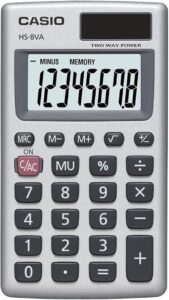
If you thought the Casio SL-300SV was small, the HS-8VA takes it further. This is the definition of minimalist calculator design. At just 4-5 dollars, it’s the cheapest option on this list, yet it comes from a brand trusted worldwide. The 11,200+ customer reviews at 4.5 stars prove this tiny calculator actually works.
The 8-digit display and 6 basic functions cover simple arithmetic, percentages, and square root calculations. Is it lacking in bells and whistles? Absolutely. But sometimes you just need a calculator the size of a credit card that costs less than a coffee. The mini design fits virtually anywhere: a desk drawer, a wallet, a small bag, a locker.
Features
- 8-digit LCD display
- Mini design: 2.8″ x 1.7″ x 0.5″
- 6 functions: basic arithmetic, percentage, square root
- Solar powered with battery backup
- Extremely lightweight
- Cheapest option available
- Ultra-compact design
- 11K+ reviews prove reliability
- Dual power source
- Very limited functions
- Tiny display is hard to read
- Not suitable for complex math
8. Canon P170DH3 12-Digit Desktop Printing Calculator
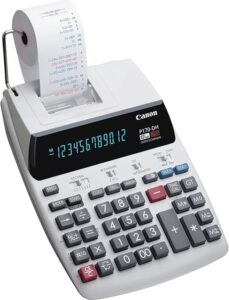
The Canon P170DH3 enters an entirely different category: the printing calculator. If you need a permanent paper record of your calculations, this is your machine. It prints onto thermal paper rolls in dual color—black for positive numbers and red for negative values. For accountants, bookkeepers, and anyone managing business finances, the print function transforms the calculator from a tool into part of your documentation system.
The 12-digit display accommodates larger numbers, and the solar plus battery power ensures consistent operation throughout the workday. Canon’s reputation for reliability translates to calculators too. At $35-45, this is the most expensive option on the list, but for professional accounting work, the value of having printed records justifies the cost.
The main downside is purely practical: this calculator needs paper rolls (sold separately), adding an ongoing cost. It’s also desktop-only and takes up significant desk real estate. If you occasionally need quick math, look elsewhere. But if accounting or financial management is part of your daily work, the Canon P170DH3 eliminates the need to manually write down results.
Features
- 12-digit LCD display
- Receipt printing function with thermal paper
- Dual-color printing (black/red for positive/negative)
- Solar powered with battery backup
- Desktop calculator for stationary use
- Trusted Canon brand for business
- Prints paper records automatically
- Dual-color printing for clarity
- Reliable Canon brand
- 12-digit display for larger numbers
- Requires thermal paper rolls (ongoing cost)
- Bulky desktop-only design
- Expensive compared to alternatives
- Overkill for simple calculations
Solar Powered Calculators Buying Guide
Key Takeaways
- Basic calculators cost $5-10 and handle everyday arithmetic with large, easy-to-read displays
- Scientific calculators ($12-18) offer 200+ functions perfect for students and professionals
- Printing calculators ($35+) serve accounting and bookkeeping work with paper records
- All quality solar calculators include battery backup for reliable power
- Pocket-sized models sacrifice display size but gain portability
- Desktop models prioritize display clarity and button size over portability
What Are Solar Powered Calculators?
A solar powered calculator is a portable computing device that converts light energy into electrical power to operate its display and processor. Unlike traditional calculators powered exclusively by batteries, solar calculators use photovoltaic cells (the same technology that powers solar panels on homes) to convert light directly into usable electricity. This dual-power approach means the calculator can operate indefinitely in any environment with adequate light, while the battery backup ensures reliability during extended darkness.
Solar calculators have been around since the early 1980s, proving themselves as one of the most reliable applications of small-scale solar technology. The photovoltaic cells used in calculators are the same fundamental technology driving the massive growth in residential and commercial solar installations today—just scaled down to fit a device that fits in your pocket.
How Do Solar Powered Calculators Work?
The solar cells in a calculator function identically to larger solar panels. They contain semiconductor material (typically silicon) that releases electrons when exposed to photons of light. These free electrons create electrical current that powers the calculator’s circuits and LCD display. In bright sunlight, the solar cells produce maximum power. In indoor fluorescent or LED lighting, they produce less power but still enough to run the calculator continuously.
The battery backup completes the system. When light is insufficient (dim lighting, night use, or the calculator sits in a drawer), the battery seamlessly takes over. The transition between solar power and battery is automatic—you never notice the switch. This hybrid approach combines the sustainability of solar with the reliability of battery backup, resulting in a calculator that literally never needs to be “powered off” due to depleted batteries.
Benefits of Solar Powered Calculators
The most obvious benefit is cost. Once purchased, a solar calculator has virtually no operating costs. You’ll replace the battery once every 2-3 years, spending perhaps $2-5 per replacement. That’s far cheaper than constantly buying new batteries for traditional calculators. Over a decade of use, the savings accumulate significantly.
Environmental impact matters too. Fewer disposable batteries end up in landfills. Solar calculators reduce the demand for battery production, which requires mining and manufacturing that generates waste. By choosing solar, you’re supporting a sustainable approach to everyday devices.
Reliability is another major advantage. Solar calculators simply don’t fail due to battery depletion. Students taking exams, accountants processing month-end records, and field workers managing on-site calculations never face the frustration of a dead calculator at a critical moment. The hybrid power system ensures the device works whenever you need it.
How Much Solar Power Does a Calculator Actually Need?
Calculator solar cells don’t need much. A basic desktop model draws somewhere between 0.001 and 0.003 watts during operation, which means even a modest amorphous cell roughly an inch wide can keep it running in standard room lighting. That’s the beauty of solar-powered calculators compared to almost every other solar product on the market. You’re not sizing panels to overcome cloudy days or winter sun angles. You’re just asking whether the ambient light in your office, classroom, or kitchen is enough to keep a tiny charge moving.
That said, low-light performance still varies between models. Cheaper calculators with smaller cells may struggle under fluorescent tubes positioned at the wrong angle or in rooms with heavily tinted windows. Higher-quality models use amorphous silicon cells (rather than monocrystalline) specifically because amorphous performs better under diffuse indoor light. If you’re buying for a dimly lit environment, check whether the model specifies indoor or mixed-light capability rather than assuming any solar calculator will work anywhere.
The backup battery question comes up here too. Many calculators pair the solar cell with a small button cell battery (LR44, CR2032) that activates when there’s not enough light to sustain operation. This is almost always a good thing. It means you can keep working when you close the blinds or move into a shadowed area without the display going blank mid-calculation. Look for dual-power designs if your workspace doesn’t get consistent natural or bright artificial light.
Display Size, Digits, and Readability
The number of digits on the display matters more than most buyers think about before purchasing. Basic models show 8 digits, which is fine for everyday arithmetic but won’t handle larger figures used in financial calculations or unit conversions without rounding. Ten-digit and twelve-digit displays give you more room to work with, and they’re worth the small premium if you’re doing anything beyond simple sums.
Display contrast varies significantly across price points. Cheaper models use lower-contrast liquid crystal displays that are hard to read at an angle or in bright ambient light. Look for calculators that advertise a tilted display or adjustable viewing angle if you’re mounting one on a stand or using it from across a desk. The display size itself also matters in classrooms or office settings where you’re sharing a screen or reading from a distance. Larger digit height means less eye strain during extended use.
Solar-powered scientific calculators add another layer of complexity with multi-line displays that show both the expression you’ve entered and the result simultaneously. This two-line layout is standard on most scientific models now, and it’s a meaningful upgrade over single-line displays for checking your work as you go. If you’re buying for a student or anyone working through multi-step calculations regularly, the two-line display should be a baseline requirement rather than a luxury feature.
Things to Consider Before Buying
Display Size and Readability: A 12-digit display is clearly easier to read than an 8-digit display, but larger displays mean larger calculators. Consider where you’ll primarily use it. Desk calculators prioritize readability; portable models sacrifice some display clarity for compactness.
Function Count: Basic models handle addition, subtraction, multiplication, and division. Scientific calculators add trigonometric, logarithmic, and statistical functions. Printing calculators add paper documentation capability. Match the function count to your actual needs—excess functionality just adds complexity.
Portability: Pocket-sized calculators weigh just a few ounces and fit in any bag or pocket. Desktop models are heavier and require desk space but offer larger displays and more comfortable button layouts for extended use. Some people need portability; others want desk real estate with optimized ergonomics.
Battery Backup: All quality solar calculators include battery backup, but verify the battery type. Some use standard AAA batteries you can replace yourself; others use proprietary batteries requiring replacement from the manufacturer. Easier replacement means lower long-term costs.
Price Considerations: Quality solar calculators range from $4-45. The difference in price reflects display size, function count, materials, and intended use. A $10 basic calculator serves most people. Students in advanced mathematics benefit from investing $17-18 in a quality scientific model.
Types of Solar Powered Calculators
Basic Calculators: These handle fundamental arithmetic: addition, subtraction, multiplication, division, and percentage calculations. They’re perfect for everyday use, household budgeting, shopping, and simple work math. Display sizes are typically 8-12 digits, and they cost $5-15.
Scientific Calculators: With 200+ built-in functions, scientific models handle trigonometry, logarithms, exponents, statistics, and complex number calculations. They’re essential for high school and college mathematics, physics, engineering, and chemistry courses. Price range: $12-25.
Financial/Printing Calculators: Designed for accountants and bookkeepers, printing calculators produce paper records of calculations. Some include financial functions for business calculations. The dual-color printing (black/red) helps categorize positive and negative numbers. These premium models cost $35-60 and require thermal paper supplies.
Pocket/Mini Calculators: Ultra-compact models fit keys and small bags. They sacrifice display clarity and button comfort for maximum portability. Ideal for backup calculations or travel. Cost: $4-8.
Graphing Calculators: The most advanced type (though rarely solar powered), these display mathematical functions graphically. They’re overkill for most users but essential for calculus and advanced mathematics courses. Expect to pay $80-150 for quality graphing calculators.
Frequently Asked Questions
Can a solar calculator work indoors?
Yes. Solar calculators charge from any light source—direct sunlight, fluorescent office lighting, LED bulbs, and even incandescent lights all work. Performance is strongest in bright conditions but adequate indoors. The battery backup ensures the calculator works even in dim lighting or complete darkness, making solar calculators fully functional in any office or home environment.
Do solar calculators need direct sunlight to work?
No, direct sunlight is not required. While solar calculators charge fastest in direct sunlight, they work fine under standard indoor lighting. Office fluorescent lights, LED desk lamps, and ambient room lighting all provide adequate power for continuous operation. Direct sunlight is a bonus but not a requirement.
Why does my solar calculator have a battery if it’s solar powered?
The battery serves as backup power for low-light situations. While solar cells can operate under indoor lighting, they may not generate sufficient power in very dim conditions or at night. The battery seamlessly provides backup without any action from you. This hybrid approach combines the sustainability of solar with the reliability of battery backup, ensuring the calculator works in any situation.
How long do solar calculators last?
Well-made solar calculators last 10-20+ years of regular use. The solar cells don’t degrade significantly over time. The LCD display and electronic components are extremely durable. Eventually the battery may require replacement (typically every 2-3 years), which is a simple, inexpensive fix. The mechanical durability of calculators is one of their most appealing features.
Can solar calculators be used for standardized tests like the SAT?
Yes, many solar calculators are approved for standardized tests. The Texas Instruments TI-30X IIS listed in this guide is explicitly approved for SAT, ACT, and AP exams. However, always verify with your testing organization before exam day. Graphing calculators and calculators with wireless capability are typically prohibited, but standard scientific solar calculators are generally allowed.
What’s the difference between a scientific calculator and a basic calculator?
Basic calculators handle fundamental arithmetic: addition, subtraction, multiplication, division, and percentage. Scientific calculators add 200+ functions including trigonometry (sine, cosine, tangent), logarithms, exponentials, statistical functions, and complex number calculations. Scientific models also typically feature larger displays and more sophisticated button layouts. Choose scientific if you’re working with advanced mathematics, physics, engineering, or chemistry. Choose basic for everyday math, budgeting, and shopping calculations.
Summing Up
Solar powered calculators represent a smart intersection of practicality, sustainability, and value. Whether you need a basic model for household budgeting, a scientific calculator for college coursework, or a printing calculator for professional accounting work, solar options exist at every price point. The CATIGA 12-digit desktop calculator stands out for its combination of affordability, large display, and proven reliability through thousands of reviews. But the best solar calculator is the one that matches your specific use case—from the ultra-compact Casio HS-8VA at $4 to the professional Canon P170DH3 printing calculator at $40+.
If you’re also thinking about solar panels for your home, call (855) 427-0058 for a free quote — it takes just a few minutes to find out what installation would cost and save you in your area.
Updated