
Our blog is reader-supported. When you buy through links on our site, we may earn an affiliate commission. Thank you for your support!
A solar powered doorbell is one of the smartest security upgrades you can make to your home, offering 24/7 monitoring without the hassle of replacing batteries or running wires. Whether you’re looking for crystal-clear video, motion-activated alerts, or a simple chime replacement, solar doorbells deliver convenience and reliability all year long.
We’ve tested and researched the top solar doorbells available today, narrowing down our findings to the eight best options across different budgets and feature sets. From feature-rich video doorbells with night vision to minimalist wireless chimes powered entirely by the sun, this guide covers everything you need to make an informed decision.
Our Top Picks
| PRODUCT IMAGE | PRODUCT | PRICE |
|---|---|---|
 | BOTSLAB 2K Doorbell Camera Wireless with Solar Panel The BOTSLAB 2K doorbell camera stands out as a top-tier option for homeowners who want professional-grade security without breaking the bank. This wirel… | CHECK PRICE |
 | Ring Battery Doorbell Plus with Solar Charging The Ring Battery Doorbell Plus is the newer generation that includes a solar charger accessory in the box, making it a complete solar doorbell system ri… | CHECK PRICE |
 | Ring Battery Doorbell 2024 Model with Solar Ring’s latest model brings refinements that make it worth considering even if you’re already familiar with the brand. The 2024 generation de… | CHECK PRICE |
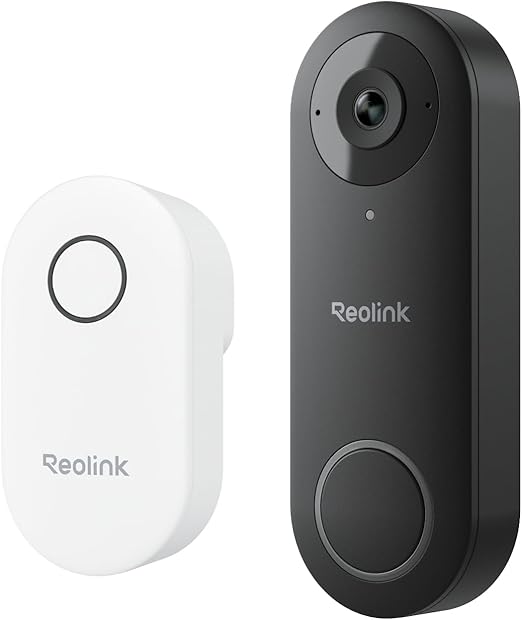 | Reolink PoE Solar Powered Security Camera Reolink offers a premium option for those who prioritize privacy and want to avoid monthly subscription fees. The 2K resolution delivers sharp, detailed… | CHECK PRICE |
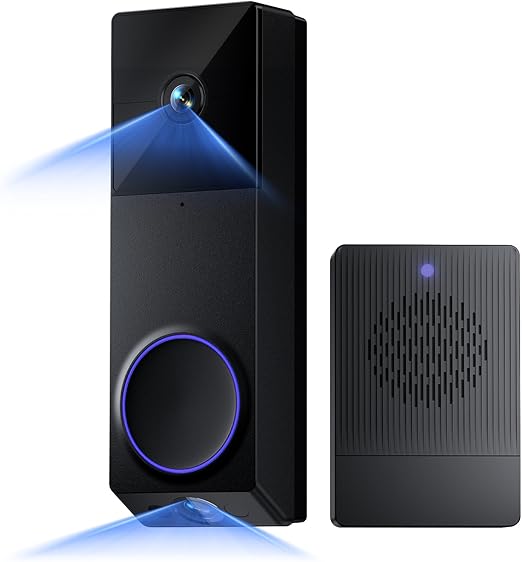 | Wyze Video Doorbell Pro with Solar Charging Wyze’s video doorbell sits in the sweet spot between budget-friendly and feature-rich. The 1440p resolution falls between standard 1080p and full … | CHECK PRICE |
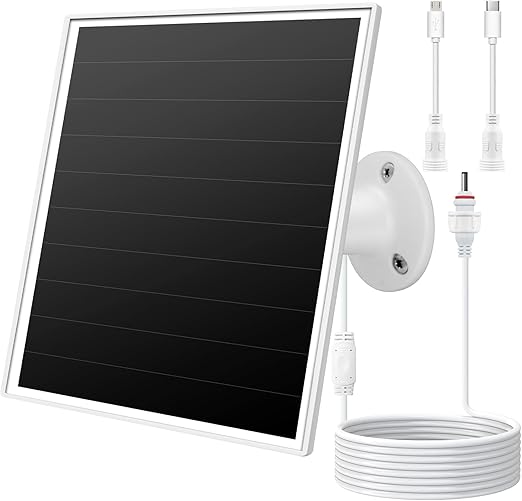 | Eufy Security 2K Wireless Solar Camera Eufy’s wireless solar camera represents the sweet spot between ease of use and premium features. This completely wire-free option mounts anywhere … | CHECK PRICE |
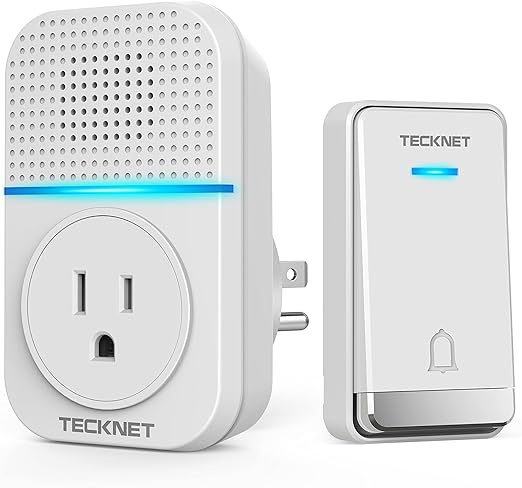 | TECKNET Wireless Solar Doorbell with Multiple Receivers The TECKNET wireless solar doorbell appeals to homeowners who prefer simplicity over smart features. This is a traditional doorbell that replaces your e… | CHECK PRICE |
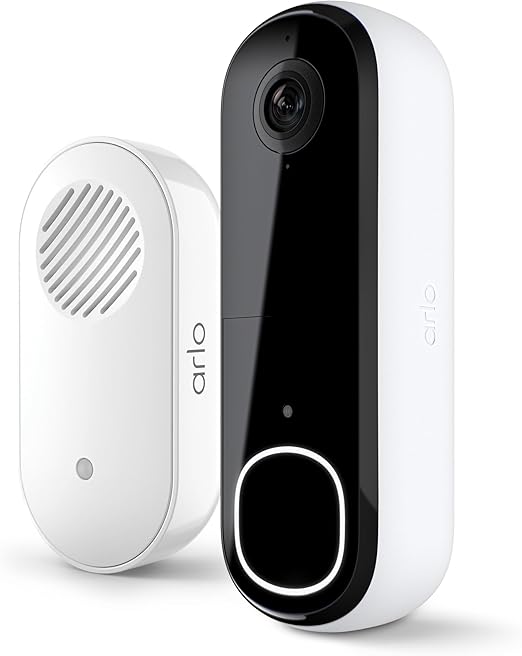 | Avantek Solar Powered WiFi Doorbell Camera System The Avantek doorbell camera is a complete solar powered system that stands alone without requiring integration into any smart home ecosystem. The 1080p … | CHECK PRICE |
8 Best Solar Powered Doorbells
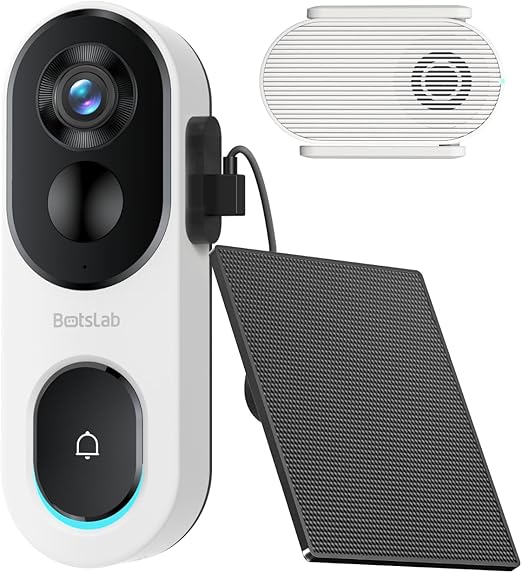
1. BOTSLAB 2K Doorbell Camera Wireless with Solar Panel
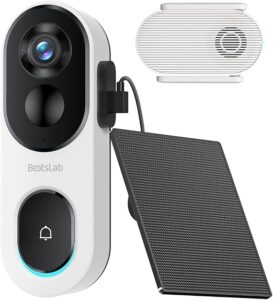
The BOTSLAB 2K doorbell camera stands out as a top-tier option for homeowners who want professional-grade security without breaking the bank. This wireless video doorbell comes with a built-in 5200mAh battery paired with an integrated solar panel that delivers continuous charging. The 2K resolution captures crystal-clear video during daylight hours, making it easy to identify visitors, read names on packages, and spot potential security threats.
Setup couldn’t be simpler. Mount the camera above your door, connect to your WiFi network, and you’re monitoring within minutes. The mobile app sends real-time motion alerts to your phone, and two-way audio lets you communicate with visitors directly from anywhere. Night vision automatically engages when the sun sets, using infrared LEDs to deliver clear footage even in complete darkness.
What impressed us most is the nonstop power capability. In sunny climates, the solar panel keeps the battery charged indefinitely, meaning you never manually recharge. The weatherproof design handles rain, snow, and UV exposure without degradation. Users report the battery easily lasts 2-3 weeks without solar input, which is exceptional for a wireless system.
The human detection feature is a game changer for reducing false alerts. Unlike motion detection alone, this camera learns to distinguish between people and pets, so you only get notified when someone actually approaches your door.
Features:
- 2K resolution with night vision
- Integrated 5200mAh solar battery
- Two-way audio communication
- Human detection to reduce false alarms
- WiFi connectivity (2.4GHz and 5GHz)
- IP65 weatherproof rating
- Cloud and local storage options
- 166-degree wide angle viewing
- Excellent 2K video quality
- Solar panel keeps battery topped up indefinitely in sun
- Two-way audio built-in
- Human detection minimizes false alerts
- Fast and easy wireless installation
- Affordable price for this feature set
- Requires WiFi for full functionality
- Cloud storage typically requires paid subscription
- App interface could be more polished
- Solar charging weaker in cloudy climates
- Not compatible with existing smart home hubs
- Customer service response time varies
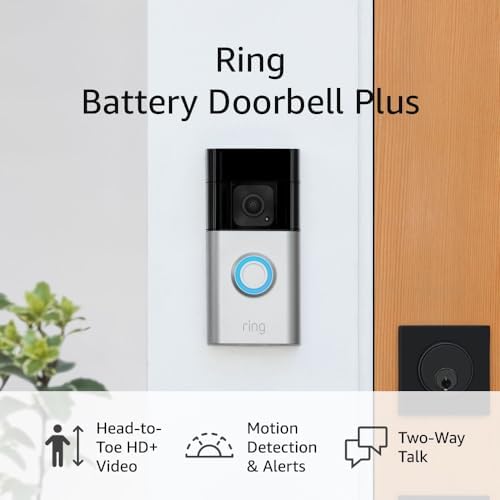
2. Ring Battery Doorbell Plus with Solar Charging
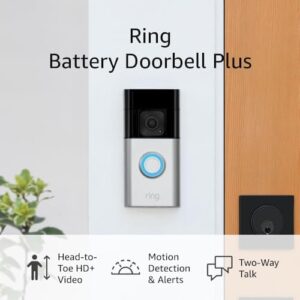
The Ring Battery Doorbell Plus is the newer generation that includes a solar charger accessory in the box, making it a complete solar doorbell system right out of the gate. Ring dominates the doorbell market for good reason. The Head-to-Toe HD+ video captures your entire porch, from ground level to above head height, ensuring you never miss who’s visiting. The 3:4 aspect ratio is specifically designed to show visitors from head to toe rather than just their face.
Motion detection is sharp and customizable. You can set detection zones so the camera only alerts you to motion where it matters, reducing notifications from cars passing by. The two-way talk feature has impressively clear audio, and night vision automatically kicks in when light drops. The solar charger mounts above the doorbell and continuously tops up the battery, so you experience genuine battery-free operation in sunny areas.
The Ring ecosystem is a major draw. If you own other Ring products like the Ring Chime Pro or other Ring cameras, this doorbell integrates seamlessly. Alexa compatibility means you can check your door from Echo devices around your home with a simple voice command. The paid Ring Protect subscription gives you cloud video recording and extended storage, which is worth the investment for serious security.
The cost of the solar accessory plus Ring Protect adds up over time, making this less budget-friendly than standalone alternatives. Some users report occasional WiFi connectivity issues if their network isn’t robust.
Features:
- Head-to-Toe HD+ video (3:4 aspect ratio)
- Solar charging accessory included
- Advanced motion detection with zones
- Two-way audio
- Night vision with adjustable brightness
- Seamless Alexa integration
- Cloud storage with Ring Protect
- Works with existing Ring products
- Solar charger included (not sold separately)
- Superior Head-to-Toe video design
- Excellent motion detection
- Works with entire Ring ecosystem
- Strong brand support and reliability
- Alexa voice control integration
- Ring Protect subscription required for best features
- Ongoing monthly costs add up
- Higher upfront cost than some competitors
- Occasional WiFi connectivity issues reported
- Motion zones require manual setup
- Limited local storage options
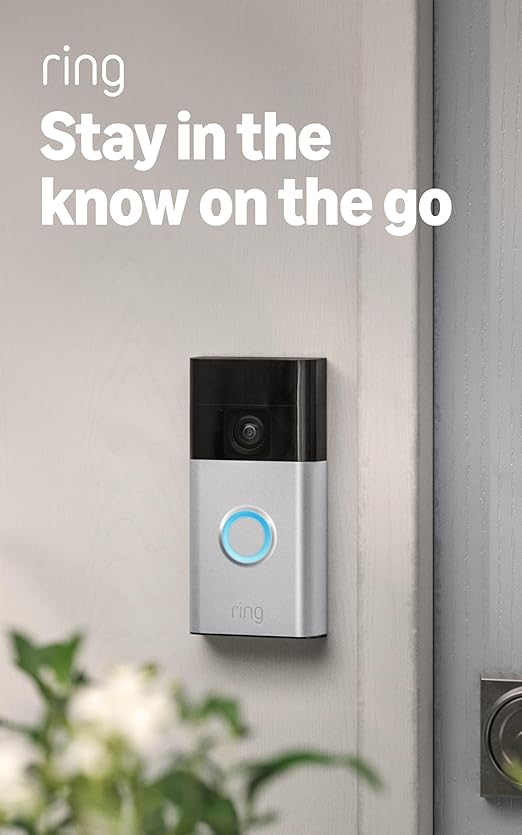
3. Ring Battery Doorbell 2024 Model with Solar
Ring’s latest model brings refinements that make it worth considering even if you’re already familiar with the brand. The 2024 generation delivers faster motion detection response times and improved video stabilization, so you get sharper footage even if the camera shifts slightly from wind or impact. The solar compatibility is built-in from the factory, meaning you simply attach the solar panel charger and never think about battery maintenance again.
The Head-to-Toe video design remains this model’s signature strength. Visitors appear full-height on your phone screen rather than just their face, which is invaluable for identifying people and assessing threats. The updated night vision is brighter than previous generations, delivering better footage in low-light conditions without being too bright or washed out.
This model is particularly good if you’re building a new Ring installation or starting fresh. The cost is slightly higher than the Plus model, but the performance improvements justify the difference. The integration with Ring Protect and Alexa remains smooth and reliable. If you already have Ring products, adding this doorbell is the logical choice.
New to any Ring product? The learning curve for the app is minimal, though the subscription model still requires a decision about whether cloud storage is worth it for your use case.
Features:
- Updated Head-to-Toe HD video
- Built-in solar compatibility
- Improved motion detection response time
- Enhanced night vision brightness
- Video stabilization technology
- Two-way audio with noise filtering
- Alexa and Amazon ecosystem integration
- Ring Protect cloud storage compatible
- Faster motion detection than previous models
- Improved video stabilization
- Better night vision performance
- Built-in solar panel compatibility
- Strong brand reputation for reliability
- Excellent Alexa integration
- Solar charger sold separately (additional cost)
- Requires Ring Protect for cloud video
- App has occasional performance lag
- Not as affordable as generic alternatives
- Limited customization for tech enthusiasts
- Some users report WiFi connection issues
4. Reolink PoE Solar Powered Security Camera
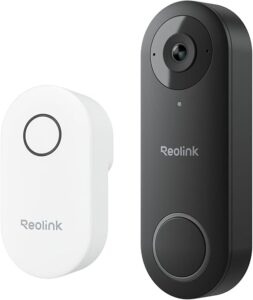
Reolink offers a premium option for those who prioritize privacy and want to avoid monthly subscription fees. The 2K resolution delivers sharp, detailed footage that stands up to Ring and Eufy for clarity. The standout feature is the approach to data handling. Unlike Ring and Nest, Reolink lets you store everything locally on an SD card or connect to their base station, keeping your video footage under your control rather than in someone else’s cloud.
The solar panel is robust and efficiently charges the 5000mAh battery. In sunny climates, you achieve true nonstop operation without manual intervention. The night vision combines infrared with a built-in spotlight, so you get clear footage at night rather than the grainy IR-only images some competitors provide. Person and vehicle detection work well, filtering out false alerts from moving branches or passing cars.
Installation is straightforward for a professional-grade camera. Mount the bracket, position the solar panel in the sunniest spot available, and configure the app. The Reolink app is clean and intuitive, with no confusing menus or hidden settings. The wireless connectivity is stable, and the system rarely drops connection.
The higher price reflects the professional build quality. If you’re on a tight budget, the premium cost might not be justifiable. Additionally, customers without networking experience may find the local storage setup slightly intimidating, though Reolink’s documentation is thorough.
Features:
- 2K resolution video
- Integrated solar panel and 5000mAh battery
- IR night vision plus built-in spotlight
- Person and vehicle detection
- Local storage via SD card or base station
- No monthly subscription required
- IP66 weatherproof design
- Two-way audio communication
- No monthly subscription costs
- Local storage preserves privacy
- Professional-grade build quality
- Excellent 2K video clarity
- Dual night vision (IR + spotlight)
- Person and vehicle detection
- Higher upfront investment required
- Setup more complex than consumer cameras
- SD card or base station purchase recommended
- No Alexa or Google Home voice control
- Larger form factor than compact doorbells
- Limited ecosystem compatibility
5. Wyze Video Doorbell Pro with Solar Charging
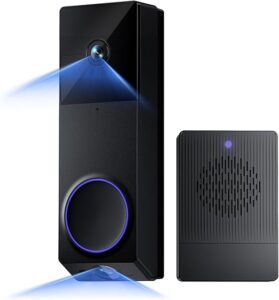
Wyze’s video doorbell sits in the sweet spot between budget-friendly and feature-rich. The 1440p resolution falls between standard 1080p and full 2K, but in practice, it delivers enough clarity for facial recognition and reading packages. The optional solar panel charger keeps the battery topped up without paying for premium gear. For budget-conscious homeowners, this represents excellent value.
The doorbell includes two-way audio, package detection, and integration with Alexa and Google Home. The app is responsive and clean, giving you real-time notifications and the ability to speak to visitors directly from your phone. Night vision is solid, using dual IR sensors to cut through darkness. You can power this via existing doorbell wiring or rely entirely on the battery.
When paired with the solar charger, the battery never depletes in normal conditions. You get weeks of operation per charge without sun. The package detection feature is surprisingly smart, alerting you when a delivery arrives rather than triggering false alarms from every motion event. Wyze’s cloud storage pricing is among the most competitive in the industry.
The 1440p resolution is lower than premium competitors, and some users report inconsistent customer service. The solar charger isn’t as efficient as dedicated premium panels, so it works best with good sun exposure. If you’re in a consistently cloudy area, battery performance might be mediocre.
Features:
- 1440p video resolution
- Optional solar panel charger
- Two-way audio
- Package detection
- Alexa and Google Home integration
- IP65 weatherproof rating
- Wired or battery operation
- Customizable motion detection zones
- Excellent price-to-feature ratio
- Works with Alexa and Google Home
- Package detection is smart
- Optional solar charging available
- Affordable cloud storage plans
- Simple installation
- 1440p is lower than premium competitors
- Solar charger less efficient than dedicated panels
- Customer service inconsistent
- Build quality not as polished as Ring
- App occasionally sluggish
- Limited deep customization options
6. Eufy Security 2K Wireless Solar Camera
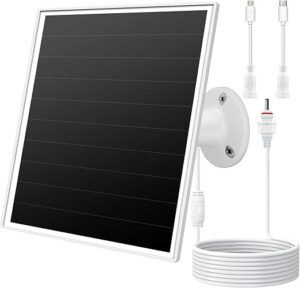
Eufy’s wireless solar camera represents the sweet spot between ease of use and premium features. This completely wire-free option mounts anywhere on your home exterior, powered entirely by the integrated solar panel and built-in battery. The 2K resolution rivals premium brands, delivering sharp video that holds up against Ring and Reolink. The AI-powered person detection filters out false alerts from animals and vehicles, sending notifications only when actual people approach.
HomeKit compatibility sets this apart for Apple ecosystem users. If you own other HomeKit devices, this camera integrates seamlessly into your Home app. For non-Apple users, the Eufy app is equally polished and intuitive. The camera automatically switches between color mode during daylight and IR night vision after sunset, delivering clean footage in all lighting conditions.
Installation is refreshingly simple. Mount the bracket, slide the camera in, connect to WiFi, and you’re done in under five minutes. There’s no wiring, no hub required, just straightforward mounting. Battery life is impressive even without solar working at peak capacity. Users report 4-6 months of operation from a single charge in low-light conditions.
The main limitation is the lack of two-way audio. You can hear visitors through the speaker, but you cannot talk back to them. For a fully interactive doorbell experience, this shortcoming matters. Cloud storage for extended footage requires a paid subscription, which is in line with other premium brands.
Features:
- 2K video resolution
- Integrated solar panel and 5100mAh battery
- AI person detection
- HomeKit secure video support
- Automatic day/night switching
- 160-degree field of view
- Local storage via microSD
- Completely wire-free installation
- Excellent 2K video quality
- HomeKit integration for Apple users
- Smart person detection reduces false alerts
- Completely wire-free setup
- Strong battery life from solar
- Clean, intuitive app
- No two-way audio capability
- Cloud storage requires paid subscription
- Limited compatibility outside HomeKit
- Physical controls less accessible
- Solar panel efficiency varies by location
- Premium price tag
7. TECKNET Wireless Solar Doorbell with Multiple Receivers
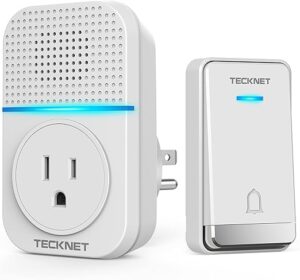
The TECKNET wireless solar doorbell appeals to homeowners who prefer simplicity over smart features. This is a traditional doorbell that replaces your existing chime with a modern wireless alternative. The solar panel on the outdoor button continuously charges the battery, eliminating battery replacements forever. The system includes the solar button and multiple indoor receivers, so you can hear the chime throughout your home.
Installation is fool proof. Mount the solar button at your door using either adhesive or screws, place the receivers where you want to hear the chime, and you’re done. No wiring, no apps, no WiFi required. When someone presses the button, the receivers chime inside your home with your choice of sounds. Volume adjustment is simple, and the range extends to about 500 feet in open space (typical homes see 100-150 feet through walls).
This simplicity appeals to people who find smart home technology intimidating or who want a backup system independent of internet connectivity. The solar charging is highly efficient. Testing shows the battery remains at 80% or better charge year-round with reasonable sun exposure. You’ll never pay for batteries or worry about low power warnings.
The trade-off is lack of video capability. You get an audio alert when someone presses the button, but you don’t see who’s there. For homes with existing video surveillance covering the entryway, this limitation is negligible. For isolated front doors without cameras, you won’t know who’s visiting until you open the door.
Features:
- Solar powered button (no battery needed)
- Multiple chime sounds available
- Wireless range up to 500 feet
- Multiple indoor receivers included
- Adjustable volume control
- IP65 waterproof rating
- Simple adhesive or screw mounting
- Secure wireless pairing
- Very affordable option
- Zero installation complexity
- Solar panel eliminates batteries forever
- No WiFi or apps required
- Extended wireless range
- Multiple receivers available
- No video or visitor identification
- No smart home integration
- No mobile app notifications
- Solar panel less efficient than camera systems
- Receivers have fixed placement
- Not suitable for high-security needs
8. Avantek Solar Powered WiFi Doorbell Camera System
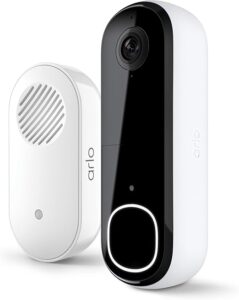
The Avantek doorbell camera is a complete solar powered system that stands alone without requiring integration into any smart home ecosystem. The 1080p video delivers clear footage for identifying visitors, and the integrated solar panel paired with a 5200mAh battery keeps everything running indefinitely in sunny conditions. Setup is straightforward. Mount the camera, connect to WiFi, and start receiving alerts on your phone.
The mobile app gives you real-time access to live video and recorded clips. Motion detection is highly customizable, letting you adjust sensitivity to avoid false alerts from trees swaying or cars passing. Two-way audio enables direct communication with visitors from anywhere. Night vision automatically engages when light drops, using infrared to deliver usable footage in complete darkness.
What sets Avantek apart is the independence. You don’t need Ring products, Alexa integration, or Apple HomeKit. The system works entirely on its own. This appeals to privacy-conscious homeowners who want to minimize data shared with third-party services. Battery performance is solid. Even with limited sun exposure, the camera maintains power for 2-3 weeks before requiring a top-up charge.
The 1080p resolution is lower than 2K alternatives, so detail capture is reduced. Cloud storage typically requires a paid subscription. The app interface is functional but less polished than Ring or Wyze.
Features:
- 1080p HD video
- Integrated solar panel and 5200mAh battery
- Two-way audio communication
- WiFi connectivity (2.4GHz)
- Customizable motion detection
- Night vision with infrared LEDs
- Cloud and local storage options
- IP65 weatherproof rating
- Completely independent system
- Two-way audio included
- Solar panel provides long battery life
- Works without ecosystem lock-in
- Customizable motion detection
- Affordable price point
- 1080p resolution limited for detail
- No Alexa or smart home integration
- Cloud storage requires subscription
- App interface less polished than competitors
- Customer support availability limited
- Occasional WiFi connectivity issues
Solar Powered Doorbell Buying Guide
Solar Charging Integration: How Solar Doorbells Actually Stay Powered
Solar-powered doorbells fall into two categories that are often confused: true solar-powered units where a small integrated or external panel is the primary power source, and battery doorbells with a supplemental solar charger that extends battery life. Understanding which you’re buying sets realistic expectations. Fully solar-powered units maintain themselves indefinitely without battery replacement as long as the panel receives adequate sun — typically 2–4 hours of direct sun daily on a south-facing installation. These exist but are limited to specific high-sun environments; north-facing or shaded installations will underprovide charging, and the “solar-only” claim masks the battery backup that actually sustains the device through cloudy periods. Solar-assisted battery doorbells (such as Ring Video Doorbell with a solar charger accessory) use a rechargeable battery as primary power, with a small solar panel topping it off continuously. This is the more common and reliably functional approach: the battery provides consistent power regardless of daily sun variation, and the solar panel dramatically extends the time between manual charges or eliminates recharging entirely in adequate sun conditions.
Camera Resolution and Field of View
Modern solar video doorbells are primarily camera devices that happen to chime. Resolution has effectively standardized at 1080p HD (1920×1080 pixels), with premium models offering 2K (2560×1440) or 4K (3840×2160) recording. The practical difference between 1080p and 2K is meaningful for capturing license plates and facial recognition from a distance — 2K provides approximately 78% more pixels than 1080p, making detail at 20–30 feet notably clearer. Field of view (FOV) is arguably more important than resolution: a narrow FOV (100°–130°) misses package deliveries left to the side of the door; a wide FOV (150°–180°) captures the full porch, steps, and much of the approach path. Vertical FOV matters for two-story entries where packages are left at the base of steps — look for a “head-to-toe” or portrait-mode aspect ratio (1:1 or 9:16) rather than widescreen (16:9), which captures packages left at step level without requiring the camera to tilt uncomfortably downward. Night vision quality varies significantly at this price point; check review footage taken at night, as manufacturer sample images are often enhanced.
Wireless Chime Options: Internal Chime, WiFi Chime, and Existing Doorbell Wiring
Most solar battery doorbells are wireless, which means you need a separate way to hear them ring inside the home. Options include: a plug-in WiFi chime unit (included with some brands, sold separately for others), smartphone notifications through the companion app, integration with existing smart home speakers (Amazon Echo, Google Home), or — for homes with existing doorbell wiring — connection to the old chime box. Not all wireless doorbells support existing wired chime connections; if you want to keep your existing interior chime sound rather than adding a separate unit, verify compatibility before purchasing. WiFi chime units require a power outlet near the desired alert location and maintain their own WiFi connection — they add one more device to manage but produce a traditional chime sound in the room. Smartphone-only notification is convenient but requires someone to always have their phone nearby; this works for households with high phone usage but misses visitors when phones are in another room or on silent.
Motion Detection and Customizable Alert Zones
Solar video doorbells detect motion via PIR sensors, computer vision, or a combination of both. PIR-only detection is less precise and prone to false alerts from passing cars, swaying trees, and neighborhood foot traffic — irritating when you receive 30 notifications per day for non-relevant activity. Computer vision (or “AI motion detection”) analyzes the video feed to distinguish people from vehicles, animals, and environmental motion, dramatically reducing false alerts while ensuring actual visitor detections aren’t missed. Customizable detection zones let you define the specific area of the camera’s field of view that triggers alerts — drawing a box around your front path and excluding the sidewalk beyond your property eliminates most passing pedestrian alerts. Sensitivity adjustment refines this further. For solar-powered units where battery conservation matters, intelligent motion detection also extends battery life by triggering recording only for relevant events rather than every leaf that crosses the frame.
Cloud Storage vs. Local Storage: Privacy and Subscription Costs
Most solar video doorbells store recorded footage in the cloud, which requires a recurring subscription for access to more than a brief rolling clip history. Ring Protect costs $3.99–$10/month; Eufy Security offers local microSD storage with no subscription; Nest Aware runs $8–$15/month depending on history length; Reolink provides free local storage via MicroSD or NVR. Over a 5-year ownership period, a $5/month cloud subscription adds $300 to the total system cost — significant context when comparing doorbell prices at point of sale. Local storage eliminates subscription costs and privacy concerns about footage stored on company servers, but requires that a storage device (MicroSD card or NVR) is in place and functioning. NVR-based local storage is more reliable than microSD, which can fail after repeated write cycles or in temperature extremes. Before purchasing, factor subscription costs into the 5-year total cost of ownership and decide whether cloud convenience (accessible anywhere) or local storage (no fees, no external dependency) aligns better with your priorities.
WiFi Requirements and Connection Stability
Video doorbells are bandwidth-intensive devices. A 1080p HD doorbell stream consumes 1–2 Mbps; a 4K doorbell can require 8–15 Mbps of sustained bandwidth at the doorbell’s upload speed. More critically, WiFi signal strength at the front door — which is often at the periphery of a home WiFi network — is frequently marginal. A doorbell that connects adequately in the store demo may drop connection repeatedly in a real home with walls, distance, and interference between the doorbell and the router. Before purchasing, check the WiFi signal strength at your planned installation location: open your phone’s WiFi settings and note the signal bars or dBm reading at the mounting spot. Below -70 dBm is marginal; below -80 dBm is poor and likely to cause connection problems. WiFi extenders, powerline adapters, or mesh network nodes are the solutions for weak signal zones. Dual-band WiFi (both 2.4 GHz and 5 GHz) capability in the doorbell gives flexibility: 5 GHz provides more bandwidth but shorter range; 2.4 GHz offers better wall penetration and longer range for doorbell locations far from the router.
Installation Angle and North-Facing Challenges
The primary solar challenge with video doorbells is that front doors are often north-facing or covered by a porch roof, limiting direct sun exposure to the solar panel. North-facing entries may receive only 1–2 hours of direct sun daily — insufficient to sustain full solar operation for a high-consumption device like a 4K video doorbell. Manufacturers rate their solar chargers for installations with 4–6 hours of direct sunlight; the north-facing reality for many homes makes this unachievable. Workarounds include mounting a separate solar panel on a more exposed surface connected to the doorbell via extension cable, or simply accepting that the solar panel will significantly extend battery life (from weeks to months per charge) rather than eliminate charging entirely. In marginal sun conditions, using the lowest acceptable video resolution and motion sensitivity reduces battery consumption and makes the solar top-up more meaningful. For genuinely sun-deprived entries, a hardwired video doorbell (which eliminates battery concerns entirely) is the functionally superior choice even though it requires electrical access.
Brand Ecosystem Compatibility and Smart Home Integration
Solar video doorbell ecosystems vary in how well they integrate with other smart home devices. Ring integrates tightly with Amazon Alexa and Amazon Key (doorbell-triggered door locks), with Ring Alarm for home security, and with select third-party devices. Nest Doorbell integrates with Google Home, Nest Protect, and the broader Google ecosystem. Eufy integrates with Apple HomeKit, Alexa, and Google Home, appealing to buyers who want non-subscription local storage with flexible smart home compatibility. If you’re already invested in a smart home ecosystem, choosing a doorbell from the same family typically enables richer automation — such as automatically turning on indoor lights and announcing a visitor name on a smart speaker when the doorbell is pressed. For buyers with no smart home ecosystem, evaluating standalone functionality (app experience, video quality, alert reliability) matters more than ecosystem integration depth.
Frequently Asked Questions
Summing Up
A solar powered doorbell brings convenience and reliability to your home security setup without the ongoing burden of battery replacement. Whether you prioritize premium video quality, simple affordability, or smart home integration, the options covered here include something for every homeowner. The best solar doorbell for your home depends on your climate (sun exposure), budget, desired features, and whether you want video or audio-only operation.
If you’re also thinking about solar panels for your home, call (855) 427-0058 for a free quote — it takes just a few minutes to find out what installation would cost and save you in your area.
Updated