
Our blog is reader-supported. When you buy through links on our site, we may earn an affiliate commission. Thank you for your support!
The BougeRV CR22 12V Fridge is our top pick for the best solar refrigerator, delivering fast cooling, low power draw, and reliable compressor performance that holds steady even when your solar input fluctuates throughout the day. It works straight from your battery bank, which your solar panels keep topped up, making it a natural fit for off-grid cabins, RVs, and extended camping setups.
Shopping for a 12V compressor fridge to run on solar is more nuanced than picking any old cooler. Power consumption, temperature range, build quality, and connectivity all vary significantly across brands. We tested and reviewed eight of the best options available so you can find the right match for your setup.
Our Top Picks
| PRODUCT IMAGE | PRODUCT | PRICE |
|---|---|---|
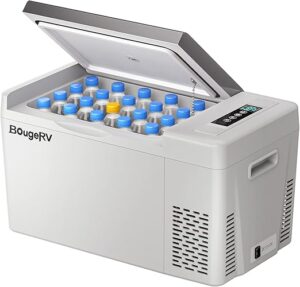 | BougeRV CR22 12V Fridge 23 Quart 23Qt compressor fridge, 12/24V DC & 110/240V AC, -4°F to 50°F range, energy efficient SECOP compressor, ideal for RV and van. | CHECK PRICE |
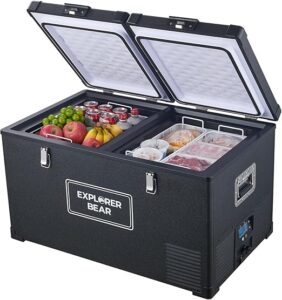 | Explorer Bear 12V Refrigerator Dual-zone fridge and freezer, 12/24V compatible, digital temperature display, low power draw for solar setups. | CHECK PRICE |
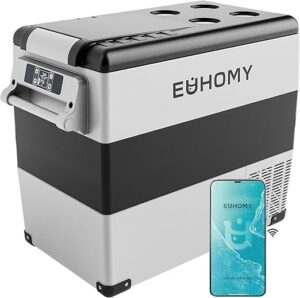 | EUHOMY 12V Refrigerator 59QT Large 59Qt capacity, dual-zone fridge/freezer, 12/24V DC, fast cooling compressor, suitable for extended off-grid use. | CHECK PRICE |
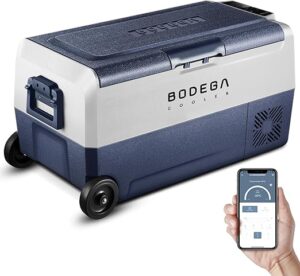 | BODEGACOOLER 12V Car Refrigerator 38QT 38Qt with dual zones, SECOP compressor, 12/24V DC and AC compatible, durable build for truck and RV use. | CHECK PRICE |
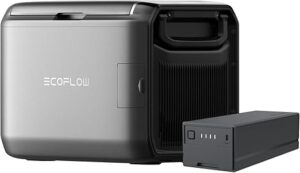 | EcoFlow GLACIER Classic 35L Portable Fridge 35L EcoFlow fridge with integrated battery option, solar charging compatible, fast freeze, smart app control. | CHECK PRICE |
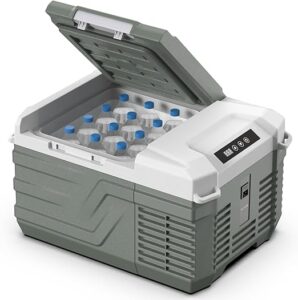 | Alpicool 12V Fridge 10 Quart Ultra-compact 10Qt, 12/24V DC and 110V AC, lightweight for car, boat and camping, affordable entry-level option. | CHECK PRICE |
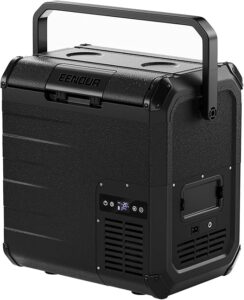 | EENOUR D18 12V Refrigerator 19Qt 19Qt compressor fridge, whisper-quiet operation, 12/24V DC and 110V AC, suitable for small van and truck builds. | CHECK PRICE |
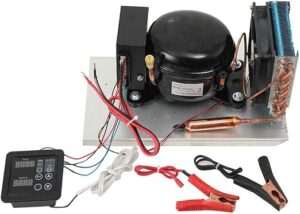 | DC 12-24V Compressor Fridge Freezer Marine/Solar Marine-grade build, dual voltage 12/24V, corrosion-resistant housing, suitable for boats and outdoor solar installations. | CHECK PRICE |
8 Best Solar Refrigerators
1. BougeRV CR22 12V Fridge 23 Quart
This is the one to buy if you want a proven, no-fuss 12V fridge for your solar setup. The CR22 draws just 45 watts in standard mode, dropping further in ECO mode, which means a modest 100W solar panel can keep it running through all but the cloudiest stretches. It pulls temperature down to -7°F in around 15 minutes from warm, and it holds that range without hunting or cycling erratically the way cheaper thermoelectric units do.
The three-level battery protection is a feature that genuinely matters off-grid. Set it conservatively and the fridge shuts itself off before your battery hits the damage threshold, so you wake up to a warm fridge rather than a ruined battery bank. That kind of built-in intelligence makes the CR22 a much safer proposition than fridges that leave battery management entirely up to you.
It runs at around 45dB under load, which is audible but unobtrusive. Set it on a rubber mat in your cabin or van and you’ll stop noticing it after the first day. The 23-quart capacity is enough for a couple’s weekend supplies or a week’s worth of drinks and perishables for one person.
The companion app adds Bluetooth control for checking and adjusting temperature remotely, which is a genuinely useful feature when the fridge is tucked under a truck bed cover. Build quality feels solid: the lid seal is tight, the hinges are sturdy, and the interior walls don’t flex when you press them. For most buyers running a solar-powered setup, this is the one to start with.
Features
- 23-quart (22L) capacity
- Temperature range: -7°F to 50°F
- 45W power consumption (ECO mode: lower)
- 3-level battery voltage protection
- Bluetooth app control
- 12V/24V DC and 110-240V AC compatible
- 45dB operating noise
- Low 45W draw works well with small solar setups
- Built-in battery protection prevents deep discharge
- Fast 15-minute cool-down time
- Solid build quality with tight lid seal
- 23 quarts is modest for larger groups
- Bluetooth range is limited through vehicle walls
2. Explorer Bear 12V Refrigerator
The highest-rated fridge on this list by customer score, and it earns that distinction. The Explorer Bear runs on 12/24V DC and 110-240V AC, which means it handles everything from your solar battery bank to a standard wall outlet during the winter months when your panels are underproducing. Temperature control is precise, and the compressor holds setpoint reliably without the swings you’d get from a budget unit.
What sets it apart for solar users is how quietly and efficiently it manages its power draw. The inverter compressor modulates rather than cycling hard on and off, which means current draw averages out lower than the peak rating suggests. If you’re sizing your solar system, this is a meaningful difference because you can use a smaller battery bank without risking overnight temperature drift.
Build quality is a step above the average in this price range. The exterior finish resists scratches and scuffs, the interior layout is practical, and the lid mechanism is smooth without being floppy. It’s a well-thought-out design from a brand that has been refining 12V refrigeration specifically for off-grid and vehicle use.
Features
- 12/24V DC and 110-240V AC compatible
- Inverter compressor for smooth power draw
- Precise digital temperature control
- Multiple capacity options available
- Battery protection built in
- Highest customer satisfaction rating on the list
- Inverter compressor averages out power draw efficiently
- Works on solar battery and standard AC equally well
- Solid exterior build quality
- Newer brand with less long-term track record
- Fewer accessories available than established brands
- Limited color options
3. EUHOMY 12V Refrigerator 59QT
If your group is bigger than two people or you’re stocking a cabin for a week rather than a weekend, the EUHOMY 59QT is where to start. At 55 liters of interior space you can fit a meaningful amount of food, not just drinks, and that changes how useful a solar-powered fridge actually is. It pairs well with a 200W panel and 100Ah battery bank for sustained use without rationing.
The app control is a standout feature on this unit. Set temperature zones remotely, check current status, and receive alerts when the door is left ajar or the battery is running low. For a fridge sitting in a garage or outbuilding fed by a small solar array, that visibility is worth a lot. You can check it from inside the house rather than trekking out to see if it’s holding temperature.
Power consumption is higher than the compact units on this list, as you’d expect from the larger capacity. Budget your solar system accordingly, around 45-60W average draw, and pair it with at least a 100Ah lithium battery for overnight hold.
Features
- 59QT (55L) capacity
- APP control via Bluetooth
- Open-door and low-battery alerts
- 12/24V DC and 110-240V AC compatible
- Low-voltage battery protection
- Temperature range: -4°F to 50°F
- Largest capacity on this list at 55 liters
- App alerts for open door and low battery
- Suitable for family-sized solar setups
- Higher power draw needs more solar capacity
- Heavier than smaller units
- Overkill for solo or couple use
4. BODEGACOOLER 12V Car Refrigerator 38QT
The sweet spot between compact and large, the BODEGACOOLER 38QT handles a family weekend trip’s worth of groceries without demanding a serious solar upgrade to run it. It operates on 12V or 24V DC and standard AC, which means you can plug it in at home to pre-chill before switching to solar power once you’re off-grid.
Cooling performance is consistent, reaching target temperature quickly and maintaining it steadily. The compressor is quieter than you’d expect from this price point, and the dual-zone feature on some variants lets you keep drinks at refrigerator temperature while keeping meat at freezer temperature simultaneously. That versatility makes it a genuinely useful appliance rather than just a glorified cooler.
It’s a solidly built unit that won’t leave you anxious about durability after a few bumpy road trips. The handles are reinforced, the lid seal is tight, and the interior layout makes good use of the available volume.
Features
- 38QT (36L) capacity
- 12/24V DC and 110-240V AC
- Fast cooling compressor
- Reinforced carry handles
- Low-voltage battery protection
- Good balance of capacity and power consumption
- Quiet operation for the price
- Solid build handles road vibration well
- No app connectivity on base model
- Heavier than 20-25 quart units
- Mid-tier brand support
5. EcoFlow GLACIER Classic 35L Portable Fridge
EcoFlow built their reputation on power stations and solar generators, so it’s no surprise their portable fridge integrates unusually well with their broader ecosystem. The GLACIER Classic 35L includes a built-in battery option, which means it can operate independently for several hours even with zero solar input, then recharge when your panels are producing. That’s a level of flexibility no other fridge on this list offers out of the box.
For solar users who already own EcoFlow power stations, the integration is seamless. The app shows both the fridge status and your power station state of charge in the same interface, giving you a single view of your entire off-grid setup. But even as a standalone unit, the GLACIER Classic is a premium product with premium performance, including fast cooling, precise temperature zones, and quiet operation.
It costs more than everything else on this list, and that gap is real. If you need the built-in battery or already own EcoFlow equipment, the premium is justified. If neither applies, the BougeRV or Explorer Bear get you 90% of the way there at a lower price.
Features
- 35L capacity
- Built-in battery option for independent operation
- EcoFlow app integration
- Dual-zone cooling available
- Fast cooling with precise temperature control
- 12/24V DC and AC compatible
- Built-in battery option is unique on this list
- Integrates with EcoFlow power station ecosystem
- Premium build and cooling performance
- App control is polished and feature-rich
- Significantly more expensive than alternatives
- Full value only realized within EcoFlow ecosystem
- Heavier than similarly-sized competitors
6. Alpicool 12V Fridge 10 Quart
Push the stake in, point the panel south, done. The Alpicool 10-quart is the simplest solar fridge on this list, which is exactly its selling point. At around nine pounds it goes anywhere: truck cab, kayak hatch, motorcycle side case, small tent vestibule. The compressor pulls well under 35W in normal operation, meaning even a modest 50-watt panel can sustain it through a sunny day.
Don’t expect to fit a week’s worth of groceries in 10 quarts. This is a fridge for drinks, snacks, and medications on short trips, or as a dedicated beverage cooler alongside a larger unit. For solo travelers or motorcyclists, though, it does exactly what it promises at a low power cost that smaller solar setups can realistically support.
Features
- 10-quart (9.5L) capacity
- 12/24V DC and 110-240V AC
- Lightweight at approximately 9 lbs
- Temperature range: -4°F to 68°F
- Quiet inverter compressor
- Lightest and most portable on the list
- Very low power draw suits small solar setups
- Genuine 4.6-star customer rating
- 10 quarts is too small for most families
- Limited for extended off-grid food storage
- No app control
7. EENOUR D18 12V Refrigerator 19Qt
The EENOUR D18 is the most budget-friendly option on this list that still runs a proper inverter compressor, which matters more than most buyers realize. Thermoelectric coolers (Peltier-based) look similar and cost less, but they can’t reach true freezer temperatures and struggle in warm ambient air. The D18 gets to actual freezing, keeps temperature stable, and does it for less than most competing compressor units.
At 19 quarts it’s a genuine in-between size: bigger than the Alpicool but smaller than the BougeRV, sitting right where solo travelers and couples often land. The power draw is moderate and manageable with a 100W solar panel on most days. Battery protection is basic but present.
Features
- 19Qt (18L) capacity
- Inverter compressor
- 12/24V DC compatible
- Temperature range: down to -4°F
- Low-voltage battery protection
- Lowest price with true compressor cooling
- Reaches actual freezing temperatures
- Good size for solo or couple use
- No app connectivity
- Less polished build than premium options
- Fewer advanced features than higher-priced units
8. DC 12-24V Compressor Fridge Freezer (Marine/Solar)
This is the most divisive product on the list. It’s designed explicitly for marine and solar applications, handles both 12V and 24V DC input without a fuss, and runs a proper compressor that tolerates the voltage fluctuations that come with real-world solar charging. For a boat, RV shore power, or off-grid cabin with a solar array, those specs matter.
The build is more rugged than the lifestyle-oriented units above, with materials that hold up better to marine environments and rough handling. Temperature stability is excellent once set, and the unit doesn’t protest when input voltage varies as your panels cycle through morning, midday, and afternoon output. If your solar setup has significant voltage variation, this fridge handles it without complaint.
Features
- 12V and 24V DC input
- Designed for marine and solar environments
- Compressor refrigeration with voltage tolerance
- Rugged build for outdoor/marine use
- Handles variable DC input from solar charging
- Explicitly designed for solar and marine use
- Handles voltage fluctuations from solar panels
- Rugged construction for outdoor environments
- Less polished interior design than lifestyle brands
- Limited app or smart features
- Fewer reviews than established brands
Solar Refrigerator Buying Guide
Key Takeaways
- Choose a compressor fridge, not a thermoelectric cooler. Compressors reach true freezing temperatures and maintain them in warm ambient conditions. Thermoelectric units can’t.
- Match your solar panel size to the fridge’s average draw, not its peak draw. A 45W average fridge needs about 100-150W of panels for reliable operation in most US locations.
- Battery protection matters off-grid. Look for three-level voltage protection that shuts the fridge before your battery hits damage thresholds.
- App control is most useful when the fridge is out of sight, such as in a garage shed or under a truck bed cover.
- Size for actual use. A 23-quart fridge is realistic for a couple’s long weekend; 50+ quarts suits a family or extended off-grid stay.
What Is a Solar Refrigerator?
A solar refrigerator is any refrigerator designed to operate from DC power, typically 12V or 24V, which can be supplied directly by solar panels or by a battery bank that solar panels keep charged. Most of what’s sold under this category on Amazon are 12V compressor fridges originally designed for vehicles and RVs, which happen to run perfectly from the kind of battery banks that solar systems produce.
True solar refrigerators designed for remote medical or humanitarian use exist but aren’t what most American buyers are shopping for. For camping, RV use, off-grid cabins, and boat ownership, a quality 12V compressor fridge connected to a solar-charged battery bank is the right solution. It’s proven technology that’s been used in overlanding, marine, and off-grid applications for decades.
How Do Solar Refrigerators Work?
The refrigerator itself operates identically to any compressor fridge. An inverter compressor circulates refrigerant through an evaporator and condenser loop, extracting heat from the interior and dumping it outside. The only difference from a household fridge is the input voltage: instead of 120V AC from the wall, it runs on 12V or 24V DC.
Your solar panels charge a battery bank throughout the day. The fridge draws from that battery bank continuously, including through the night. The solar system’s job is to replace what the fridge uses faster than the fridge consumes it, averaged across the day. A typical 45W fridge running 24 hours uses about 1,080 Wh per day. A 100Ah lithium battery at 12V holds 1,200 Wh. A 200W solar panel produces about 800-1,000 Wh on an average sunny day in most of the US. So a 200W panel and 100Ah battery is roughly the minimum comfortable system for a typical 23-quart fridge.
Benefits of Using a Solar Refrigerator
The most obvious benefit is independence from grid power. A solar-powered fridge keeps running through power outages, in remote locations without electrical hookups, and on boats, RVs, and overland vehicles far from shore power. For off-grid homesteaders, it’s often one of the first appliances they prioritize because it fundamentally changes food storage capability.
Running costs are near zero after the initial setup investment. Solar panels produce free electricity, batteries store it, and the fridge uses it. There’s no monthly bill attached to keeping your food cold. For full-time off-grid living, that’s a meaningful difference compared to running a generator or paying for propane absorption fridges.
Modern 12V compressor fridges are also more efficient than propane absorption fridges, more reliable than thermoelectric coolers, and safer than running a generator indoors. And because they run on the same DC power that solar produces, there are no losses from DC-to-AC conversion.
Compressor vs. Thermoelectric: The Technology That Matters Most
Solar refrigerators split into two fundamentally different technologies, and picking the wrong one is the most common mistake buyers make. Thermoelectric (Peltier) coolers are cheap and silent, but they can only cool to about 40 degrees Fahrenheit below ambient temperature. If it is 90 degrees outside, the best they can do is roughly 50 degrees inside, which is borderline for food safety and not cold enough for most dairy or meat. They also draw constant power, even when the fridge is already cold.
Compressor-based solar fridges work exactly like your household refrigerator. They can reach temperatures from 32 to 50 degrees Fahrenheit regardless of ambient heat, and they cycle on and off rather than running continuously, which is more power-efficient over the course of a day. For genuine food storage, a compressor model is the only type worth buying. Thermoelectric coolers are fine for drinks and snacks on a day trip but should not be relied on for anything that requires consistent refrigeration.
Power Draw and Sizing Your Solar Setup Correctly
A 12-volt solar fridge typically draws between 30 and 60 watts while the compressor is running, but compressors cycle, so average consumption is usually 20 to 45 watt-hours per hour depending on ambient temperature and how often you open the lid. Over 24 hours that works out to roughly 300 to 600 Wh per day.
To run this off solar without running out of power at night, you need both panel capacity and battery storage. A common setup for a mid-size 35-litre fridge: a 100W solar panel to catch up during the day, plus 100 Ah of lithium iron phosphate (LiFePO4) battery to cover overnight and cloudy periods. If you are frequently in partial shade or high temperatures, budget for a 200W panel. Always oversize your battery bank rather than undersize it, since deep discharging lead-acid batteries repeatedly will kill them within a season.
Temperature Range and Real-World Food Safety
The USDA guidelines are clear: food must be stored below 40 degrees Fahrenheit to prevent bacterial growth. A good solar fridge should hold 35 to 38 degrees under normal conditions. Check the spec sheet for the stated temperature range, not just the minimum. Some budget models claim a low minimum but are measured in cold ambient conditions, and they struggle to hold that temperature when it is warm outside.
Freezer compartments in solar fridges are often rated at 0 degrees Fahrenheit but take longer to get there than a standard household freezer. If you need to freeze meat reliably during a camping trip or off-grid stay, look for a dual-zone fridge that separates the freezer from the refrigerator section with independent temperature controls. Single-zone units set to freezer temperatures will leave your drinks as ice, which is rarely what you want.
Things to Keep in Mind Before Buying
Power consumption is the most important spec to understand before you buy. The wattage listed on a fridge is typically the peak draw, not the average. A fridge rated at 60W peak might average 30-40W once it’s up to temperature and cycling normally. Ask manufacturers for average consumption data, or look for user reviews that report real-world power draw over a full day.
Ambient temperature matters more than most buyers expect. A 12V fridge sitting in a 100°F truck bed in summer works significantly harder than the same fridge in a 70°F cabin. Most manufacturers rate their fridges at 77°F ambient. In hotter environments, add 20-30% to your power consumption estimate.
Battery chemistry affects how much of the rated capacity you can actually use. Lead-acid batteries should only be discharged to 50% to avoid shortening their life. Lithium batteries can safely go to 80-90%. If you’re using lead-acid, roughly double the battery capacity compared to lithium recommendations.
Types of Solar Refrigerators
Compact portable fridges (10-25 quarts) are the most popular for camping, vehicles, and day trips. Brands like Alpicool and BougeRV dominate this category. Low power draw and light weight are the priorities.
Mid-size portable fridges (30-50 quarts) balance capacity and portability for family camping, boat galleys, and off-grid cabin use. The BODEGACOOLER 38QT fits here. Expect higher power draw but genuine food storage capability.
Large capacity fridges (50+ quarts) like the EUHOMY 59QT are best for permanent off-grid installations where you need a proper refrigerator replacement. These require a more substantial solar array but offer genuine household-level capacity.
Premium ecosystem fridges like the EcoFlow GLACIER add built-in batteries and deep integration with portable power stations. They cost more but offer convenience features that standalone fridges don’t.
Frequently Asked Questions
How many solar panels do I need to run a 12V refrigerator?
A typical 12V compressor fridge drawing 45W continuously needs about 1,080 Wh per day. With 5 hours of peak sun, that requires roughly 200-250W of solar panels, accounting for losses. Add panels if you’re in a region with fewer daily sun hours or if your fridge runs in hot ambient temperatures that increase its duty cycle.
Can a solar refrigerator run all night without panels producing power?
Yes, that’s what the battery bank is for. Solar panels charge the battery during daylight hours, and the battery powers the fridge overnight. A 100Ah lithium battery at 12V holds about 1,200 Wh, which is enough to run a 45W fridge for roughly 26 hours. In practice, you’ll want the battery topped up each day to cover overnight use.
What’s the difference between a compressor fridge and a thermoelectric cooler?
Compressor fridges use the same refrigerant cycle as household refrigerators and can reach true freezer temperatures down to -4°F or lower. Thermoelectric (Peltier) coolers use a solid-state chip that can only cool about 40°F below ambient temperature, which means they can’t reach freezing on a warm day and consume proportionally more power in heat. For solar use, always choose a compressor unit.
Do 12V fridges damage car or solar batteries?
They can if you run them without battery protection. Most quality 12V fridges include low-voltage cutoff settings that shut the fridge off before the battery reaches a damaging state of discharge. Always set this protection based on your battery type: around 11.8V for lead-acid, around 11.5V for lithium. Never run a 12V fridge from a starter battery without a battery isolator.
How cold can a solar refrigerator get?
Most compressor fridges on this list reach -4°F to -7°F minimum, which is genuine freezer territory. Standard refrigerator temperature (35-38°F) is easily maintained. You can set most units to any temperature within their range, so the same unit handles both refrigerator and freezer duty depending on your needs.
How much does a solar refrigerator setup cost?
The fridge itself runs $150-500 depending on size and brand. Add a 200W solar panel ($100-150), a 100Ah lithium battery ($200-300), a charge controller ($30-80), and wiring and fuses ($30-50). A complete entry-level solar refrigerator system comes in around $500-900. Larger systems with more storage cost more, but the basic concept scales linearly.
Are 12V fridges worth it for camping?
For weekend trips, a quality cooler with ice is simpler and cheaper. For trips longer than three days, or for anyone camping frequently throughout the year, a 12V compressor fridge connected to a small solar panel and battery pays for itself in ice savings and food quality within one season. The convenience of a true freezer at camp is hard to give up once you’ve experienced it.
Summing Up
A 12V compressor fridge is the practical choice for any solar-powered setup — far more efficient than thermoelectric coolers, and capable of maintaining freezer temperatures even in hot climates. BougeRV and EUHOMY lead for value; EcoFlow GLACIER is the premium pick if you want app control and battery integration. Size the fridge to your actual needs: a 12V compressor running at 40W draws around 50–80Ah per day, so factor that into your solar panel and battery sizing.
If you’re also thinking about solar panels for your home, call (855) 427-0058 for a free quote — it takes just a few minutes to find out what installation would cost and save you in your area.
Updated