
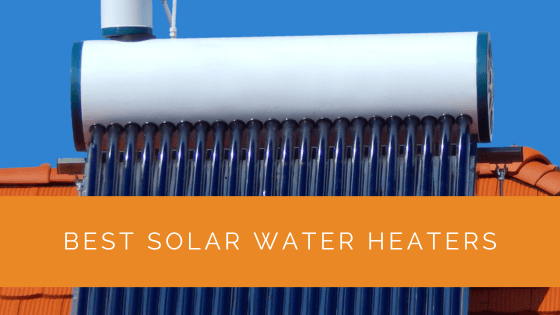
Solar water heaters harness the sun’s thermal energy to heat water for homes, providing 50–80% of annual hot water demand while reducing electricity or gas consumption dramatically. Unlike solar electricity systems (photovoltaic), solar thermal systems directly convert sunlight to heat with 40–80% efficiency—far exceeding photovoltaic efficiency—making them among the most cost-effective renewable energy investments available. Understanding solar water heater types, performance, installation requirements, and economics helps homeowners maximize energy savings and self-sufficiency.
Solar water heaters have delivered proven performance for decades, with over 100 million systems deployed worldwide. Modern systems are durable, low-maintenance, and increasingly affordable, especially when combined with federal tax credits and state incentives. This comprehensive guide explains how solar water heaters work, compares system types, and provides guidance for evaluating whether solar thermal is right for your home.
How Solar Water Heaters Work
Basic Principle: Solar collectors absorb sunlight and convert it to heat energy, warming water or heat transfer fluid flowing through absorber plates. This thermal energy is stored in a tank for later use—morning showers use heat collected the previous day, and cloudy-day reserves ensure supply during lower-sun periods.
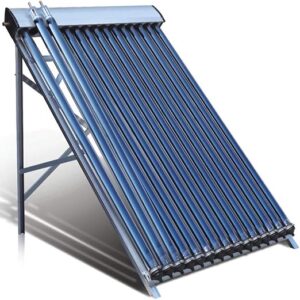
Collector Types: Flat-plate collectors (aluminum or copper absorber plates with glass cover) are most common for residential use, costing $300–$800 per unit and producing 50–100 gallons of hot water per collector on sunny days. Evacuated-tube collectors (glass tubes containing absorber strips in vacuum) are more efficient but costlier ($400–$1200 per unit). Performance difference: evacuated-tube systems maintain higher temperatures in cold climates but offer minimal advantage in mild climates.
Storage Tank: Insulated 40–120 gallon tank stores heated water, providing supply during evening/night and cloudy periods. Modern tanks use multiple outlets and internal baffles to maintain temperature stratification—hotter water at top for immediate use, cooler water at bottom for recycling through collectors.
Heat Transfer Fluid (Optional): Closed-loop systems use glycol-water mix or oil instead of direct water heating, preventing freeze damage in cold climates. Heat exchanger transfers thermal energy from circulating fluid to tank water. Open-loop systems (direct) circulate household water through collectors, simpler and more efficient but vulnerable to freezing in cold climates.
Circulation and Control: Pumps (thermostatically controlled or differential-temperature controlled) circulate water/fluid through collectors when solar heat available. Typical systems cycle 2–4 times daily, drawing 50–150 watts pump power, offset by far greater thermal energy collection.
Solar Water Heater System Types
Active Open-Loop (Direct) Systems: Household water circulated directly through solar collectors, heated by absorber plates, and stored in tank. Advantages: simple, highly efficient (40–50%), lowest component cost. Disadvantages: freeze damage risk in cold climates (water freezes in exposed pipes below 32°F), scaling issues in hard-water areas (mineral deposits clog lines). Best for: mild climates (California, Arizona, Florida, Hawaii). Cost: $2000–$4000 installed.
Active Closed-Loop Systems: Glycol-water or oil mixture circulates through collectors and exchanges heat with tank water via heat exchanger. Advantages: freeze-proof, corrosion-resistant, works in any climate. Disadvantages: slightly lower efficiency (40–45%, heat exchanger loss), more complex, higher cost. Best for: all climates, particularly cold regions. Cost: $3000–$6000 installed.
Passive Thermosiphon Systems: No pump; heated water naturally rises and flows to tank by gravity (convection). Advantages: extremely reliable (no moving parts), lowest operating cost (no pump electricity), durable (20–30 year lifespan). Disadvantages: requires tank positioned higher than collector (roof-mounted system, which may limit placement), lower heat transfer rate, larger tank required. Best for: fixed installations where tank height placement feasible. Cost: $2000–$4000 installed, lowest operating costs.
Integral Collector-Storage (ICS) Systems: Tank and collector integrated into single unit, mounted on roof. Simplest and most compact design, lower cost. Disadvantages: less efficient heat retention (large heat loss at night), limited hot water capacity. Best for: mild climates, limited space, budget installations. Cost: $1500–$3000 installed.
Performance and Efficiency
Solar Fraction: Percentage of annual hot water demand met by solar energy. Typical systems: 50–70% solar fraction (50–70% of hot water comes from solar, remainder from backup gas/electric heater). Sizing larger collectors increases solar fraction to 80–90% but faces diminishing returns—very large systems overheat summer, create excess supply, and require expensive heat rejection mechanisms.
Thermal Efficiency: Percentage of incident solar radiation converted to thermal energy in water. Flat-plate collectors: 40–50% efficiency. Evacuated-tube collectors: 50–65% efficiency. Compared to photovoltaic efficiency (15–22%), solar thermal efficiency is 2–4× higher, making solar thermal superior for water heating specifically.
Daily Output: Typical flat-plate collector (20 sq ft, south-facing, optimal tilt): generates 20–30 gallons of 120°F usable hot water on sunny day (50–75 kWh thermal). Evacuated-tube collectors (same size): 25–35 gallons. Cloudy day output: 20–40% of sunny-day output (10–15 gallons).
Seasonal Variation: Summer output 3–4× winter output due to longer days and higher sun angles. Winter days may require backup heater supplementation for some loads. Annual average: 50–70% of demand met by solar, rest from backup heater.
Temperature Rise Capacity: Quality systems raise water temperature 40–60°F from inlet temperature. Example: 55°F groundwater inlet, heated to 115°F (practical shower temperature), provides 60°F temperature rise—achievable under typical sunny conditions.
Solar Water Heater Economics and ROI
System Costs: Residential solar water heater complete installation: $3000–$6000 depending on system type and location. This covers collectors, tank, piping, controls, installation labor, and inspection/permitting.
Annual Savings Calculation: Typical household (family of 4, 50 gallons daily 120°F hot water): annual backup heater cost ~$500–$800 (electric, $0.12–$0.15/kWh) to $400–$600 (natural gas, $1–$1.50/therm). Solar system meeting 60% demand: saves $300–$500 annually.
Simple Payback Period: $4500 system cost ÷ $400 annual savings = 11.25 year payback. Combined with 30% federal ITC (2026), payback reduces to 7.5–8 years ($3150 net cost after tax credit).
30-Year Net Benefit: Over 30-year system lifespan (warranty period), savings: 30 years × $400/year = $12,000 (not accounting for energy inflation). Accounting for 3% annual energy cost inflation: savings exceed $20,000 in today’s dollars. System cost effectively pays for itself 2–3 times over its lifespan.
Federal Investment Tax Credit: 30% of system cost (equipment + installation) eligible for federal ITC through 2032, declining 26% (2033), 22% (2034), zero (2035+). A $4500 system qualifies for $1350 tax credit (30%), reducing net cost to $3150.
State and Local Incentives: Many states offer additional rebates/credits beyond federal ITC. Examples: California (SOMAH program, $1000–$1500 rebates), New York (0% financing + rebates), Hawaii (solar water heater tax credits). Combined incentives can reduce net cost to $1500–$2000.
Installation and Maintenance
Roof Requirements: South-facing roof (within 45° east/west) with unobstructed sun access 10am–3pm. Shading from trees/buildings reduces output proportionally; even 10–20% shade cuts annual solar fraction substantially. Roof structure must support additional 150–300 lb weight (collectors + water weight).
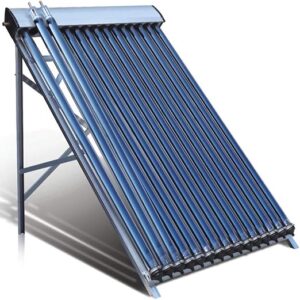
Piping and Integration: Collectors connected to existing water heater via insulated pipes (minimize heat loss). Backup heater remains operational for cloudy days and peak demand periods. Integration with existing plumbing straightforward for retrofit installations.
Maintenance: Minimal—annual inspection of pipes, connections, and pump operation. Periodic flushing (every 3–5 years, depending on water hardness) prevents mineral scaling. Most systems require only basic checks and don’t need regular servicing.
Lifespan: Collectors: 20–30 years (glass coating degrades slowly, performance drops ~0.5% annually). Tank: 10–15 years (anode rod extends life). Pump: 10–15 years. Complete system serviceability and part availability extend effective lifespan to 25–30+ years.
Comparison: Solar Water Heater vs Photovoltaic + Electric Heating
System Cost Comparison: Solar thermal water heater: $3000–$6000. Equivalent PV system (3–4 kW) + electric heating: $8000–$12000 (before incentives). Solar thermal 30–50% less expensive.
Efficiency Comparison: Solar thermal: 40–50% of incident solar energy becomes usable heat. PV + electric resistance: 15–22% of solar energy becomes electricity, 95% of electricity becomes heat = 14–21% overall efficiency. Solar thermal 2–3× more efficient for water heating.
Performance Comparison: Solar thermal provides 50–70% of hot water demand. PV + resistance heating provides equivalent coverage only with 3–4 kW system, 10+ kWh daily battery storage (or grid export with net metering)—much more complex and expensive.
Best Choice: Solar thermal superior for dedicated water heating. PV superior for whole-home electrification (heating, electricity, transportation). Hybrid approach: solar thermal for hot water, rooftop PV for electricity, often optimal for maximum energy independence at reasonable cost.
Challenges and Considerations
Freeze Risk (Cold Climates): Open-loop systems vulnerable in climates experiencing sustained freezing. Solution: closed-loop systems with glycol heat transfer fluid, cost premium $1000–$2000. Alternatively: drain-back systems automatically drain collectors when temperature drops below freezing threshold.
Overheating (Summer): Excess solar input in summer can overheat system. Solution: temperature relief valve (standard on all systems) releases excess heat, or diverter controls redirect flow to heat pool (if applicable). Properly designed systems rarely experience overheating issues.
Hard Water Scaling: High-mineral water (hard water) can cause mineral deposits in pipes and collectors. Solution: water softening treatment, or use closed-loop system (mineral buildup bypasses collectors). Annual flushing helps dissolve minor deposits.
Aesthetic Concerns: Rooftop collectors change home appearance. Mitigation: low-profile designs, color-matched frames, roof-integration alternatives. Increasingly, homeowners prioritize functionality/savings over aesthetics.
Frequently Asked Questions
How much money can I save with a solar water heater?
Typical household saves $300–$500 annually (60% of hot water demand met by solar). Over 30-year lifespan, total savings exceed $12,000 (before inflation adjustment). With 3% annual energy cost inflation, savings approach $20,000+. Net savings after system cost typically $8,000–$15,000 over lifetime.
Do solar water heaters work in winter?
Yes, though output is reduced. Winter solar fraction: 20–40% of demand (vs 70–80% summer). Backup heater handles remainder. Even in cloudy northern climates, systems generate meaningful heat and reduce annual heating bills by 30–50%.
Will a solar water heater work on cloudy days?
Yes, but output is reduced. Overcast day output: 20–40% of clear-day output. Thermal storage tank maintains hot water from previous sunny days, ensuring supply even during extended cloudy periods. Backup heater provides supplemental heat if tank temperature drops below comfort level.
How much does a solar water heater installation cost?
Typical residential installation: $3000–$6000 depending on system type (active open-loop lowest cost, closed-loop higher), location, and contractor. After 30% federal ITC and state rebates, net cost often $1500–$3000. System pays for itself through energy savings in 7–12 years.
Can I use a solar water heater with a gas water heater?
Yes, absolutely. Most solar water heater installations integrate with existing gas or electric heaters as backup. Solar system provides primary heating when sunlight available, backup heater engages automatically when tank temperature drops. This hybrid approach maximizes efficiency and ensures reliable hot water.
How long do solar water heaters last?
Collectors: 20–30 years (performance degrades ~0.5% annually). Tank: 10–15 years. Pump: 10–15 years. Average system lifespan with maintenance: 25–30 years. Many systems remain functional 35+ years with component replacement as needed.
Summing Up
Solar water heaters represent the most cost-effective renewable energy investment for most homeowners, with thermal efficiency 2–4× higher than photovoltaic systems and payback periods of 7–12 years. Meeting 50–70% of annual hot water demand while requiring minimal maintenance, solar thermal systems deliver decades of reliable energy savings.
Combined with federal tax credits (30% through 2032) and state incentives, net costs drop to $1500–$3000, with total lifetime savings often exceeding $15,000. Whether in sunny southern climates or cloudy northern regions, solar water heaters reduce energy consumption, lower utility bills, and provide energy independence for one of the largest end-use categories in most homes.
Ready to explore solar water heater options for your home? Call (855) 427-0058 to discuss solar thermal systems and whether they’re suitable for your location and hot water needs, or get a free solar water heater consultation today.
Updated