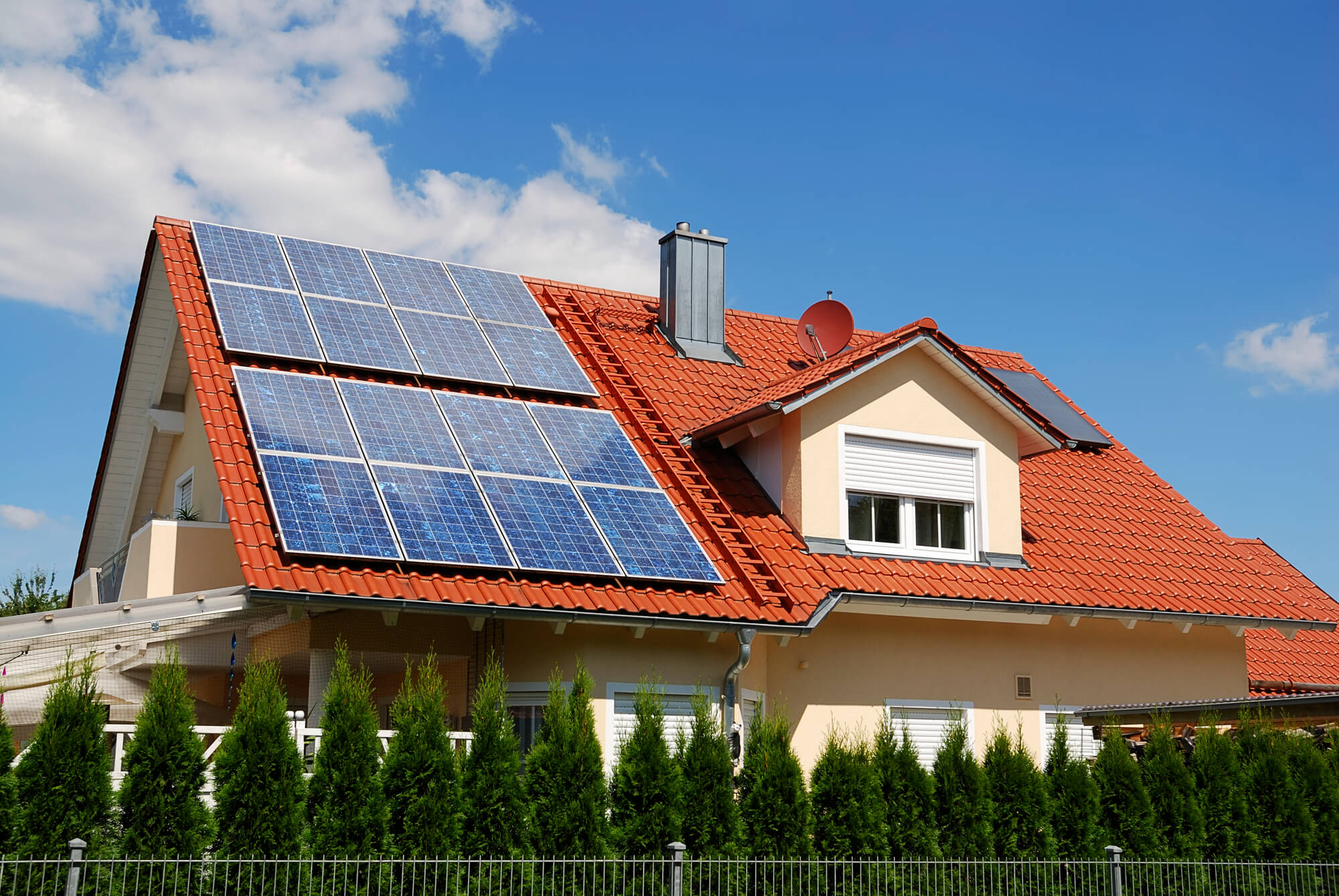
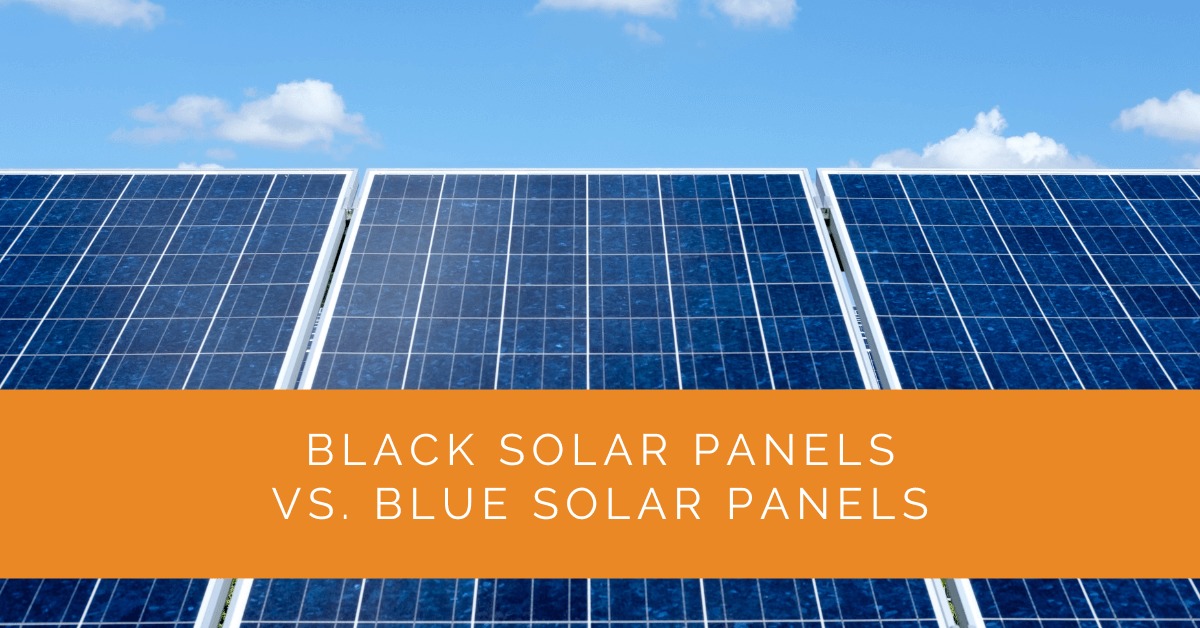
When people say “black solar panels,” they typically mean all-black monocrystalline panels — black cells, black frame, black backsheet. When they say “blue,” they mean polycrystalline panels with their distinctive blue-hued silicon cells. The color difference reflects a fundamental difference in how the silicon is processed and structured, which affects efficiency, cost, aesthetics, and availability. Here’s what you need to know — including the significant market reality that polycrystalline production has essentially stopped.
Contents
- 1 The Quick Comparison
- 2 Why Are Monocrystalline Panels Black?
- 3 Why Are Polycrystalline Panels Blue?
- 4 The Market Reality: Polycrystalline Is Effectively Over
- 5 Monocrystalline Technology Generations
- 6 All-Black vs. Standard Mono: Does It Affect Performance?
- 7 Which Should You Choose?
- 8 Frequently Asked Questions
- 9 Summing Up
The Quick Comparison
| Feature | Black (Monocrystalline) | Blue (Polycrystalline) |
|---|---|---|
| Silicon structure | Single crystal (uniform) | Multiple crystals (fragmented) |
| Cell color | Black / near-black | Blue (due to crystal grain boundaries) |
| Efficiency | 20–25%+ (standard); up to 26% (premium) | 18–21% |
| Cost per watt | $0.90–$1.20/W (installed) | Marginally lower historically; now similar |
| Current production status | Active — dominant market choice | Largely discontinued (major manufacturers stopped in 2023) |
| Temperature performance | Slightly better | Slightly worse |
| Aesthetics | Premium; all-black option available | Blue cells with silver frames — less sought-after |
| Panel size for same output | Smaller | Larger |
Why Are Monocrystalline Panels Black?
Monocrystalline silicon cells are grown from a single silicon crystal — the Czochralski process pulls a single crystal seed through molten silicon, creating a uniform cylindrical ingot. When cut into wafers and processed with anti-reflective coatings, the resulting cells appear very dark — nearly black — because the uniform crystal structure allows maximum light absorption with minimal reflectance.
Standard monocrystalline panels have black cells with silver or white frames and a white or clear backsheet. The all-black variant goes further: the frame is black anodized aluminum, the backsheet is black, and there are no visible silver bus bars on the cell surface (achieved through PERC or HJT cell designs where contacts are on the rear). All-black panels from manufacturers like SunPower, REC, and Q CELLS (their Q.PEAK DUO BLK series) are the premium aesthetic option.
Why Are Polycrystalline Panels Blue?
Polycrystalline (also called multicrystalline) silicon cells are made by pouring molten silicon into a mold and allowing it to cool into a block. During cooling, silicon crystals form in random orientations. The resulting wafer contains multiple crystals with visible grain boundaries between them. These grain boundaries and random crystal orientations scatter light at visible wavelengths, particularly in the blue range — which is why poly panels appear blue rather than black.
The blue color is characteristic but undesirable from an efficiency standpoint. The grain boundaries that create it also act as recombination sites for electrons, reducing efficiency compared to the perfectly uniform single-crystal structure of monocrystalline cells.
The Market Reality: Polycrystalline Is Effectively Over
This is the key fact that most articles on this topic miss or understate: major solar panel manufacturers stopped producing polycrystalline panels in 2022–2023. Jinko Solar, LONGi, JA Solar, and Canadian Solar — the four largest manufacturers in the world — have all shifted their entire production capacity to monocrystalline, specifically PERC, TOPCon, and HJT cell technologies.
The reason is economics. As silicon wafer costs fell, the cost advantage of poly panels (which was always about cheaper manufacturing, not better performance) disappeared. With mono panels now competing on price while delivering higher efficiency and better aesthetics, there was no remaining market rationale for poly. Some poly panels still exist in clearance stock and used/secondary markets, but they’re not being manufactured at scale by leading brands.
If a sales rep offers you polycrystalline panels in 2026, they’re either selling old inventory or an off-brand product. Modern residential and commercial solar is entirely monocrystalline.
Monocrystalline Technology Generations
Today’s monocrystalline panels aren’t all the same — they span several generations of cell technology with meaningfully different efficiency levels:
Standard PERC (Passivated Emitter and Rear Cell): Adds a passivation layer to the rear of the cell, reflecting unabsorbed light back through the cell for a second absorption chance. Efficiency: 20–22%. Now the baseline commodity mono technology. Very cost-competitive.
TOPCon (Tunnel Oxide Passivated Contact): Adds a thin tunnel oxide layer that reduces electron recombination. Efficiency: 22–24.5%. The current volume production technology at leading manufacturers. Jinko’s Tiger Neo and LONGi’s Hi-MO 7 are TOPCon products.
HJT (Heterojunction Technology): Combines crystalline silicon with amorphous silicon layers for very low recombination losses and excellent low-light and high-temperature performance. Efficiency: 22–25%+. REC Alpha series and Canadian Solar HiHero are HJT products.
IBC (Interdigitated Back Contact): All contacts on the rear of the cell — no bus bars on the front face — maximizes light absorption. Used in SunPower’s Maxeon cells. Highest efficiency available at the residential scale (up to 22.8% for Maxeon 6), premium price.
All-Black vs. Standard Mono: Does It Affect Performance?
All-black panels use a black backsheet instead of a white or clear one. The black backsheet absorbs more heat, which causes slightly higher operating temperatures compared to standard white-backsheet panels. Since higher temperature reduces solar cell efficiency (by approximately 0.35–0.5% per degree Celsius), all-black panels typically show 2–3% lower annual production compared to an otherwise identical standard panel.
Most people installing all-black panels are making a deliberate aesthetic trade — accepting the small efficiency reduction for the cleaner visual appearance. On a south-facing roof with good sun exposure, the difference in annual output between all-black and standard mono panels of the same wattage is small in absolute terms.
Which Should You Choose?
For most homeowners, the choice is straightforward: buy monocrystalline panels from a reputable tier-1 manufacturer (SunPower, REC, Q CELLS, Jinko, LONGi, Canadian Solar). The specific cell technology (PERC, TOPCon, HJT) matters less than manufacturer quality, warranty terms, and installer reputation.
Choose all-black panels if aesthetics are a priority — HOA requirements, historic district, architectural sensitivity, or simply personal preference. Expect a small efficiency premium (all-black panels from the same manufacturer cost slightly more than standard) and a small efficiency reduction (2–3% from the hotter backsheet).
Avoid polycrystalline panels for new installations. There’s no remaining performance or price justification for poly when modern mono panels are now price-competitive and deliver higher efficiency in a smaller footprint.
Frequently Asked Questions
Are black solar panels more expensive than blue?
Today, monocrystalline panels are price-competitive with or cheaper than polycrystalline on a per-watt basis for comparable quality levels, because poly manufacturing has been largely discontinued. All-black mono panels (with black frames and backsheets) do carry a small premium over standard white-backsheet mono panels — typically $0.05–$0.10 per watt — because of the additional manufacturing step and the smaller production volume for aesthetic-focused models.
Do black solar panels get hotter?
Yes, slightly. All-black panels with black backsheets absorb more heat than white-backsheet panels. Operating temperatures are typically 3–5 degrees C higher, resulting in approximately 1.5–2.5% lower output at peak midday temperatures. In practice, the difference in annual production is small — typically under 3% compared to an equivalent standard panel.
Can you still buy blue (polycrystalline) solar panels?
In limited quantities — some distributors still have old polycrystalline inventory, and a small number of off-brand manufacturers continue making poly panels for niche markets. However, no major tier-1 manufacturer (Jinko, LONGi, JA Solar, Canadian Solar, REC, Q CELLS) produces polycrystalline panels at scale anymore. For a new residential installation, you’ll almost certainly be quoted monocrystalline panels regardless of which reputable installer or brand you choose.
What is the most efficient solar panel available?
As of 2026, SunPower’s Maxeon 7 panels lead residential efficiency at up to 22.8% panel efficiency. REC Alpha Pure Black (HJT) and Q CELLS Q.PEAK DUO BLK series are close behind at 21–22%. For most homeowners, the efficiency advantage of premium panels versus standard TOPCon panels (22–24%) is worth calculating in terms of roof space — if you have limited roof area, higher efficiency panels produce more watts per square foot.
Summing Up
Black (monocrystalline) solar panels are the clear choice for new solar installations in 2026. They outperform blue (polycrystalline) panels on efficiency, aesthetics, and temperature performance — and are now price-competitive because major manufacturers have discontinued poly production. The relevant choice today is between standard mono panels (most cost-effective) and premium all-black or high-efficiency variants (for aesthetic requirements or constrained roof space). The blue-vs-black comparison is largely historical at this point — the market has definitively moved on.
For help choosing the right panels for your roof, climate, and budget, contact Solar Panels Network USA at (855) 427-0058. Our advisors can walk you through current panel options and match you with certified installers offering competitive quotes in your area.
Updated