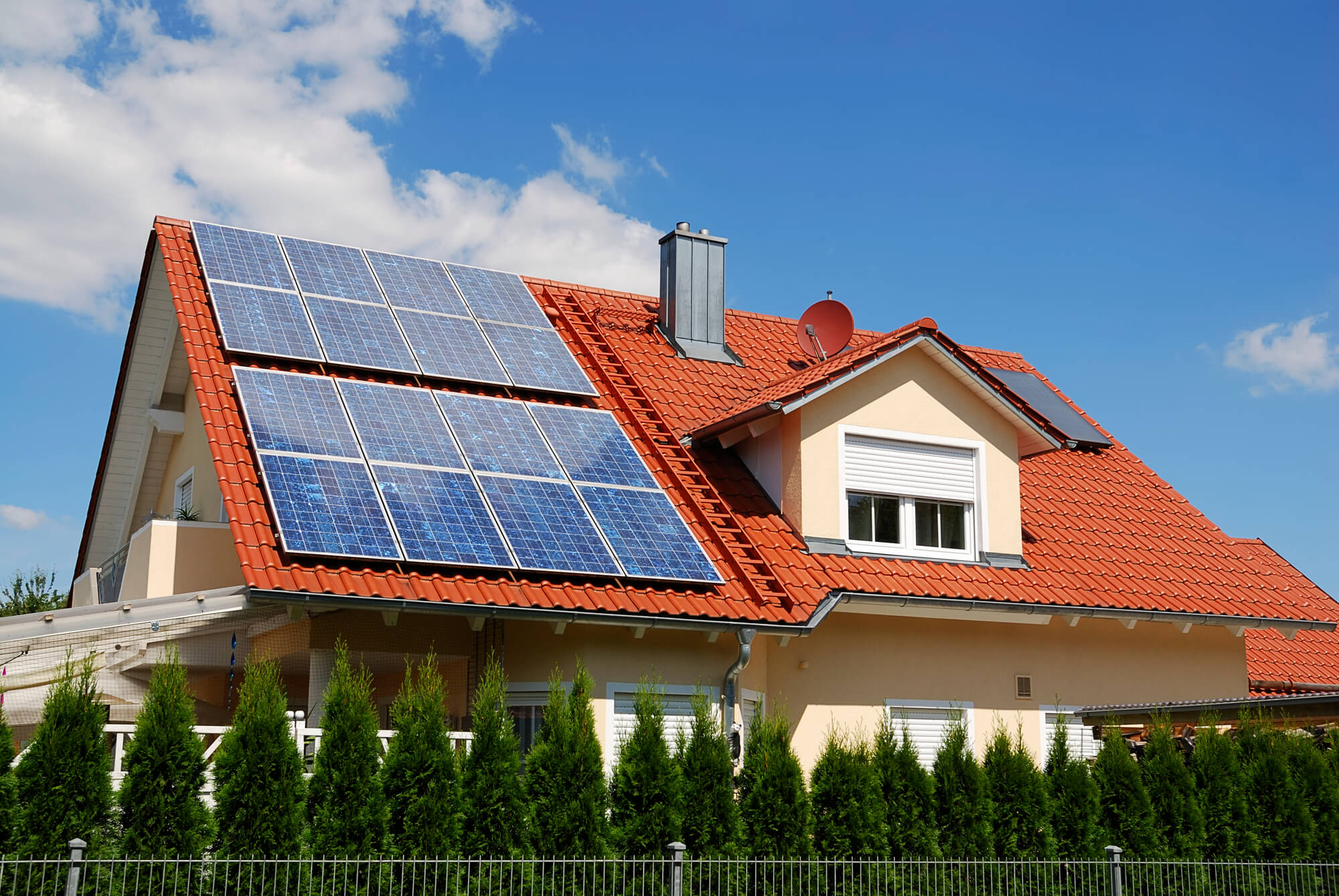
Commercial solar installations differ significantly from residential systems in scale, engineering requirements, financing mechanisms, and performance optimization. Businesses deploying solar face distinct technical and financial considerations that demand specialized expertise. Understanding commercial solar technology, system design, incentive structures, and ROI calculations is essential for facilities managers, business owners, and corporate sustainability teams considering large-scale renewable energy deployment.
From rooftop systems on shopping centers to sprawling ground-mounted arrays serving industrial facilities, commercial solar has become the most cost-effective energy solution for businesses across the United States. With system sizes ranging from 10 kW to multi-megawatt installations, and financing options including direct purchase, leasing, and power purchase agreements, commercial solar offers flexibility and scalability that drives the green energy transition in the business sector.
Contents
- 1 Differences Between Commercial and Residential Solar
- 2 Types of Commercial Solar Installations
- 3 Commercial Solar Equipment and Components
- 4 System Sizing and Design for Commercial Applications
- 5 Commercial Solar Economics and ROI
- 6 Financing Options for Commercial Solar
- 7 Commercial Solar Incentives and Tax Benefits
- 8 Commercial Solar Maintenance and Performance
- 9 Commercial Solar Grid Integration and Utility Coordination
- 10 Frequently Asked Questions
- 10.1 What is the average cost of commercial solar?
- 10.2 How long is the payback period for commercial solar?
- 10.3 What financing options are available for commercial solar?
- 10.4 Is commercial solar eligible for the 30% Investment Tax Credit?
- 10.5 How much maintenance do commercial solar systems require?
- 10.6 What are the tax benefits beyond the 30% ITC?
- 11 Summing Up
Differences Between Commercial and Residential Solar
Scale and Complexity: Commercial systems typically range from 10 kW to 1 MW or larger, compared to 5–10 kW residential systems. Larger systems require more sophisticated engineering, specialized equipment, complex electrical work, and often necessitate utility interconnection studies and dedicated energy management systems.

Structural Requirements: Commercial buildings often have complex roof structures, multiple mechanical systems, and equipment that must be carefully integrated with solar installations. Engineers must analyze roof loading, design optimal panel layouts accounting for HVAC units and roof penetrations, and ensure structural integrity for additional weight.
Electrical Infrastructure: Commercial systems require three-phase electrical service, larger capacity breakers, and sophisticated monitoring systems. Multi-inverter configurations with string inverters or central inverters distribute power across the building or export to the grid in more complex ways than simple residential setups.
Permitting and Interconnection: Large commercial systems require detailed engineering drawings, utility interconnection agreements, and fire protection system coordination. Approval timelines often extend to 3–6 months.
Performance Optimization: Commercial systems use real-time monitoring with sophisticated software platforms, enabling operators to optimize performance, identify faults, and track energy generation against baselines. This data-driven approach maximizes financial returns.
Types of Commercial Solar Installations
Rooftop Arrays: Most common for established businesses with suitable roofs. Rooftop systems preserve land, integrate with existing facilities, and offer excellent ROI. Average size: 20–100 kW. Typical costs: $2.50–$3.50 per watt installed (before incentives).
Ground-Mounted Systems: Used when roof space is insufficient or unsuitable. Ground-mounted arrays offer easier maintenance, better cooling, and flexibility in sizing. Common at industrial facilities, warehouses, and agricultural operations. Average size: 50 kW–500 kW.
Canopy Systems: Parking lot and carport canopies that generate electricity while providing shade and weather protection. Increasingly popular for retail, office, and manufacturing facilities. Dual-use design appeals to businesses seeking sustainability while improving customer amenities.
Solar Trackers: Single-axis or dual-axis tracking systems that follow the sun’s path, increasing annual output by 25–35% compared to fixed systems. Higher cost but justified by increased generation in large-scale deployments. Common at utility-scale and large commercial installations.
Building-Integrated PV (BIPV): Solar integrated into building materials—facades, skylights, windows—generating electricity while serving as functional building components. Emerging technology with premium costs but strong aesthetic appeal for modern commercial architecture.
Commercial Solar Equipment and Components
Solar Panels: Commercial systems use monocrystalline panels with 300–400 W nameplate capacity, higher efficiency (18–22%), and robust frames designed for large-scale deployment. Premium manufacturers include Siemens, Canadian Solar, JinkoSolar, and Trina, with product warranties typically 25 years.
Inverters: Central inverters (typically 50–500 kW capacity) serve large commercial systems, converting DC output from panel arrays to three-phase AC power. String inverters (10–20 kW each) are used in modular deployments. Top commercial-grade inverters from Schneider Electric, ABB, and Fronius offer 97–99% efficiency and 10–15 year warranties.
Monitoring and Control Systems: SCADA (Supervisory Control and Data Acquisition) systems monitor real-time performance, track inverter status, manage grid export, and provide alerts for faults. Cloud-based platforms enable remote monitoring and predictive maintenance. Integration with building management systems (BMS) enables optimization relative to consumption patterns.
Racking and Mounting: Structural aluminum racking systems engineered for 25+ year lifespan, designed to handle wind loads up to 140+ mph, snow loads, and thermal expansion. Galvanized steel or stainless steel connections prevent corrosion in coastal and harsh environments.
Electrical Hardware: Heavy-duty disconnects, breakers, surge protection, and monitoring equipment rated for commercial service. Arc flash study and electrical protection coordination ensure safety and code compliance.
System Sizing and Design for Commercial Applications
Commercial system sizing balances several objectives: generating maximum revenue, fitting within available space, matching consumption patterns, and managing utility demand charges.

Consumption-Based Sizing: Systems sized to offset 60–90% of annual consumption, accounting for seasonal variations and business operation patterns. A facility using 500,000 kWh annually might install a 100–150 kW system (20–30% offset), allowing predictable utility bill reductions while maintaining grid connection stability.
Roof-Limited Sizing: When roof space is constrained, systems use available area optimally. A 50,000 sq ft commercial roof might accommodate 150–200 kW of panels (assuming 6–8 W/sq ft panel density).
Export-Limited Sizing: Utilities typically allow export up to 120% of average consumption or specific export limits. Commercial systems must respect these caps to avoid oversizing and wasting potential generation.
Load Matching and Time-of-Use Optimization: Advanced system designs coordinate generation with consumption patterns. Manufacturing facilities shift energy-intensive processes to peak solar generation hours. Retail facilities benefit from daytime generation offsetting HVAC loads during business hours. Integration with battery storage enables load shifting, further increasing economic value.
Commercial Solar Economics and ROI
System Costs: Commercial solar costs $2.50–$3.50 per watt installed (2024 pricing), with larger systems enjoying economies of scale. A 100 kW commercial system costs roughly $250,000–$350,000 before incentives, or $175,000–$245,000 after the 30% federal Investment Tax Credit (ITC) valid through 2032.
Annual Savings: A 100 kW system in a medium solar resource area (15% capacity factor) generates 150,000 kWh annually. At average commercial electricity rates of $0.12–$0.15 per kWh, this generates $18,000–$22,500 in annual energy savings. This increases with solar-favorable rate structures like time-of-use billing, where daytime generation aligns with peak-rate periods.
Return on Investment: With $200,000 net cost (after 30% ITC) and $20,000 annual savings, payback occurs in 10 years. The system then generates 15+ years of nearly free electricity, achieving 15%+ IRR. System lifespan extends 25–30+ years with minimal maintenance.
Accelerated Depreciation: Commercial systems qualify for MACRS accelerated depreciation (5-year recovery period), generating substantial tax deductions beyond the 30% ITC. A $250,000 system generates approximately $50,000 in ITC plus $210,000 in depreciation deductions (assuming 5-year MACRS), resulting in $84,000 in total tax benefits (at 40% combined federal/state rate), reducing net cost to $116,000 and cutting payback to 5–6 years.
Demand Charge Reduction: Commercial electricity bills include demand charges ($/kW peak monthly demand) in addition to energy charges ($/kWh). Solar reduces peak demand by generating during high-demand afternoon hours, cutting demand charges by 10–30%. This additional benefit isn’t captured in basic energy savings calculations but significantly improves ROI.
Financing Options for Commercial Solar
Direct Ownership/Capital Purchase: Business pays full capital cost upfront, claims 30% ITC and accelerated depreciation, and receives all economic benefits. Best for well-capitalized businesses with tax appetite. Requires $50,000–$500,000+ capital depending on system size.
Solar Lease: Third party (solar company or investor) owns system, business pays fixed monthly lease payment (typically 20–30% below projected energy savings). Business receives net savings with zero upfront capital. Solar company captures ITC and depreciation. 15–20 year typical term. Popular when capital is better deployed elsewhere.
Power Purchase Agreement (PPA): Third party owns and operates system, business purchases generated electricity at fixed or escalating $/kWh rate (typically 10–20% below utility grid rate). Business receives immediate savings with zero upfront investment and zero operations responsibility. 20–25 year typical term. Simplest for businesses wanting solar benefits without infrastructure investment.
Property-Assessed Clean Energy (PACE) Financing: Specialized financing program using property tax assessments to secure solar loans. Enables 100% financing with property-level repayment (survives ownership transfer). Available in specific states and municipalities.
Unsecured Commercial Solar Loans: Banks and solar-specific lenders offer fixed-rate loans (7–10% interest) secured by equipment warranty or blanket personal guarantee. Enables capital purchase with 80–90% financing. Business owns system and receives all benefits.
Commercial Solar Incentives and Tax Benefits
Federal Investment Tax Credit (ITC): 30% of system cost through 2032 (declining 26% in 2033, 22% in 2034, zero after 2034). Available for both direct ownership and certain financing structures. Retroactively available for systems placed in service in prior years if not previously claimed.

Accelerated Depreciation (MACRS): Commercial systems placed in service after 2022 qualify for 5-year property class depreciation. Bonus depreciation (100% in 2023, declining thereafter) available for systems placed before end of 2026. Combined with ITC, these deductions generate 30–50% of system cost in tax benefits.
State and Local Incentives: Many states offer rebates, grants, or performance-based payments beyond federal ITC. Examples: California SOMAH rebate (small/medium businesses), Massachusetts SolarMass rebate, New York State rebate programs. Incentives range from $0.20–$1.50 per watt.
Utility Rebates and Incentive Programs: Some utilities offer direct rebates ($0.50–$2.00 per watt) or performance-based incentives ($/kWh generation bonus) for commercial solar. Programs vary by utility and region.
Net Metering Credits: Most states allow exported solar electricity to earn credit at retail rate or reduced avoided-cost rate against future consumption. This varies significantly by state and utility, ranging from 100% retail credit to 40–60% avoided cost.
Commercial Solar Maintenance and Performance
Routine Maintenance: Minimal—mostly panel cleaning (1–2 times annually in clean environments, more in dusty areas) and annual inverter inspection. Expected annual maintenance cost: $0.50–$1.50 per kW ($50–$150 for 100 kW system).
Performance Monitoring: Real-time monitoring identifies soiling (dust, pollen, bird droppings) reducing output by 2–5% annually. Automated alerts identify inverter faults, string failures, or grid interconnection issues enabling rapid response. Expected annual losses to soiling and downtime: 2–5% of potential generation.
Warranty and Service: Panel warranties cover 80% of rated power at 25 years (typical degradation: 0.5% annually). Inverter warranties: 10–15 years with extended service plans available. Racking and electrical components carry 25+ year warranties. System performance guarantees ensure generation remains within specified range.
Commercial Solar Grid Integration and Utility Coordination
Interconnection Process: Utilities require feasibility studies, interconnection agreements, and protective relay coordination for export capacity >10 kW. Large systems (>100 kW) may require dedicated substation upgrades, adding cost and timeline. Typical interconnection timeline: 4–12 weeks for routine cases, longer for complex systems.
Net Metering and Export Policy: NEM structures vary widely. Most states offer NEM 2.0 (retail-rate credits). California, other areas transitioning to NEM 3.0 (avoided-cost rate credits of 40–60% retail rate) reduce incentive for oversizing. Battery storage becomes economically important under unfavorable export pricing.
Demand Response and Grid Services: Large commercial systems increasingly participate in demand response programs, providing grid services (frequency regulation, reactive power support) for modest additional revenue. Battery-integrated systems offer even greater grid value, enabling load shifting and backup power during outages.
Frequently Asked Questions
What is the average cost of commercial solar?
Commercial solar costs $2.50–$3.50 per watt installed (2024 pricing), with economies of scale favoring larger systems. A 100 kW system costs roughly $250,000–$350,000 before incentives, or $175,000–$245,000 after the 30% federal ITC.
How long is the payback period for commercial solar?
With energy savings, demand charge reduction, and the 30% ITC, commercial solar typically achieves 5–10 year payback, with 15%+ internal rate of return (IRR). Accelerated depreciation benefits improve payback to 5–6 years for well-capitalized businesses.
What financing options are available for commercial solar?
Options include direct ownership (capital purchase), solar leases, power purchase agreements (PPAs), PACE financing, and commercial solar loans. PPAs and leases offer zero upfront cost; capital purchase maximizes long-term financial benefits.
Is commercial solar eligible for the 30% Investment Tax Credit?
Yes, commercial solar systems qualify for the 30% federal ITC through 2032 (declining 26% in 2033, 22% in 2034). This applies to direct ownership; some financing structures (leases, PPAs) may allocate ITC differently.
How much maintenance do commercial solar systems require?
Minimal—annual panel cleaning, inverter inspection, and monitoring. Expected maintenance: $0.50–$1.50 per kW annually. Most costs are monitoring and preventive service rather than repairs.
What are the tax benefits beyond the 30% ITC?
Commercial systems qualify for accelerated MACRS depreciation (5-year recovery), generating deductions worth 10–20% of system cost. Combined with ITC, total tax benefits typically reach 40–50% of installed cost.
Summing Up
Commercial solar has become the most economically attractive renewable energy investment for businesses, offering rapid payback (5–10 years), 25+ years of clean generation, and substantial tax benefits through the 30% federal Investment Tax Credit and accelerated depreciation. Whether through direct ownership, leasing, or power purchase agreements, commercial solar fits diverse business financial structures and risk tolerances.
Beyond energy savings, commercial solar delivers demand charge reduction, corporate sustainability credentials, asset value enhancement, and workforce engagement benefits. Modern monitoring systems ensure optimal performance, while simplified financing options eliminate capital barriers for businesses of all sizes.
Ready to explore commercial solar for your facility? Call (855) 427-0058 to speak with a commercial solar specialist about your business’s energy profile and economic potential, or get a free quote to see how solar can reduce operating costs while advancing your sustainability goals.
Updated