
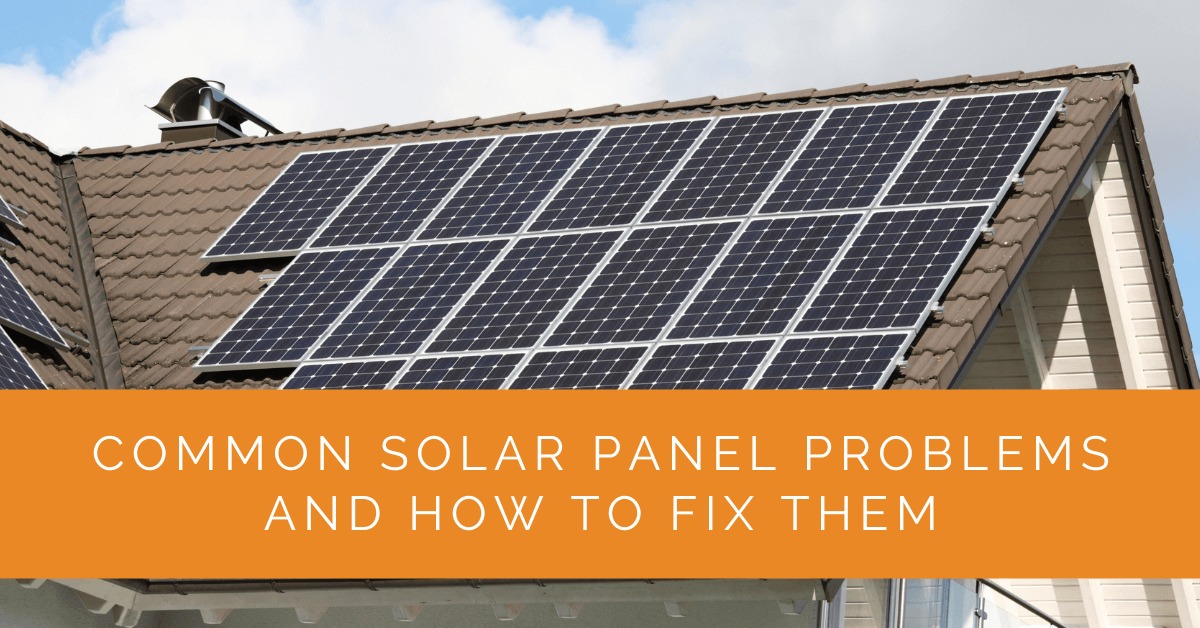
Solar panels are among the most reliable electrical systems a home can install — but they’re not problem-free. Inverter faults, shading-induced underperformance, soiling, wiring issues, and battery problems account for the vast majority of solar system issues, and most of them are diagnosable from monitoring data and a visual inspection without professional tools. Knowing what the common problems are and how to identify them saves time and money.
This guide covers the most common solar panel and system problems, their symptoms, likely causes, and whether the fix is DIY, a warranty claim, or a call to your installer.
1. Inverter Faults and Error Codes
The inverter is the most failure-prone component in a solar system, and inverter faults are the most common cause of complete system downtime. Most modern inverters display fault codes on their screen or in the monitoring app.
Common inverter fault codes and their causes:
Grid fault / utility voltage out of range: The inverter detected a grid voltage or frequency outside acceptable limits and disconnected for safety (anti-islanding protection). Usually self-clears when grid conditions normalize. If frequent, contact your utility — it may indicate a neighborhood grid quality issue.
Ground fault / GFDI fault: Current detected flowing on the grounding conductor, indicating a fault between the PV circuit and ground. This is a serious fault that requires professional diagnosis. Do not reset a persistent GFDI fault without identifying and correcting the cause — it can indicate a fire hazard.
DC overvoltage: String voltage exceeded the inverter’s Vmax. Can occur on very cold mornings when panel Voc rises due to temperature coefficient. A single occurrence during unusual cold snap is typically benign; recurring overvoltage may indicate a string design error that should be corrected.
Isolation fault: Insulation resistance between PV array and ground below acceptable threshold. Indicates degraded wiring insulation, water infiltration into a junction box, or damaged cable jacket. Requires professional inspection to locate the fault.
No grid / communication error: Inverter cannot synchronize with grid frequency. Check that the AC disconnect and main breaker to the inverter are on. May indicate a utility outage or blown fuse at the AC disconnect.
For most self-clearing faults: the inverter resets automatically when conditions return to normal. If a fault persists for more than 24–48 hours, contact your installer or the inverter manufacturer’s support line.
2. Underperforming Panels or Strings
A system producing 15–30% less than expected on sunny days — when shading, weather, and season are accounted for — has one or more underperforming panels or strings. The most common causes:
Soiling: Bird droppings, pollen, dust, or leaves concentrated on one or a few panels create partial shading that in a series string reduces the entire string’s output. Identify by visual inspection. Fix: clean the affected panels.
Shading from new obstructions: A tree that has grown, a newly installed satellite dish, a neighbor’s building addition, or seasonal changes (a deciduous tree that had no leaves at installation now shades panels in summer). Identify by observing when underperformance occurs — if it’s afternoon-only, shading from a western obstruction is likely. Fix: trim trees or reconfigure affected panels.
Panel hot spots from cell cracks: Microcracks caused by shipping, installation handling, hail, or thermal cycling create high-resistance cell areas that heat up and underperform. Not visible without infrared thermography or electroluminescence imaging. Fix: professional inspection; warranty claim if within product warranty period (typically 10–12 years).
Bypass diode failure: A failed bypass diode (short circuit failure mode) permanently routes current around one-third of the panel, reducing that panel’s output by 33%. A failed diode (open circuit) removes the bypass protection, potentially causing hot spot damage. Detectable with I-V curve tracing. Fix: panel replacement; warranty claim.
Disconnected or high-resistance MC4 connector: MC4 connectors that are not fully seated, corroded, or water-infiltrated create resistance that reduces string current. Often intermittent — disconnects in the rain, reconnects when dry. Identify by looking for production drops specifically during rain or humid weather. Fix: inspect and replace affected MC4 connectors.
3. Physical Panel Damage
Hail damage: Small hail (<1") rarely breaks standard tempered glass (panels are IEC 61215 certified to withstand 25mm hail at 23 m/s). Large hail can crack glass, compromising moisture ingress protection and accelerating degradation. Check panels visually after hail events. Cracked-glass panels should be removed and replaced — they are a long-term fire and shock risk. Hail damage is typically covered under homeowner's insurance.
Snail trails: Brown oxidation lines running across the cell surface, typically following cell cracks. A cosmetic indicator of microcracks below — silver paste at the crack edges oxidizes and migrates to form the visible trail. Not immediately performance-limiting, but associated with elevated hot spot risk and accelerated degradation. Usually develops within 1–3 years of installation from cracks introduced during manufacturing or shipping. May be covered under product warranty as a manufacturing defect.
Delamination: Separation of the EVA encapsulant from the glass or backsheet, visible as white or yellow patches where the encapsulant has detached. Typically caused by manufacturing defects in the lamination process, though UV exposure and thermal cycling accelerate delamination in affected panels. Delamination allows moisture ingress, leading to corrosion of busbars and cell metallization. Replace affected panels.
Discoloration / EVA browning: Yellow or brown discoloration of the encapsulant behind the glass, primarily in older panels (2000–2015 vintage). Caused by UV degradation of the ethylene vinyl acetate (EVA) encapsulant. Reduces light transmission to cells, reducing output by 2–8% depending on severity. Modern panels use UV-stabilized EVA or POE encapsulants that resist browning significantly better.
4. Roof Leak at Standoff Penetrations
Solar-related roof leaks are typically caused by improperly installed standoff mounts — specifically, standoffs without adequate flashing or sealant at the roof penetration. The symptoms: water staining on the ceiling or attic directly below a standoff location, visible water around a roof standoff after rain.
Diagnosis: In the attic after a rain event, look for water tracking from above. The leak path is often not directly below the standoff — water enters at the standoff and travels along rafter or sheathing before dripping visibly.
Fix: requires a roofer or solar installer to slide new flashing under the affected shingles and re-seal the standoff penetration. If the standoff itself is improperly positioned (not over a rafter, or with insufficient lag bolt embedment), the standoff must be relocated — which requires removing and reinstalling the affected rail section and panels above it.
Prevention: ensure your installer uses a proper “flash and seal” method with flashing slid under uphill shingles, not just sealant applied over the standoff base. Ask to see the standoff installation before railing goes in.
5. Production Drops in Winter
Reduced winter production is normal and expected, but some homeowners are alarmed by it. Understanding the difference between normal seasonal variation and a problem:
Normal winter production reduction: In the continental US, a south-facing 7 kW system might produce 700–900 kWh/month in summer and 300–450 kWh/month in December-January — a 50–60% reduction. This is entirely normal due to shorter days, lower sun angle, and cloudy weather. PVWatts provides monthly expected production estimates for any location.
Abnormal winter production reduction: Production significantly below PVWatts estimates for the month (adjusted for actual weather). Or production that recovers fully in spring without any maintenance — which suggests a persistent winter-specific issue like snow accumulation covering panels, tree shading that’s only significant when the low winter sun drops below tree line.
Snow on panels reduces production to near zero until the snow slides off or is removed. On steep-tilt roofs, snow typically sheds within hours to a few days. On low-tilt roofs in heavy snow climates, snow may persist for a week or more. A soft roof rake can safely remove most snow from accessible panels — never use metal tools on panel glass.
6. Battery System Issues
Battery not charging or discharging: Check the battery management app for fault codes. Common causes: temperature outside operating range (most residential LFP batteries require 0–50°C ambient — cold garages in winter may trigger low-temperature protection); cell imbalance detected by BMS (often self-resolves after a few charge-discharge cycles); communication fault between battery and hybrid inverter (may require system reboot).
Battery not holding charge between days: Self-discharge in LFP batteries is very low — less than 2–3% per month at room temperature. If the battery appears to drain significantly without loads, the system is likely discharging through loads you’re not aware of (a whole-home backup mode drawing small standby loads overnight). Review the battery’s load profile in the monitoring app.
Reduced battery capacity over time: Normal LFP degradation is approximately 0.5–1% of capacity per year, or 2.5–5% total over the first 5 years. Significant capacity loss (over 20%) within the warranty period (typically 10 years at 70–80% of rated capacity) should trigger a warranty claim with the manufacturer.
When to Call a Professional
DIY diagnosis is appropriate for: reading monitoring data, cleaning panels, resetting tripped breakers, removing snow, and identifying obvious soiling or shading causes. Call your installer or a licensed solar O&M provider for: any GFDI or isolation fault that doesn’t self-clear; persistent inverter faults with error codes you can’t identify; any visible wiring damage, burned components, or burning smell near the inverter or array; suspected roof leaks at standoff locations; and panel physical damage from hail, storm, or fire.
Frequently Asked Questions
Why is my solar system not producing power?
The most common reasons a solar system produces no power: inverter is in fault or standby mode (check the display or app); the AC disconnect switch has tripped or been manually turned off; the utility has had an outage (grid-tied systems cannot operate without grid reference); it is nighttime or heavily overcast. Check the inverter display first — fault code or status indicator will usually identify the cause within the inverter’s control range.
Why is my solar production lower than expected?
Production below expected levels (use PVWatts for expected monthly estimates) is most often caused by soiling, shading from new obstructions, or inverter operating sub-optimally. For panel-level monitoring systems (SolarEdge, Enphase), check which specific panels or microinverters are underperforming. A single panel consistently producing 15%+ less than its neighbors needs investigation — infrared inspection, cleaning, or warrany claim depending on the cause.
Do solar panels degrade over time?
Yes, at a predictable and warrantied rate. Modern TOPCon and HJT monocrystalline panels degrade at 0.3–0.5% per year. At 25 years, a panel rated at 400W at installation produces approximately 345–370W — 85–92% of rated output, which is within manufacturer warranty (typically 80–87% at year 25). Polycrystalline panels and early monocrystalline panels degraded faster (0.7–1.0%/year), but these panels are legacy equipment.
Can birds cause problems with solar panels?
Yes, in two ways. Bird droppings on panels cause partial shading that can reduce string output by 15–40% depending on placement and system type. Bird nesting under panels (particularly between the panel frame and the roof) causes structural issues, fire risk from nesting material near wiring, and damage to cable jacketing from pecking. Anti-bird mesh (critter guard) around the array perimeter is the standard prevention for nesting. Regular panel cleaning addresses droppings.
What should I do if my inverter keeps tripping?
Note the specific fault code when the inverter trips. Self-clearing faults (grid voltage transients, momentary grid disconnects) are normal and typically occur a few times per year. Recurring GFDI faults, recurring overvoltage, or any fault that doesn’t self-clear within 24 hours warrants a call to your installer or the inverter manufacturer’s support line. Most inverter manufacturers offer 24/7 technical support and can often diagnose the fault remotely through the monitoring system.
Summing Up
The most common solar panel problems are inverter faults, soiling-induced underperformance, shading from new obstructions, panel hot spots, and improper standoff flashing causing roof leaks. Most can be identified through monitoring app data and a visual inspection. Persistent inverter faults, physical panel damage, and electrical issues like isolation faults or GFDI trips require professional diagnosis and repair. Annual visual inspection and monitoring review catch the majority of issues before they cause significant production losses.
If your solar system is underperforming and you need professional diagnosis or repair — or you’re considering a new installation — call (855) 427-0058 for a free consultation. Local solar professionals can assess your system and provide repair or replacement estimates at no cost.
Updated