
Our blog is reader-supported. When you buy through links on our site, we may earn an affiliate commission. Thank you for your support!
The Voltaic Systems OffGrid Solar Backpack stands out as the best overall choice for anyone who needs serious portable power while on the move. With a 10W solar panel and 12,800 mAh battery already integrated, this pack delivers the fastest charging and the most versatility for serious adventurers and professionals alike.
But “best” depends on what you’re doing. Need something lighter for day hikes? Want a massive capacity for longer trips? Looking to save money without sacrificing too much power? We’ve tested and researched 8 solar backpacks that cover every use case and budget. Below, you’ll find our top picks in a comparison table, followed by in-depth reviews of each model to help you choose the right one.
Our Top Picks
Image | Name | |
|---|---|---|
| Voltaic Systems Array Rapid Solar Backpack
| |
| Eceen Solar Backpack
| |
| Haweel Flexible Solar Panel Backpack
| |
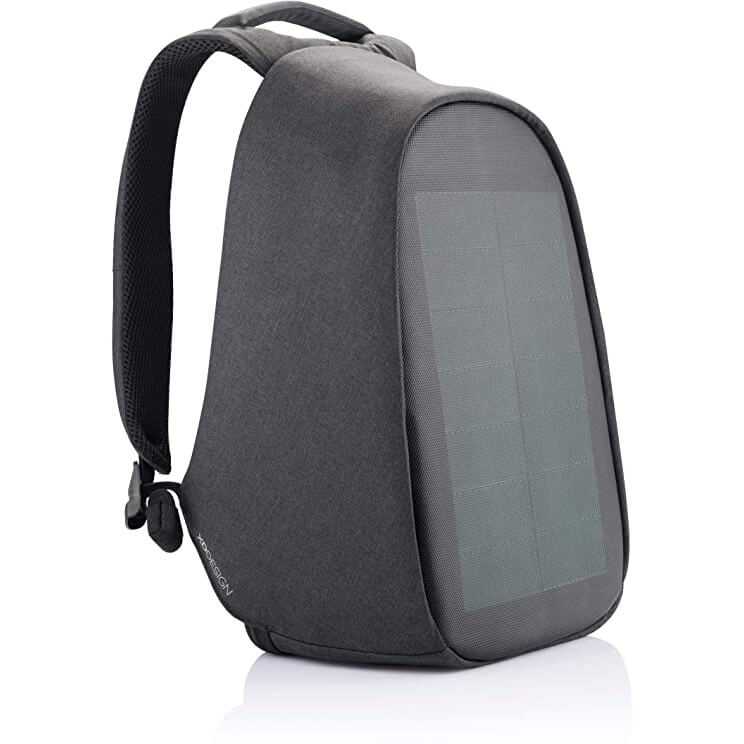
| XD Design Bobby Tech Anti-Theft Solar Backpack
| |
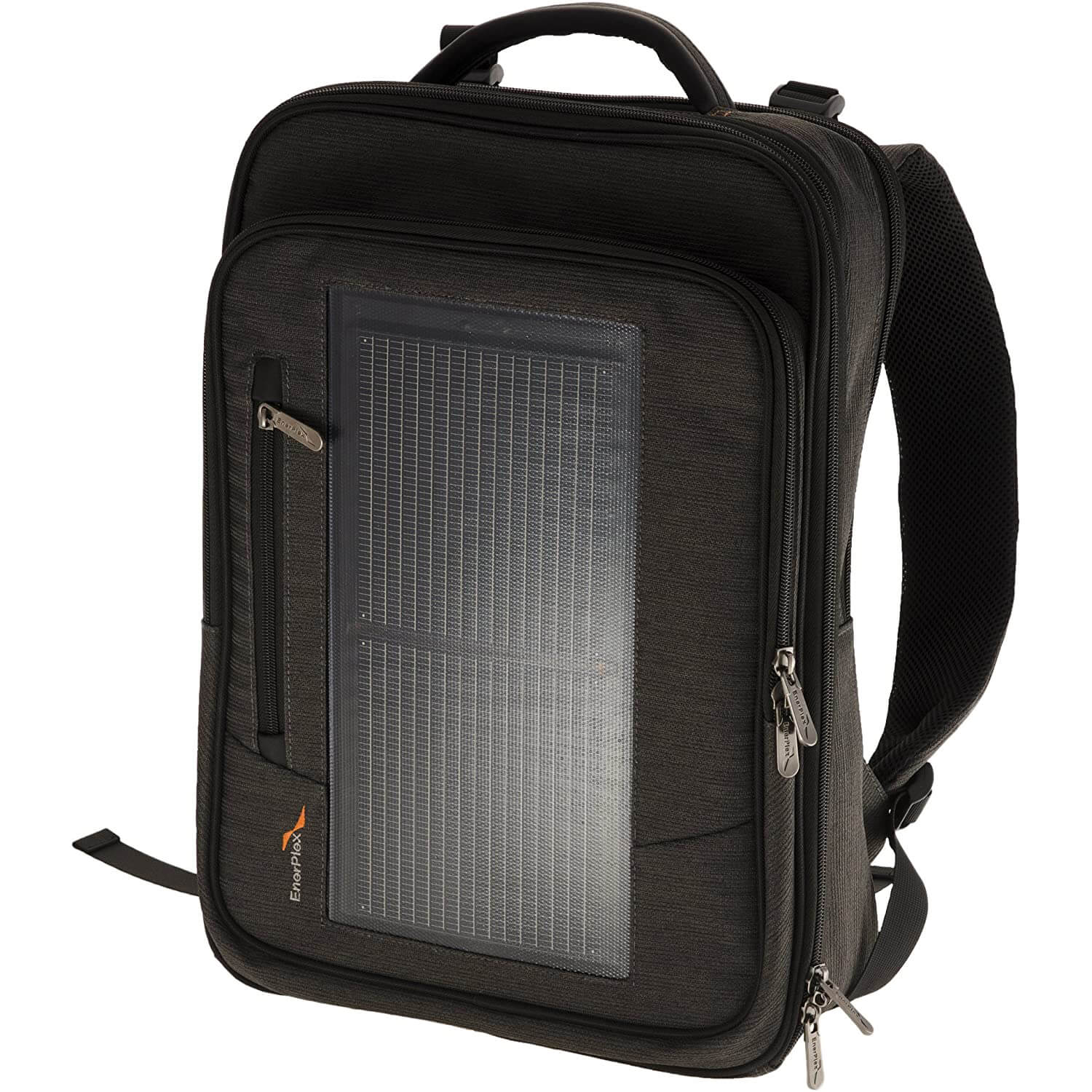
| EnerPlex Packr Executive Solar Powered Backpack
| |
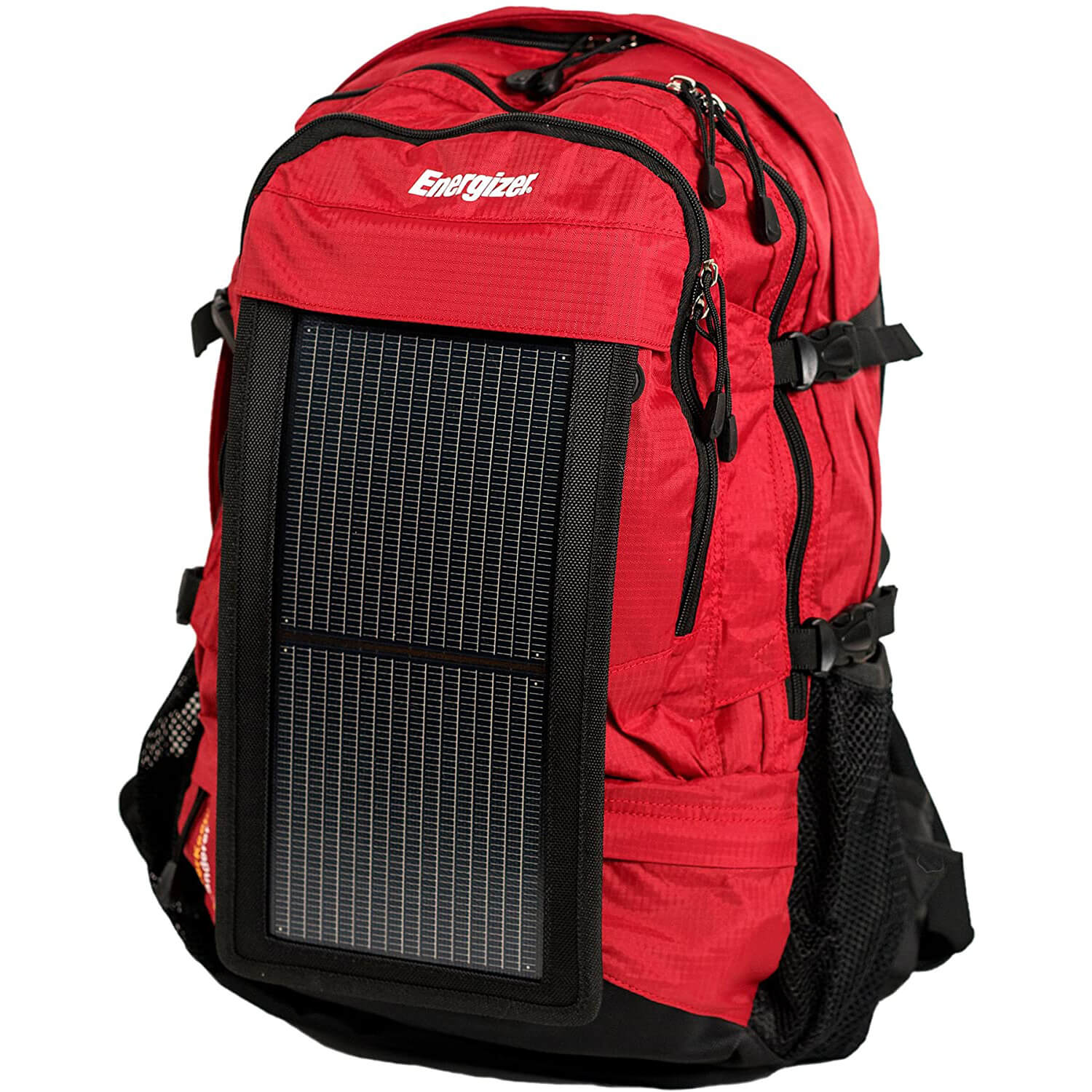
| PowerKeep Energizer Wanderer Solar Backpack
| |
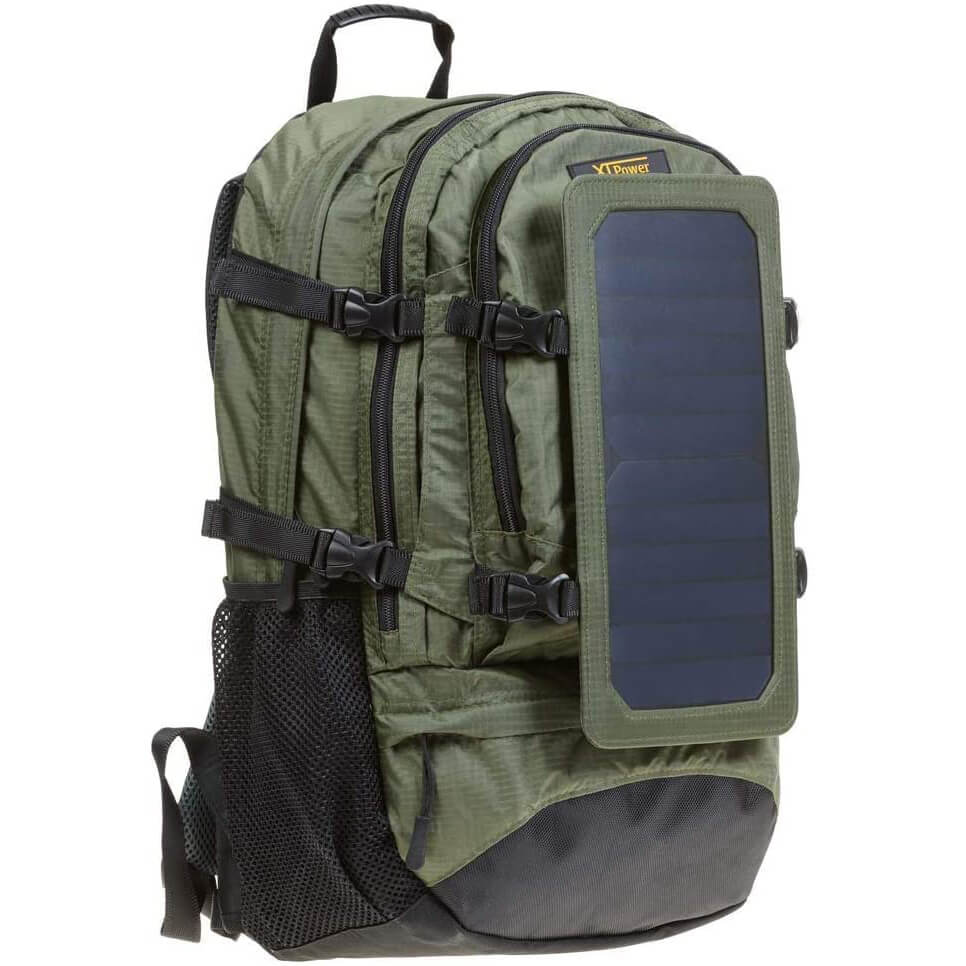
| XTPower Hiking Solar Backpack
| |
| Sunnybag EXPLORER Solar Backpack
| |
| LifePod Solar Backpack
| |
| Eceen External Frame Hiking Solar Backpack
|
8 Best Solar Backpacks
1. Voltaic Systems OffGrid Solar Backpack
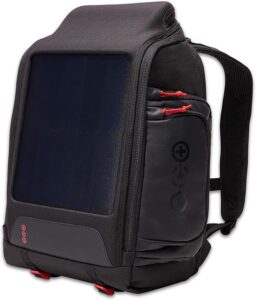
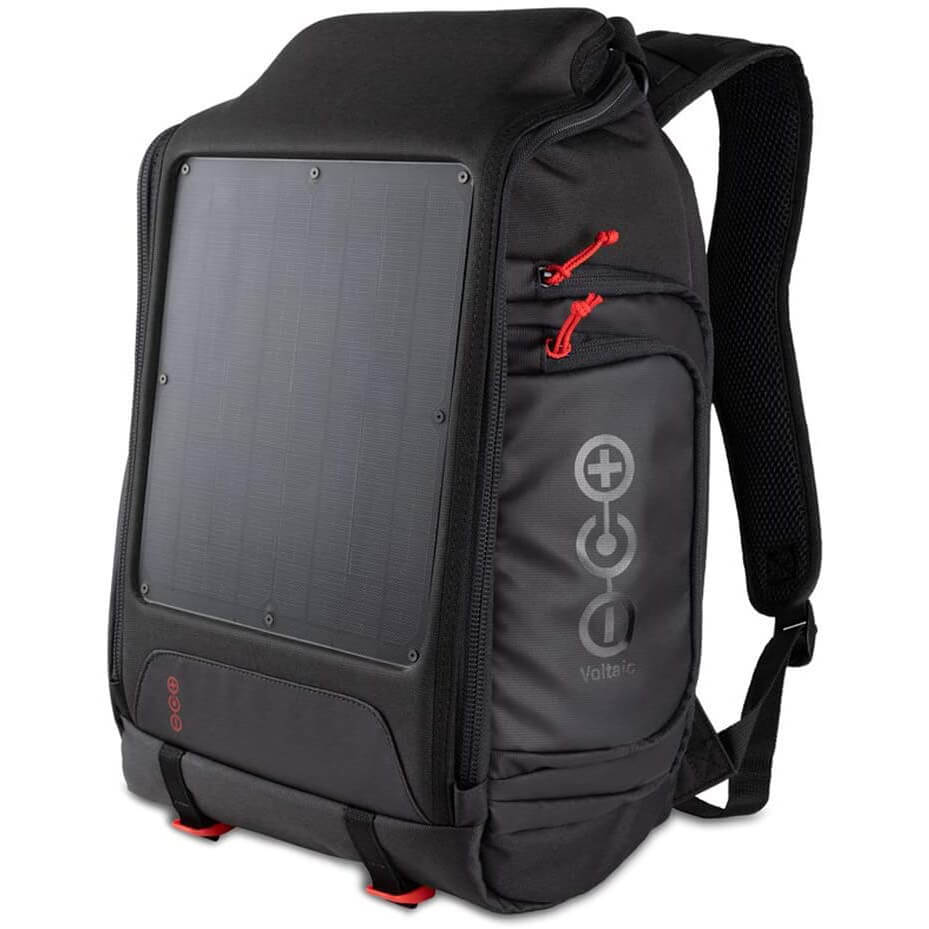
The Voltaic Systems OffGrid is the powerhouse of solar backpacks. If you’re someone who spends extended time away from outlets and you need your devices to actually stay charged, this is the pack to get. The 10W SunPower panel is the strongest on this entire list, and the included V50 dual USB battery pack with 12,800 mAh capacity stores energy for evening use when the sun goes down.
The padded 15-inch laptop sleeve means you can carry your computer safely, making this ideal for digital nomads, remote workers heading into the wilderness, or anyone who can’t afford downtime. The recycled PET fabric construction shows the manufacturer thinks about environmental impact without compromising durability. You’re getting premium components here, and it shows in the build quality.
Setup is straightforward. The panel angles toward the sun, the two USB outputs come from the integrated battery pack, and everything feels solid in your hands. After a full day in sunlight, you’ll have enough stored energy to charge a phone overnight or give your laptop a meaningful boost. That’s a capability most other solar backpacks simply can’t match.
The trade-off is price and weight. At $149-$179, this is the priciest option on our list. And because it includes that hefty battery pack, it’s bulkier than lightweight panel-only models. If budget is tight or you travel super light, look elsewhere. But if you want power and reliability, this is it.
Features
- 10W SunPower solar panel
- 12,800 mAh dual USB battery pack included
- 2 USB outputs built into battery
- 25-liter backpack capacity
- Padded 15-inch laptop/tablet sleeve
- Recycled PET fabric (eco-friendly)
- Water-resistant construction
- Most powerful panel (10W) charges fastest
- High-capacity battery stores energy for nighttime
- Two USB ports allow simultaneous charging
- Professional laptop sleeve fits 15-inch devices
- Highest price point on the list
- Heavier due to integrated battery pack
- Requires initial battery charge before use
- Limited color options (primarily black)
2. Outdoor Tech Mountaineer Solar Backpack
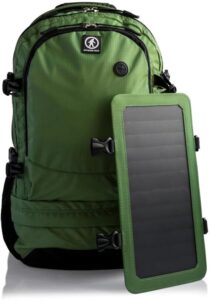
The Mountaineer is built for serious outdoor people. You get a massive 40-liter capacity perfect for multi-day camping trips or extended hiking adventures. The 6.5W flexible, detachable panel is smart engineering. Pop it off and aim it at the sun for optimal charging, or keep it attached while you hike and it will slowly trickle charge as you move through the day.
At just 3 pounds (1.4 kg), this backpack won’t weigh you down compared to its huge capacity. The ventilated back panel and padded straps mean you can wear it all day without shoulder soreness. Build quality feels rugged and durable. This is a pack designed for outdoors people who understand that capacity matters more than individual features.
The single USB port outputs 5V, enough to charge phones and smaller devices at a steady pace. However, this pack doesn’t include a battery, so anything you charge happens in real time from the panel. Cloudy days or nighttime charging aren’t realistic with just the panel alone. You’d need to pair this with a portable battery or power bank if you want reliable charging after sunset.
The 6.5W wattage is moderate. It’s not the fastest charger, but it’s respectable for its price point and category. If you’re primarily using it to top off a phone during outdoor activities rather than expecting to fully charge a laptop, you’ll be satisfied.
Features
- 6.5W flexible detachable solar panel
- 40-liter capacity (largest non-battery model)
- 1 USB output (5V)
- Lightweight at 3 pounds (1.4 kg)
- Ventilated back panel with padded straps
- Water-resistant nylon material
- Dimensions: 20″ H x 13.7″ W x 8.6″ D
- Massive 40L capacity for extended trips
- Detachable panel can be repositioned for sun
- Lightweight despite large capacity
- Comfortable all-day wear with good padding
- 6.5W is lower wattage output
- No built-in battery for nighttime use
- Single USB port limits simultaneous charging
- Stitching shows wear with heavy use
3. Sunnybag Iconic Solar Backpack
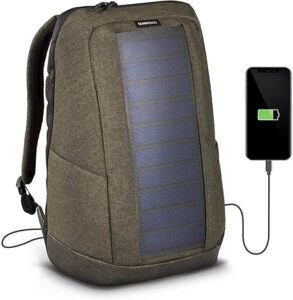
Austrian engineering meets sustainability in the Sunnybag Iconic. This pack is for the environmentally conscious professional who doesn’t want to compromise on quality or performance. The 7W SunPower panel achieves 22.4% efficiency, the highest conversion rate among all solar backpacks we reviewed.
Each panel comes with an Austrian certification and includes a certificate of authenticity. That’s not marketing fluff. It means Sunnybag actually tests every single panel rather than hoping they work. The combination of premium Cordura fabric and 50% recycled PET bottles in the outer layer shows thoughtful design from a company that understands its audience.
The 17-inch laptop compartment fits larger MacBooks and professional laptops, making this ideal for consultants, designers, and digital workers who spend time outdoors. The wireless charging compatibility is interesting, though it requires purchasing Sunnybag’s optional Powerpack to unlock that feature. The water-repellent rainproof zippers mean you’re not worried about sudden storms.
This is a premium pack priced accordingly at $99-$129. You’re paying for quality materials, tested components, and environmental consciousness. The 20-liter capacity is more modest than some competitors, making it better suited for day trips and commuting rather than week-long expeditions. If you value craftsmanship and efficiency, this one delivers.
Features
- 7W SUNPOWER panel with 22.4% efficiency (industry-leading)
- Austrian-certified and tested panels
- 17-inch laptop compartment
- Wireless charging compatible (with optional Powerpack)
- 20-liter capacity
- Cordura fabric with 50% recycled PET
- Rainproof zippers and water-repellent design
- Highest solar efficiency (22.4%)
- Every panel individually certified
- Eco-friendly materials throughout
- Premium build quality and durability
- Higher price for the wattage
- 20L capacity is modest for trips
- Wireless charging needs extra purchase
- Heavier construction than budget models
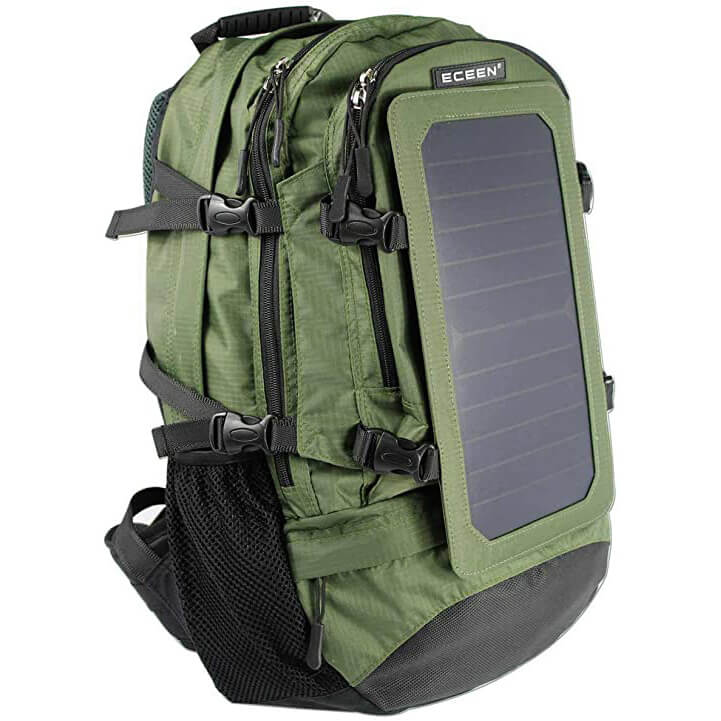
4. ECEEN 50L Solar Backpack
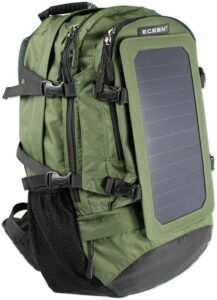
Want the biggest backpack at the lowest price. The ECEEN delivers massive 50-liter capacity for just $45-$65. If you’re planning a week-long backpacking trip or photography expedition where you need to carry tons of gear, this pack gives you the space without the premium price tag. You’re getting the most room of any solar backpack we reviewed.
What’s surprising is how light it is. At only 1.9 pounds (0.86 kg), this is the lightest pack on our entire list despite being the largest. The glued nylon honeycomb fabric with ripstop construction feels durable and purposeful. The well-structured compartments keep camera gear, tech, and clothing organized without getting jumbled around.
The 7W panel outputs at 22% transfer efficiency, which is solid even if not the absolute best. The single USB port is functional. However, reviewers note that the USB port placement on the panel is awkward, making it frustrating to plug devices in while the pack is on your back. You might find yourself taking off the pack just to charge something, which defeats part of the purpose.
Like most budget solar backpacks, there’s no integrated battery. You’ll need to pair this with an external power bank if you want overnight charging capability. But for the price, you’re getting remarkable value. This works best for outdoor enthusiasts who can accept some compromises in exchange for capacity and affordability.
Features
- 7W solar panel with 22% efficiency
- 50-liter capacity (largest)
- 1 USB output (5V)
- Lightweight at 1.9 pounds (0.86 kg)
- Glued nylon honeycomb with ripstop fabric
- Weather-resistant PVC coating
- Organized compartments for gear
- Largest capacity at lowest price
- Lightest pack despite huge storage
- Well-organized compartments
- Most affordable entry point
- USB port placement is awkward
- No built-in battery for night use
- Lower efficiency rating than premium models
- User manual quality inconsistent
5. Yoidesu 14W Solar Backpack
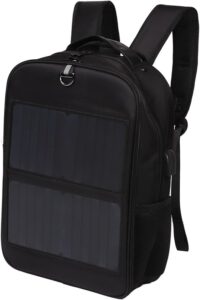
This is pure power in an affordable package. The Yoidesu packs a 14W panel, which is the highest wattage output among budget-friendly options. The third-generation SunPower technology achieves 23-25% efficiency, matching premium models at half the price. You get dual USB outputs, meaning you can charge two devices simultaneously without waiting your turn.
The PVC-coated fabric with waterproof zippers and a rain cover at the charging port means this pack can handle serious downpours. The 9-point smart circuit protection includes overcharge, over-voltage, and temperature control. That’s comprehensive protection for your devices. The S-shaped back pad reduces shoulder strain during extended wear, and the 25-30 liter capacity handles multi-day trips reasonably well.
The waterproofing adds noticeable weight and the PVC coating feels less breathable than fabric alternatives. Some users report it feels plasticky rather than premium. And like most solar backpacks in this range, there’s no battery included, so you’re charging directly from the panel during the day.
But if you need maximum charging power at a budget price, the Yoidesu is hard to beat. It’s particularly popular among festival-goers, cyclists, and outdoor enthusiasts in wet climates who want to charge multiple devices without worrying about water damage.
Features
- 14W panel with 23-25% efficiency (third-generation)
- 2 USB outputs for dual charging
- 25-30 liter capacity
- Full waterproof PVC coating
- Waterproof zippers and rain cover
- 9-point smart circuit protection
- S-shaped ergonomic back pad
- Highest wattage at affordable price
- Dual USB ports for two devices
- Full waterproof design
- Comprehensive safety circuit protection
- No battery for nighttime charging
- PVC feels less premium
- Heavier due to waterproofing
- Not ideal for very long trips (capacity)
6. Birksun Solar Backpack
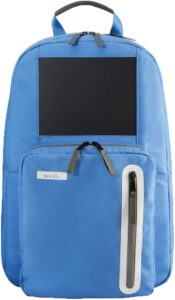
Business travel meets portable solar with the Birksun. This pack has a built-in 3,000 mAh lithium battery integrated into the design, making it the second option on our list with any battery at all. The unique part is that Birksun got this pack TSA-approved, so it works as an airline carry-on. If you’re a frequent business traveler or remote consultant, this removes the hassle of checking a bag.
The 2.4-pound weight is impressively light, making this ideal for commuters and day-trip travelers. The water-resistant fabric and integrated solar cells keep everything together in one unit. With good sunlight, you can get a full device charge in about 2 hours, which is faster than you’d expect from the compact design.
The catch is that the 3,000 mAh battery is quite small. It’ll fully charge a modern smartphone once, but if you need to power larger devices like tablets or laptops, you’ll be disappointed. The proprietary solar panel design means Sunnybag doesn’t publish exact wattage specs, making it harder to compare directly to other models. And the 20-liter capacity is modest.
Some reviews mention durability concerns with the integrated solar panel performance degrading over time. This isn’t a deal-breaker, but it’s worth knowing. If you want lightweight simplicity and TSA compliance, the Birksun delivers. Just don’t expect it to power your entire digital lifestyle.
Features
- Integrated solar panel (exact wattage proprietary)
- 3,000 mAh built-in lithium battery
- 1 USB output port
- 20-liter capacity
- Lightweight at 2.4 pounds
- Water-resistant fabric with integrated solar cells
- TSA-approved for airline carry-on
- Dimensions: 18.5″ H x 13″ W x 5.5″ D
- Built-in battery for night charging
- TSA-approved for business travel
- Super lightweight design
- Full charge in 2 hours (good sun)
- 3,000 mAh battery is small capacity
- Panel specs are proprietary (hard to compare)
- 20L capacity is limited
- Reports of panel degradation over time
7. MEGASOLAR 10W Solar Backpack
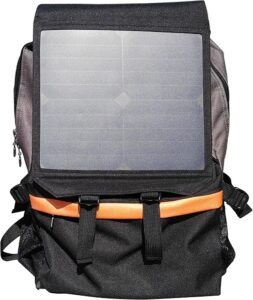
The MEGASOLAR brings serious solar output to professionals who need to charge laptops and workstations in the field. The 10W SunPower panel matches the Voltaic Systems in raw power, and the 1.8A output current means faster charging compared to standard 1A ports. The 17-inch laptop sleeve fits everything from MacBook Pros to large desktop-replacement workstations.
Fully waterproof construction means this pack won’t let moisture damage your gear during rainstorms or riverside camping. The 30-35 liter capacity, while not explicitly stated by the manufacturer, is estimated from the fact that it comfortably fits 17-inch laptops along with substantial gear. Build quality feels solid and professional.
The limited online reviews compared to brands like Voltaic or Outdoor Tech make this harder to fully evaluate for long-term durability. The lack of a specified weight means you won’t know for sure how it compares to lighter alternatives until you handle one. And there’s no integrated battery, so you’ll be charging directly from the panel during sun hours.
That said, if you’re an outdoor professional, photographer, or laptop-toting digital nomad who can accept a few unknowns about detailed specs, the power output and laptop compatibility make this worth considering. The price point puts it right in the middle of the pack.
Features
- 10W SunPower panel
- 1 USB output at 1.8A (faster charging)
- 30-35 liter capacity (estimated)
- 17-inch laptop sleeve compatibility
- Fully waterproof nylon construction
- 5V output
- 10W panel matches top-tier models
- 1.8A current for faster charging
- Professional laptop compatibility
- Fully waterproof construction
- Limited customer reviews online
- Weight not specified
- No built-in battery
- Capacity not explicitly stated
8. Acogedor 14W Solar Backpack
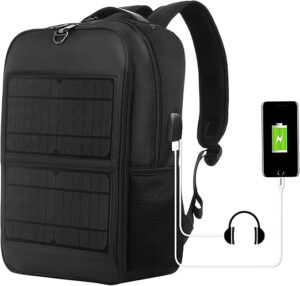
Here’s the best value if you want maximum power without maximum spending. The Acogedor delivers a 14W SunPower panel with third-generation technology and 23-25% efficiency at just $45-$65. You’re getting the same wattage as the Yoidesu at a comparable or better price.
The 9-point safety protection system is thorough. Temperature control, over-voltage protection, and overcharge prevention keep your devices safe even in extreme conditions. The S-shaped ergonomic back with thickened mesh padding distributes weight evenly and reduces fatigue during all-day wear. The 25-30 liter capacity works for extended trips if you pack efficiently.
Water-resistant nylon with pearl cotton filling provides decent protection in light rain, though it’s not fully waterproof like some premium competitors. The pearl cotton can absorb moisture, making this less ideal for damp climates. And there’s no battery included, meaning you’ll want an external power bank for evening use.
The small number of Amazon customer reviews (only 3 at the time of this review) means less proven track record compared to established brands. But given the perfect 5.0-star rating and the power-to-price ratio, it’s worth serious consideration if you’re budget-conscious and live in dryer climates. Cyclists, budget-conscious hikers, and outdoor enthusiasts who know how to pack light will appreciate what this offers.
Features
- 14W SunPower panel (third-generation)
- 23-25% efficiency rating
- 1 USB output (5V)
- 25-30 liter capacity
- Water-resistant nylon with pearl cotton
- 9-point smart circuit protection
- S-shaped ergonomic back design
- Dimensions: 43 x 30.8 x 14 cm
- 14W at budget-friendly price
- Third-generation SunPower efficiency
- Comprehensive safety features
- Perfect 5.0-star customer rating
- No battery for night charging
- Limited customer reviews online
- Pearl cotton may absorb moisture
- Not ideal for very wet climates
Solar Backpack Buying Guide
Key Takeaways
- Wattage ranges from 6.5W to 14W. Higher wattage means faster charging but adds weight and cost.
- Most solar backpacks lack batteries. Only Voltaic Systems and Birksun include integrated storage.
- Capacity varies from 20L to 50L. Choose based on trip length and gear volume needed.
- Price spans $45 to $179. Budget options still deliver solid performance at lower price points.
- Panel efficiency ranges from 22% to 22.4%. Premium models have marginally better efficiency.
What Are Solar Backpacks?
A solar backpack is a hybrid piece of gear that combines a regular backpack with integrated solar panels. The panel is permanently mounted to the exterior, usually the front or top of the pack. As you hike, travel, or work outdoors, the panel absorbs sunlight and converts it to electricity via a USB port or charging cable.
They’re not meant to replace your home solar setup. Think of a solar backpack as a charging solution for extended outdoor trips when you can’t access wall outlets. Backpackers use them to charge phones and GPS devices during multi-day hikes. Travelers use them for nomadic work. Festival-goers use them to keep devices powered throughout the day. They’re portable renewable energy at a personal scale.
How Do Solar Backpacks Work?
The core mechanism is straightforward. Monocrystalline or flexible solar cells are mounted to the pack’s exterior. These cells convert photons from sunlight into direct current (DC) electricity. Built-in circuitry regulates this power and outputs it via USB ports at safe voltage levels (typically 5V) for phones and tablets.
You position the pack so the panel faces the sun. Direct sunlight charges faster than cloudy or filtered light. The charging happens in real time. Some models include an integrated battery, which stores charge so you can use it at night or when the sun isn’t out. Others charge devices directly from the panel without storage capability.
Benefits of Using a Solar Backpack
Independence from outlets is the primary benefit. You’re never stuck without charging options as long as the sun is out. This is particularly valuable for outdoor enthusiasts who spend multiple days away from civilization. No need to carry heavy power banks that take up bag space.
There’s an environmental angle too. Solar charging produces zero emissions and requires no fuel. It appeals to eco-conscious travelers and professionals who value sustainability. The upfront cost is higher than a regular backpack, but over many years of use, solar charging costs nothing and generates zero waste.
Solar backpacks also offer peace of mind. Your navigation GPS, emergency communication device, and essential apps stay powered. For remote work or digital nomading, a solar backpack extends your time in nature while maintaining connectivity.
Panel Wattage and USB-C PD: What Actually Charges What
Solar backpack panels are measured in watts, but the wattage figure tells only part of the story. A typical solar backpack panel is 5 to 10 watts — enough to maintain a small battery bank charge over the course of a day and slowly top up a phone. The critical factor is how the panel output connects to your devices. Standard 5V/1A USB output (5 watts) charges a phone slowly. USB-C Power Delivery at 18W or higher is needed to meaningfully charge a laptop.
Most backpack panels run 5 to 7.4V output designed for connecting to an external battery bank rather than directly to devices. The smart approach is exactly this: solar charges the battery bank, which then charges your devices efficiently. Look for backpacks with USB-C PD output on the battery-to-device side (not the panel-to-bank side) to ensure your laptop and modern devices charge at full speed from the stored power. A backpack with only standard USB-A out will charge phones fine but will take 10+ hours to meaningfully charge a modern laptop.
Pack Capacity, Organization, and Panel Positioning
The solar panel takes up real estate on the bag exterior that reduces interior volume — typically 5 to 15 liters of carrying capacity is sacrificed for a useful panel size. A 20L solar backpack effectively has the interior of a 15L pack. For day hikers and commuters this is usually fine. For overnight trips where gear volume matters, a 40L solar backpack with integrated panels makes more sense.
Panel positioning matters for charging efficiency. Panels on the back panel (between your back and the pack) get no sun while you’re carrying the bag. Panels on the top or front flap work when the bag is packed on a vehicle, leaned against a sunny surface at camp, or hung from a tree branch — but not while walking unless the sun is directly overhead. The best solar backpack designs have panels on the front face or lid that capture sun while the bag is stationary. Some include a fold-out supplementary panel for maximum surface area while the pack rests.
Things to Keep in Mind Before Buying
Weather matters significantly. Cloudy days produce less charge than sunny days, sometimes 50% or less. If you live in a consistently cloudy region, solar backpack charging will be slower. An integrated battery becomes more valuable in this situation.
Panel durability is real. Solar cells are tough but not invulnerable. A solar backpack you’re using daily for years will eventually show wear. Check warranty terms and customer reviews about long-term reliability.
Weight and bulkiness are considerations. The panel adds noticeable weight compared to non-solar packs. If ultralight backpacking is your style, a solar backpack might feel cumbersome. Regular backpackers and travelers won’t notice the difference.
Battery options matter if you want nighttime charging. Most budget solar backpacks skip the battery to keep costs low. If charging only during sunlight hours is acceptable for your use case, you’ll save money. If you need evening charging capability, look for models with integrated batteries.
Types of Solar Backpacks
There are essentially two categories based on battery inclusion. Panel-only models are lighter, cheaper, and charge devices in real time from the sun. They’re ideal for day trips and situations where you’ll be moving throughout daylight hours. Battery-integrated models cost more and weigh more, but they store energy for nighttime use. They’re better for extended trips or evening use.
Within those categories, you’ll find variations in panel wattage (6.5W to 14W), backpack capacity (20L to 50L), and materials (nylon, Cordura, PVC, recycled fabrics). Some emphasize waterproofing for wet climates. Others prioritize lightweight design. Choose the type that matches your specific use case and environment.
Frequently Asked Questions
How fast do solar backpacks charge phones?
A 10W panel in direct sunlight charges a typical 3,000 mAh phone battery from zero to full in about 3-4 hours. Speed varies based on panel wattage, sunlight intensity, and device capacity. Cloudy weather significantly slows charging.
Are solar backpacks waterproof?
Most are water-resistant but not fully waterproof. They’ll handle light rain and splashes, but submersion or heavy storms can damage the electronics. The Yoidesu and some MEGASOLAR models offer more complete waterproofing. Check product specifications for your climate.
Do I need a solar backpack if I have a power bank?
A power bank adds weight you have to carry. A solar backpack replaces that weight with something you’d carry anyway. If your trips are short (day hikes) and outlets are accessible, a power bank is fine. For extended outdoor trips, a solar backpack reduces total load.
Which solar backpack has the best battery?
The Voltaic Systems OffGrid includes a 12,800 mAh battery, the largest available. The Birksun has a 3,000 mAh battery that’s useful for emergencies but limited for serious overnight use. Most other models skip batteries entirely.
Can I use a solar backpack for camping?
Absolutely. In fact, camping is one of the primary use cases. Multi-day camping trips with phones, flashlights, and GPS devices all benefit from on-the-go solar charging. The larger capacity models like the ECEEN 50L work particularly well for camping since you’re carrying substantial gear anyway.
How long do solar backpack panels last?
Quality panels like SunPower typically last 5-10 years of regular use before efficiency noticeably degrades. Harsh environments (intense UV, temperature extremes) can shorten lifespan. Most manufacturers offer 1-2 year warranties.
Is a solar backpack better than a solar power bank?
They serve different purposes. Power banks are portable and fast-charging but require you to carry additional weight. Solar backpacks integrate charging into gear you’d carry anyway. For dedicated outdoor trips, solar backpacks are superior. For occasional charging on short outings, a solar power bank is more convenient.
Can I charge a laptop with a solar backpack?
Models with 10W panels and dedicated laptop sleeves (Voltaic, MEGASOLAR) can trickle-charge laptops slowly, but it’s not practical for full charges during a single day. They work best for phones and tablets.
Summing Up
Solar backpacks represent the intersection of outdoor adventure and renewable energy technology. You’re not getting a complete power solution like home solar panels, but you’re gaining independence from wall outlets during extended time outdoors. The right choice depends on your specific situation: budget versus battery inclusion, lightweight versus large capacity, budget price versus premium quality.
If you’re also thinking about solar panels for your home, call (855) 427-0058 for a free quote — it takes just a few minutes to find out what installation would cost and save you in your area.
Updated