Dual-axis solar tracking systems keep panels pointed directly at the sun as it moves across the sky from dawn to dusk and from season to season. Unlike fixed solar panels that point in one direction, a dual-axis tracker follows the sun on both the horizontal axis (east-west, called azimuth) and the vertical axis (up-down, called elevation). This constant alignment maximizes sunlight capture throughout the day and year, generating 35% to 45% more electricity than stationary panels in the same location.

However, this extra output comes at a significant cost in complexity, maintenance, and capital expense. Understanding when dual-axis tracking makes economic sense—and when it doesn’t—is essential before investing in the technology.

How Solar Tracking Works

To understand dual-axis systems, it helps to understand the simpler single-axis tracker first, then see how dual-axis extends that concept.

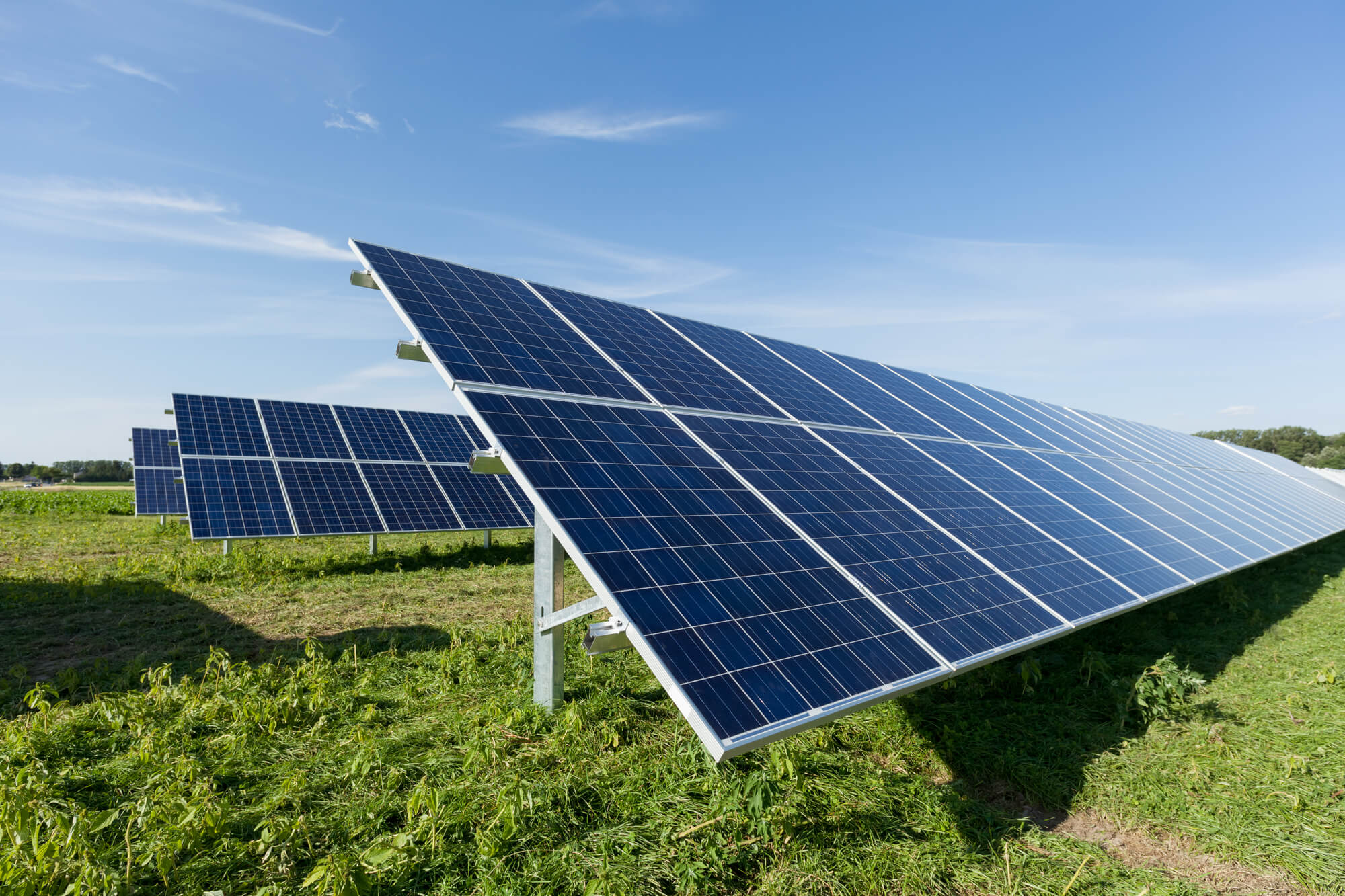
Ground Mounted Solar Panels

Fixed Panels (No Tracking)

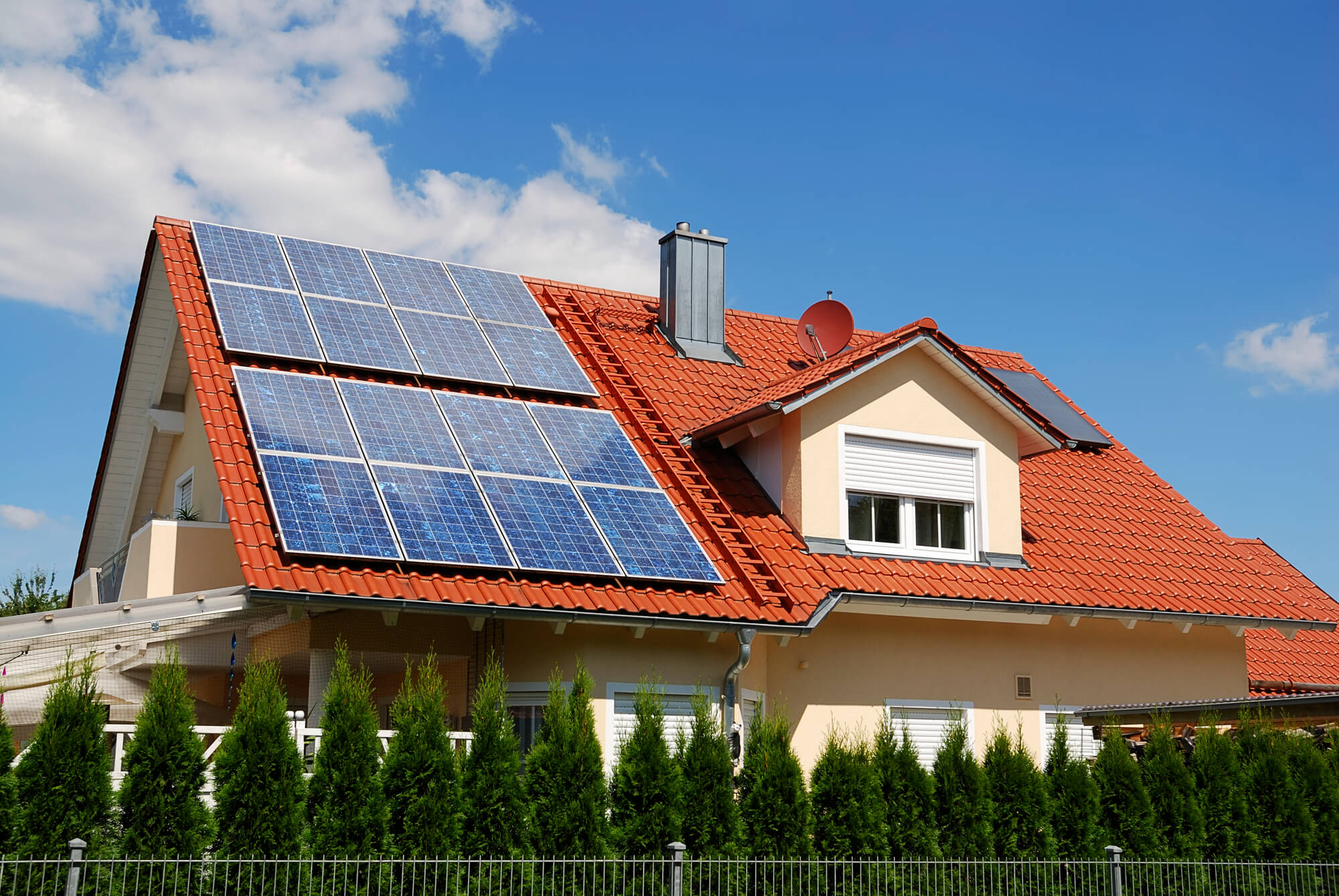
Standard residential and small commercial solar arrays have panels mounted at a fixed angle—typically optimized for your latitude and roof orientation. A panel faces south (in the Northern Hemisphere) at an angle equal to your latitude plus 15 degrees. This static orientation works well because it’s simple, has no moving parts, and requires minimal maintenance.

The tradeoff: a fixed panel never points directly at the sun except for a brief moment around solar noon. Throughout the morning and afternoon, the sun’s angle changes, and the panels receive less-than-perpendicular light, reducing output.

Single-Axis Tracking

A single-axis tracker rotates the panel on one axis only—typically east to west, following the sun’s path across the sky from sunrise to sunset. A motor and controller rotate the panel throughout the day so that it always faces the sun horizontally. The panel’s tilt angle (elevation) remains fixed.

Single-axis trackers increase output by roughly 20% to 30% compared to fixed panels because they minimize the angle-of-incidence loss throughout the day. The sun still rises and sets at different angles seasonally, but the east-west tracking captures most of the improvement.

Dual-Axis Tracking

A dual-axis system adds a second motor and controller that adjusts both the horizontal angle (following the sun east to west) and the vertical angle (tilting to match the sun’s seasonal elevation change). The panel always points directly perpendicular to incoming sunlight, which is the theoretical maximum for light capture.

Dual-axis systems increase output by 35% to 45% compared to fixed panels. The extra 15% gain versus single-axis comes from the seasonal elevation adjustment.

Types of Dual-Axis Tracking Systems

Dual-axis trackers come in two main configurations, each suited to different applications.

Passive Tracking

Passive trackers use no motors or controllers. Instead, they rely on a hydraulic fluid system that responds to heat imbalance. As sunlight heats one side of the tracker, the fluid shifts, moving the weight and rotating the panel toward the sun. These systems are mechanically simple, low-cost, and reliable in stable weather.

However, passive trackers respond slowly to cloud cover and can overshoot or undershoot the optimal angle. They’re rarely used for modern utility-scale installations but are sometimes found on older small systems or in specialized applications where simplicity matters more than precision.

Active Tracking (Motor-Driven)

Active trackers use electric motors, sensors, and controllers to track the sun’s position continuously. Two motors—one for east-west and one for elevation—adjust the panel angle based on real-time sunlight sensors or astronomical calculations of the sun’s position.

Active systems are more complex and more expensive but offer better accuracy and faster response to changing sky conditions. Most modern dual-axis systems are active motor-driven trackers.

Output Gains from Dual-Axis Tracking

The output increase varies by climate, latitude, and system design, but documented results are consistent.

Geographic Variation

Dual-axis tracking provides the largest output gain in locations near the equator, where the sun moves through a wider range of elevations seasonally. At the equator, a dual-axis tracker can increase output by 45% to 50% compared to a fixed panel.

At higher latitudes (like the northern United States or Canada), the sun’s elevation angle changes less dramatically with season, and dual-axis tracking provides smaller gains—typically 30% to 35% improvement.

Weather Impact

Tracking systems work well in clear-sky conditions but offer diminishing returns in very cloudy climates. If the sky is overcast, diffuse sunlight comes from all directions, so the panel’s angle matters less. In very sunny, dry regions (desert Southwest, high-altitude areas), dual-axis trackers show their strongest advantage.

Real-World Examples

A utility-scale study comparing a 1 MW fixed array to a 1 MW dual-axis tracked array in Arizona produced these results:

  • Fixed array: 1,500 MWh/year
  • Single-axis tracked array: 1,800 MWh/year (20% gain)
  • Dual-axis tracked array: 2,050 MWh/year (36.7% gain)

Similar studies in northern climates show gains of 25% to 35% for dual-axis systems.

When Dual-Axis Trackers Make Economic Sense

The output gains are real, but they come at a price. Dual-axis tracking systems cost 2 to 3 times more than fixed racks, which is a substantial premium. For a homeowner or small business, this premium rarely pays back. For utility-scale solar farms, the economics are more favorable but still require specific conditions.

Solar Panels on Field

Utility-Scale Projects

Large solar farms with flat, available land in high-irradiance regions (Southwest, California, parts of Texas and Colorado) can justify dual-axis tracking because:

  • Land is cheap: The extra cost of tracking is outweighed by the ability to generate more power per acre of land occupied
  • High irradiance: The output gain is maximized in sunny climates
  • Economies of scale: The per-megawatt cost of tracking systems drops when deploying 50 MW, 100 MW, or larger projects
  • Long operating life: The return-on-investment (ROI) for tracking extends over 25 to 30 years, enough time for the cost premium to be recovered through extra electricity sales

For utility-scale projects in optimal locations, dual-axis tracking can deliver attractive returns, typically recovering the capital cost in 8 to 12 years.

Off-Grid and Remote Systems

Off-grid systems where maximizing power from a limited number of panels is critical sometimes justify tracking. An off-grid cabin or remote equipment installation that relies on a small solar array may benefit from dual-axis tracking because the extra output reduces battery size requirements and improves reliability during cloudy periods.

In these applications, the cost trade-off is different: reducing battery size (which is expensive) by using tracking can make economic sense even at small scale.

Concentrated Photovoltaic (CPV) Systems

Concentrated photovoltaic systems use lenses or mirrors to focus sunlight onto small, highly efficient cells. CPV requires precise, continuous sun tracking to work at all—the systems fall apart without dual-axis tracking. While CPV has not achieved mainstream adoption, it remains an active research and niche-deployment area.

Why Residential Solar Doesn’t Use Trackers

Homeowners and small commercial installations almost never use dual-axis (or even single-axis) trackers. The reasons are straightforward.

High Cost Per Watt

A typical residential solar system costs $2.50 to $4.00 per watt installed (panels, racking, inverter, labor). Adding dual-axis tracking adds $1.50 to $2.50 per watt—a 50% to 75% cost increase. For a 10 kW system, this means an extra $15,000 to $25,000.

Roof Space Is Not Constrained

Residential roofs have sufficient space for a fixed array. The economics of tracking (more output from less land) only matter when land is expensive or scarce. A homeowner can simply install more panels on the roof to match the output of a smaller tracked array, and the panels-only solution is cheaper.

Maintenance Burden

Trackers have moving parts: motors, bearings, sensors, and control electronics. These require maintenance, calibration, and eventual replacement. Fixed panels have no moving parts and typically last 25 to 30 years with minimal maintenance beyond occasional cleaning. A tracker might require bearing replacement every 10 to 15 years, adding operational cost.

Wind Loading

Moving trackers present larger wind loads than fixed panels because they can rotate out of a streamlined position. High winds can damage tracking motors or mechanisms. Fixed panels are simply tilted flat or angled safely during severe weather.

Dual-Axis vs. Single-Axis: The Trade-Off

Single-axis trackers (east-west rotation only) are sometimes used on utility-scale installations where space is tightly constrained but full dual-axis tracking is cost-prohibitive. Single-axis systems cost 50% to 75% of dual-axis systems and deliver 60% to 75% of the output gain.

For most utility applications, single-axis tracking represents a better cost-benefit balance than dual-axis. Dual-axis makes the strongest case in extremely high-irradiance, dry climates with very expensive land (deserts, high-altitude plateaus) where output density is paramount.

Emerging Technologies in Solar Tracking

As solar costs continue to decline, research is exploring smarter tracking approaches:

  • AI-powered predictive tracking: Machine learning models predict cloud cover and adjust panels proactively rather than simply reacting to current sunlight
  • Distributed tracking: Instead of one tracker per large array, smaller sub-arrays track independently, reducing mechanical complexity
  • Hybrid tracking-storage systems: Combining tracking with battery storage to maximize load matching—track the sun during peak generation, discharge during peak demand

These emerging approaches may improve the cost-benefit equation for tracking, particularly as automation and control costs decline.

What is the difference between single-axis and dual-axis tracking?

Single-axis trackers rotate on one axis only, typically following the sun east-west throughout the day. They increase output by 20-30%. Dual-axis trackers add a second motor that also adjusts the panel’s elevation (tilt) to follow the sun’s seasonal height changes. Dual-axis systems increase output by 35-45%. Dual-axis costs 2-3 times more than single-axis and is rarely used except at utility scale in high-irradiance locations.

How much more power do dual-axis trackers generate?

Dual-axis trackers generate 35% to 45% more electricity than stationary panels in the same location. The exact gain depends on latitude (equator receives more benefit), climate (sunny regions benefit more than cloudy ones), and the specific panel and tracker quality. In a high-irradiance desert climate, you might see a 40-45% gain. In a northern climate or cloudier region, expect 25-35%.

Can I add tracking to my existing solar panels?

Technically yes, but it’s not practical. Existing panels would need to be dismounted from their current racking, mounted on tracking structures, rewired to tracking controllers, and the tracking system would need to be commissioned. The cost and labor would typically exceed the cost of a new fixed array. If tracking is desired, it’s best integrated into the design from the start.

Do trackers work in cloudy weather?

Trackers still work in cloudy weather—they’ll follow the sun’s position through the clouds. However, the output gain from tracking diminishes significantly when the sky is overcast because there’s no direct beam to track. In very cloudy climates, the cost premium for tracking becomes harder to justify because the output gains are smaller. Trackers shine in high-irradiance, low-cloud regions.

Do tracking systems require a lot of maintenance?

Yes, significantly more than fixed panels. Trackers have motors, bearings, sensors, and control electronics that need periodic inspection, calibration, and maintenance. Motors may require replacement every 10-15 years. Fixed panels have no moving parts and last 25-30 years with minimal maintenance beyond occasional cleaning. This maintenance burden is a major reason residential installations don’t use trackers.

Summing Up

Dual-axis solar tracking systems can increase electricity output by 35% to 45% compared to fixed panels, making them attractive for utility-scale solar farms in high-irradiance regions where land is expensive and output density is critical. The technology is proven, reliable, and deployed at scale globally.

However, for residential and small commercial installations, the 2-3x cost premium, maintenance burden, and reduced lifespan compared to fixed panels make dual-axis tracking impractical. Most homeowners achieve better economics by installing more fixed panels rather than tracking fewer panels.

If you’re considering a residential or small commercial solar installation, fixed panels remain the most cost-effective option for your situation. For information on designing a fixed solar array optimized for your roof and location, call (855) 427-0058 or get a free quote from local installers who can assess your specific needs.

Updated