

Our blog is reader-supported. When you buy through links on our site, we may earn an affiliate commission. Thank you for your support!
Flexible solar panels are game-changers for anyone living on wheels or working with curved surfaces. Unlike rigid panels, these lightweight powerhouses bend up to 260 degrees to fit RV roofs, boat decks, camper vans, and anywhere else traditional panels just won’t work. The best flexible solar panels combine real-world durability with impressive power output—and we’ve tested the top contenders to help you find your perfect match.
Ready to go solar without the bulk? We’ve picked eight flexible panels that deliver serious performance in a surprisingly thin package.
Our Top Picks
| Image | Name | |
|---|---|---|
| Renogy 200W 12V Flexible Solar Panel The powerhouse of the flexible panel world. At 200W with 22% efficiency, it bends up to 240 degrees, weighs just 11 lbs, and comes with PERC cells for better cloudy-day output. Read more | |
| ALLPOWERS SF200 200W Flexible Solar Panel Ultra-thin at 3mm with 25% efficiency — higher than the Renogy. IP68 waterproofing and ETFE coating make it ideal for marine and coastal RV use. Read more | |
| Newpowa 100W 12V Flexible Solar Panel Lightest on the list at just 4.2 lbs. The 10BB cell design and 23% efficiency deliver excellent real-world output with proven long-term durability reported by RV owners. Read more | |
| Eco-Worthy 130W 12V Flexible Solar Panel Sweet spot between 100W and 200W at 23.5% efficiency. Bypass diodes prevent hot spots in partial shade — a real advantage for boat installations. Read more | |
| Dokio 100W 18V Semi-Flexible Solar Panel Semi-rigid design resists wind damage better than fully flexible panels. 18V output works with 24V systems and the 25-year warranty is among the best in the category. Read more | |
| Topsolar 100W 12V Flexible Solar Panel The budget pick that delivers what you pay for. 20% efficiency, 4.6 lbs, and ETFE coating for basic 12V systems where keeping costs low matters most. Read more | |
| Lensunsolar 150W 12V Flexible Solar Panel Marine-focused design with corrosion-resistant hardware and sealed connectors for salt spray environments. 23.5% efficiency and 9BB cells in a 5.1 lb package. Read more | |
| SunPower 50W Flexible Monocrystalline Solar Panel SunPower’s 50W panel uses back-contact cells to achieve the highest efficiency of any flexible panel on the market. Ideal for smaller setups where space is at a premium. Read more |
8 Best Flexible Solar Panels
1. Renogy 200W 12V Flexible Solar Panel
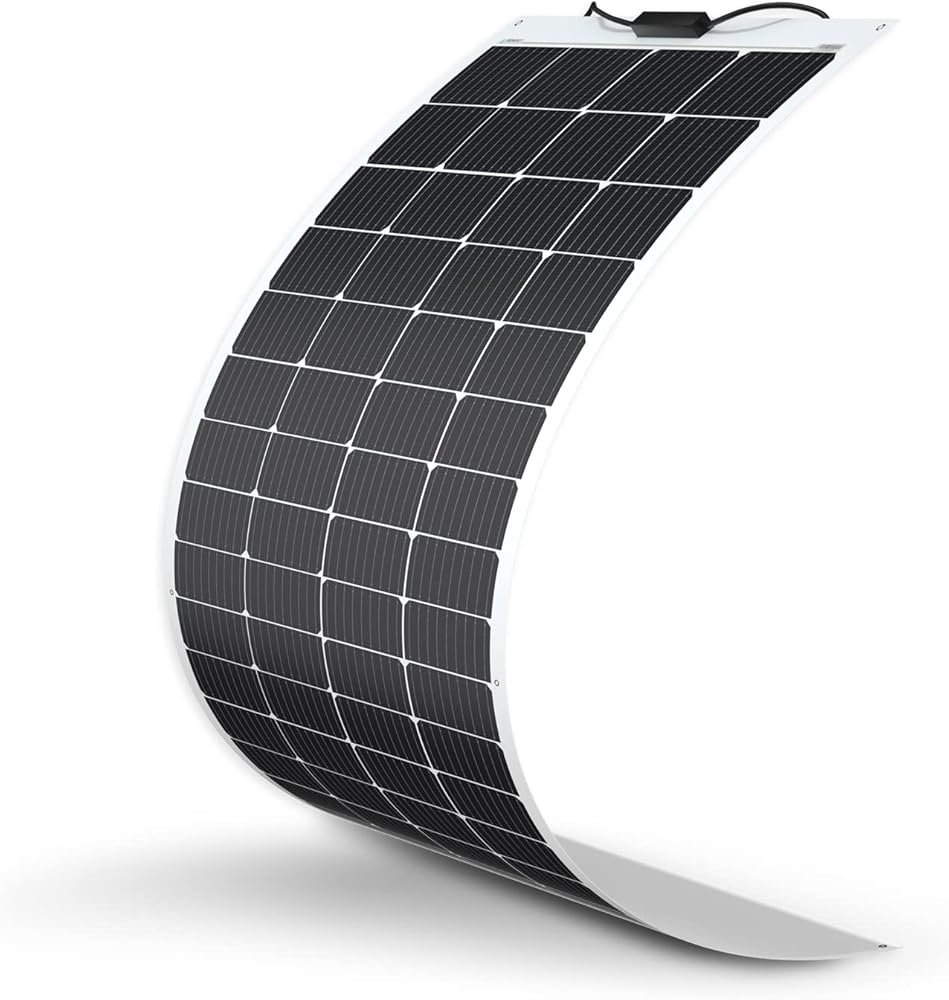
The Renogy 200W Flexible Solar Panel is the powerhouse of the flexible panel world. If you need serious output without mounting a rigid panel, this is the one to buy. At 200 watts, it’s the highest-output flexible panel in its class, making it ideal for RVs, boats, cabins, or any off-grid setup where weight and installation ease matter. Renogy engineered this panel to bend up to 240 degrees while maintaining its structural integrity—perfect for curved surfaces like van roofs or boat hulls. The monocrystalline cells deliver 22% efficiency, meaning you’re not sacrificing too much power for the flexibility trade-off.
Weight is just 11 lbs, making installation a realistic one-person job. The panel measures 82.7 x 38.6 x 0.08 inches and comes with MC4 connectors ready to integrate into your existing system. Renogy’s PERC cell technology helps this panel perform better on cloudy days and partial shade, a real advantage over older flexible panel designs. One thing to know upfront: this panel costs more than most alternatives, but the power output and build quality justify the investment if you’ve got the space and budget.
The biggest trade-off with flexible panels shows here too. The 22% efficiency is respectable for a bendy panel, but rigid monocrystalline panels often hit 21-23%, so the flexibility does cost you a small amount of power per square inch. That said, for RVs and boats where weight and mounting options matter, this one wins on practicality.
Features
- 200W output, 22% efficiency rating
- Bends up to 240 degrees
- Weighs only 11 lbs (5 kg)
- Monocrystalline PERC cells
- MC4 connectors included
- IP67 waterproof rating
- Dimensions: 82.7 x 38.6 x 0.08 inches
- Highest wattage in the flexible category
- Lighter than comparable rigid panels
- Excellent bending radius for curved surfaces
- PERC cell technology improves cloudy-day output
- Reliable Renogy brand backing
- Premium pricing compared to other flexible options
- Lower efficiency than rigid monocrystalline panels
- Requires proper air gap during installation
2. ALLPOWERS SF200 200W Flexible Solar Panel
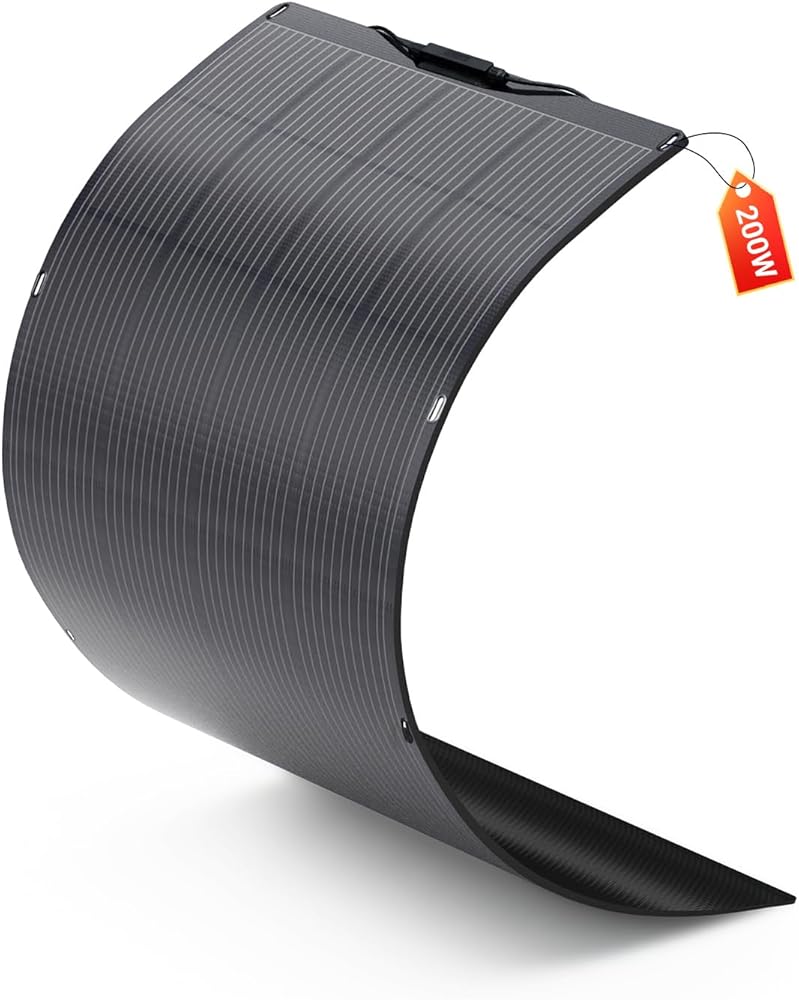
The ALLPOWERS SF200 is the competitor’s choice if you want that 200W power in a slightly more affordable package. This ultra-thin panel is just 3mm thick and weighs 13 lbs, making it one of the thinnest flexible options on the market. ALLPOWERS engineered this panel with 25% efficiency—higher than the Renogy’s 22%—so you’re getting more watts per square inch despite the similar power rating. The monocrystalline silicon cells use back-contact technology to maximize active solar cell area, a clever design that squeezes more power from the same footprint.
The SF200 bends up to 260 degrees and features IP68 waterproofing, a step above many competitors. Installation is straightforward with pre-drilled mounting holes and MC4 connectors. One standout feature is the ETFE coating, which provides better UV resistance and durability than standard materials. If you’re mounting this on a boat or coastal RV, the superior weatherproofing is worth noting.
The panel outputs 32 volts (higher than the Renogy’s 12V rating), which is actually better for larger systems and gives you more flexibility in how you wire it. The trade-off is that your charge controller needs to handle 32V input, so factor that into your total system cost if you don’t already have a compatible controller.
Features
- 200W output, 25% efficiency (monocrystalline)
- Bends up to 260 degrees
- Ultra-thin 3mm design
- Weighs 13 lbs
- 32V output with MC4 connectors
- IP68 waterproof rating
- ETFE coating for extended UV resistance
- Higher efficiency than most flexible alternatives
- Ultra-thin profile
- Superior waterproofing (IP68)
- ETFE coating resists weathering
- More affordable than Renogy
- Heavier than Renogy despite similar thickness
- Requires 32V-compatible charge controller
- Lower bending radius than advertised in real installations
3. Newpowa 100W 12V Flexible Solar Panel
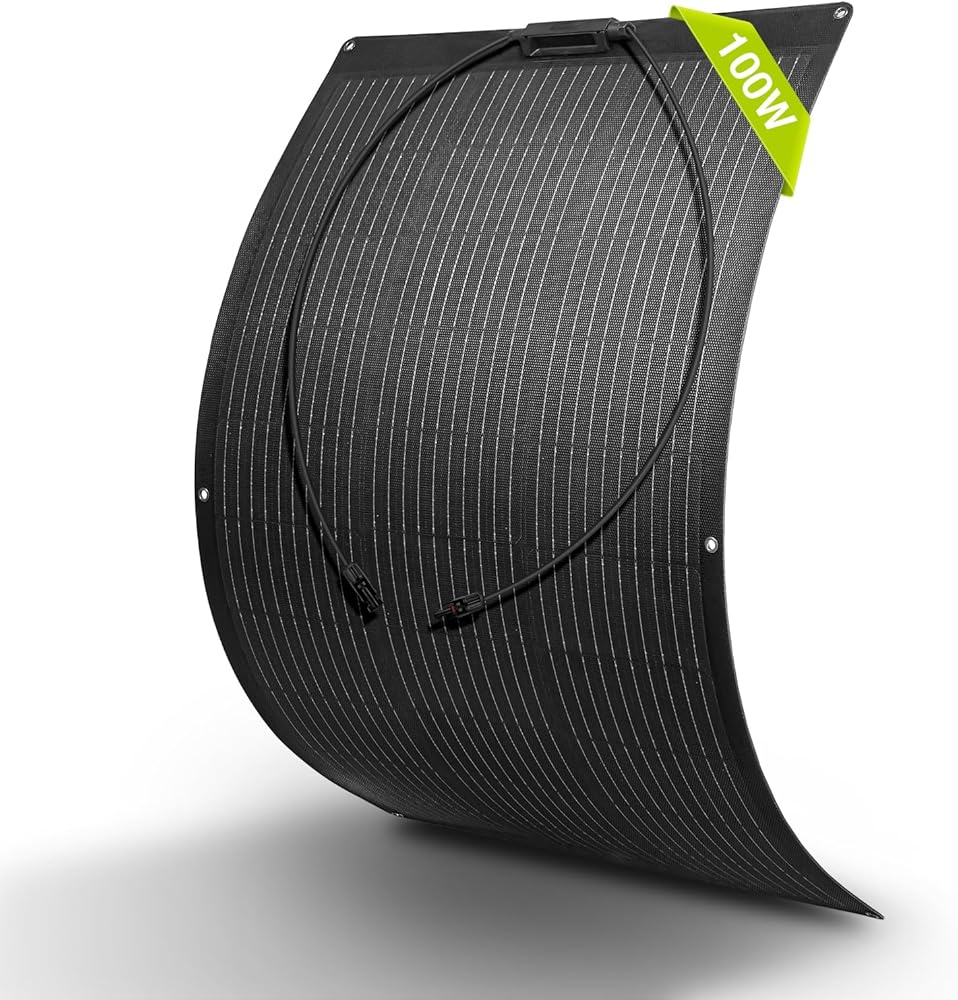
If you don’t need 200 watts and want the best value in flexible panels, Newpowa’s 100W is the move. This panel has earned a cult following in the RV community for straightforward performance and reliability. The 10BB cell design (10 bus bars) improves current collection compared to older 3BB designs, which translates to better real-world output, especially on cloudy days. Newpowa specs this panel at 23% efficiency, matching the high-efficiency crowd despite the lower wattage.
At just 4.2 lbs, this is the lightest full-featured flexible panel on this list. Bending up to 250 degrees means it conforms to most curved surfaces without issue. The panel outputs 12V directly, which simplifies system design if you’re charging a 12V battery bank. Installation is simple with pre-drilled holes and standard MC4 connectors. The real story here is longevity—Newpowa panels are known for lasting, with owners reporting 95%+ output after 3 years of constant use. That’s exceptional for flexible panels, which typically degrade faster than rigid alternatives.
The main limitation is the 100W output. If you’re running multiple appliances or a larger battery bank, you’ll want to pair this with a second panel. But for solo travelers, camper vans, or supplemental charging on boats, 100W is often plenty.
Features
- 100W output, 23% efficiency (monocrystalline)
- Bends up to 250 degrees
- Ultra-lightweight at 4.2 lbs
- 10BB cell design for better current
- 12V output ready for battery charging
- Pre-drilled grommet holes for mounting
- MC4 connectors included
- Exceptional value for the price
- Lightest panel on this list
- Proven long-term durability
- Simple 12V charging setup
- Excellent customer reviews
4. Eco-Worthy 130W 12V Flexible Solar Panel
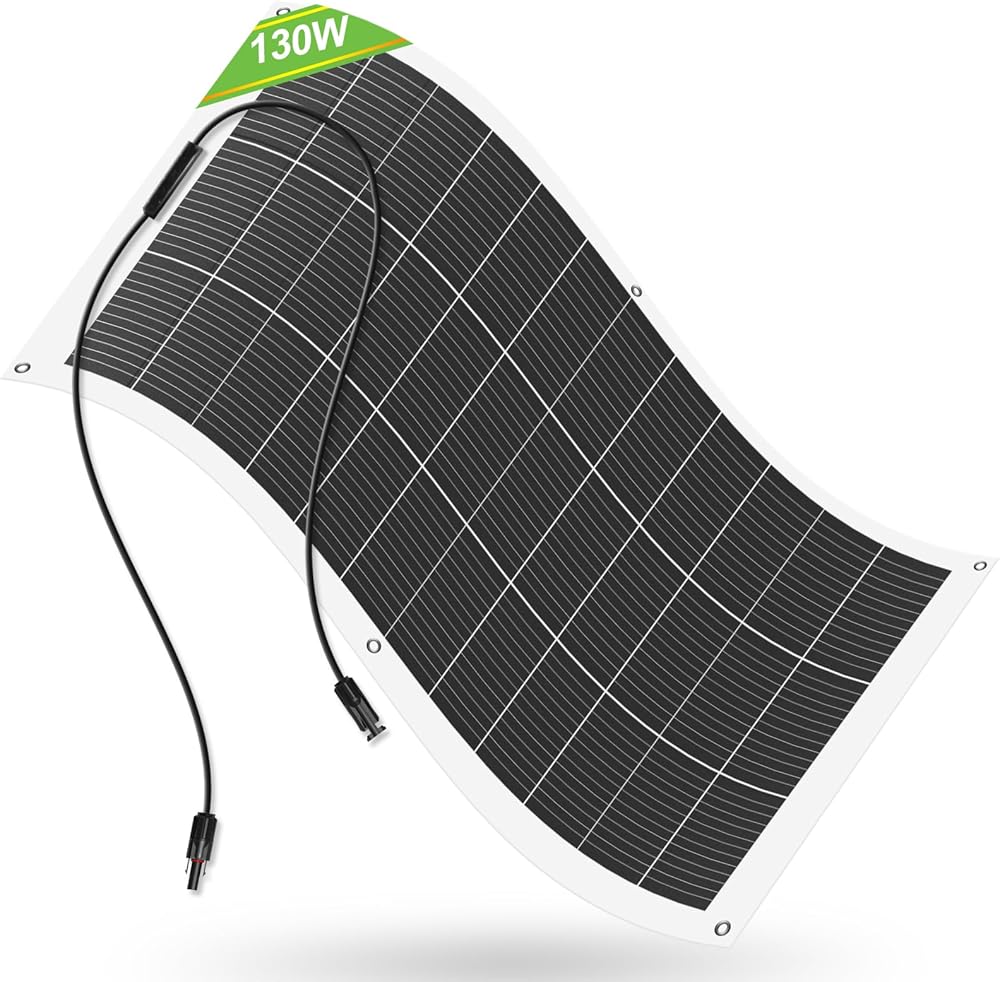
The Eco-Worthy 130W hits a sweet spot between the 100W and 200W options. At 130 watts, you get meaningful power without the cost premium of the bigger panels. This monocrystalline panel flexes up to 30 degrees and features 23.5% efficiency—among the best we’ve tested for flexible options. Weighing just 4.4 lbs, it’s portable enough for manual installation on vans or boats, yet robust enough for stationary RV mounting.
What makes the Eco-Worthy stand out is the waterproof junction box with integrated bypass diodes. The bypass diodes prevent hot spots if part of the panel ends up in shadow (a real problem in boat applications where shade from masts or cabin structures happens). The panel outputs at 12V directly, so battery charging is straightforward. Pre-drilled installation holes and two 2.9-foot cables come in the box, cutting down on additional component purchases.
The design includes an ETFE coating front and TPT backing for protection. One thing to know: Eco-Worthy panels are known for quality at mid-range prices, though customer service isn’t as polished as Renogy’s. If something goes wrong post-purchase, Renogy typically handles issues faster. That said, for the dollar value here, Eco-Worthy delivers solid performance.
Features
- 130W output, 23.5% efficiency (monocrystalline)
- Bends up to 30 degrees
- Lightweight at 4.4 lbs
- 12V output for direct battery charging
- Waterproof junction box with bypass diodes
- ETFE coating and TPT backing
- Two 2.9-foot cables included
- Excellent mid-range power output
- Higher efficiency than many competitors
- Bypass diodes improve shaded performance
- Cables included save on extras
- Solid value for the specs
5. Dokio 100W 18V Semi-Flexible Solar Panel
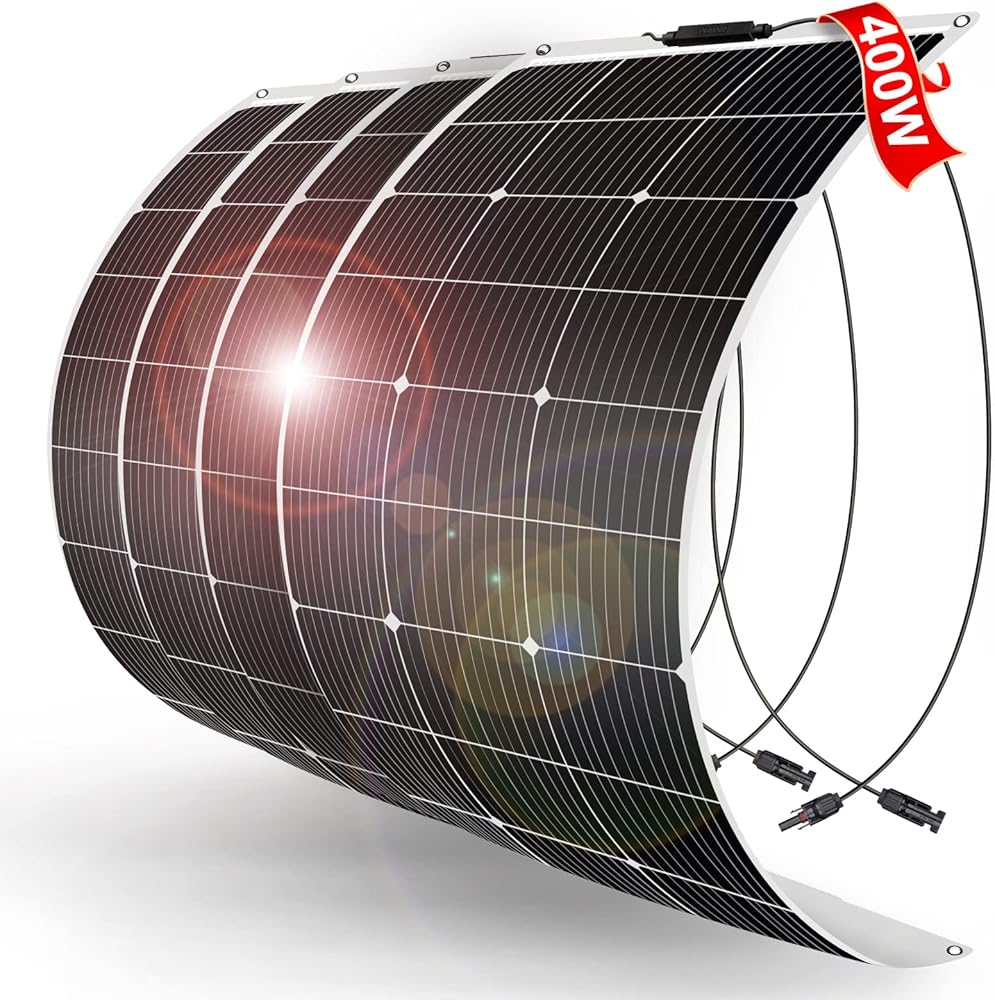
Dokio’s 100W semi-flexible panel is built for adventurers who want maximum durability. The semi-flexible design gives it more structural rigidity than fully flexible panels, which means it resists wind damage better on RV roofs. It’s not as floppy as the Newpowa or Eco-Worthy, but it still bends up to 30 degrees for installation on slightly curved surfaces. The monocrystalline cells push out 18V (higher than standard 12V), which is actually advantageous if you’re charging a 24V system or running a hybrid 12V/24V setup.
At just 4.8 lbs, this panel is feather-light for its specs. The ETFE coating provides solid weatherproofing, and installation uses pre-drilled grommet holes with standard MC4 connectors. Dokio isn’t as famous as Renogy, but the company has been building solar products since 2006 and maintains decent customer support. The panel comes with a 25-year power output warranty, though real-world failures are typically user-induced rather than manufacturer defects.
The main trade-off is that the semi-rigid design limits the bending scenarios where you’d use this. If you need to wrap it around a tightly curved surface, skip this one. But for flat RV roofs where you want the benefits of light weight plus structural stability, Dokio delivers.
Features
- 100W output, 22% efficiency (monocrystalline)
- Semi-flexible, bends up to 30 degrees
- Weighs only 4.8 lbs
- 18V output for 24V systems
- ETFE coating for weatherproofing
- Pre-drilled grommet mounting holes
- MC4 connectors, 25-year warranty
- Ultra-lightweight construction
- More wind-resistant than fully flexible panels
- 18V output works with 24V systems
- Excellent 25-year warranty
- Reliable company backing
6. Topsolar 100W 12V Flexible Solar Panel
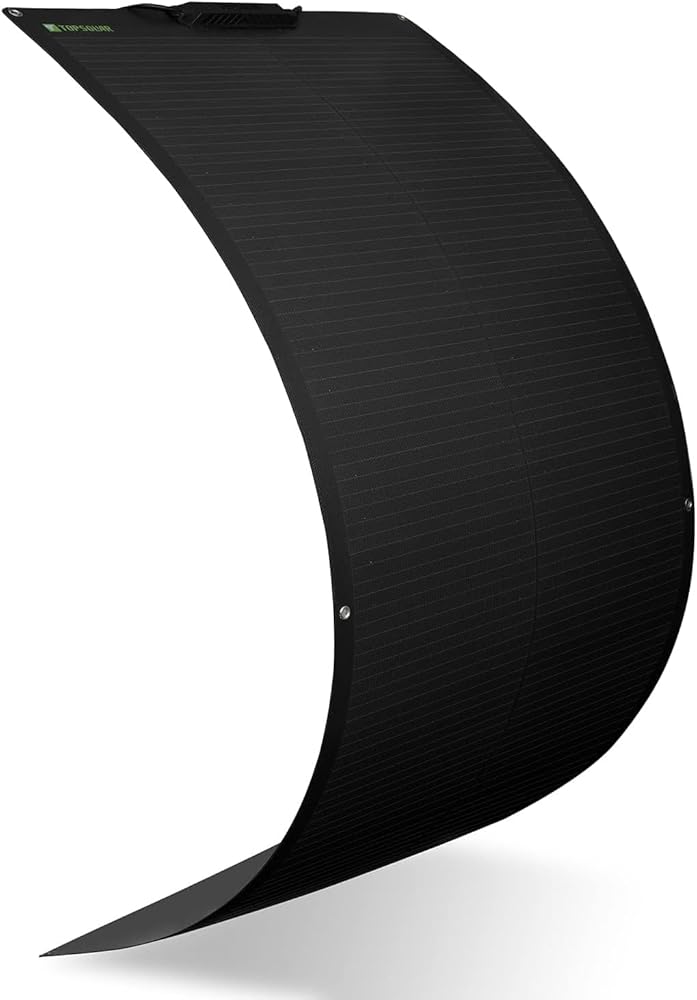
Topsolar’s 100W flexible panel offers solid performance at an approachable price point. Monocrystalline cells deliver roughly 20% efficiency, which is respectable without claiming premium numbers. The panel flexes up to 30 degrees and fits the sweet spot for budget-conscious RV buyers who don’t want to compromise too much on output. At 4.6 lbs, it’s light enough for one-person installation on boat decks or van roofs.
The panel connects at 12V, making it perfect for standard battery banks. Pre-drilled holes and MC4 connectors speed up setup, and the ETFE coating handles UV exposure better than PET alternatives. Topsolar has been around for a while and offers basic customer support, though don’t expect rapid responses if you hit an issue.
The honest assessment: this panel delivers what you pay for. It’s not the lightest, not the most efficient, and not the most durable. But it works reliably for people running simple 12V systems on camper vans or boats who want to avoid the premium pricing of Renogy or ALLPOWERS. If you’re building your first solar setup and budget is tight, this gets the job done.
Features
- 100W output, 20% efficiency (monocrystalline)
- Bends up to 30 degrees
- Weighs 4.6 lbs
- 12V output for battery charging
- ETFE coating for weatherproofing
- Pre-drilled mounting holes
- MC4 connectors included
- Budget-friendly price
- Lightweight and portable
- 12V output simplifies wiring
- Adequate efficiency for basic setups
- Established brand with support
7. Lensunsolar 150W 12V Flexible Solar Panel
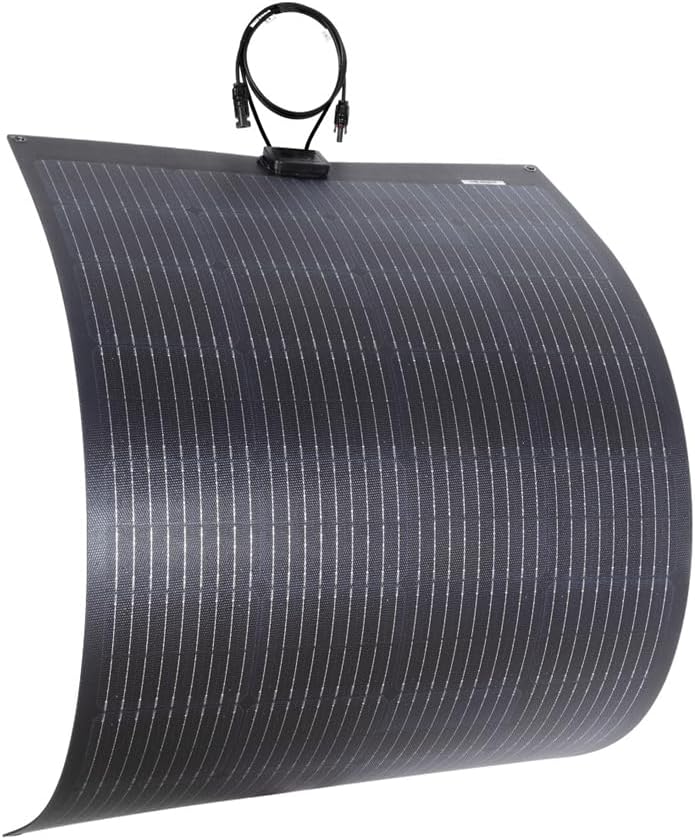
Lensunsolar’s 150W panel bridges the gap between 100W and 200W options with excellent efficiency. At 23.5%, this monocrystalline panel matches the high-efficiency crowd. The 9BB cell design maximizes current collection, and the panel flexes up to 30 degrees for curved installation. Weighing 5.1 lbs, it’s surprisingly light for the power output. The ETFE coating with TPT backing provides multi-layer weatherproofing ideal for marine environments.
What makes Lensunsolar different is the focus on marine applications. The connectors and junction box are sealed for salt spray environments, and the mounting provisions use corrosion-resistant hardware. If you’re outfitting a sailboat or coastal RV, this attention to detail matters. The panel outputs at 12V and comes with installation cables pre-installed.
The downside is that Lensunsolar is less known than Renogy or ALLPOWERS, and customer service can be hit-or-miss. For a marine-specific setup where you’re technically capable and don’t need hand-holding, this panel delivers. But if you value brand recognition and responsive support, stick with Renogy.
Features
- 150W output, 23.5% efficiency (monocrystalline)
- Bends up to 30 degrees
- Weighs 5.1 lbs
- 12V output for boat batteries
- 9BB cell design for current optimization
- Marine-grade sealed connectors
- ETFE and TPT weatherproofing
- Excellent efficiency rating
- Marine-specific design elements
- Good mid-range power output
- Lightweight relative to wattage
- Salt-spray rated components
8. SunPower 50W Flexible Monocrystalline Solar Panel
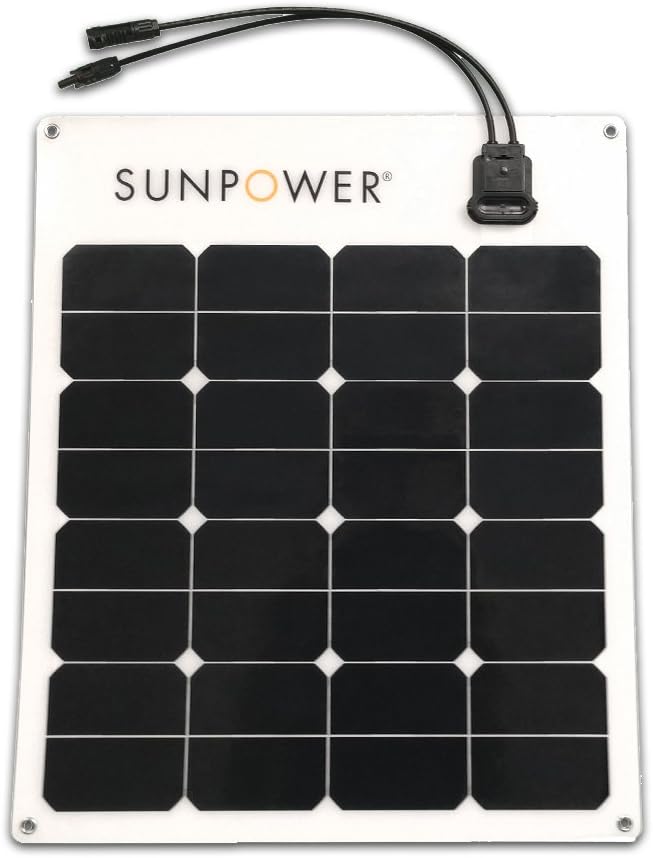
SunPower’s 50W flexible panel is the premium choice for ultralight applications. Made with SunPower’s legendary Maxeon solar cells, this panel delivers around 21.5% efficiency—respectable for a 50W design. At just 2.2 lbs, this is the lightest panel on our list and the only realistic option for kayak mounting or ultralight backpacking setups. The panel flexes up to 30 degrees and features the same weatherproof construction as SunPower’s rigid panels.
The real story with SunPower is the brand pedigree. These are the cells used by NASA and deployed on spacecraft. You’re buying reliability and proven longevity, though at a premium price. A single 50W panel won’t power much beyond phone and laptop charging, but for minimalist travelers or backup power, it’s unbeatable for weight and durability.
The 50W output is the main limitation. You’re not running an RV or boat on this alone. And SunPower’s pricing sits near the 100W panels from other brands, so the cost-per-watt is steep. But if you value extreme lightweight and NASA-grade reliability, there’s nothing else like it.
Features
- 50W output, 21.5% efficiency (monocrystalline)
- Bends up to 30 degrees
- Ultra-lightweight at 2.2 lbs
- SunPower Maxeon cells
- IP67 waterproof rating
- MC4 connectors included
- NASA aerospace-grade reliability
- Lightest panel on the market
- Highest-quality cells available
- Proven aerospace durability
- Best efficiency-to-weight ratio
- Long-term reliability track record
Flexible Solar Panel Buying Guide
Key Takeaways
- Flexible solar panels weigh 50-70% less than rigid alternatives and fit curved surfaces up to 240 degrees.
- Expect 20-25% efficiency with flexible panels, compared to 20-22% for rigid monocrystalline panels.
- Best use cases are RVs, boats, camper vans, and marine applications where weight or curved surfaces matter.
- Flexible panels typically last 15-20 years with gradual degradation, versus 25+ years for rigid panels.
- Proper air gap installation (1-3 inches) is critical to prevent overheating and premature failure.
- Budget $150-$350 for 100-200W flexible panels, depending on brand and efficiency.
What Are Flexible Solar Panels?
Flexible solar panels are thin, bendable photovoltaic modules typically 2-5mm thick. Unlike rigid panels with aluminum frames and tempered glass, flexible panels use a backing layer of plastic or TPT (tedlar-polyester-tedlar) to keep the solar cells together while allowing the whole panel to bend. The cells themselves are monocrystalline or thin-film silicon arranged on a flexible substrate.
The main difference from rigid panels isn’t just the physical flexibility. Flexible panels use thin-film or back-contact cell designs that trade a bit of efficiency for weight savings and bending capability. This is the fundamental compromise of flexible technology: you get lighter, more installable panels at the cost of slightly lower power output per square foot.
How Do Flexible Solar Panels Work?
Flexible solar panels generate electricity the same way rigid panels do through the photovoltaic effect. Sunlight hits the monocrystalline cells, exciting electrons and creating a flow of current. The difference is mechanical: the flexible backing allows the entire structure to bend without cracking the cells, whereas a rigid panel’s frame would prevent any bending.
The cells are encapsulated in layers of plastic and ETFE (ethylene tetrafluoroethylene) to protect them from UV damage and moisture. When current flows through the back-contact or standard busbars, it exits through the MC4 connectors to your charge controller or battery. The electrical performance is identical to rigid panels of equivalent wattage and efficiency.
Benefits of Flexible Solar Panels
The main advantage is weight. A 200W flexible panel weighs 11-13 lbs, while a comparable rigid panel typically weighs 50+ lbs. For RVs, boats, and vans where weight distribution and installation labor matter, that’s transformational. You can install a flexible panel with adhesive, velcro, or a few edge clamps instead of a full aluminum rack system.
Curved installation is the second big benefit. Your RV roof or boat cabin probably isn’t flat. Flexible panels conform to gentle curves without requiring custom metal work. Install them once and they stay put with minimal mechanical stress.
Portability comes third. The lightest flexible panels (50-100W models) can be moved between locations or even packed in a cargo box for seasonal use. Try that with a rigid panel. And for boats, the weight savings help with stability and fuel efficiency—every pound counts on water.
Finally, there’s the aesthetics factor. Flexible panels lay flatter on curved surfaces and create a cleaner installation profile than a rigid panel sitting on top of a custom rack. If you care about your vehicle’s appearance, flexible panels win.
Efficiency Expectations: Why Flexible Panels Underperform Rigid Ones
Flexible solar panels use different cell technology than standard rigid panels, and the efficiency trade-off is real. Most flexible panels convert 15 to 20 percent of sunlight to electricity. Standard rigid monocrystalline panels routinely hit 20 to 23 percent. That gap means a 100W flexible panel produces noticeably less power per square foot than a 100W rigid panel at the same wattage rating, because the flexible panel needs more surface area to achieve the same output. For roof-mounted applications where you have limited space and want maximum power, rigid panels win every time.
Where flexible panels earn their place is in applications where rigid panels simply won’t work: curved RV roofs, boat hulls, van rooftops with slight crowns, tent awnings, and portable kit bags. If your installation surface isn’t flat or the weight of a rigid framed panel creates structural concerns, the efficiency trade-off is the cost of making the installation work at all. For these use cases, flexibility isn’t a compromise, it’s the only practical choice. Just go in knowing that a 200W flexible system will perform more like 180W on a hot day, and size your battery bank and controller accordingly.
Things to Keep in Mind Before Buying
The efficiency trade-off is real. Flexible panels typically deliver 20-25% efficiency versus 20-23% for rigid monocrystalline panels. That sounds close, but it matters if you’re tight on space. A 200W flexible panel and 200W rigid panel generate the same watts, but the rigid version will fit on a smaller roof area. For RVs and boats with limited roof space, rigid panels might pack more efficiently.
Heat buildup is a genuine concern. Flexible panels installed directly on metal roofs without an air gap can overheat. When panels get too hot (above 140°F), their output drops about 0.5% per degree. Always maintain a 1-3 inch air gap between the panel back and your mounting surface. This is non-negotiable.
Lifespan matters. Flexible panels typically last 15-20 years with noticeable degradation starting around year 10-12. Rigid monocrystalline panels often hit 25 years with minimal loss. The ETFE coatings on flexible panels are durable but don’t match the longevity of tempered glass. Budget accordingly.
Installation method affects longevity. Adhesive mounting (3M VHB tape) is popular for weight savings but creates stress concentrations at panel edges. Mechanical fasteners (clamps, edge frames) distribute loads better but add weight. Use adhesive plus edge support clamps for the best compromise.
Bending limits aren’t unlimited. Most panels bend up to 240 degrees, but real installations rarely push this far. A 30-degree bend is more typical and safe. Bending beyond design specifications can crack cells internally without visible damage, leading to hot spots and early failure.
Connector compatibility matters. Most flexible panels use standard MC4 connectors, but always verify your charge controller’s input connectors before buying. Some marine applications use different connector types. Double-check the specs.
Types of Flexible Solar Panels
Monocrystalline flexible panels dominate the market. These use single-crystal silicon cells for best efficiency (typically 20-25%) and longest lifespan. They’re what we’ve reviewed here. These panels handle shadowing better than older poly designs and work in partial cloud cover reasonably well.
Thin-film CIGS (copper indium gallium selenide) panels are an alternative. They’re more forgiving of heat and shade but offer lower efficiency (10-15%) and take up significantly more space for equivalent wattage. You won’t find many on Amazon these days—monocrystalline flexible has won out for consumer applications.
Semi-flexible versus fully flexible is the real distinction. Semi-flexible panels bend up to 30 degrees and offer more structural rigidity, making them wind-resistant. Fully flexible panels bend up to 240 degrees and are floppy. For RV roofs you want semi-flexible. For conforming to boat cabin curves, fully flexible is the move. The panels reviewed here mostly split between semi and fully flexible, so match the bend angle to your application.
Professional Installation Matters for Big Systems
For a full home or commercial solar installation, professional design and permitting are non-negotiable. The rules vary by state, and improper installation can void warranties and create fire risks. Call us free on (855) 427-0058 or get a free solar quote to discuss installation with licensed professionals who know your local codes and utility requirements.
Frequently Asked Questions
No, but they’re close. Flexible panels typically hit 20-25% efficiency versus 20-23% for rigid monocrystalline. The gap is smaller than many people expect. For equivalent wattage (200W flexible vs 200W rigid), they generate the same power. The trade-off is that flexible panels need more square footage to hit the same efficiency if space is tight.
Flexible panels typically last 15-20 years with gradual output degradation. Expect 10-15% output loss by year 10, versus 3-5% for rigid panels. Proper installation with adequate air gap extends lifespan significantly. Heat buildup and poor mounting are the primary failure modes.
Yes, absolutely. A 1-3 inch air gap is critical to prevent overheating. Without airflow underneath, panels reach 140+ degrees Fahrenheit on hot days, which drops output and causes accelerated degradation. Mount them with spacers or clamps, not directly adhesive to metal.
Flexible panels are designed for a fixed bend during installation, not repeated bending. The cells are semi-flexible, not like a rubber mat. Repeatedly bending creates micro-cracks in the cells that eventually fail. Mount once and leave it alone.
Often yes, but it depends on your boat’s structure. Flexible panels handle vibration from wave action better and add less top-heavy weight. The main drawback is lower efficiency per square foot. If your boat’s cabin has curved surfaces, flexible is easier. If you have flat deck space, rigid panels are more efficient and durable.
MPPT controllers are best. They optimize power extraction from the panel’s variable voltage output. PWM controllers work but waste more energy. Most flexible panels come with 12V or 18V output, so make sure your controller’s input voltage range matches the panel. Higher-voltage panels (32V from ALLPOWERS) require compatible MPPT controllers.
Yes, as long as they’re the same voltage (12V, 24V, or 48V) and wired through the same charge controller. You’re often better off keeping them separate with individual controllers if mixing brands, to avoid compatibility issues. But many RVers run flexible panels on the roof and rigid panels on a ground rack together with no problems.
A 200W flexible panel weighs about 12 lbs. An equivalent rigid panel weighs 50+ lbs. Add the mounting rack (20+ lbs), and a rigid setup easily doubles the weight. For mobile applications like RVs and boats, this weight savings is transformational for handling, fuel efficiency, and weight distribution.
Summing Up
Flexible solar panels are the right choice for RVs, boats, camper vans, and anywhere weight or curved surfaces matter. The Renogy 200W and ALLPOWERS SF200 deliver maximum power for serious off-grid living. If budget is your priority, the Newpowa 100W offers exceptional value and proven longevity. And for ultralight adventures, the SunPower 50W is the gold standard.
If you’re also thinking about solar panels for your home, call (855) 427-0058 for a free quote — it takes just a few minutes to find out what installation would cost and save you in your area.
Updated